Layer count first: a built-up roof is made of alternating plies of reinforcing felt and bitumen, topped with gravel, a mineral cap sheet or a coating, and a facility director in Lowell, MA meets it as a system with a long service history and many repairs layered on top. The first job is to read it. We count the plies with a core cut, identify the insulation and deck, locate the surface type and record any layers that may be wet. That record tells the owner whether to repair, recover or replace, and what each choice costs.
Built-up systems are durable and repairable, and they are also heavy, slow to install and unforgiving of trapped moisture. Those traits shape every scope decision.
How the Layers Work
A BUR assembly starts with a base sheet or insulation, then adds plies of felt bonded with hot asphalt, coal tar or cold adhesive. Multiple plies mean redundancy: a defect in one layer is covered by the next. The surface may be gravel embedded in bitumen to protect against sun and add fire resistance, a mineral-surfaced cap sheet, or a smooth surface with a reflective coating.
Gravel hides the membrane, which makes inspection harder. Low areas, flashing and blisters can be buried under stone. When we inspect a gravel-surfaced roof, we sweep selected areas clear, photograph what is under them and note where the stone has migrated to the drains. Gravel in a drain bowl is a leak waiting to happen. Sweeping also lets us check flashing bases, where the membrane turns up a wall and the gravel can hide a split. The sweep areas are photographed before and after, and the stone is put back or removed as the scope directs.
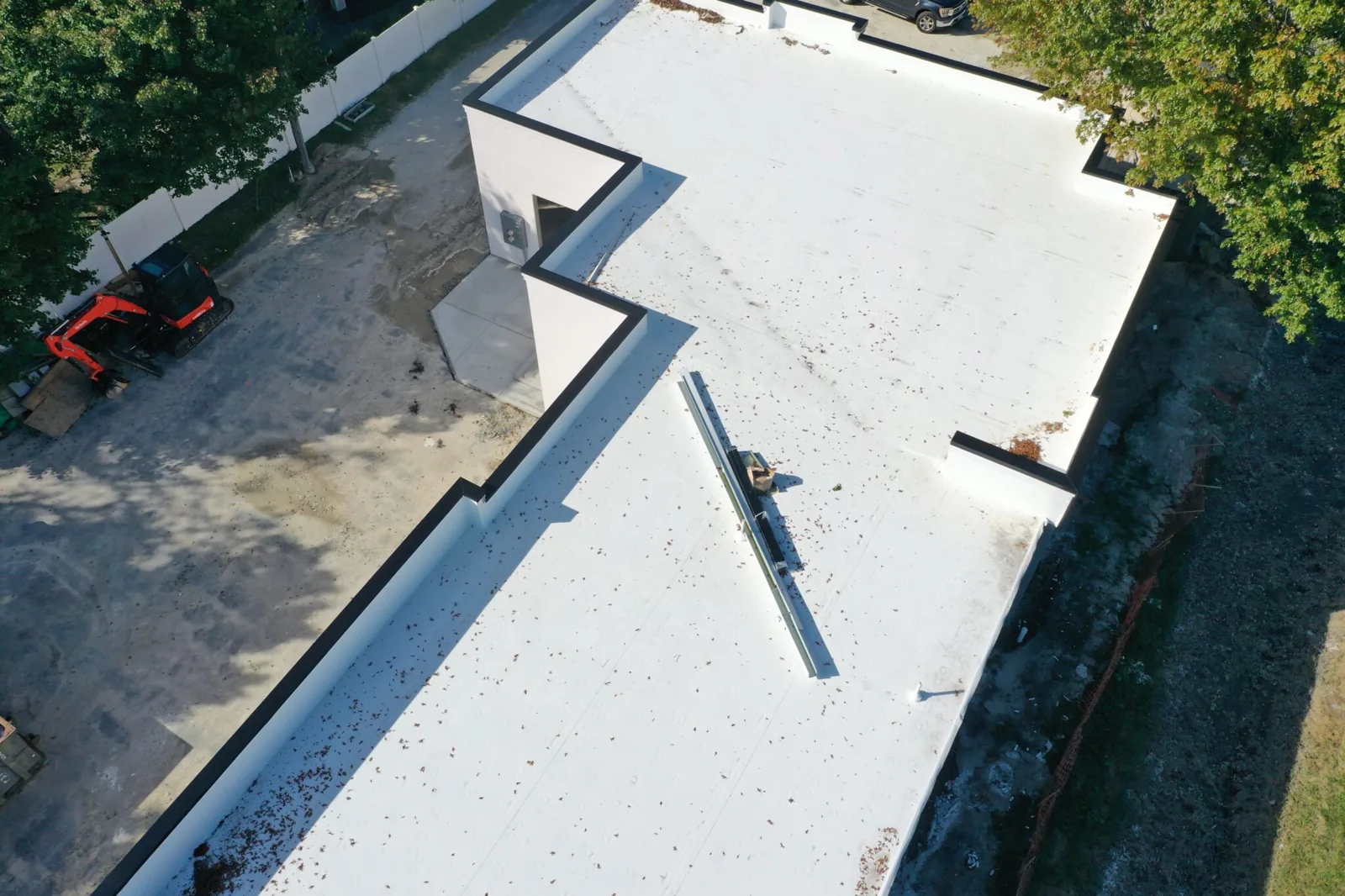
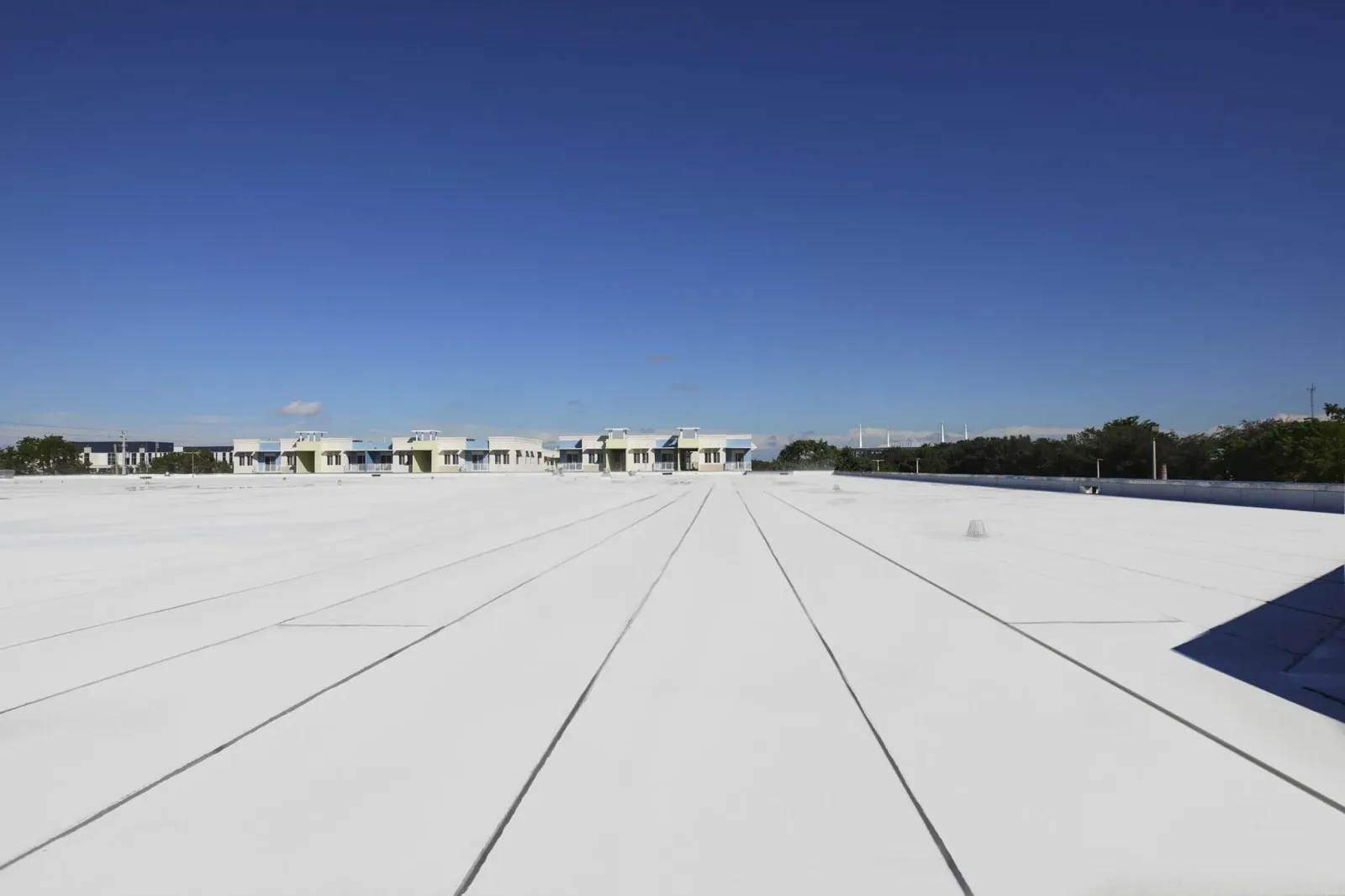
Some built-up roofs carry a smooth surface with an aluminum or white coating instead of gravel. Those roofs are easier to read and show blisters and cracking directly. The coating itself ages, chalks and thins, and a recoat plan is part of a maintenance program. Without it, the bitumen below is exposed to sun and weather again.
Aging Signs and Failure Patterns
Built-up roofs fail in recognizable ways: alligatoring of the surface, blisters that break, ridges over insulation joints, splits in the membrane at changes in plane and flashing that has pulled away from walls. Pitch-based surfaces can flow in summer and crack in winter, and asphalt can oxidize and lose flexibility.
With NOAA normals of 24.9 degrees in a Lowell January and 72.8 in July, each season moves the membrane by a measurable amount. Splits often open along the lines where the roof moved most. We map them on the roof plan, photograph each from a fixed point and measure the length, so the repair decision rests on numbers.
Moisture in a Multi-Ply Roof
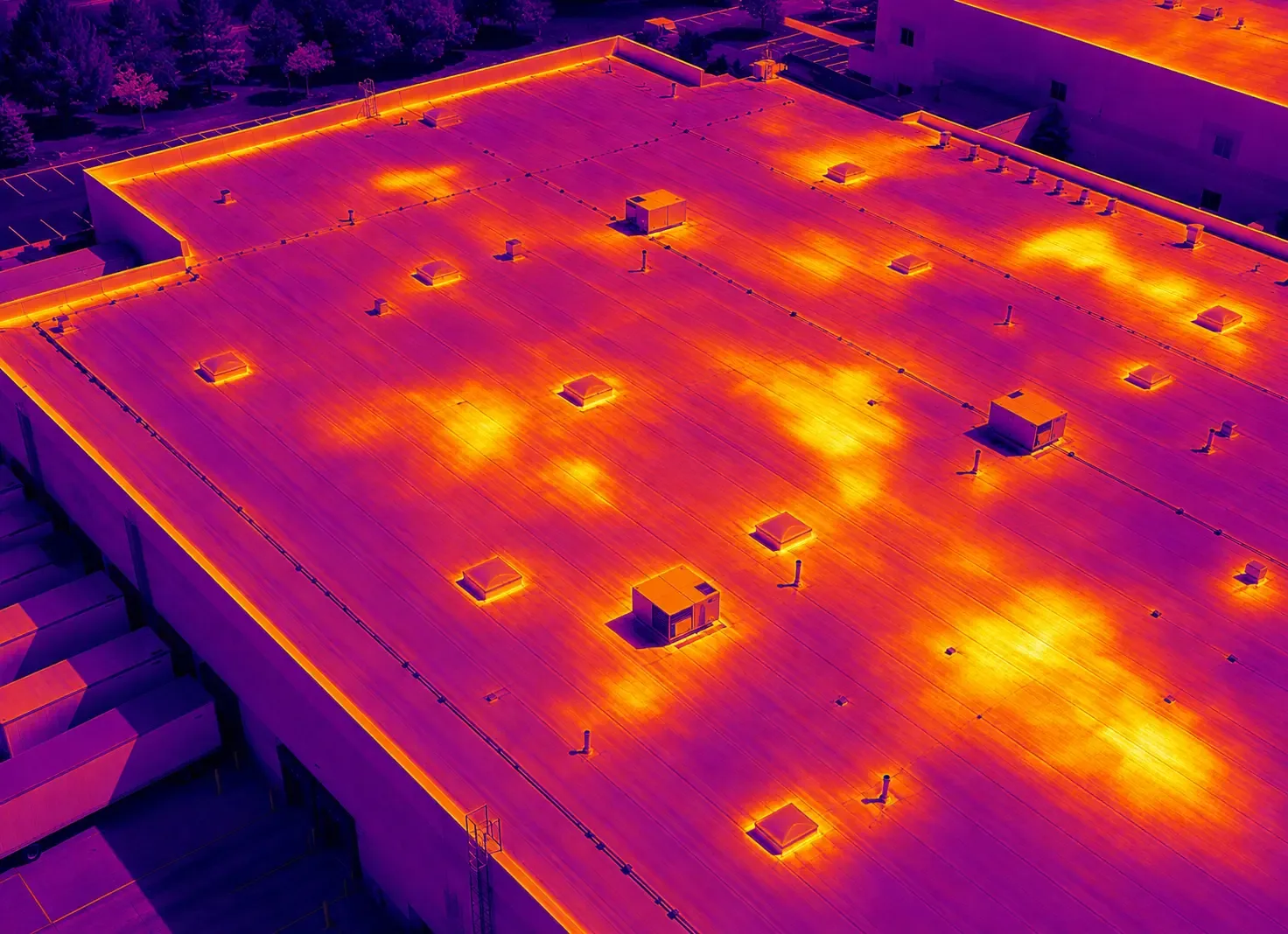
Water that enters a multi-ply roof can travel between plies and into insulation before it reaches a ceiling. The wet area is often far from the visible defect, and the roof may leak at a point that has no flaw above it. An infrared moisture survey maps the wet area, core cuts confirm it, and the boundary becomes the repair limit.
Repair within the boundary can involve removing wet insulation and patching the plies back in. Beyond a certain extent, repairing a built-up roof piece by piece costs more than replacing it. The scope compares both, with the cost of each and the expected life of the result. Roof traffic matters here too: a built-up surface under rooftop equipment that gets frequent service wears faster along the paths to it, and walkway pads laid over the route extend the life of the surface.
Wet insulation in a built-up roof is often the real cost driver. Insulation under a multi-ply membrane can hold water for years without showing it, and the extent of the wet area decides whether a partial tear-off is sensible or whether the whole roof needs to come off. We state the wet area in square feet from the survey and price each path.
Hot Asphalt, Fumes and Safety
Traditional BUR installation uses a kettle or tanker of hot asphalt on or near the roof, with tar-lined mop or mechanical spreaders. The work requires fire controls, a trained crew, ventilation planning and communication with the building about fumes. Air intakes near the work area are closed or filtered, and the schedule tells tenants when odor is likely. Cold-process adhesives reduce heat and odor and suit buildings where hot work is restricted.
Not every building allows hot work, and some insurers restrict it. Where hot work is allowed, a fire watch stays on the roof for a set period after the last application, and extinguishers, a sand or fire blanket at the kettle and clear access to the roof are checked before work starts. The scope states the method and the permits it needs. If the building is occupied, the schedule and the odor plan go to the facility director before the roof is opened.
Lowell Weather and the Installation Window
The Lowell station's normals show 48.51 inches of annual precipitation spread across every month, and the city's hazard mitigation materials identify nor'easters, snowstorms, ice storms and hurricanes as major hazards. Built-up work needs dry, warm days, because bitumen applied in cold or damp conditions does not bond well. A late-season start risks cold plies and incomplete flood coats, so the schedule carries a weather hold and a clear rule for stopping.
After installation, drainage is the first protection. We look at gravel stops, scuppers and drain bowls after the first heavy rain of the season, and once more after the first thaw. Heavy snow adds weight to a roof that already carries a gravel surface, and the city's record of 126.5 inches of snow in the winter of 1995 is a reminder to confirm structural capacity before layers or ballast are added.
Repair, Recover or Replace
A built-up roof with dry insulation and a sound deck can often be restored with a coating or recovered with a single-ply membrane over a cover board. The permit review under the Massachusetts 10th edition building code, a 2021 IBC derivative effective October 11, 2024, looks at how many layers already sit on the roof, and it is the sole state code for applications filed from July 1, 2025. Where the roof already carries multiple layers, a full replacement removes them.
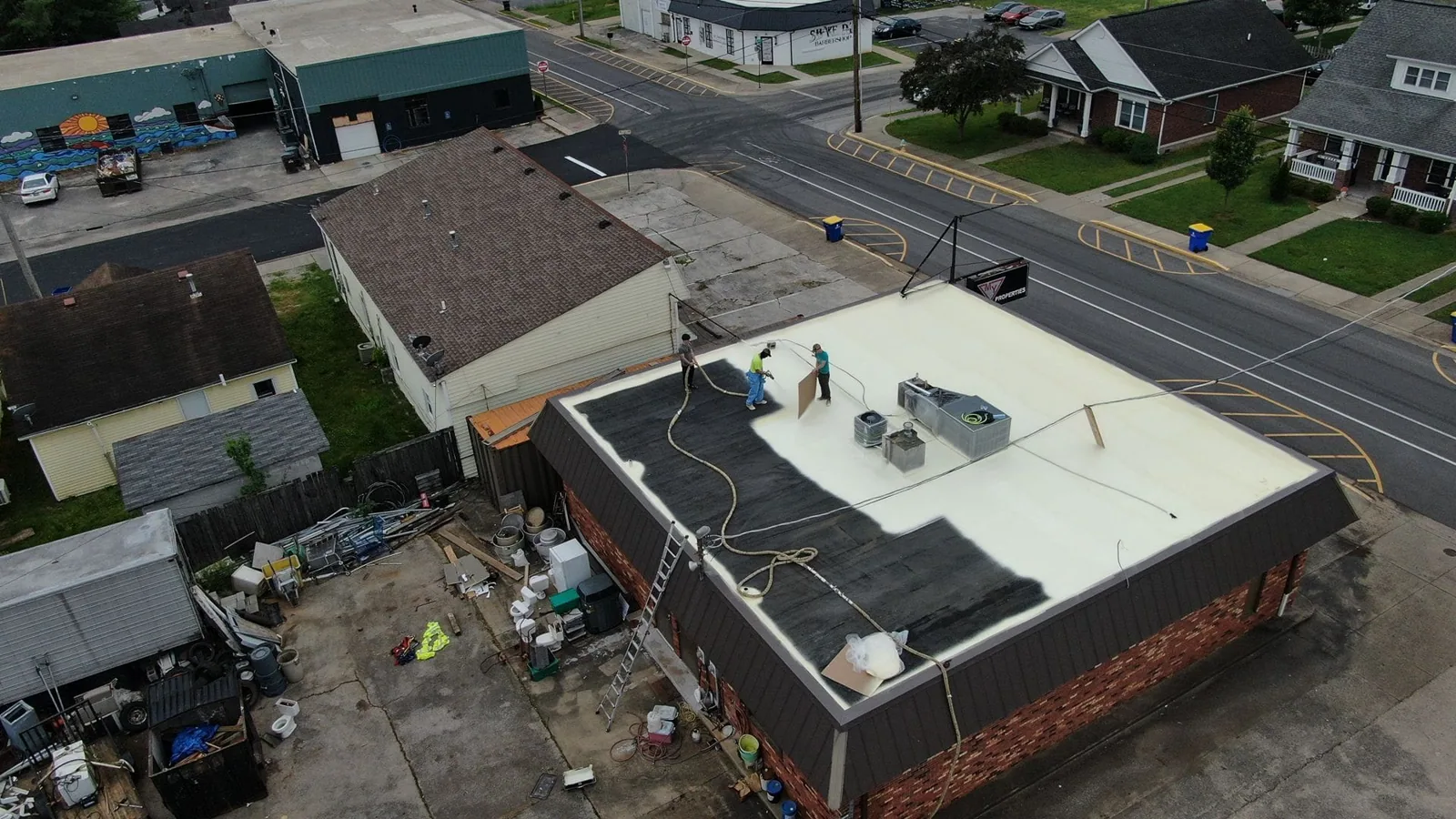
Single-ply replacements such as TPO or a modern modified bitumen system are common after a tear-off. The choice depends on exposure, budget and the building's tolerance for noise, odor and heat work.
Where Built-Up Roofs Appear
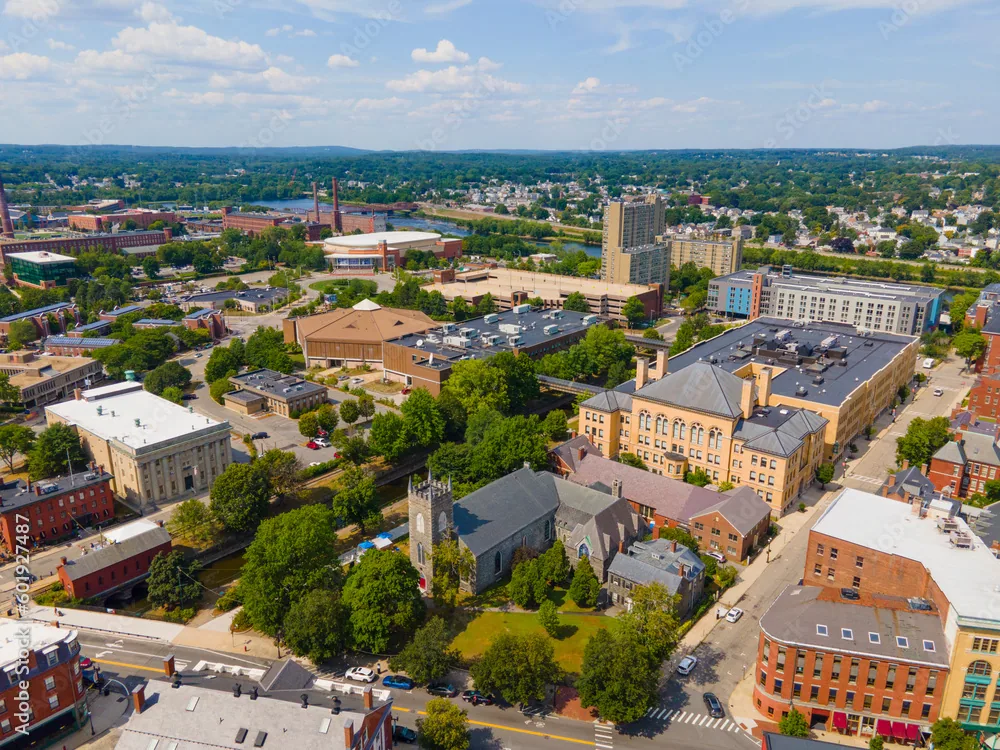
Older low-slope buildings are the usual place for built-up roofs. The Downtown Lowell Historic District, which the city's planning materials describe as a commercial district, mill yards and a canal system, is one place to look, and exterior work there goes to Historic Board review. Ayer's City Industrial Park, Chelmsford, where Route 3 and I-495 cross, and Tewksbury, with direct access to I-93 and I-495, are others. The roof type on any building is confirmed with a core cut, and a built-up job in Lowell starts there.
Commercial Roofing Questions
How many plies does a built-up roof have?
A core cut shows it, and the count affects repair and replacement choices.
Why is gravel a problem for inspection?
It hides the surface. We sweep selected areas clear and photograph what is under them.
Can a BUR roof be coated?
If it is clean, sound and dry beneath, yes. A coating adds reflectance and protection.
What makes tear-off of a BUR roof expensive?
Weight, layers and disposal. Multiple plies of felt and bitumen are heavy and slow to cut away.
Is hot asphalt required?
No. Cold-process adhesives and other systems exist. Building rules and insurer limits guide the choice.