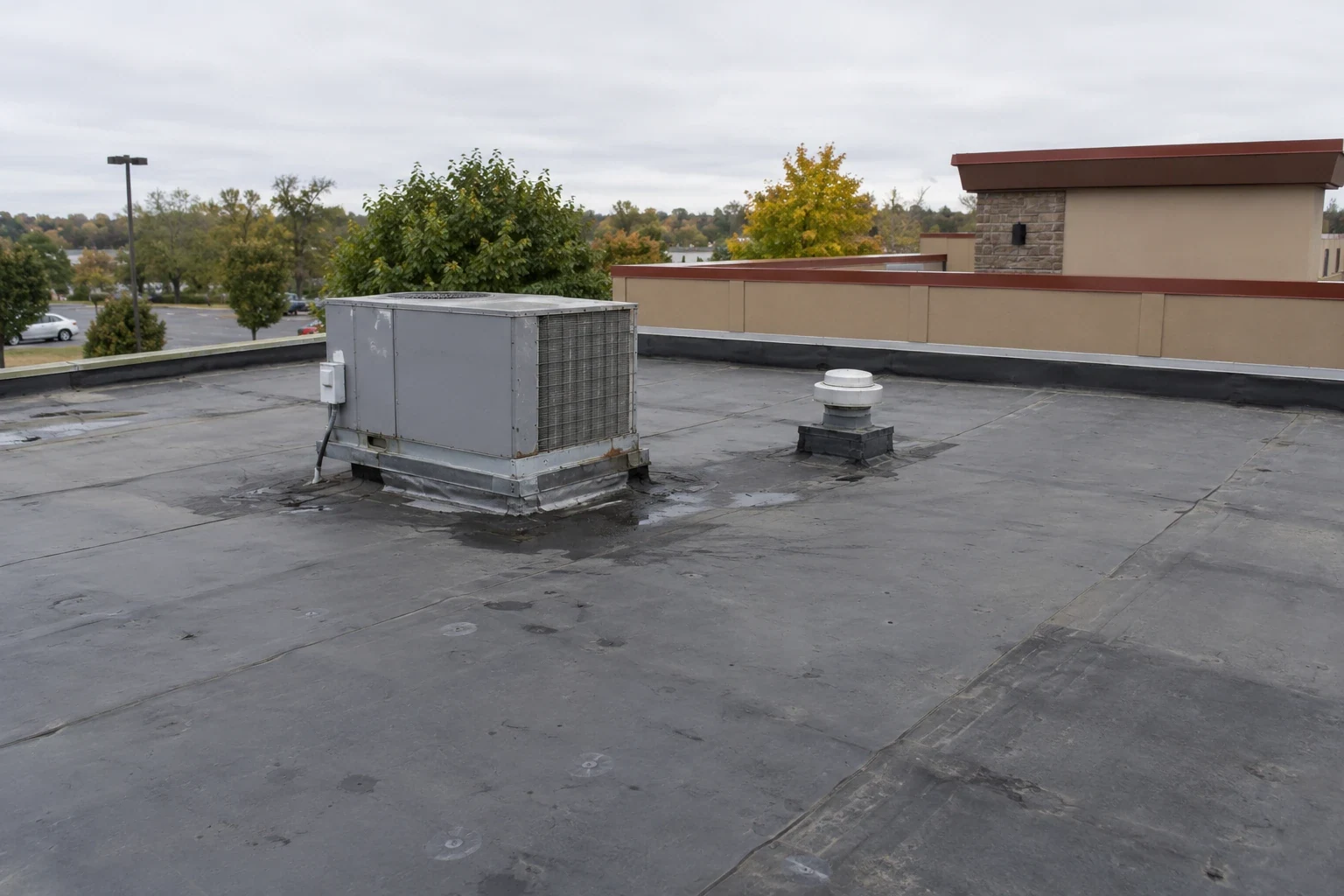
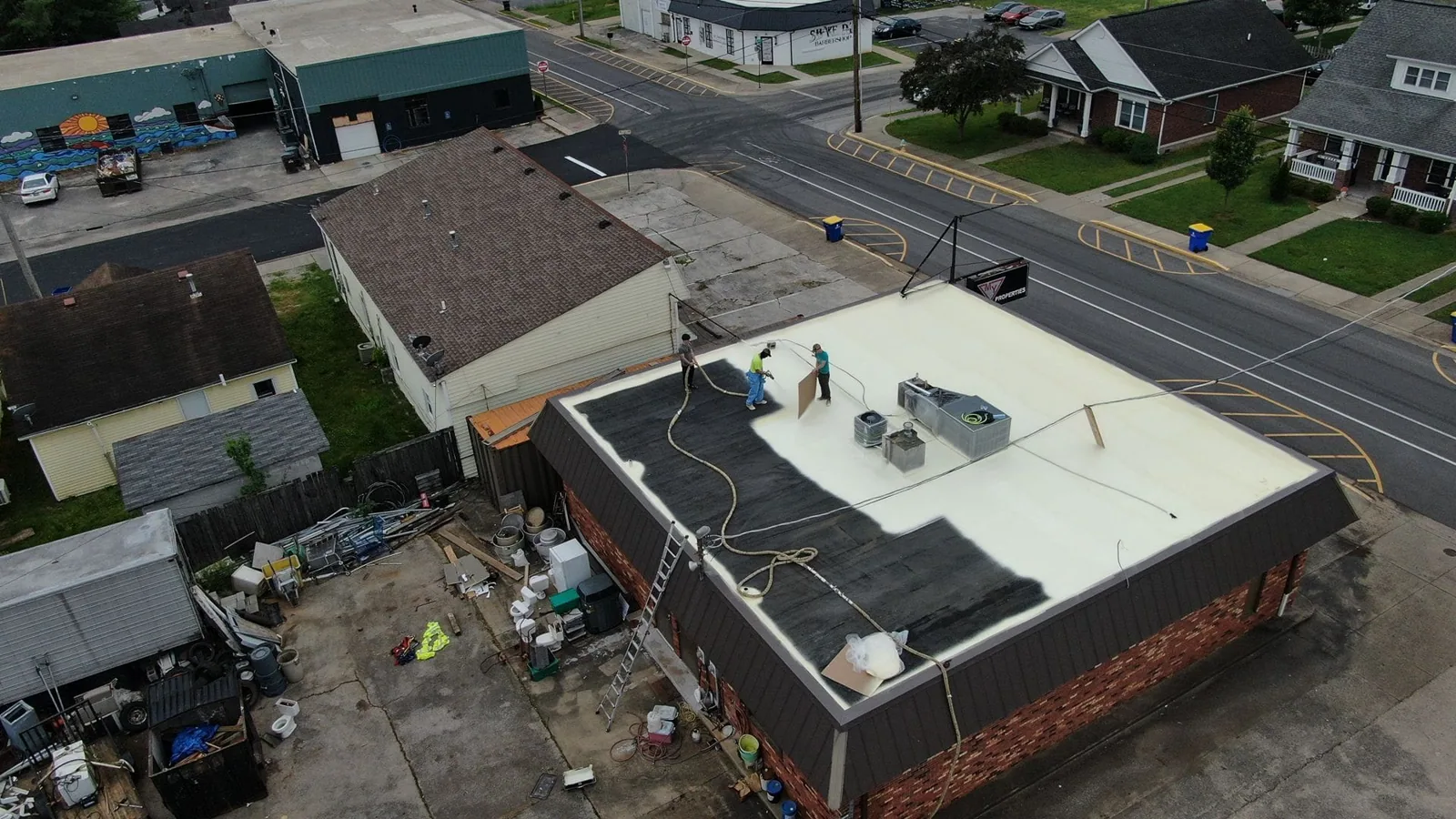
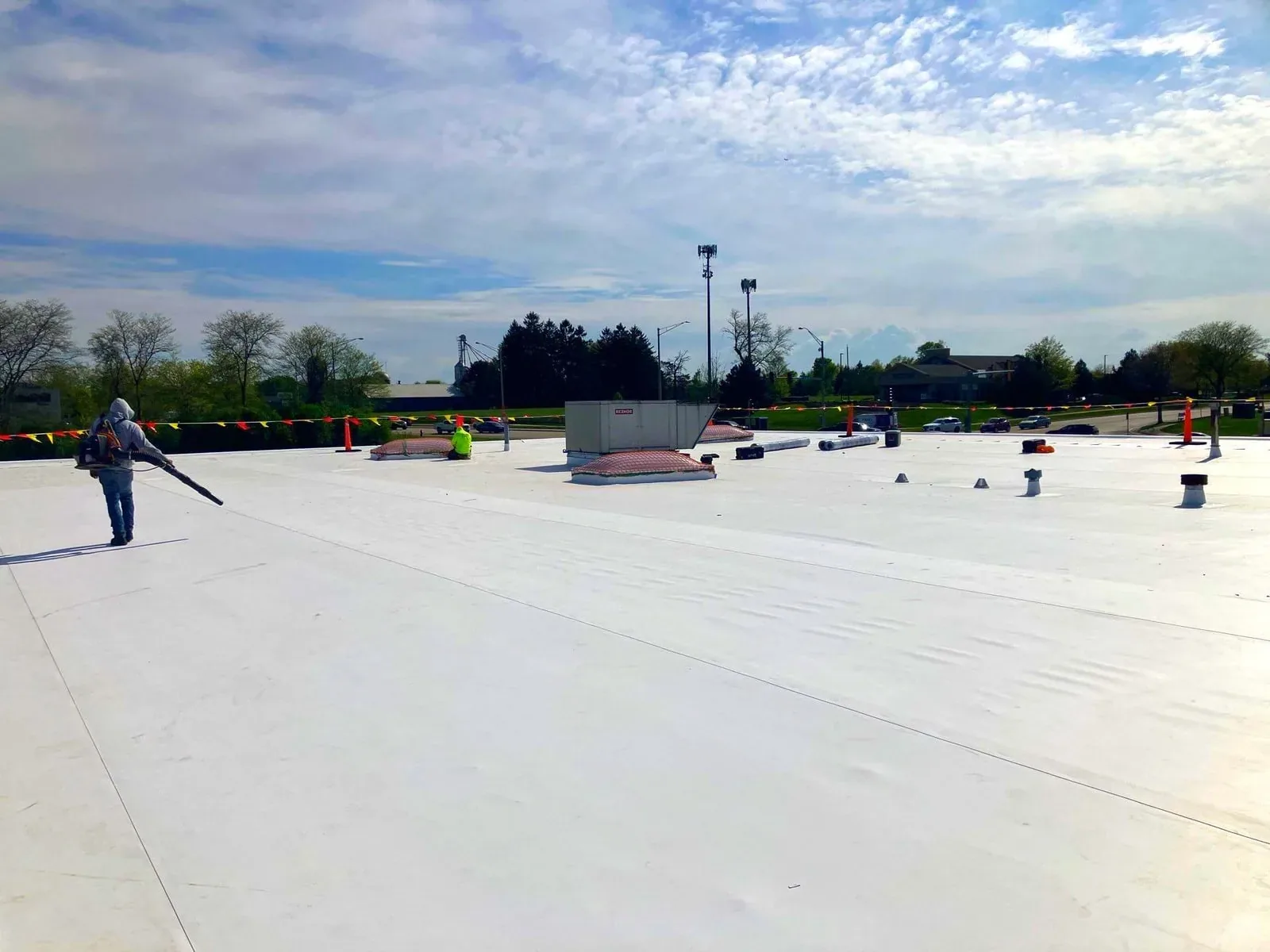
Exposure first: what leaves the building through the roof, and what lands on it. PVC earns its place in Lowell, MA when the answer includes cooking grease, oils, chemical vapor or heavy exhaust, because the membrane resists those better than many single-ply alternatives. On a plain office or warehouse roof, PVC competes on service life and seam strength against TPO and EPDM, and the choice comes down to cost, exposure and the facility director's tolerance for repair work.
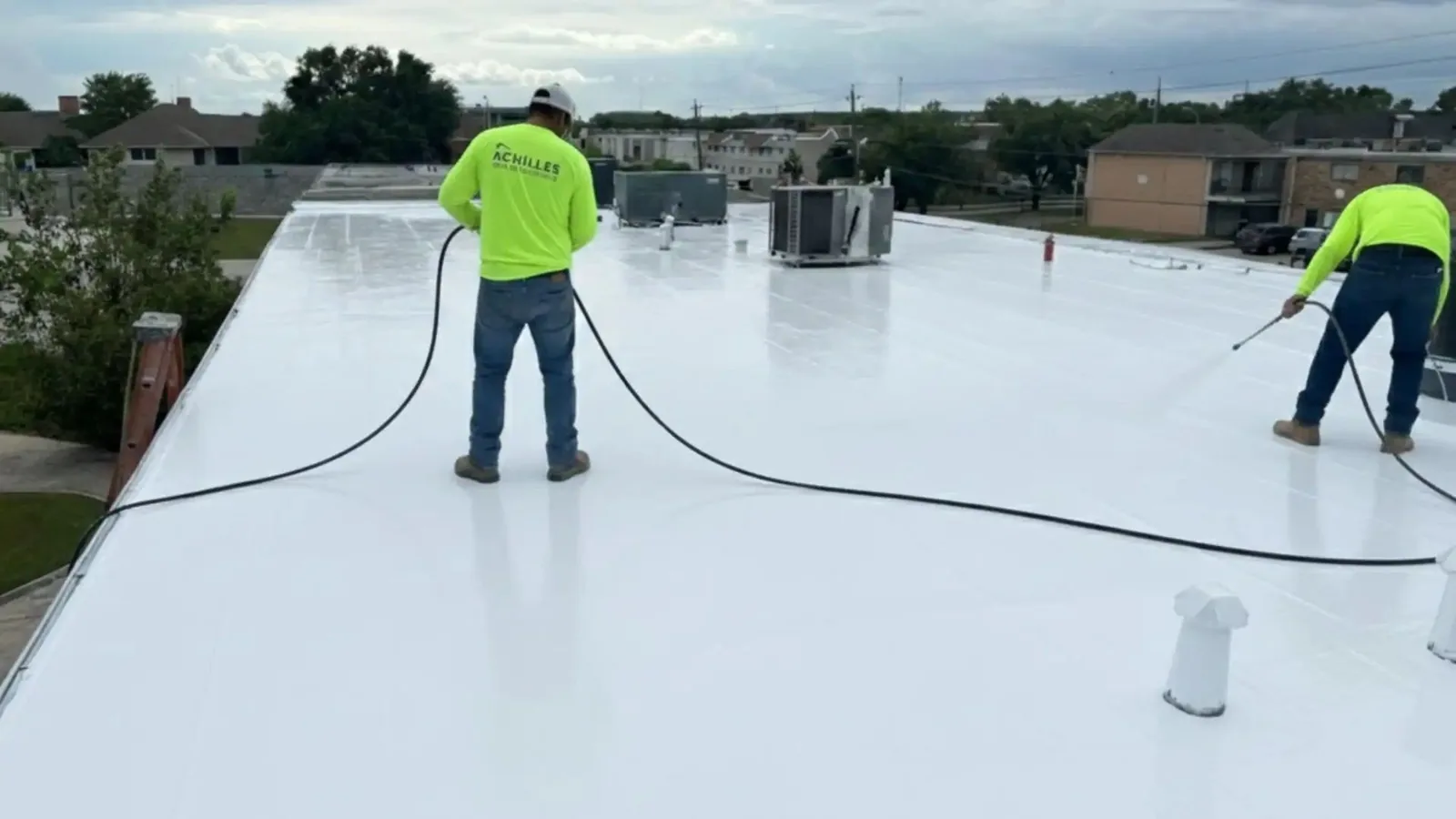
The scope decision follows the inspection. We walk the roof, map exhaust points and drains, test the insulation and then say whether PVC is the right membrane, whether the existing system can stay, or whether a coating bridge makes sense. Cost exposure goes on the page next to each option.
One question comes up first on a PVC job: is the membrane the problem, or is the problem what sits above it? A flashing that was never terminated properly, a drain that holds water for days, or a vent that dumps condensate on one spot will damage any membrane. We find the cause before choosing the cure, and the roof record shows where each condition sits on the plan.
What PVC Membrane Is
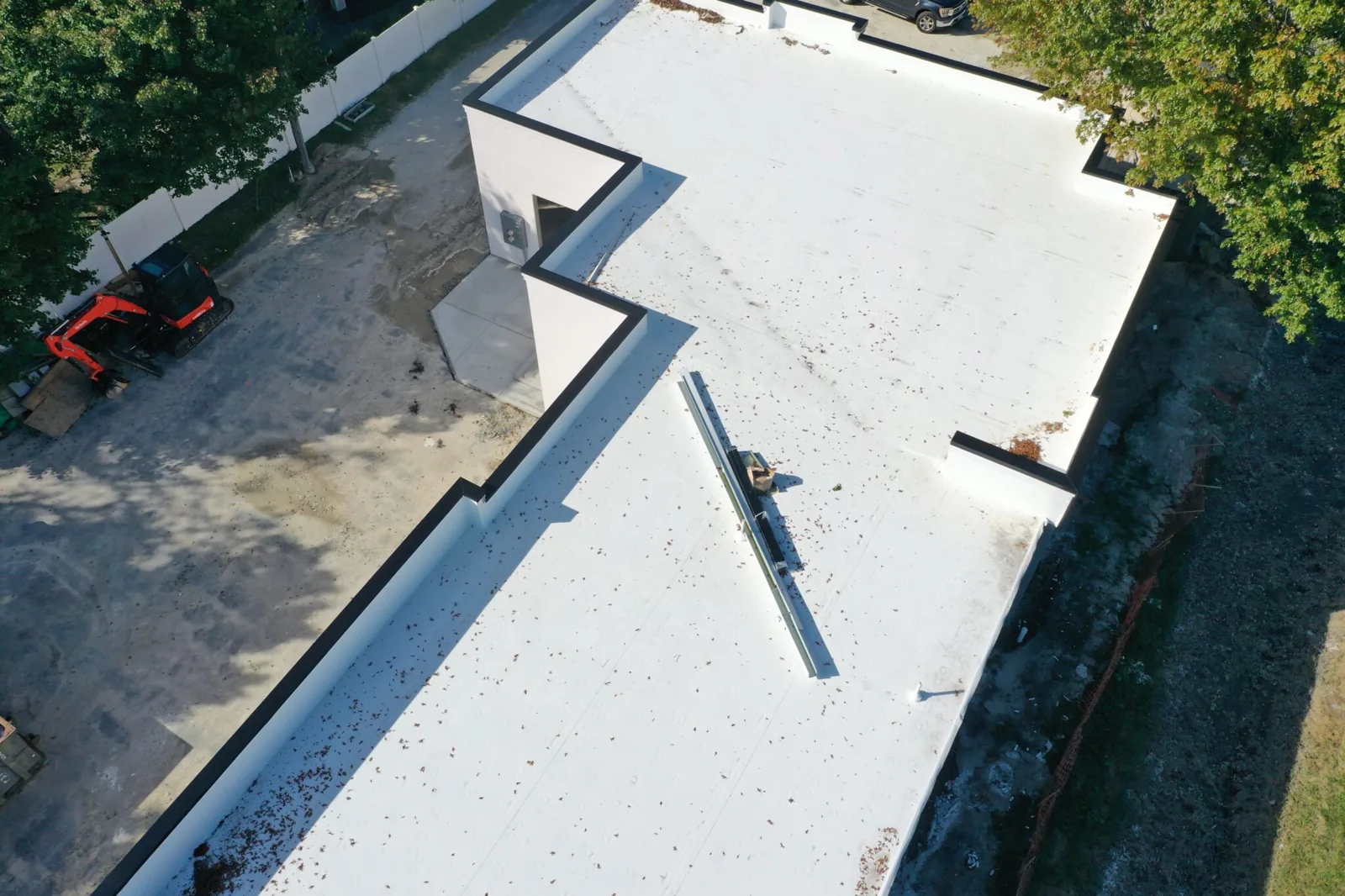
PVC roofing is a polyvinyl chloride sheet, reinforced with a polyester or fiberglass scrim and formulated with plasticizers that keep it flexible. Sheets are joined by hot-air welding, which fuses the overlapping surfaces into a continuous membrane. Thicknesses commonly run from 50 to 80 mil, and the membrane is often white, though other colors exist.
Plasticizers are the maintenance topic. Over decades they migrate out, and the membrane stiffens. Formulations with better plasticizer retention age more slowly, and a roof that sits next to heavy exhaust can age faster. We measure flexibility during inspection by bending a test patch and watching for cracking, and we record the result so the change is visible from visit to visit.
Grease, Oils and Exhaust
Restaurant exhaust, kitchen grease, oils from process vents and some cleaning chemicals attack many membranes. PVC with the proper formulation resists them, and that resistance is the main reason it is specified near kitchen exhausts, process lines and industrial vents. Grease still needs managing: traps and filters on the exhaust, and cleaning of the membrane around it, keep deposits from building up and slick surfaces from becoming a fall hazard.
We note every exhaust location on the roof sketch, record grease staining and photograph it. If grease has crept into seams or flashing, the repair plan starts with a compatible cleaner and then renews any detail that has gone soft. A restaurant roof is the clearest case, since kitchen exhaust sits on the roof every day the kitchen runs, but process vents and lab exhaust put the same question to other buildings.
Cold Weather and Lowell Conditions
Lowell's NOAA station reports January at 24.9 degrees on average and July at 72.8, with 48.51 inches of precipitation in a year. PVC stays workable in the cold if installers follow temperature limits for welding and adhesives, and a reinforced sheet resists the movement of seams through the winter. Ice and snow still load the roof. The city's hazard materials recall a 1995 winter of 126.5 inches of snow, which is reason enough to confirm drainage and structure before any membrane is chosen.
Wind exposure from hurricanes and nor'easters, which Lowell's hazard materials list among its major hazards, drives the attachment pattern. Perimeter and corner zones get closer fastening or full adhesion, and the edge metal is tested against the wind rating the project requires.
Installation Sequence and Timing
A PVC reroof follows a set order. The deck is inspected and repaired, insulation and cover board are laid, the membrane is rolled out and either adhered or mechanically fastened, seams are welded and probed, and flashing details are formed at every wall, curb and penetration. Prefabricated corners and boots reduce the number of hand-welded details, and each weld is checked as it is made. Cover board under PVC protects the insulation from foot traffic and impact, and where the roof has heavy service traffic, walkway pads are welded along the route to the equipment so that wear lands on a sacrificial surface instead of the field of the membrane.
The work needs dry surfaces and reasonable temperatures. In Lowell that points to late spring through early fall for the main installation, with winter reserved for inspection and temporary repairs. Weather holds are written into the schedule with a date for the next update. A full replacement carries the longest schedule, and a recover over a sound base the shortest.
Repairing an Existing PVC Roof
Small failures on PVC are fixable. A cut, a split seam or a cracked flashing can be repaired with hot-air welding of a compatible patch, provided the existing membrane is clean and still weldable. A test weld on aged material shows whether it will bond. If the surface has been contaminated with oils or has hardened too far, welding may not hold, and a different repair, such as a liquid-applied flashing resin or a coating, comes into play.
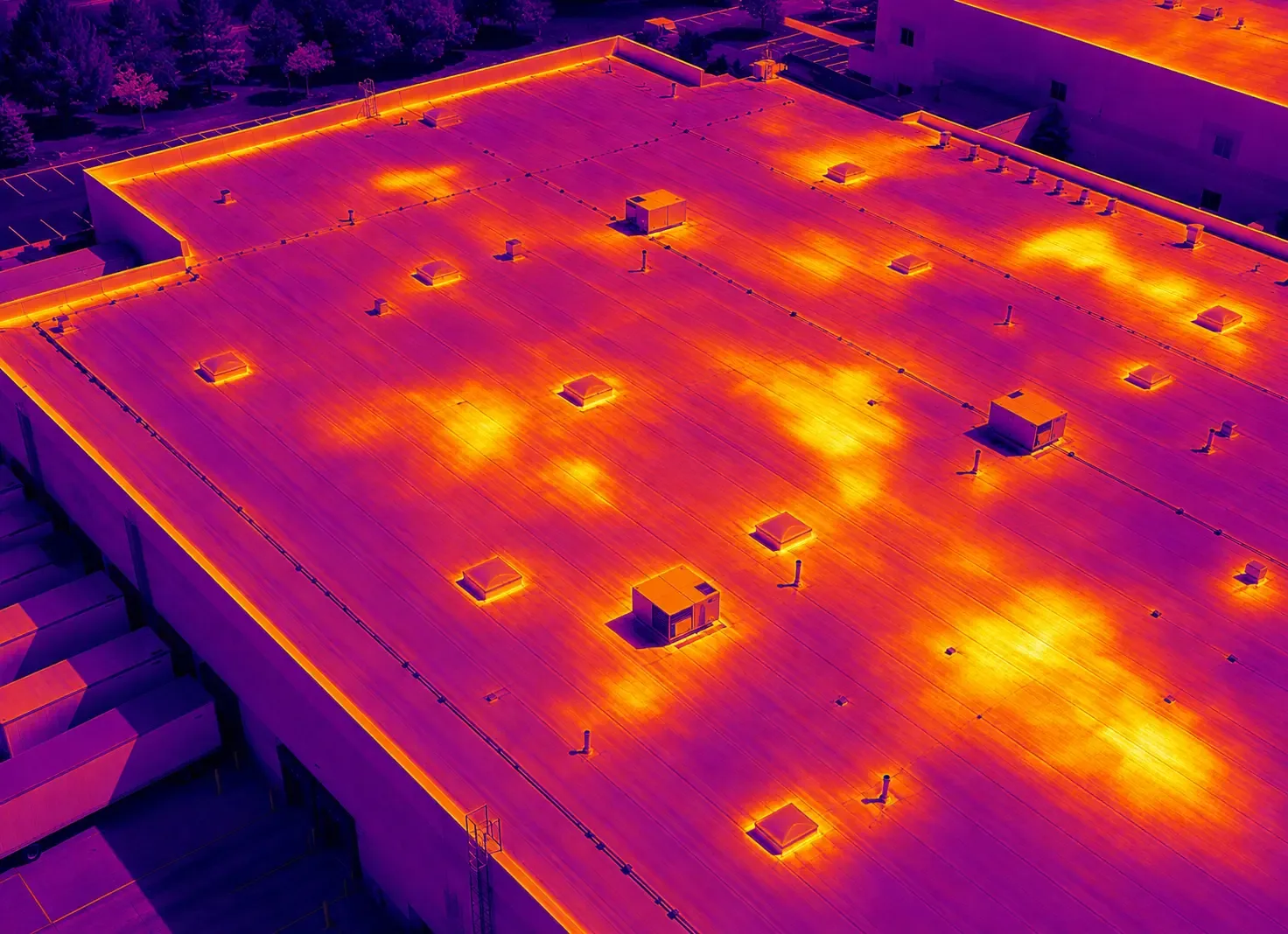
An infrared moisture survey maps wet insulation, and the repair boundary drawn from it sets what can be patched and what needs replacement. A roof with wet insulation over a wide area is not a patch candidate, however good the membrane looks.
PVC Against TPO and KEE
PVC and TPO are both welded thermoplastics, and they look similar from the ground. PVC generally offers stronger chemical resistance and a long record of seam strength, at a higher material cost. KEE, a PVC-alloy membrane, adds a high-molecular-weight plasticizer that slows aging and resists contamination, and the KEE roofing option suits roofs near heavy exhaust.
The comparison goes into the scope with installed cost, expected life and the repair method for each, and the facility director picks. A manufacturer's warranty depends on installation to its details, so terms are read before an order is placed. The closeout file holds the weld test results, the photographs by roof section, the product data and the warranty paperwork, and the follow-up date sits on the last page. When a roof changes hands, that file is what a buyer's inspector asks for first, and a complete one shortens due diligence.
Where PVC Fits Around Lowell
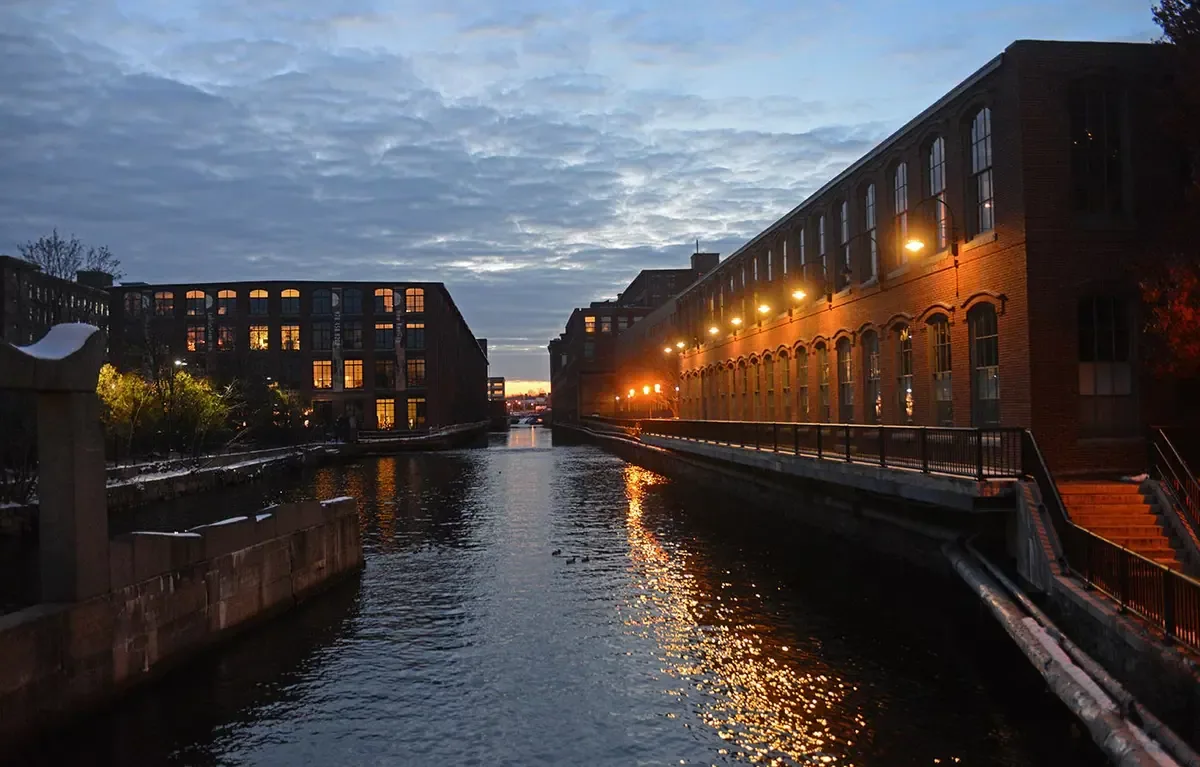
PVC suits roofs with exhaust and process loads. Lowell names manufacturing and technology employers such as Somerset Industries and MACOM Technology Solutions, and education and health services lead its employment, so the exhaust question is worth asking on many owners' roofs. The exposure on any one building is established on its roof, from the exhaust locations and the staining, and not from the employer's name. In Ayer's City Industrial Park, along Tanner Street, mostly heavy-industry zoning and redevelopment plans for clean industry mean roof exposures will vary building to building. The same walk applies across Lowell, including the Hamilton Canal District with its planned commercial, retail, office and research uses, and in towns such as Chelmsford and Billerica along the Route 3 and I-495 corridors.
Commercial Roofing Questions
Why choose PVC over TPO?
Mostly for exhaust, grease and chemical exposure, and for its seam strength. On a plain roof the two compete on cost and preference.
Does PVC get brittle with age?
Plasticizers migrate out over decades, so the membrane stiffens. We test flexibility on inspection and record it.
Can PVC be installed in winter?
It can be handled in cold weather within the limits for welding and adhesives, but the main installation window is the warm season.
How is grease damage repaired?
The surface is cleaned with a compatible product, damaged flashing is replaced, and welded patches go on clean membrane.
What drives PVC cost?
Thickness, attachment method, the number of penetrations and flashings, insulation work and access.