The calendar sets the scope before the roof does. A district has one summer break when buildings are empty, a budget that closes months earlier and a roof inventory that cannot all be addressed in one summer. The facilities director decides which buildings get the break, which get a patch and which wait another year. Our job is to give that decision the evidence it needs.
School roofs in and around Lowell, MA, live with 48.51 inches of annual precipitation and a 24.9°F January daily mean, and the city's hazard record names nor'easters, snowstorms and ice storms as major threats. A leak in January interrupts class, damages ceilings and floors and forces a decision about moving students. A planned program turns most of those January calls into summer work orders.
Summer scheduling and the break window
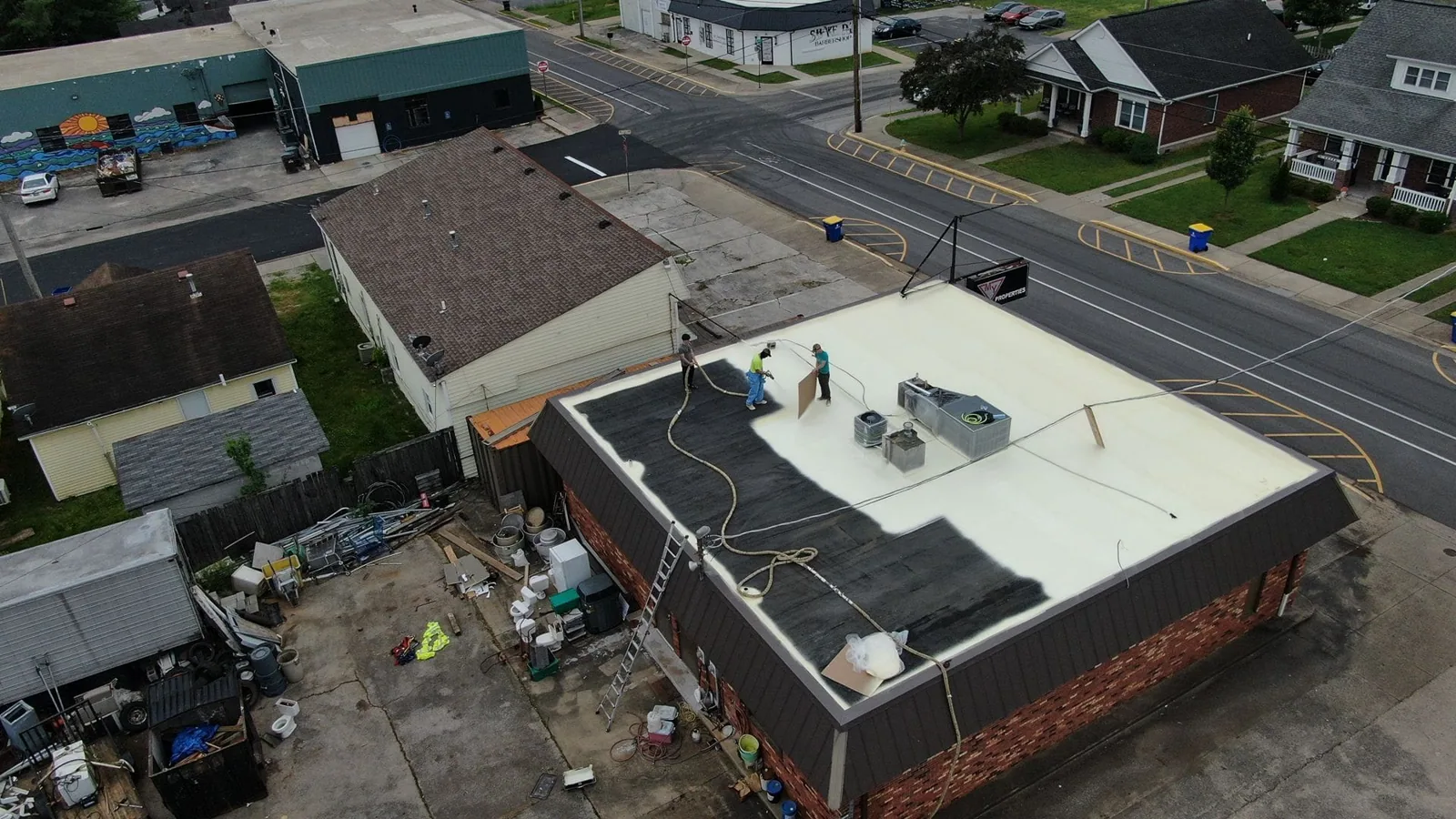
A summer reroof is a race against a fixed date. The roof must be tight, inspected and cleared of equipment before staff and students return. That means material orders, submittals and permits happen in spring, and tear-off starts the week school lets out. A slipped delivery or a rain week can push the end date toward opening day.
The scope lists the risks and their costs. Weather holds are priced as a possible line, material lead times are stated and the schedule includes float. If a building is large, work is divided into sections so that a delay in one does not leave the whole roof open. Each section is dried in at the end of every working day.
For buildings that cannot be finished in one summer, a two-phase plan covers the oldest or most damaged sections first. The remaining sections get a documented maintenance plan that holds them until the next break. A replacement scope can be written in phases from the start.
Student safety and site control
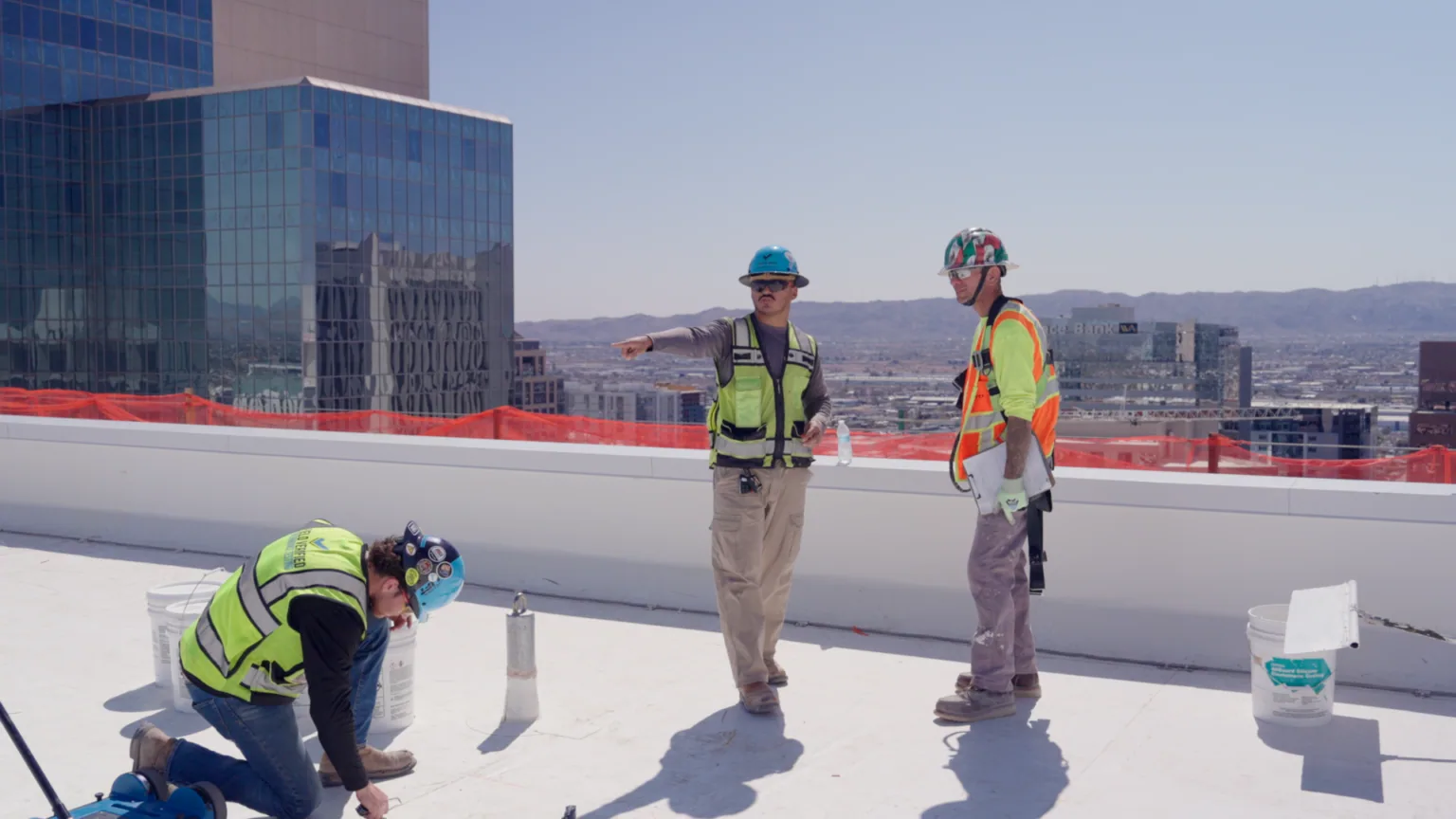
Roof work in or near an occupied school follows tight site rules. Fenced staging areas keep students away from equipment, crane and lift swing paths are kept clear of play areas and bus lanes, and deliveries are timed outside arrival and dismissal. Hot work and fumes are planned so that intakes do not draw them into classrooms.
Work during the school year, such as emergency leak repair, follows the same logic on a smaller scale. The crew checks in with the front office, uses designated routes and keeps tools and materials out of corridors. Noise during testing days is coordinated with the principal's office.
Roof access hatches inside buildings require attention as well. A hatch above a corridor may be the only path to the roof, and its use has to be scheduled around class changes. The plan records the access route so that every visit follows the same safe path. A school roof has these constraints built into its work from the start.
Mid-year leak response
A leak report during the school year gets a first-hour check: where is water entering, can the classroom or hall below be protected, and is there an electrical hazard? The facilities office decides whether to move students. The crew covers the roof opening, and interior protection goes on the ceiling, wall or floor as needed.
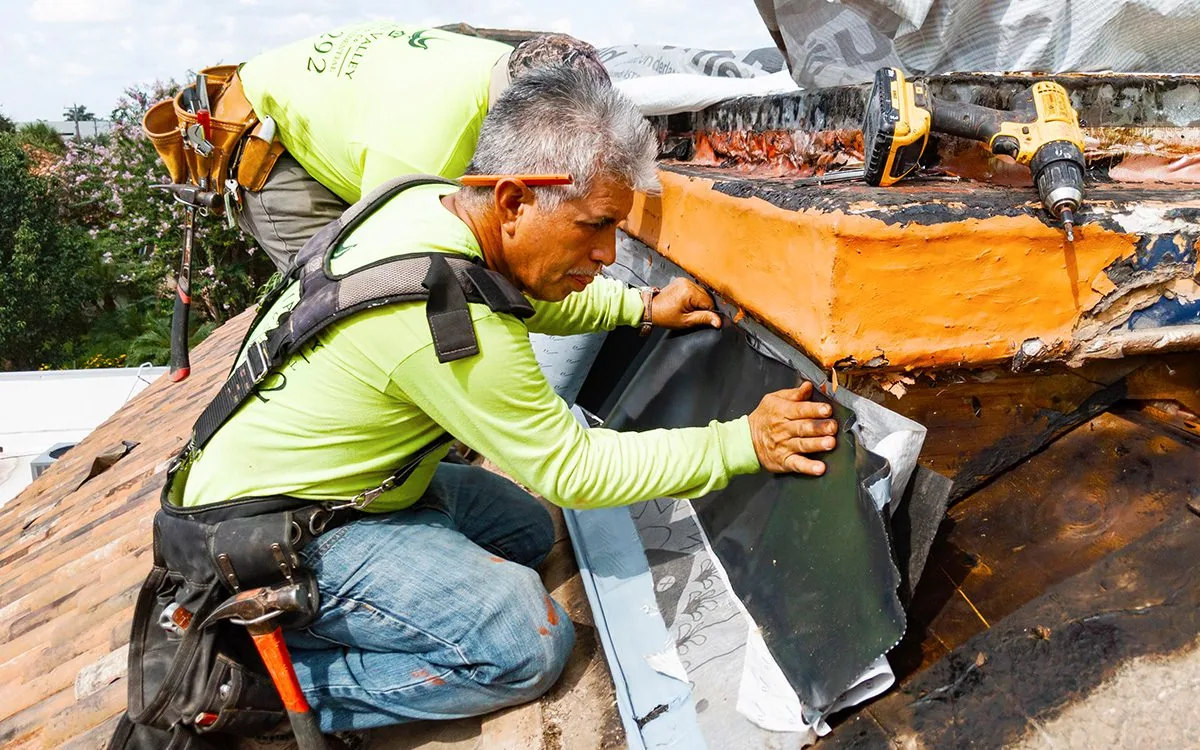
Cold weather limits the permanent repair. Adhesives and welds need dry, warm substrates, so a temporary dry-in holds the opening through the cold months. It is photographed, located on the roof plan and revisited at the first workable weather. The permanent repair is priced separately and scheduled into a break if it needs a larger section opened. The emergency roof repair line is answered at any hour, holidays and school vacations included.
Records from each call feed the district's capital planning. A building with three leak calls in two winters is a candidate for the next summer's scope, and the log makes the case in plain terms.
Capital planning and the roof inventory
A district's roofs are built at different times and age at different rates. The inventory lists each building, each roof section, the system on it, its age, its condition and its remaining service life. A roof capital plan turns that inventory into a multi-year schedule with cost ranges, so the budget request shows what is needed and when.
A condition survey with infrared readings sharpens the schedule. Roofs that look worn may still be dry underneath and eligible for repair or recover, while roofs that look acceptable may hold wet insulation that will fail soon. The survey sorts them, and the capital plan funds the right buildings in the right year.
Where a membrane is sound but worn on the surface, a recover or restoration can extend service life at lower cost than tear-off. The survey states which sections qualify and which do not. The survey also notes which buildings carry warranty paperwork and what notice each document requires, so the inventory shows where coverage still applies before a repair is ordered and a district is not surprised by a notice deadline.
Public building context across nearby towns
Districts around Lowell work in towns with different shapes. Dunstable's town center is compact, with civic and municipal uses, and Westford identifies its historic town center and Forge Village among its business and civic areas. Dracut identifies nine business districts that overlap several historic neighborhoods. Older town-center buildings and historic districts may carry review requirements that affect visible roof changes, so a district should confirm them before a project is bid.
Public and commercial buildings in Westford and Dracut are inspected in the same format.
Filings made from July 1, 2025 onward are governed by the state's 10th edition, a version of the 2021 International Building Code, and the energy code in force must be confirmed for each project because municipalities may adopt stretch provisions. Colleges follow similar planning on their own campuses, as in college and university roofing, and municipal owners use the public agency approach. A district that shares a nurse's office or clinic space with a health partner can borrow the ranking method health systems rely on, where the room below sets the order of work.
Commercial Roofing Questions
How early should a district start planning a summer reroof?
In the fall or winter before. Surveys, design, submittals, bidding and material orders take months, and many membranes and insulation boards have lead times. Starting early moves risk out of the summer break and into the spring, where it costs less.
What if the work is not finished when students return?
The plan prevents that with sections, float and a firm dry-in rule. If a section is running late, it is sealed temporarily and the remainder finishes after hours or on a weekend, away from students. The schedule states how a delay will be handled before work begins.
Can leaks be repaired during the school year without disrupting class?
Usually. Temporary dry-ins can be installed quickly with a small crew. Larger repairs that need staging or noise are timed outside class hours or placed in a break. The facilities office approves the time and route each visit.
How does a district choose between repair, recover and replacement?
The survey sets the answer. Dry insulation and a sound membrane point toward repair or recover. Wet insulation across sections, failed seams in several places or a brittle membrane point toward replacement. The report shows the readings and the cost of each option.
What records should a district keep for each roof?
Installation date, system type, warranty terms, inspection reports, repair logs and photographs. A condition report at regular intervals keeps those records current, and the file supports grant applications, insurance questions and capital requests.