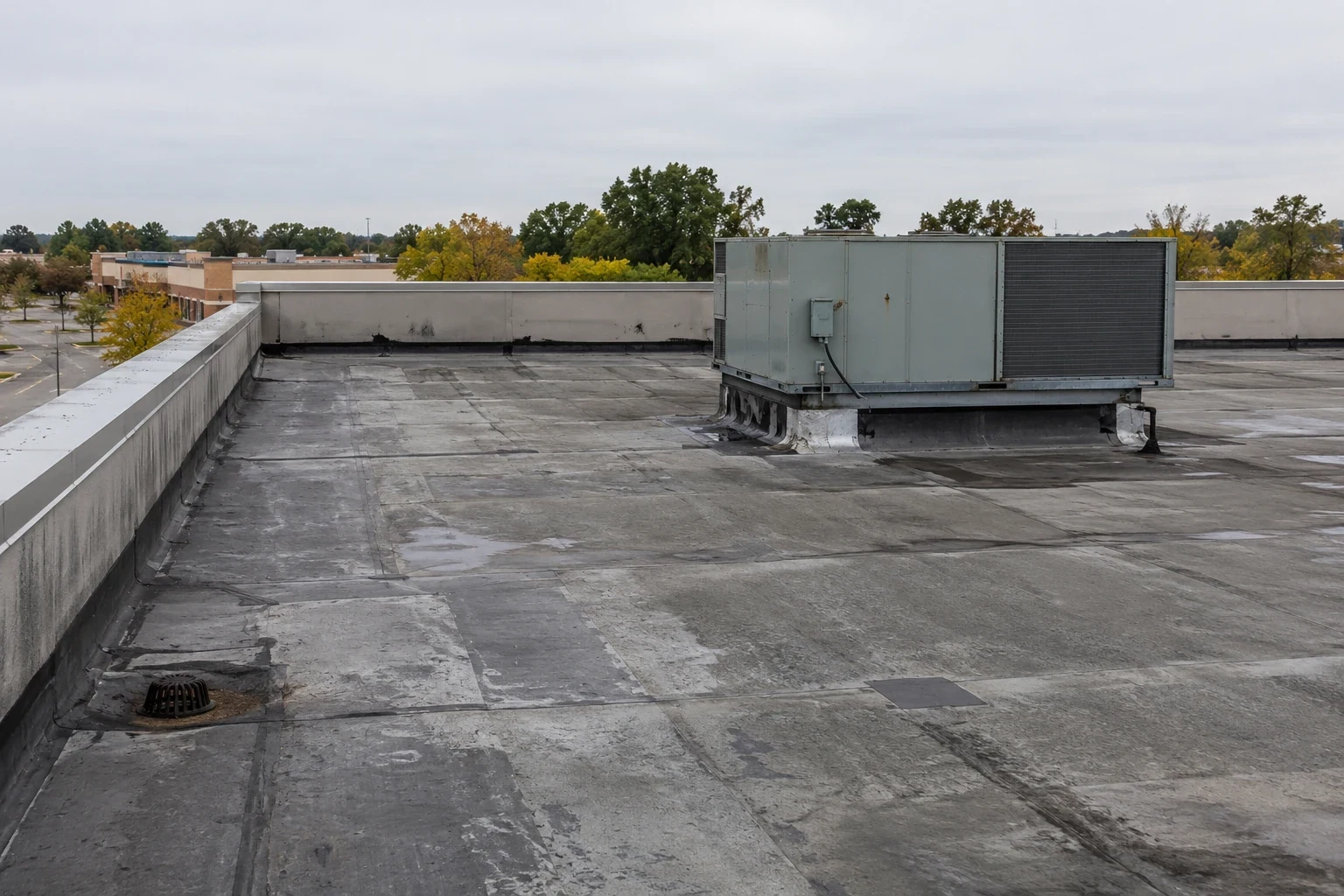
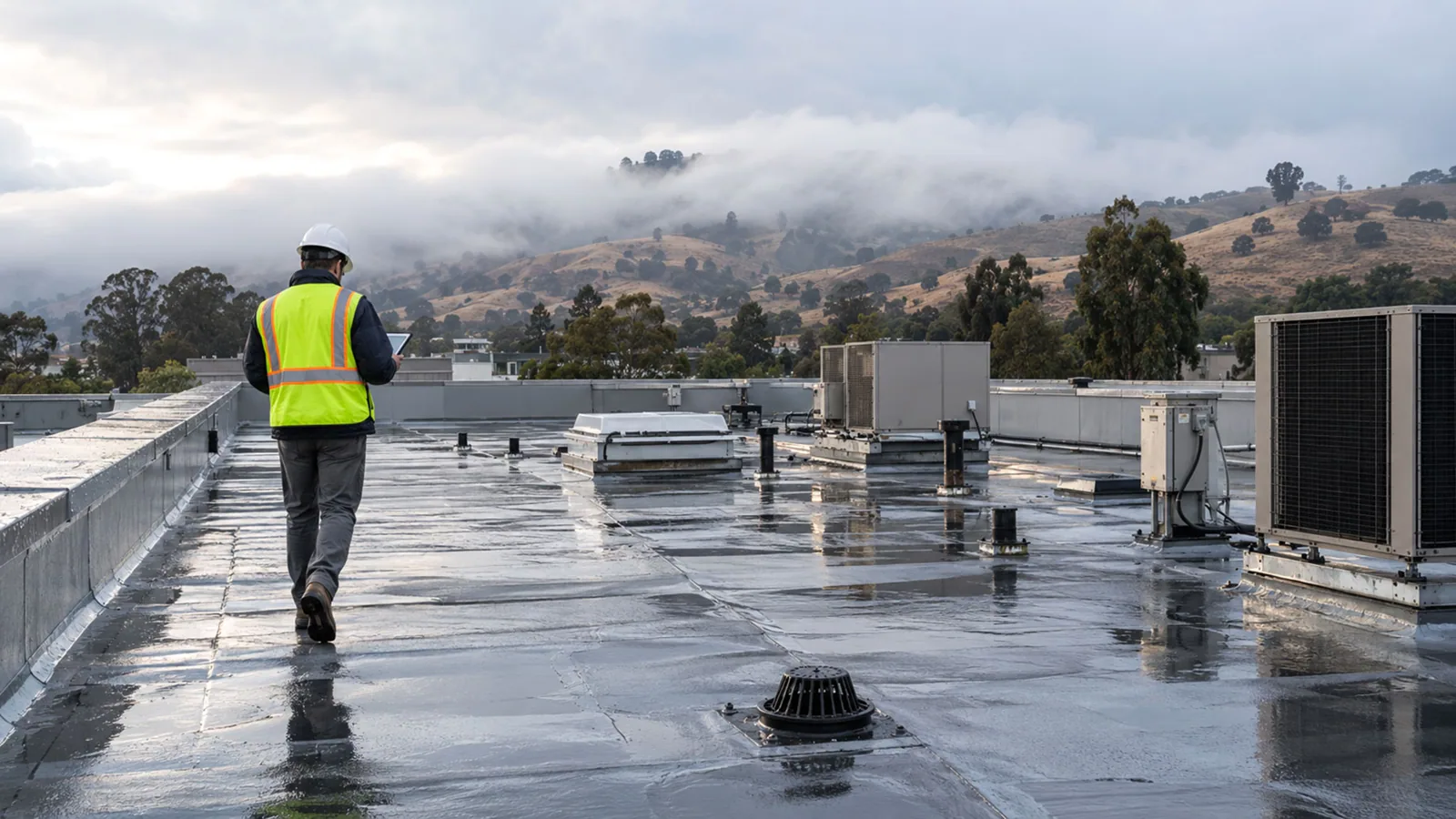
Repair work gets cheaper and more durable when the repair boundary is drawn before the first seam is cut. A boundary is the line on the roof that separates the section being fixed from the section being left alone, and it is the line that decides the cost. Draw it too tight and the next rain finds the next failure two feet away. Draw it too wide and the owner pays for membrane that had years left.
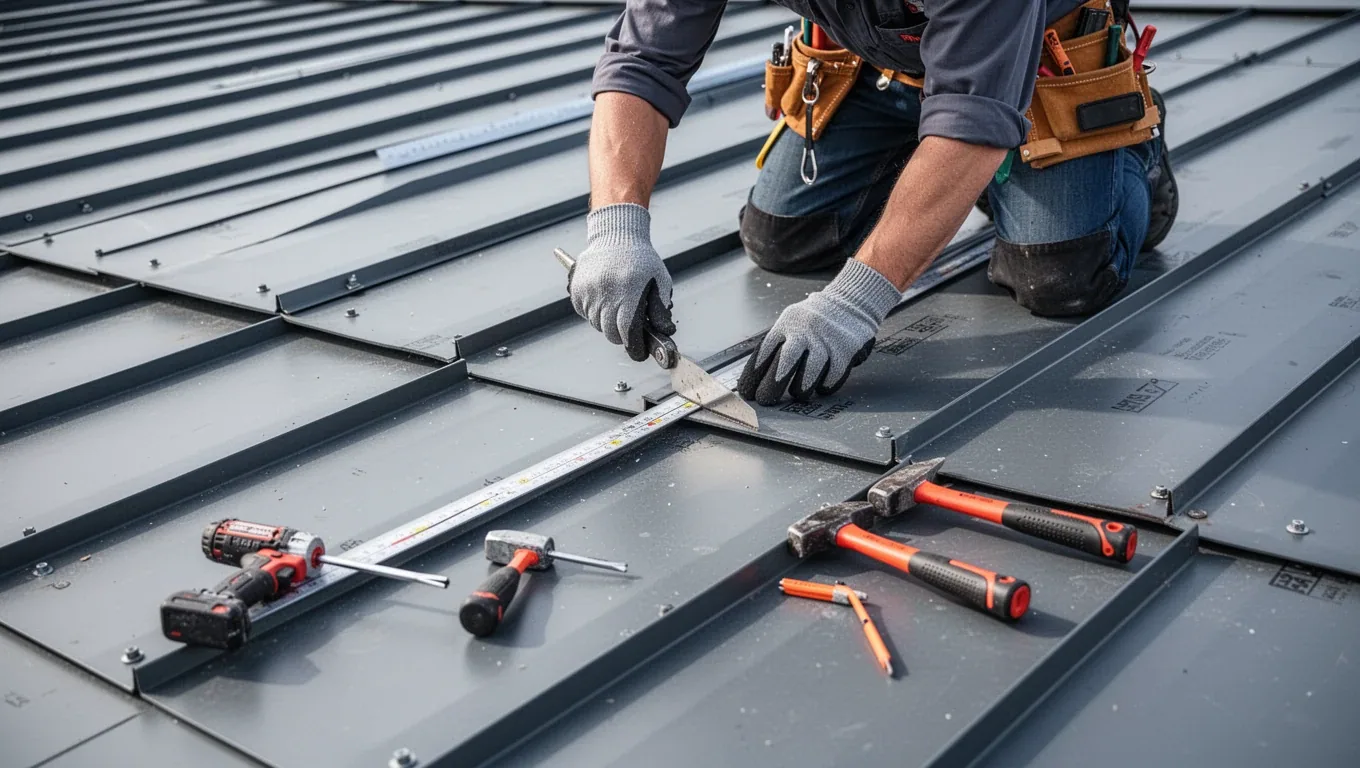
In Lowell, MA, the work is planned around weather as much as around the defect. A seam that opens in the January cold cannot be welded or adhered properly until the substrate is dry and warm enough, so a planned repair is often split into a temporary dry-in now and a permanent fix when conditions allow. The inspection note that goes to the facility director states which stage is which, and what each costs.
What gets repaired and what gets replaced
Most repairs sort into four groups. Membrane defects: punctures, splits, blisters and abraded areas. Seam defects: laps that have lifted, welds that were never complete, and sealant that has dried out. Flashing defects: base flashing pulled loose at walls, curbs and pipe penetrations. Edge defects: coping, fascia and drip edge metal that has opened or shifted.
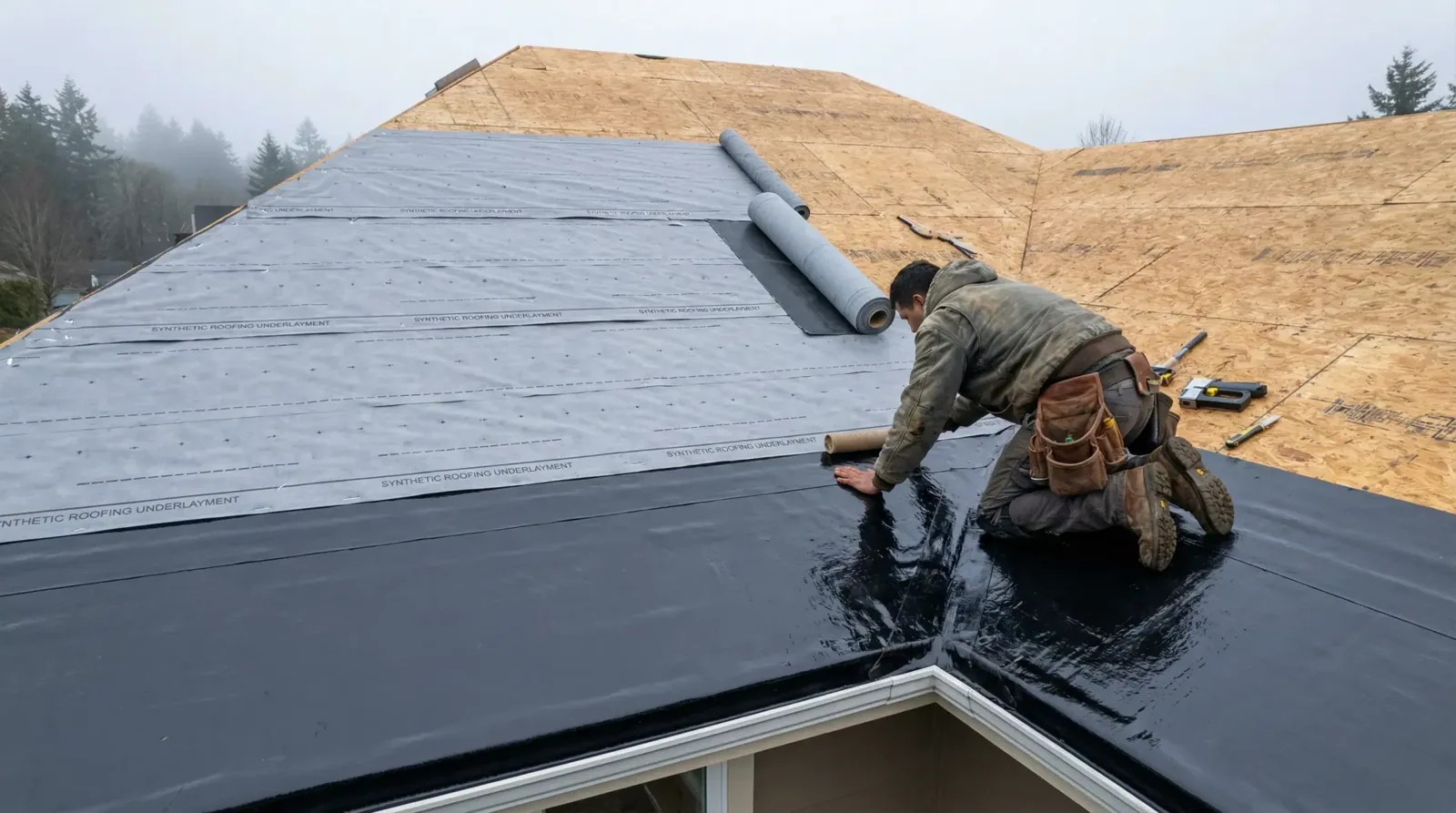
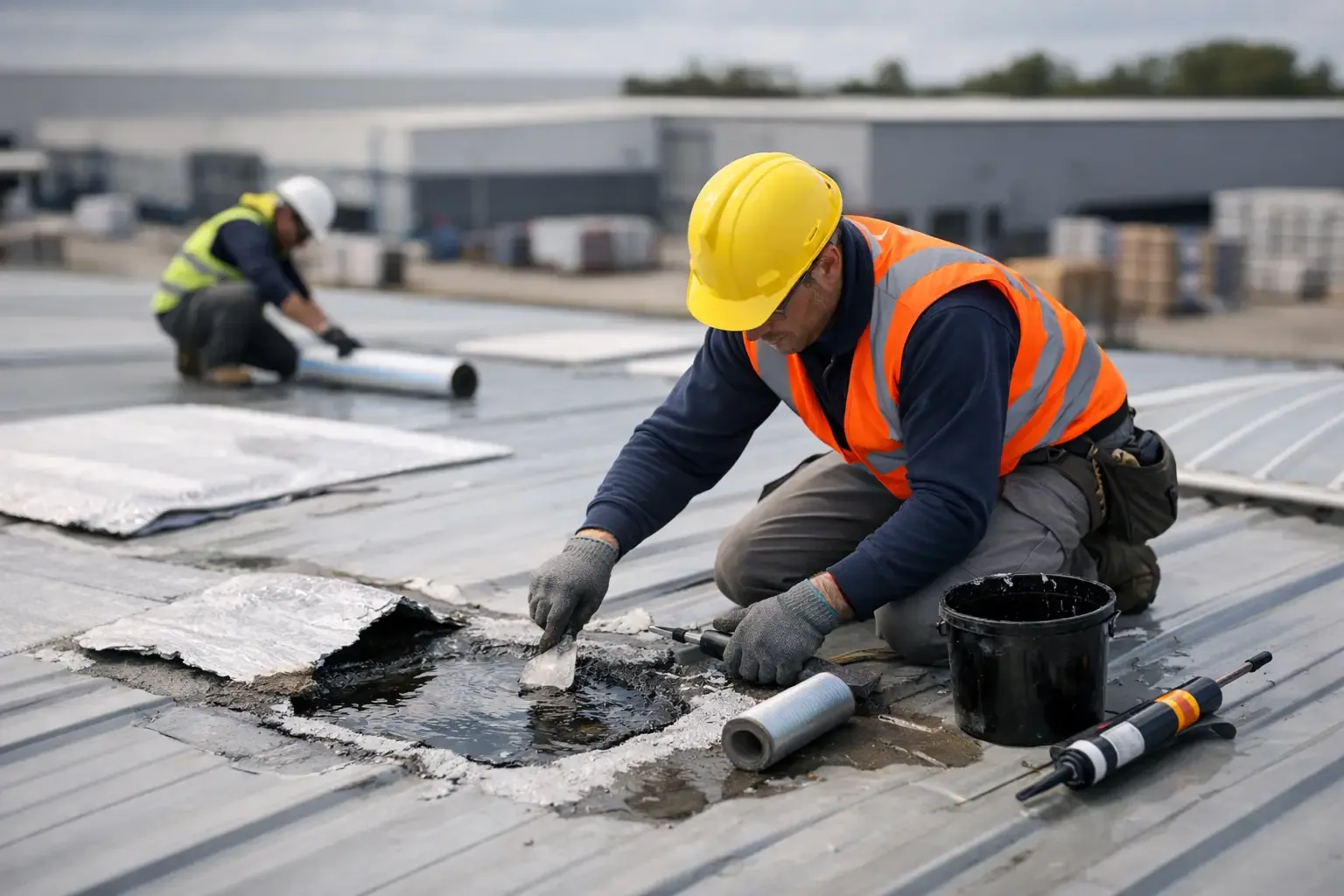
Each group has a standard method. Single-ply membranes take patches of the same material, heat-welded or adhered, with edges rounded so they do not lift. Bituminous roofs take new plies, cap sheet sections or cold-applied mastic reinforced with fabric. Metal roofs take sealed panel laps, new fasteners with washers, and replaced flashing at penetrations. A failed seam is repaired by cleaning, welding or re-adhering the lap and then probing the full length, because the visible lift is often shorter than the weak stretch.
When the defects spread across more than one roof section, repair stops being the cheaper path and the finding moves to replacement scope.
Flashing and detail work
Most leaks start at details, not in the field of the roof. Walls, curbs, drains, vent pipes and expansion joints are where two materials meet and move at different rates, and winter makes that movement larger. Ice storms and nor'easters sit on Lowell's hazard record as major threats, and ice at a roof edge or a drain is hard on any detail that was marginal to begin with.
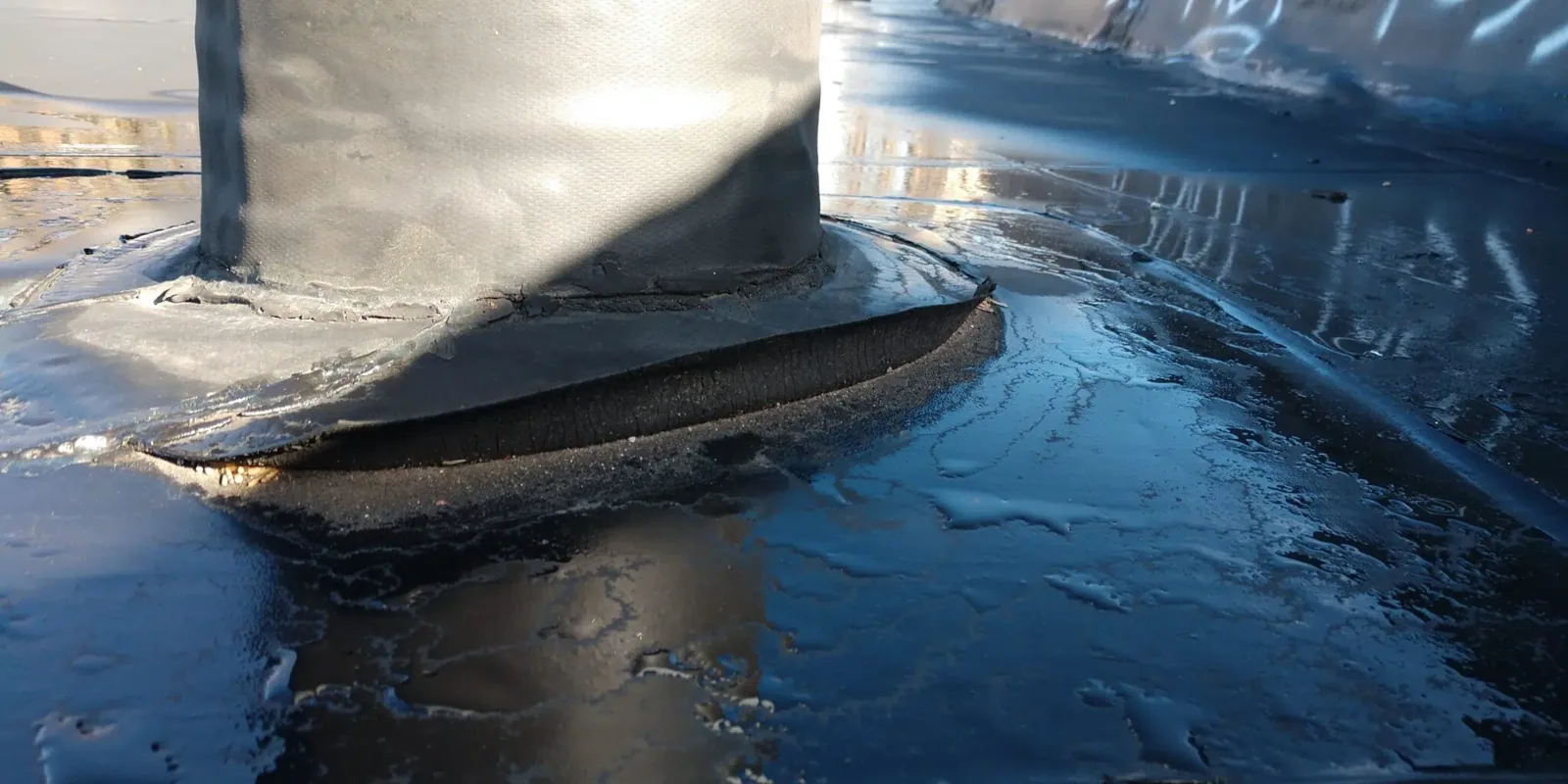
A flashing repair starts with removing the loose or cracked material back to a sound edge. The substrate is cleaned and primed, new flashing is set in the proper termination, and the top edge is secured under a counterflashing or a termination bar and sealed. Sealant alone over a loose flashing is a temporary condition. It stops water for a season and then the same opening returns, so the repair note lists which locations received a mechanical termination.
Rooftop equipment curbs need the same attention, since a unit that was reset after service often leaves the flashing disturbed.
Winter repair limits
Cold limits what can be done and how long it lasts. NOAA's normals for the Lowell station put the January daily mean at 24.9°F, with 48.51 inches of precipitation spread across the year, including 4.54 inches in a normal December. Adhesives and sealants have minimum application temperatures, and welds need dry membrane. Frost on a surface defeats a bond before it starts.
The winter approach is a temporary repair that keeps water out: cold-applied mastic, a patch that is taped and weighted, or a membrane strip fastened over the opening. It is documented with photographs and its location is recorded so the permanent repair is made at the same spot when the weather opens. The temporary work is not billed as the final fix.
If the leak is active and water is entering a ceiling, the response is the one on the leak repair sequence, because interior protection and a dry-in come before any permanent repair is scheduled.
Where repair programs run across the area
Repair needs vary with building use. Lowell's downtown historic district takes in the commercial district, mill yards and the canal system, and exterior work there is subject to Historic Board review, so a repair that changes visible edge metal or a parapet cap is checked against that review before work starts. Around the Lowell Connector and Tanner Street, the Ayer's City Industrial Park area is mostly zoned for heavy industry, so crew access is worth arranging around whatever production runs below the deck.
Commercial property further out is similar in its demands. Billerica markets commercial space from small storefronts to large industrial buildings, and Forest Ridge Business Park is a three-building office setting minutes from Route 3. A shopping center roof gets patched on a different schedule than a research building, because customer hours decide when equipment and lifts can be on site.
Property managers who handle several roofs often fold repair findings into a maintenance plan so the same details are checked each season.
Pricing and the return window
Repair pricing is built from four items. The labor to open, clean and rebuild the defect. The material, which depends on the roof system. The access, meaning whether a lift, a hoist or interior ladder access is needed. And the number of locations, since moving the crew costs the same whether one patch or ten is made once the equipment is up.
Each item appears in the scope as a line, so the facility director can approve the repair in stages. The staging runs the active defects first, then the details that are failing slowly, then the items that can wait for a maintenance visit. The return window is stated up front: when the crew will be on the roof, which doors and walkways are affected, and when the next update with photographs will arrive.
The record stays with the building. When a repair fails or recurs at the same location, the earlier photographs show whether the cause was the original defect or a neighboring one, which changes the claim and the scope.
Commercial Roofing Questions
How do you decide whether a leaking roof can be patched or needs a larger scope?
The moisture readings and the number of failing locations set the answer. A single puncture on a dry roof is a patch. Repeated seam lifts, wet insulation in more than one area, or flashing that has shrunk back from walls point toward a larger scope, and the boundary is marked on the roof plan.
Will a repair void an existing manufacturer warranty?
Repairs made outside the manufacturer's required method can affect coverage, so the warranty document is read before work. Where a warranty is active, the repair follows its notice and approved-materials terms, and the paperwork is kept with the roof file.
Can seams on an older TPO or EPDM roof be fixed instead of replaced?
Often they can, if the membrane is still sound. EPDM seams are cleaned and re-taped or re-bonded, and TPO seams are re-welded after the surface is prepared. A probe along the full lap shows how far the weak stretch runs before any material is ordered.
What does a repair cost in a building with tenants on every floor?
Access and interior protection add to the roof labor. Ceiling protection, work hours and the route to the roof all count as lines in the scope. A rooftop repair near Route 3 with a lift costs more than one reached by roof hatch, and the estimate says which applies.
Do you provide a written record after the repair is finished?
Each repair closes with before and after photographs, a plan of the repaired locations and a statement of the materials used. The condition report format keeps it consistent from visit to visit, which helps when an insurer or a buyer asks for roof history.