Equipment count is the first number on a technology-office roof report. Chelmsford, MA sits where I-495 meets Route 3. The town guide lists technology, bioscience, defense, communications and instrumentation firms among its regional base and points to the Route 3/129 corridor for large offices and corporate headquarters. A building in those uses may carry mechanical equipment, exhaust and communications gear on the roof, and each unit adds a curb, a support and a penetration. When a leak report arrives, the crew asks what is on the roof before asking where the stain is.
Emergency calls reach a crew at any hour, holidays included, and equipment-heavy roofs are inspected, repaired, recovered, coated and replaced.
Curbs, Supports and Penetrations
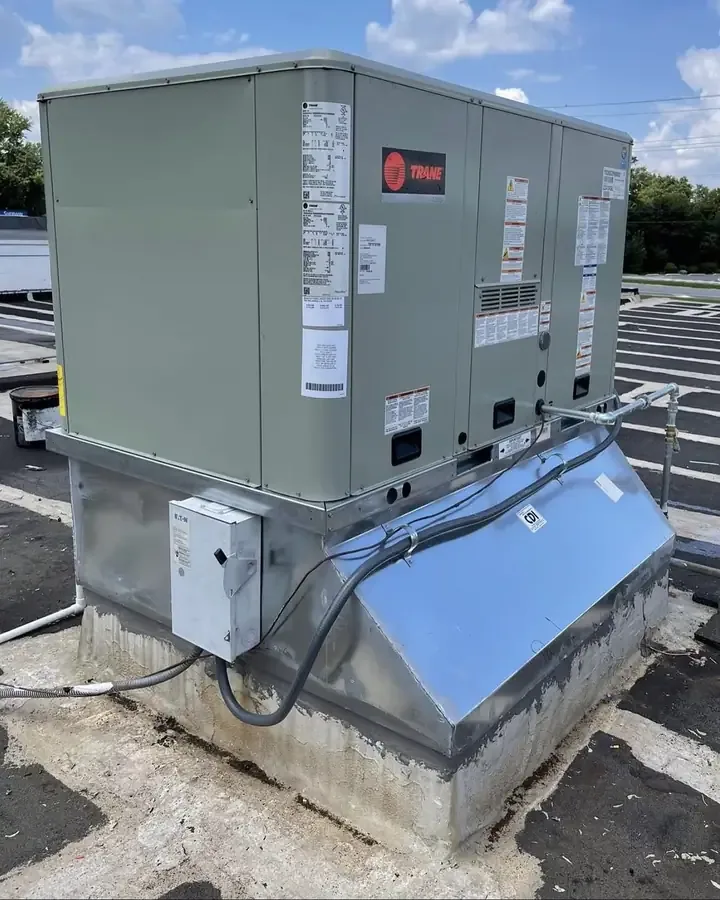
Every rooftop unit sits on a curb or a support, and every pipe or conduit run goes through the membrane. Over time, units are added, moved or retired, and the roof keeps the evidence. We number every curb and penetration on the roof plan, photograph its base and rate the flashing. Details that rely only on sealant are flagged, since sealant has the shortest life at roof temperatures.
The rooftop equipment curb and support check looks for settled curbs, crushed membrane under supports, loose counterflashing and abandoned openings from removed units. Service paths are mapped too, because technicians who walk the same route to the same unit wear the membrane there. Walkway pads placed along that route cost far less than the membrane repair they prevent.
Where a building holds laboratory or process exhaust, the membrane near the outlets is checked for staining and softening. We note the finding and ask what is being discharged, so the repair material suits the exposure.
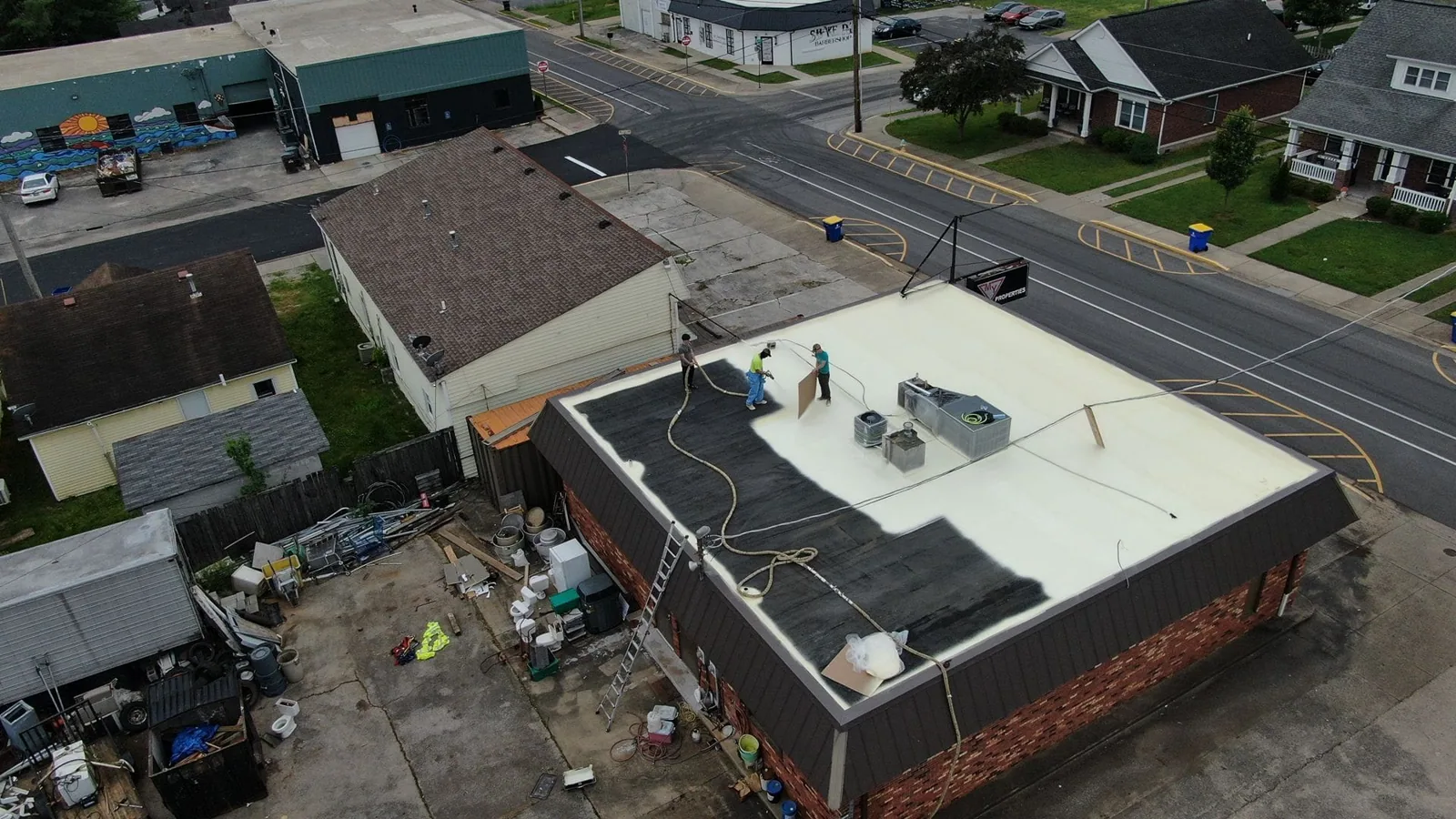
The count also drives the schedule. A roof with a dozen units cannot be replaced in a day, so the plan sets the order of sections, the units that can be raised and the ones that must keep running, and it states how many days each phase needs before weather is considered.
Restricted Roof Access
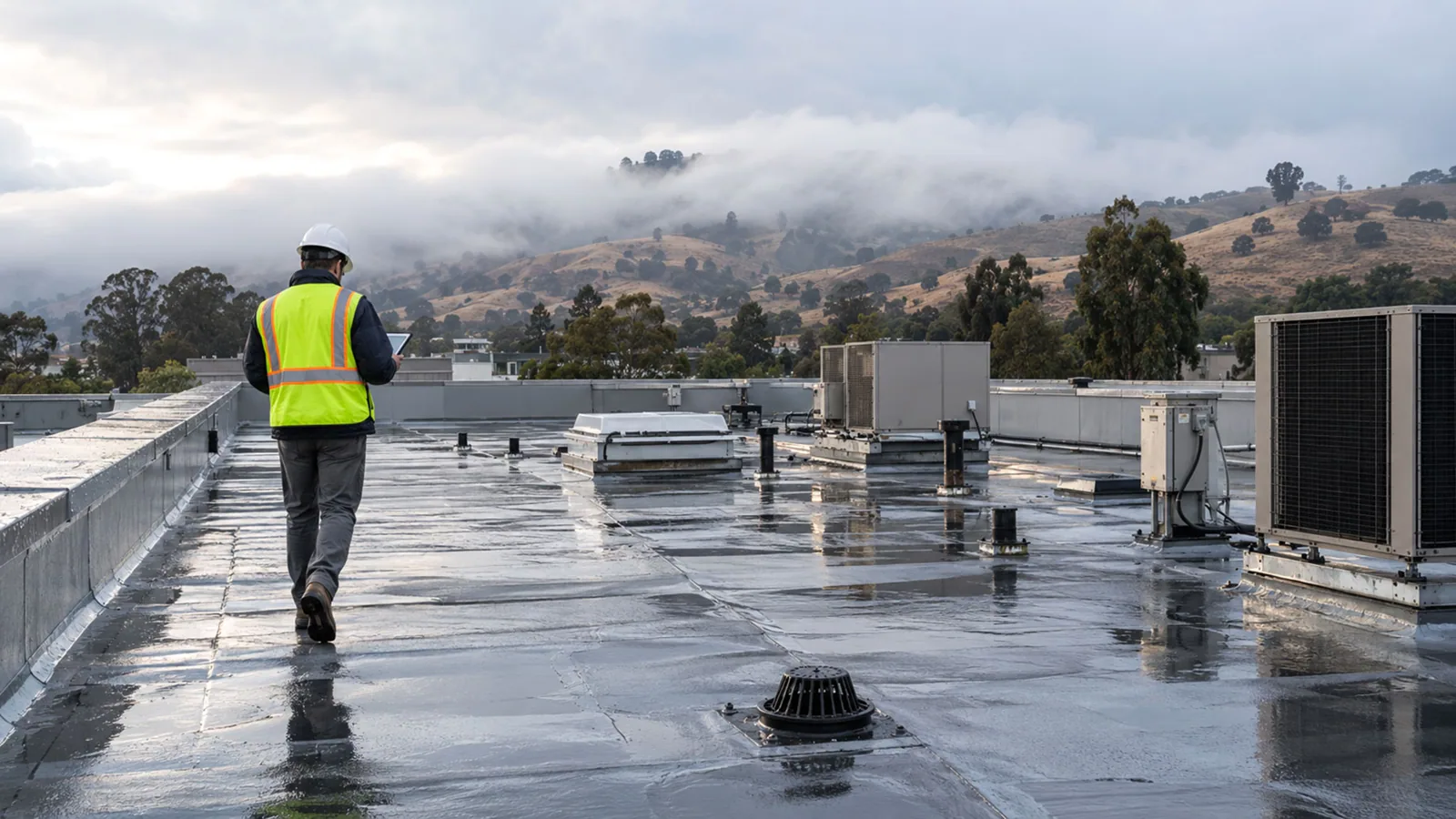
A site with security rules may limit who enters and what may be photographed. Where access is restricted, the plan names the escort, the entry route, the hours and any rules on cameras, tools and materials before the crew is scheduled. The inspection note records what was reached and what was not. Photographs are taken only where permitted, and the note says so.
None of this changes the roof. It changes the schedule. An escorted visit may take longer, and a locked hatch may need a key holder who is not on site. The cost update shows the added time, so the facility director sees what the access rules add to the repair. Questions about restricted areas are raised at the first call, not on the roof.
First-Hour Dry-In
After a report, the crew confirms safe access, checks what is wet below and sets interior protection: tarps over equipment, drip containment and, if needed, a shut-off recommendation to the occupant. Then comes the temporary dry-in over the opening. A tarp is fastened at its edges, not just weighted in the middle. A reinforced strip is taped or adhered on a membrane roof. Panels are re-lapped on a metal roof.
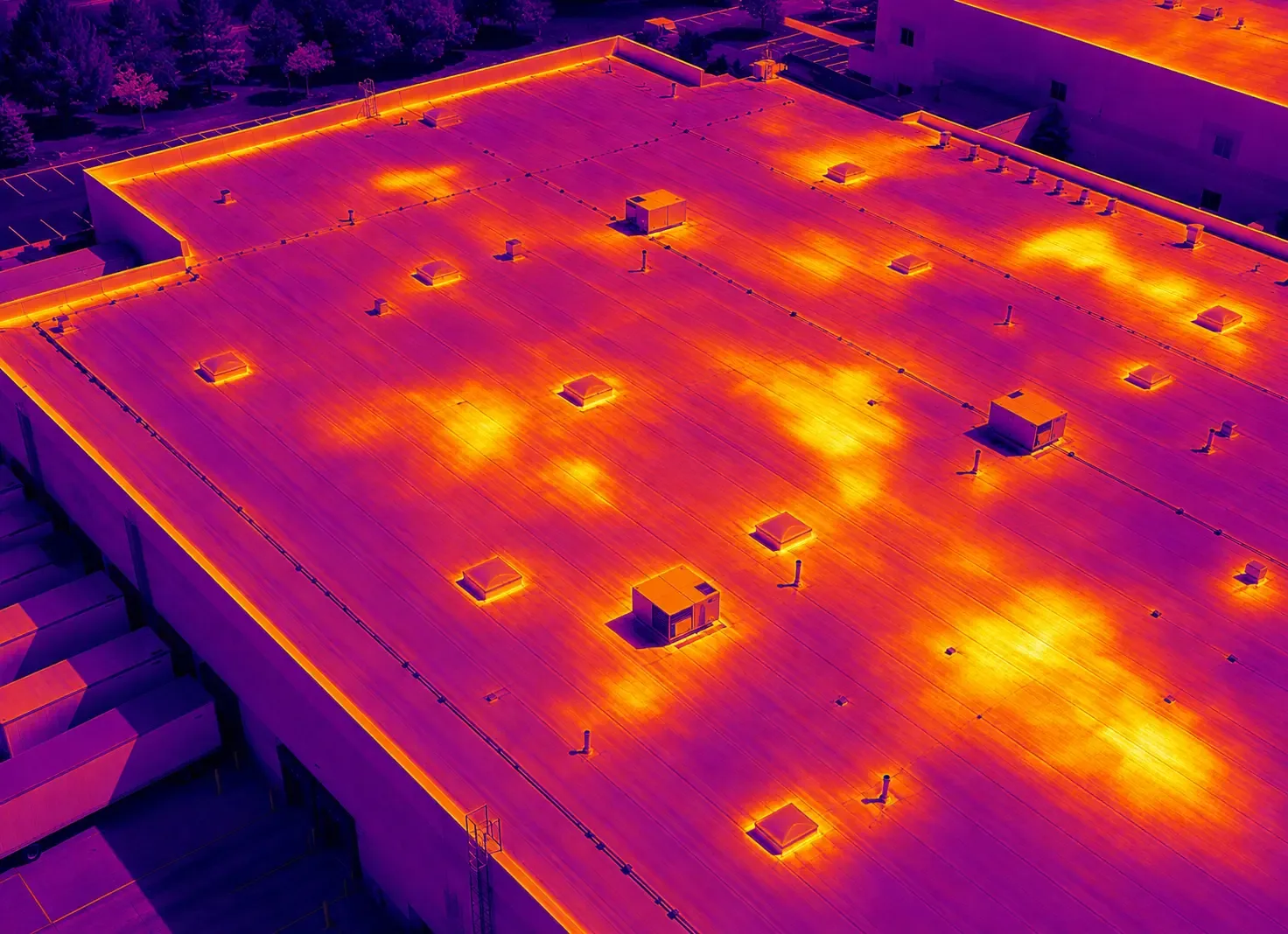
The note records the location, the materials, the weather and the expected hold time. Equipment curbs are common leak sites, so the first search starts at the nearest unit. A split corner flashing, an open seam at a curb base or a failed boot is often the source, and a patch there can be quick. If the readings show wet insulation, the boundary expands, and the cost update shows by how much. An infrared moisture survey maps the extent on a larger roof.
Route Network and Deliveries
The town holds Routes 3A, 4, 27, 40, 110 and 129 in addition to the I-495 and Route 3 crossroads. For a roof job, a dense route network gives choices for truck approach, but each choice meets a driveway, a signal and a lot. The delivery plan lists the road the truck will take, the entrance and the lift spot, plus the person at the curb. Large rolls, pallets of board and bundles of edge metal arrive in batches sized for a day or two of work, which keeps stacks off the roof and away from drains.
Staging for an office park with shared lots follows a simple rule: nothing blocks a fire lane, an accessible route or a neighbor's entrance. When a lift must occupy part of a lot, the note states which spaces, for how many hours, and who approved it. The same note covers the dumpster and the end-of-day sweep for nails, screws and membrane scraps.
Weather and Drainage Planning
At the Lowell station, a typical January sits near 25 degrees, the year totals 48.51 inches and October's normal reaches 5.00. Hurricanes, nor'easters, snowstorms and ice storms all appear on Lowell's hazard list. Chelmsford roofs plan their drains, access routes and dry-in order against that same regional pattern.
For an office roof with many units, drainage deserves attention because equipment pads and curbs divide the surface and create low pockets. We map where water stood after the last rain and check that every drain and scupper is clear. A fall check and a spring check keep the record current. A maintenance program logs each.
Scope Decisions and Code
When a roof with many units needs replacement, sequencing matters. Units can be raised on temporary supports, the membrane replaced beneath them and the curbs reflashed, or the work can be staged around units that cannot be shut down. Each approach carries a different cost and risk. The scope shows the choice, the reasoning and the interruption it causes.
The tenth-edition state code, based mainly on the 2021 IBC, covers filings from July 1, 2025. It sets the base energy rules too, and a town may add stretch provisions, so those get confirmed before insulation is specified. Owners in Billerica and Tewksbury face the same confirmation step with their own building departments. A replacement scope lists every layer, curb and edge.
Closeout Record
The closeout record lists the roof sections worked, the curbs and penetrations reflashed, the materials used, the test results and the photographs, with section numbers on each. It names anything left in place on purpose and the date to look again. If equipment is added later, the record gives the next contractor the flashing detail to match and the section number to update.
Commercial Roofing Questions
Why is the nearest rooftop unit searched first?
Curb corners, boots and counterflashing around equipment are frequent water paths. A patch there is quick, and it rules the area in or out before a wider search.
How are escorted roof visits priced?
The cost update adds the escort wait, the extra walking and any limits on photographs. The facility director sees that line before the visit is approved.
What happens to a unit during a membrane replacement?
It is either raised on temporary supports so the membrane runs beneath it, or the work is staged around it if it cannot be shut down. Each choice has a cost and an interruption.
Are walkway pads worth adding?
On routes that technicians use weekly, yes. A pad costs little next to the membrane repair that foot wear causes.
When are drains checked on an office roof with many units?
In the fall and again in spring. Curbs and equipment pads create low pockets, so each visit maps where water stood after the last rain and clears every drain and scupper.