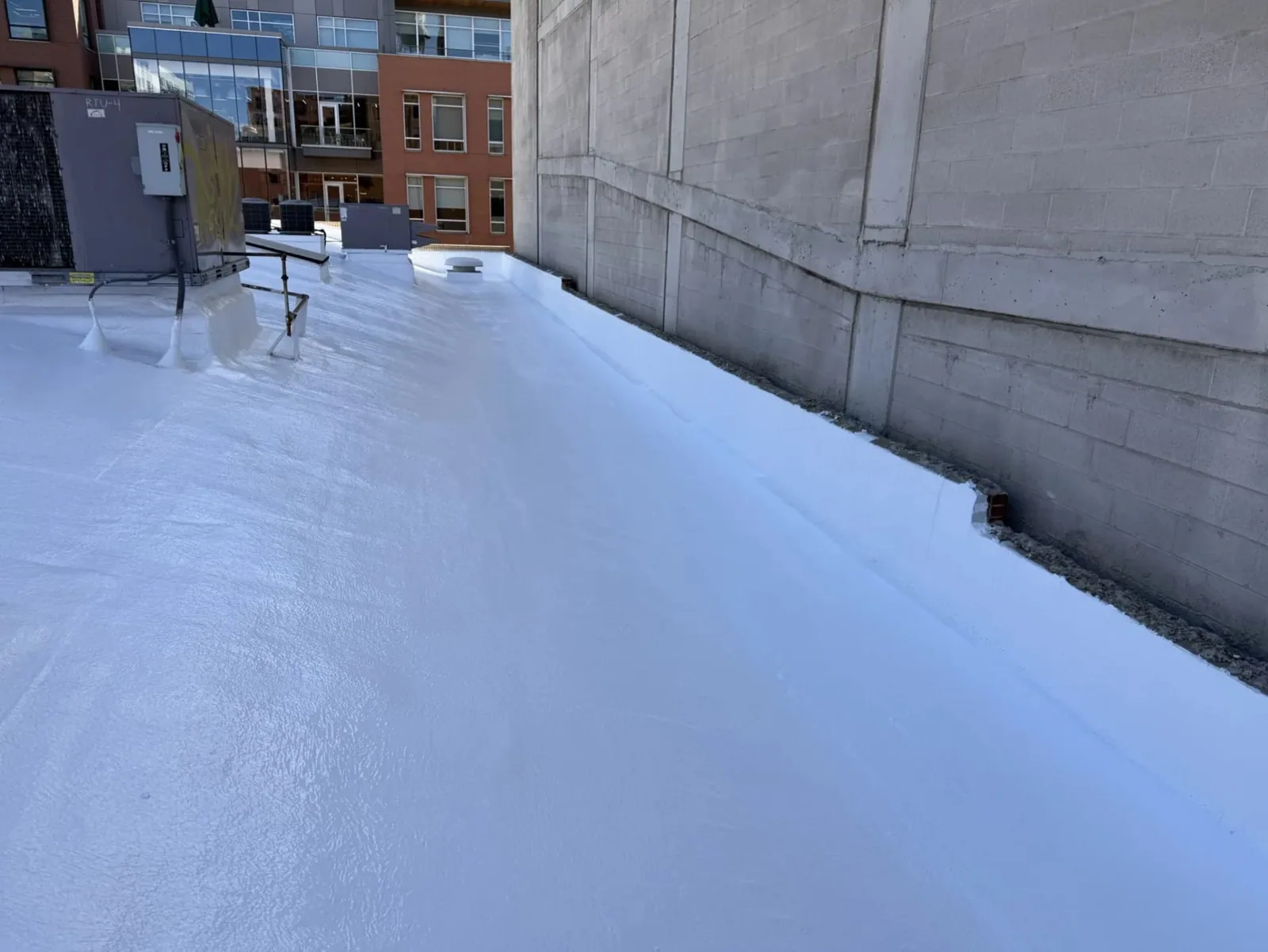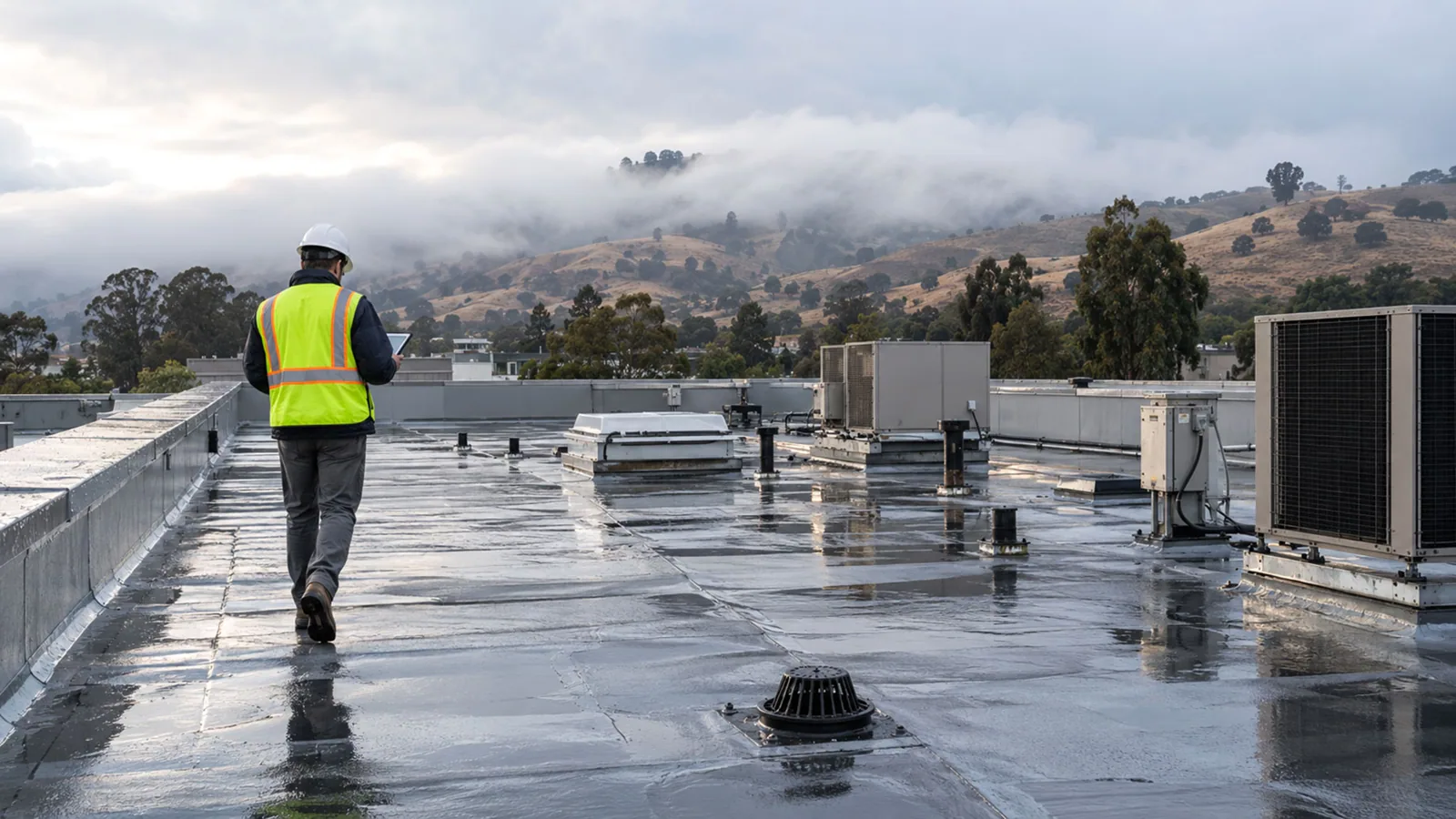
District size sets the staging plan before the roof is opened. Dracut, MA identifies nine business districts, defined by concentrations of businesses of varying size and density, and some of them overlap historic neighborhoods. A roof in a tight district with a shared lot and a narrow approach needs a different first response from a roof on a broad site with room to stage a lift. Either way the report starts one sequence: safe access, protection for what is below, a temporary dry-in, then the repair boundary.
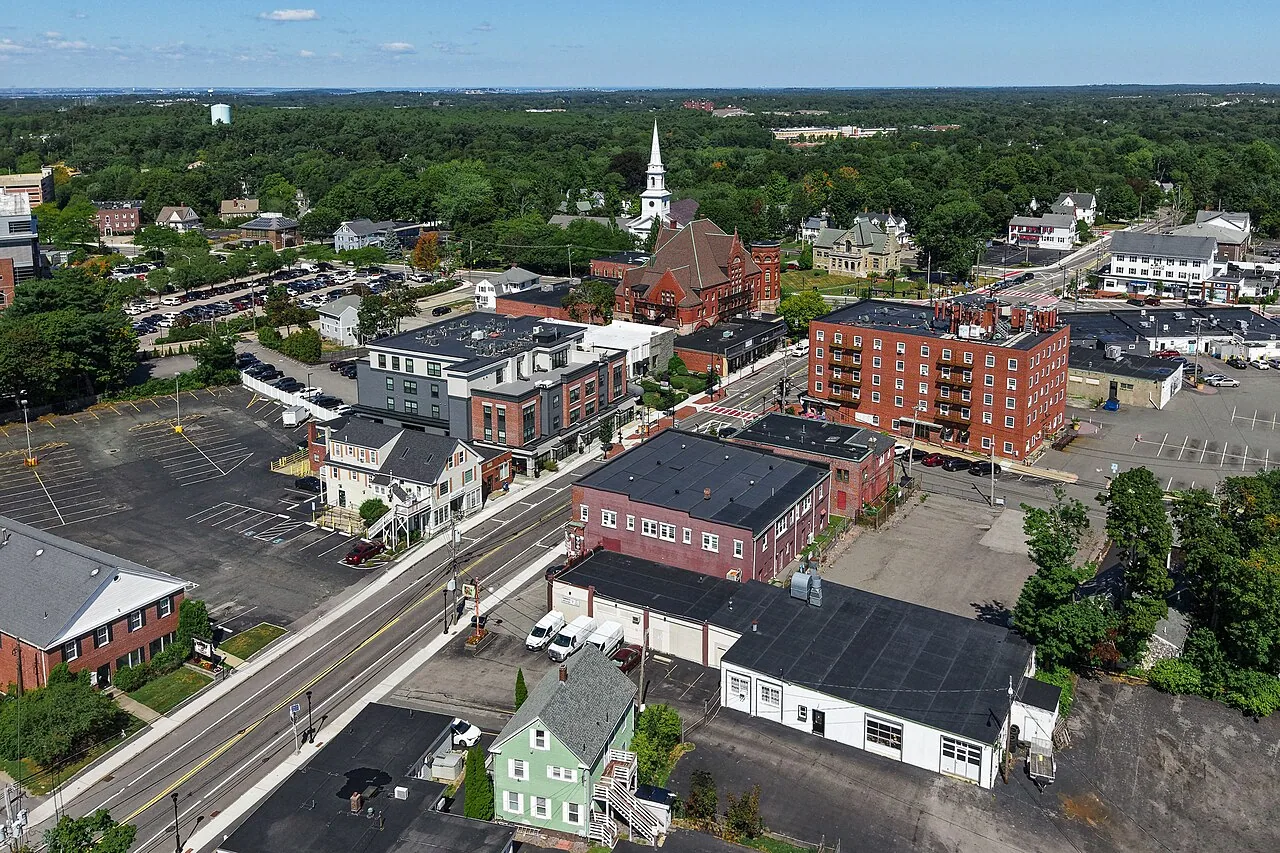
Emergency calls here are answered at any hour, holidays included. The roof section tells us what to bring; the district tells us how to arrive.
Dense Sites and Shared Access
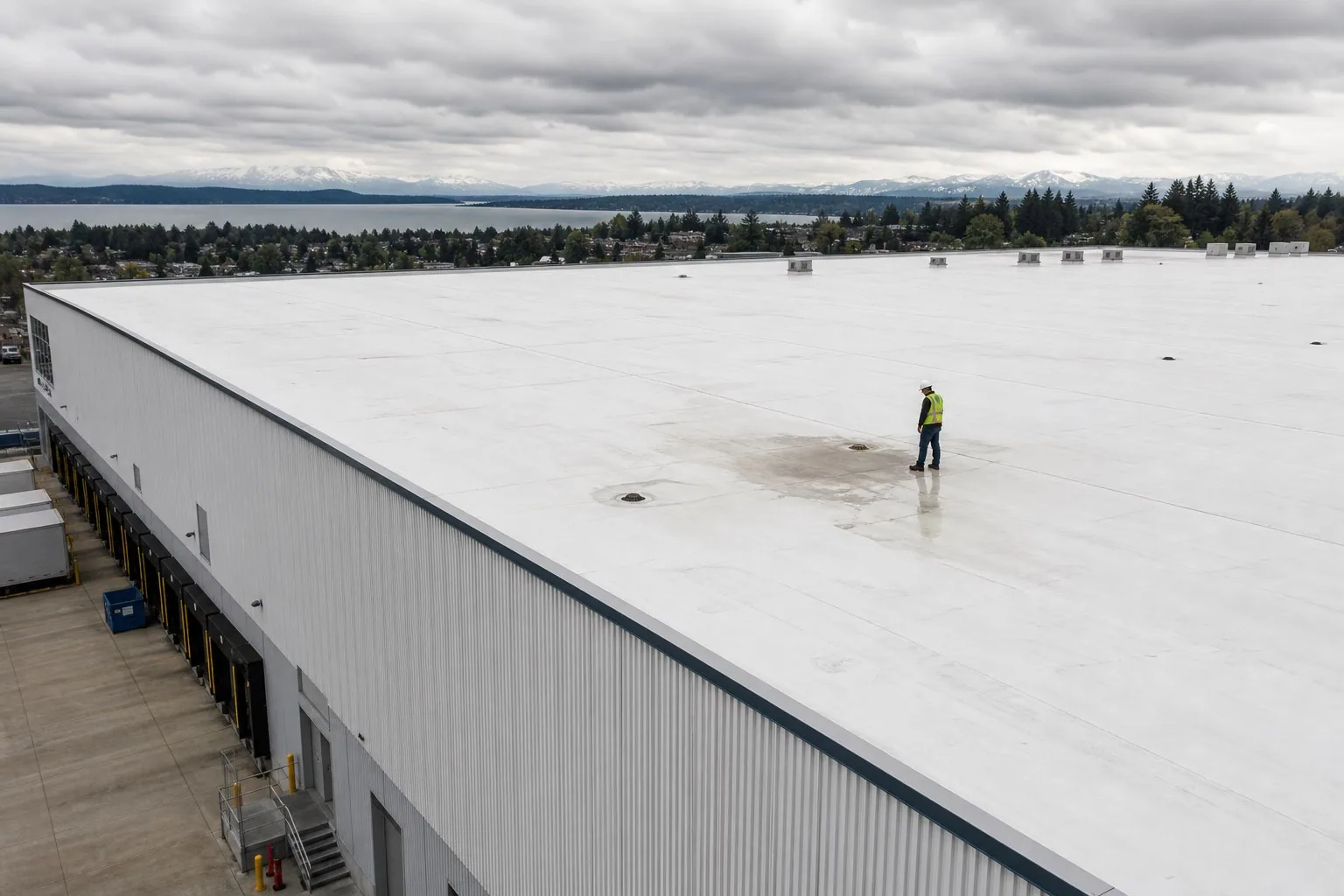
When businesses of different sizes sit close together, shared parking, shared driveways and shared walls are common. Each one affects roof work. A lift needs a flat, clear spot with room to swing. A dumpster needs space that does not block a neighbor's entrance. A delivery truck needs an approach that does not cut across a customer lot at midday. Before the crew arrives, we ask who controls the lot, who holds the roof keys and which hours are quiet.
Answers go into the first note. If the lot cannot be cleared, work shifts to early hours or to a weekend window, and the cost update says what that shift adds. If the roof shares a wall with a neighbor, flashing at the wall line is photographed from the owner's side, and any water crossing the line is recorded without altering the neighbor's roof.
These steps weigh more on a small roof and a tight lot, because it packs more edge, flashing and penetration detail into each square foot. The leak is likelier to start at a detail than in the field.
Detail-Heavy Roofs
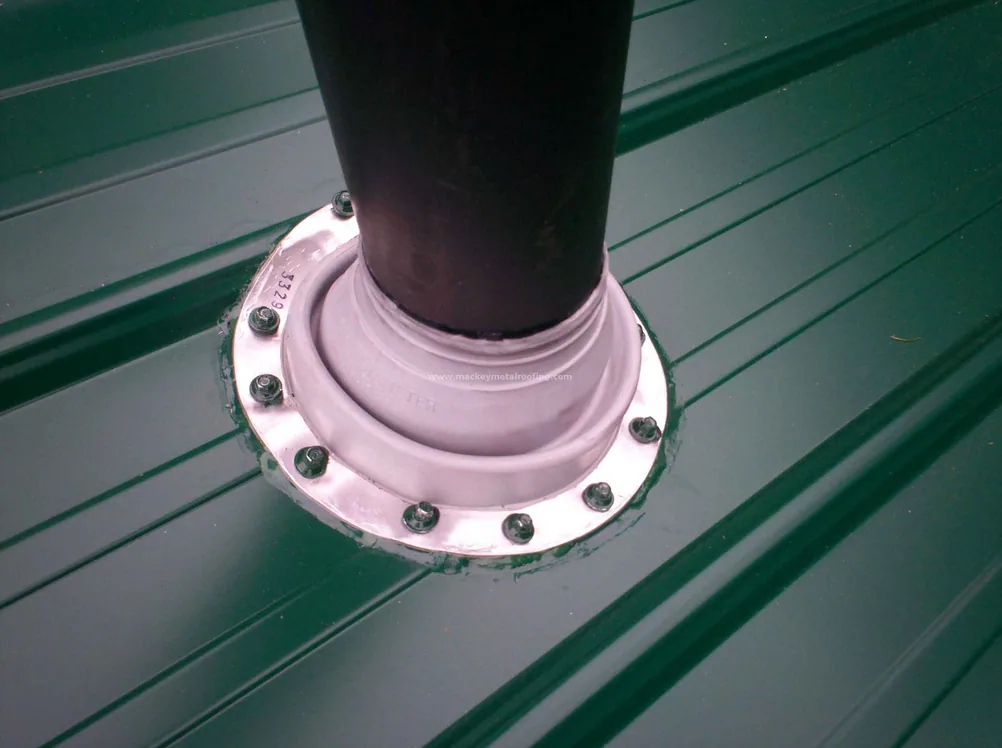
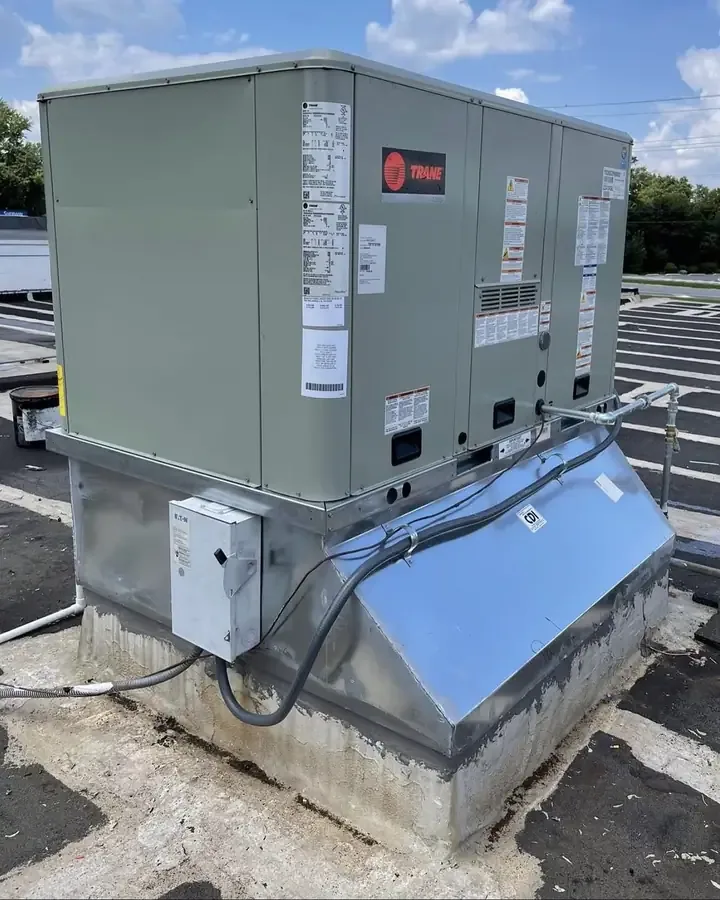
A small commercial roof often carries a rooftop unit or two, vent stacks, an exhaust fan, a skylight and a signage support. Each is a flashing detail with its own failure mode. Sealant dries. Pipe boots split. Curb corners open. We check each detail on the walk, photograph it and rate it, and we mark any that rely on sealant alone for a membrane-based repair, because sealant has the shortest life on a roof.
The skylight and penetration flashing repair rebuilds each detail with membrane or resin lapped onto sound surface. Equipment curbs and supports are checked for settlement and for crushed membrane beneath them. The repair list ranks details by water risk, so the facility director fixes the most exposed one first.
Temporary Dry-In and Repair Boundary
A temporary dry-in is a holding measure. On a membrane roof it can be a reinforced strip taped or adhered over the opening. On a metal roof it can be re-lapped panels or a battened tarp. We fasten the edges, photograph the work and record the weather at the time. The note lists what the dry-in covers and what it does not.
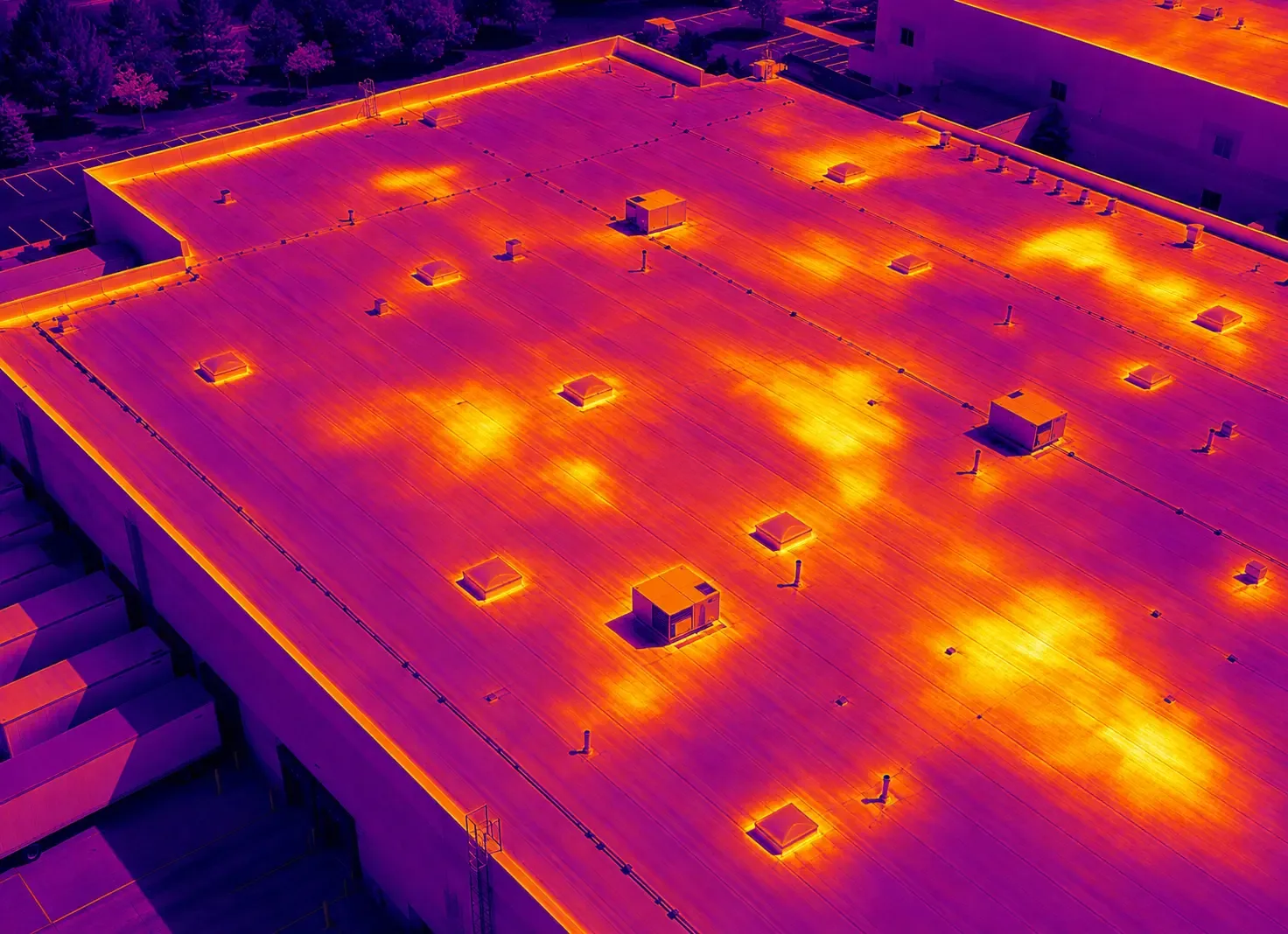
The repair boundary follows the moisture readings. A handheld meter or an infrared moisture survey maps wet insulation; a core confirms. Board that tests dry outside the line stays; board that tests wet inside it is cut out. On a small roof, the boundary may cover a corner or a curb. On a larger roof it may cover a section. The cost update separates the price of the dry-in, the repair and any larger scope the readings may justify.
Historic Neighborhood Edges
Several of the districts overlap historic neighborhoods. A commercial roof at that overlap may be near houses, a church or small institutional buildings, and that changes the scope in practical ways. Visible roof edges, colors and profiles may draw attention that a back-lot roof does not. We ask the building department early whether any exterior review applies to the parcel, and we hold the order for material until the answer is in the file.
Noise and debris control also matter more near homes. Tear-off dust, loose granules and fragments of old membrane travel on wind, so chutes, tarps below the work and a sweep of the lot at day's end keep material on the property. Hours are set to avoid early and late disturbance, and the property manager receives the schedule in writing.
Recover, Coat or Replace
On small and mid-size roofs, the decision usually comes down to three paths. A recover lays new membrane over a dry, sound roof and skips the tear-off. A coating restoration renews the surface of a dry, well-adhered membrane. Replacement removes wet or failed layers and starts again. The moisture map and cores choose the path, and the scope shows the evidence beside the price.
Cost follows the area, the number of details, the insulation required and the staging complexity. A dense site with shared access can cost more to stage than a larger roof with open space around it, and the cost update says so. Timing follows the weather: a coating needs a dry cure window, a recover needs dry surfaces, and a tear-off needs a forecast that allows each section to be closed the same day.
Weather and Drainage Planning
Lowell, the neighboring market city, averages near 25 degrees in January, with 48.51 inches of precipitation a year and 4.54 in a normal December, and the hazard plan there counts nor'easters, snowstorms and ice storms among major threats. Dracut roofs plan drainage, access and the order of dry-in work around that same regional pattern.
In practice, a fall check clears drains and gutter outlets, reseats loose edge metal and records seam condition. A post-storm visit starts with the edges, moves to drains and ends at any active water path. A preventive maintenance calendar with two visits a year keeps small defects small and gives the owner a dated record.
Town Support and Permits
Dracut's economic development staff assist firms with property selection, marketing, grants and business growth. For a roof, the useful step is simpler: confirm which approvals a replacement needs before material is ordered. The state's tenth-edition code, rooted in the 2021 IBC, applies to filings from July 1, 2025, and any stretch energy provisions Dracut has adopted would change the insulation requirement. We check with the building department and write the confirmation into the scope.
Owners with buildings in Lowell or Tyngsborough as well as Dracut keep one file per address, with its own roof sections, ratings and follow-up date. The permit step is listed as a milestone with a date, so a replacement approved in spring is not held up by paperwork in summer.
Commercial Roofing Questions
What if the lot is shared and cannot be cleared?
Work moves to quiet hours or a weekend window, and the cost update states what the shift adds. The delivery plan names the route and the person who will meet the driver.
Which roof details leak most often on small buildings?
Pipe boots, curb corners, skylight edges and any detail that relies on sealant. They are checked, photographed and ranked by water risk.
Can a neighbor's roof affect mine?
Water crossing a shared wall can. We record what is visible from the owner's side and document the condition without altering the neighbor's roof.
How long does a temporary dry-in last?
As long as the weather allows, and the note gives an expected hold time under current conditions. A return window decides when the permanent work happens.
Who confirms the building approvals?
We check with the local building department and write the answer into the scope, including any energy provisions beyond the state base.