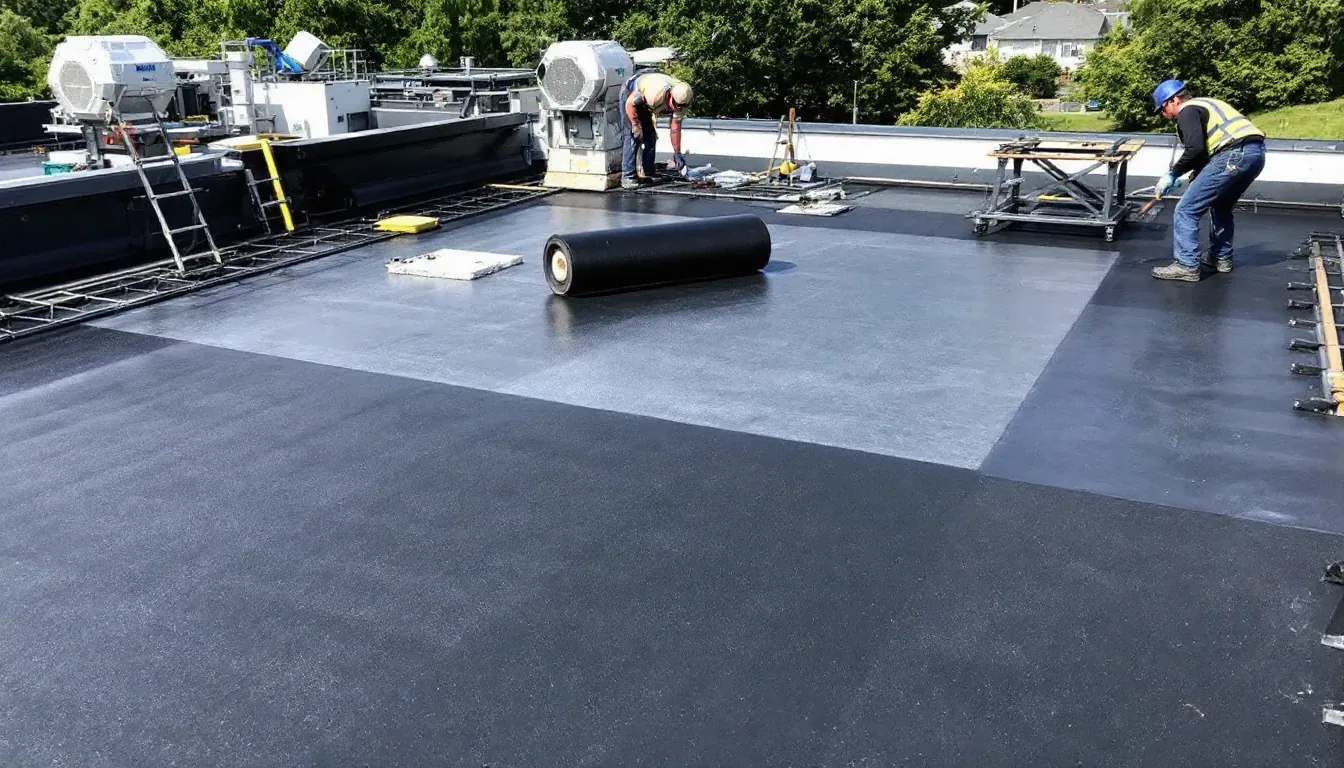
System choice first: TPO is a thermoplastic single-ply membrane whose seams are fused with hot air, and in Lowell, MA it competes for the same low-slope commercial roofs as PVC, EPDM and modified bitumen. The decision is a cost and timing question for the facility director, and it starts with what the existing roof needs, not with a preferred product. We walk the roof, test the insulation, and then say whether TPO fits as a recover, as a new membrane after tear-off, or not at all.
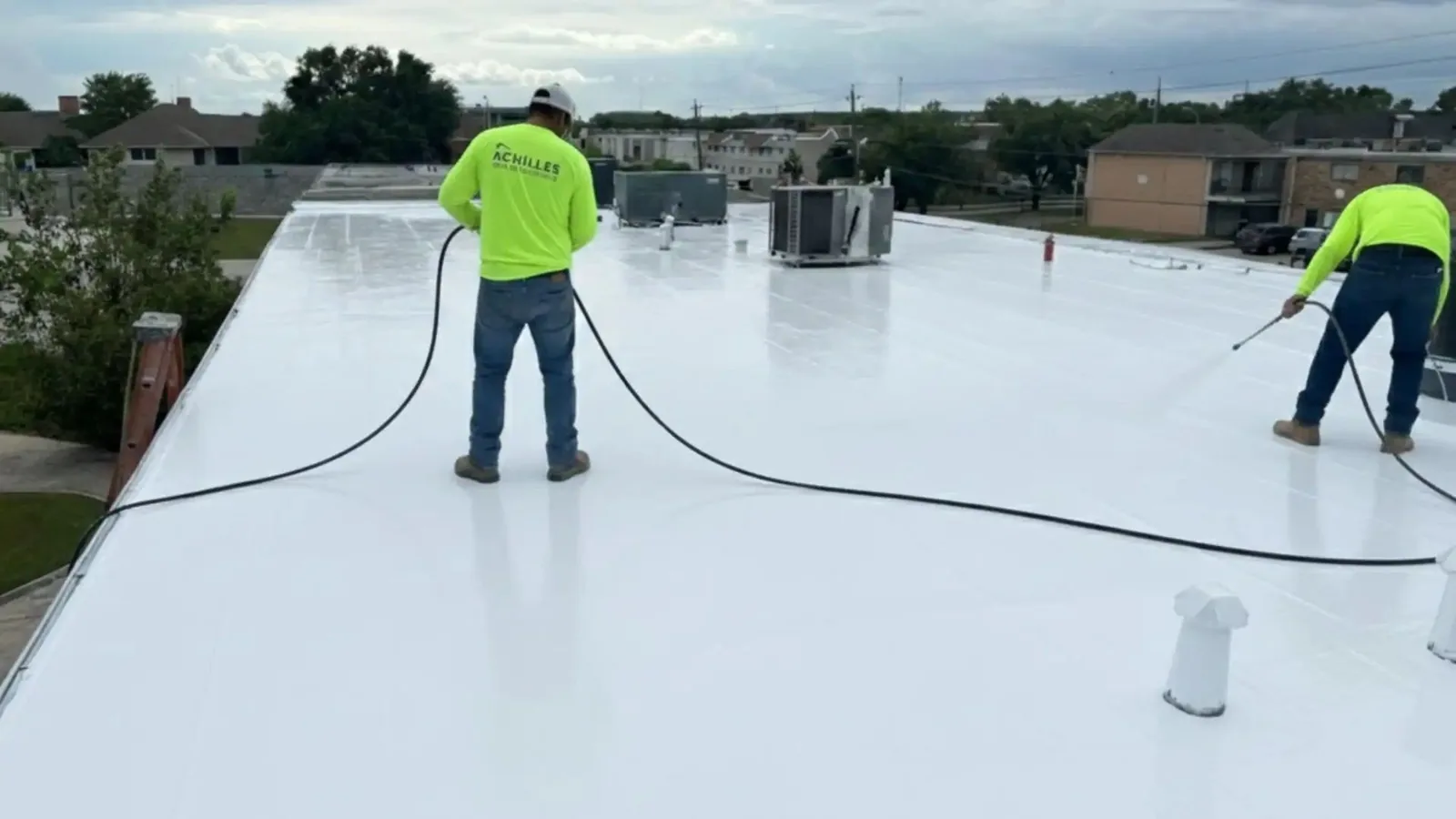
TPO is usually white and usually installed in 45 to 80 mil thicknesses, either fully adhered, mechanically fastened or ballasted. Each attachment changes the cost, the noise and the wind rating, so the scope names the attachment method and the reason for it.
Heat-Welded Seams and What They Depend On
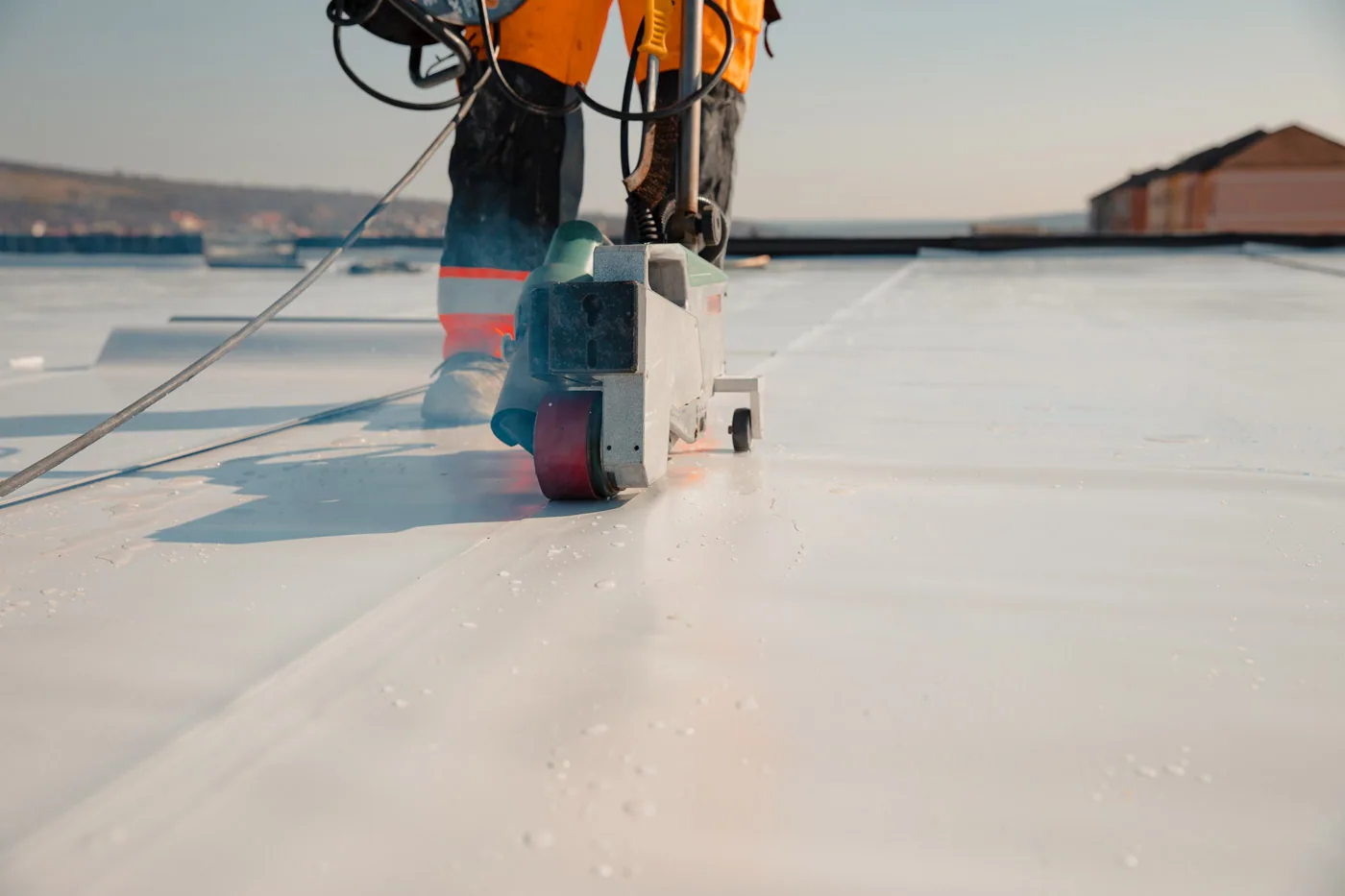
The seam is where a TPO roof lives or dies. Overlapping sheets are welded with hot air, and a good weld fuses the two surfaces into one. A weld made over dirt, moisture or surface contamination will look fine and test poorly. For that reason, welds are probed by hand along every seam during installation, and test cuts are taken from the weld to check strength at intervals the project sets.
Seam condition is also the first thing we check on an existing TPO roof. Open seams, pinholes and cracked corners show up after years of thermal cycling, and each is photographed and numbered. A seam failure repair restores the weld with new hot-air bonding, a cover strip or a patch, depending on the extent.
Lowell Weather and Membrane Performance
NOAA's Lowell station averages 24.9 degrees Fahrenheit in January against 72.8 in July over 1991-2020, and 48.51 inches of precipitation fall across a year. A roof here goes through hundreds of freeze-thaw cycles in its life, and a membrane that is stiff when cold and soft when hot has to accommodate that movement at seams, edges and penetrations. Properly formulated TPO handles it, though the lower the temperature at installation, the more care welds and adhesives need.
Hurricanes, nor'easters, snowstorms and ice storms all appear in the city's list of major hazards, which is why we weight edge attachment and drainage most heavily. Wind lifts perimeter membrane, and ice blocks drains. A TPO roof is only as good as its edge metal and its outlets.
Attachment: Adhered, Fastened or Ballasted
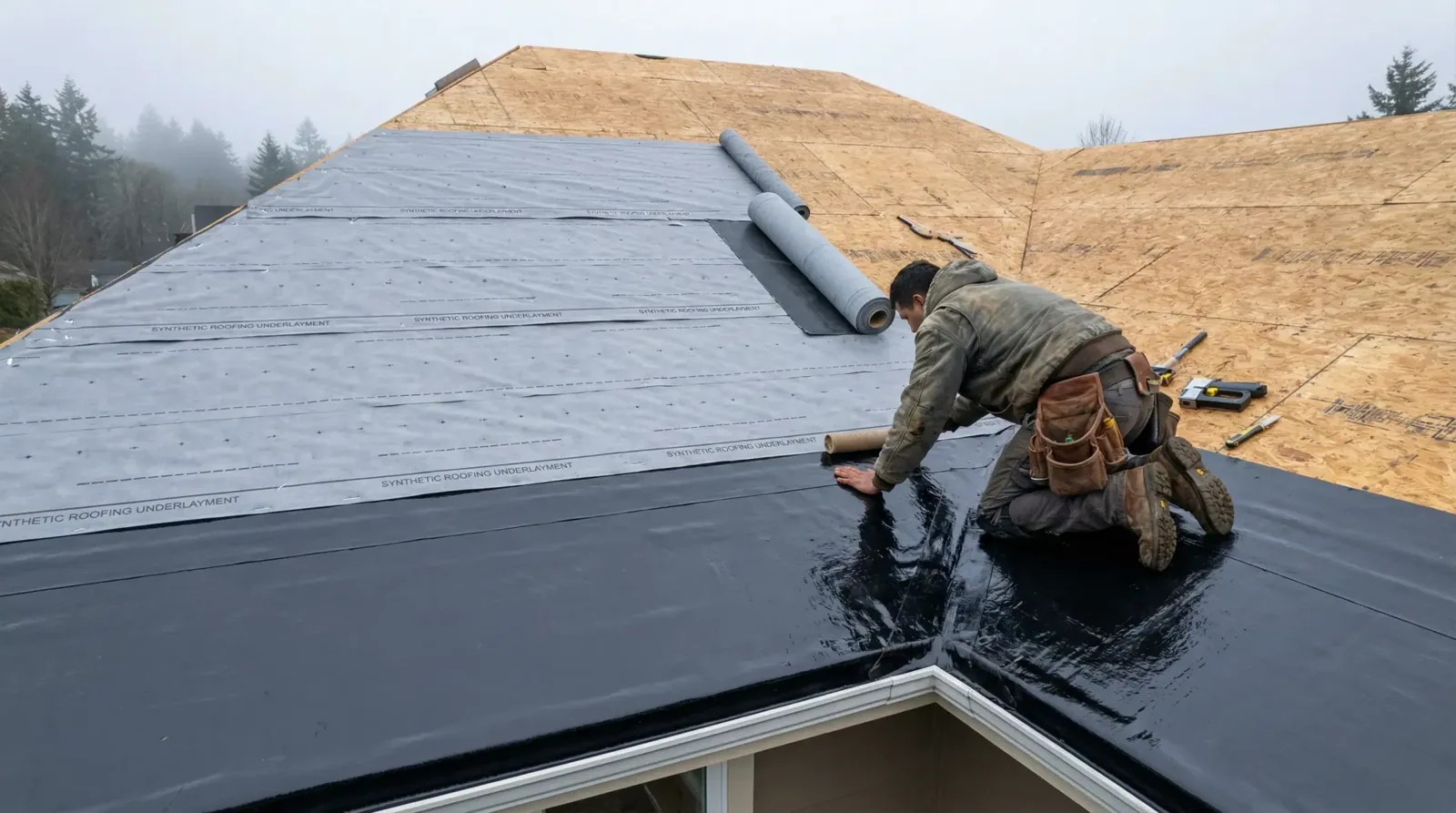
Fully adhered TPO is bonded to the substrate with adhesive. It gives a smooth appearance, good wind performance and a quieter installation, and it needs a clean, dry, firm substrate and moderate temperatures. Mechanically fastened TPO is secured by plates and screws along the seams, which is quicker and works at lower temperatures, though the fastener lines must be correct for the wind zone. Ballasted systems rely on stone or pavers for weight and need a deck that can carry it.
Choice among these depends on the deck, the budget, the access and the season. A fast install in October may favor mechanical attachment, while an occupied building with noise limits may favor adhesive. The scope shows the trade so the facility director can compare the costs.
TPO as a Recover or as a Replacement
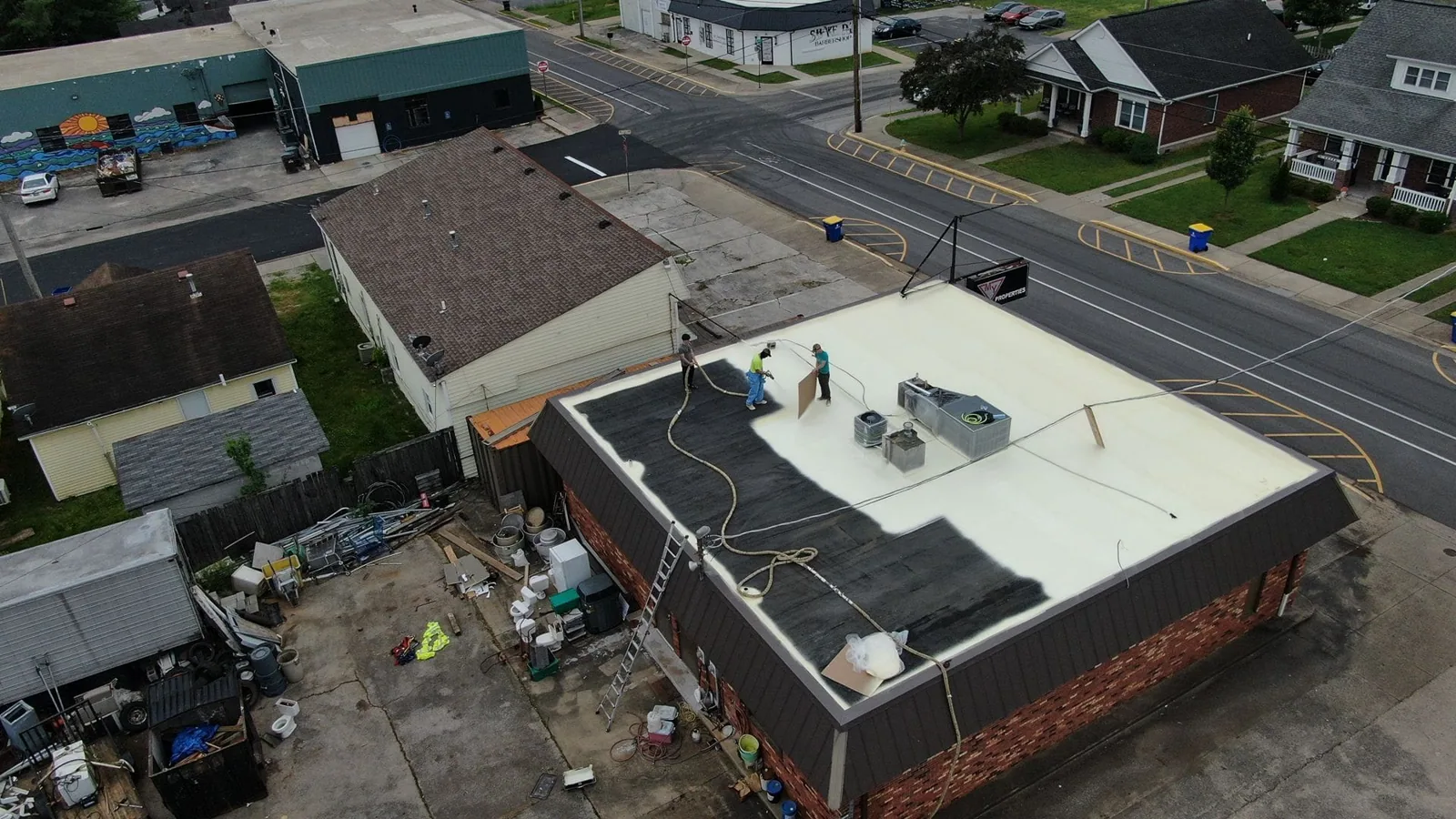
A TPO membrane can go over an existing roof as a recover if the insulation is dry, the deck is sound and the code allows another layer. A cover board separates the new membrane from the old surface. When moisture has spread, or when the roof already carries two layers, a full replacement removes everything to the deck and starts again with new insulation, which also resets the insulation value to current code.
The permit falls under the 10th edition of the state building code, which is drawn mainly from the 2021 IBC and has been the only code for applications since July 1, 2025. The base energy code is part of it, and municipalities can adopt stretch provisions, so the local energy requirement is confirmed before the insulation thickness is set.
TPO Against the Alternatives
TPO is a common single-ply choice on cost and reflects sunlight well. PVC offers greater chemical resistance and is often chosen where kitchen grease or exhaust is a factor. EPDM is a rubber membrane with a long record in cold climates and simple repairs, though its seams are adhesive and not welded. Each of the three has strengths, and a roof with heavy rooftop exhaust, many penetrations or frequent foot traffic may favor one over the others.
We lay the options out with installed cost, expected service life, repair method and warranty terms, and the facility director decides. The membrane maker's warranty depends on installation to its details, so we read the terms before the order and tell the facility director which inspections and records the warranty will ask for. Warranty length is stated by the maker and varies by system and thickness, and the closeout file holds the paperwork the claim would need.
Repair Limits on an Existing TPO Roof
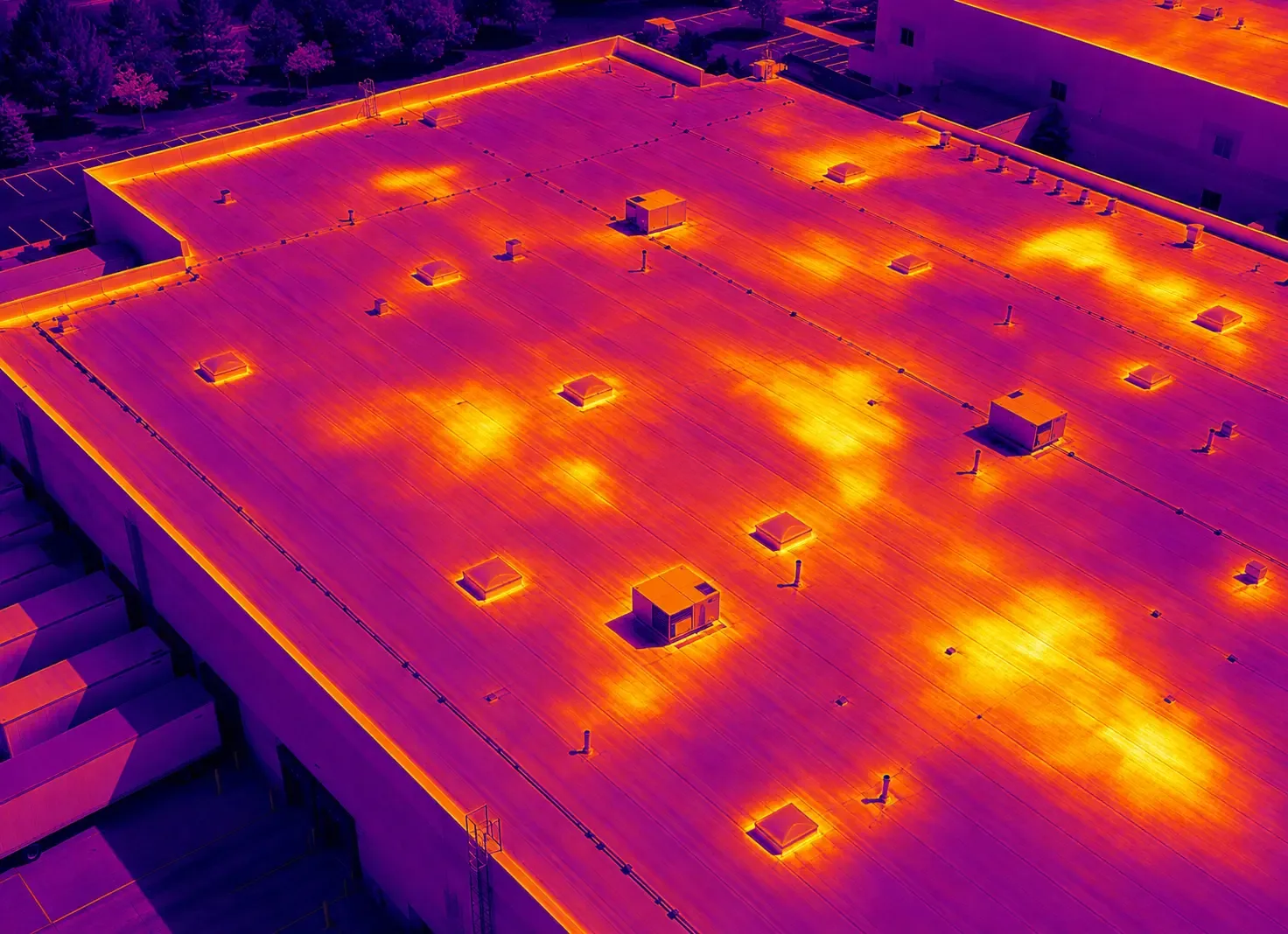
Not every TPO roof needs replacing. Isolated seam failures, punctures and flashing cracks can be repaired with compatible patches and welded details. A moisture survey sets the repair limit: if insulation beneath the membrane is wet over a wide area, repairs on the surface will not hold. Infrared moisture survey mapping and core cuts give the boundary, and the boundary appears on the roof plan with the date.
Aged TPO can become brittle and chalky at the surface, and reflectance drops as dirt and weathering build up. A test weld on aged material tells us whether new patches will bond. If they will not, the scope changes from repair to recover or replacement. Core cuts also show the membrane thickness left on a roof that has been walked and cleaned for years, which tells us how much life remains and whether a coating or recover is a sensible bridge to the budget year.
Where TPO Is Specified Around Lowell
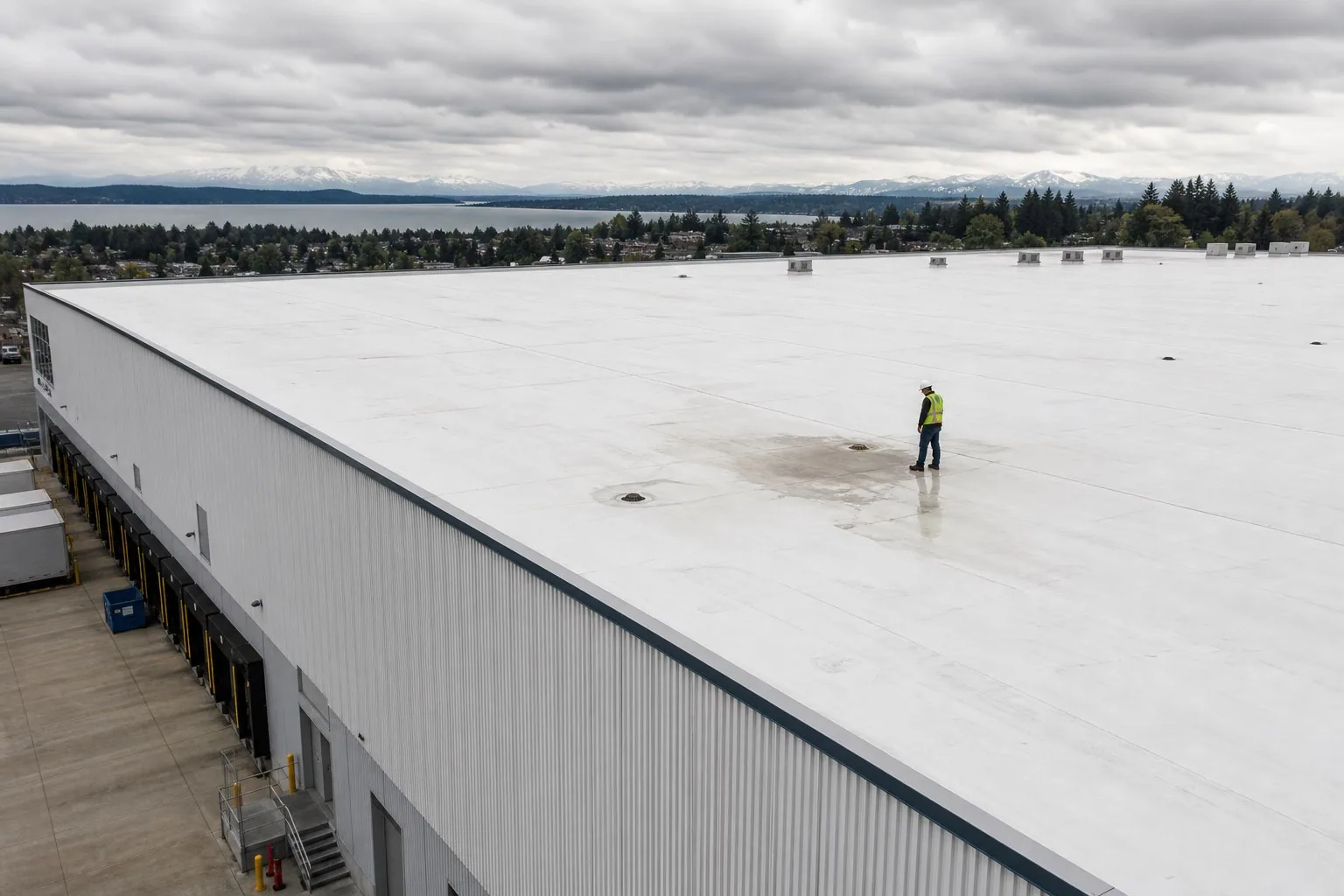
Large, low-slope roofs are the common TPO candidates. Lowell's planning materials describe Ayer's City Industrial Park along Tanner Street as a mostly heavy-industry area planned for redevelopment, and the Hamilton Canal District as a mixed-use district planned for commercial, retail, office and research space; a TPO scope for a building in either starts from the roof as found. Historic mill roofs in the Downtown Lowell Historic District answer to Historic Board review for exterior work, and any membrane color or edge change visible from the street goes through it. The same membrane is often picked for warehouse roofing, where long, simple roof areas let welding crews cover ground quickly. Buildings by Route 3 and I-495, the road access the city uses to attract businesses, get the same walk-first approach in Lowell and the surrounding towns.
Commercial Roofing Questions
How thick should a TPO membrane be?
Thickness depends on traffic, attachment and the warranty sought. The scope sets it from the roof's use and the manufacturer's requirements.
Can TPO go over an old built-up roof?
Yes, as a recover, if moisture testing shows dry insulation and the deck is sound. A cover board separates the layers.
Why do some TPO seams fail?
Contamination, moisture or poor weld temperature during installation, and later thermal movement. Probing and test cuts catch most of them early.
Is white TPO the only choice?
No. Other colors exist. White is common for its reflectance, and the energy code and cooling load decide whether it matters.
When is TPO installed in New England?
Mostly in the warm, dry months. Mechanical attachment can extend the season, and the schedule states weather holds.