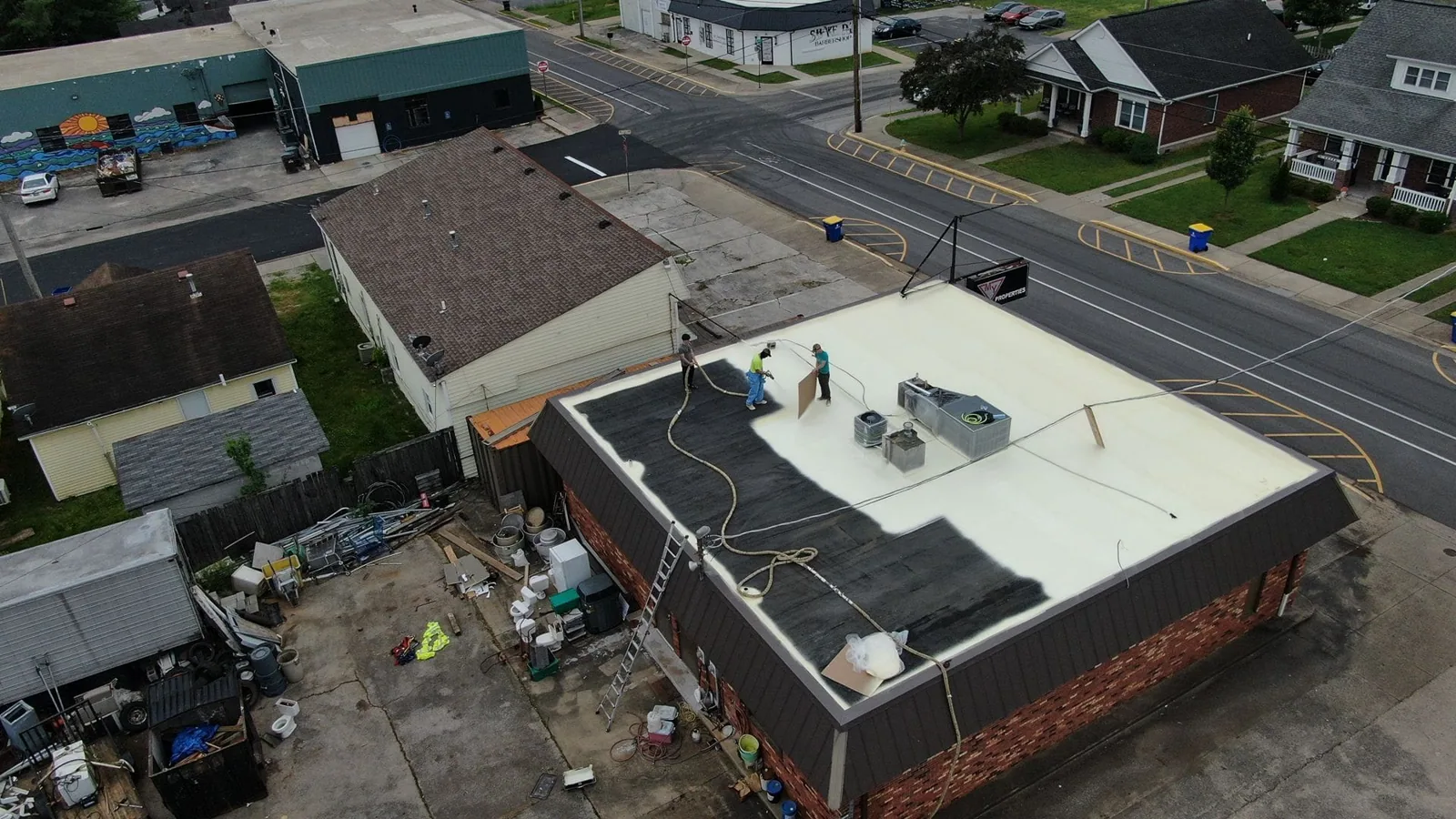
Keep the dock schedule visible while the roof condition is sorted. A distribution center report starts with the affected bay, the outbound lanes below it, and the times when a lift or material delivery can reach the roof. We confirm safe access and interior protection before choosing a repair boundary. That sequence limits avoidable interruption while the facility director gets a clear scope and return window.
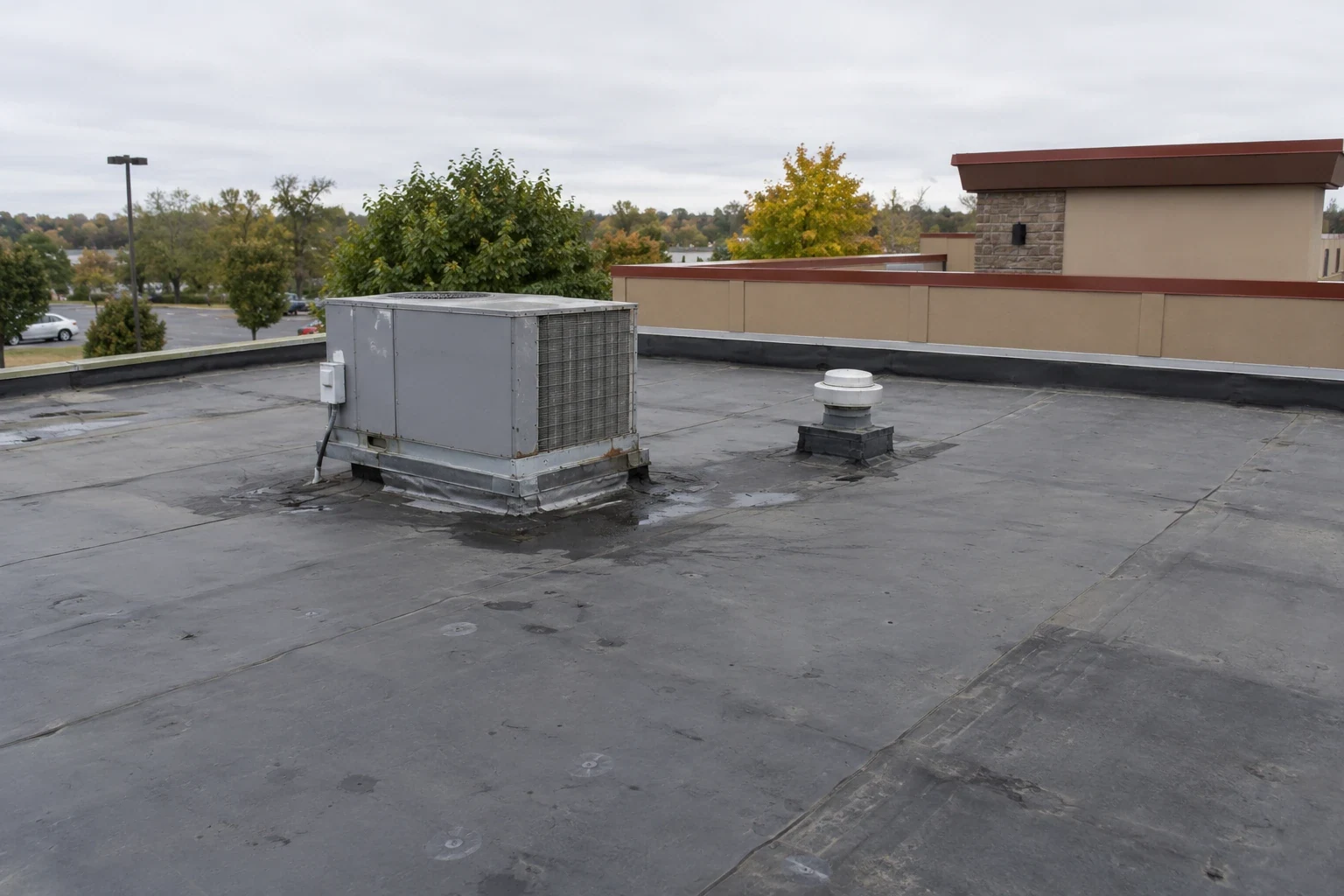
A 48.51-inch annual precipitation normal at the Lowell station means drains and overflow paths face regular checks through the year. Drains, overflow paths and seam transitions need inspection before water enters a high-turn area. We record each finding by roof section, distinguish temporary dry-in from permanent work, and price the two separately. The result is a decision the operations team can schedule, not an open-ended closure request. Where the layout resembles a warehouse roof, the dock count and shift pattern still set a different work sequence.
Dock access and shift timing
A distribution center moves goods on a timetable. Before work, we map the loading doors, truck circulation, employee routes and interior zones under the defect. The facility contact identifies the shift change, receiving window or dispatch period that cannot be blocked. We set equipment and material movement around those constraints, then name any temporary route restriction in the work plan. The facility contact also confirms roof-hatch keys, escorts and any lift staging area before a crew is dispatched.
If several roof sections need attention, each phase has its own access boundary. A dry-in over one dock does not automatically require shutting down another. We coordinate noisy removal, lifts and debris handling with the site team and keep the next return window in writing. For a building that remains occupied during reroofing, the occupied-building sequence can separate active work from receiving and dispatch.
The roof findings behind the schedule
We inspect drains, sumps, scuppers, membrane seams, perimeter metal, wall transitions and rooftop equipment supports. The reported interior location is matched to roof sections and deck direction. A stain near a conveyor may trace uphill to a curb, seam or drain, so the repair boundary follows the water path rather than the ceiling mark. We photograph conditions and note what is visible, what needs testing and which areas can remain in service.
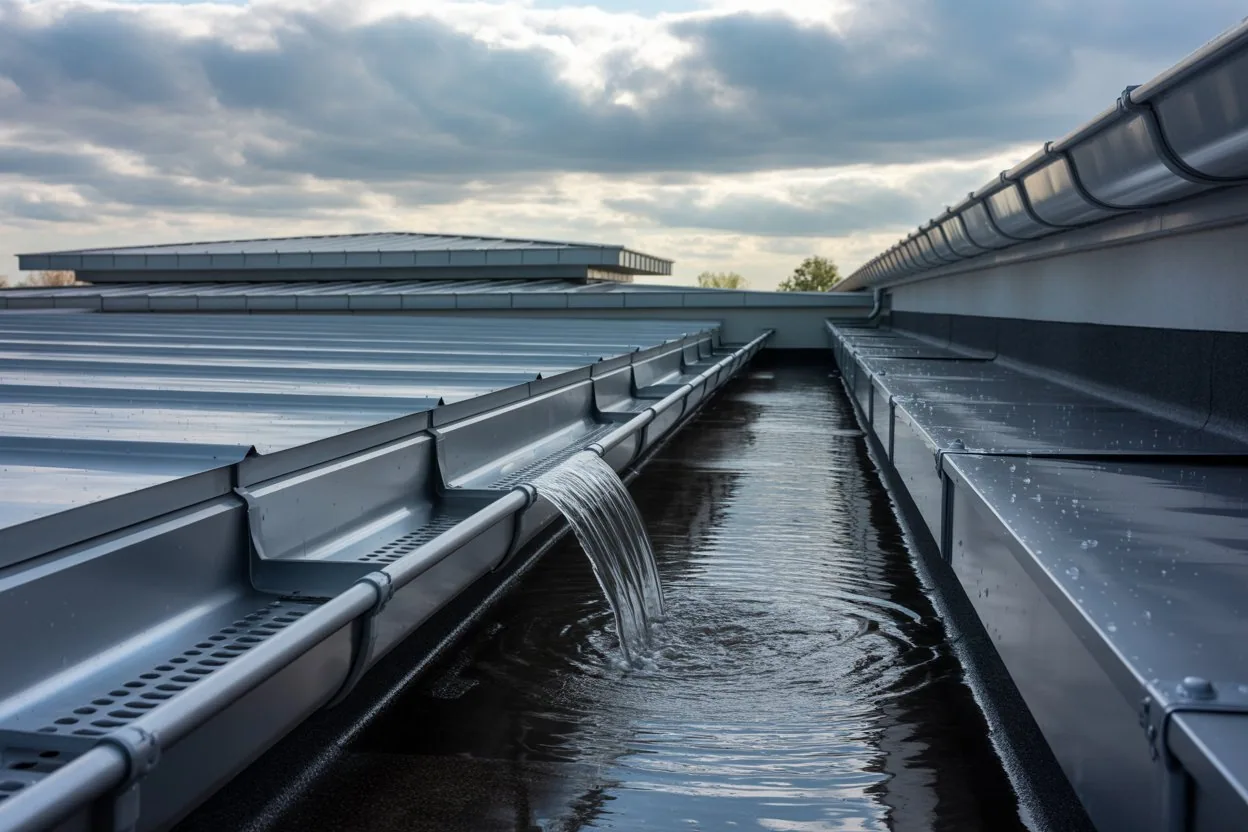
Where insulation moisture could alter the scope, a survey or core sample helps determine whether a patch is sound. For a broad roof, a roof condition report marks findings and priorities for facilities review. A drain and scupper repair can address blocked flow, separated strainers or damaged flashing as distinct work items, rather than burying them in a general roof allowance.
Repair boundaries and capital choices
Isolated membrane damage on a dry, serviceable assembly may be repaired. We prepare the surface, remove weak material and install a compatible patch or rebuilt seam. If wet insulation extends across multiple sections, or details repeatedly fail, the scope compares repair with replacement. A recover is considered only after checking drainage, attachment, existing layers and project requirements. The report states which condition changes the recommendation. A manufacturing plant roof may call for a separate staging plan where process equipment and work shifts set access limits.
Distribution operations often need phased work. We can mark limits by roof section, dock group or safe access zone, then schedule removal and installation so the facility can keep essential movement open where conditions allow. The replacement scope identifies each phase, its weather hold and interior protection. Where work concerns only local membrane or flashing, a repair scope keeps that boundary separate from longer-term capital needs.
Lowell-area operating context
Truck movement matters near Ayer's City: the Lowell Connector and Tanner Street each mark an edge of its planned area. Most of the 108 acres is heavy-industry zoned, with commercial and residential uses at the perimeter. For dispatch, those circulation edges make the truck approach, lift position and loading-door schedule worth confirming before a crew is sent. The site contact can then confirm whether the delivery gate, receiving window and lift area remain available for that phase. Billerica's published listings span storefront-scale property and larger industrial sites, a local range that makes roof access and daily operation specific to each address.
Downtown Lowell's historic boundary reaches commercial blocks, mill yards and canals; the Historic Board reviews exterior work there. If a roof scope changes visible coping or a parapet, we identify that review step before ordering metal or setting the return window. Properties across Lowell sit in different settings, so the roof plan and site contact determine the sequence at each address.
Cost exposure and the return window
Price depends on roof system, number of failed locations, moisture extent, access equipment, interior protection and how many mobilizations the work needs. A single curb repair above an open service lane is different from removal across several bays containing active inventory. We list the labor, materials, testing and access assumptions by item in the written scope. Each line stays tied to its roof section. If findings could expand the scope, we show the trigger and ask for direction before proceeding beyond the approved boundary.
At the Lowell station, a normal January day averages 24.9°F. Cold, wet or icy surfaces can restrict some permanent repairs, so the schedule includes a weather hold and a documented temporary dry-in when needed. A preventive roof visit can later recheck drains, seams and the prior repair location. We provide the facility director the next inspection date and the report point needed to decide whether to repair, monitor or budget a larger section. Repeated checks after a weather hold should revisit the exact drain, seam or curb named in the first report. That keeps a temporary measure from becoming an undocumented permanent condition and helps the next shift understand which area needs attention.
Commercial Roofing Questions
Can dock doors stay open while roof work is underway?
Often, if safe access and overhead protection permit it. We identify which doors sit below the work, then place lifts and materials away from truck paths. A closure is listed with its start and expected end so dispatch can route around it.
How is a roof leak traced when the ceiling mark is far from the entry?
The inspection begins at the interior report and follows deck direction, seams and drainage uphill. We compare that path with curbs, penetrations and roof sections, then use moisture testing where wet insulation may change the repair. The marked finding shows the suspected entry and any area that needs another check.
What information changes the cost of a distribution center repair?
The number of roof sections, material type, moisture extent, equipment access and interior protection all affect the scope. We list each separately. If a test could change the repair boundary, it is priced as a decision step rather than folded into an unknown allowance.
Can the work be divided across operating shifts?
Yes. We can plan a sequence by roof section and site access, then coordinate noise and material movement with the facility contact. If a weather hold interrupts the sequence, the temporary dry-in and remaining open work are documented before crews leave.
When is a recover a reasonable option?
Only after the assembly is checked for moisture, drainage, attachment and the applicable project requirements. If those conditions do not support another layer, we price repair or removal and replacement instead. The report records why the option fits or fails.