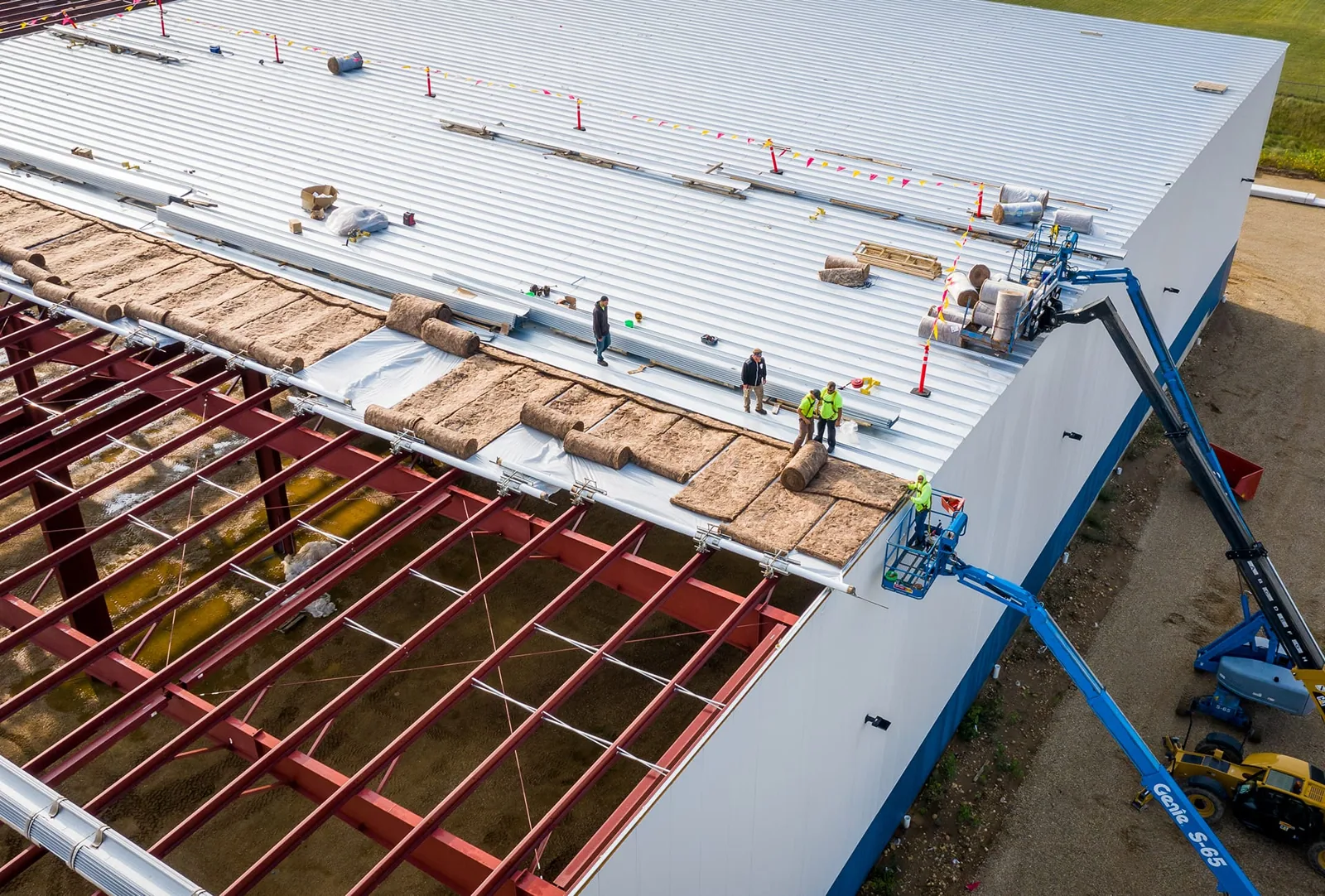
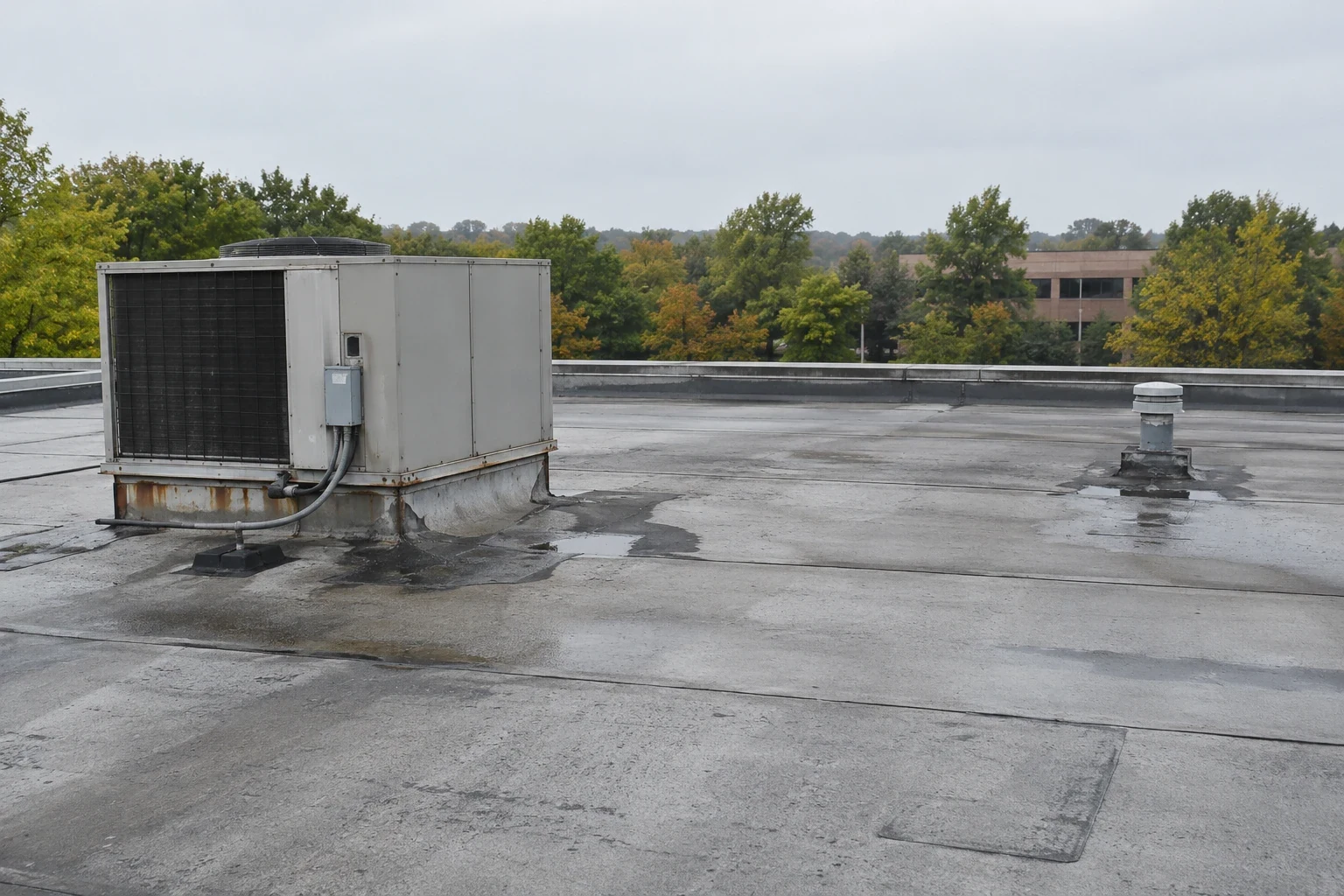
The question on a recover is simple and the answer is not: can the existing roof stay in place under a new one? Two things settle it before anyone talks price. One is how much water the old roof is holding. The other is how many roof layers the building already carries, since the building code limits both. A facility director in Lowell, MA, who asks about an overlay is usually trying to keep the cost exposure down and keep tenants working. That is a fair goal and often a reachable one, as long as the readings support it.
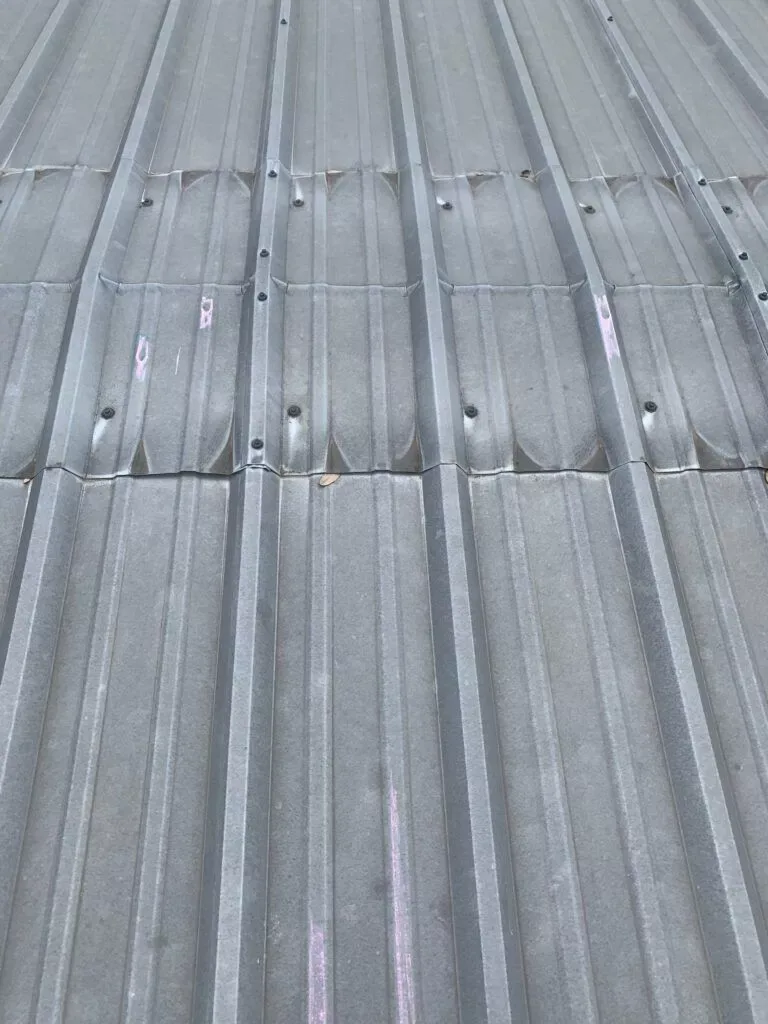
The first-hour check on a recover is therefore a test, not a visit to admire the surface. We read moisture across each roof section, count the layers at the edges, and mark the area where the old assembly has to come out regardless. What stays, what goes and where the repair boundary falls become the scope.
When a recover is allowed
Building codes restrict recovering in a few clear cases. A roof that already carries multiple layers is generally a tear-off candidate. Wet insulation is another bar, because a new membrane sealed over trapped water cannot dry it out and the moisture keeps degrading the insulation. A recover is also off the table where the deck cannot carry the extra weight or where existing flashing heights would end up below the minimum once the new system is added.
In Massachusetts the base is the 10th edition code, built primarily on the 2021 International Building Code with state amendments. Permit applications filed on or after July 1, 2025 fall under it alone. A recover still needs a filed permit, and the local energy code has to be confirmed for the property because a town may adopt stretch provisions that change what the added insulation or cover board must be.
When any of those conditions fails, the sound route is full replacement on the affected sections. Often a building splits: one roof section passes every test and recovers, while another needs removal.
Moisture testing before the overlay
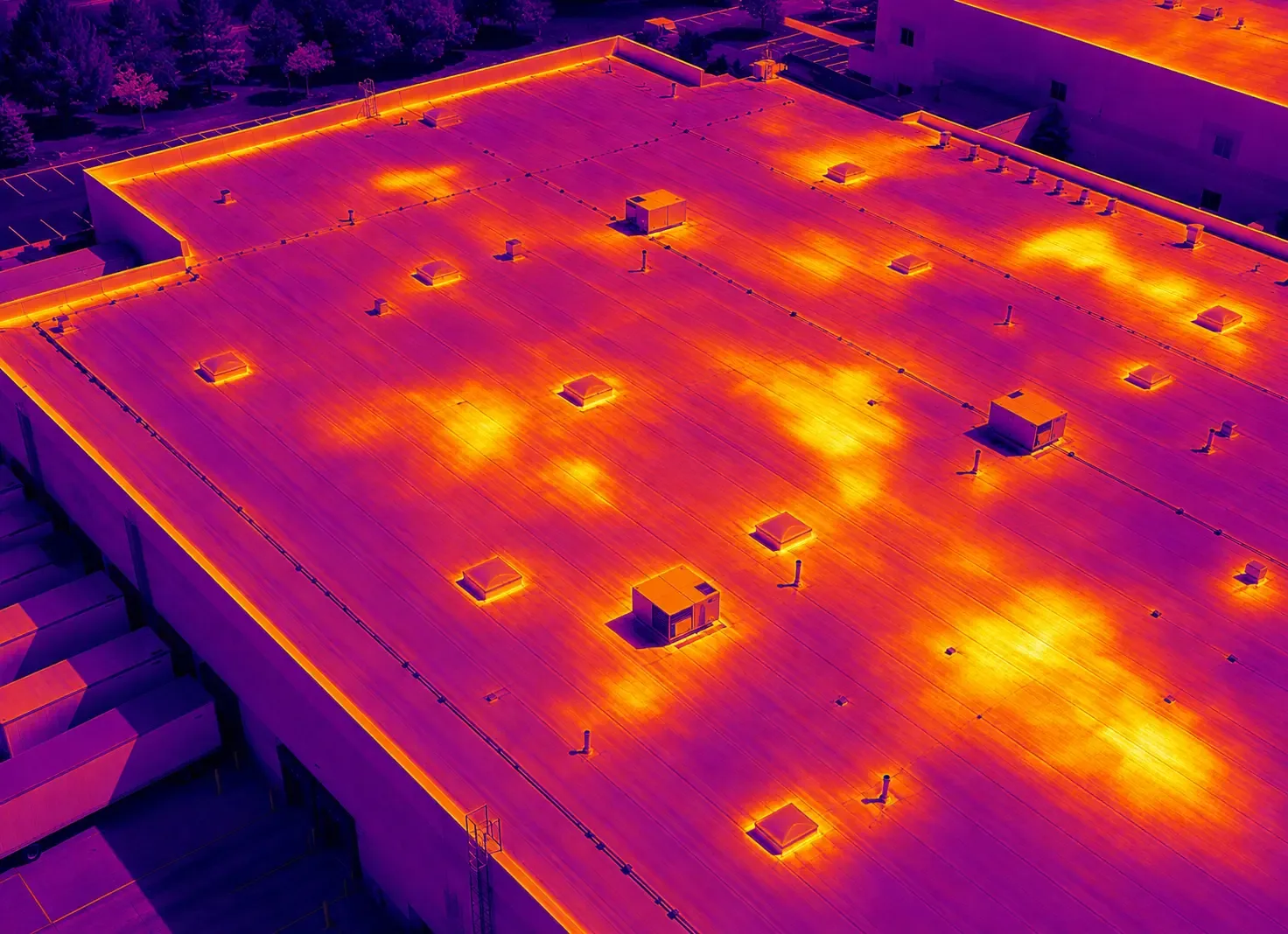
Surface appearance says little about what is inside the assembly. A membrane with few visible defects can sit over saturated polyiso, and a roof with a stained ceiling below may only have one wet corner. An infrared scan with core cuts maps the wet areas, and the cores confirm the layer count and the condition of the insulation and the deck.
Readings are taken on a day when conditions allow useful data: dry roof surface, stable temperatures, and enough cooling after sunset for infrared to show a contrast. The result is a plan of the roof with wet zones outlined. Those zones are cut out and replaced with dry insulation before the overlay is placed, so the recover is not covering a problem that grows underneath it.
The scan also tells us whether the existing surface can take the new material. Blistering, loose aggregate and heavy granule loss all change the prep. Every core hole is filled and sealed the same day it is cut.
Overlay assemblies and attachment
A recover is a stack of decisions about what goes between the old roof and the new membrane. A cover board or a layer of new insulation separates the two, and the choice depends on the existing surface. Gravel-surfaced built-up roofs usually get the aggregate removed or covered with a rigid board. Smooth membranes may take an adhered recover board directly.
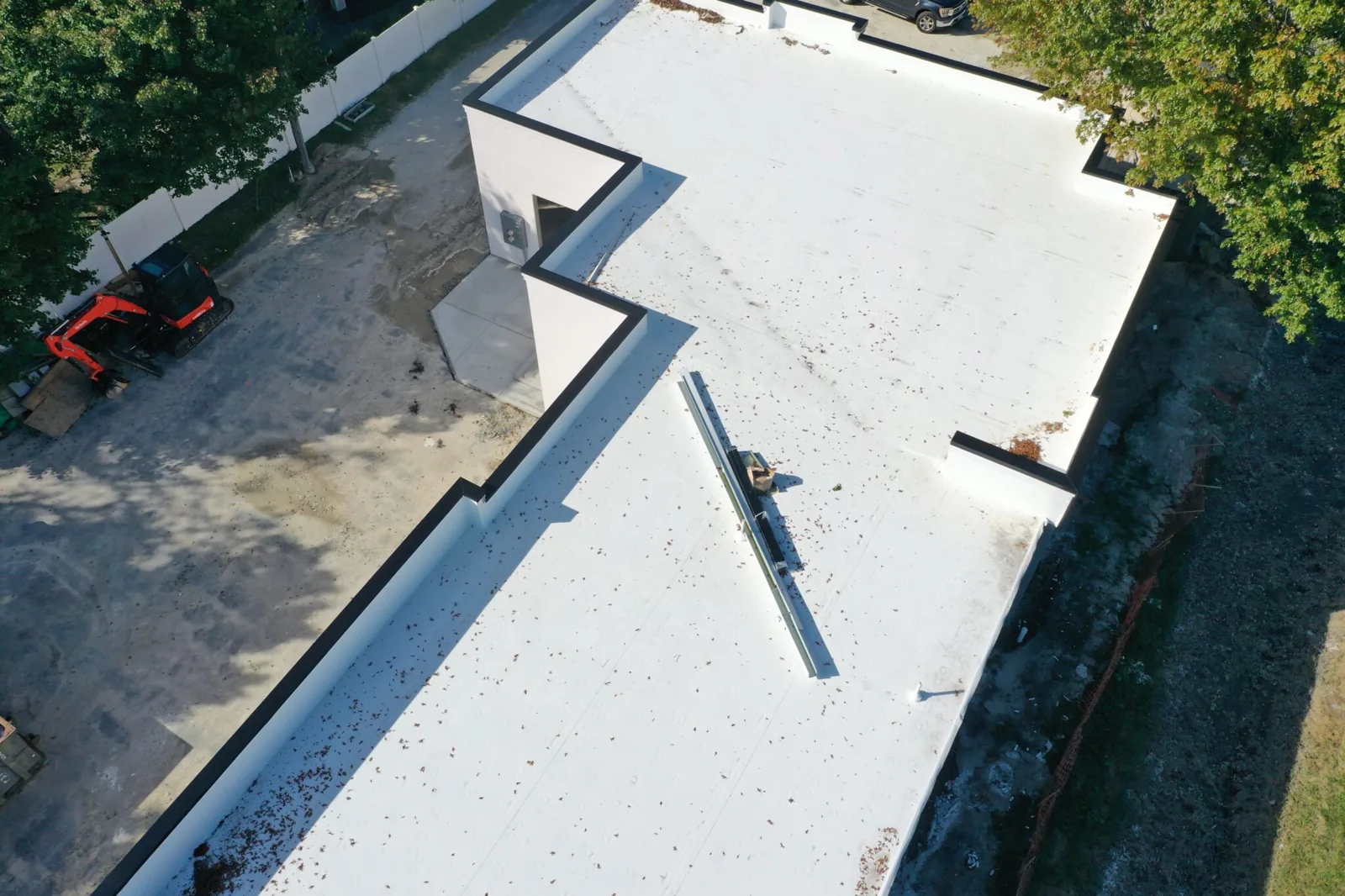
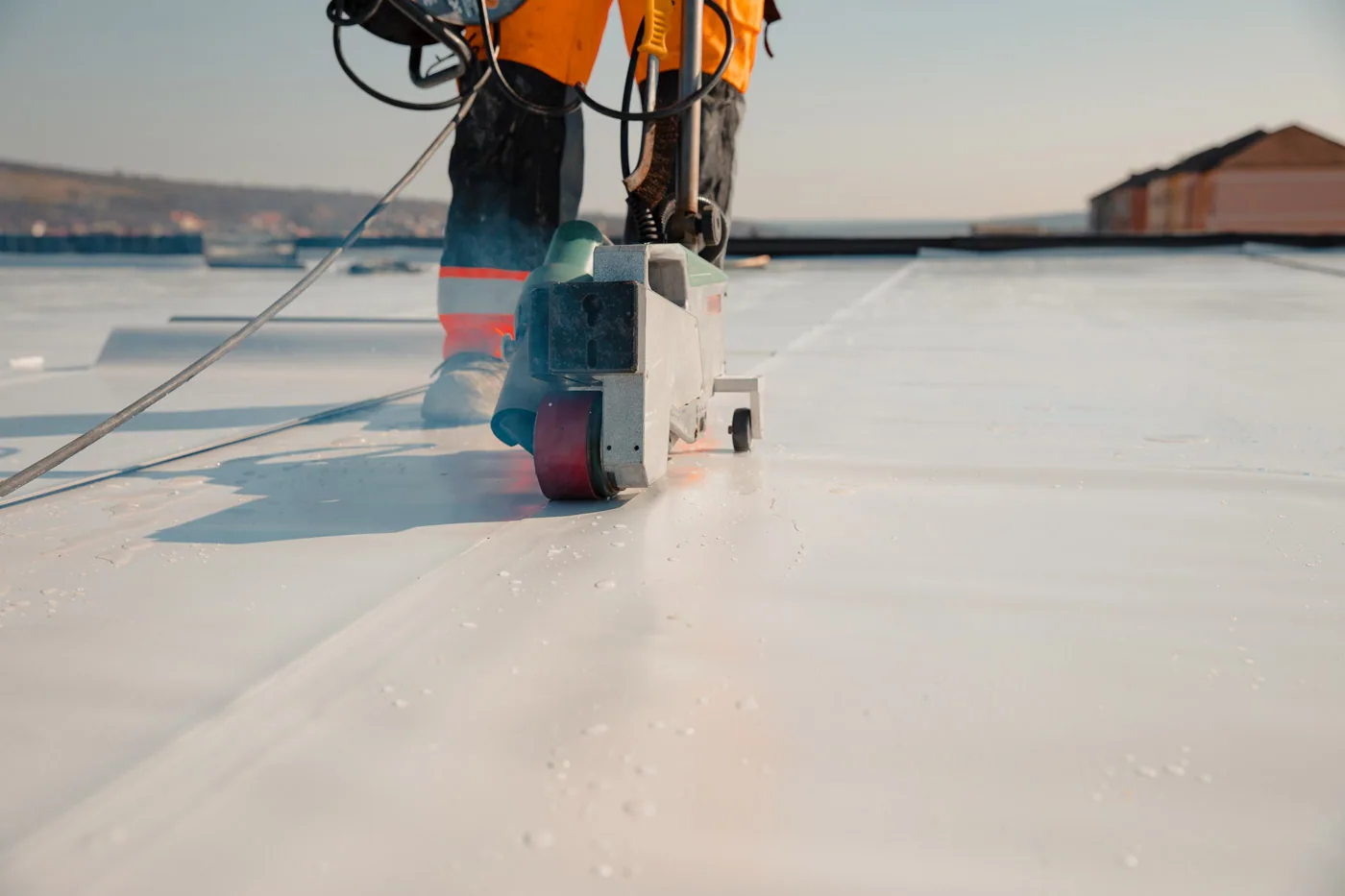
The new membrane can be mechanically fastened, adhered or ballasted, and the choice is driven by the deck. Fasteners have to reach a deck that will hold them, and the pattern has to meet wind uplift requirements at corners and perimeters, where uplift is highest. A TPO or PVC single-ply membrane is a common overlay material because it goes on without torch work and weighs little.
On a metal roof, a retrofit framing system can be added over the old panels. That is a separate path, covered in metal roof retrofit, with its own limits on rib height and fastener location.
Schedule and occupant impact
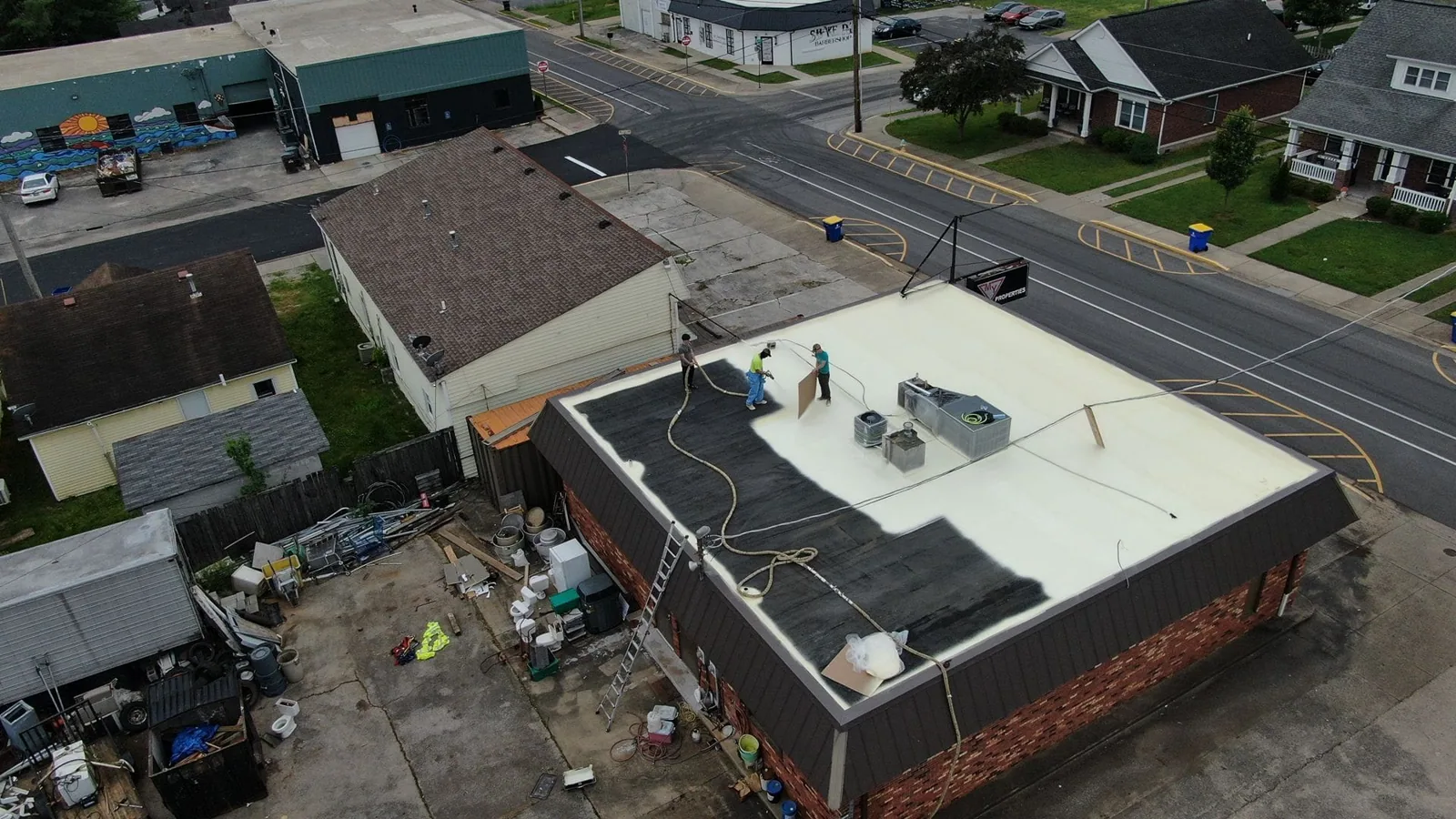
A recover moves faster than a tear-off, and it produces less noise, dust and debris. Tenants below the work see less interruption, and the building is exposed to weather for a shorter time because the old roof stays in place as a temporary layer. That is a real advantage when tenants cannot relocate, for example in space tied to a lab, a clinic or a production line.
It still has its limits. Equipment on the roof must be disconnected, lifted or curbed at the new height. Drains need extensions so water leaves at the finished surface, not at the old one, and the edge detail changes. Curb height and flashing termination are checked at every penetration before the overlay is priced, since a few inches of added thickness change every one of them.
Winter shuts the schedule down quickly. With a January daily mean of 24.9°F at the Lowell station, adhered systems and sealants need conditions most months in the cold season cannot give. A recover booked for spring avoids the weather holds that add cost.
Where recovers fit around Lowell
Recovers suit buildings where the existing roof is dry, the deck is sound and tenant disruption carries real cost. Around the Ayer's City Industrial Park, a roughly 108-acre Tanner Street area that is mostly zoned for heavy industry, any operator running production below the deck will want the line kept moving. Office buildings in Billerica's Concord Road area, which includes multiple large office buildings just off Route 3, have a similar concern with noise and entry points.
Hospitals and clinics have a stricter version of it. Lowell General Hospital is among the regional employers the city lists, and hospital facilities have infection-control and noise requirements that favor roofing methods with less debris. The office building roof is the simplest case, because the tenants stay and the roof is accessible.
For properties in Chelmsford, the crossroads of Route 3 and I-495, the same test sequence applies. The scope starts with readings, then the layer count, then a short list of what the overlay can and cannot cover.
Commercial Roofing Questions
How many layers of roofing can a building carry before a recover is ruled out?
Code limits the count, and the core cuts show the layers actually present. If the roof already has multiple applications, the sections affected are priced as tear-off. Cuts are taken at several points because layer counts can change across one building.
Will a recover over a roof with a history of leaks last as long as a new roof?
Only if the wet material comes out first. A recover on a dry, sound assembly can perform well. Over saturated insulation it inherits the problem, and the new membrane's service life shrinks. The scan tells us which case the building is in.
Does adding a layer raise the roof height at the edges and curbs?
Yes, and it changes flashing termination at every wall, curb and drain. We measure each one before pricing. Where the added thickness leaves flashing below the minimum, the detail is rebuilt, and that rebuilding appears as a line in the scope.
What is the cost difference between a recover and a replacement?
A recover avoids removal, disposal and most deck exposure, which are large cost lines on a tear-off. It adds cover board and edge work. Wet zones and flashing rebuilds close part of the gap, so the figure comes from the readings and not from a rule of thumb.
Can a recover go on after a winter with heavy snow loads?
After a heavy winter the deck, drains and seams are inspected first. Lowell's hazard record includes nor'easters and ice storms, and ponding or crushed insulation shows up in the spring readings. If the deck has deflected, that section is repaired before any overlay is considered.