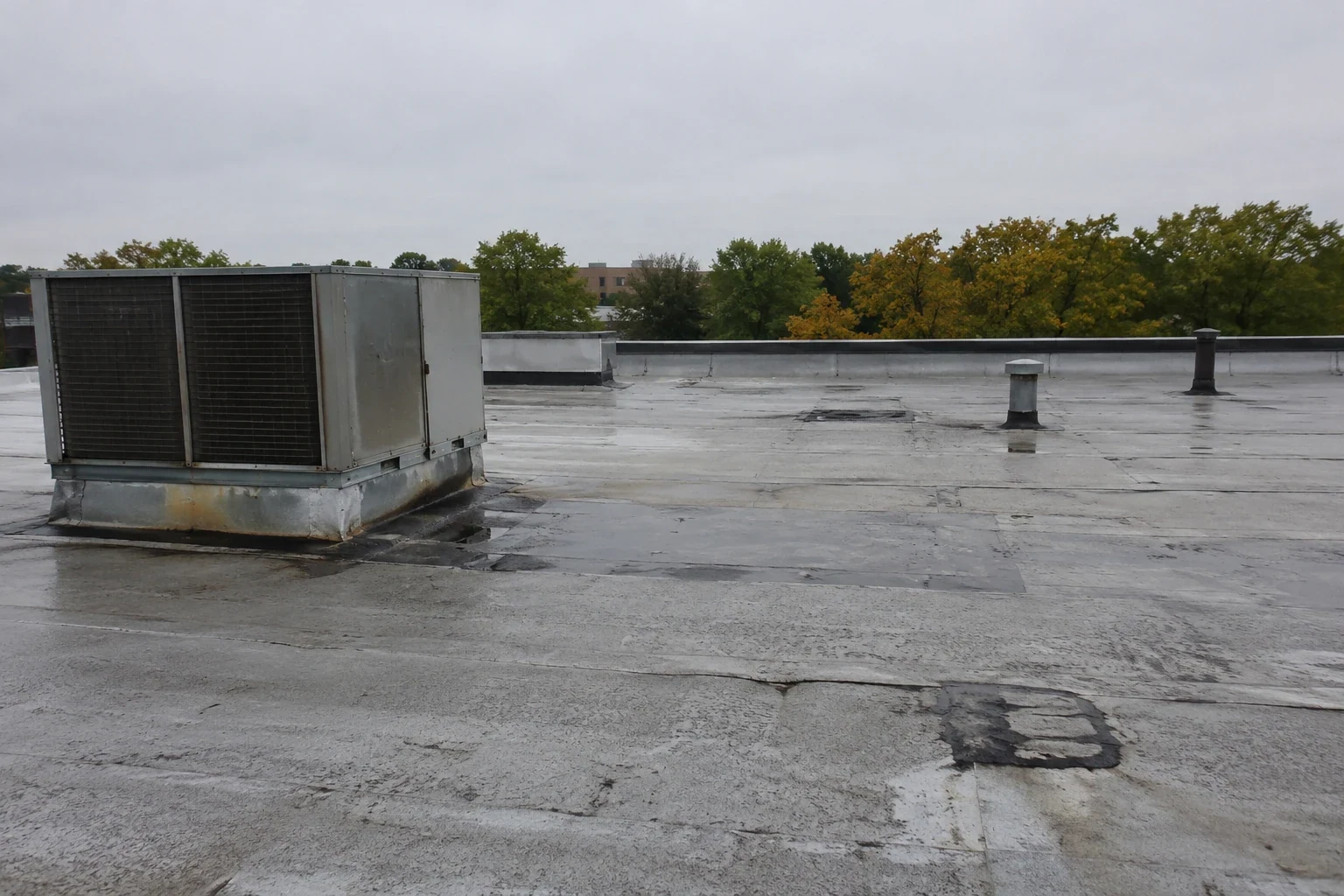
Ceiling plastic and buckets go up first. Someone on the facility team reports water at a tile, a light fixture or a loading door, and the immediate task is to keep it from reaching stock, electrical equipment or people. The roof comes second, and it comes with questions: where was the water on the roof side, which roof section feeds that ceiling, and what did the weather do in the hours before it appeared.
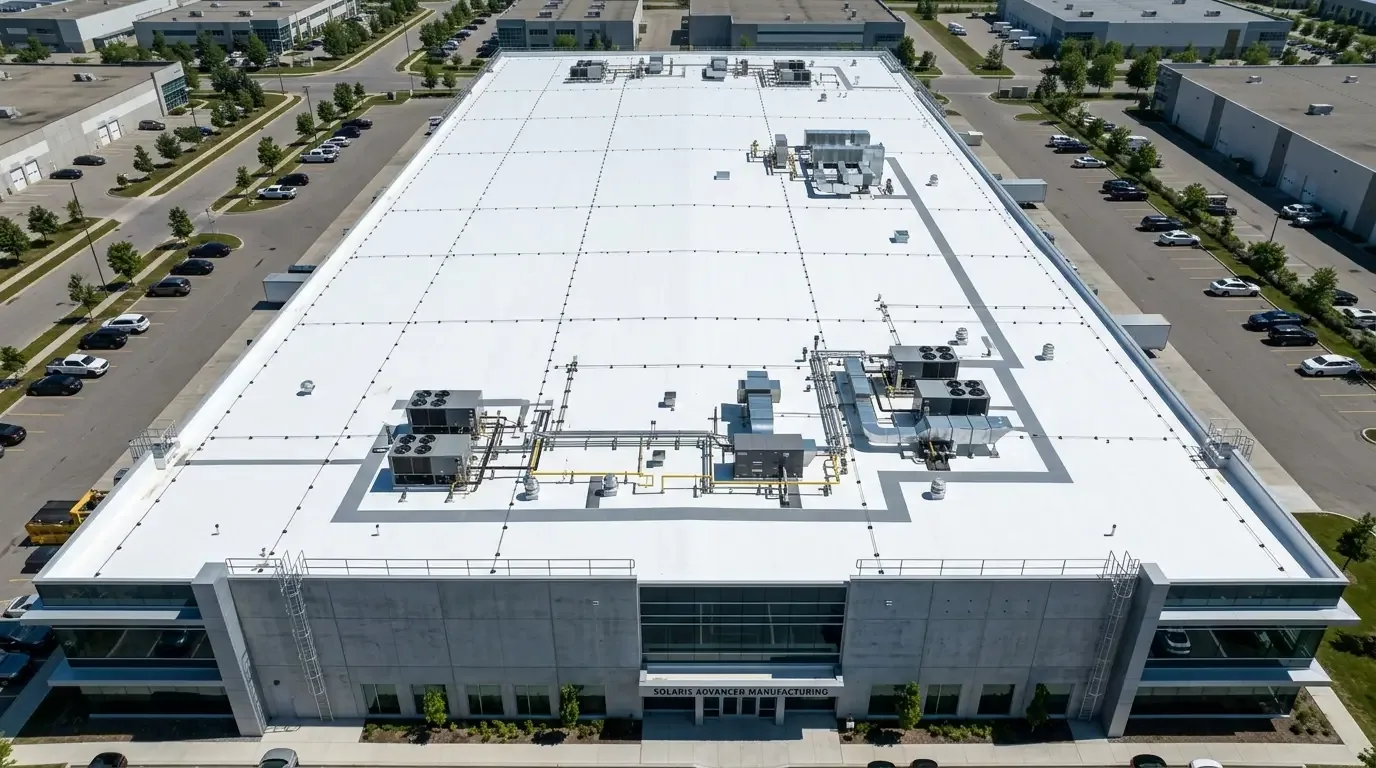
In Lowell, MA, the answers are shaped by a wet calendar. NOAA normals for Lowell add up to 48.51 inches of precipitation a year, so a roof gets tested by weather in almost every month. A leak repair worth paying for ends with a located source, a repair that matches it, and a record of the interior protection used. A patch placed where the water appeared, with no trace behind it, is the pattern that returns next storm.
Tracing the water path
Water travels. It runs along a deck flute, follows a seam, drops through a penetration, and exits at a ceiling joint twenty feet from where it entered. The trace starts inside, with the location of the stain and the ceiling layout, and moves up to the roof along the direction of slope and framing.
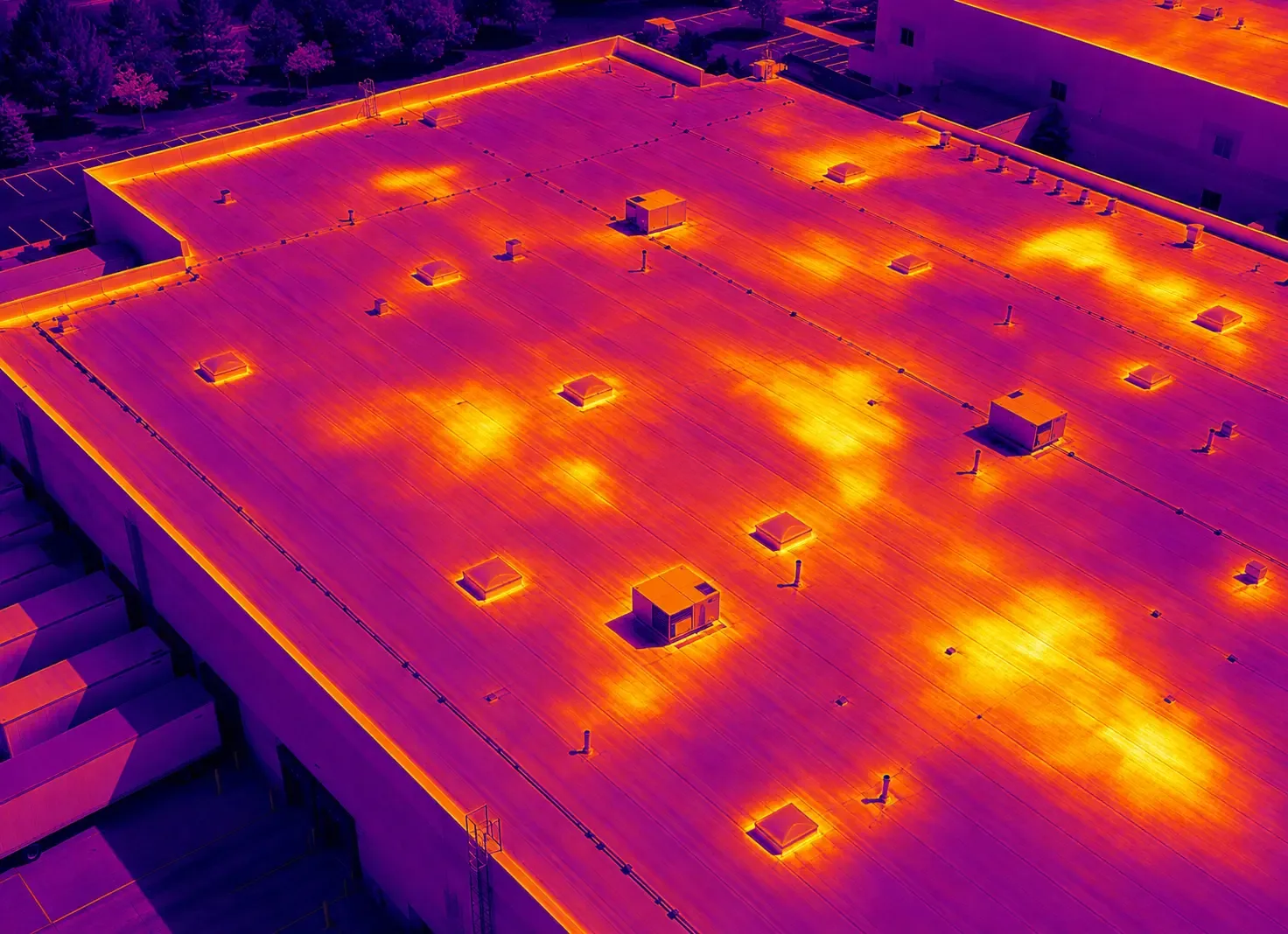
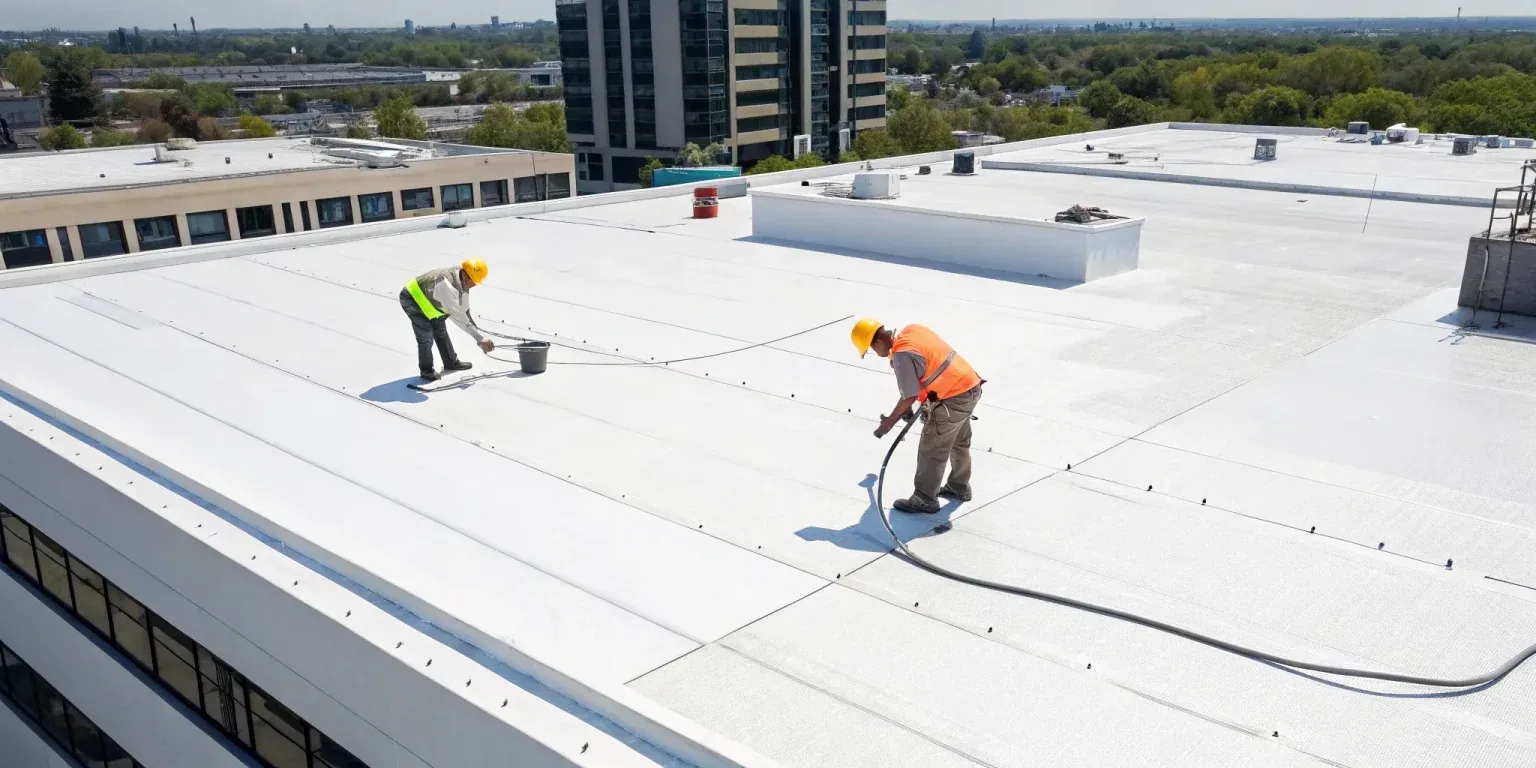
On the roof we look at the usual entry points in an order: drains and scuppers, penetrations, flashing at walls and curbs, field seams, then the membrane itself. Where those are clean, a controlled water test isolates one area at a time. The hose goes on the highest suspect area first and works downhill, with someone inside watching for the first drip. This is slow, and it works. For larger roofs, an infrared moisture survey maps wet insulation, which shows the extent of the problem even when the entry point is hidden.
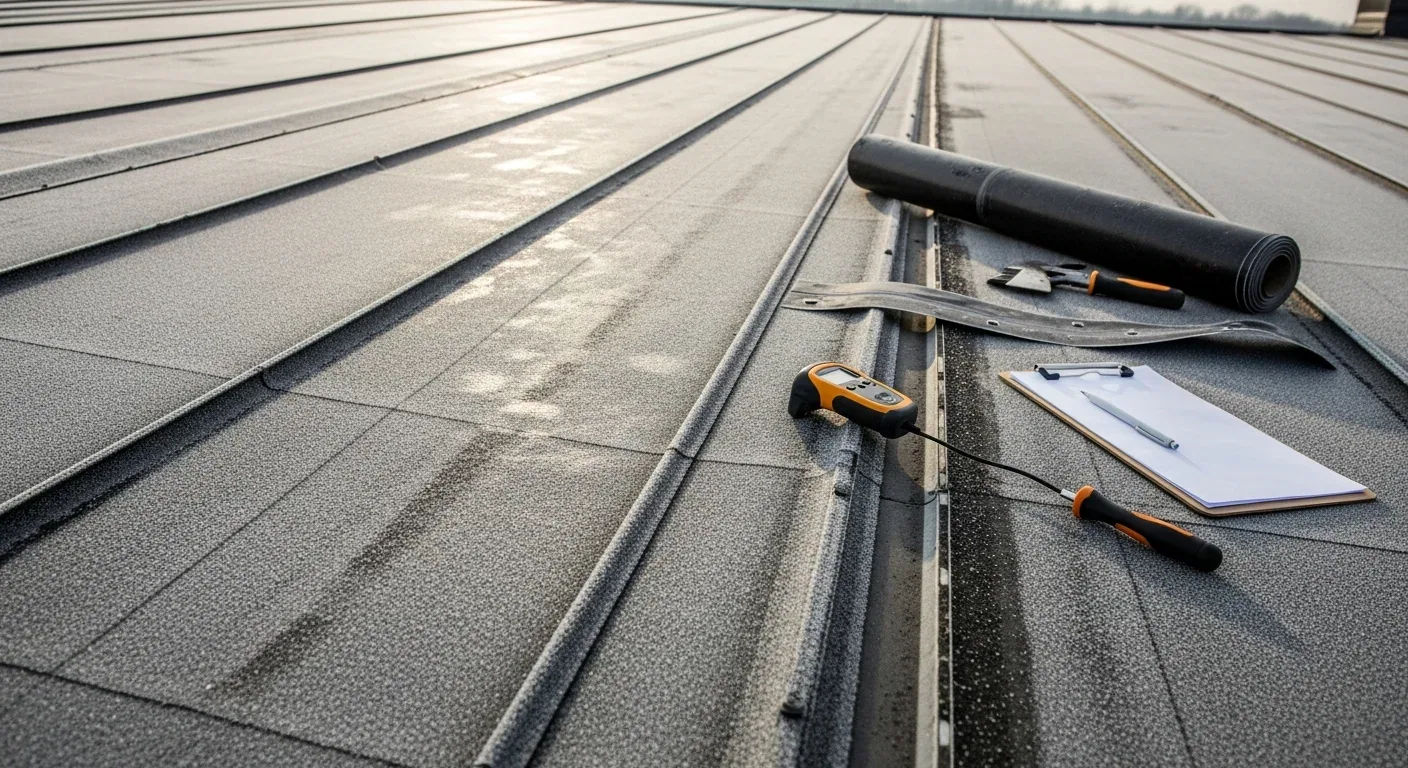
The finding is recorded as an inspection note: where the water entered, how far it traveled, and which roof section it affects.
Temporary dry-in and permanent repair
The two are separate jobs. A temporary dry-in stops water entry now, using a patch, a mastic seal or a taped membrane strip, and it is built to last through the next few weather events. A permanent repair rebuilds the failed element: a new flashing with a mechanical termination, a welded seam, a replaced section of membrane, or new insulation where the old one is saturated.
Cold affects which is possible. A normal January in Lowell averages 24.9°F, so many sealants and adhesives will not cure and a weld on a damp membrane will not hold. A winter leak call often ends with a documented dry-in and a booked date for the permanent work, with the temporary repair photographed so it can be found again.
If the leak comes at the end of a pattern, the plan moves to planned roof repair across the affected sections instead of another single patch.
Drains, ponding and ice
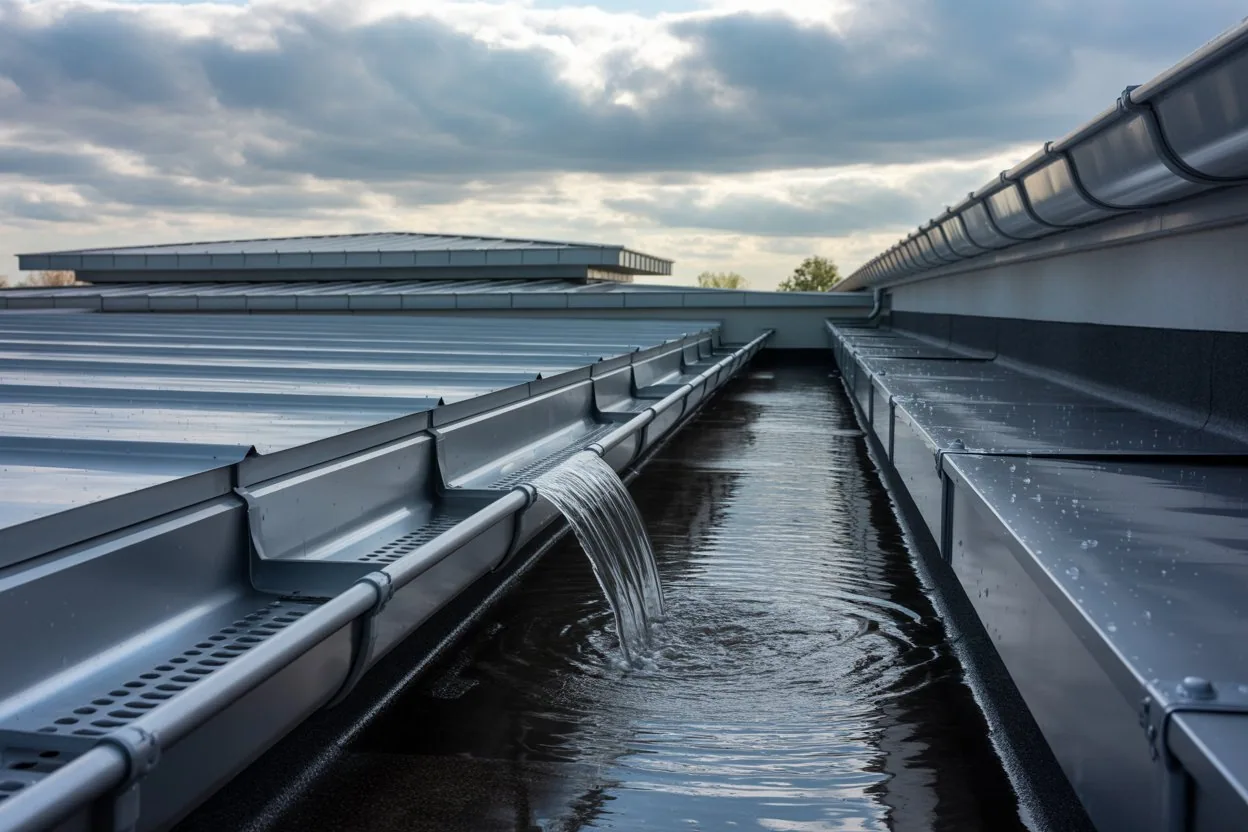
Many leak calls in this climate trace back to water that did not leave the roof. A clogged drain, a scupper blocked by ice or debris, and a low spot that holds water after rain all raise the head of water over seams and flashings that were built to shed, not to hold. The city's hazard planning lists ice storms alongside nor'easters and snowstorms, and repeated freeze and thaw at drains is the result on a roof.
So the leak visit includes the drainage. We clear the path, check that drains and scuppers are open and the sumps are intact, and look for ponding that lasts more than a day after rain. Water standing beside a flashing is a leak waiting for the next storm.
After a heavy snow, the weight on a roof section and the meltwater path both matter. The extreme winter of 1995 left 126.5 inches of snow in the city's record. A snow and ice damage inspection looks at the same low spots, because they are where meltwater collects.
Interior protection and records
The interior plan runs alongside the roof work. Tarps over equipment, moved stock, drip collection, and shutting off circuits where water is near panels are decisions for the facility director, and we ask early which areas are most sensitive. A lab, a clinic or a data room has a different threshold than a storage bay, and the protection plan reflects that before the roof work begins.
Records start at the first call. We note the reported location, the time, the weather, what was protected and what the first visible condition was. Photographs of the ceiling and the roof, taken before anything is touched, give an insurer or a landlord the sequence of events. Where a claim is likely, the documentation follows the format used for roof insurance claim assistance, with dates and readings.
This record also separates emergency work from permanent repair on the invoice. The facility director can see what was spent to stop the water and what was spent to fix its cause, which keeps the cost exposure clear.
Leaks across institutions and mill buildings
Leak response differs by building use. Lowell General Hospital and the UMass Lowell Emerging Technologies and Innovation Center, where research in nanotechnology, plastics engineering, biomedicine and electro-optics takes place, are examples of the kind of use where water entry has to be handled with extra care inside. Downtown, the historic district's mill yards and canal system include a legacy mill-building stock, and exterior changes there go through Historic Board review.
Beyond the city line, commercial property off Route 3 and I-495 in places like Chelmsford and Billerica gets the same trace, protect, dry-in sequence. Offices, flex buildings and shopping centers report leaks differently, but the roof side is the same: find the path, stop it, then fix the cause. Calls inside Lowell and in the towns around it get the same order of work.
Commercial Roofing Questions
How long does it take to find a leak on a large flat roof?
A visible entry point can be found in one visit. A hidden one can take a water test across several sections and a second visit for infrared. The roof plan shows each section tested and cleared, so the search narrows with every step.
Why does the leak return after a patch on the same spot?
The patch was probably placed where the water appeared, not where it entered. Water follows deck flutes and insulation joints, so the entry can sit well uphill. A second patch at the same ceiling spot repeats the mistake until the trace is done.
Can a leak be repaired during a Lowell winter?
A temporary dry-in can, using materials rated for cold. Permanent seam welds and adhesive work wait until the membrane is dry and the temperature allows. We photograph the temporary repair and book the permanent date before leaving the roof.
Does an old leak mean the insulation is wet?
Frequently, if the leak ran for more than a few weeks. Wet insulation loses R-value and can hold water for months. A core cut or infrared scan locates the area, and that area is replaced as part of the repair boundary.
What should the facility director record before the roof visit?
Date and time of the first report, the ceiling location, rainfall or snowmelt in the previous day, and anything moved or covered. Photographs help. That timeline tells us which roof section and which weather event to examine first.