Sunset is the working hour for an infrared survey. Through the afternoon the roof absorbs heat, and wet insulation holds that heat longer than dry insulation does. As the air cools, the wet areas stay warmer, and a thermal camera sees the difference as a pattern on the roof surface. The scan is timed to that window, which is why the crew arrives late in the day and works into the evening.
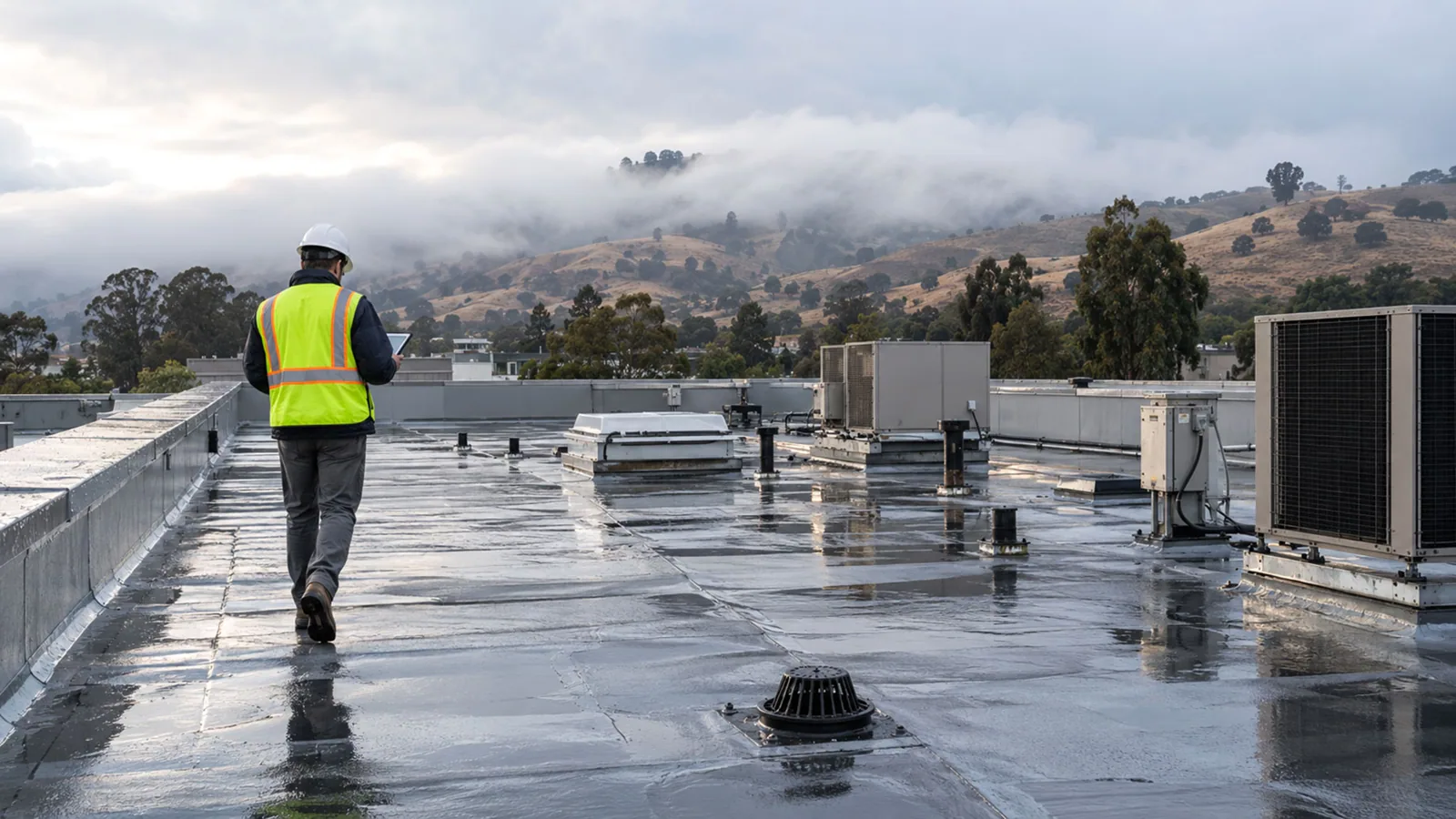
For a facility director in Lowell, MA, the survey answers a cost question that no visual inspection can. How much of this roof is wet? A roof with a few small wet areas can be repaired in place. A roof with wet insulation across several sections cannot be recovered, and a replacement scope has to include removal of the saturated material. The scan marks the boundary, core cuts confirm it, and the facility director gets a plan to price from.
How the scan works
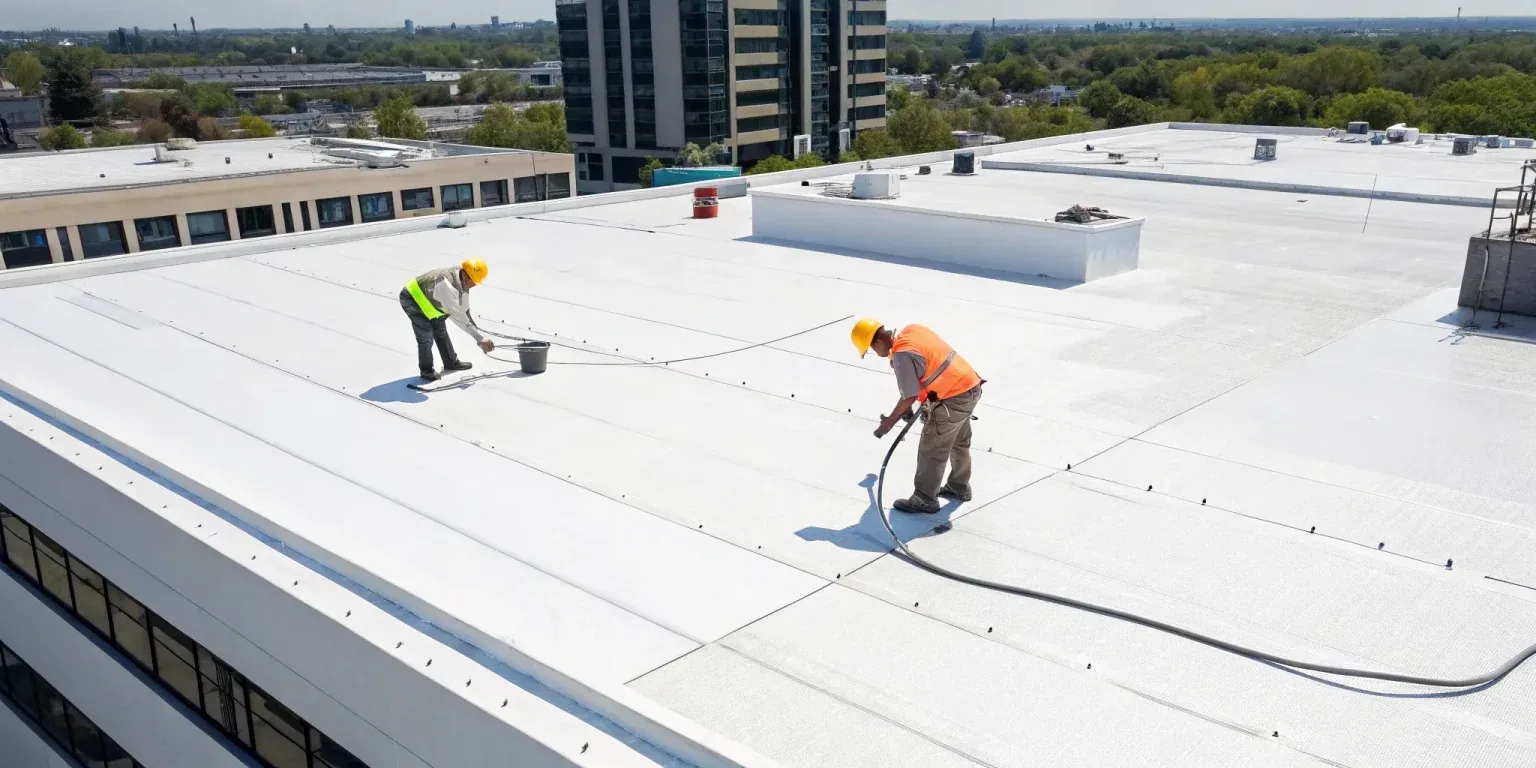
Water conducts and stores heat differently from dry insulation. On a clear, dry day with a warm roof surface and a falling air temperature, wet zones show up as warm patches on the thermal image. The crew walks or flies the roof, captures the images and marks the suspect zones on the roof surface with paint, tied to the plan by measured distances.
Conditions limit the method. A wet surface, heavy cloud, strong wind or a roof that has not warmed all day will blur the contrast. Ballast, pavers and some thick membranes mask readings, so those roofs need other tools. We check the forecast before committing to a date, and an evening that cannot produce clean data is postponed, because a scan taken in poor conditions can mislead a decision worth far more than the cost of a second visit.
Thermal patterns can also come from causes other than moisture, such as a change in insulation thickness or a metal fastener line. The scan marks candidates, and a physical check settles each one.
Core cuts and meter readings
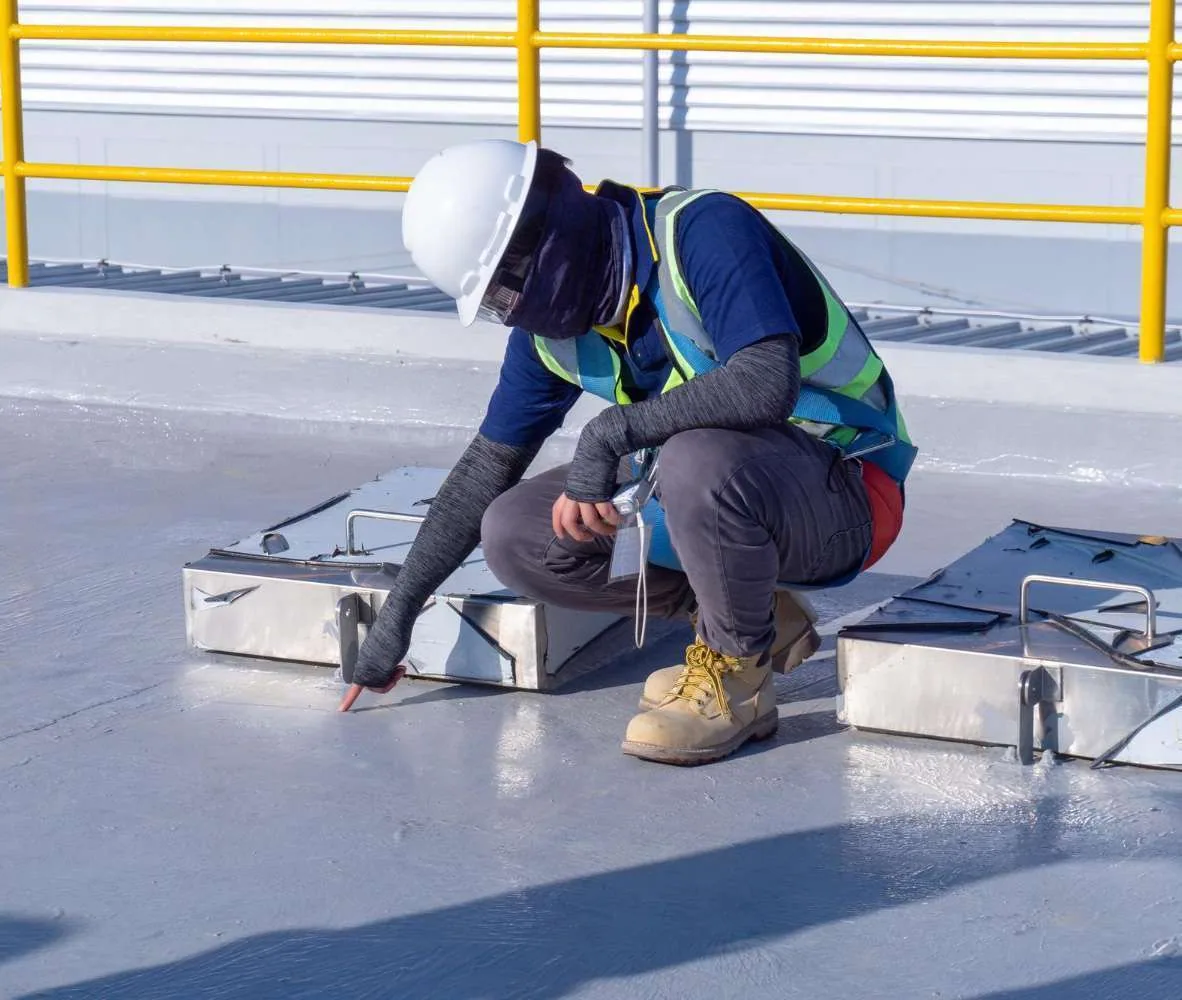
Every thermal anomaly worth acting on gets a confirming test. A small core is cut through the membrane and insulation, and the layers are examined directly: how many there are, what the insulation type is, whether it is wet, and what condition the deck surface is in. Cores taken inside and outside the marked zones confirm where the boundary lies.
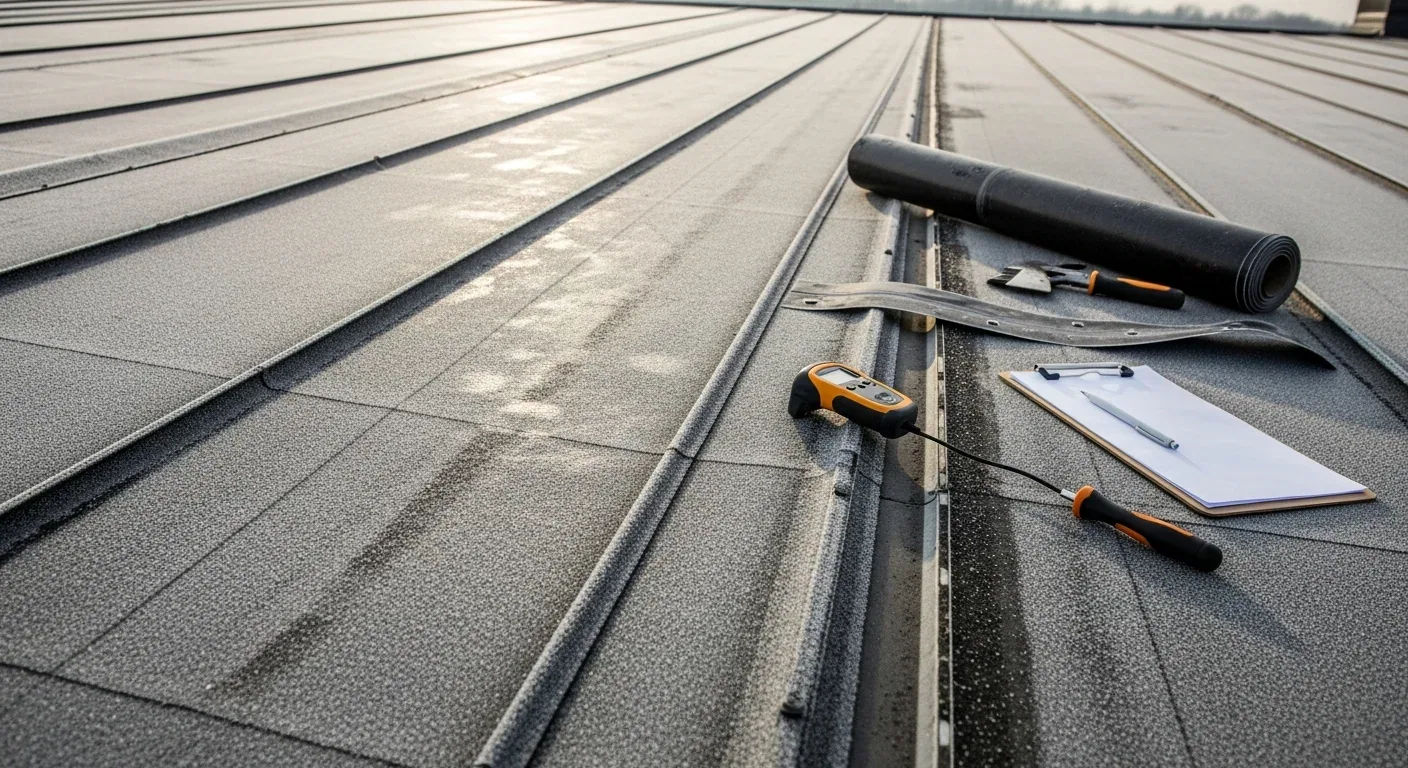
Moisture meters add data between cuts. A handheld capacitance or resistance meter reads across the roof in a grid pattern and finds wet material that the camera missed or masked. Readings are logged by position and plotted on the roof plan.
Each core hole is filled with matching insulation and resealed with a patch the same day, and the location is recorded. The point is to take as few cores as the decision needs. A grid with a handful of cuts at the zone edges is usually enough to place the boundary within a few feet.
The moisture map and what it settles
The deliverable is a roof plan with wet areas outlined and color-coded by confidence: confirmed by core, confirmed by meter, thermal only. Next to it is a table of core findings with photographs, layer counts and insulation condition. The facility director reads one page and sees the extent of the problem.
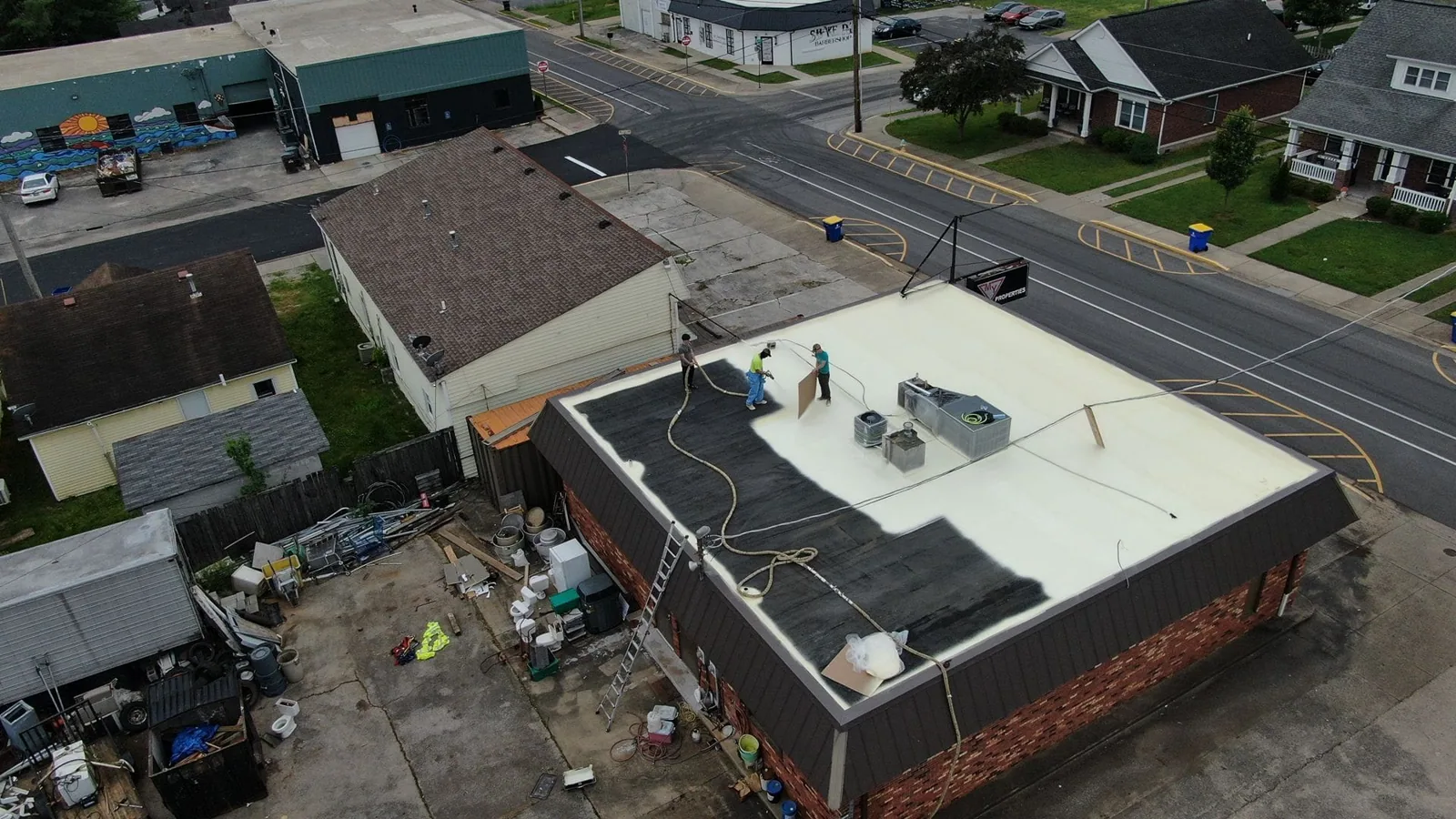
That map drives three decisions. If wet areas are small and isolated, they are cut out and replaced, and the roof continues in service under planned repair. If the roof is dry but worn, a recover over the existing roof may be allowed. If wet insulation spreads across several sections, the map becomes the scope for full replacement, with the removal area and the volume of saturated material estimated from the outlines.
Moisture maps also show whether leaks and wet insulation coincide. When they do not, the interior leak has a different source from the wet area, and the search continues.
Climate, ponding and wet insulation
Insulation gets wet through small openings used again and again by weather. In NOAA's Lowell normals a year totals 48.51 inches of precipitation, with 5.00 inches in a normal October and 4.54 inches in a normal December. A seam or flashing that lets in a little water on each rain accumulates it in the insulation over months. Then freezing cycles open the gap further, and January's 24.9°F daily mean means the cycle repeats through the winter.
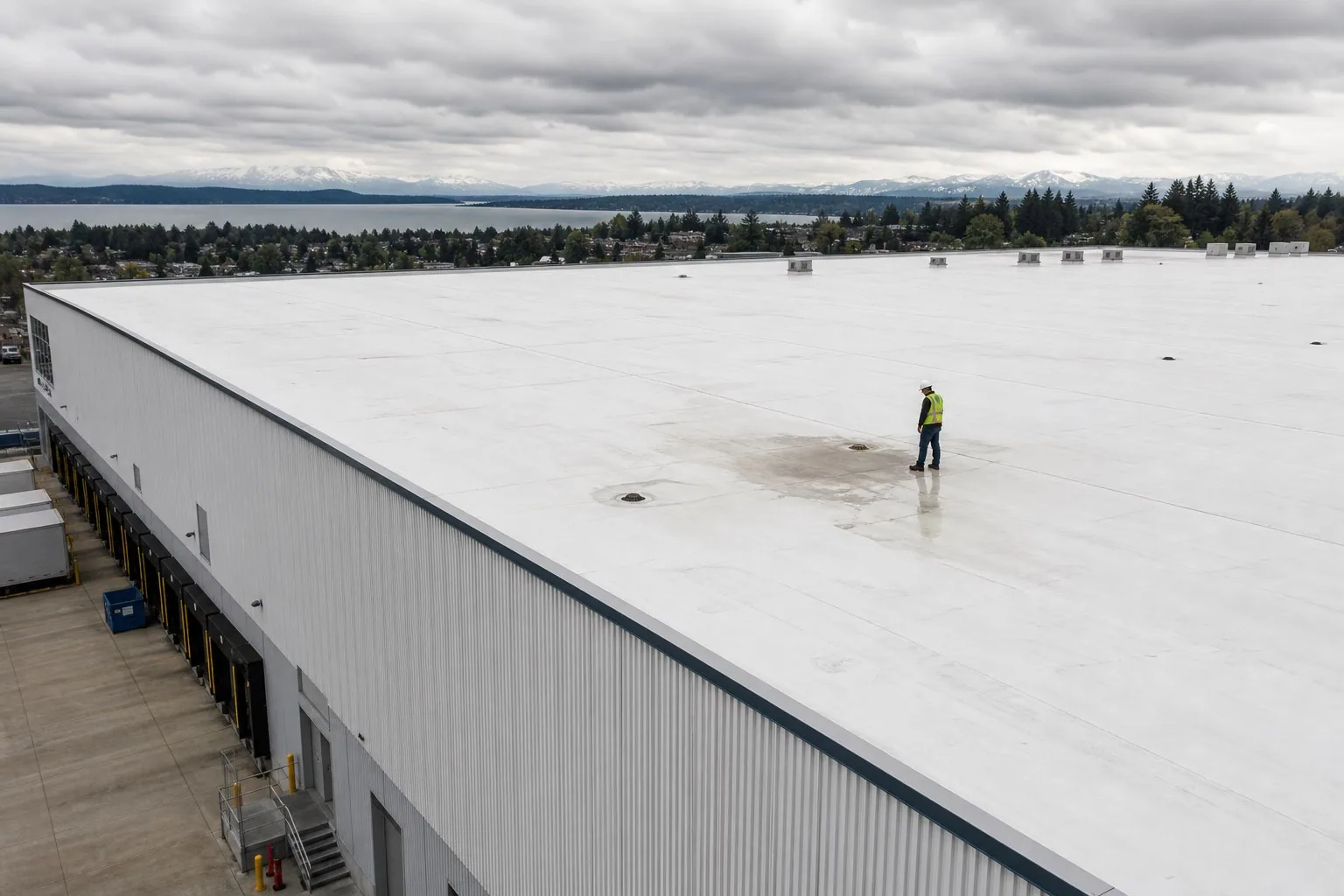
Low spots make it worse. Water that ponds on the roof has more time and head pressure to enter through any weak point, and the wet zones in a survey often line up with the ponding areas on the plan. Nor'easters, snowstorms and ice storms are all in the city's hazard record, and meltwater from a heavy snow arrives in volume on a roof that cannot drain.
Knowing the moisture path helps fix the cause, not only the symptom. A drain that needs resetting or a curb that needs new flashing gets listed with the wet areas it feeds.
Buyers, warranties and portfolios
A moisture survey fits several situations beyond a leak. A buyer weighing a building wants to know whether the insulation is sound before agreeing to a price, and a survey is a standard part of due diligence roof surveys. A manufacturer warranty claim may require proof of the extent of wet material, and the map and cores supply it as part of warranty management.
Owners with several buildings can scan them in order of age or leak history and rank them for spending. The Route 3/129 technology corridor in Chelmsford, which the town identifies as a concentration of large offices and corporate headquarters, suits a portfolio owner who wants the same data on every roof. In Lowell, the same ranking works across a mixed set of districts, from the Hamilton Canal District to the downtown mill yards.
The survey can pair with a hands-on inspection, so the surface findings and the moisture findings land in one report.
Commercial Roofing Questions
Can an infrared survey be done on a roof covered with gravel or pavers?
Results are weaker. Ballast hides surface temperature, so the camera sees less contrast. On those roofs we lean on meter readings and core cuts, and we say in advance how much of the roof the thermal pass can cover.
How many core cuts will the roof need?
As few as the decision requires. A grid of cuts at the edge of each marked zone and a few outside them is usually enough to place the boundary. The number rises when the roof has several layers or mixed insulation.
Does a wet zone always mean the insulation must be replaced?
Wet polyiso or fiberboard that has lost its R-value or its strength is replaced. Some insulation types dry out if the water source is removed. The core shows which material is present and what shape it is in.
What time of year works best for scanning in Lowell?
Late spring through early fall gives the cleanest contrast, with warm days and calm evenings. Winter scans struggle with snow cover, cold surfaces and short days. If a winter scan is needed, we use meters and cores more heavily.
Can the results be used for a roof warranty or insurance dispute?
The map, photographs and core findings document where the insulation is wet and how deep the problem runs. They support a claim or a warranty request, but the cause of the moisture still has to be shown from the roof findings.