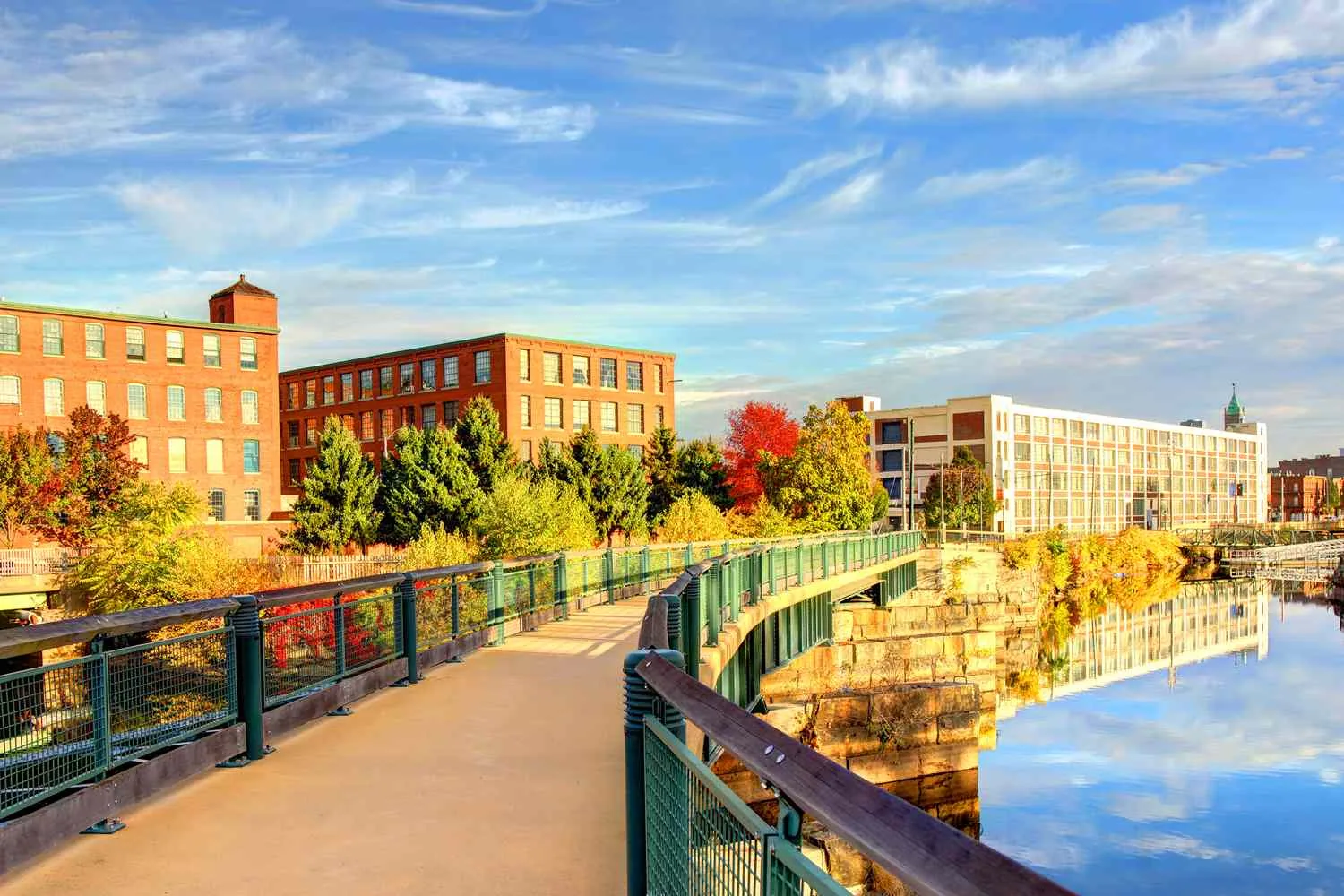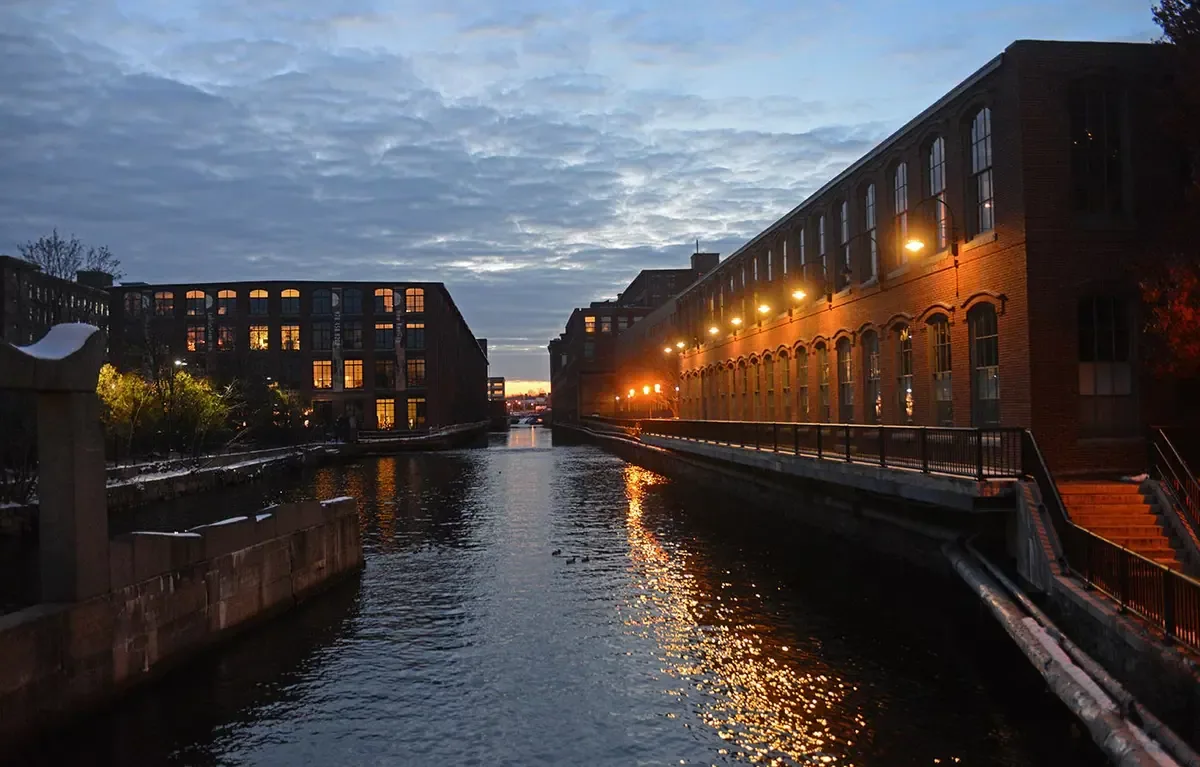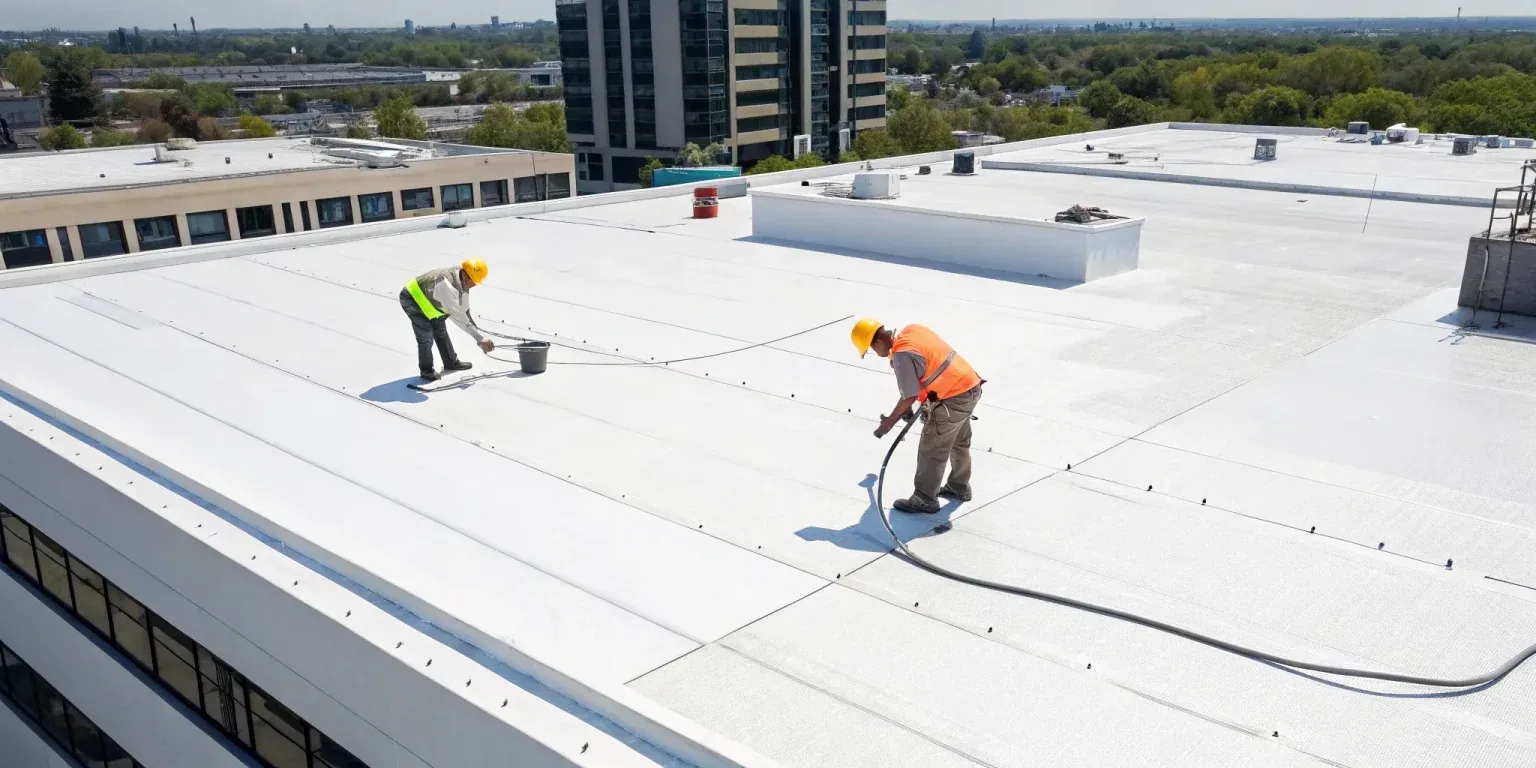
A first walk on a Tyngsborough, MA roof records what the roof is before anyone proposes what it needs. Tyngsborough, MA belongs to the northern tier of the Greater Lowell planning area, where the regional council reports extensive transportation infrastructure and a diverse economy, and the town is part of the labor and service region tied to UMass Lowell and Middlesex Community College. A diverse economy can mean more than one kind of roof, so the walk comes first: membrane or metal, seam style, insulation layers, drains, penetrations, access.
Repair, replacement, recovery, coating and inspection are all offered for flat and metal roofs, and the phone is answered around the clock, holidays included.
First-Walk Record
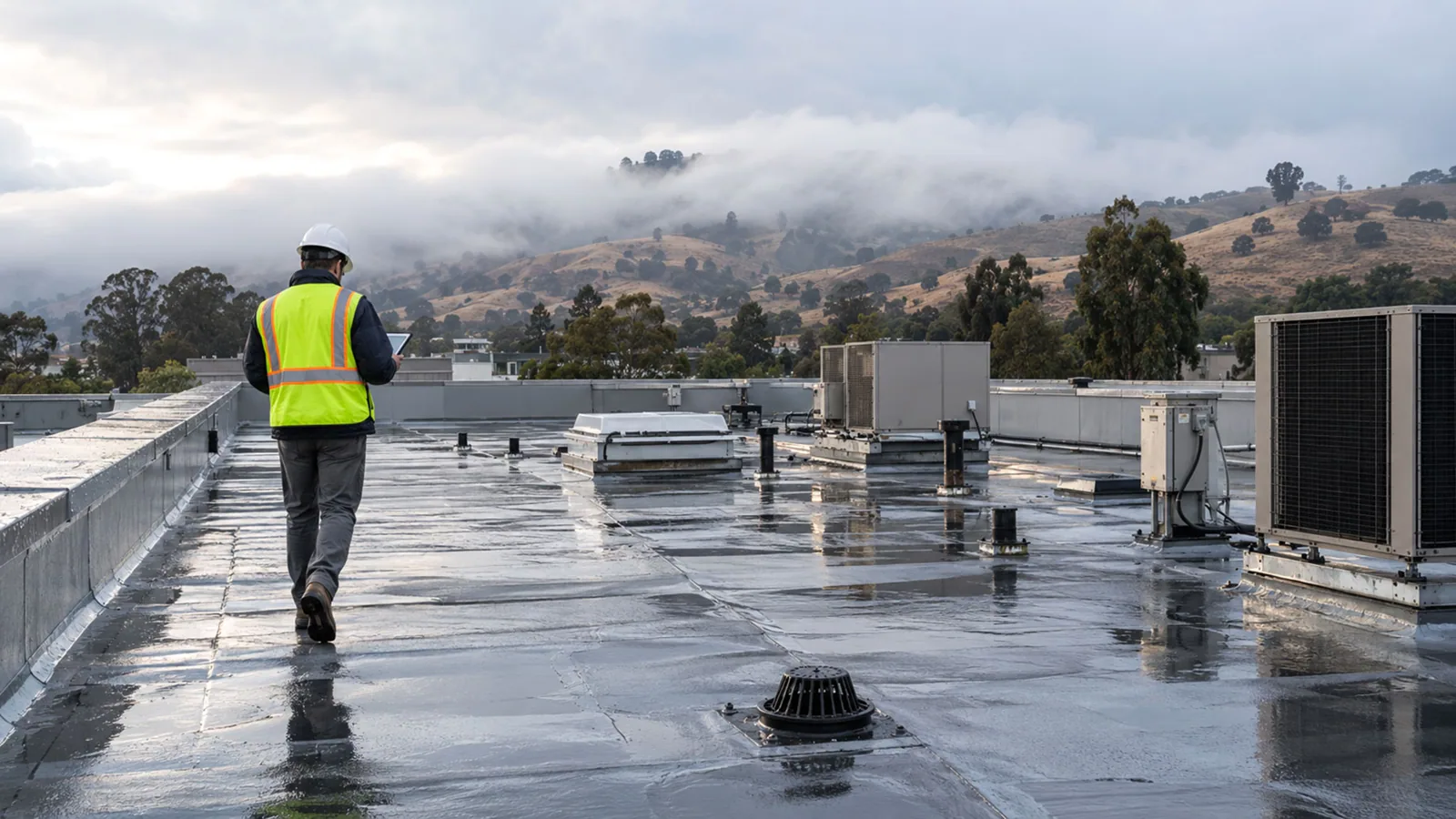
The first walk divides the roof into numbered sections. Each change of height, each change of deck or membrane and each separate drainage zone gets a number on a plan. Every observation that follows carries that number. The walk checks edges and perimeter, then the field, then seams, drains and scuppers, then penetrations and equipment curbs, then walls and parapets. At each stop the crew records the condition, photographs it from a repeatable position and notes whether a test is needed.
The record also lists what could not be seen: an area under equipment, a section covered by snow, a stretch the crew could not reach safely. Each gap gets a note naming the test or visit that would close it. A roof report that hides its gaps invites a surprise; one that lists them gives the owner a plan.
Moisture Readings and Cores
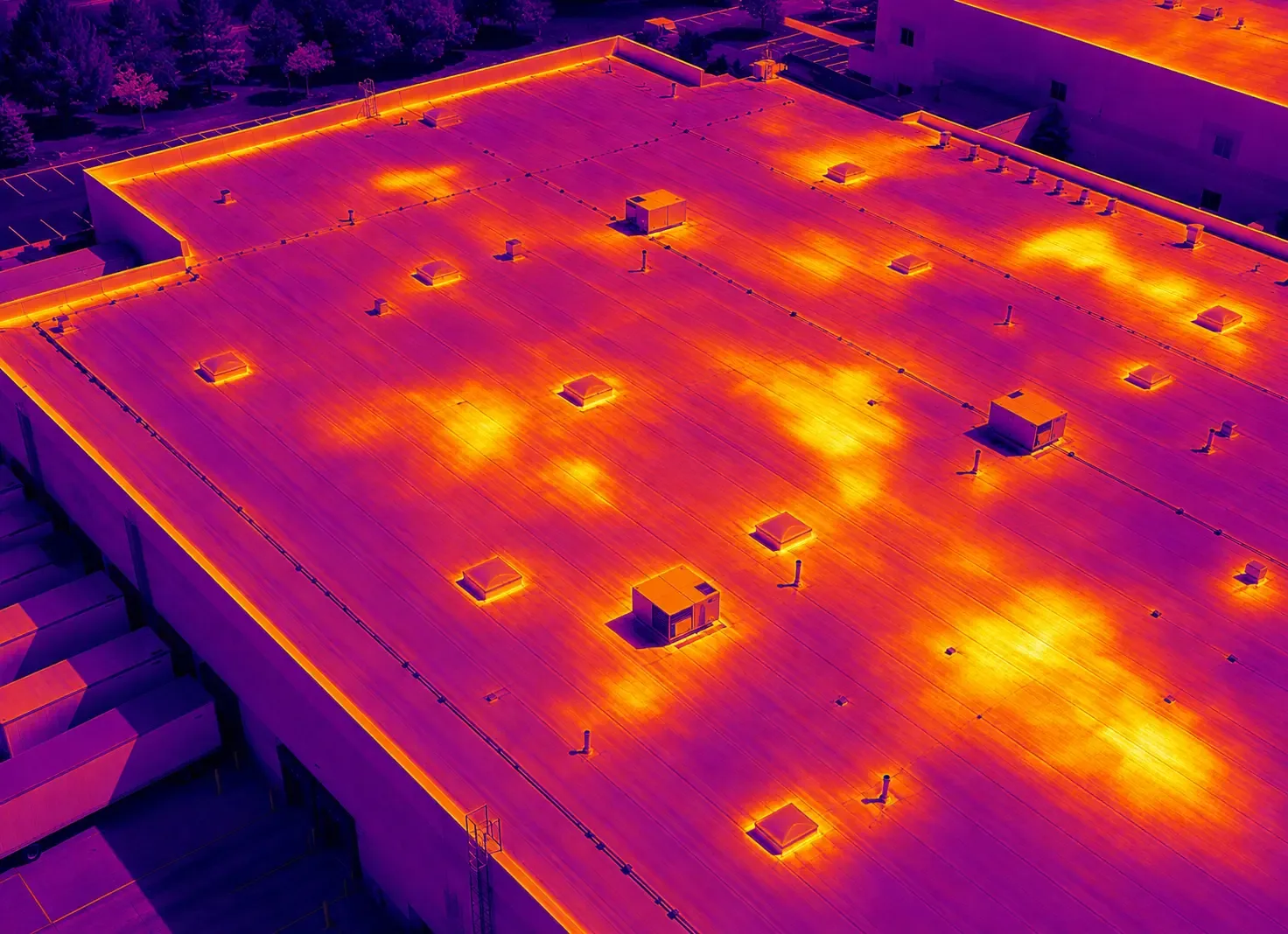
Visual checks cannot show wet insulation. A handheld meter pass across suspect areas, or an infrared moisture survey on a larger roof, produces a map of wet and dry zones. A core cut at the strongest reading confirms the finding and shows the insulation type, thickness and condition. That day the core hole is resealed, and the photo and log entry go into the file.
The readings fix the repair boundary. Dry board stays where it is; wet board is cut out to the line. If the wet area is small, the repair is local. If it spreads across sections, the scope moves toward recover or replacement. Either way, the owner sees the test results next to the price, and the cost update names what could change the figure.
Interior Protection Plan
Interior protection starts on the first call. We ask what sits under the wet area: stock, equipment, records, people. Tarps go over what can be covered. Drip containment goes under what cannot. If electrical equipment is exposed, the occupant receives a shut-off recommendation before the roof is touched. Ceiling tiles that have taken water are photographed, then removed if they threaten to fall.
The plan names who may enter the affected area and who holds the keys. It also notes the hours when work noise, odor and dust are least tolerable, so loud phases land in quiet windows. The facility director sees the list before the crew goes up, and the roof work follows it.
Regional Setting and Staging
The regional council's note on extensive transportation infrastructure speaks to roads, not driveways, and each site has its own approach, lot and neighbors. The staging plan names the delivery route, the lift position, the dumpster spot and the quiet hours. For an occupied building, the occupied building reroofing plan adds tenant hours, entrance protection and interior covers.
Owners with property in Dracut, Lowell or Tyngsborough can hold one maintenance calendar across all of them. Each roof keeps its own file, ratings and follow-up date, because the walk, not the town, decides what each roof needs.
Cold-Season Readiness
As regional context, the Lowell station's normals show a typical January near 25 degrees, 48.51 inches of precipitation in a year, and 4.54 inches in a normal December. Nor'easters, snowstorms and ice storms are on the Lowell hazard list, and the record winter of 1995 produced 126.5 inches of snow. Tyngsborough roofs plan drains, access and sequencing around the same regional pattern.
A fall visit clears drains, checks edges and records seam condition. A post-thaw visit looks for ponding, lifted laps and ice damage. Small repairs made during these visits are logged with the date, material and section number, so the owner can see whether a section is steady or starting to need more attention. A preventive maintenance plan keeps that rhythm.
Drainage and Edge Checks
Water that cannot leave the roof tests every seam. After a report, the crew clears each drain, scupper and gutter outlet on the affected section and notes where water stood. Ice at an outlet is photographed, and the thaw path is checked. Edge metal is tested by hand: coping, drip edge and termination bars are pushed to find what moves.
A loose edge ranks ahead of cosmetic work, since a gust can lift it and widen the damage in a single event. A blocked drain ranks high; the next storm adds both load and water. Both are priced as separate lines, so the owner can approve the small protective work without approving a larger scope.
Options, Cost Drivers and Closeout
The owner's options follow the evidence. A repair suits localized damage over dry board. A recover suits a sound deck and dry insulation. Replacement suits wet board across sections or a roof already recovered once. Coating suits a dry, well-adhered membrane with weathering. Each path has cost drivers: area, details, insulation thickness, edge metal, access and the weather hold.
Filings from July 1, 2025 follow the state's tenth-edition code, whose base is the 2021 IBC; stretch energy provisions, where a town has adopted them, are confirmed before insulation is specified.
When the work ends, the closeout file lists the roof sections worked, the materials used, the tests run and the photographs taken. It names anything left in place on purpose, such as a patched area scheduled for later replacement, with the date to look again. The file is written to be forwarded to a property manager, a lender or a tenant, and the next crew can pick up where the last one stopped without a phone call.
For owners comparing replacement against repeated repair, the file also holds the repair history by section. A roof with the same detail failing in the same place three times tells a different story from a roof with three unrelated repairs, and the record makes that difference visible.
That closeout file is also where the next follow-up date lives, set against the season so the next drain check comes before the weather, not after it.
Commercial Roofing Questions
What does the first walk leave out on purpose?
Nothing is left out silently. Areas the crew could not see or reach are listed, with the test or visit that would settle each.
Why map moisture before choosing a repair?
The map sets the cut line. Without it a patch covers the stain while wet board keeps spreading under it.
Can one calendar cover roofs in several towns?
Yes. Each roof keeps its own file and ratings, and the visits are scheduled together to save mobilization.
What changes a cost update?
Wider wet areas, deck findings under the board, a longer weather hold or added access limits. The update names which of them could move the price.
Which approvals does a replacement need?
The local building department decides, and the edition and any added energy rules are written into the scope first.