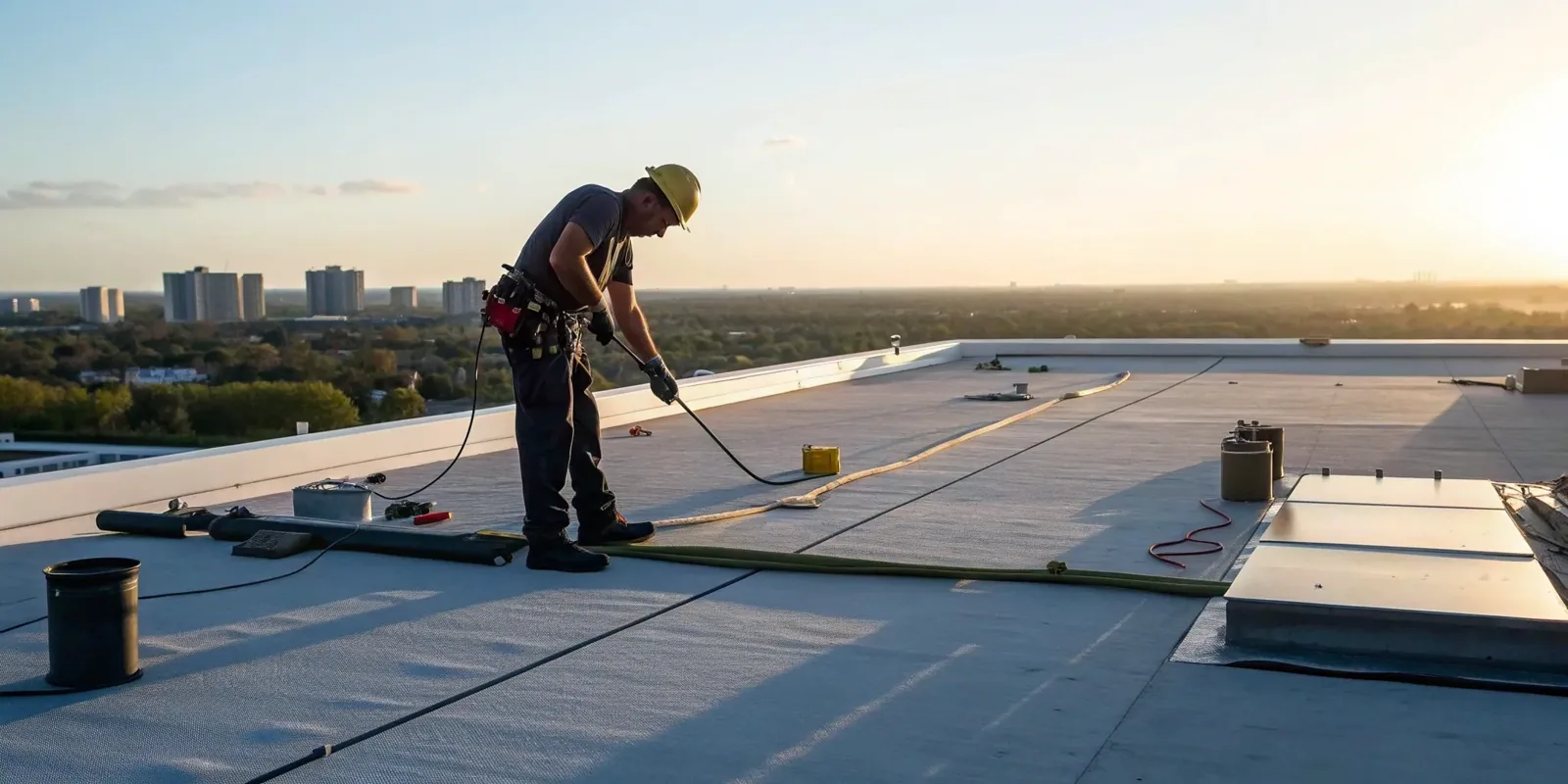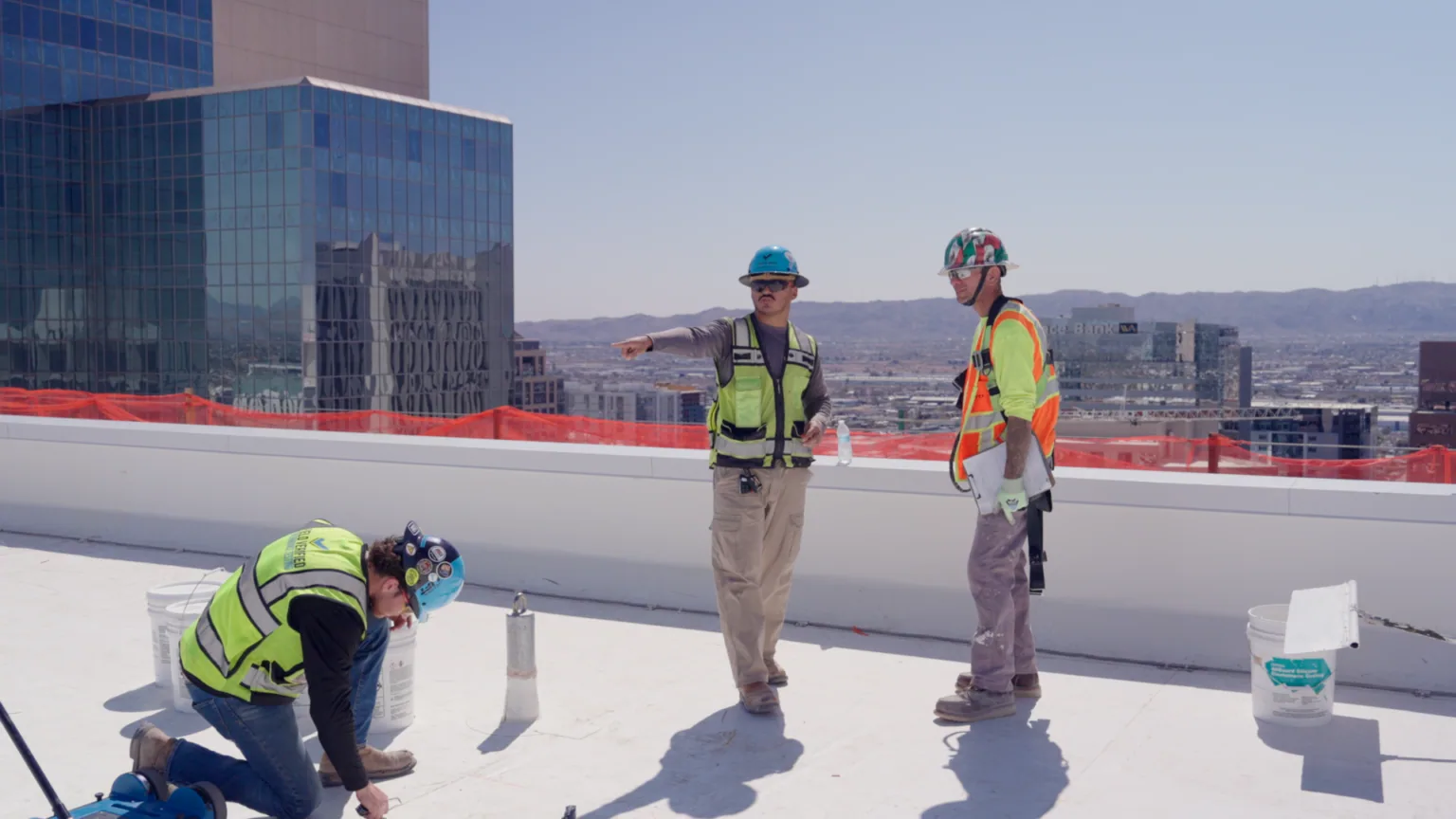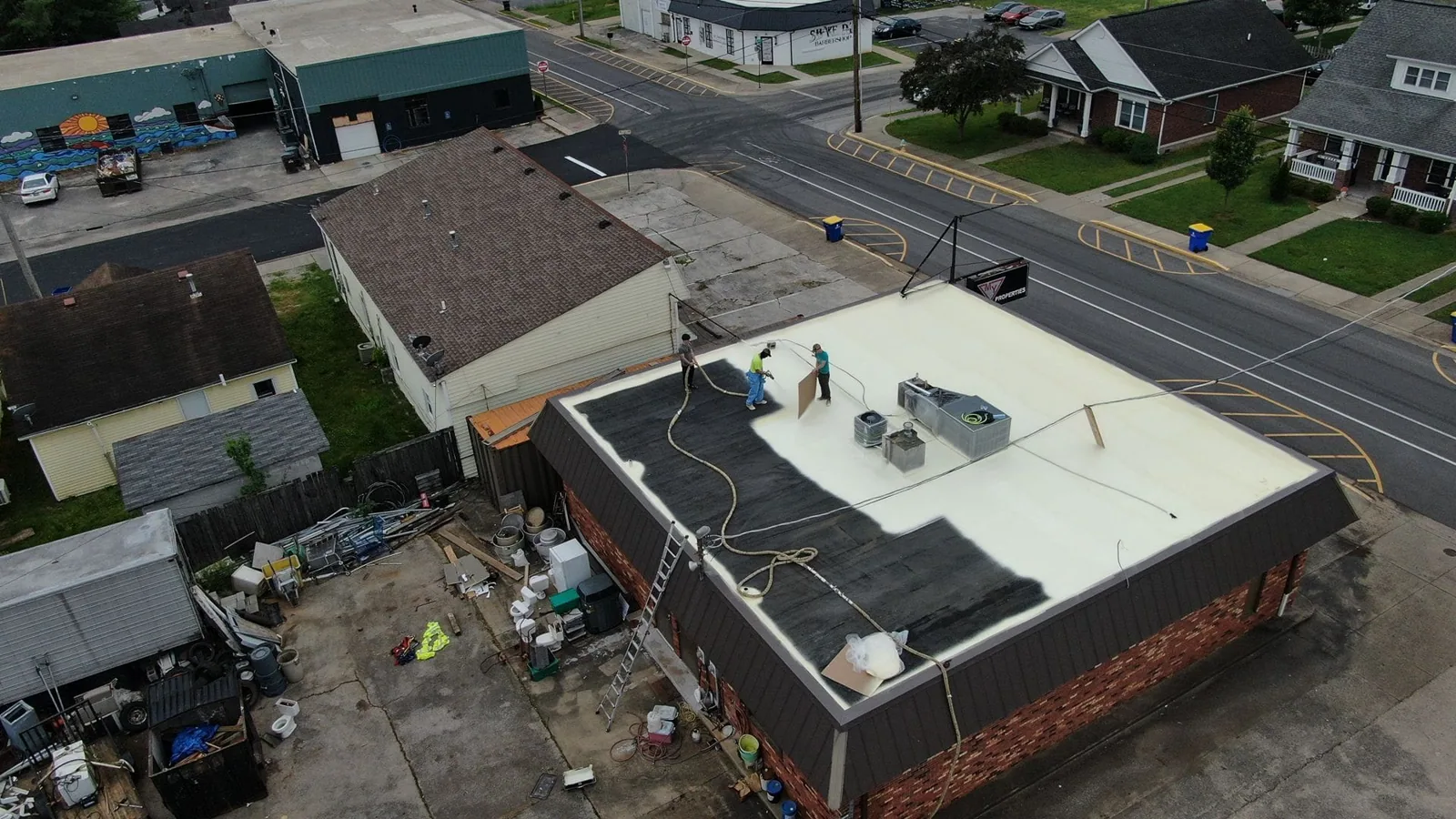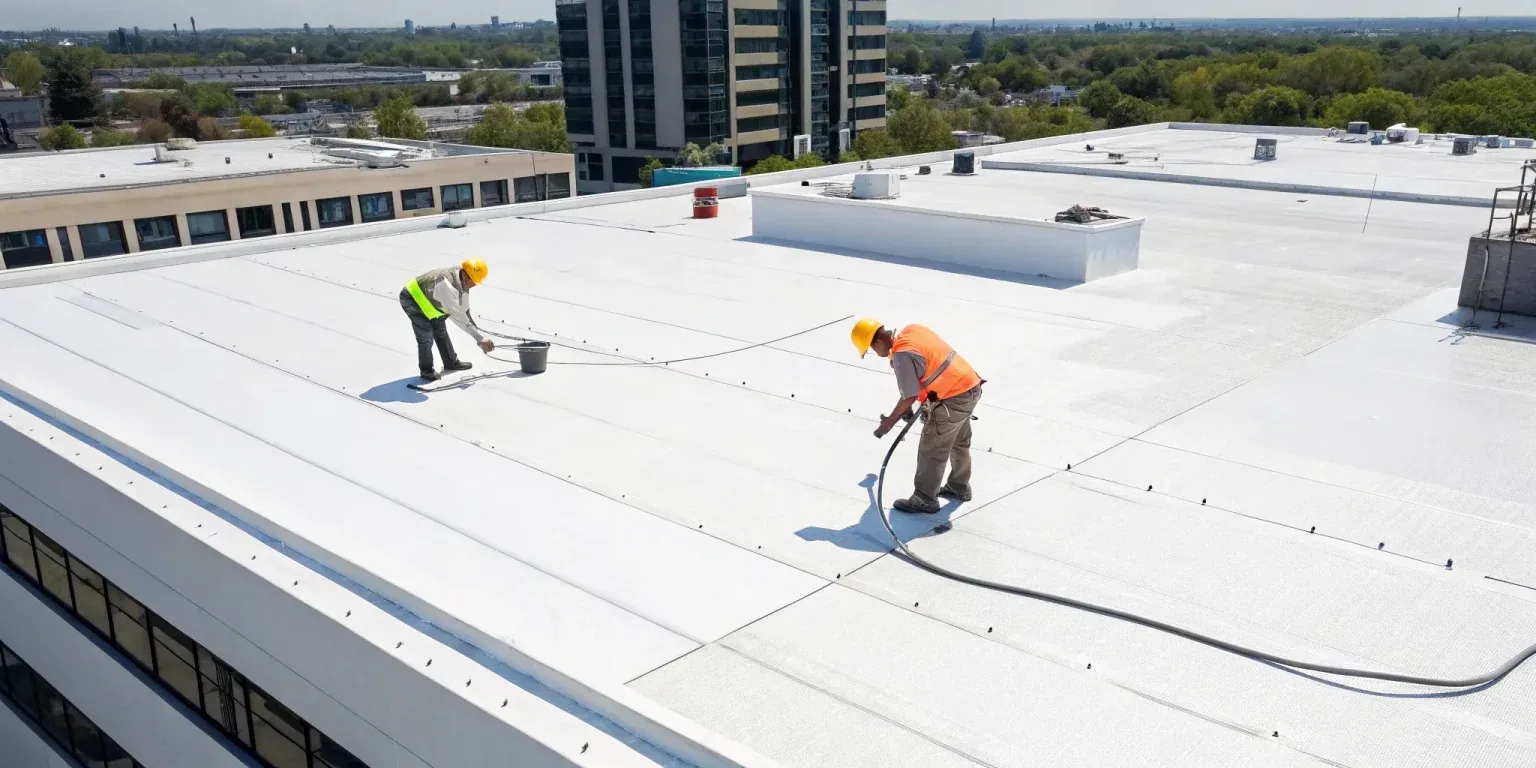
Before a roof crew enters a manufacturing site, the facility director needs a boundary that fits the production plan. We confirm the active roof section, process equipment below it, safe access and the shift window available for noisy or hot work. A leak response begins with interior protection and temporary dry-in; permanent repair follows after the condition and material requirements are checked.
Lowell's economic planning identifies advanced manufacturing among the region's strengths. We inspect the actual membrane, seams, penetrations, insulation and deck, then price each repair boundary so production leadership can make a controlled decision. A report should also distinguish an active drip above a work cell from a roof condition that can be scheduled during planned downtime. We record the location, interior protection and who can authorize access before setting the return window. We log these items for the next shift handoff.
Production and roof access
A plant may have exhaust, ductwork, piping, electrical runs or equipment curbs that limit where a crew can stage. The pre-work walk identifies those routes and the areas below them. We coordinate roof access, escorts, lockout boundaries set by the facility and the work hours that avoid critical production periods. If an interior area needs protection, it is named before tools come out.
Where work must cross a shift change, the daily handoff records what was opened, what has been sealed and what remains temporary. A weather hold can change the order, so the facility contact receives the next return window and any exposure that remains. We separate roof scope from process-system work and do not move or disconnect plant equipment. An occupied-site work sequence can keep those responsibilities and access limits visible to the team.
Inspection at the roof system
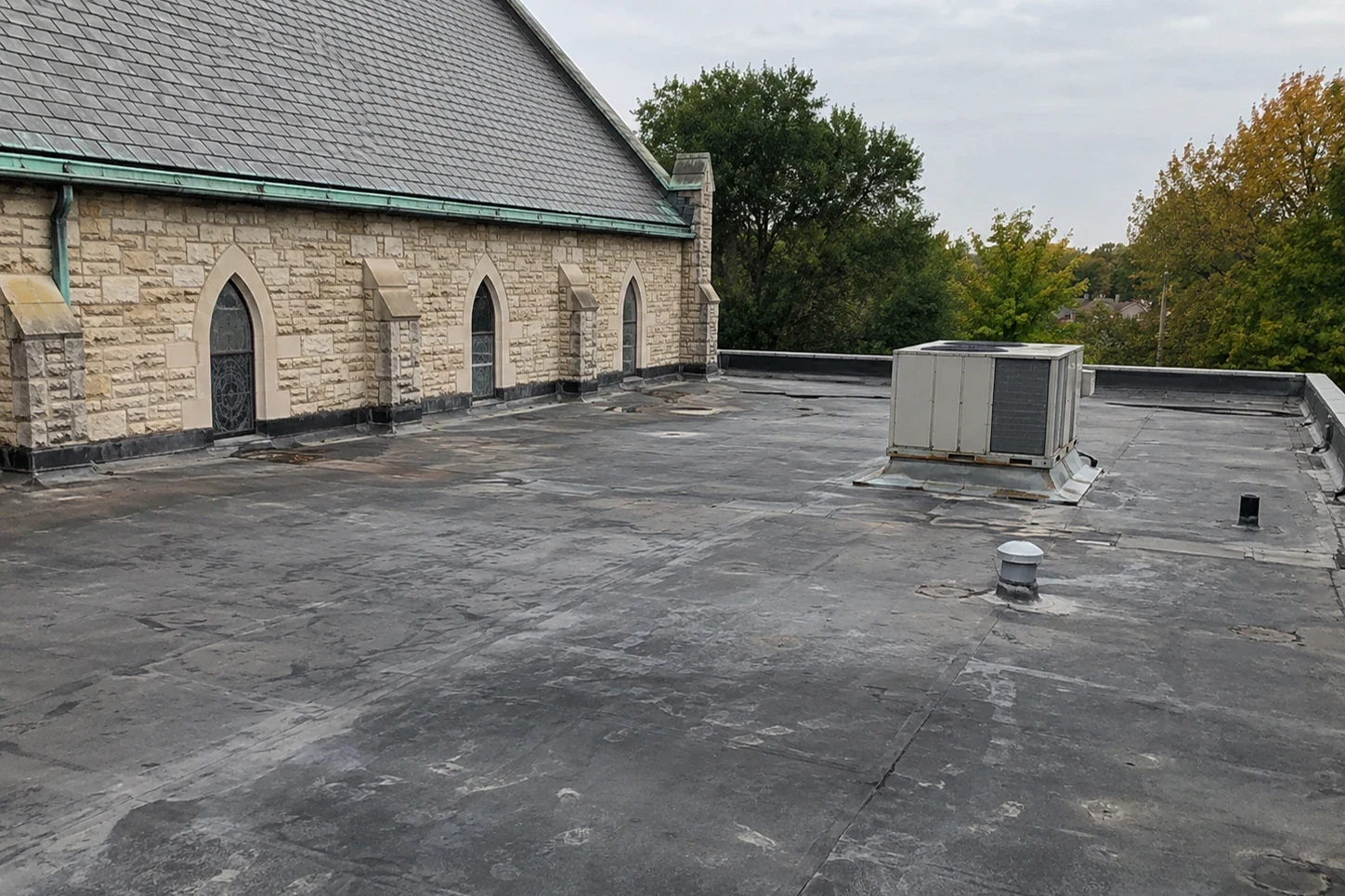
We inspect field membrane, seams, base flashing, penetrations, edge metal, drains and equipment supports. Each finding is marked by roof section and photographed. If a process exhaust or heat source sits near a membrane detail, we check the actual clearance and condition instead of assuming the material is damaged. Soft decking, wet insulation or repeated seam openings can change the repair boundary and require additional testing.
A hands-on commercial inspection gives the plant a current list of repair now, repair during the next planned visit and monitor items. If moisture extent is uncertain, a survey or core sample may determine whether insulation can remain. We show that test as a scope decision. The capital plan can then separate urgent production protection from replacement needs that fit a later shutdown.
Repair, recovery and replacement
Isolated punctures, open seams or loose flashing may be repaired when the surrounding assembly is sound. The repair follows the installed system, with preparation and compatible materials rather than sealant over a moving edge. If wet insulation spans several bays, the plan compares selective removal with broader replacement. A recover is considered only after verifying moisture, drainage, attachment and project requirements. The condition, not the plant's business category, decides the option. The warehouse roof inspection shares this same condition test, while its access plan follows loading and storage needs instead of process controls.
Replacement can be divided into roof sections that align with safe access and operating windows. We state when tear-off begins, where the temporary dry-in ends and what inspection hold must clear before the next area opens. A phased replacement scope should identify material delivery and debris routes as clearly as the roof work itself. For isolated defects, a repair visit may preserve serviceable areas while a capital decision is developed. The report also lists which sections sit over process areas and which sit over storage or offices, so the facility director can see where a shutdown window is needed and where work can run during production.
Local industrial and commercial context
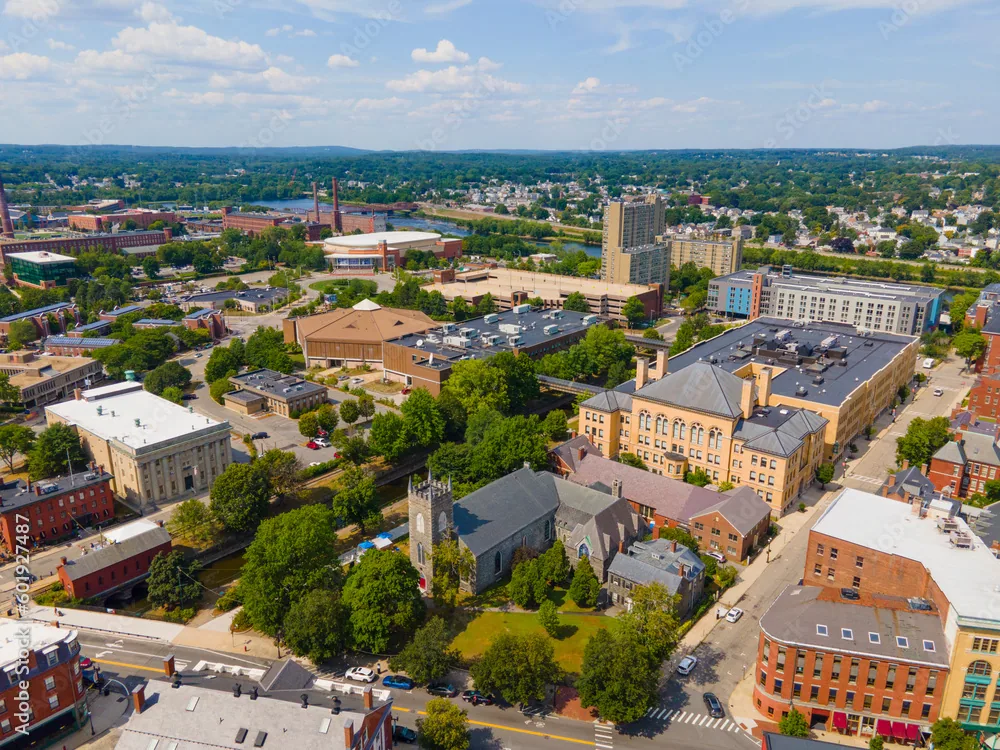
The Ayer's City plan covers 108 acres around Tanner Street, where heavy industry is the dominant zoning and commercial and residential uses meet the perimeter. The Lowell Connector and Tanner Street mark two edges. For a plant roof, we verify the truck route, equipment staging, material access and installed assembly with the facility contact.
The city's master plan identifies advanced manufacturing and defense contracting as regional strengths, and the local economic-development office lists MACOM Technology Solutions and Somerset Industries among major employers. In nearby Chelmsford, the Route 3/129 technology corridor includes large offices and corporate headquarters. We set the plant's work window with its operations contact, then keep each roof phase and access restriction on the same schedule. Where a plant is in Chelmsford, we coordinate travel, access and staging from the actual property plan.
Cost and timing controls
Manufacturing roof costs move with the roof system, failed locations, testing, access equipment, interior protection, material handling and the number of phases. A repair above a clear mechanical room is different from work over an active line with controlled access. We list each cost driver and the assumption attached to it. If a test or shutdown window could change the price, it is identified before approval and crew dispatch. Material delivery, hoisting, debris removal and escorted access are listed when they affect the sequence. A facility manager can compare the approved scope with the production calendar before committing to a return date.
A January daily mean of 24.9°F at Lowell's station makes freeze-thaw a work-planning factor for roof materials and conditions. Cold or wet surfaces may require a temporary dry-in first and a permanent weld or adhesive repair later. Lowell's winter-hazard materials record 126.5 inches of snowfall in 1995, a historical figure that underscores why a snow-season review should check drains, edge details and safe access. We state the weather hold, the exposed boundary and the return date. Before work resumes, the facility contact confirms that the area below is clear and the approved access path remains open. For older metal sections, a standing-seam review checks panel attachment, laps and flashing at actual conditions. A distribution facility roof may face similar logistics, but a plant's process access and equipment limits receive their own plan.
Commercial Roofing Questions
Can roofing work happen during an active production shift?
It can when safe access, noise limits and interior protection are agreed before mobilization. We identify the roof section and area below it, then set the work window with the plant contact. Tasks that require a shutdown or restricted zone are listed separately.
How do you protect process equipment below a leak?
The first response is to identify the water path and protect exposed equipment or controls with the facility team. We document what is covered and where the temporary dry-in begins. Any electrical isolation or process shutdown remains under the site's authorized staff.
What makes a roof repair larger than a seam patch?
Wet insulation, a weak deck, repeated seam failure or failing details across adjacent sections can expand the boundary. We map the condition and show which test or opening would settle the decision before ordering material.
Can replacement be staged around maintenance shutdowns?
Yes. We can sequence roof sections against the planned shutdown and access schedule, with each phase showing removal, temporary protection and inspection points. The facility director receives the next work window and any weather hold in the scope.
Does Lowell winter weather affect repair timing?
Cold, moisture and ice can restrict permanent membrane work. We can price a temporary dry-in separately, then schedule the permanent repair when the substrate and conditions support the selected method. The report records what remains to be completed.