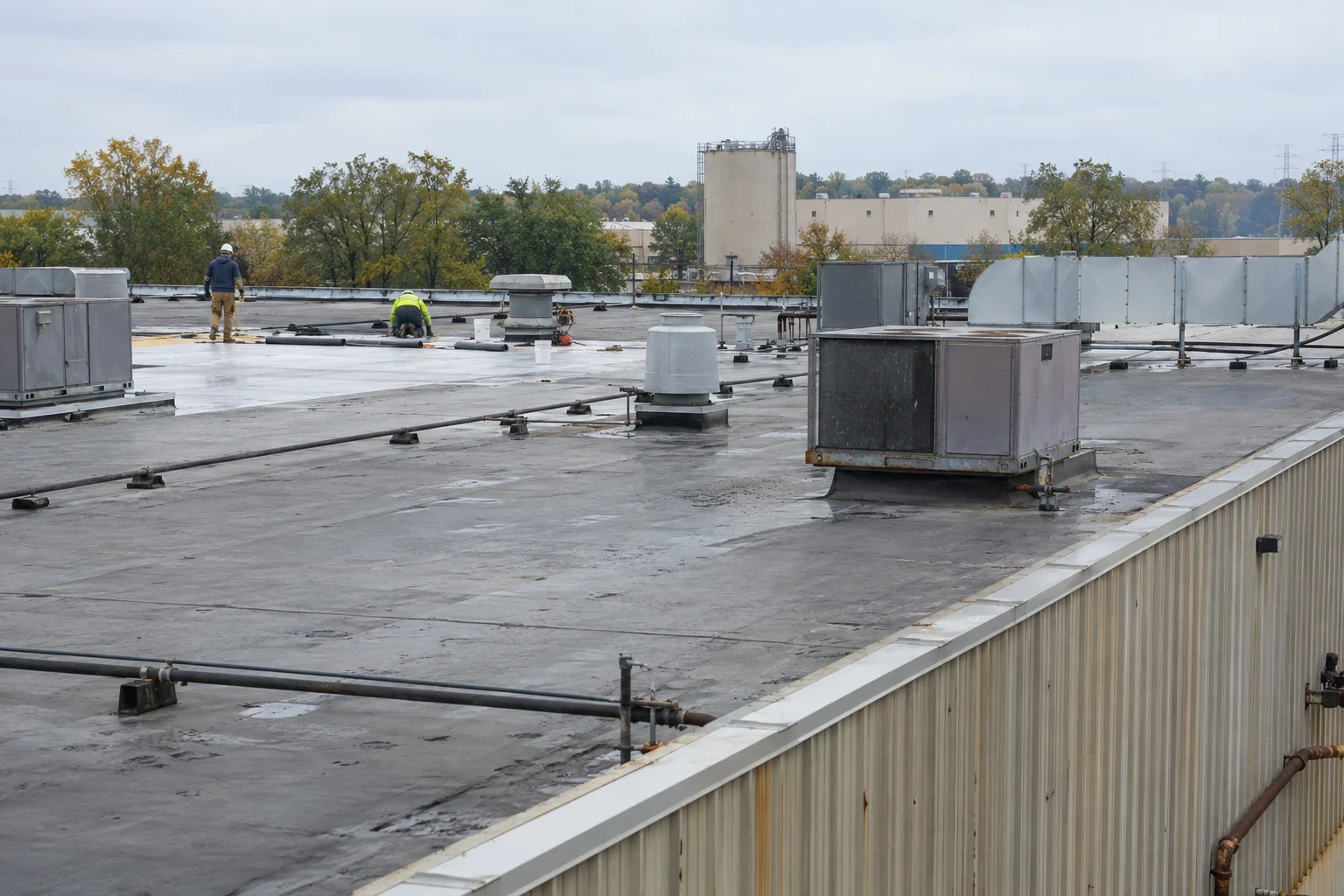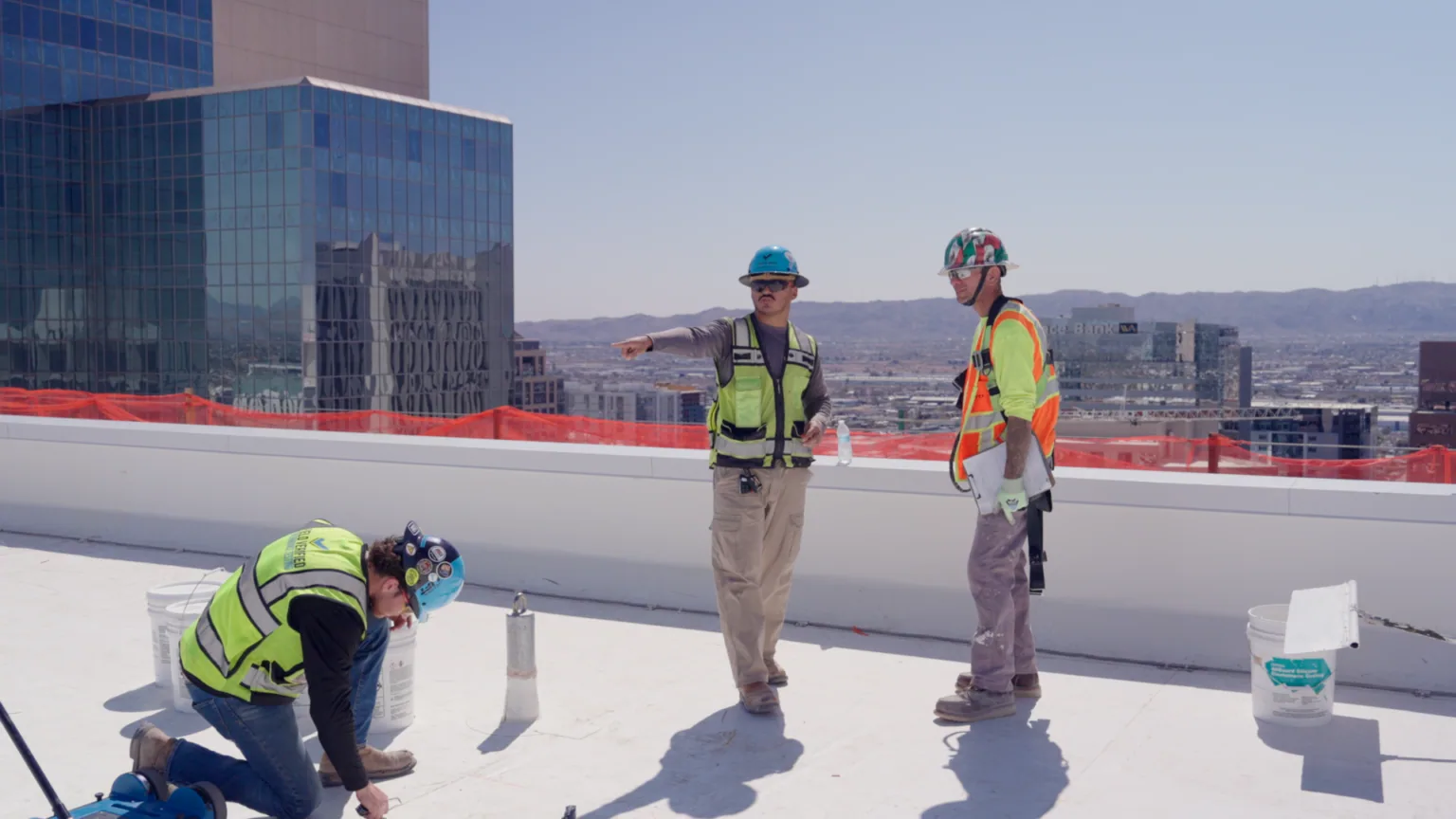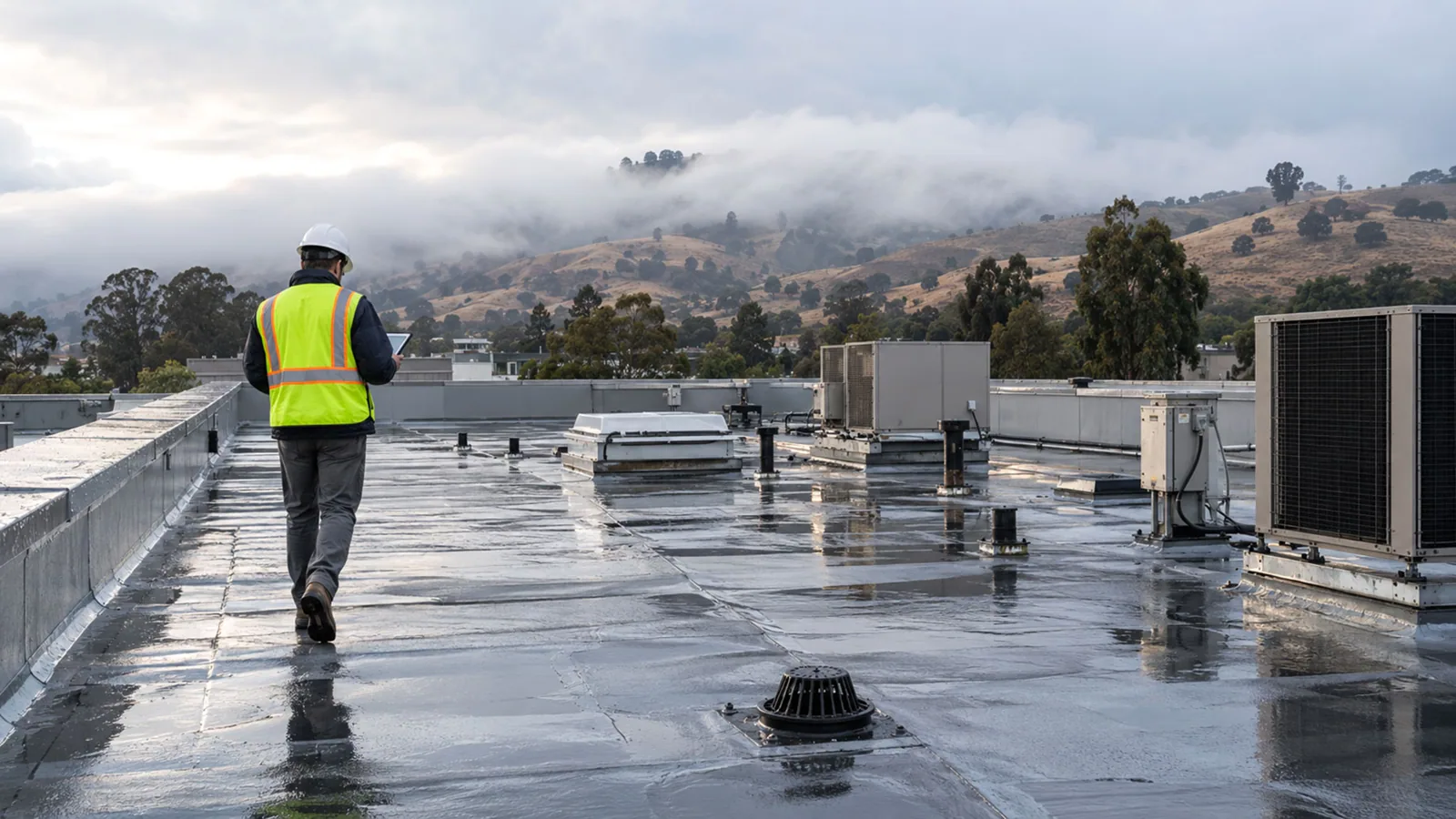
The roof line in an acquisition model is usually a guess until someone walks the roof. A buyer assumes remaining life from the year the building was built, and the walk shows whether the membrane, the insulation and the flashing agree with that assumption. If they do not, the number moves, and it moves before closing instead of after.
Investors and REITs holding commercial property around Lowell, MA, deal with a regional market that mixes mill buildings, suburban offices, industrial parks and retail corridors. Each asset class fails differently, and each carries a different cost to fix. The survey that matters is the one that sorts those differences into a reserve figure, a repair list and a replacement date the investment committee can use.
The roof inside the acquisition model
A pre-purchase roof survey answers four questions. What system is on the building and how old is it. What is the visible condition of seams, flashing, drains and edges. Where is moisture trapped in the insulation. What will it cost to keep the roof in service for the hold period, and what will it cost to replace it at the end. Our due diligence roof survey is built to answer exactly those four.
Moisture is the item that is easiest to miss. A roof that looks fine from above can hold wet insulation that will fail within a few years, and an infrared scan finds it without cutting the membrane. The scan result sets the size of the repair area and, if wet area is large, pushes the finding toward replacement. That shift changes the purchase price conversation.
Timing matters because due diligence periods are short. The survey plan lists the roof access needed, the day of the visit, the date the findings will arrive and the date a priced scope follows.
Mill, office and industrial assets in the region
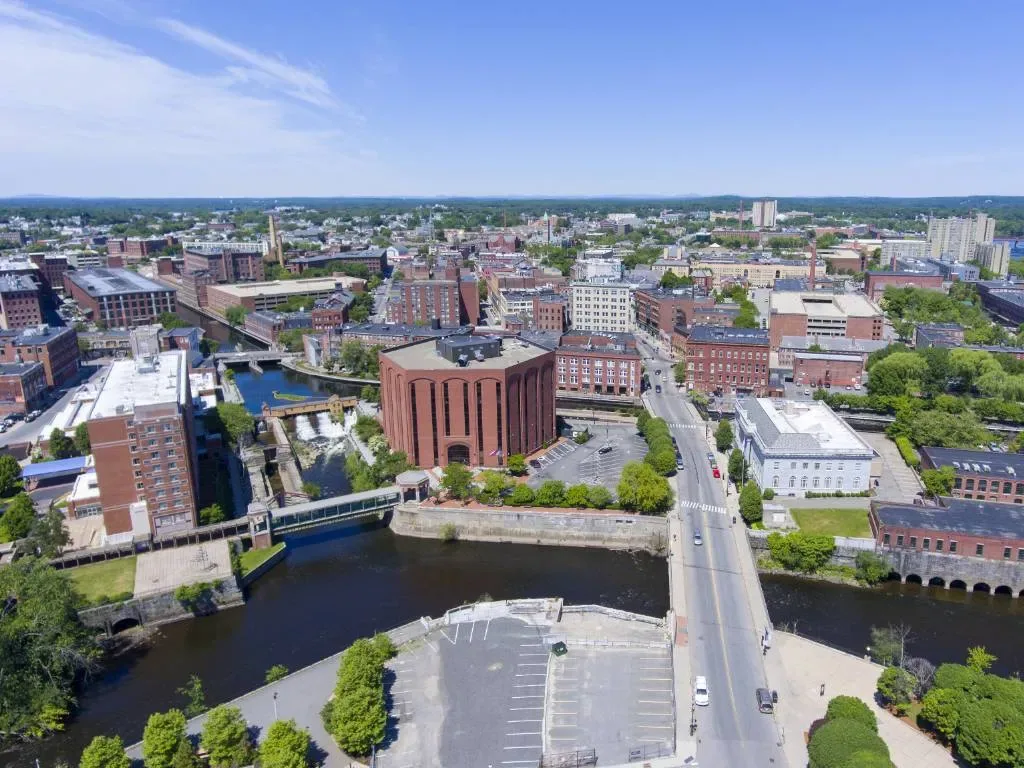
Lawrence lists industrial-park space and historic mill buildings as part of its commercial property base, and Lowell's downtown historic district takes in mill yards and the canal system. Mill roofs often involve parapets, old flashing and complex drainage, and exterior work in the historic district is subject to Historic Board review. A buyer needs to know that approval step exists before pricing a replacement.
In Billerica, the Concord Road area holds several large offices plus approved cGMP expansion space just off Route 3, and Chelmsford describes its Route 3 and 129 corridor as a concentration of large offices and corporate headquarters. Office roofs in that setting often carry heavy rooftop equipment loads, so curb flashing and equipment supports deserve their own survey line.
A survey of an asset in Billerica or Lawrence uses the same format as one in Lowell, so that a portfolio comparison is possible. Owners with industrial tenants can read the manufacturing plant approach alongside it, since production schedules shape access on those roofs. Before any visit, the survey plan also records the lease restrictions that govern roof access, so a tenant is never surprised by a crew on the roof.
Reserves and the replacement horizon
A reserve figure is only as good as the condition data behind it. The roof capital plan for a property lists each roof section, its system, its age, its remaining service life and a replacement window, with an estimated cost range built from current scope and not from a rule of thumb.
Cost drivers are stated in plain terms. Tear-off is cheaper when the old roof is a single layer and more costly when layers stack. Wet insulation must be removed, and the amount of it changes the number. Rooftop equipment that must be lifted and reset adds crane time. Access in an occupied building adds hours and interior protection. A replacement priced without those drivers hides risk.
For a fund that holds many assets, the plan ranks buildings by urgency so that capital goes first to the roof most likely to cause a loss. Lower-ranked roofs get a maintenance schedule that holds them until their turn.
Maintaining value during the hold
Nor'easters, snowstorms and ice storms are among Lowell's major threats, and 126.5 inches of snow fell on the city in the winter of 1995. NOAA's normals show 48.51 inches of precipitation across a typical year. A roof in this region works through freeze and thaw every cold season, and the details at edges, drains and penetrations take the abuse first.
A preventive maintenance program protects the asset during the hold. Visits clear debris, inspect seams and flashing, and log changes with photographs. When a lender or an appraiser asks for roof history, the record exists. When a tenant reports a leak, the file shows what was already known about that section.
The program also supports insurance. A documented maintenance record helps when a claim is made after a storm, since it shows the roof was kept in working order and separates storm damage from long-term wear.
Repositioning and exit
Redevelopment changes the roof question. Hamilton Canal District planning calls for a mixed-use redevelopment that links downtown Lowell to the commuter rail station, with commercial, retail, office and research uses in view. A building repositioned toward a new use may need a roof sized for new rooftop equipment, solar-ready framing or a cool-roof membrane. Solar-ready roofing is a decision best made at the replacement, not after it.
For filings on or after July 1, 2025, the state's 10th edition governs alone, built on the 2021 International Building Code, with the base energy code alongside it. Municipalities may adopt stretch energy provisions, so the energy requirements for a given roof must be confirmed for the specific project before insulation levels are set.
At exit, the buyer's survey will find what ours finds. Owners who have already repaired the known defects and filed the reports present a cleaner asset. The property manager on the asset then has a roof file that supports the sale.
Commercial Roofing Questions
How long does a roof survey take within a due diligence period?
The visit itself is short, often a single day for one building. Findings, photographs and the moisture map follow within the date we state in advance, and a priced scope comes after that. The sequence is set at the start so the buyer's team can plan around it.
Does an infrared scan replace a core sample?
No, they answer different questions. The scan shows where moisture is likely to be, and a core confirms what the assembly is made of and how wet it is at a chosen point. Used together, they size the repair area and test the replacement figure.
What does a replacement reserve include besides the roof itself?
It includes insulation, tear-off, disposal, edge metal, drains, equipment resets, access and interior protection. Leaving those out understates the figure. The reserve also states whether energy code upgrades are likely, since insulation requirements can change the thickness of the new assembly.
Should a REIT standardize on one roof system across its holdings?
It can help with purchasing and repair, but building use should still decide. A TPO system suits many low-slope roofs, while metal or bituminous systems may suit others. The plan records the reason for each choice so that later managers understand it.
How are storm losses separated from ordinary wear in a claim?
Through records from before the storm. Dated inspection photographs and repair logs show the roof's condition, and a post-storm inspection documents new damage. The claim documentation then lays out which damage is new.