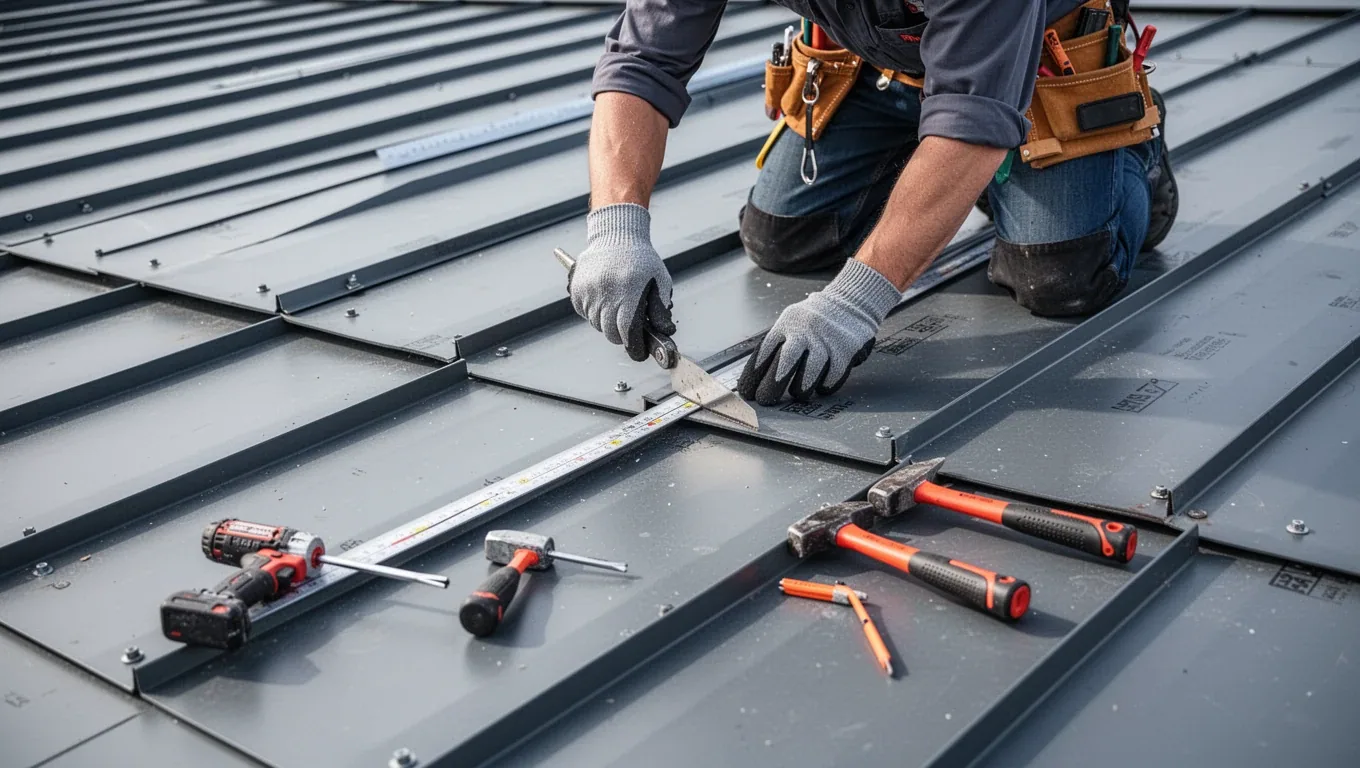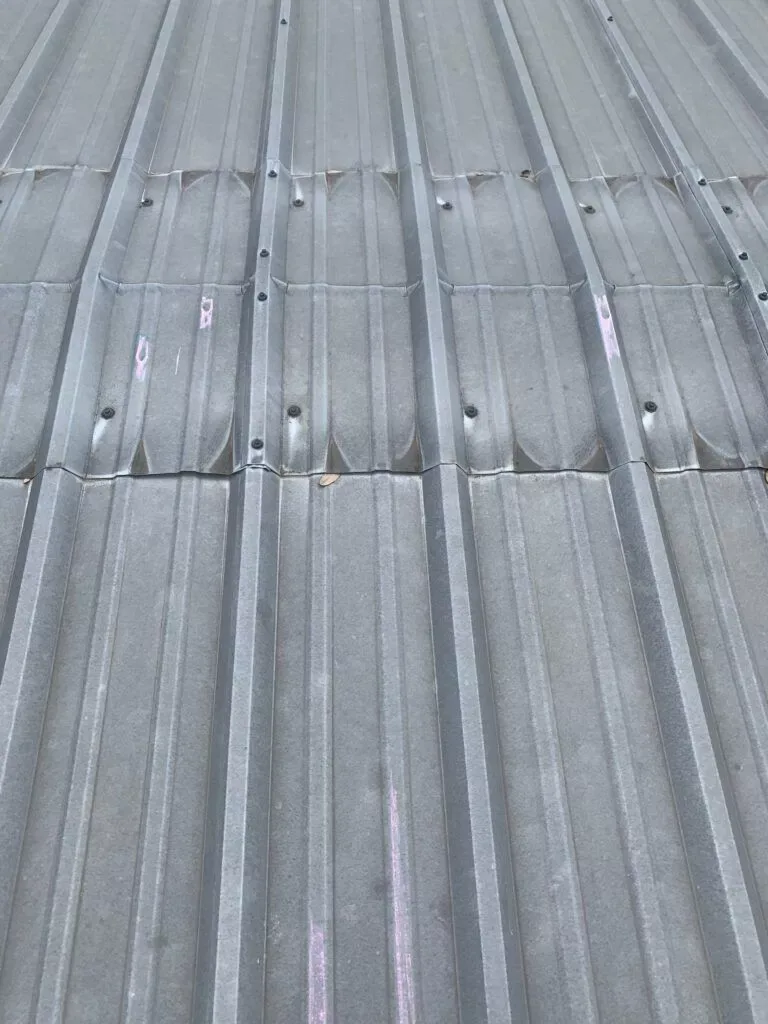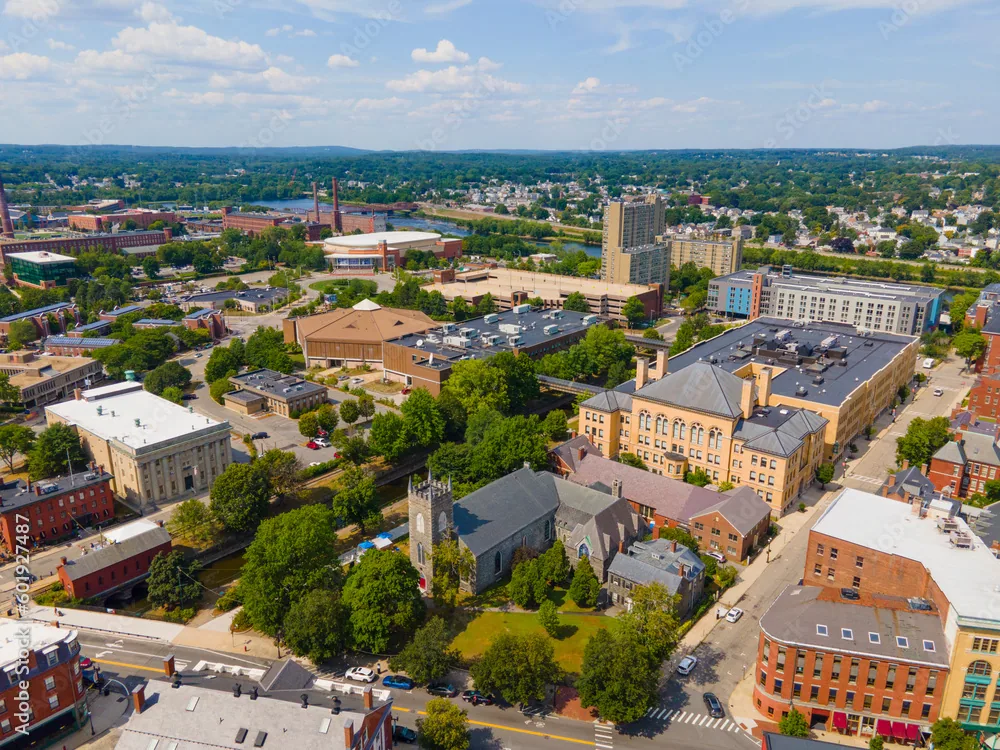
Mill yards, canal edges and heavy-industry tracts all sit inside one city limit, and each sets a different first action when a roof report comes in. Lowell, MA packs three settings into one city: a downtown historic district of commercial blocks, mill yards and canals, Ayer's City with its roughly 108-acre industrial area, and the Hamilton Canal District, planned to join downtown to the commuter-rail station through mixed uses. A roof in any of those settings starts the same way: confirm safe access, protect the interior, place a temporary dry-in, then draw a repair boundary the facility director can approve.
Low-slope and metal roofs both get inspected, repaired, recovered, coated and replaced here, and emergency calls are answered around the clock.
Historic District Roof Sections
Much of downtown falls inside the historic district, and exterior work there goes before the Historic Board. For a roof, that matters in two ways. First, a change that can be seen from a street, a yard or a canal path, such as edge metal, coping, parapet caps or a new membrane color, may need approval before it is ordered. Second, an emergency repair does not wait for a meeting, so the temporary dry-in is built to be removable and is logged as temporary.
A walk, a core and the owner's records settle the deck type, the layers and the drainage path. Older buildings often have roof sections at several heights, tie-ins at walls and stair towers, and drains that serve more than one section. Each gets its own number and its own note. A parapet cap that sheds water badly can feed a wall, so edge metal and coping are checked early.
Four quick answers at the first call speed the response: the entry point, the space under it, the key holder and today's safe route to the roof.
Ayer's City Industrial Sections
Around Tanner Street in Ayer's City, the city's plan counts about 108 acres, mostly heavy-industry zoning, edged by commercial and residential uses, with the Lowell Connector among the borders of the redevelopment area. It expects redevelopment toward clean industry and better access. For roof work, a redevelopment plan means site conditions can change from one year to the next, so each building is recorded as found.
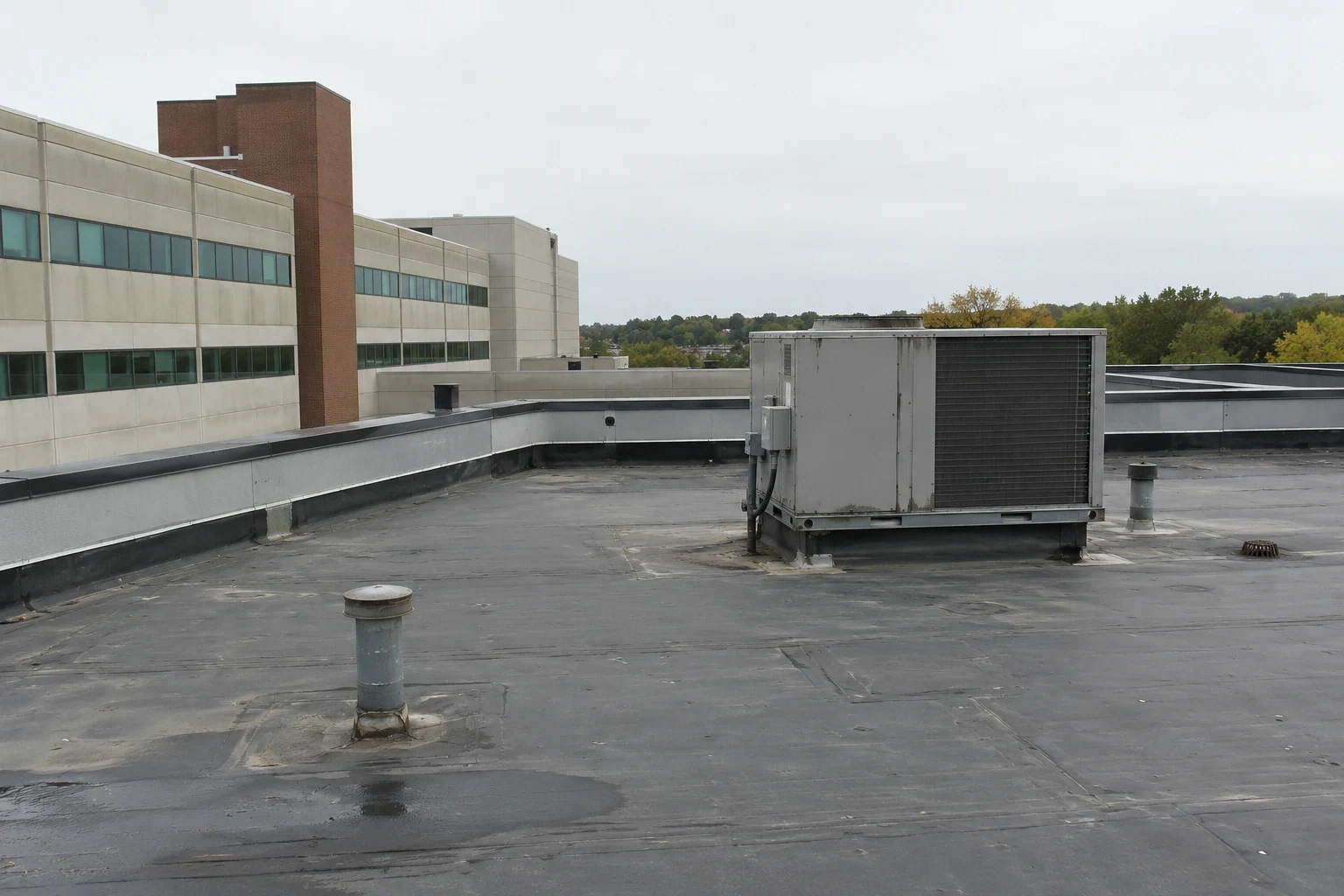
Industrial roofs bring their own checks: exhaust outlets and the membrane beside them, rooftop equipment supports, long drainage runs and loading-area activity below. We look for staining or softening near outlets and for traffic wear along service paths. On a big roof a drone survey comes first, and the hand check goes where the images point. Moisture readings then fix the repair boundary, and the note shows which sections are sound, serviceable or failing.
Redevelopment Staging
The Hamilton Canal District plan coordinates streets, traffic, transit circulation, utilities and building locations, with commercial, retail, office and research uses among the planned types. Roofing in an area under change needs a staging plan that respects neighbors: lift positions, delivery windows, pedestrian routes and noise hours. The plan is written before the first delivery and shared with the property manager.
The same discipline applies on any occupied building reroofing job in the city. Tenants are listed by area and hours. Intakes near the work zone get temporary protection. Entrances below the work area are covered or rerouted. The roof is dried in each day, and the note records the weather at close.
Winter Storm Planning
Nor'easters, snowstorms, ice storms and hurricanes top the city's natural hazard list, and the record winter of 1995 left 126.5 inches of snow. At the Lowell station, January averages near 25 degrees and the year brings 48.51 inches of precipitation. That record shapes planning for drains, roof access and dry-in sequencing.
Before the cold season, drains and scuppers are cleared and photographed, edge metal is checked by hand and temporary materials are staged. After a storm, the first visit looks at edges and attachment, then at drains, then at any active water path. The storm damage repair record carries dated photographs and the temporary work performed, which also supports any insurance paperwork.
Highway Access and Deliveries
The city's hazard plan treats Lowell as a regional transportation hub because I-93, I-495 and Route 3 meet here; Boston and other New England towns are directly connected. For a roofing job, the junction helps with deliveries and crew movement, but a downtown street or a canal-side yard still has its own limits: narrow approaches, shared lots, loading hours. The delivery plan fixes the route, the truck size and the lift position, and it names who meets the driver.
On emergency calls, access is the first uncertainty. A roof hatch that is locked, a ladder that is missing or a lift route blocked by parked vehicles can cost an hour. Asking the facility director for key holders, roof access and parking restrictions at the first call keeps that hour short. The answers are logged with the report time, so a second visit starts from known conditions.
Interiors That Cannot Stop
Education and health services lead the city's employment, and Lowell General Hospital appears on the list of regional employers, and the workforce draws on UMass Lowell and Middlesex Community College. Buildings in those sectors share a constraint: the interior keeps running. On roofs over such buildings, the plan identifies the spaces below, sensitive equipment, air intakes and the hours when noise and odor are least tolerable, and it sets interior protection before the roof repair.
The same plan fits hospital roofs and other places where a leak is a property loss and an operating issue at once. Neighboring towns such as Chelmsford and Billerica raise similar questions with different building mixes.
Cost Update and Code Check
The first cost update arrives after the inspection, never before it, so the figures rest on readings and not on a guess about the roof. It splits the figure into three: holding the roof, repairing inside the boundary and any larger scope the readings justify. The state's tenth-edition building code, drawn mainly from the 2021 IBC, has stood alone since filings of July 1, 2025. Energy rules ride on top of it and may be tightened by the city, so we confirm which set applies before insulation is specified. The scope then prices tear-off, deck allowance, insulation, cover board, membrane and edge metal separately, so the facility director sees which part of the price moves if the readings change. Each update gives the earliest crew date together with any hold that weather could impose. In Lowell that date is often set by a review step in the historic district or a staging limit in a redevelopment area, and the update says which one applies.
Commercial Roofing Questions
Does a roof in the historic district need approval for repairs?
The Historic Board reviews exterior work there, so visible changes should be checked before ordering. Emergency dry-in is temporary and logged as such.
What makes an industrial roof different on the walk?
Exhaust outlets, equipment paths and long drainage runs. Staining beside an outlet and wear along service routes are the first things recorded.
How is a roof scheduled in a redevelopment area?
Around neighbors: lift position, delivery windows, pedestrian routes and noise hours, all written before the first delivery.
What happens first after a nor'easter?
Edges and attachment, then drains, then any active water path. Dated photos go in the file for the repair and for any claim.
Which energy rules govern a replacement?
The state base energy code, plus any stretch provisions the city has adopted. We confirm the applicable set before insulation thickness is written into the scope.