Contaminant first: KEE is a PVC-alloy membrane built to shrug off the oils, greases and chemical residues that shorten the life of other roofing sheets. In Lowell, MA, where manufacturing and professional and business services sit among the city's key employment sectors, the question for a facility director is simple: what is on the roof surface, and will the membrane tolerate it? If the answer is exhaust grease, or solvent mist, KEE earns a place in the comparison. If the roof carries nothing but weather, it competes mainly on price.
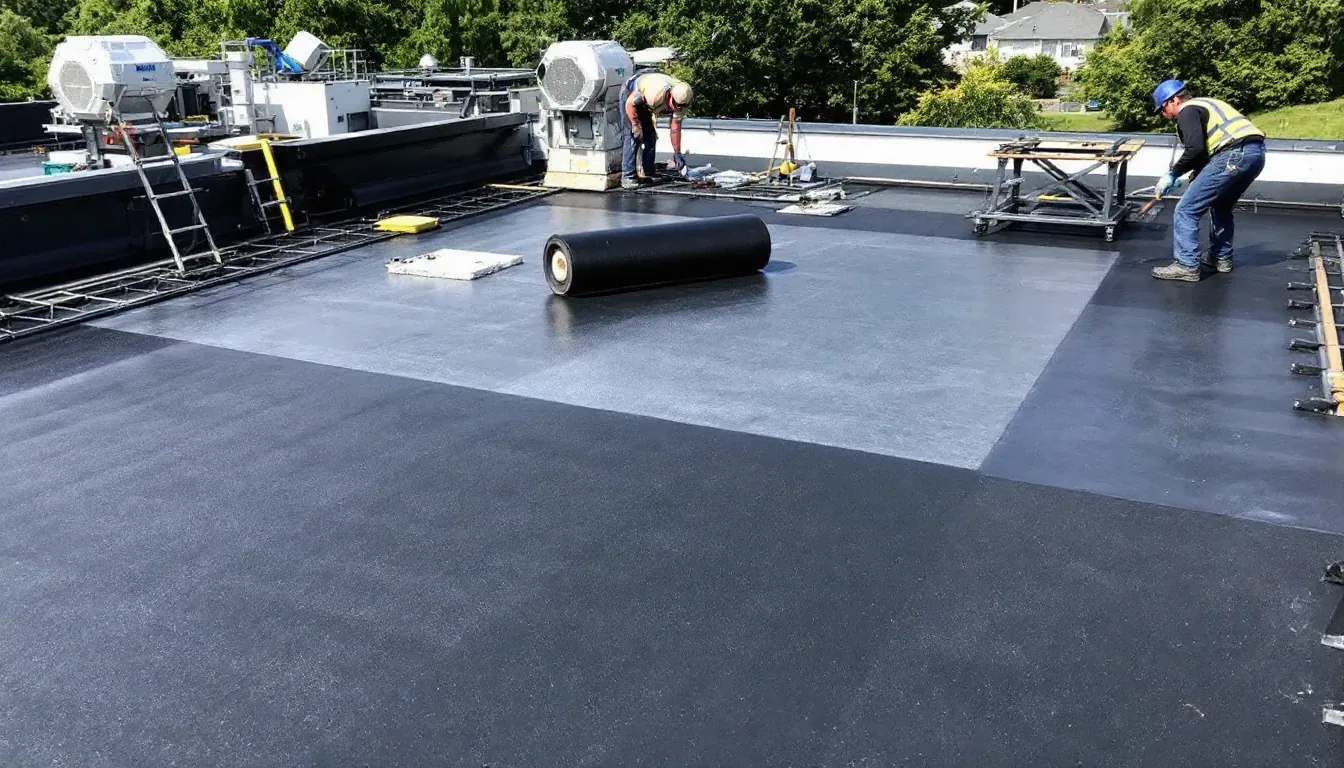
We begin with a walk. We map vents and stacks, photograph residue and staining, test the insulation and read the existing membrane. Then the scope decision lays out repair, recover and replacement paths with cost exposure for each.
What KEE Is and How It Differs from Standard PVC
KEE stands for ketone ethylene ester, a polymer blended into the PVC sheet in place of the plasticizers that standard PVC relies on for flexibility. Plasticizers can leach out of ordinary PVC when it sits against oils or heat, and a membrane that loses them stiffens and cracks. A polymeric modifier does not migrate in the same way, so the sheet keeps its flexibility longer in contaminated settings.
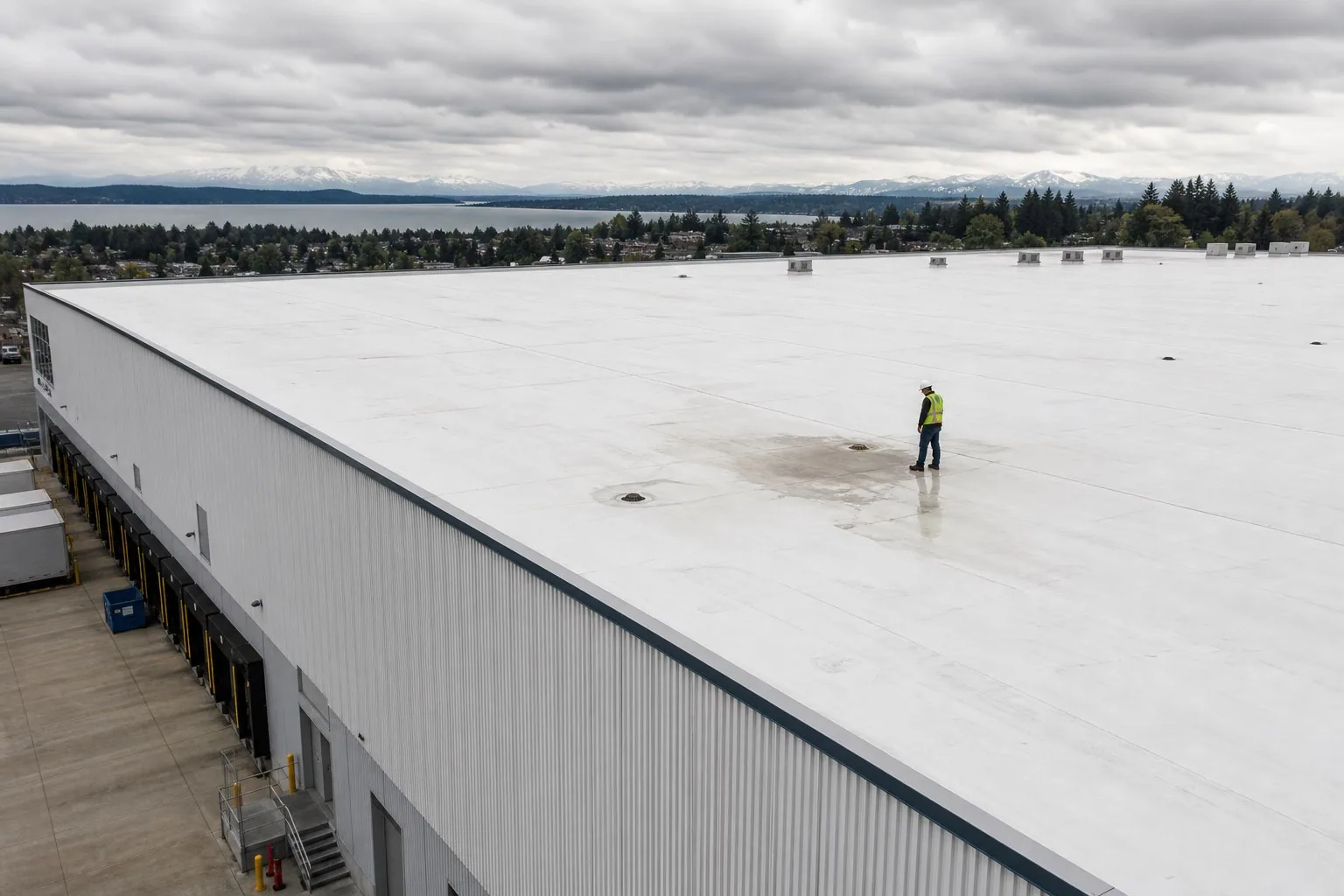
The sheet is reinforced, welded at the seams with hot air and commonly white. It is more specialized than standard PVC, and the price reflects it. The practical difference shows up on roofs that receive exhaust deposits, where one membrane will soften at the stack and another will not.
Standard PVC is not a lesser product. On a roof with light exposure it performs well and costs less, which is why the comparison belongs in the scope. We price both and show what the added contamination resistance costs, so the facility director can decide whether the roof's exposure justifies it. A roof with one small vent may not; a roof with a dozen exhaust fans and a history of softened membrane around them may.
Exhaust, Oils and Process Vents
Kitchen exhaust, cooking vapor, lubricant mist and solvent fumes deposit film on a roof. Film attracts dirt, softens some membranes and makes walking slippery. A membrane with contamination resistance holds up, but the roof still needs care: grease filters on exhaust fans, cleaning of the roof around vents and walkway pads along service paths keep deposits from building up and reaching seams.
We record every exhaust point on the roof sketch and photograph the staining around it. When residue has already worked into seams or flashing, the plan calls for a compatible cleaner and fresh details wherever the old ones have softened. A compatible cleaner matters, since the wrong solvent can damage the sheet it is meant to clean.
Walkway pads belong on the route between the hatch and each exhaust point. They take the wear from service visits and give technicians a clean, non-slip path away from the film. Drip trays or splash guards under grease outlets protect the membrane directly, and they are cheap compared with a section of replaced sheet. We list these protective items in the scope separately so they can be approved on their own.
Lowell Climate and the Membrane
The Lowell station's 1991-2020 NOAA normals pair a 24.9 degree January with a 72.8 degree July, and 48.51 inches of yearly precipitation. Freeze-thaw cycling is a certainty, and a welded, reinforced membrane handles the movement at seams and edges when the details are well made. Because hurricanes, nor'easters, snowstorms and ice storms head the city's hazard list, edge securement and drainage get as much attention as the choice of membrane.
Wind loads at corners and perimeters set the fastening pattern, and snow and ice set the drain checks. A KEE roof is not immune to either, and the scope names the wind-uplift approach used. Seasonal visits follow the same sequence on every roof: drains and scuppers first, then seams, then edges, then each curb and penetration, with photographs from fixed points so that change shows from one visit to the next.
Installation and Welding Quality
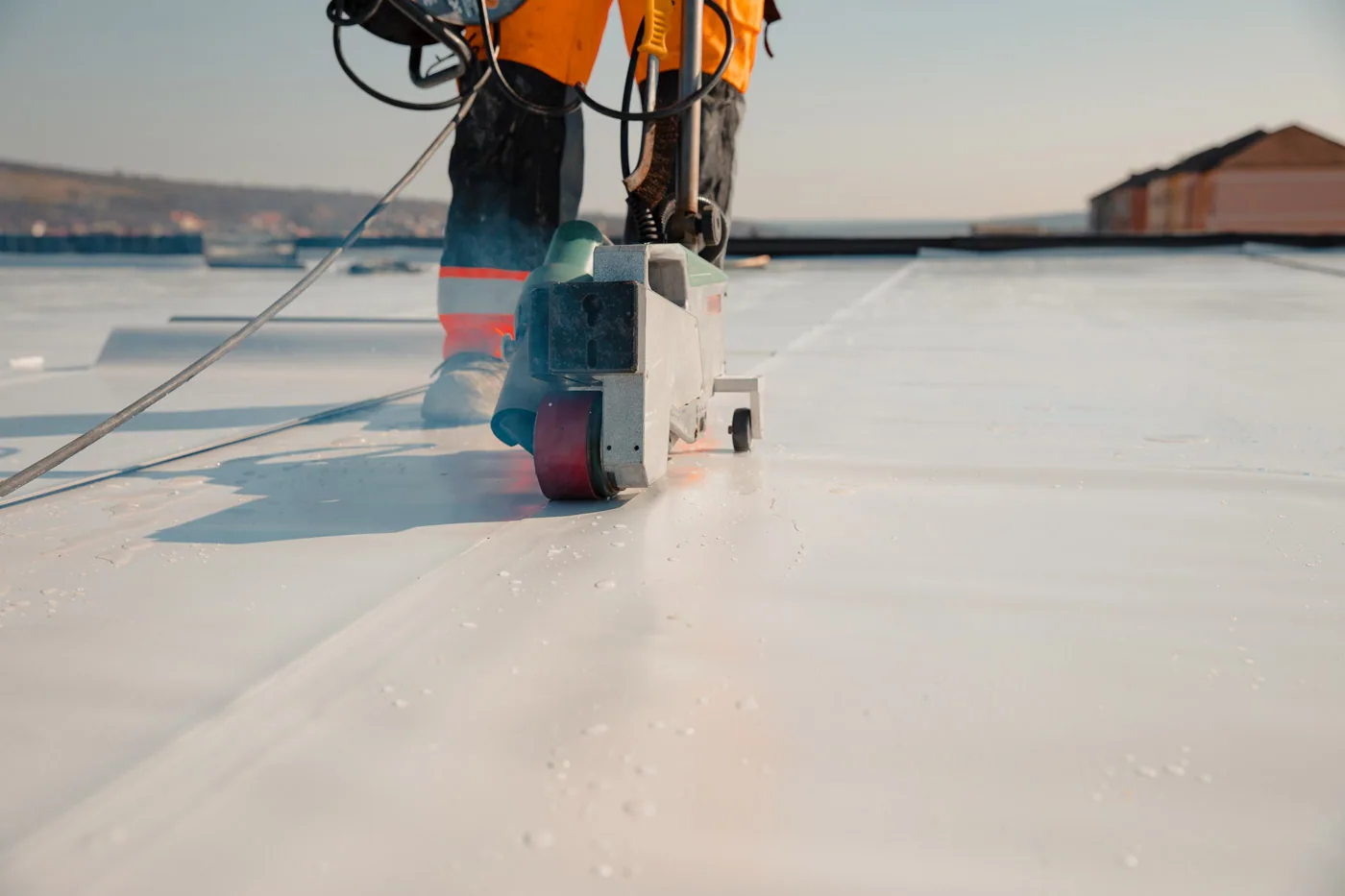
A KEE roof is installed with mechanical fastening or full adhesion over insulation and a cover board, and each seam is hot-air welded. Welding quality is the quality of the roof. Temperature, speed and pressure must suit the sheet and the day, and welds are probed along their length, with test cuts at intervals. Flashing around curbs, drains and walls is formed from preformed pieces or welded sheet, and each corner is checked.
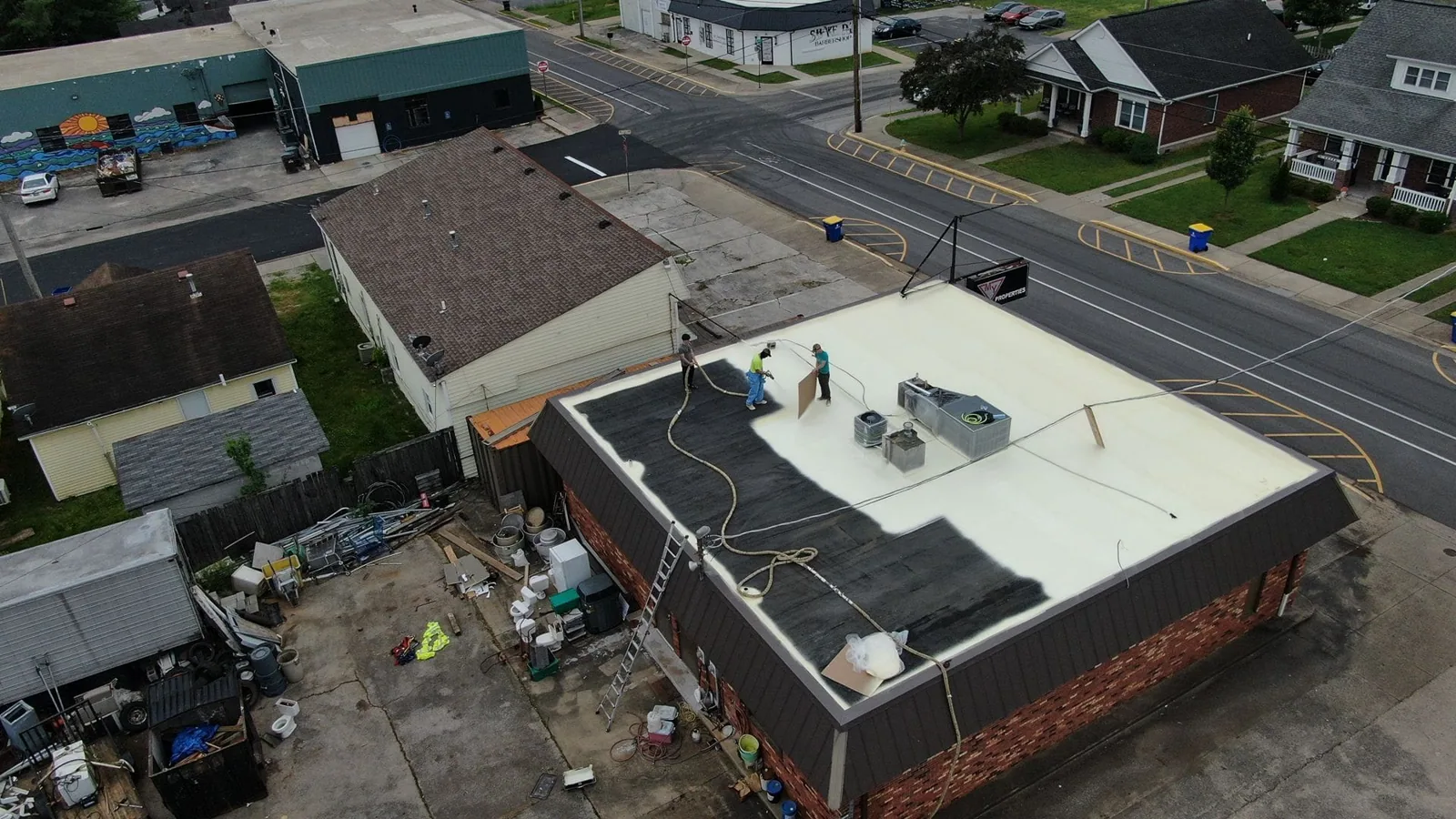
Installation needs dry surfaces and moderate temperatures. Most of the work belongs in the warm months, with weather holds written into the schedule. A replacement includes tear-off, deck inspection and new insulation, and a recover adds a membrane over a dry, sound base.
Repair, Recover or Replace
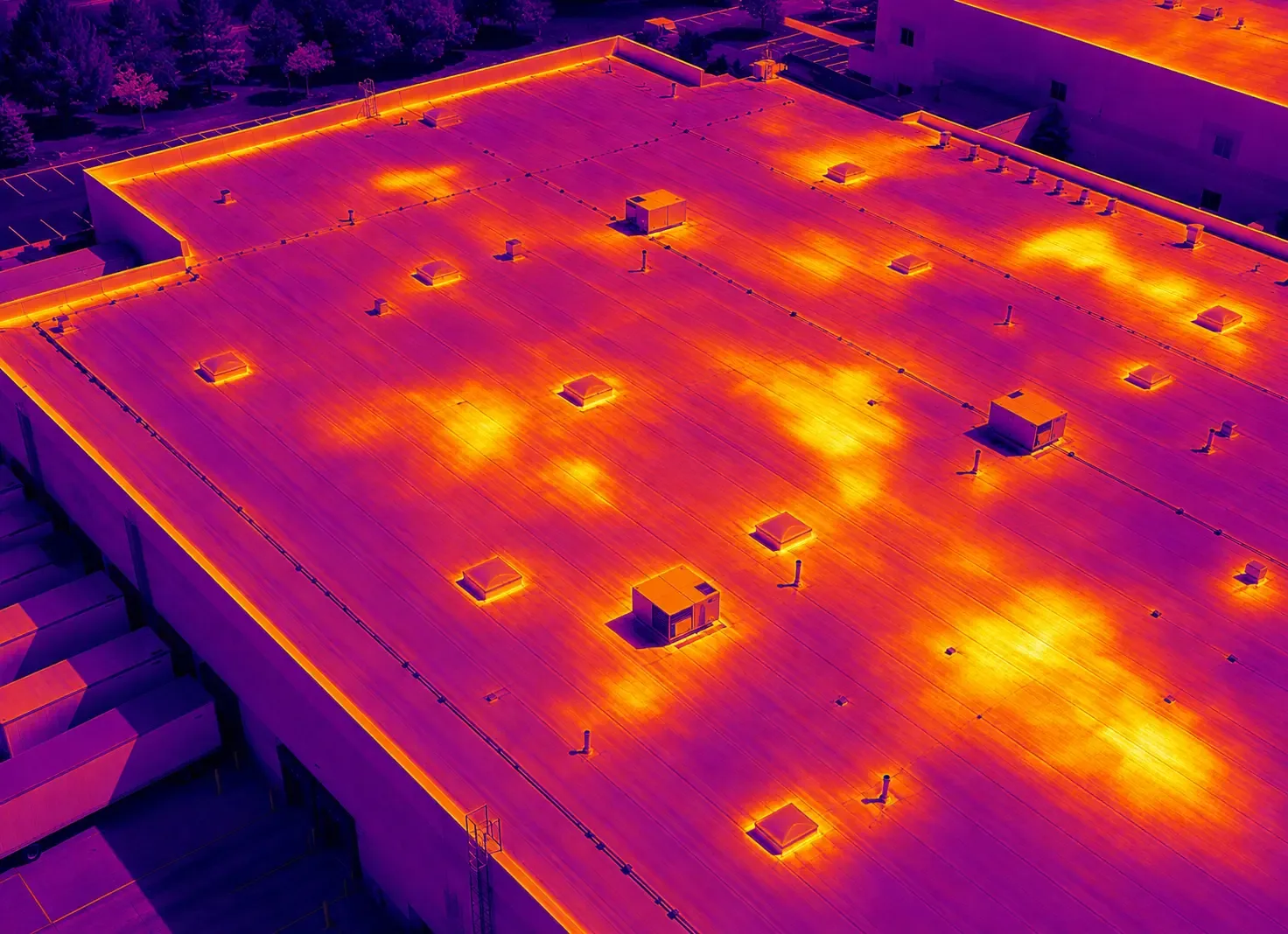
KEE can be repaired by welding patches to clean, weldable material. A test weld confirms bonding. Contaminated surfaces are cleaned before welding, and badly softened areas are cut out. A moisture survey sets the limit: wet insulation under a broad area means surface repair will not solve the problem, and an infrared moisture survey draws the boundary.
If the existing membrane is another type with chemical damage, KEE can be a replacement choice on the strength of its contamination resistance. The scope shows the installed cost for each option, the expected life as stated by the manufacturer, and the warranty terms. Warranty terms are read before the order, since coverage depends on installing to the maker's details. The closeout file keeps the weld test results, product data and photographs by roof section, and it names the follow-up date for the first seasonal check after installation.
Code and Energy Requirements
Applications filed on or after July 1, 2025 go under the Massachusetts 10th edition code, effective since October 11, 2024 and adapted chiefly from the 2021 IBC. That edition also carries the base energy code, and a town may layer stretch provisions over it, so we ask the building department which energy rule applies before setting insulation thickness. A tear-off can trigger insulation upgrades that a recover does not, and the cost difference goes into the scope.
Where KEE Fits Around Lowell
Exposure to exhaust and process vapor exists on many building types. The city names manufacturers and technology employers, among them Somerset Industries, MACOM Technology Solutions, UKG and IBM, and a hospital and education sector that includes Lowell General Hospital and UMass Lowell. Whether any given roof has contamination is decided by the walk and not by the employer. The same question applies in Ayer's City Industrial Park on Tanner Street, in Billerica and Tewksbury, and on properties near Route 3 and I-495 across Lowell. Compare with TPO when exposure is light.
Commercial Roofing Questions
Is KEE just thicker PVC?
No. It uses a polymeric modifier in place of the plasticizers that migrate out of standard PVC, which helps it resist contamination.
Does KEE need cleaning?
Yes, around exhaust points. Compatible cleaners remove films that attract dirt and make the roof slippery.
Can KEE be installed over an old roof?
As a recover over dry insulation and a sound deck, with a cover board. Moisture testing decides.
How long does a KEE membrane last?
The manufacturer states an expected life for each product. Roof care, drainage and exposure move it up or down.
Why does exhaust matter so much?
Grease and oils soften many membranes and carry dirt to seams. Contamination-resistant sheet slows that damage.