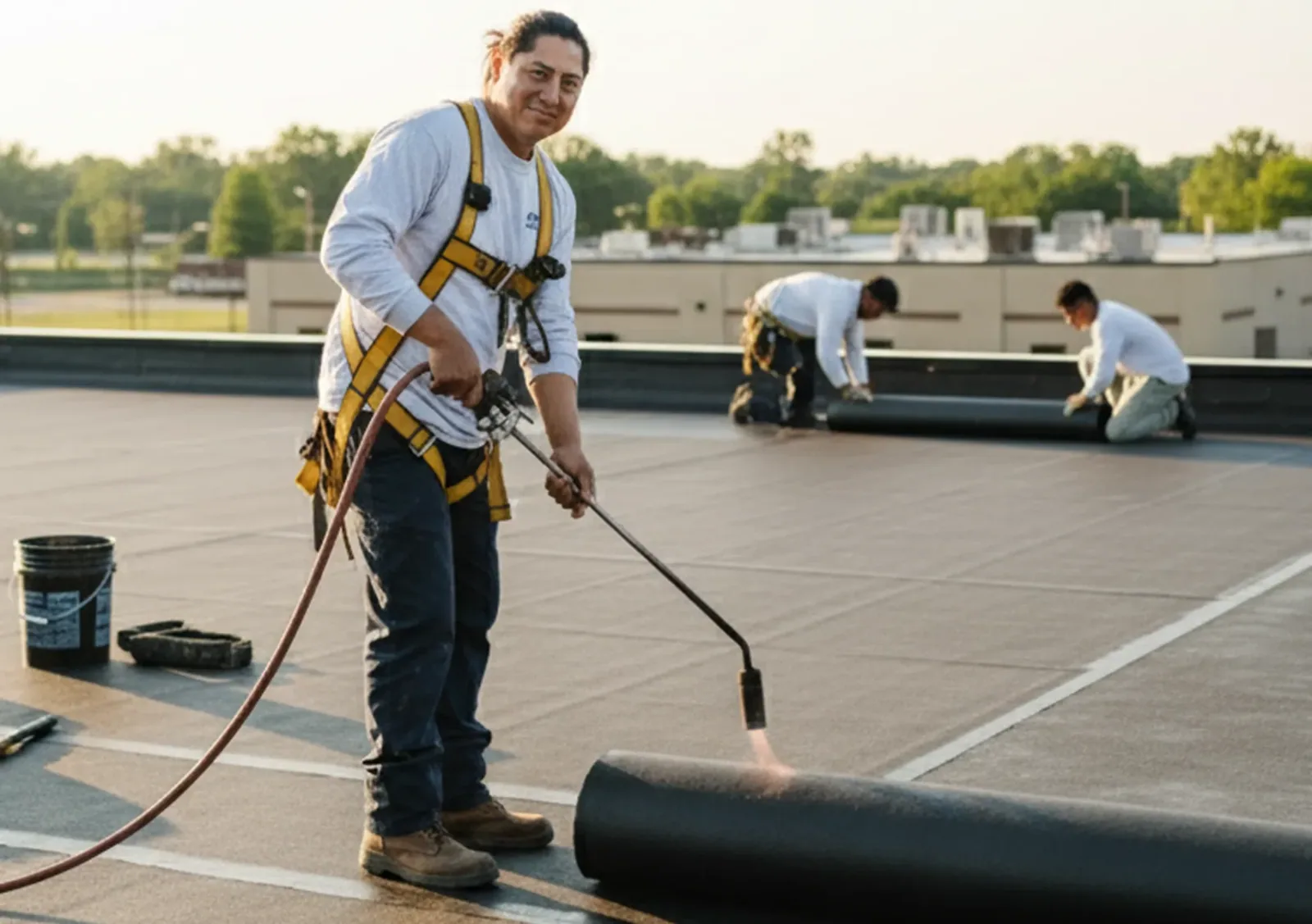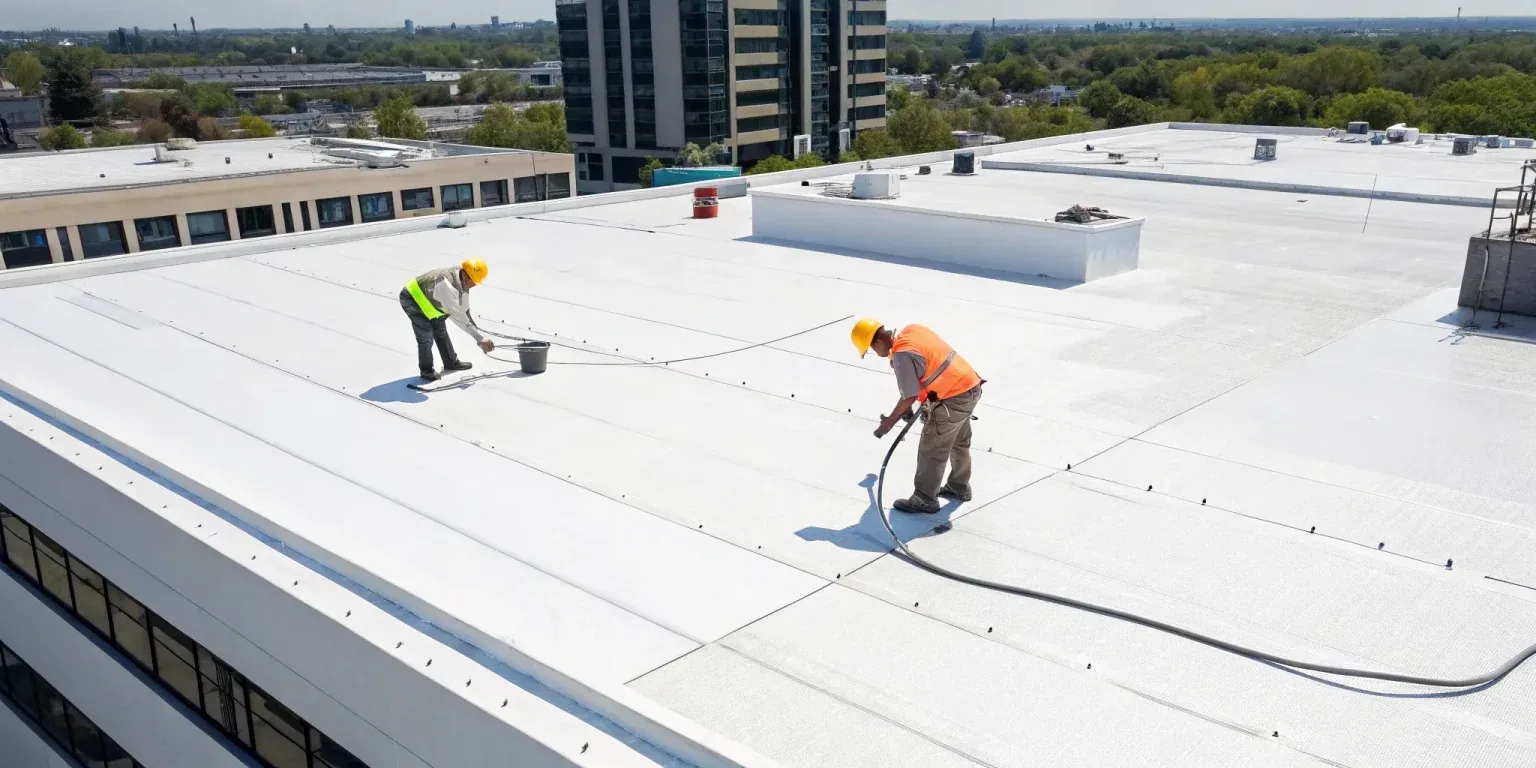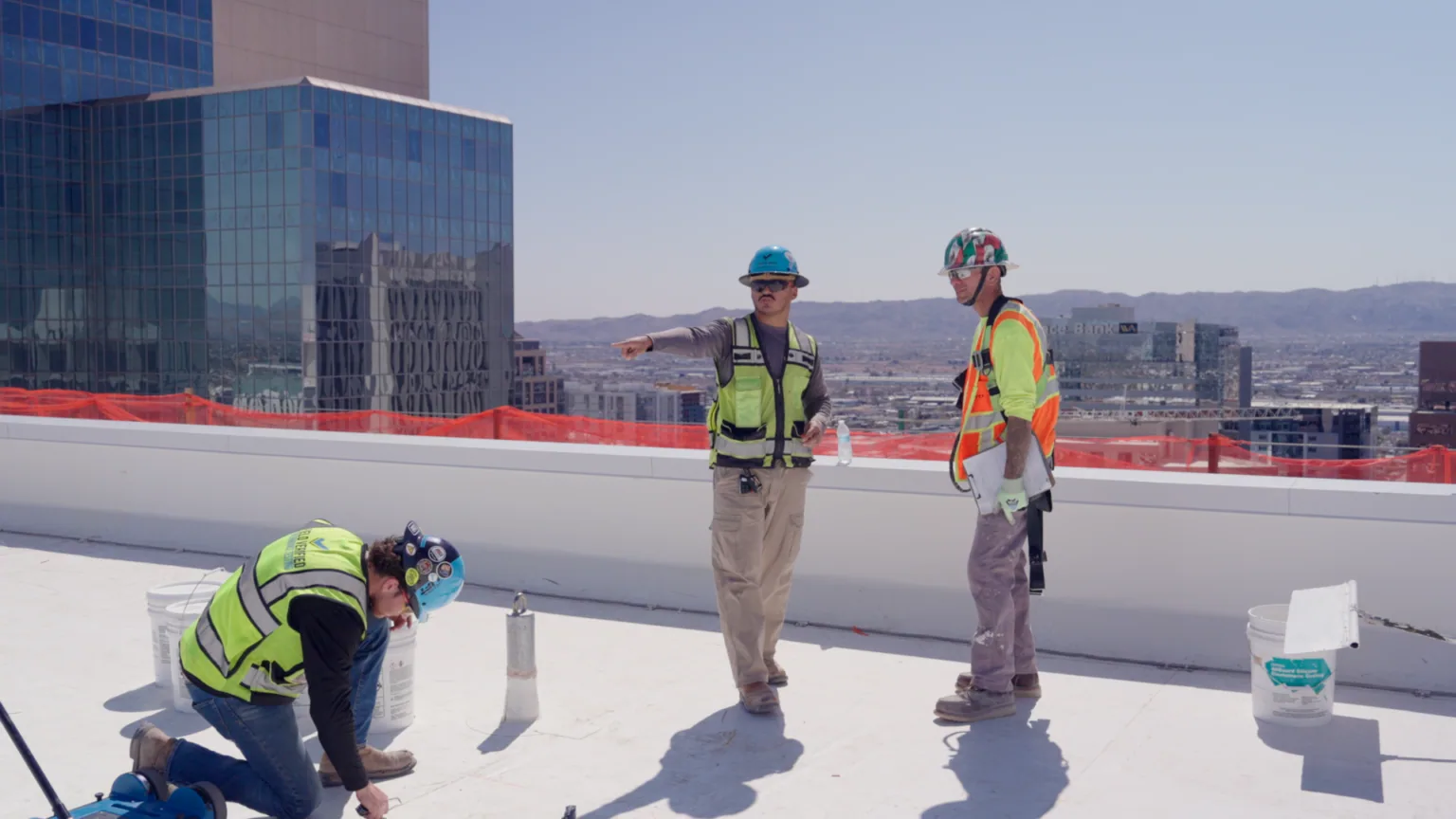
Hatch open, harness clipped, first look at the drains: that is the order of a hands-on inspection. Drains come first because water that does not leave the roof does most of the damage, and everything else on the surface reads differently once the drainage picture is known. After that the walk covers seams, flashings, penetrations, edge metal, equipment curbs and the field of the membrane, one roof section at a time.
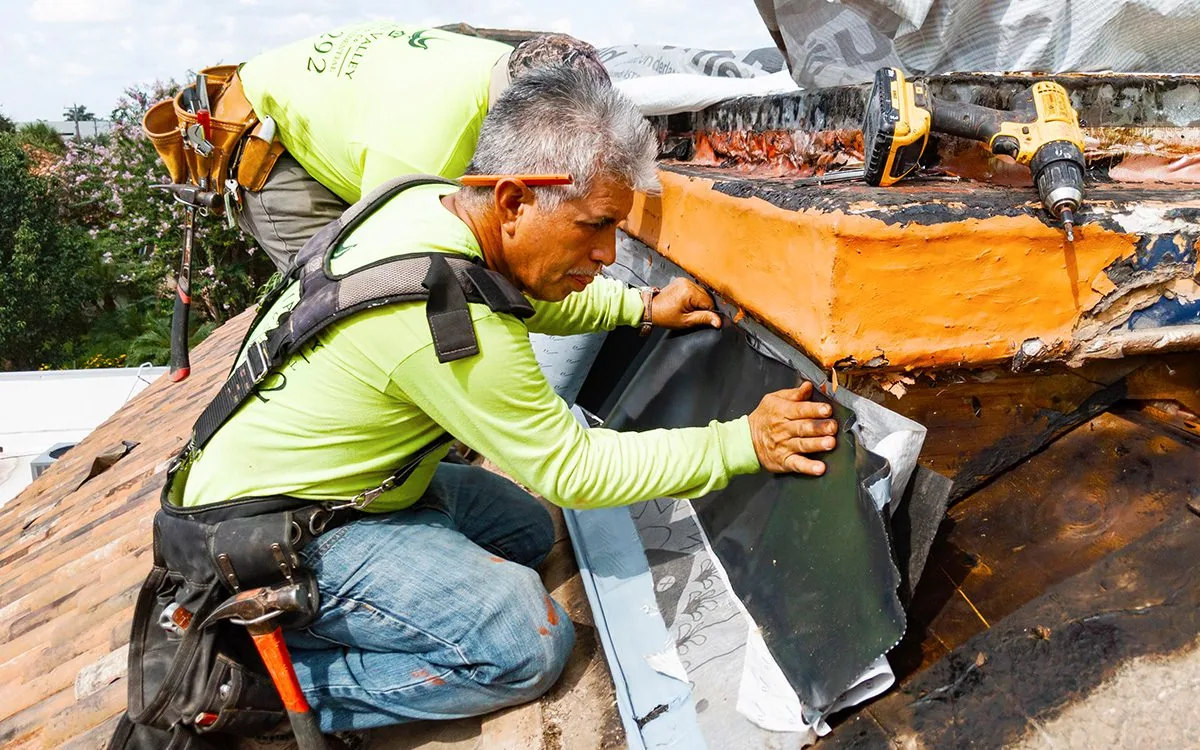
In Lowell, MA, the walk is timed against the seasons. Fall findings decide what must be fixed before the winter storms the city's hazard record lists, and spring findings show what the freeze-thaw cycle did. Every item that comes off the roof ends up in one of three bins on the facility director's report: repair now, repair on the next planned visit, or monitor. Each bin has a photograph, a location and a cost range tied to it.
What the walk covers
The inspector walks the full roof, not a representative corner. Membrane condition is checked for blistering, splitting, abrasion, ponding marks and shrinkage. Seams are probed along their length. Flashings are checked at every wall, curb and pipe, with attention to how the top edge is terminated. Drains, scuppers and overflows are tested for flow. Rooftop equipment is checked for refrigerant line damage, loose panels and sealant at the base.
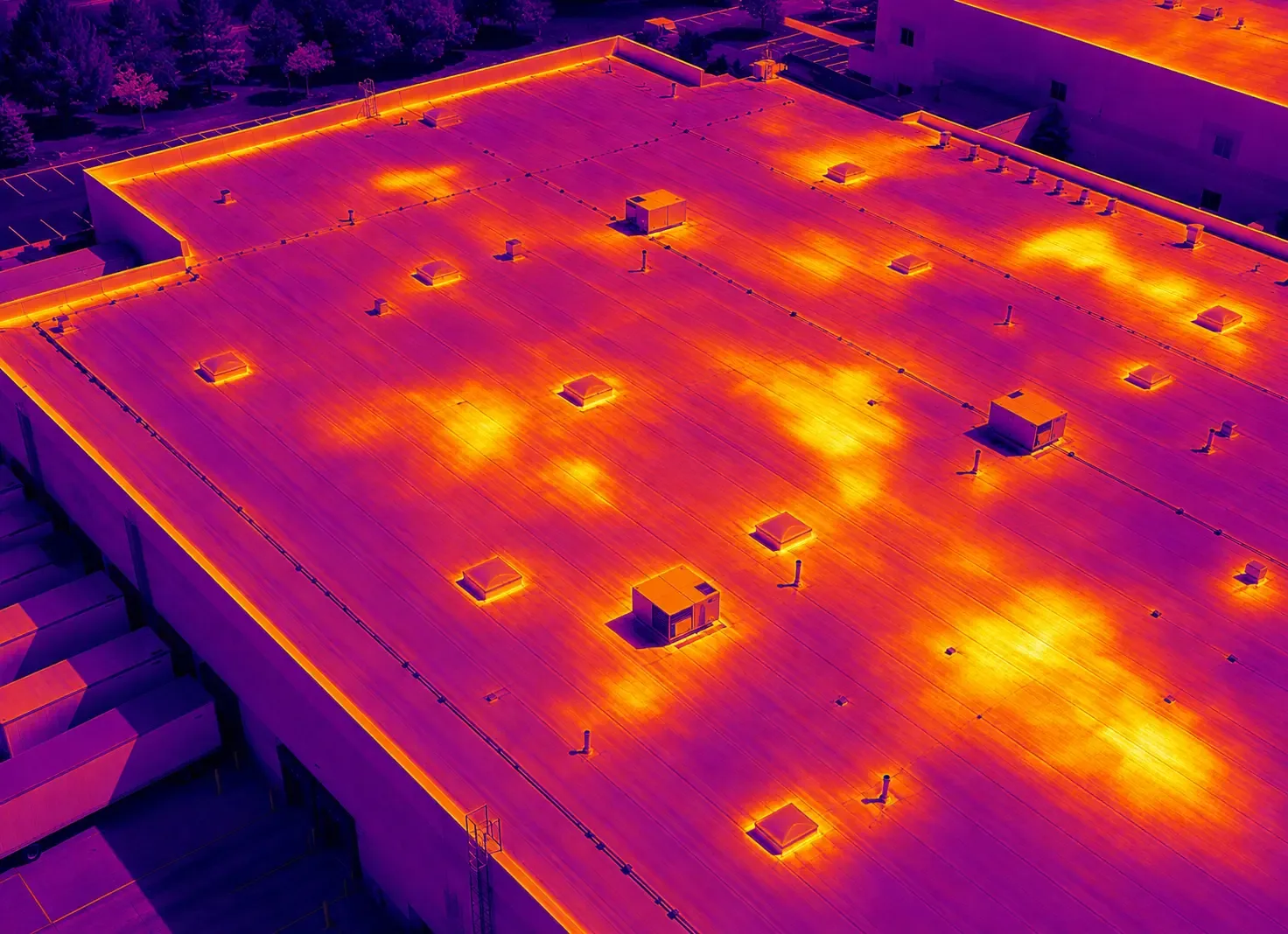
Surface signs are cross-checked against the interior. Ceiling stains, wall efflorescence and condensation marks are mapped against the roof plan to see which roof section feeds each one. Where the surface suggests wet insulation, the inspector marks the area for an infrared and core-cut survey instead of guessing.
Roof safety is part of the walk as well. Unprotected edges, skylights without screens, soft decking around old penetrations and weak access ladders are recorded for the facility director, because anyone who services rooftop equipment later is exposed to the same hazards. Where a hazard needs correction before the next service visit, it is listed with the other findings. Previous repairs are examined too. A patch that has lifted or a sealant bead that has cracked tells us whether the original cause was addressed, and that finding changes the scope of the next repair.
Findings and the written report
The report is built for the person who has to approve spend. It opens with the overall condition by roof section, then lists each finding with a photograph, a location on the plan, the likely cause and a recommended action. Priority bins separate urgent items from planned ones. Repair cost ranges are stated by item, and any assumptions behind them are listed.
The same record becomes the baseline for later visits. Photographs from this inspection are compared with the next one, so changes in a seam, a flashing or a ponding area are visible instead of remembered. A written roof condition report in this format also serves lenders, insurers and buyers who ask for roof history.
Where the findings point toward a larger project, the report says so, with the evidence: how many sections are affected, what the moisture readings show and what the next two winters are likely to do to the weak areas.
Timing against the Lowell calendar
Two inspection windows carry the most weight in this climate. The first is late summer or early fall, after the heat and before the first storms. NOAA's normals for the Lowell station give a July daily mean of 72.8°F and 5.00 inches of precipitation in a normal October, so fall is when drains clog with leaves and when open seams meet their first heavy rains. Findings from that visit are repaired before the cold stops adhesives and welds.
The second window is after the winter. The January daily mean is 24.9°F, and repeated freeze-thaw shifts flashing, opens laps and cracks sealant. The hazard record for the city names nor'easters, snowstorms and ice storms as major threats, and in the winter of 1995 Lowell took 126.5 inches of snow, so spring is the time to check for compressed insulation and deflected deck.
Storm events call for an extra visit. A repair scope written without a post-storm walk risks missing damage that has not yet leaked.
Inspections for sale, lease and planning
Not every inspection answers a maintenance question. A buyer needs to know the remaining life of the roof before closing, and a lender may ask for it. Due diligence surveys are scoped to that deadline, with a short list of the items that affect price: remaining service life, deferred repairs and the cost of replacement within the hold period.
Owners with several buildings use inspections to build a capital plan. The findings from each roof feed roof capital planning so replacement spending can be staged across years instead of arriving as a surprise. Roofs that are in good shape get a maintenance schedule instead, built on the same photographs and a visit rhythm that fits the system.
Drone imagery is added when the roof is too large or too steep to walk efficiently; a drone roof inspection feeds its findings into the same report.
Campuses, mills and business parks
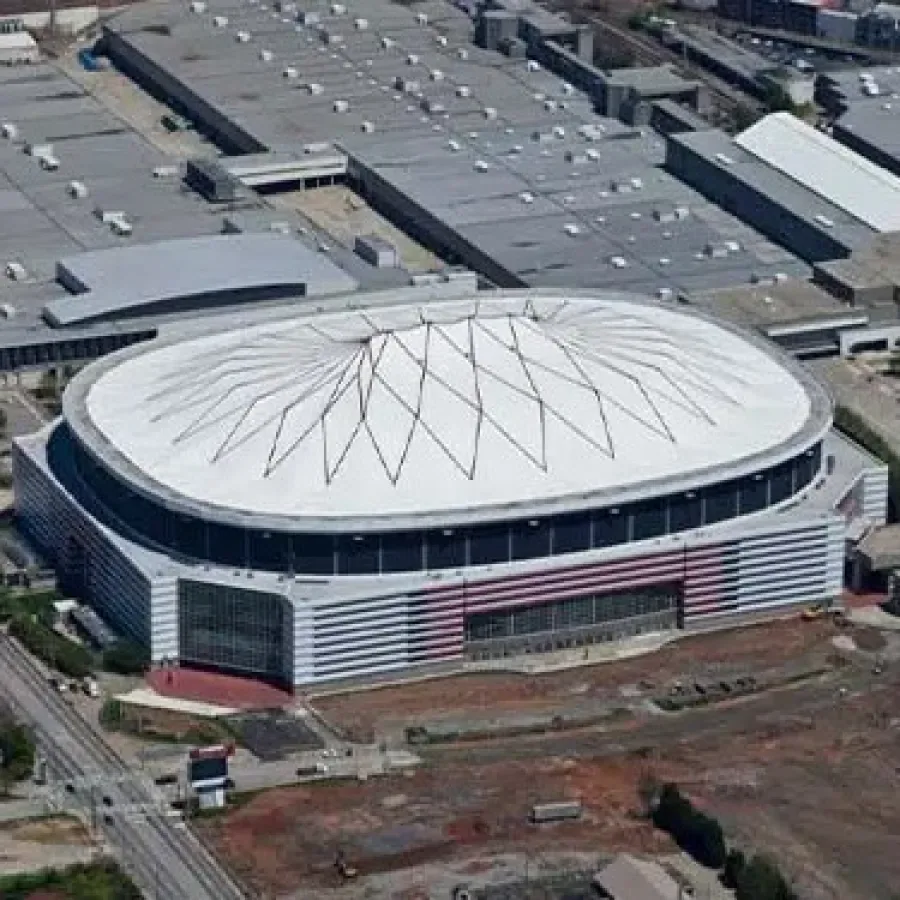
Different building groups need different walks. Higher education is part of the local base, with UMass Lowell and Middlesex Community College named in the city's workforce materials, and a campus-style inspection compares each roof against the next and ranks them for a facilities office. Downtown, the historic district's mill yards and canal system are subject to Historic Board review, and the inspection report flags visible exterior items that would need that review before any work.
The Hamilton Canal District, the district linking downtown to the commuter rail station through mixed-use redevelopment, is planned for commercial, retail, office and research uses, and each use brings different rooftop equipment. In Westford, the Route 110 corridor and the commercial office parks present a similar mix. Forest Ridge Business Park in Billerica holds three office buildings a few minutes from Route 3, so roof conditions can be compared across the three.
Commercial Roofing Questions
How long does it take to inspect a commercial roof?
Walk time scales with the number of roof sections, penetrations and drains, and a roof with heavy rooftop equipment takes longer than an open field. Photograph review and report writing follow the walk. The report date is given before the visit, so the facility director can plan the review and any repair approvals around it.
Does the inspection include a cost estimate for repairs?
Cost ranges are attached to each finding by item, with the assumptions listed. Larger findings, like a wet insulation area or a flashing rebuild, get a refined price after the moisture survey or the detail measurement.
What access do you need from the building?
A roof hatch or ladder route, a contact who can open doors, and notice of any restricted areas. If tenants must be warned, that happens before the visit. A lift is arranged in advance when the roof has no safe interior access.
Can the inspection be done in winter?
With limits. Snow and ice hide seams and block drains, and safe footing is the first concern. A winter visit can confirm drainage, flashing and visible damage, and a follow-up walk after the thaw completes the picture.
Why would a property manager add drone imagery to the walk?
Large or steep roofs are slow to cover on foot, and imagery gives a complete overhead view of the surface. The drone shows where to look closer, and the inspector confirms it by hand.