Substrate first: spray polyurethane foam, SPF, is applied as a liquid that expands into a jointless insulating layer, and it only bonds to a surface that is clean, dry and within a narrow temperature range. For a facility director in Lowell, MA that single condition governs when the work can happen and what the existing roof must look like beforehand. We begin by testing the roof for moisture, reading the surface and recording the weather window the foam needs, then lay out whether SPF suits the building at all.
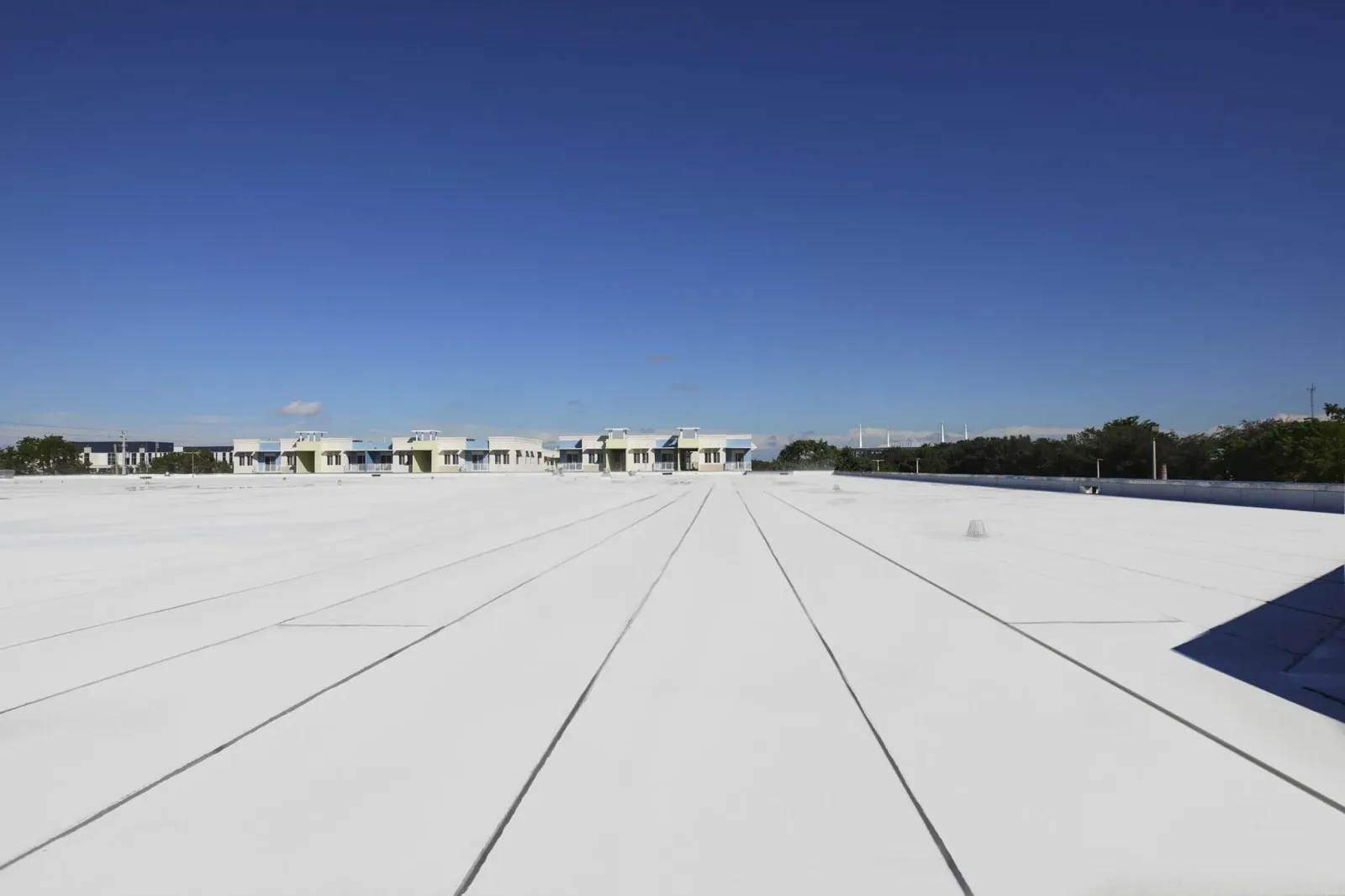
SPF is two things at once: an insulation and a waterproofing layer, finished with a protective coating that shields it from sunlight. Both parts need maintenance, and the coating is the part that wears.
Foam, Coating and the Roof Assembly
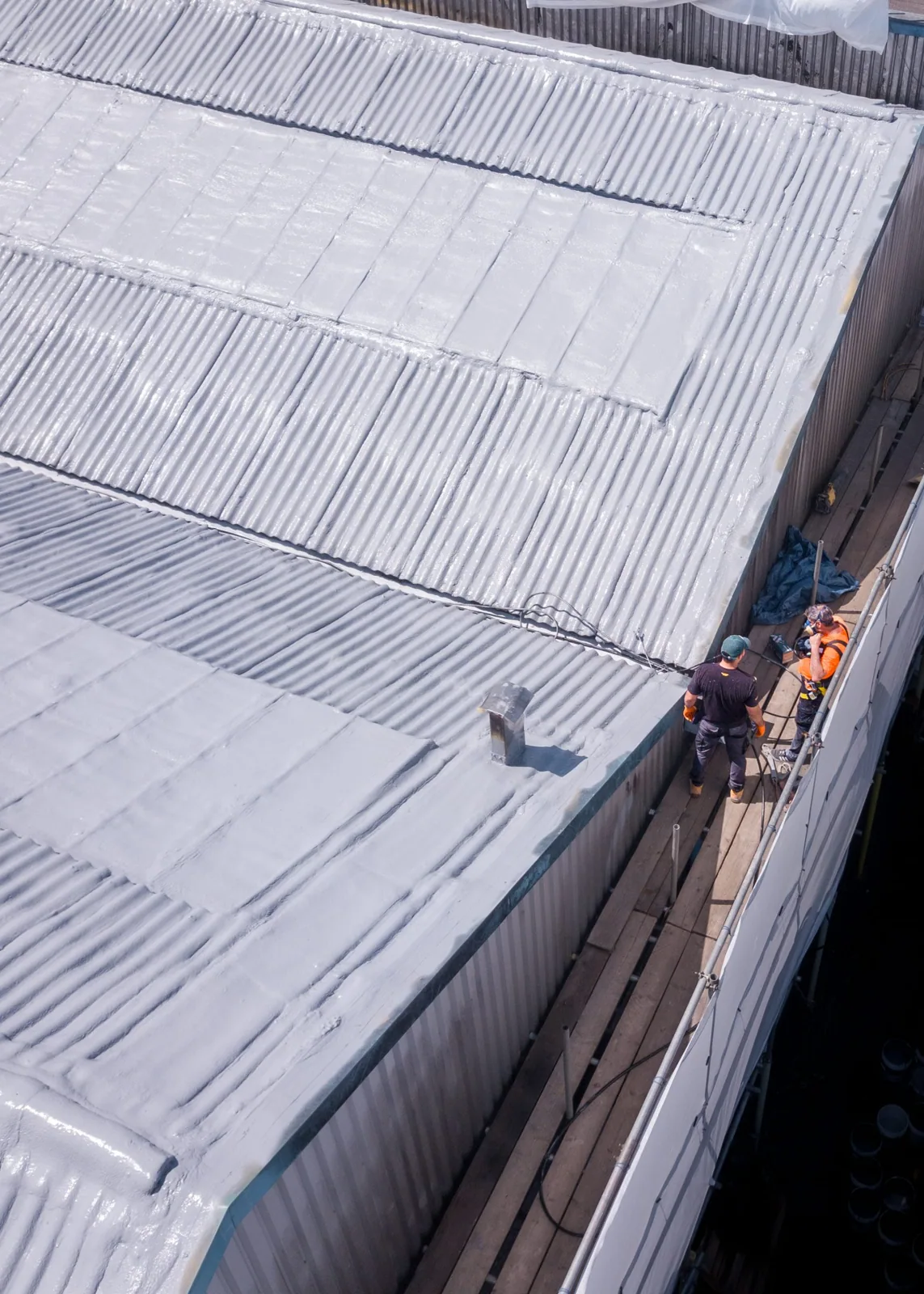
Foam is sprayed in lifts, each a fraction of an inch to an inch thick, until the thickness reaches the target. It adheres to the substrate, fills irregularities, wraps penetrations and curbs and creates a continuous layer with no seams. The cured foam is light, closed-cell and insulating, and it is also vulnerable to ultraviolet light, so a coating, typically elastomeric acrylic or silicone, is applied over it, often with granules in high-traffic areas.
Because the foam follows the surface, it can be used to build slope into a roof, adding thickness where water should flow away. It can also be applied over existing roofs of several types after preparation, which makes it a recover option when the existing roof is dry and firmly attached.
Weather Limits and the Lowell Calendar
Foam needs dry surfaces, moderate temperatures and low wind. NOAA's 1991-2020 normals for the Lowell station put the annual mean at 49.0 degrees Fahrenheit, the January daily mean at 24.9 and the July mean at 72.8, with 48.51 inches of precipitation spread through the year. That leaves a working window in the warmer months, and a morning dew or a sudden shower can end a day's spraying. Wind drift can carry overspray onto cars, glass and neighboring buildings, and crews set up wind screens and masks.
Planning around the calendar is part of the price. The scope shows the number of working days needed, the weather holds allowed and the date the next update comes. A job that starts in late fall risks stopping with foam exposed, and we plan to coat sections as they are sprayed. The same-day coating rule also protects against rain, dew and ultraviolet light, and it means the sprayed area at the end of any day is sealed against the next night's weather. Material is stored in a heated truck or trailer, since the components must be warm enough to mix and spray correctly in cool weather.
Preparation and Moisture Testing
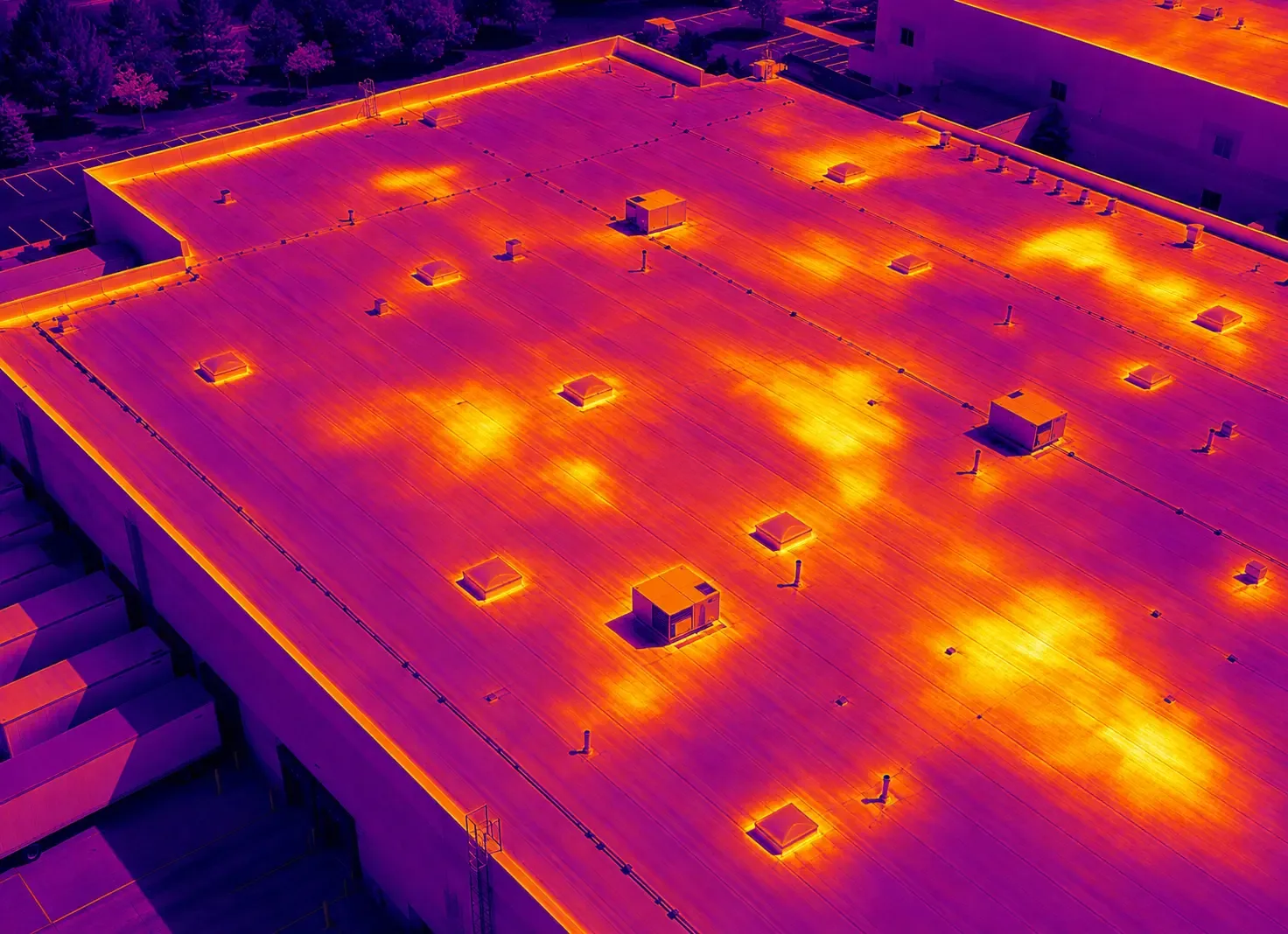
The existing roof is cleaned, dried and repaired before foam is applied. Loose material is removed, wet insulation is cut out, rust is treated and the substrate is primed where needed. An infrared moisture survey and core cuts show whether a recover is safe. Foam over wet insulation seals moisture in, and the result is a roof that cannot dry.
The substrate also determines adhesion. Dust, oil, algae and chalking prevent bonding, so the surface is washed or scrubbed, and a test patch is sprayed to confirm adhesion before the full job begins. The results go into the record, and so does the thickness of foam applied at measured points. Thickness is checked with a probe at a set grid, and low readings get an added lift before the coating goes on. Details such as curb bases, drains and parapet tops are sprayed with attention to height and slope, and any rooftop equipment that will be serviced often gets a protected walkway.
Drainage can be improved at the same time. Because foam is thicker where it is needed, a low spot that held water can be built up to drain, and a new slope can be formed toward an existing outlet. Ponding that is cured by shape is cheaper to keep than ponding that is cured by frequent cleaning.
Occupancy, Odor and Fire Controls
During spraying, the chemicals release vapors until they cure, and air intakes near the work area need protection. Occupied buildings plan for ventilation shutdowns, notification of tenants and a re-entry time after application. Crews wear protective equipment and the roof area is cordoned off. Foam is combustible before it is covered, so hot work near it is controlled, and thermal barriers may be required by code.
Foam plastics are reviewed under the Massachusetts 10th edition code, which began October 11, 2024, governs every application since July 1, 2025 and draws mostly on the 2021 IBC. Its provisions on foam plastics, fire barriers and roof coverings are reviewed with the building department, and the local energy code, which may be a stretch provision, is confirmed before the foam thickness is set.
Maintaining the Coating
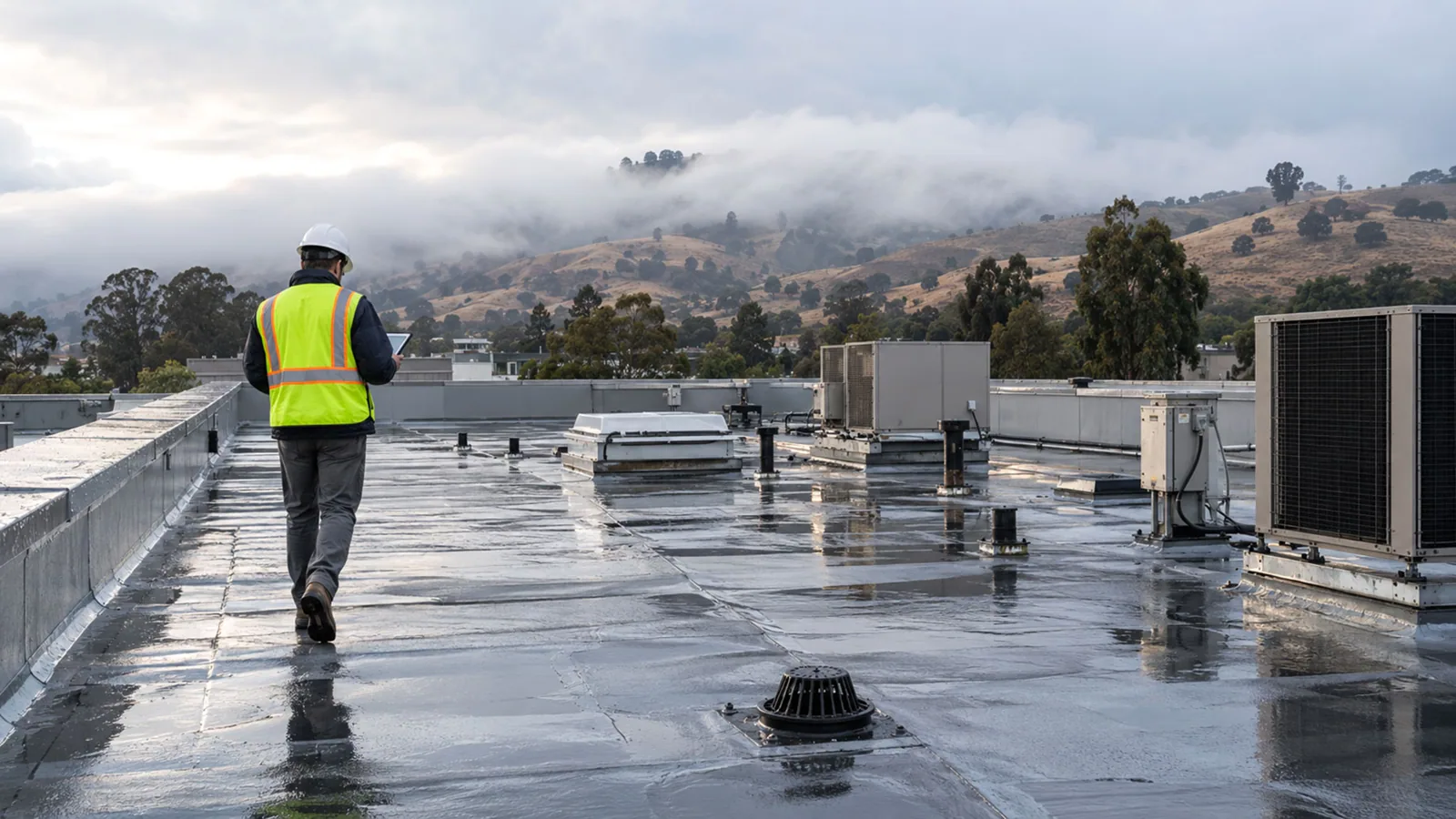
The coating protects the foam, and its thickness wears over time. Annual or semi-annual inspections look for thin spots, cracks, blisters, punctures and foot-traffic wear, and the thickness is measured and recorded. Birds can peck foam, and dropped tools can puncture it. Small damage is repaired promptly with foam and coating patches, since water entering a puncture can travel under the coating. Repairs follow a set order: cut out damaged foam, dry the area, spray or pour foam to level, then coat with overlap onto sound coating on every side. A patch with a hard edge fails at the edge, so overlap is generous.
A recoat plan, set by the coating and the wear it shows, keeps the system sound. Setting the recoat schedule up front means the later cost never arrives as a surprise. A preventive maintenance program ties inspection and recoat timing to the roof record.
SPF Compared With Other Options
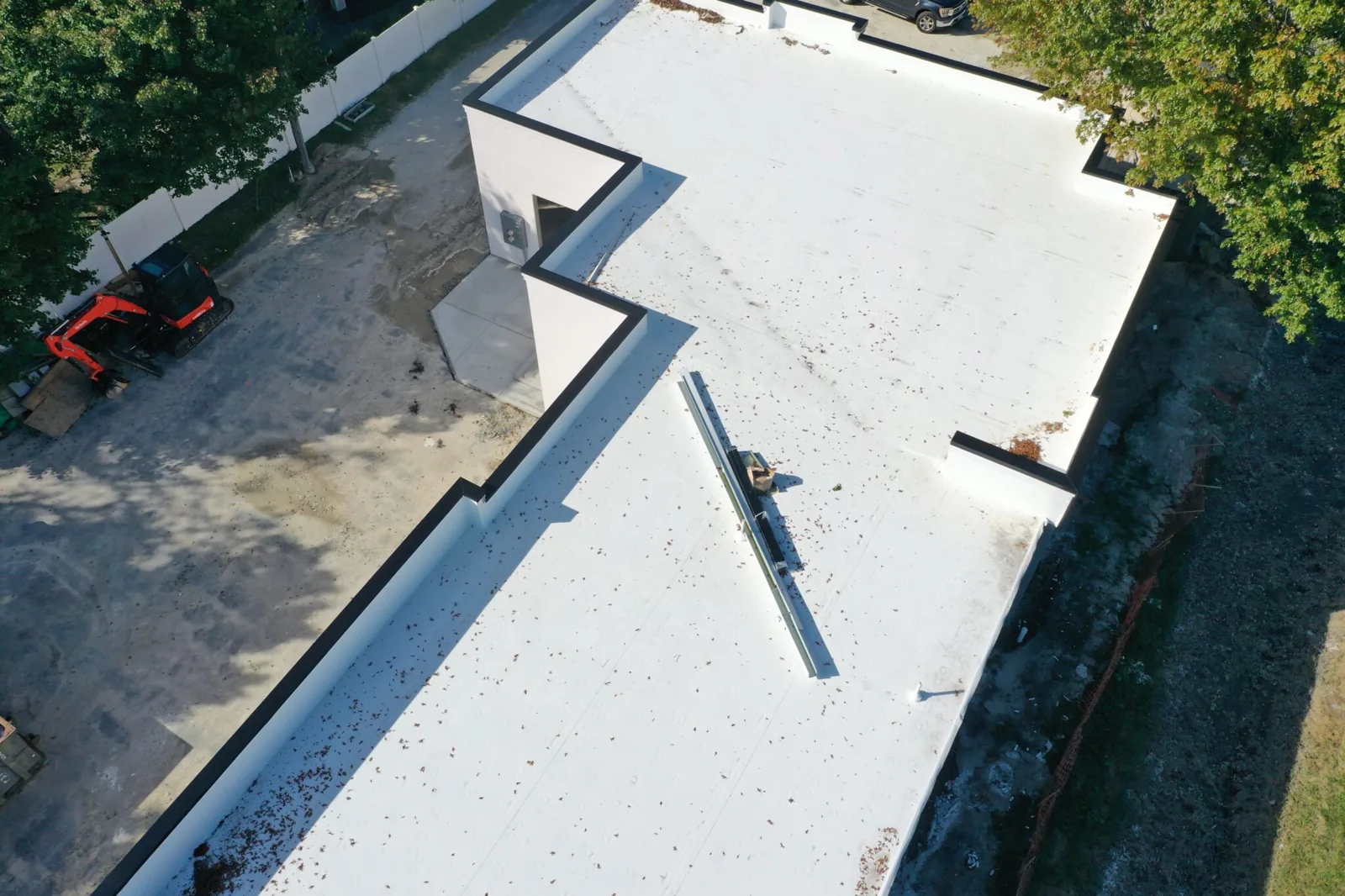
SPF delivers insulation and waterproofing in one layer, with no seams, and it adapts to complex shapes with many penetrations. It requires skilled application and good weather, and it is not the cheapest option up front. Single-ply membranes like TPO are faster to install and less sensitive to weather. Coatings alone, such as silicone, do not add insulation.
The scope lays out the installed cost, the expected service life and the maintenance requirement for each option, and the facility director decides. The warranty depends on the applicator's qualifications and the product maker's terms, which are read before the order is placed. The closeout file holds the foam density and thickness readings, the coating thickness, photographs by roof section and the date of the first recheck. The facility director receives the file and a maintenance calendar, and the next owner receives the same.
Where SPF Fits in the Lowell Area
Buildings with many penetrations or irregular roofs are the usual candidates. The legacy mill-building stock in the Downtown Lowell Historic District, where Historic Board review applies to exterior work, is one place that question arises, and so are buildings in Chelmsford, where Route 3 and I-495 cross. Whether a particular roof qualifies depends on its substrate and moisture condition, and an SPF job in Lowell starts with testing.
Commercial Roofing Questions
Can SPF be applied in the rain?
No. The surface must be dry and within the temperature range. A shower stops the day.
Why is a coating needed over foam?
Ultraviolet light degrades bare foam. The coating shields it and sheds water.
How is overspray prevented?
With wind screens, masking and a wind limit. Spraying stops when drift cannot be controlled.
Does SPF add insulation value?
Yes. Closed-cell foam insulates, and thickness is set from the energy code and the building.
How often is a recoat needed?
It depends on the coating and wear. Thickness measurements from inspections guide the timing.