Operations list first: which spaces below the roof cannot stop, which can pause, and which hours are quiet. In Lowell, MA, a reroof on an occupied building is a scheduling problem with a roofing problem inside it. The facility director holds the constraints. We turn them into a sequence of roof sections, each opened, replaced and sealed in a single day or a single weather window, so the building keeps working underneath.
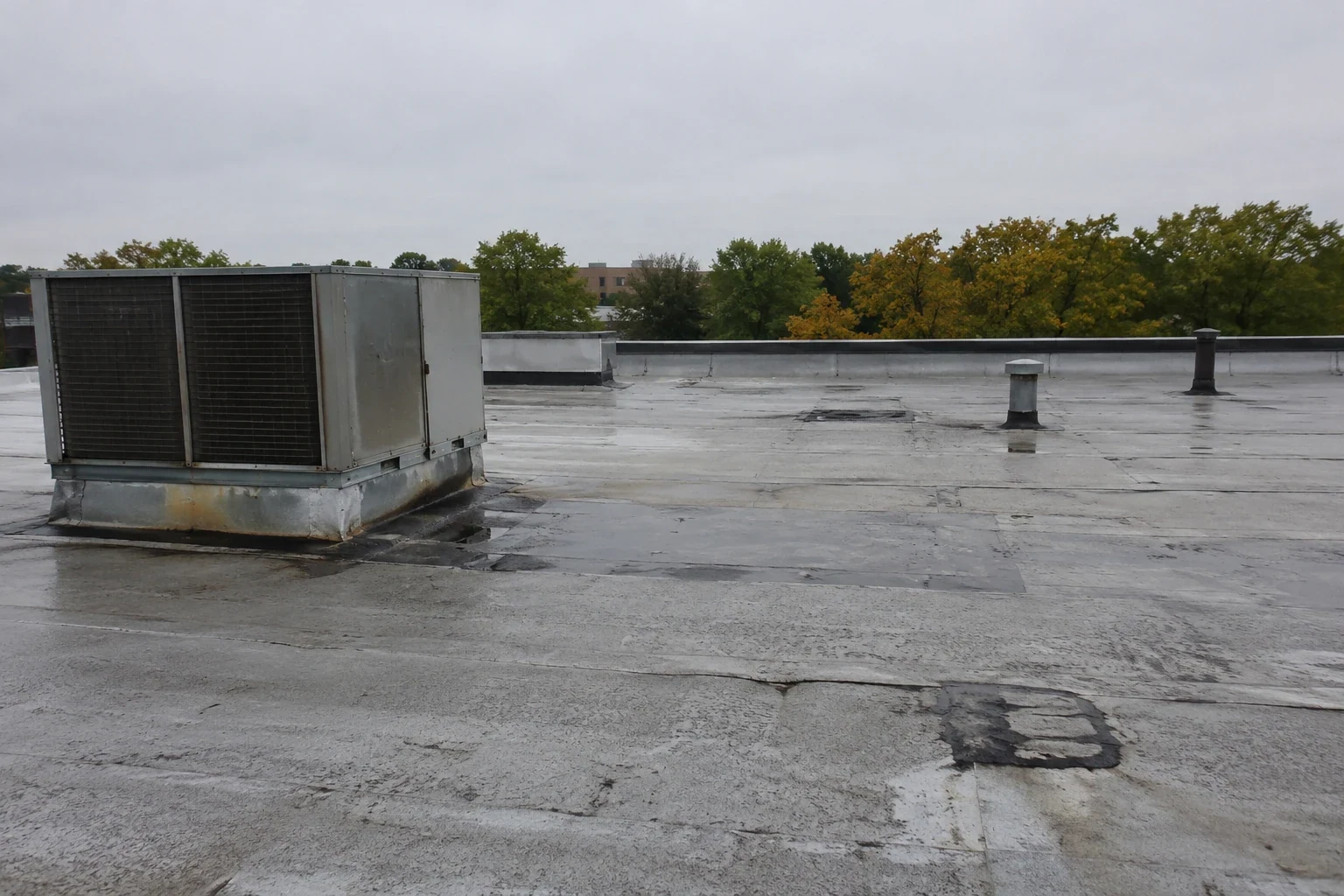
The scope decision comes before the price. A full tear-off, a recover over dry insulation and a section-by-section replacement have different noise, dust and risk profiles, and the right one depends on what happens below the roof. We write that choice into the plan with the reasoning, so tenants and managers can see why a section is first or last.
Phasing by Roof Section
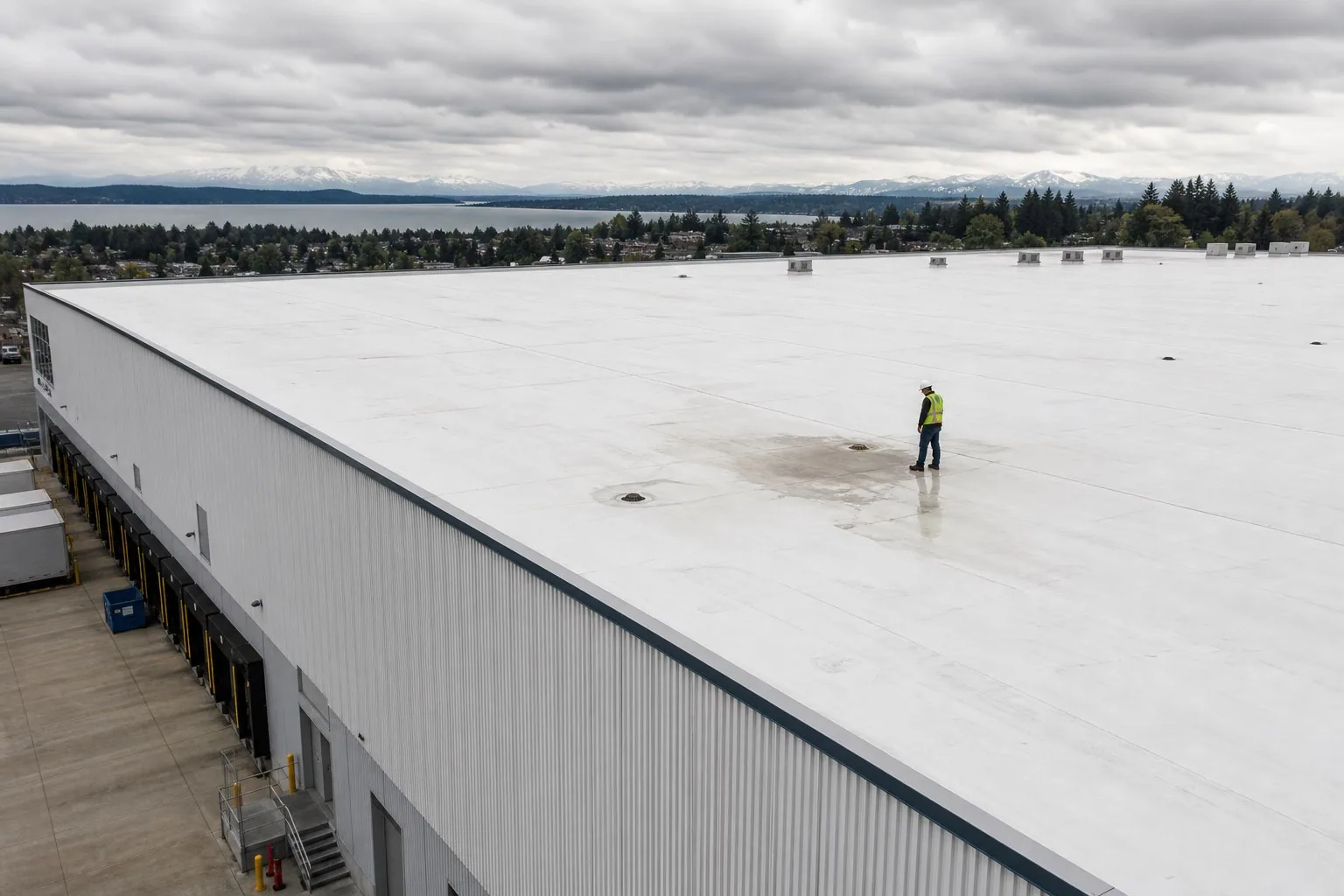
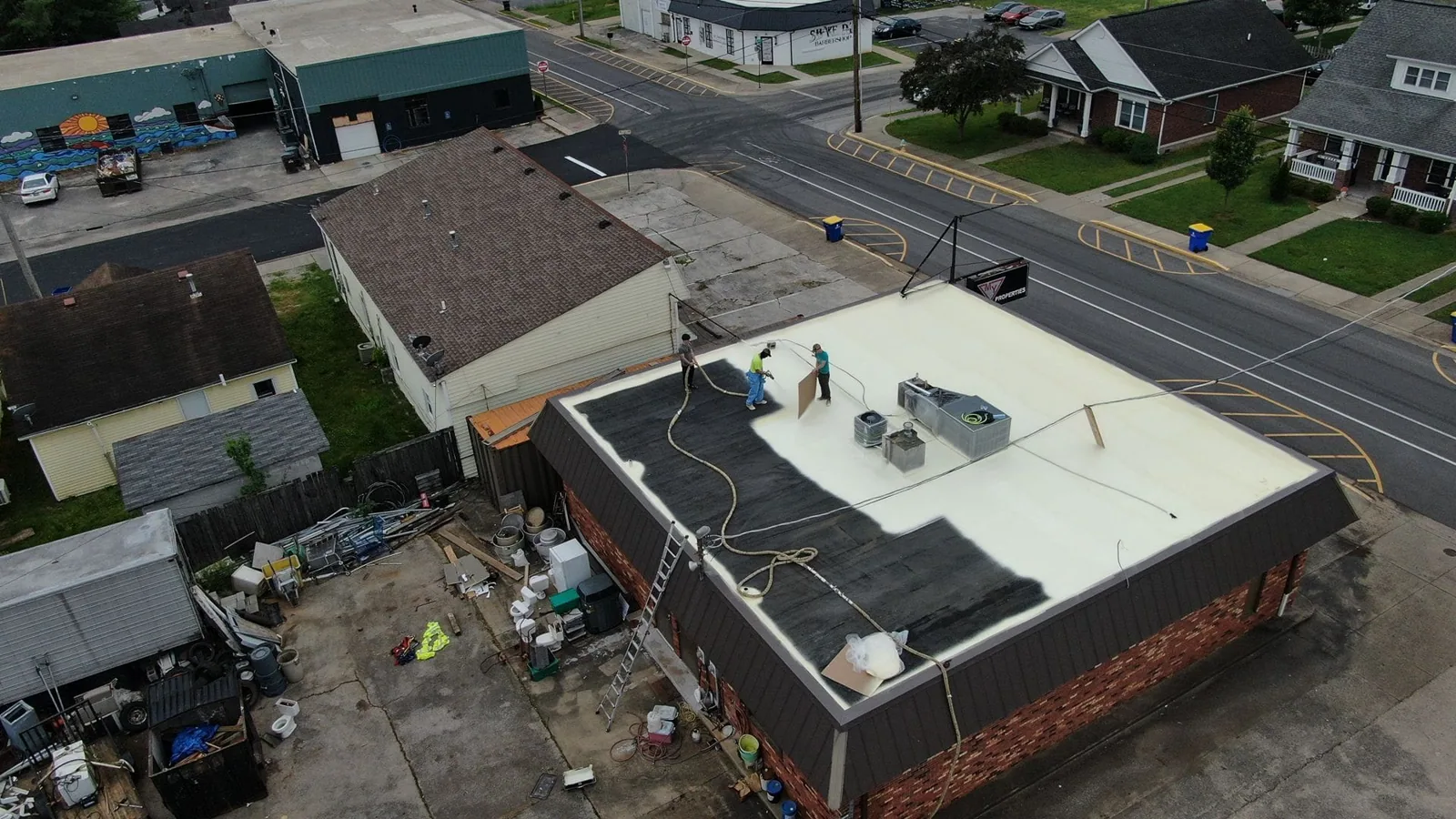
The roof is divided into sections on a plan, each with its own start and finish, its own drains and its own water path. A section is opened only when the crew can finish its dry-in the same day, and the plan places the most sensitive spaces last or in the quietest season. Where one tenant occupies only part of the building, work above their space is scheduled with them, and we confirm in writing what they will hear and when.
Staging is planned the same way, with the hoist, the dumpster and the material pile placed where they will not block entrances, fire lanes or loading doors. Material is hoisted to the roof in the morning, kept over structure and not over open spans, and any unused material is removed or covered by evening. The crew size is set by what the section can safely hold, since an overcrowded roof makes mistakes. The plan also fixes the order of the work inside a section: tear-off, deck check, insulation, cover board, membrane, flashing and edge metal, so nothing is left open overnight. A section that cannot be finished is closed with a temporary seal that is photographed and logged, and it is the first item the next morning.
Interior Protection
Tear-off disturbs dust and debris, and fasteners driven through the deck can drop particles into the space below. Interior protection starts with a list of what is directly under the work: ceilings, open workspaces, equipment, stock. Covers go over equipment and stock, ceiling tiles may be taped or removed in the lowest-tolerance areas, and critical spaces can be protected with temporary framing and sheeting.
We also plan for water. A sudden shower on an opened section is the main risk, so the crew checks the forecast every morning, keeps tarps and temporary seals ready at the edge of the open area and stops opening when the window narrows. Rain is a planning item every month: the Lowell NOAA station averages 48.51 inches a year, including a 5.00 inch October and a 4.54 inch December.
Noise, Dust, Fumes and Hours
Different roof systems create different nuisances. Tear-off is loud and dusty. Mechanically fastened systems bring the noise of fastening machines on the deck. Adhesives and hot-applied products release odors that can travel through air intakes. We map the building's air intakes and keep fumes away from them, shut down or cover intakes during the highest-odor steps when the mechanical contractor agrees and use low-odor products where the system allows.
Hours are negotiated. Noisy work may be pushed to early mornings, evenings or weekends in buildings with sound-sensitive tenants, and the schedule shows the price of those hours. The facility director chooses the trade between a slower daytime schedule and a faster one with off-hours premiums.
Safe Access and Building Security
Crews need a route to the roof that does not cross sensitive areas. We agree on the hatch, the stair or the exterior ladder, the hours it is in use and the way keys and badges are managed. Fall protection, perimeter warning lines and controlled access zones keep roof workers safe and keep people below clear of falling material. Pedestrian entrances under work areas are protected with covered walkways or closed during the highest-risk steps.
For buildings with campus-style security or restricted areas, we submit crew names and vehicle details in advance, and the escort plan is in the schedule. Anything that delays access is recorded, since it affects the return window.
Choosing the System for an Occupied Building
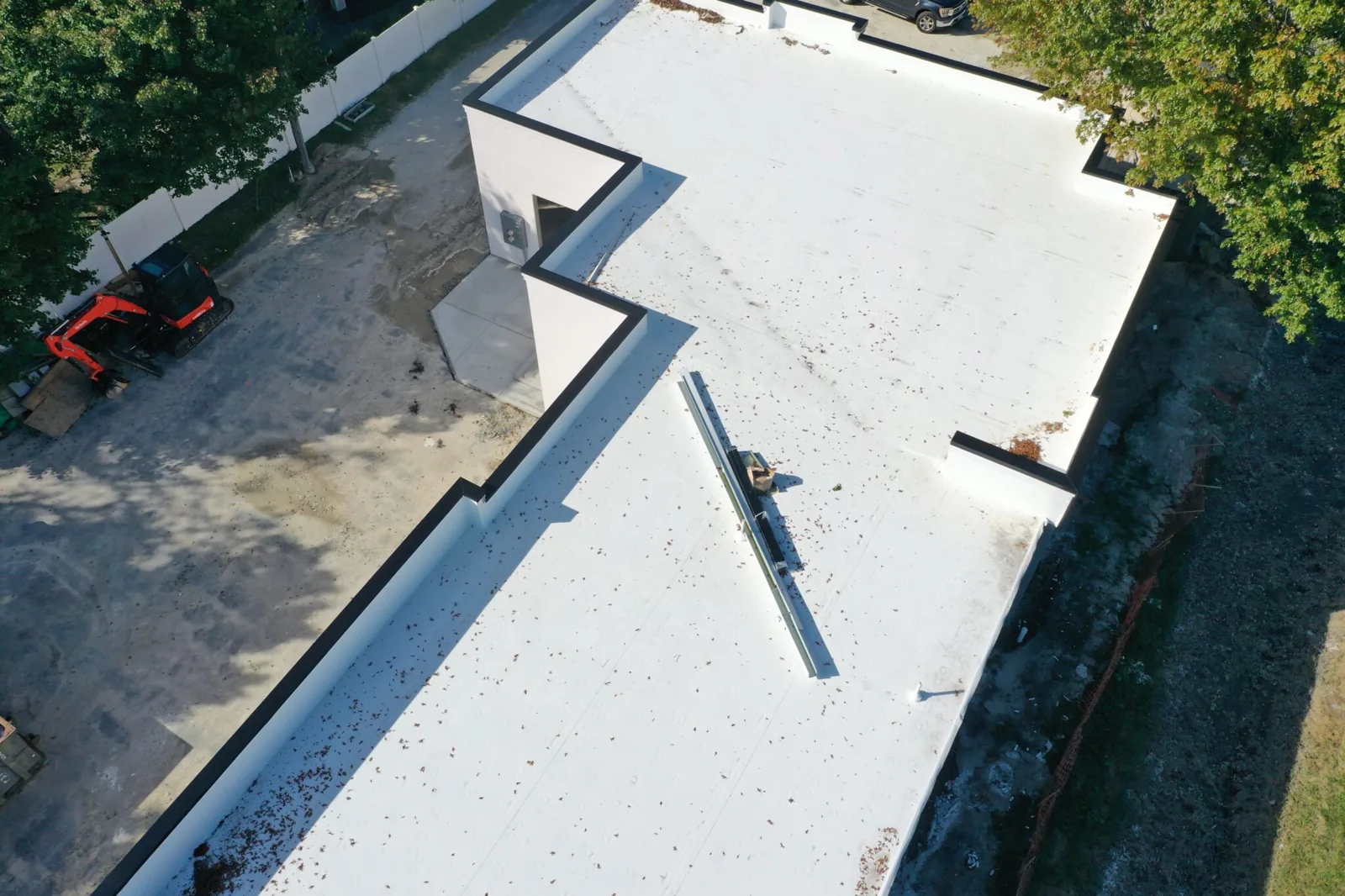
A recover over dry insulation avoids tear-off and cuts debris, dust and noise, but only when moisture testing allows it. A full replacement exposes the deck and gives the best view of what is below, at the cost of more disturbance. Adhered or welded single-ply membranes such as TPO generally produce less odor than hot-applied systems, which is why they are common choices on occupied buildings.
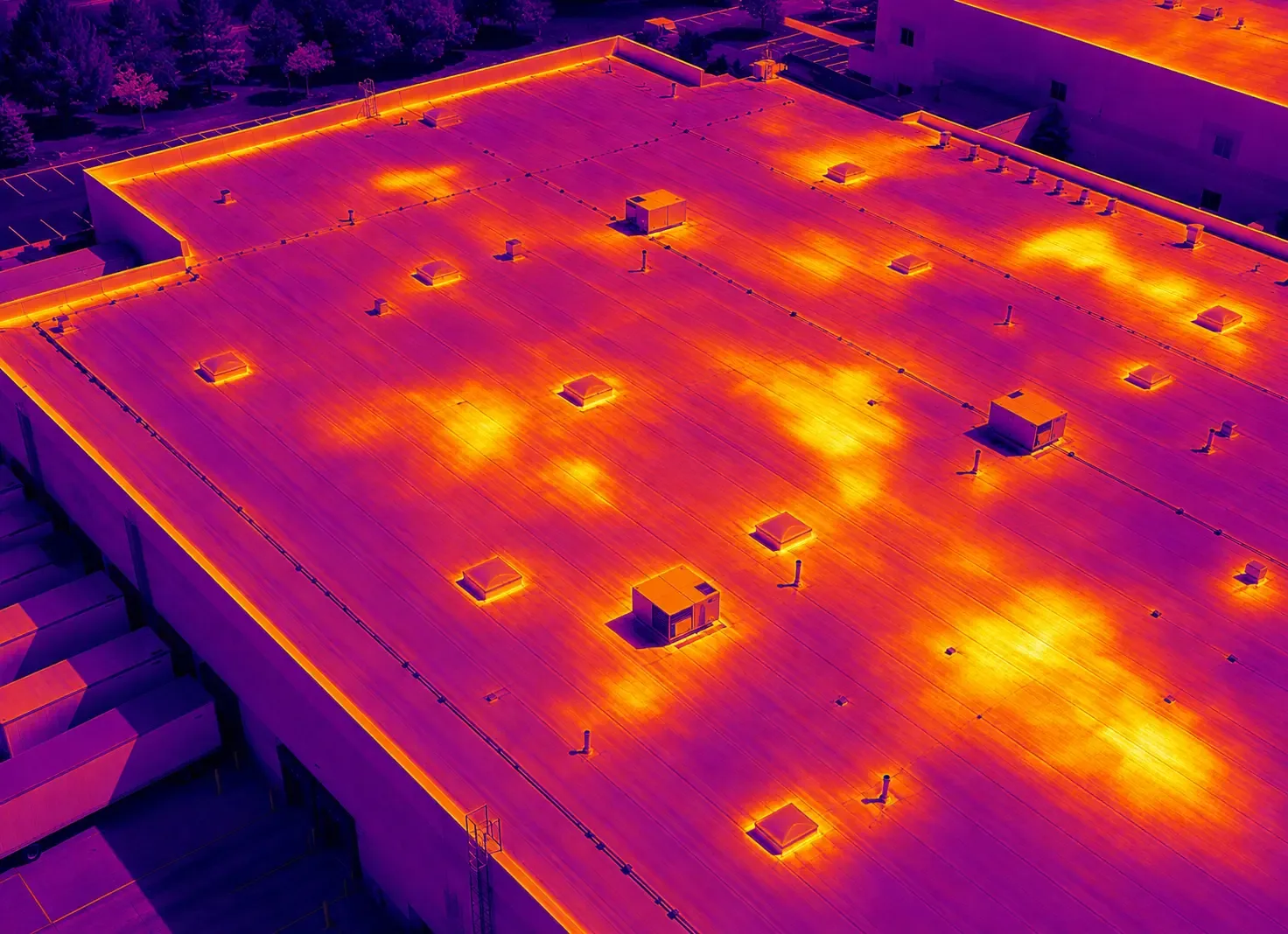
The choice also weighs warranty terms, code and budget. Permits follow the Massachusetts 10th edition code, built mainly on the 2021 IBC and in force for all applications since July 1, 2025, and a tear-off may bring insulation upgrades that a recover does not. Both options are priced so the trade is visible. Before either is chosen, an infrared moisture survey sets the boundary of any wet insulation, since that boundary decides how much of the roof can stay.
Communication Through the Job
Tenants and staff are told what to expect before work starts: which areas are affected, when the noisiest steps happen and whom to call. Contact lists are set before mobilization, and they are posted where tenants will see them: a roof foreman reachable during work hours, a project lead for scope questions and an after-hours number for water. A daily summary goes to the facility director: sections opened and closed, any water found, any change to the next day's plan. If a hidden condition turns up, such as wet insulation or a damaged deck, the crew stops, photographs it and issues a revision with a quantity and a price before the section is closed.
Where Occupied Work Happens
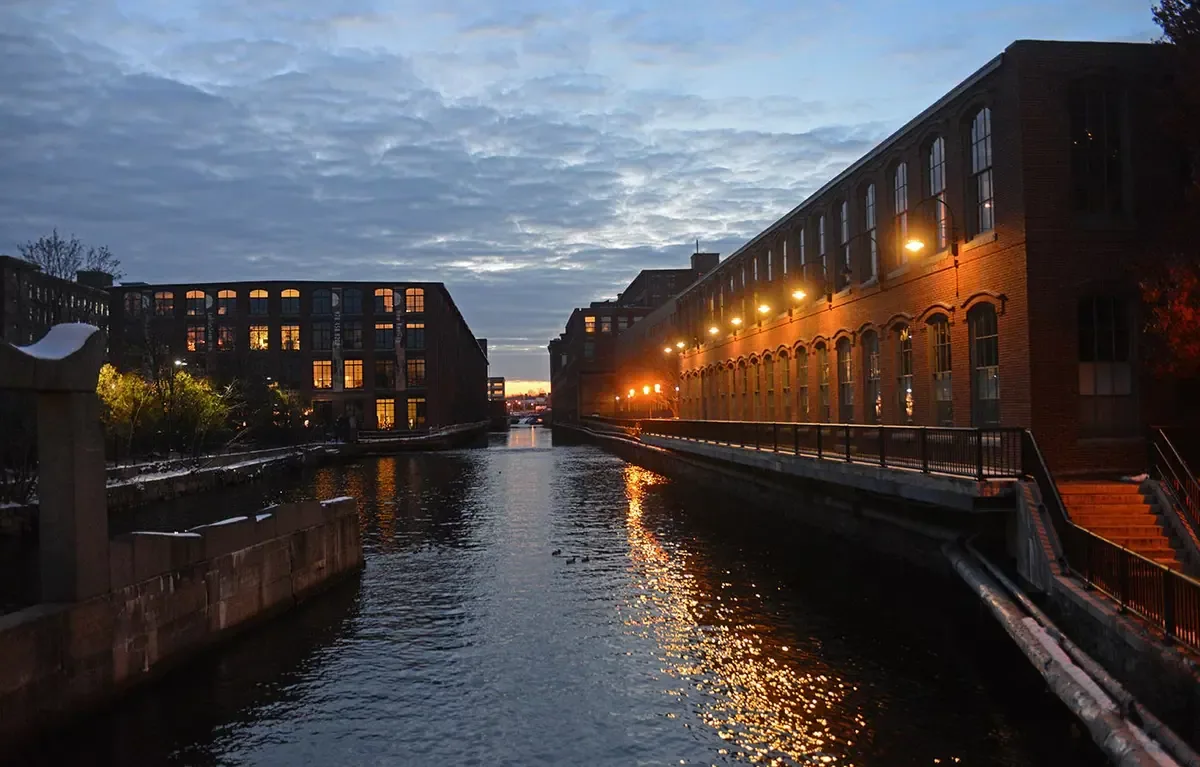
Education and health services lead Lowell's employment, and occupied reroofs suit those buildings as well as the mixed-use blocks in the Hamilton Canal District, a redevelopment area the city is shaping between downtown and the commuter-rail station. Exterior work inside the Downtown Lowell Historic District, a zone covering the commercial core, mill yards and canal system, goes before the Historic Board, and that review date belongs on the schedule. In Ayer's City Industrial Park on Tanner Street, whatever operations run below the roof shape the plan. Roofs across Lowell and along the Billerica business corridors follow the same process.
Commercial Roofing Questions
Can a tear-off happen while the building is in use?
Yes, in sections, with interior protection and a same-day dry-in for each section. The most sensitive spaces are scheduled last.
What if rain comes while a section is open?
The crew works only when the forecast allows a same-day close, keeps temporary seals ready and stops opening new area when the window narrows.
How are odors kept out of the building?
We map air intakes, keep fumes away from them, coordinate shutdowns with the mechanical contractor and choose lower-odor products where the system allows.
What does off-hours work cost?
The schedule shows the premium for each shift choice, so the facility director can compare a slower daytime plan with a faster off-hours one.
Who gets daily updates?
The facility director, with a summary of sections opened and closed, any water found and the next day's plan.