Is the line open? That is the first question on a restaurant roof call, and the answer decides everything after it. A kitchen with an active leak over a cooking line, a prep table, or a hood needs a different first hour than a dining room with a stained ceiling tile. We ask where the water is, whether gas or electric equipment sits below it, and whether service can pause. Then we confirm safe access to the roof and set the interior protection the manager can put up while we travel.
In Lowell, MA, restaurant roofs take rain across the year and heavy winter weather. For an operator, the sequence runs in steps: respond, dry in, inspect, draw the repair boundary, price it, and attach a time to each.
Kitchen Exhaust and Grease on the Roof
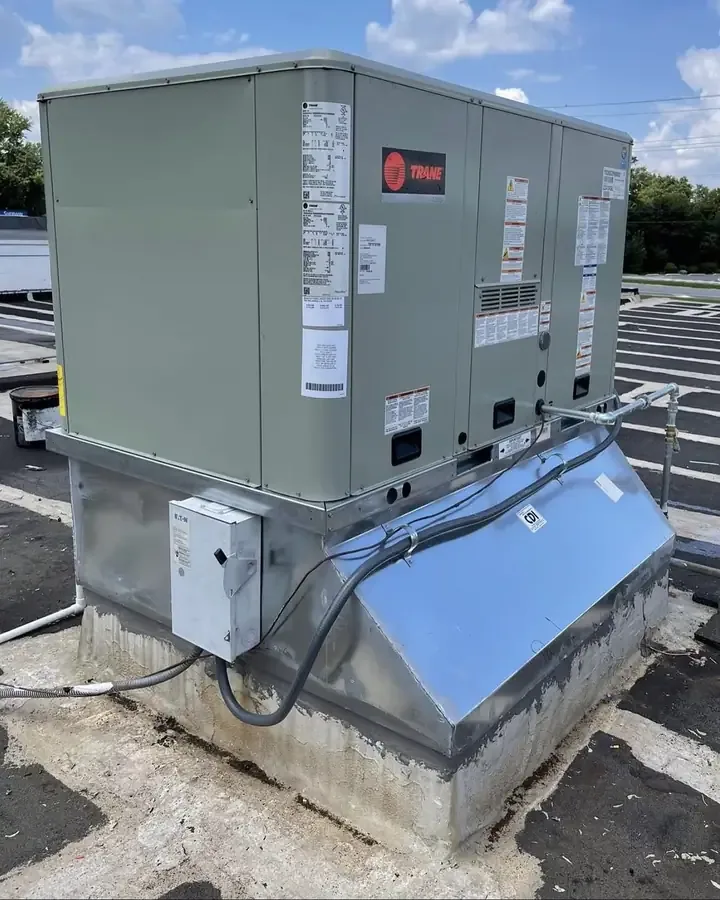
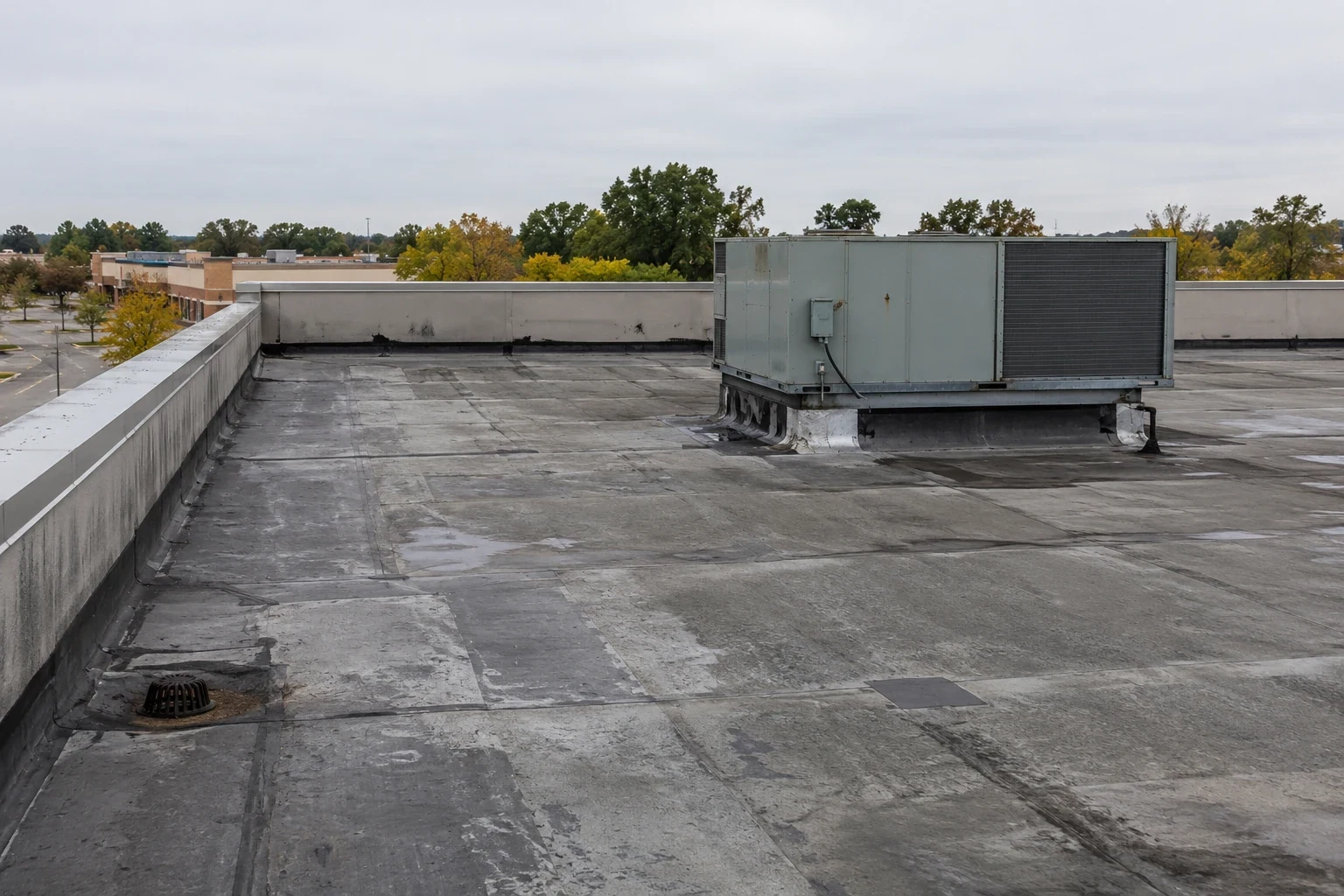
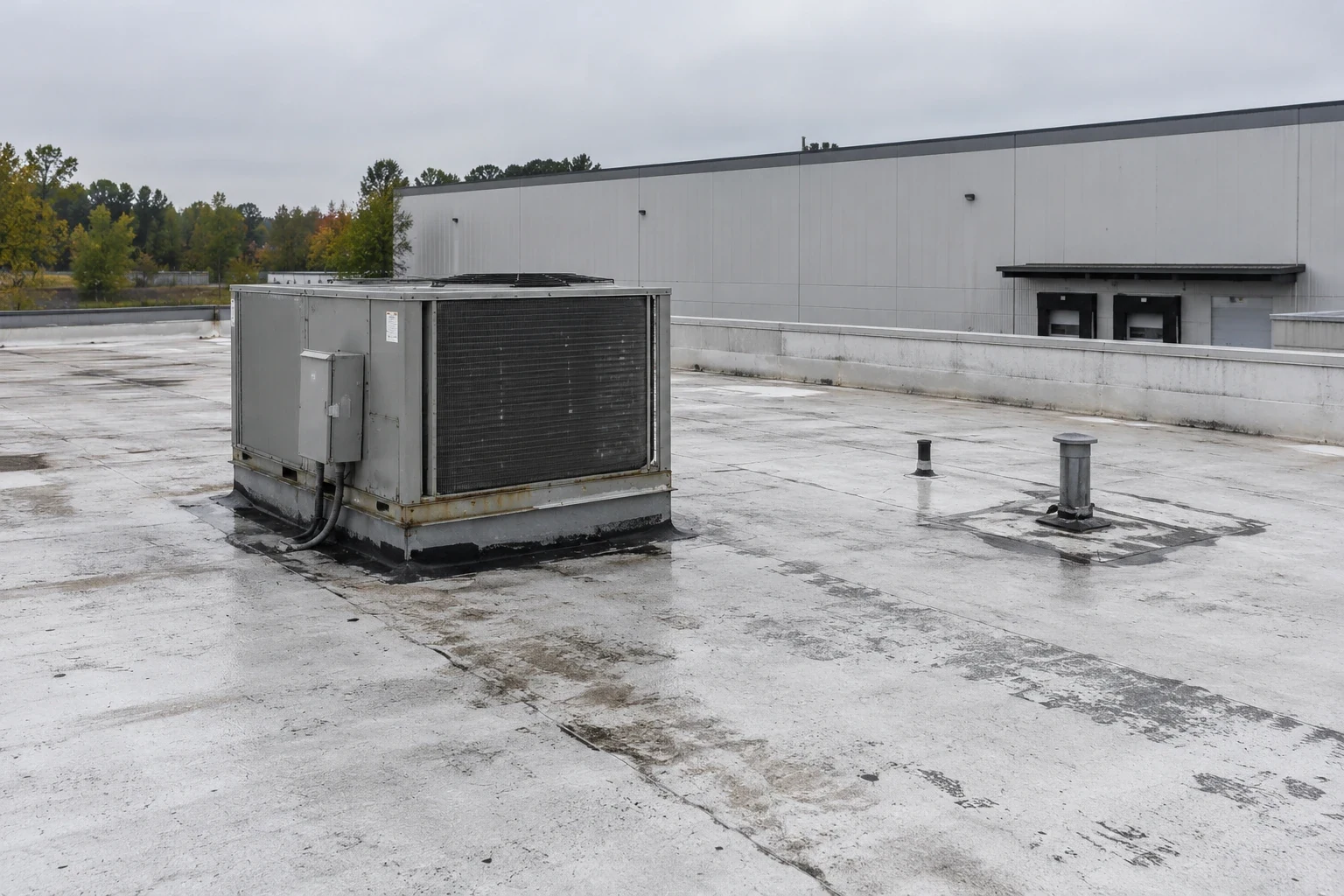
A restaurant roof carries an exhaust fan, often several, plus makeup air units and heating and cooling equipment. Exhaust fans discharge grease-laden air, and grease collects on the membrane near the fan unless a containment pan or a regular cleaning keeps it off. Grease softens many roofing membranes and spreads where it drips, so a stained area around the fan is a finding with a repair consequence.
We check the grease containment, the fan curb flashing, and the condition of the membrane around the discharge. Where grease has attacked the surface, the repair boundary extends past the visible stain. A membrane chosen to resist grease may be recommended at the next replacement. The scope for rooftop equipment curbs and supports includes the curb height and the clearance needed for cleaning access.
Dining Room and Interior Protection
Customers do not need to see a roof problem. Interior protection keeps the dining room open when possible: sheeting above a section of ceiling, a pan under a drip, a rope barrier around a wet floor, and a table moved out of the water path. We advise the manager on what to cover and what to leave, since decisions about opening belong to the operator.
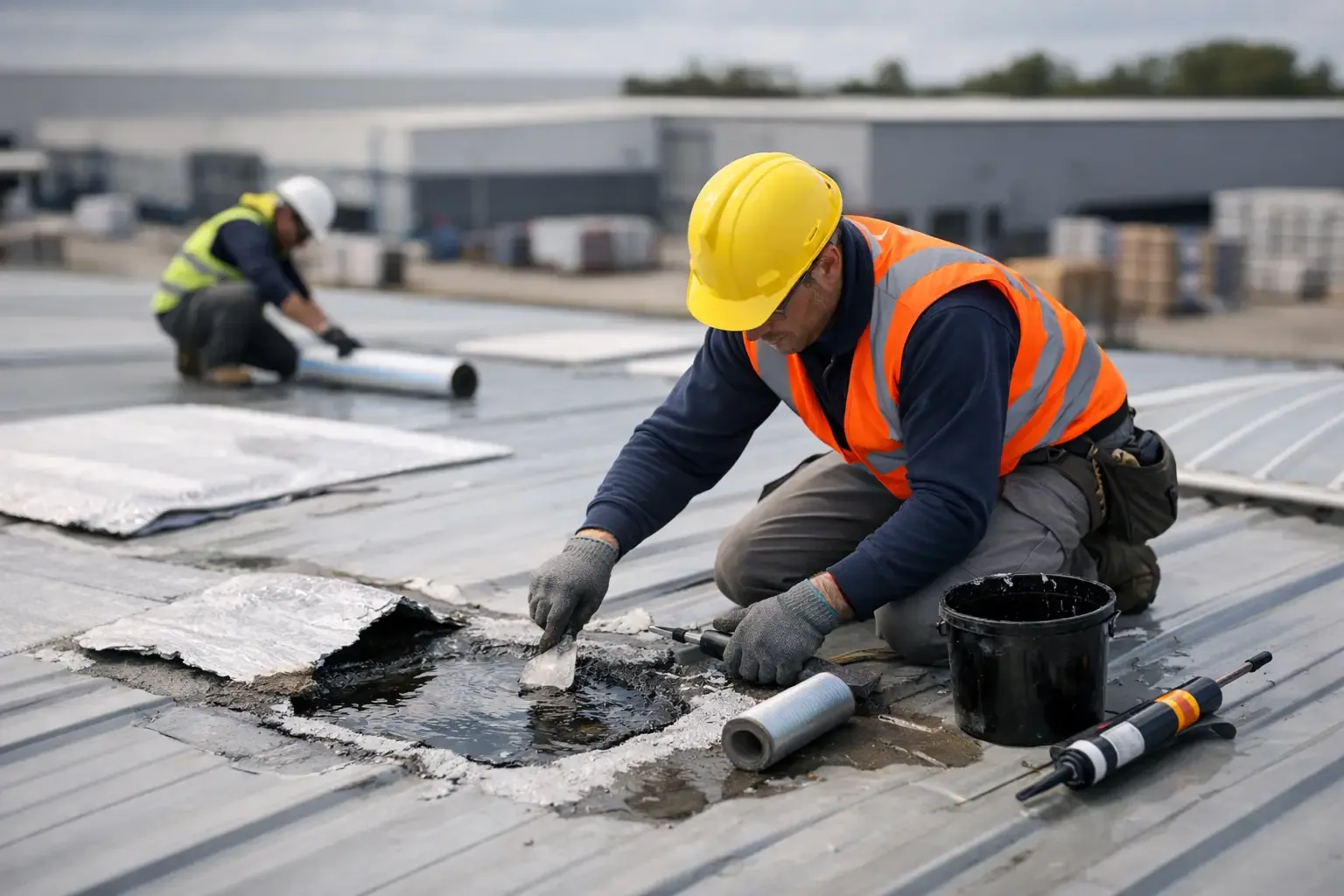
If water has reached a ceiling cavity, we trace the path before assuming the stain sits under the leak. Insulation or deck can carry water several feet before it shows. A hose test run in short intervals, with someone watching from inside, confirms the entry point. A commercial roof leak repair then applies to a defined spot, with the boundary drawn on the roof plan.
Flashing, Drains, and Small Roof Sections
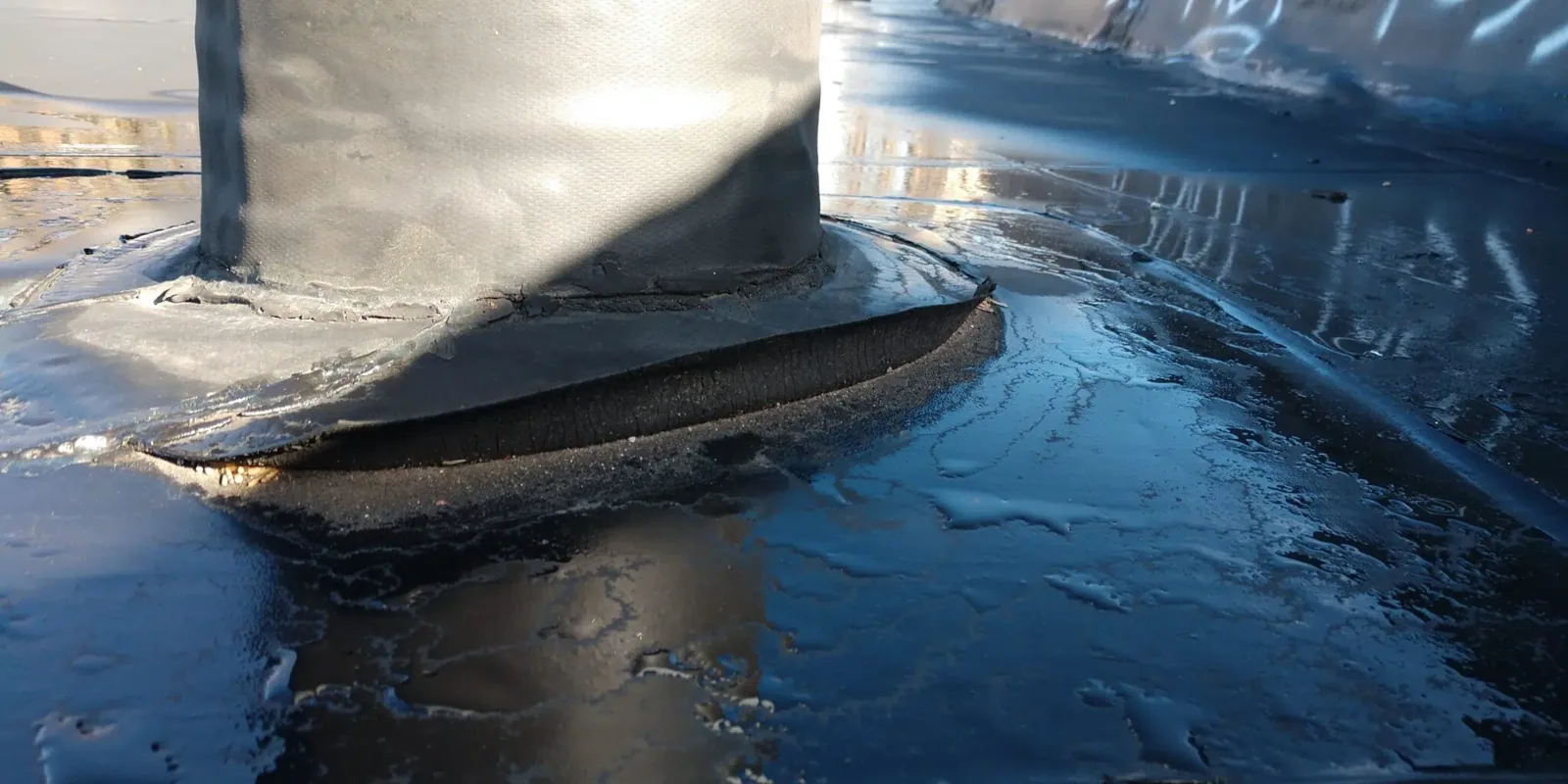
A restaurant in a small building or a single bay has a small roof, and a small roof has little margin: one clogged drain or one failed flashing can put water into the dining room. We check each wall flashing, parapet cap, and drain, and we photograph them in a fixed order for later comparison. Pipe boots and vent stack seals get a hand test.
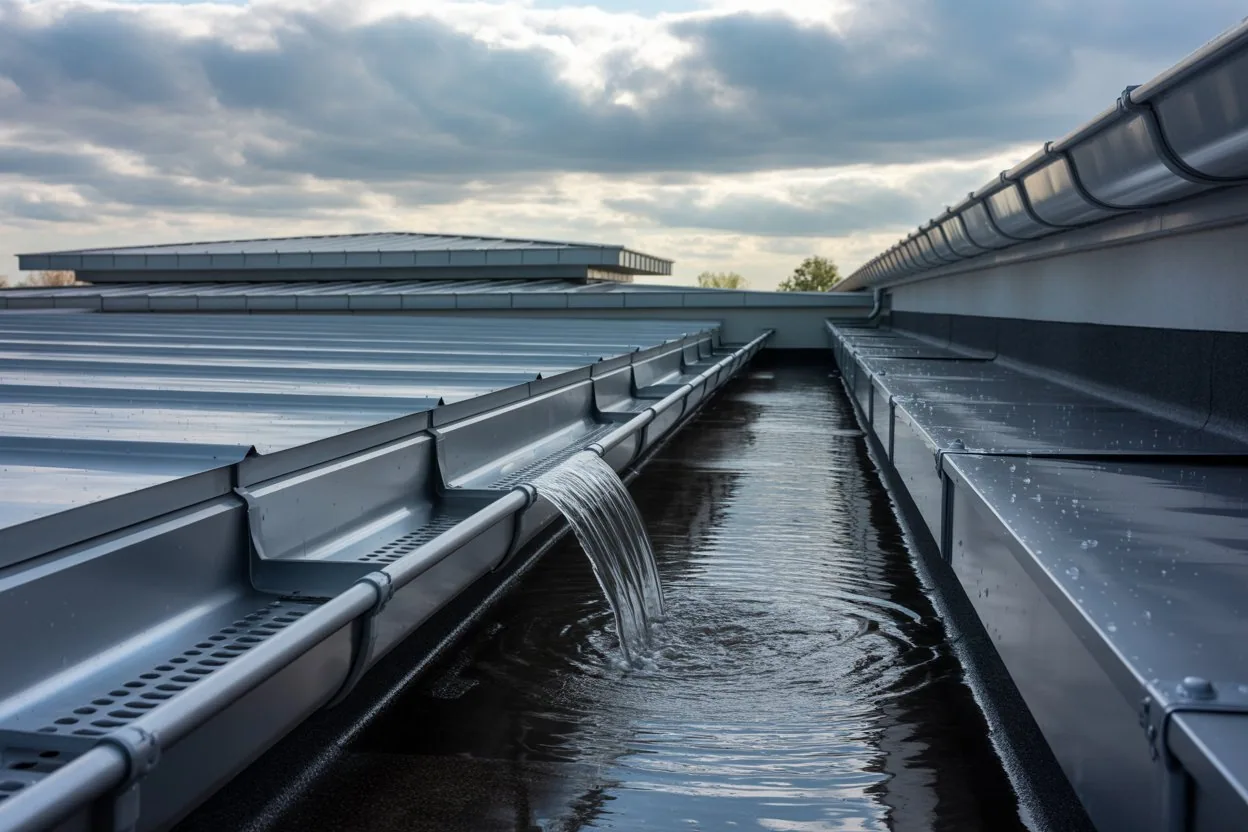
Drains on a small roof are often few. If one clogs with leaves or grease-laden debris, the water has no other path. Our drain and scupper work includes clearing, strainer replacement, and a flow test. A flashing failure repair is often the whole fix, and it can be done in a morning with the crew out before the lunch rush.
Downtown Lowell and Historic Review
The Downtown Lowell Historic District, which the city's plans place across much of downtown, sends exterior work to the Historic Board. An owner in that area should find out before scoping whether a roof change reaches an exterior element. Visible flashing, edge metal, and replaced materials are the likely items to raise.
The owner or landlord knows whether the building is in the district. Where review applies, exterior items are listed for approval and the review period gets its own line on the schedule. Plans for the Hamilton Canal District add commercial and retail space in a mixed-use area. A restaurant in a building of that kind should ask the landlord which approvals and records already exist for the roof before any work is scoped.
Weather, Snow, and the Cost of a Hold
Nor'easters, snowstorms, and ice storms are on the city's list of major hazards. After a storm, restaurant roofs get an edge-first check: coping, flashing, and drains. A January average near 25 degrees and 48.51 inches of yearly precipitation at the NOAA station mean freeze and thaw at every flashing.
A weather hold affects a restaurant more than most. A temporary dry-in has to last through the hold, and the operator needs a number for how long it can stand and when the next update will arrive. We state both. If a storm is coming, the dry-in is built to take it, and we say what the risks are. The operator also hears which tables, which kitchen stations, and which storage rooms sit under the protected section, so the decision to open for dinner or hold a reservation is made with the roof facts in hand.
Cost Update and Scope Decision
Trucks come in on I-93, I-495, or Route 3, then the lift and delivery plan uses the restaurant's own parking and service door, so guests and suppliers are not blocked and the crew's trucks have a marked place to wait. Where the lot is tight, we stage material in smaller loads and schedule the lift for the hours when the dining room is closed. Hot work and adhesives are kept away from the kitchen air intake, and the manager receives the list of products used, so that any smell reaching the dining room has a known source. Pricing comes in two steps, the dry-in on the first day and the repair once the inspection is done. The permanent price includes the access, the hours, and the weather hold. We list the items that could move the number, such as wet insulation beyond the survey boundary or a curb that cannot be reused.
For a restaurant inside a center, the same plan matches that of a shopping center roof, and operators with several locations can use a retail and restaurant chain program. Where a hotel has a kitchen, our hotel roofing plan covers the shared systems. Restaurants in Lowell and nearby Chelmsford receive the same updates on the same schedule.
Commercial Roofing Questions
Can a kitchen keep cooking during a roof repair?
Sometimes. If the work is away from the hood and the fan stays on, repairs can run beside service. If the fan must shut down or the work is above the line, service pauses and we plan the shortest window.
What does grease do to a roof?
It softens many membranes, spreads where it drips, and collects around the fan. A stain near the fan is a repair item, and the boundary extends beyond the visible mark.
How do we know where the water enters if the stain is far from the roof opening?
We trace upslope from the stain and run a hose test in short intervals. Infrared scanning can show wet insulation that points to the entry.
Do we need Historic Board approval for a repair?
If the building is inside the Downtown Lowell Historic District, review applies only when the work touches an exterior element. The owner knows whether the building is inside. Exterior items are named in the scope, and the schedule shows the days set aside for review.
What if a storm is forecast ahead of the permanent repair?
The temporary dry-in is built for the forecast. We tell the operator how long it can stand and give a date for the next update, so the decision about opening is made with facts.