Unit report first: which rooftop unit, which roof section, and whether water is showing at the curb or somewhere downslope. In Lowell, MA, a curb is where equipment, structure and membrane meet, and it is the detail that fails when any of the three moves. The membrane is cut open at every unit, so each curb is a permanent opening that depends on flashing, sealant and a sound base.
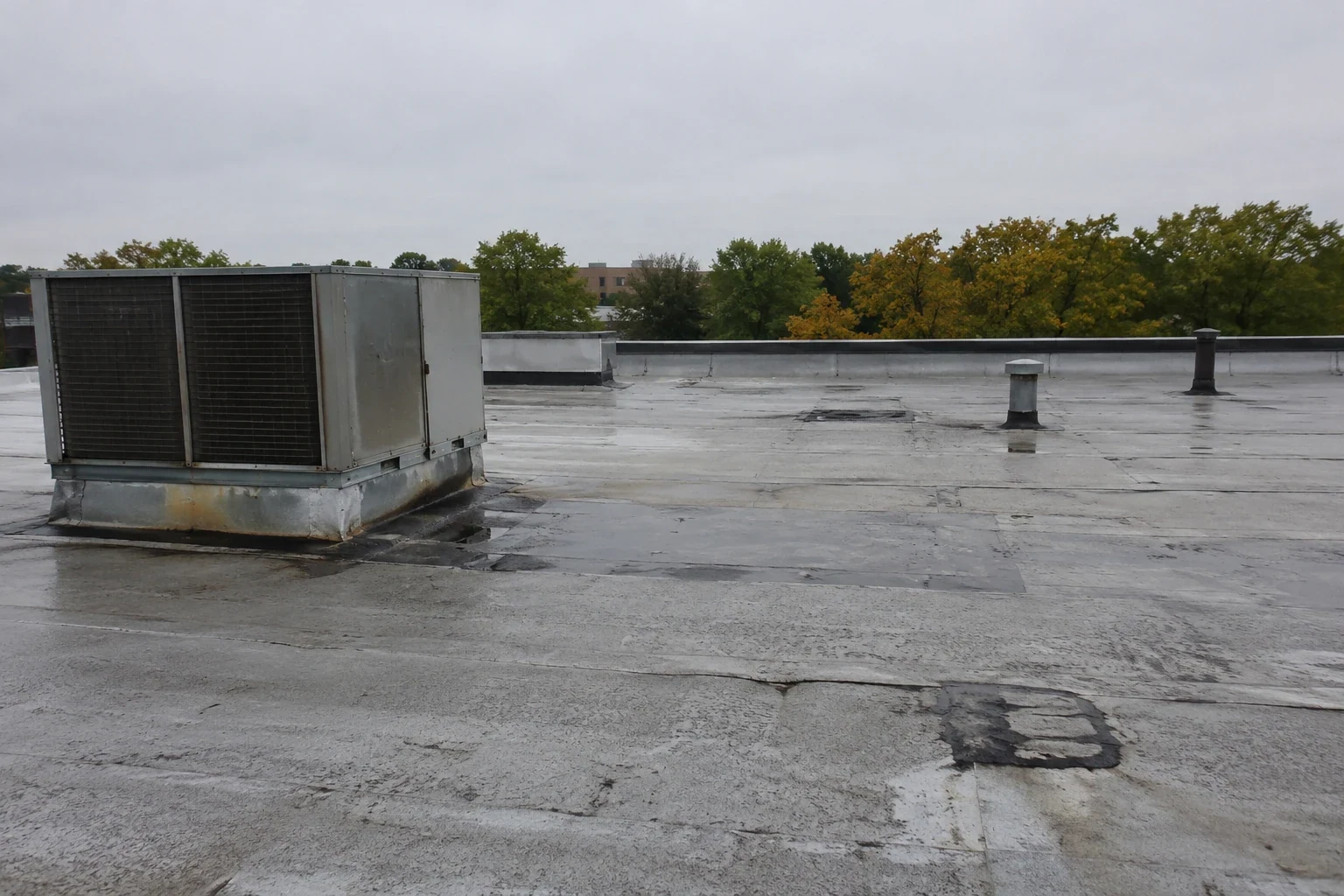
Our first step is the same on every visit: confirm safe access, count the curbs and supports on the roof section, and photograph each one before anything is touched. The count drives the cost. Ten units on one roof section mean ten flashing details to inspect, price and schedule around the equipment's service calendar.
Curb Flashing and Base Condition
A curb is a raised frame, usually wood or metal, that lifts a unit above the roof surface so water runs around it. Membrane turns up the curb sides, and a counterflashing or metal cap covers the top edge of that membrane. Failures show at corners, where the membrane was folded, and at the top edge, where sealant dries and splits after repeated thermal cycles.
Curb metal and sealant swing through a wide range each year: a January that averages 24.9 degrees against a July at 72.8, going by the 1991-2020 normals at the Lowell NOAA station. We check each corner by hand, probe the termination at the top edge, and look for fastener heads that have backed out. If the curb itself is soft or rotted, flashing repair alone will not hold, and the scope moves to a curb rebuild.
Curb Height and Snow Clearance
Curb height decides how much snow and meltwater a unit can see before water reaches the flashing. A curb set too low for the roof thickness leaves a shallow upstand, and ice banked against it can push water over the top. After a reroof or recover, the added insulation and cover board raise the roof surface, and every curb needs to be raised or extended to restore the upstand.
One winter, 1995, put 126.5 inches of snow on the city, and Lowell's hazard mitigation records also list nor'easters, snowstorms and ice storms as major hazards. That is planning context and says nothing about a particular roof, yet it supports a practical rule: do not leave a curb at the minimum height if a taller one can be built. The scope lists the existing upstand, the new upstand and the work to reach it.
Unit Supports, Rails and Pipe Supports
Not every unit sits on a curb. Some equipment sits on rails or sleepers set on the membrane, and piping, conduit and refrigerant lines run across the roof on supports. Each support is a point load and a traffic point. A rail with a hard edge cuts the membrane over time, and a pipe support without a protective pad wears through it.
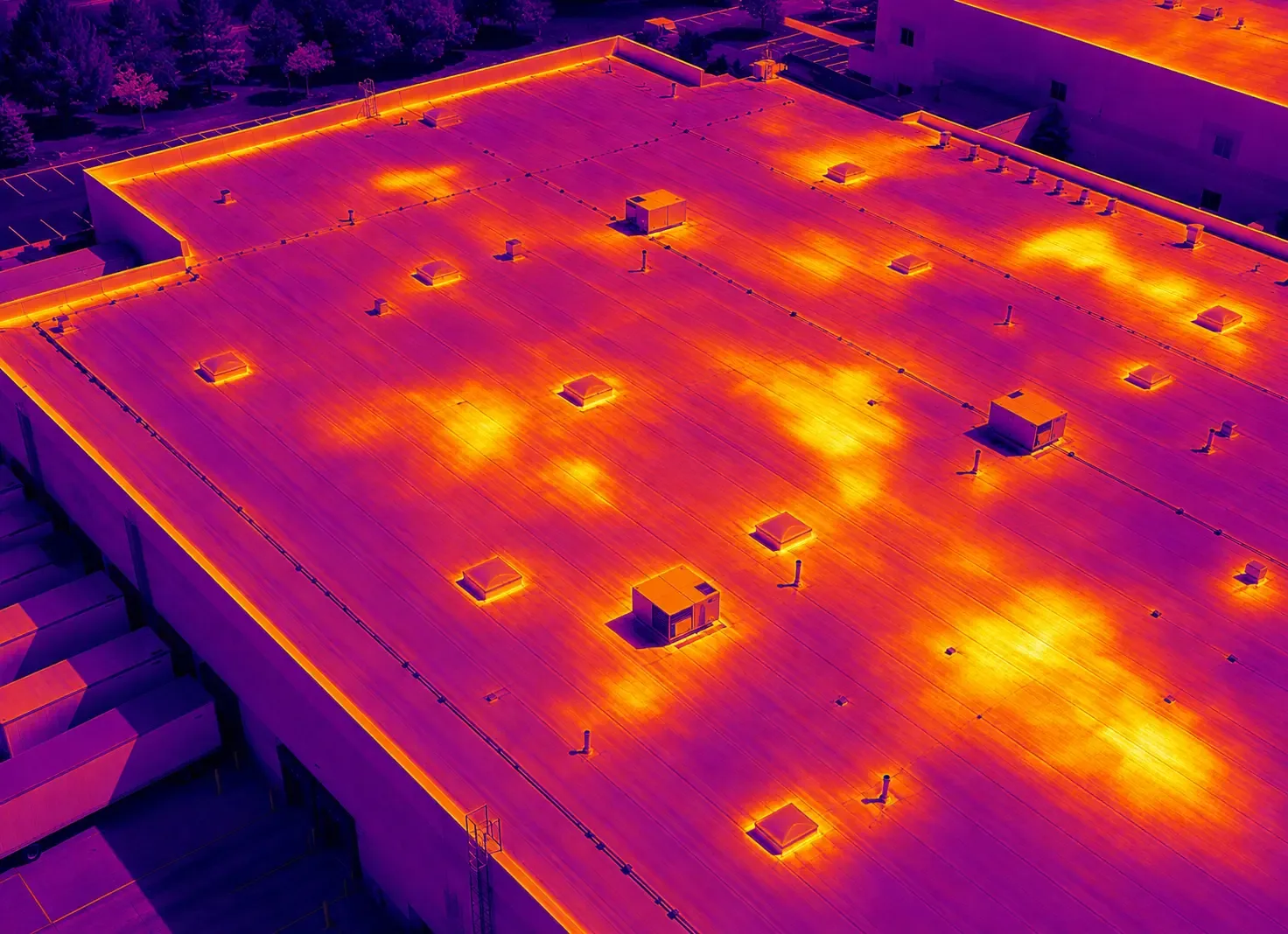
We look at three things: what carries the load, what protects the membrane beneath it, and whether movement from vibration or thermal expansion is working the support loose. Pads, walkway boards and slip sheets under supports are cheap, and their absence is expensive. Once a puncture reaches the insulation, infrared moisture survey mapping tells us how far the water went. Where lines cross the roof in numbers, a raised pipe frame can replace a row of individual supports and open the roof surface for drainage and inspection.
Load Path and Structural Review
Equipment weight reaches the deck through the curb or support, and the deck, framing and any added load have to be adequate. When a unit is replaced with a heavier model, the structural question comes first. Any changeout that needs a permit is reviewed under the Massachusetts 10th edition building code, a state-amended version of the 2021 IBC that took effect October 11, 2024 and has been the sole code for applications filed since July 1, 2025.
We do not size structure. We ask for the unit weights and the structural drawings, flag any mismatch we see on the roof, and recommend an engineer where the load path is unclear. The roof record notes what was supplied and what was assumed, so the structural reviewer starts with the same information we have.
Changeouts and the Dry-In Plan
A unit changeout opens the roof. The old unit comes off, the curb is exposed, and water has a direct route into the building until the new unit is set and flashed. The dry-in plan covers that gap: temporary cover for the opening, a weather hold if rain or snow is forecast, and a crew sequence that gets the new unit and flashing completed in one window.
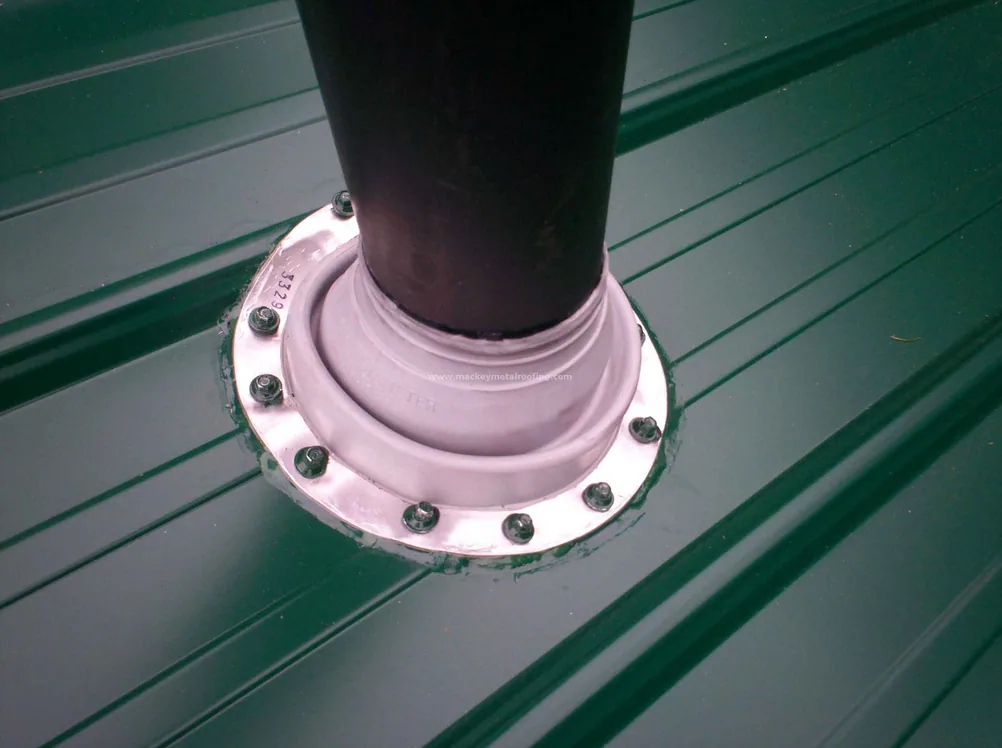
Coordination with the mechanical trade decides the schedule. We agree on crane or lift time, the order of disconnects and reconnects, and who seals the penetrations for lines and conduit. A penetration flashing detail at each line is part of the same visit, so a changeout does not leave a new unit on an old, leaking collar.
Cost and Timing
Curb work is priced by count and condition. Reflash only, reflash with a raised curb, full curb replacement and support pads are four different lines, and a roof section with mixed conditions carries all four. Access matters: a unit that needs a lift or crane adds a mobilization, and a roof reached by a fixed ladder limits what material can be carried up.
Timing follows weather and the equipment calendar. A repair limited to flashing can run in a single visit, while curbs that need new framing are staged over several. Membrane work needs dry, above-freezing surfaces, so exposed work belongs in the warm months, and winter visits are for inspection and temporary protection. If the roof is nearing replacement, curb work is bundled into the replacement scope, which avoids paying twice for flashing the new membrane would cover.
Where the Work Runs
Education and health services are Lowell's largest employment sectors, and the city also names manufacturing and technology employers such as MACOM Technology Solutions. What a roof carries is settled on the roof, and any building with air handling, exhaust and process lines simply has more curbs to maintain. The Downtown Lowell Historic District adds a review step, since exterior changes there go before the Historic Board, which can reach equipment visible from the street. In Ayer's City Industrial Park, a 108-acre Tanner Street area zoned mostly for heavy industry, the curb count is settled building by building. Roofs across Lowell and along the Route 3/129 technology corridor in Chelmsford follow the same walk.
Commercial Roofing Questions
How many curbs can be reflashed in one visit?
It depends on the count and the weather window. Small curbs with sound bases go quickly, and a curb that needs rebuilding is scheduled separately.
What decides whether a curb is repaired or replaced?
The base. If the curb frame is rotted, bent or too short for the roof thickness, flashing alone cannot hold and the curb is rebuilt.
Who handles the structural check for a heavier unit?
An engineer. We supply the roof condition and the curb details, and we flag mismatches, but the load path is the engineer's call.
Can a unit be changed out in winter?
Yes, if the opening can be dried in the same day and temporary flashing is acceptable until warm weather. Permanent flashing waits for a dry, above-freezing window.
What protects the membrane under pipe supports?
Pads or slip sheets that spread the load and keep hard edges off the surface. We replace missing ones during the visit.