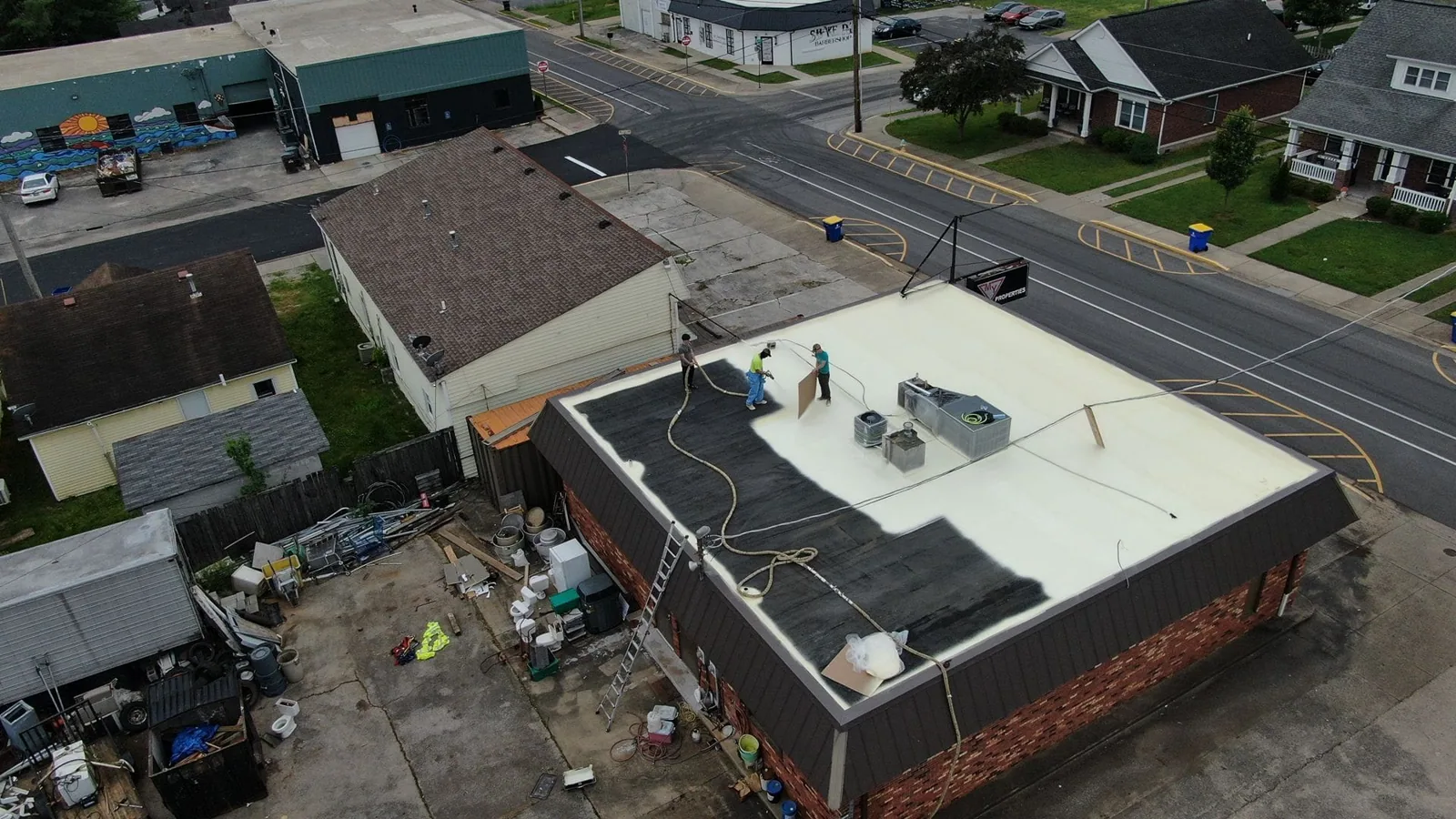
Lift one core sample and the roof reports its own insulation: the layers, their thickness, whether they are dry, and what holds them to the deck. That small plug answers questions that the membrane surface cannot, and it is the first thing taken before anyone prices a recover or a replacement. Insulation is the part of a low-slope roof that sets energy performance, supplies the slope, and absorbs the damage when water gets in.
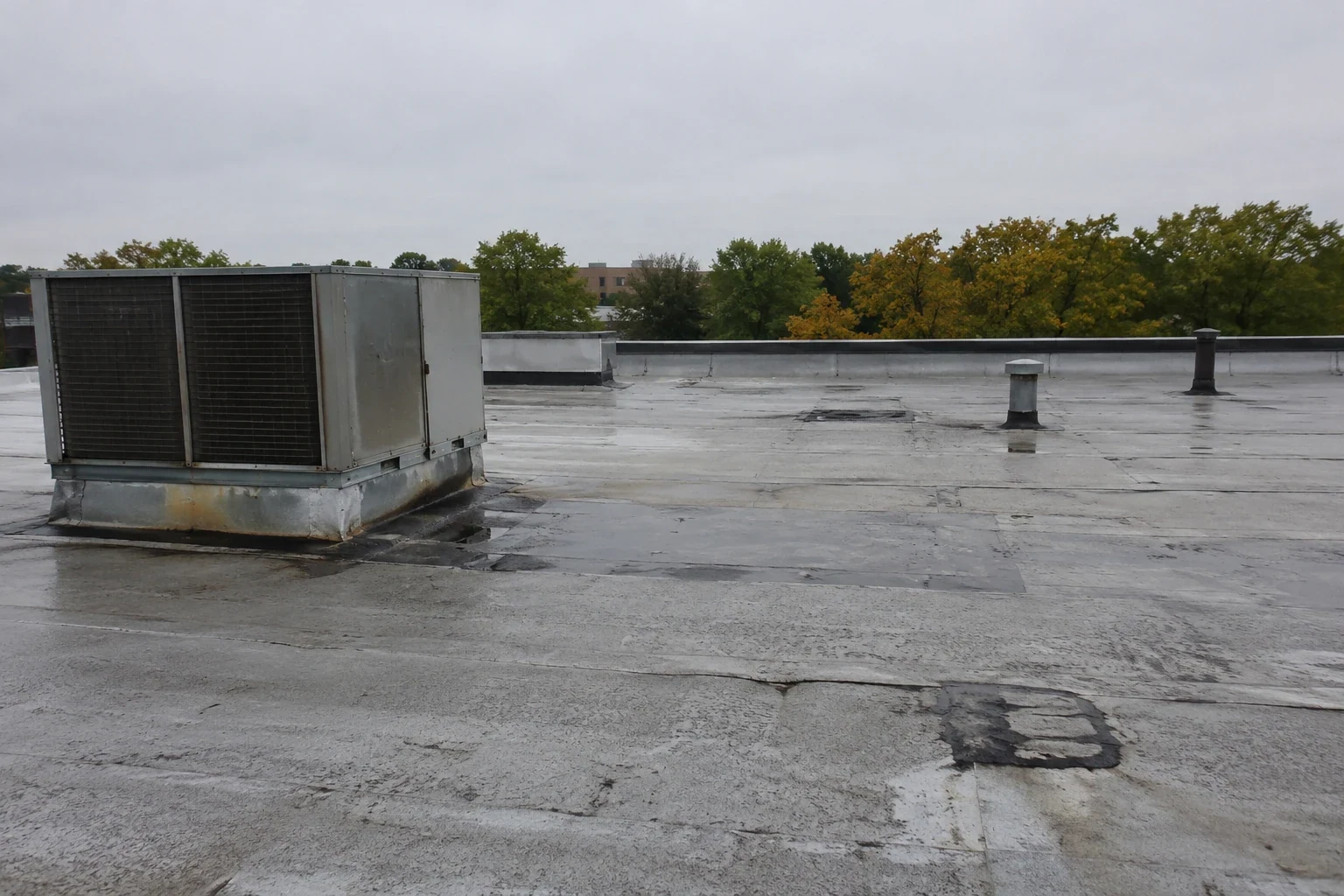
In Lowell, MA, insulation works through a wide range. The Lowell station averages 24.9°F in January and 72.8°F in July, and the state's 10th edition code carries the base energy code, which towns may tighten with stretch provisions. The facility director gets a core log, a thermal value for the existing roof, and a priced path to the thickness the project needs.
Board Types and Their Jobs
Three board families cover most low-slope roofs. Polyisocyanurate offers a high thermal value for its thickness and is the common choice under single-ply membranes. Extruded and expanded polystyrene give lower cost or moisture tolerance in certain assemblies. Mineral wool resists fire and compression and sits under heavy systems or at specific details. Each has a facer, a compressive strength and a range of acceptable adhesives, and the membrane maker's requirements decide which combinations are allowed.
A board is chosen for its job. A roof with heavy foot traffic needs compressive strength. A roof with a thin build-up needs the most value per inch. A fire-rated assembly needs the right facer and listing. The note states the job each layer does so the owner sees what the money buys.
Tapered Systems and Slope
Tapered insulation is cut in wedges so a flat deck drains toward its outlets. It adds slope without changing the structure, and it fixes ponding at its source. The taper plan shows each wedge, each saddle and each cricket, laid out from the drain locations. A flat sheet of insulation does not correct a low spot; it covers it.
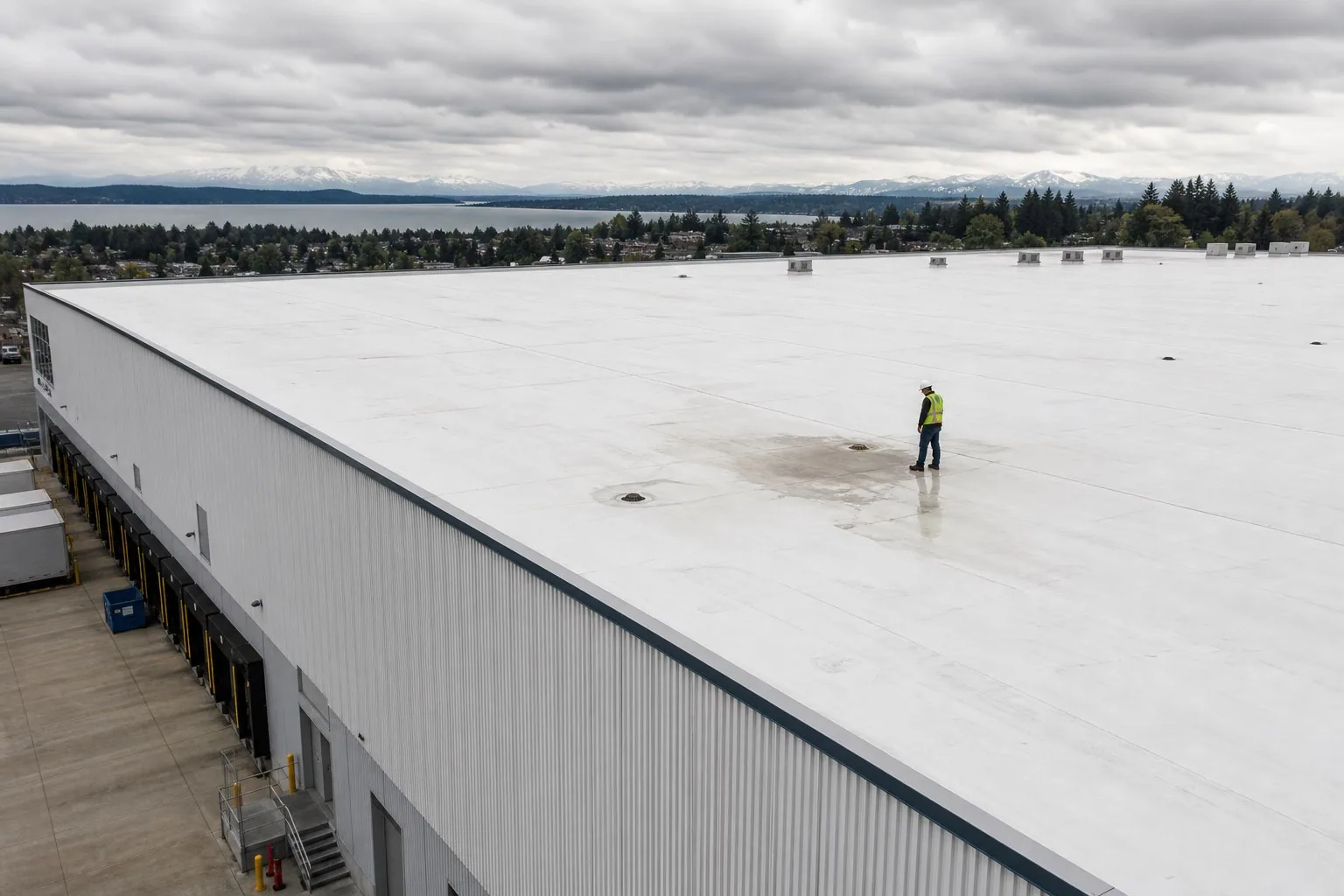
Where the existing roof ponds, the taper is designed to move water to drains and scuppers that are sound and set low enough. The thickness at the high point and the low point sets the total build-up, which determines parapet and curb flashing heights. A taper that raises the roof past the existing flashing means new flashing, and that cost is shown in the scope.
Cover Board Function
A cover board is a thin, dense panel laid over the insulation and under the membrane. It protects softer insulation from foot traffic, hail and fastener pressure, gives adhesives a better surface to bond to, and can improve fire and wind performance. Gypsum-based, fiber and high-density foam products are common, and each pairs with certain membranes and attachment methods.
Cover board is a good value where the roof sees traffic from service technicians or sits under rooftop equipment. It adds cost per square and one more layer to install, so the scope says where it is used and where it is not. Under a TPO membrane in a mechanical-heavy area, the extra layer is usually the cheaper path compared with repeated puncture repair.
Wet Insulation and Moisture Limits
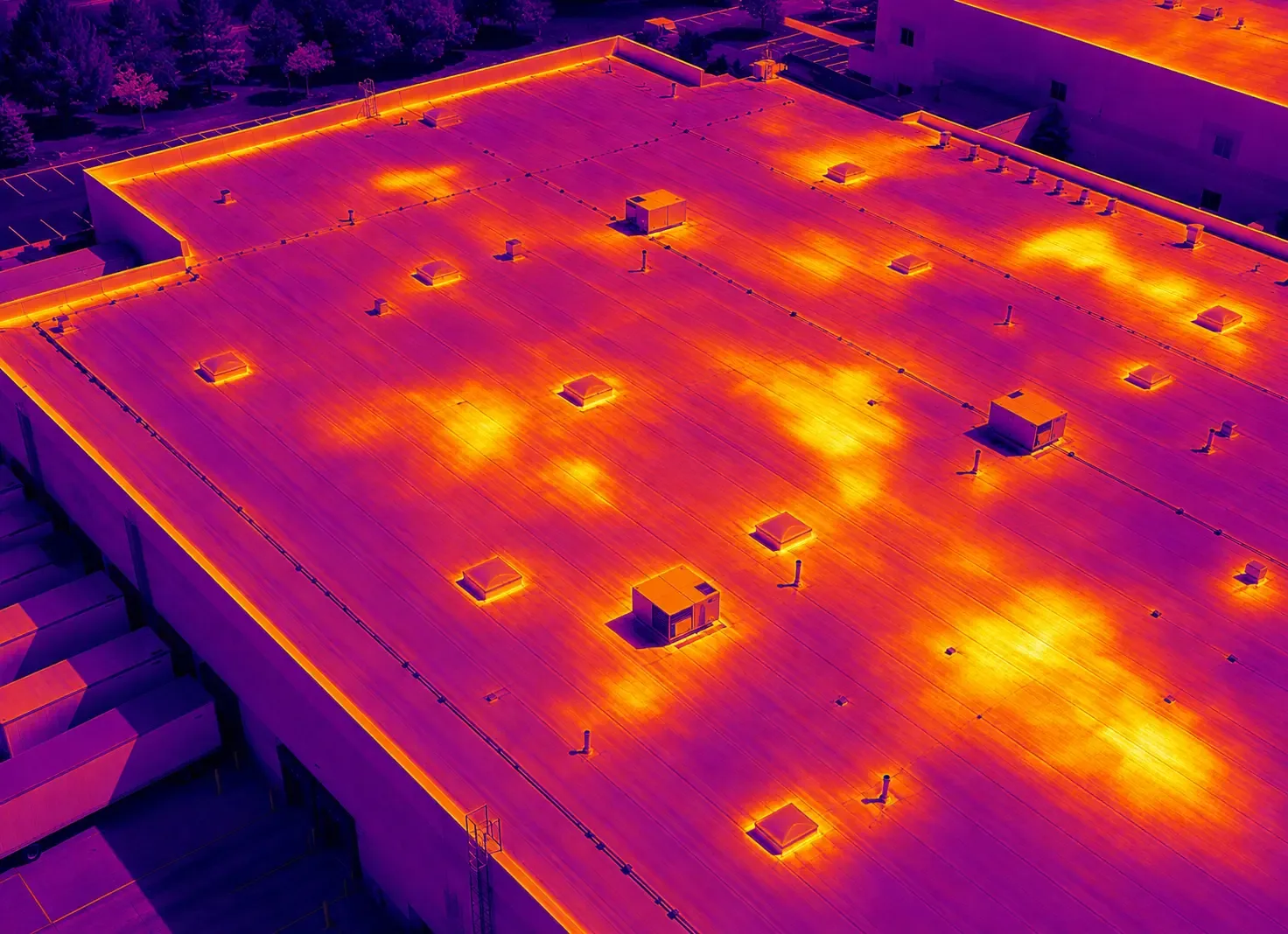
Wet insulation loses thermal value, adds weight and feeds the membrane failure above it. It is found by infrared moisture survey, nuclear or capacitance meters, and cores. The survey draws the wet area on a plan, and cores confirm the depth and the number of layers affected.
The rule is simple: wet material comes out. Dry material under it can stay if it meets the thermal need. A recover installed over wet insulation traps the moisture, and it shows up as blisters, soft spots and early membrane failure. The repair boundary follows the edge of the wet area, and the scope prices the removal and replacement by section.
Energy Code and Added Thickness
The 10th edition of the state code took effect on October 11, 2024, and once the concurrency period closed on June 30, 2025, no earlier edition applied to new filings. Its 2021 IBC foundation carries state amendments, and a town may add stretch or specialized stretch rules to the base energy code, so the energy requirement is confirmed locally before insulation thickness is set.
That check decides whether a recover may add only a cover board or must add insulation, and how much. A full replacement brings the roof to the energy requirement in force when the permit is filed. The scope states the required thickness, the thickness proposed and the reason for any difference.
Cost Drivers and Staging
Insulation cost follows thickness, board type, roof area, and the deck below. Tapered systems cost more than flat stock because each piece is cut and numbered. Mechanical attachment or adhesive affects both labor and wind performance. Access, hoisting and staging are lines of their own, and so is disposal of removed material.
Staging protects the building. Insulation is laid only as far as membrane can cover it the same day, since open board takes on water in the first rain, and 48.51 inches of normal annual precipitation at the Lowell station makes that a real exposure. A weather hold is called when the forecast cannot support the day's coverage, and the facility director hears about it the same day.
Insulation Questions on Local Building Types
Large commercial buildings face the energy question early. A roof in Chelmsford along the Route 3/129 corridor, where the town reports large offices and headquarters, is reviewed against the current energy requirement when significant work is planned. In Billerica, the Concord Road area includes multiple large office buildings and approved cGMP expansion space just off Route 3, and roof work on any of them is checked against the energy requirement in force when the permit is filed.
Commercial Roofing Questions
How much insulation does a roof need?
The energy code in force for the project sets the minimum, and Massachusetts allows municipalities to add stretch provisions. The requirement is confirmed with the building department before the scope is written. The proposal then shows required thickness, existing thickness and the added layers.
Can wet insulation dry out under a new membrane?
Not reliably. A sealed membrane traps moisture, and the insulation stays wet or the water moves to the next low point. Wet sections are removed and replaced before the membrane goes on. A survey draws the boundary so only the wet area is replaced.
Is cover board worth the added cost?
On a roof with traffic, hail exposure or rooftop equipment, usually yes. It protects the insulation and gives the membrane a firmer bed. On a quiet roof with sound existing board, it may be dropped. The scope lists it as its own line so it can be accepted or declined.
What does tapered insulation fix that a patch cannot?
It fixes the slope. A patch can seal a seam under a pond, but it cannot make the pond leave. A taper plan lays slope toward the drains, so water leaves the roof instead of sitting. It costs more up front and removes the repeated repair of the same low spot.
Can a roof be recovered without replacing the insulation?
If the existing insulation is dry, bonded to the deck and thick enough for the current energy requirement, a recover can leave it in place with a cover board over it. Cores and a moisture survey show which sections meet that test.