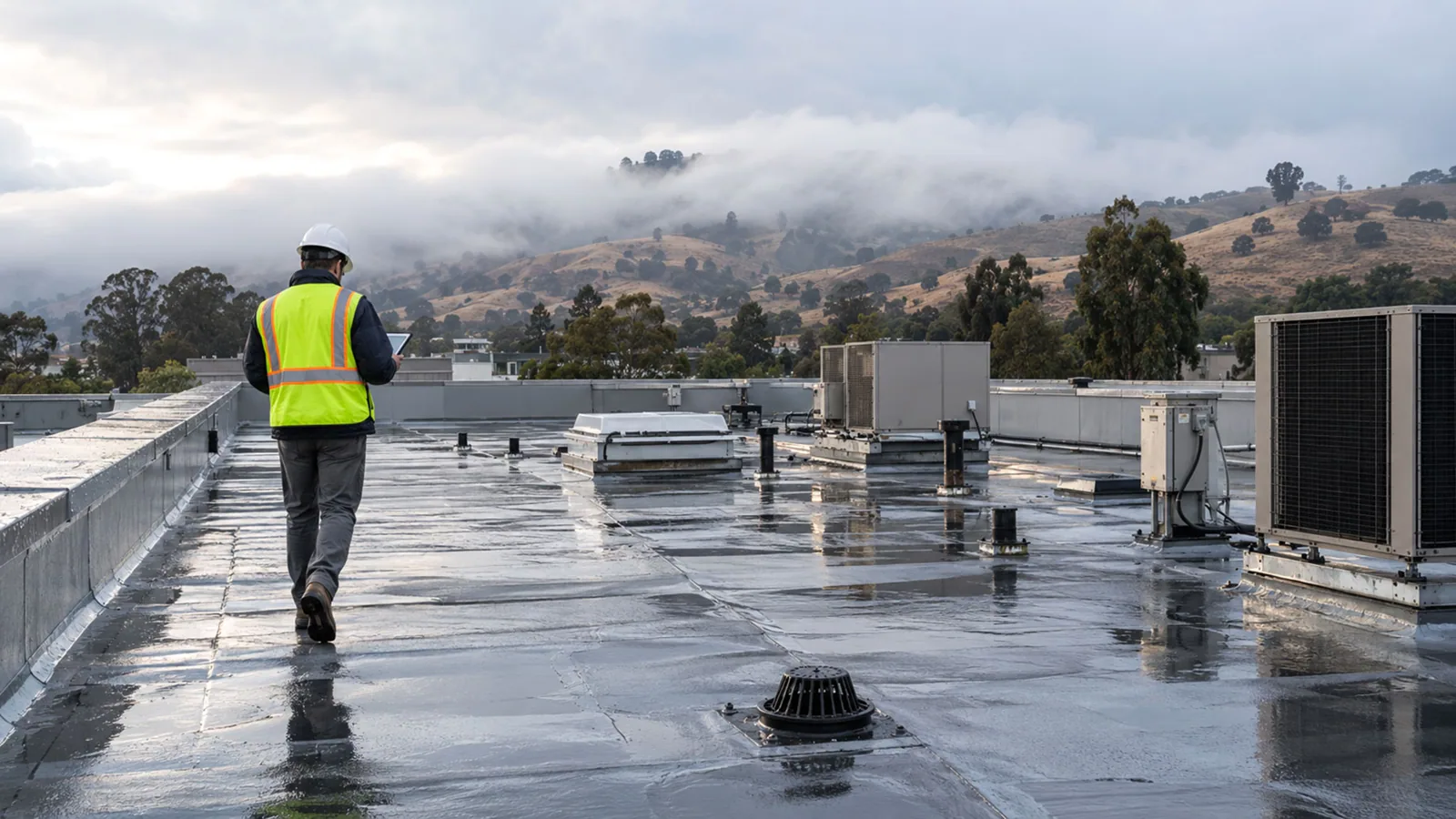
Find the drain that is carrying the water before anyone opens a seam. On a low-slope roof, water leaves through a handful of openings, and when one of them clogs, the roof holds the load instead. A ponded section adds weight, speeds membrane wear and sends water into any defect nearby. The first check after a leak report is the path the water takes to leave.
Lowell, MA, gives those openings regular work. At the Lowell station a normal year totals 48.51 inches of precipitation, and ice storms and nor'easters appear on the city's hazard list. A drain that is marginal in July is a problem in December. The inspection note for a facility director lists each drain, scupper and overflow, its condition, and the cost to bring it up to what the roof needs.
Drains, Strainers and Sumps
Interior drains sit at low points and carry water through piping inside the building. The common failures are a blocked strainer, debris packed in the bowl, a clamping ring that has loosened, and membrane that has pulled away around the flange. A leak around a drain often traces to the flange seal rather than the pipe, which is why the bowl is cleaned and the seal checked before anyone assumes the pipe has failed.
The sump, the slightly lowered area around a drain, should be intact and free of a raised lip. Over time, patches and extra membrane layers pile up around a drain and lift it above the roof surface, which turns the low point into a dam. Reworking the sump to a proper depression is a small job with a large effect on drainage, and it is priced separately from the drain itself.
Scuppers and Overflow Paths
A scupper is an opening through a parapet or edge that lets water leave the roof. It works only if its bottom sits at or below the roof surface, its liner is sealed to the membrane, and the area outside is clear. Scuppers fail when the liner opens at the corners, when the gutters and downspouts below are clogged, and when winter ice packs the opening shut.
Overflow scuppers are a second line. They sit a short height above the roof surface so that if the primary drain clogs, water leaves the roof before it reaches a depth the structure cannot carry. A roof with a drain and no overflow path puts all its trust in one opening. The inspection note records whether an overflow exists, where it discharges, and whether anyone has checked that it is free.
Crickets, Tapered Pieces and Slope
A cricket is a small sloped saddle built behind a curb, a wall or a rooftop unit to push water around an obstacle instead of letting it stop behind it. Without one, the water pools against the uphill side of the equipment and the flashing there carries standing water all year. A cricket is framed and insulated to a slope, covered with matching membrane, and flashed into the surrounding roof.
Where low spots are spread across a section, tapered insulation can build slope back into the roof surface. This is a larger scope and ties into insulation and cover board work, since the taper is laid under new membrane or cover board. The inspection note says whether a few crickets will correct the drainage or whether a section needs a tapered system, and prices both.
Measuring Ponded Water
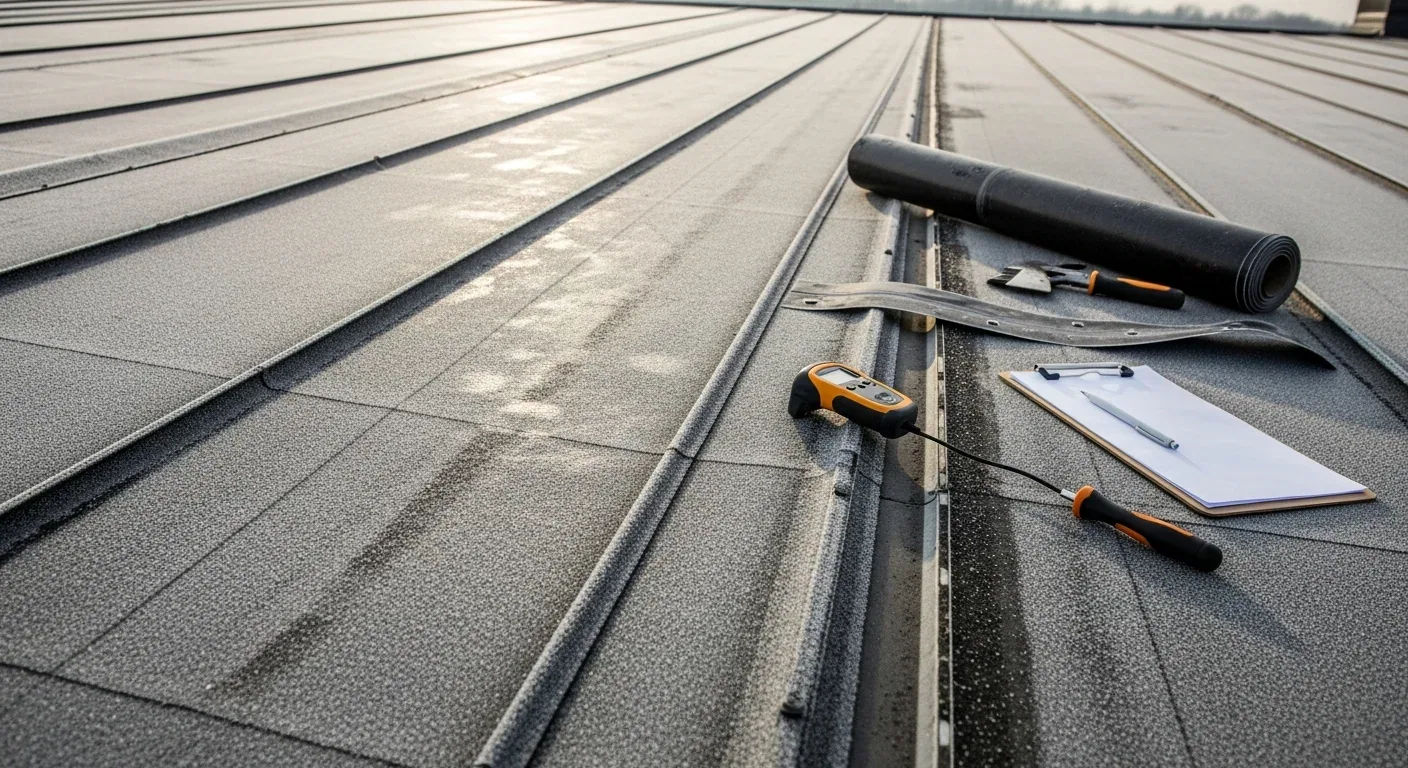
Ponding is measured, not guessed. After a rain, standing water is checked at 48 hours: if it is still there, the section is not draining. Depth and extent are recorded with photographs and a tape, and the low spots are marked on the roof plan. Shallow ponding that clears in a day may be acceptable on some membranes, while persistent ponding shortens membrane life and adds structural load.
The cause drives the fix. A clogged drain is a cleaning job. A drain set too high is a rework. A deck that has deflected is a structural question, and a roof that was never sloped is a tapered-system question. The ponding water repair path starts with the cause and only then picks a method, which avoids paying to coat or patch over a drainage defect.
Ice at the Drain
Winter changes drain behavior. Meltwater runs to a drain, refreezes in the strainer or the pipe, and leaves the roof holding the next melt. Lowell's winter storm record includes nor'easters, snowstorms and ice storms, and a drain that was clear in November can be frozen by January. Heat trace cable, where installed, is checked in the fall. Where there is none, the plan is to clear drains early after each snowfall.
Ice at a scupper builds a dam along the edge, and meltwater backs up under the edge metal. After a heavy winter event, the first inspection looks at snow and ice damage at the drains and edges, since an interior leak below a frozen drain is a two-step problem: thaw, then trace.
Scope, Cost and Maintenance Cycle
Drainage repair is priced in groups. Cleaning and minor sealing is the lowest group. Replacing a strainer, clamping ring or scupper liner is the next. Reworking a sump or adding a drain or an overflow scupper involves roof cutting, piping, and interior access, and sits higher. Crickets and tapered sections add material and labor by area. Each group carries a separate line so a facility director can approve the urgent group now and schedule the rest.
After the work, drain checks join the preventive maintenance visit schedule, with a check before winter and another after leaf fall. A short schedule is cheaper than the leak a clogged drain causes, and the visit note records what was cleared.
Drainage on Industrial and Office Roofs
Drainage needs follow building type. Billerica markets commercial properties from small storefronts to large industrial spaces, and the Concord Road area includes multiple large office buildings just off Route 3. Each roof type has its own drainage layout, from interior drains on a large flat roof to scuppers on a smaller building with parapets. Should a warehouse roof in the heavy-industry zoning of Ayer's City, near Tanner Street, have a single drain line and no overflow, it is a priority to check before the next storm.
Commercial Roofing Questions
How can a manager tell whether a drain is the problem?
Standing water 48 hours after rain, staining below a drain line, and debris piled in the bowl all point to it. The inspection clears the strainer, runs water through the bowl and watches the discharge. If water leaves at a normal rate, the drain is not the cause.
Is an overflow scupper required on a roof that has drains?
Requirements vary with the code in force and the roof design, so the answer comes from the building and its approvals. The practical question is what happens when the primary drain blocks. A roof without an overflow path holds water until it finds a way out, usually through a wall.
What does it cost to correct ponding?
The cause sets the price. Cleaning a clogged drain is the smallest job. Reworking a sump or adding a drain costs more because it involves cutting the roof and piping. A tapered section costs the most because it adds material across an area. The scope lists each one on its own line.
Will a coating fix a ponding problem?
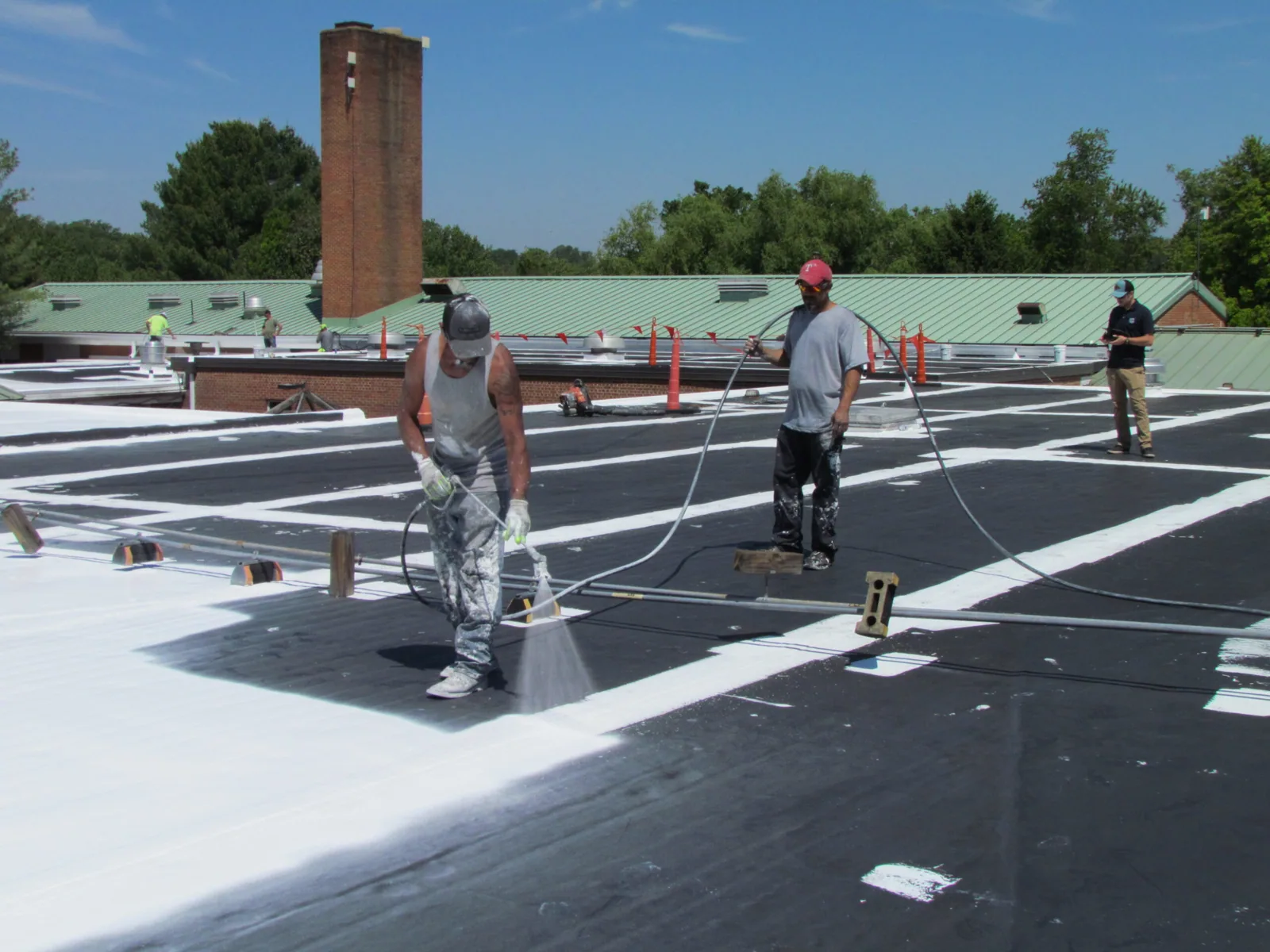
Not by itself. A silicone coat tolerates some standing water, but persistent ponding still adds load and wear. The drainage cause is corrected first, and a coating goes on only where the remaining pond is shallow and stable.
When should drains be checked in the fall?
After the leaves are down and before the first hard freeze. October carries 5.00 inches of normal precipitation at the Lowell station, so a drain that clogs in October faces weeks of rain before winter. A second check after the first snowfall catches anything that froze.