Mark every opening in the roof before looking at any one of them. Skylights, vent pipes, exhaust stacks, conduit penetrations, hatches and equipment curbs each interrupt the membrane, and each interruption is a flashing that has to stay sealed while the roof moves around it. A leak report that says the water appears near the stairwell ends up as a list of openings within a few feet of the stain.

In Lowell, MA, those openings are tested by temperature swing and storm. Flashing materials here expand and contract through a wide annual range, between the Lowell station's January and July averages of 24.9°F and 72.8°F, and nor'easters and ice storms are on the city's hazard list. The inspection note gives the facility director a numbered penetration list, a condition for each, and a cost to repair or rebuild it.
Skylights and Roof Hatches
A skylight sits on a curb that is flashed into the roof membrane on all four sides, and the glazing or dome seals to the top of the curb. Leaks come from three places: the base flashing at the curb, the gasket or sealant between the glazing and the curb, and condensation inside the unit that looks like a leak. The inspection separates them by testing, since a dome that sweats on a cold morning is not a leaking dome.
Cracked or crazed plastic domes, failed gaskets and corroded frames are replaced as units. Curb flashing is rebuilt back to a sound edge of membrane, with new base flashing, a counterflashing or termination at the top, and sealant only as the final layer. Roof hatches get the same treatment, with attention to the hinge, the latch and the curb height above the roof surface.
Pipes, Stacks and Conduit
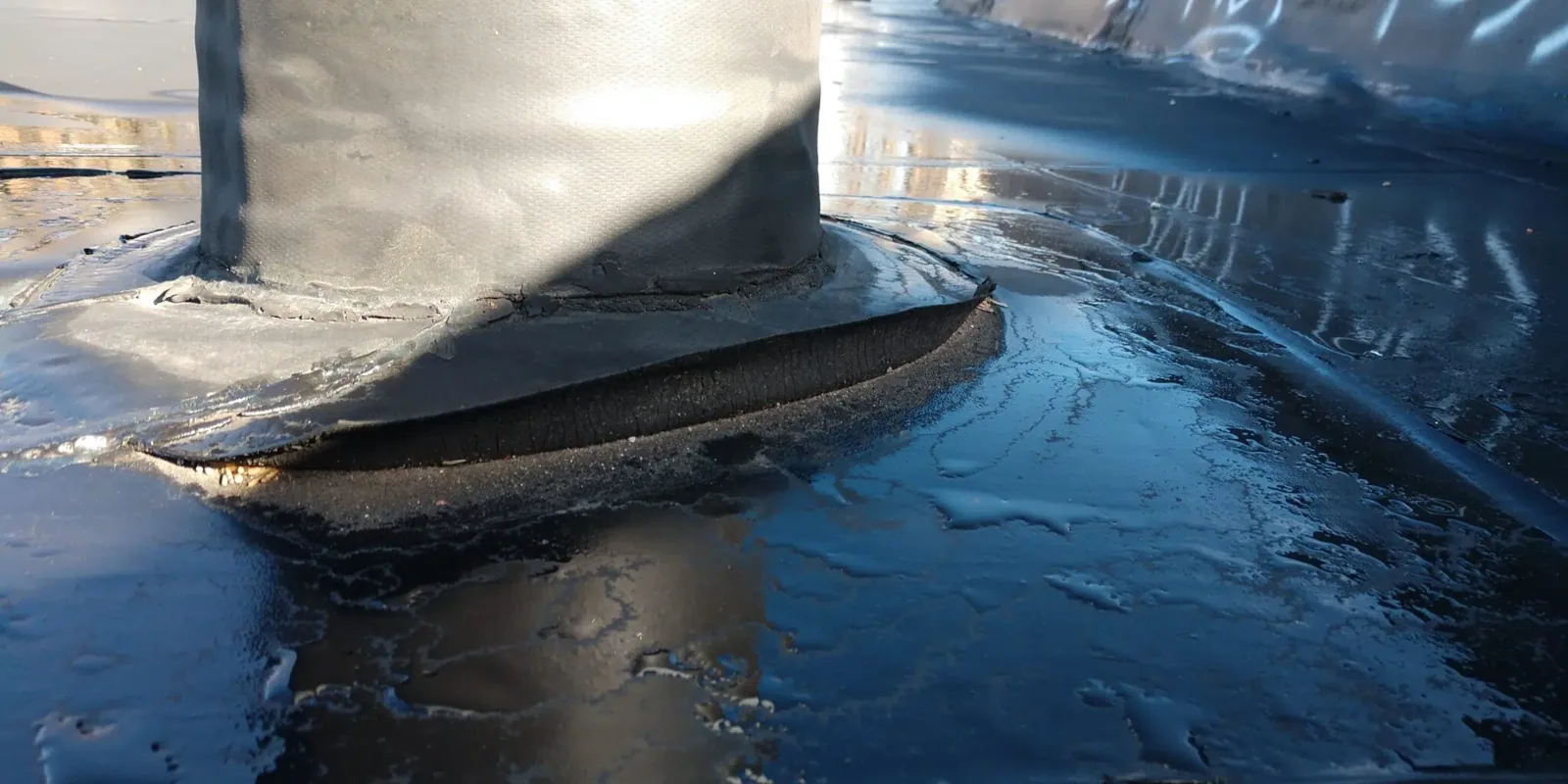
Round penetrations are flashed with a pipe boot, a prefabricated flange or a field-built detail of membrane and sealant. Rubber boots crack in sun and cold, clamps loosen, and field-made sealant pockets dry out and shrink away from the pipe. A pocket that is full of dried tar, or one that holds standing water on top of a pipe, is a repair waiting to open.
Where a new line has been added, the question is whether its flashing was done to the roof's membrane system or improvised. Conduit and small lines get a prefabricated boot or a welded or adhered membrane collar. Larger stacks get a curbed detail with its own counterflashing. The note records the size, type and condition of every penetration, which makes later additions easy to verify against a baseline.
Curbs and Equipment Openings
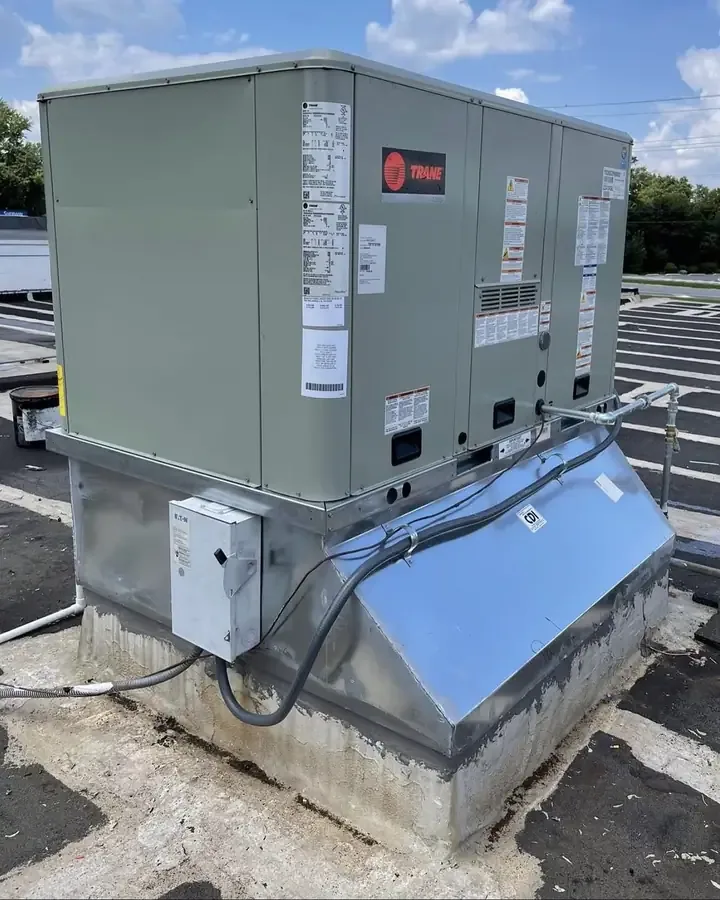
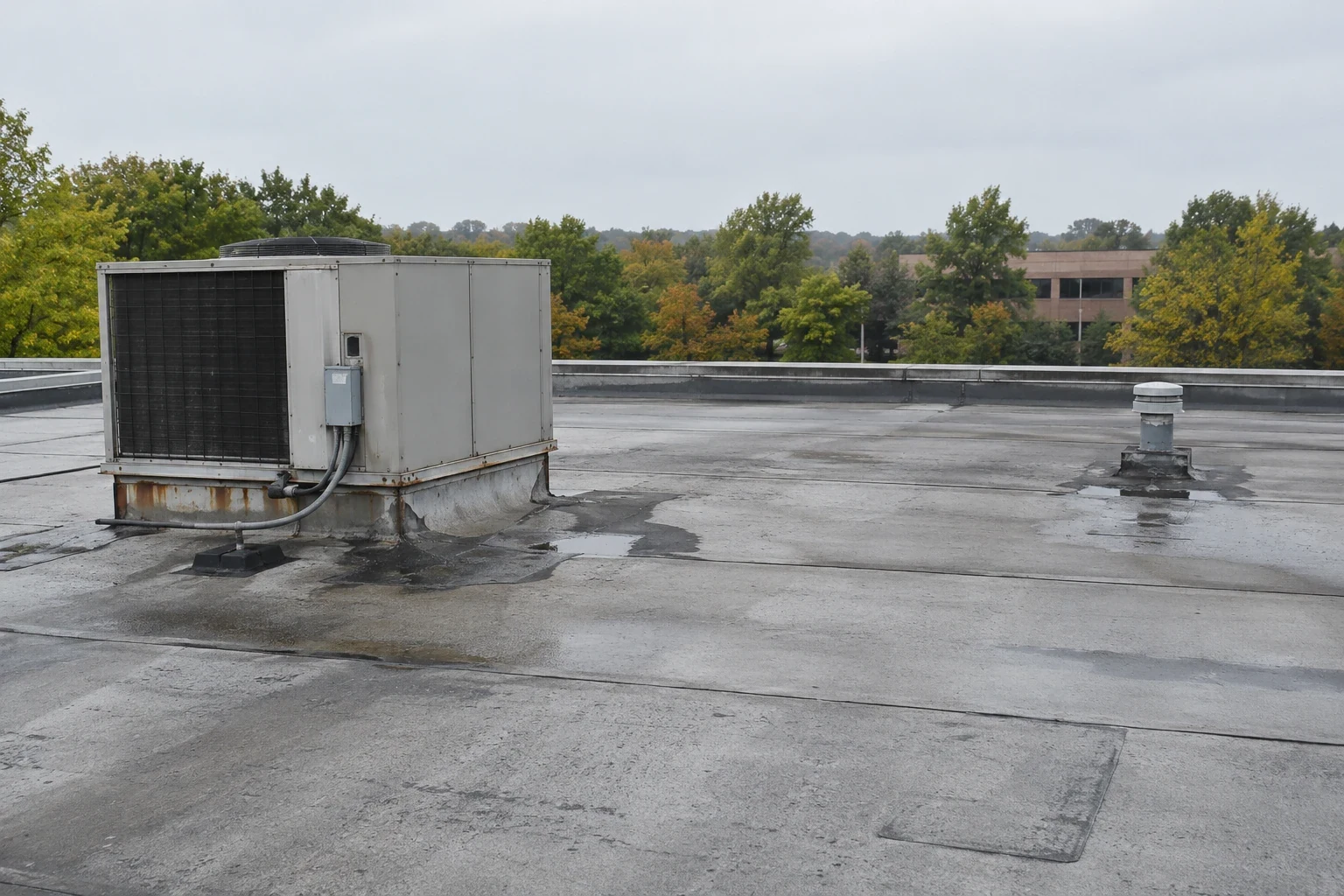
Rooftop unit curbs, exhaust fans and duct openings are larger penetrations with moving parts above them. Vibration loosens fasteners, service traffic wears the surrounding membrane, and a unit swapped without the roof crew can leave a curb flashing cut or lifted. A new unit sized differently from the old one often means a new curb, and the roof work comes before the crane date, not after it.
The curb and support scope covers how the units are supported and raised off the membrane. For flashing, the curb gets a fresh base flashing and termination when the unit is moved, with the roof crew scheduled alongside the mechanical contractor so water stays out during the swap.
How Penetration Flashing Fails
Most penetration leaks follow a small set of causes. Sealant was used where a mechanical termination was needed. The flashing was never adhered to the curb on all sides. Movement between the penetration and the deck tore the membrane. Or the curb is too low, so ponded water rises above the flashing height. Each cause has a different repair, and sealing over the opening fixes only the last stage of a longer failure.
When the problem is a pattern, the flashing failure sequence applies across the roof: probe every opening, rebuild the worst, and re-seal the rest on a schedule. The note rates each penetration good, marginal or failed, and prices the marginal group separately so the owner chooses between repairing now and watching.
Tracing a Leak to the Opening
The leak sits below the opening more often than not, but water can travel along the deck or through insulation before it drops. A leak near a skylight may start at a pipe five feet uphill. The trace works from the stain upward, checks each penetration in the area, and uses a hose test, one location at a time, to confirm the source. Wetting several at once proves nothing.
Where moisture has spread into the insulation around a failed opening, the repair boundary grows beyond the flashing itself. The leak repair sequence covers tracing and temporary protection first, and the permanent flashing work follows once the area is dry enough to bond.
Scope, Cost and Winter Timing
Penetration work is priced by the opening. Cost climbs with the size of the penetration, the condition of the surrounding membrane, the access and whether adjacent insulation is wet. A pipe boot replacement is a short visit; a skylight curb rebuild is a day or more per unit. When many openings fail at once, doing them in a single mobilization lowers the per-opening cost.
Winter limits the permanent work. Adhesives and sealants have minimum application temperatures and need dry surfaces, so cold-season visits secure the opening with temporary measures and record the location for a later fix. The scope shows which openings are urgent, which can wait for the weather window and which belong in the next maintenance visit.
Openings on Office and Technology Roofs
Bedford identifies its Crosby Drive business district as a high-tech and robotics cluster with life-sciences businesses, and the first number on a roof in a district like that is the penetration count. Bedford roofs and those in Burlington, which sits off Route 128 with a business base across life sciences, manufacturing, technology and medical services, get a penetration schedule before any other detail work. An office building roof with a dozen openings is a different job from one with two.
Commercial Roofing Questions
How can a skylight leak be told apart from condensation?
Condensation shows up on cold mornings on the underside of the glazing and dries by midday, with no relation to rain. A leak follows rain and shows at the curb edges or the gasket line. The inspection looks at the unit during and after wet weather, and a hose test confirms the source when needed.
Should a leaking pipe boot be sealed or replaced?
Replaced, if the rubber is cracked or the flange is loose. Sealant on a failed boot works for a season and then repeats. Where the boot is sound but the clamp has loosened, a re-clamp and a seal at the top are enough. The note records which was done.
What does a roof crew need to know before a rooftop unit is swapped?
The new unit's footprint, weight, curb height and the date the crane arrives. A different curb size changes the flashing, and a roof section left open overnight is a leak path. We schedule the roof work to close with the equipment work, so the opening is never left unprotected.
Why do flashings fail faster on roofs with many penetrations?
Each opening is one more place for movement, sealant aging and foot traffic to act on the membrane. A roof with twelve openings has twelve details to maintain, and service visits to the equipment multiply the wear. A numbered list and an annual check keep the count under control.
Is a skylight replacement worth it compared with a patch?
A patch is enough when the frame and curb are sound and only the gasket has failed. A crazed dome, a rusted frame or a curb that moves with the unit points to replacement. Both prices go into the scope, with the age and condition of each unit noted.