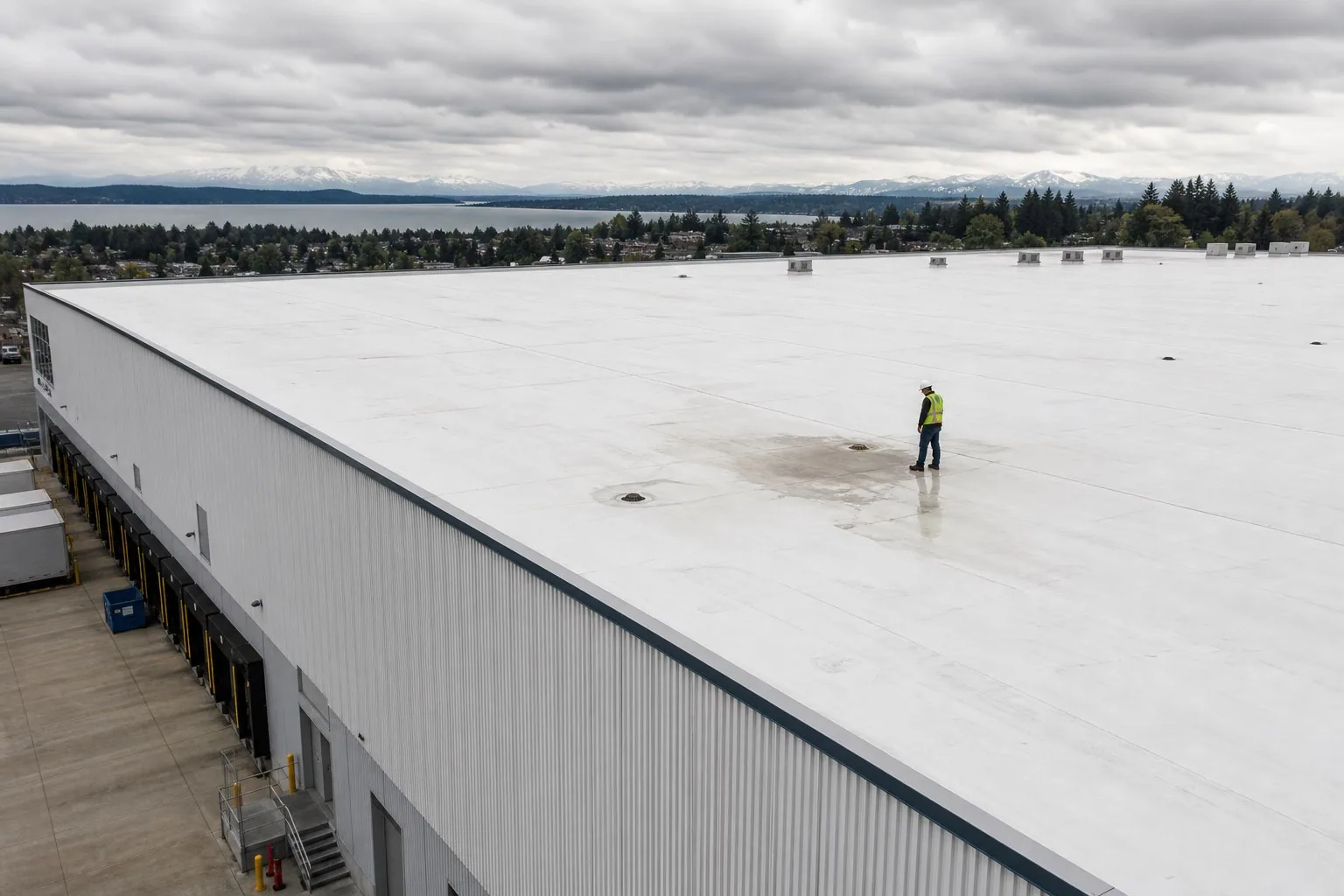
Measure the water before anyone touches the drain. Depth, extent and how long it has stood are the three numbers that turn a wet roof into a decision. A film that drains within a day is a nuisance. A pool that is still there forty-eight hours after the rain has stopped is a defect, and its cost exposure grows with every storm that adds to it.
Lowell's NOAA normals record 48.51 inches of precipitation a year, with monthly normals of 5.00 inches in October and 4.54 inches in December. Rain and melt reach these roofs in every season, so a low spot has no dry months to recover in. The inspection note records the measurement, the date and the weather in the days before, because a pond photographed once says little and a pond photographed on the same day each month says a lot.
Safe access applies here too. Wet membrane is slippery and a ponded area hides punctures and open seams, so the first walk approaches the pond from its edge and probes before stepping in.
Where the Water Collects
Ponding has four usual causes. The deck has deflected between supports, so the low point sits mid-bay. The drain has been set high, or its sump is clogged. The original slope to the drain was too shallow to begin with. Or insulation has crushed under foot traffic or equipment and left a depression. Each cause calls for a different repair, so the first walk sorts them by looking at where the water stands relative to columns, drains and equipment.
A pond at a column line points toward deck deflection. A pond ringing a drain suggests a clog or a high sump. A pond around a rooftop unit points to a crushed insulation board under the curb. We mark each one on the roof plan with its depth and photograph it from a repeatable position, so the next visit can show whether it has grown.
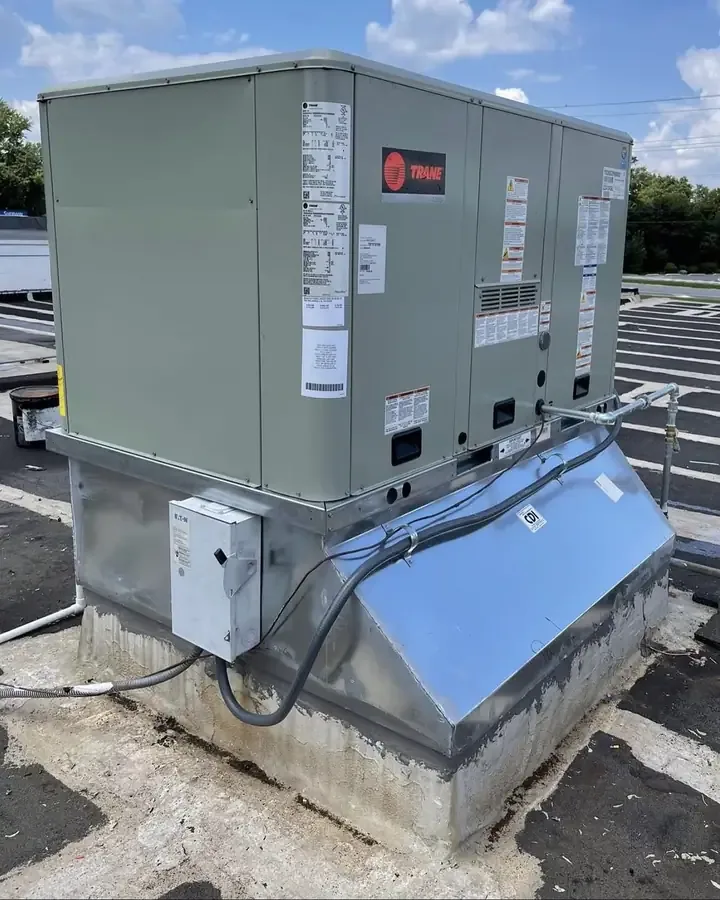
Equipment adds its own load. Heavy rooftop units on undersized supports push the deck down and compress the insulation beneath them, and the pond that forms beside the unit is a symptom of that settlement. If the curb has moved, the flashing around it is next to fail, and the repair has to include the support. A curb and support check goes with every pond near a unit.
What Standing Water Does to a Membrane
Standing water does not by itself destroy a sound membrane, and single-ply roofs are designed to be watertight under it. The trouble comes from what water holds against the sheet: dirt, algae, UV-degraded plasticizers and, in winter, ice. Heavy freeze-thaw exposure is normal here, and Lowell's January daily mean of 24.9 degrees Fahrenheit against a July mean of 72.8 shows how wide the seasonal swing is. Ice that forms in a pond expands against seams and flashing and can lift a lap that was tight in summer.
Some warranties exclude damage from ponding beyond a stated depth or time, and that is a cost exposure the owner should know about before the roof ages. We read the warranty terms alongside the measurements and note any clause that applies. A seam that has opened under a pond follows the repair steps in seam failure repair.
Foot traffic across a ponded area is a puncture risk, because wet membrane is slick and debris collects at the low point. If a service route crosses a pond, we add walk pads and photograph a puncture repair where one is found.
Drains, Sumps and Overflow Paths
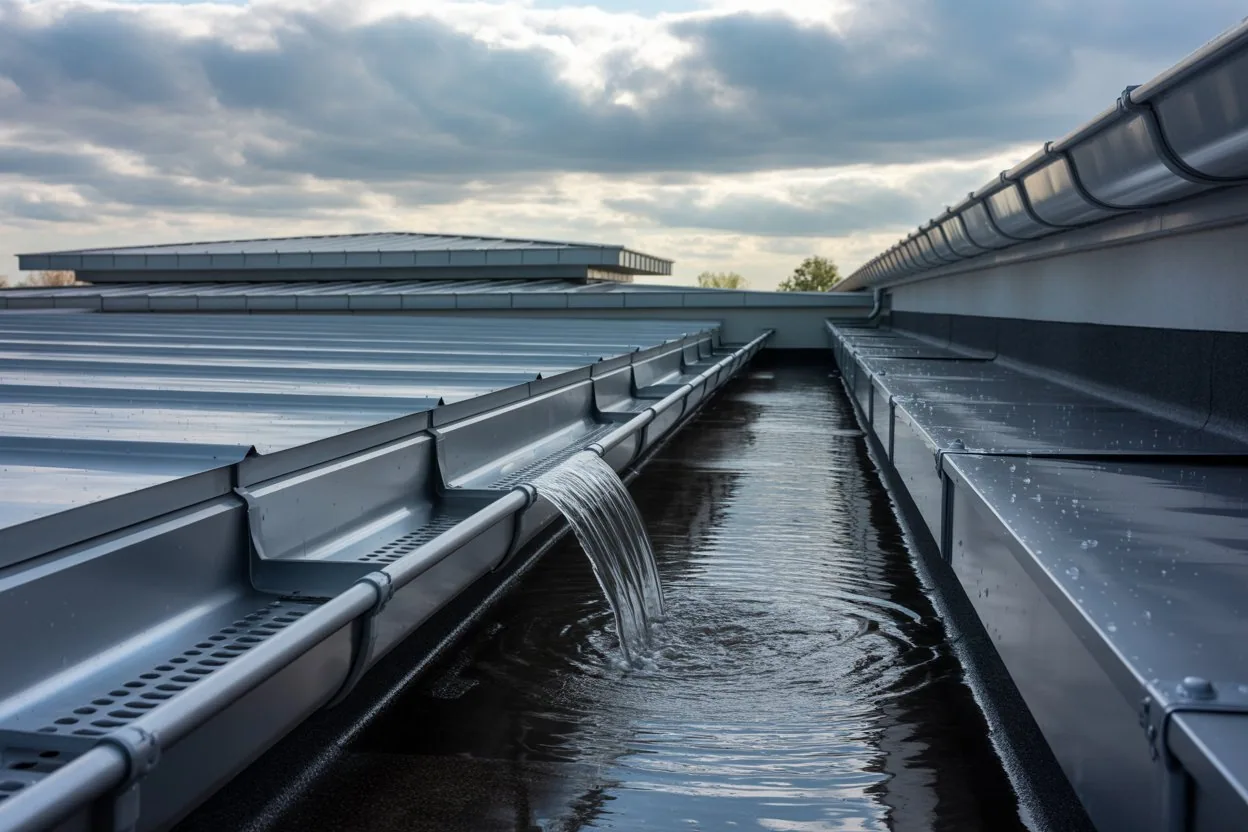
Start with the drain. Clear the strainer, lift it, and run water in to see whether the line beneath takes it. A roof drain or scupper that backs up only in heavy rain is partly blocked, and a line that never clears needs a camera or a plumber. We photograph the sump, the clamping ring and the membrane around it, since a gap there lets water into the building through the drain body.
Overflow scuppers and secondary drains are the protection against roof overload when the primary path fails. We check that they exist, that they are set at the height the design requires, and that nothing blocks them. A roof with a clogged primary drain and no working overflow carries the full weight of the water until something gives, so the overflow check goes into every ponding report.
Debris on the roof changes the picture quickly. Leaves from neighboring trees, windblown grit and packaging left by trades collect at drains within a season. A planned clearing before October, the wettest normal month, keeps the primary path open when the heaviest rain arrives. The photographs from that visit go into the file with the date.
Slope Correction Options
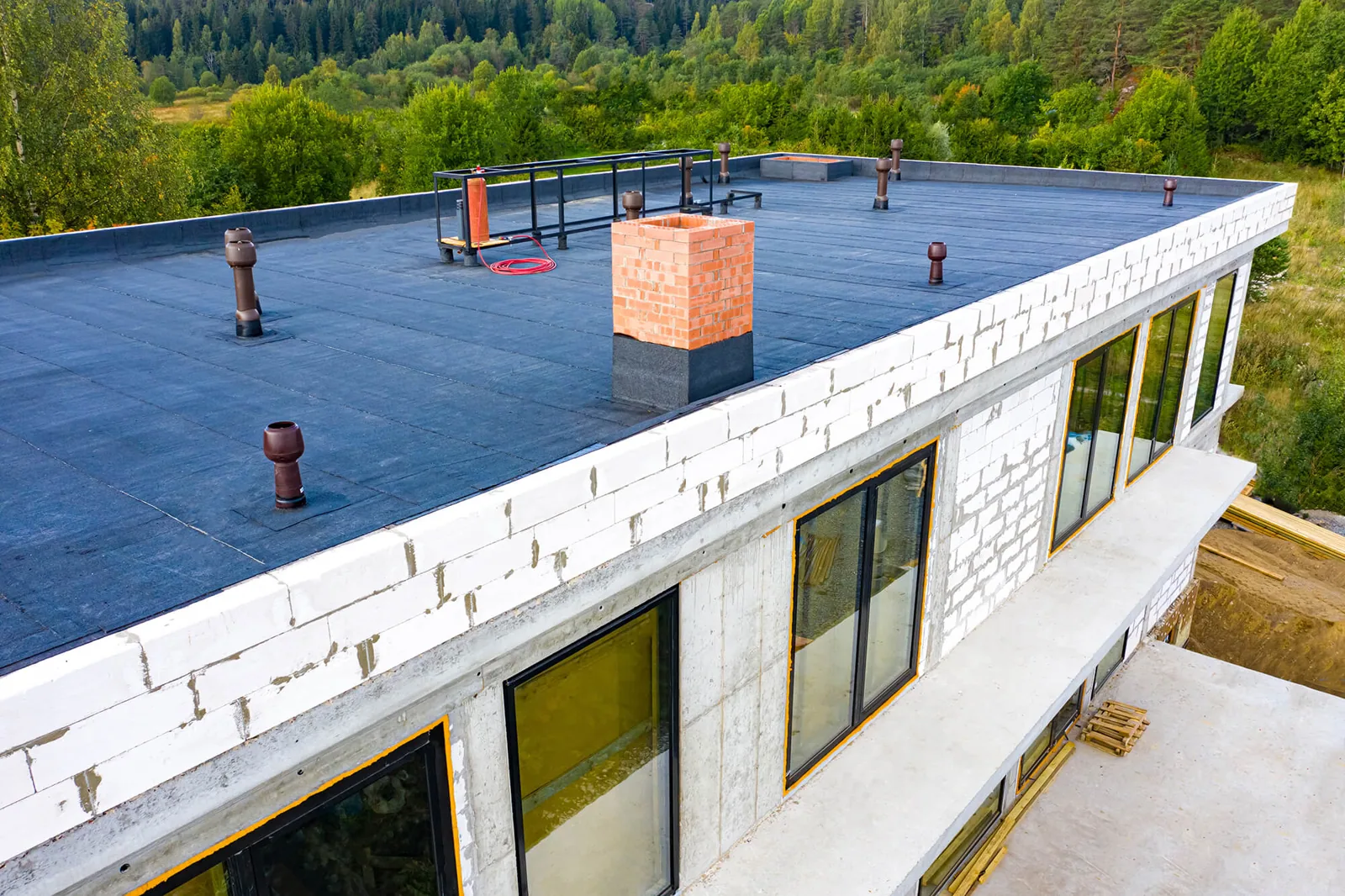
Once the cause is known, three corrections are available. A tapered insulation system adds slope toward the drains and is laid under a new membrane or over a sound one. A new or relocated drain lowers the collection point. Local fill, in the form of a sloped cover board or leveling layer, can address a small depression without a full tear-off.
Which one applies depends on the roof's condition. A dry, sound roof can take a recover with tapered insulation. A wet roof needs the wet material removed first, and the scope moves toward replacement. The inspection note states the option, its cost and the weather hold it carries, and it states what remains unknown until the roof is opened.
Owners in Lowell who want the correction folded into a larger project can ask for the tapered insulation to be priced as a separate line. That keeps the slope work visible in the scope, so the effect of each choice on the total can be read directly.
Cost Update and Inspection Cadence
Costs for ponding repair depend on the number of ponds, their area, the cause, the insulation depth and the access. A drain clearing is a short visit. A new drain involves plumbing coordination. A tapered system is priced by area and by the thickness needed to reach the drain. We give a first figure after the walk and a firmer one after moisture testing.
Lowell's position at the junction of Route 3 and I-495 sets the delivery routes, but area and cause drive the price, not the drive. After the repair, we set a maintenance visit for the first autumn and again after the first thaw, with photographs of each former pond from the original positions.
Commercial Roofing Questions
How long must water stand before it counts as ponding?
Forty-eight hours after rain stops is the usual test, and the roof's warranty may set its own limit. We record depth and duration on the same day of each visit so the pattern is clear.
Does a pond always mean the roof needs replacing?
No. Moisture in the insulation is what moves the scope to replacement. If the board is dry and the sheet is sound, the correction can be new drains, tapered insulation or a recover.
What about ponds that freeze in winter?
Ice in a pond presses on seams and flashing, so a winter pond is a repair priority. We avoid chipping ice off the membrane and plan the work for the return window instead.
Can the building owner clear the drains between visits?
Clearing strainers is routine, but a roof walk needs fall protection and care around the membrane. We offer the drain clearing as part of a maintenance visit, with before and after photographs.
Which records help in a warranty discussion?
Dated photographs with depth readings, the roof plan, drain checks and any maintenance record. Those show the manufacturer how the water behaved and what was done about it.