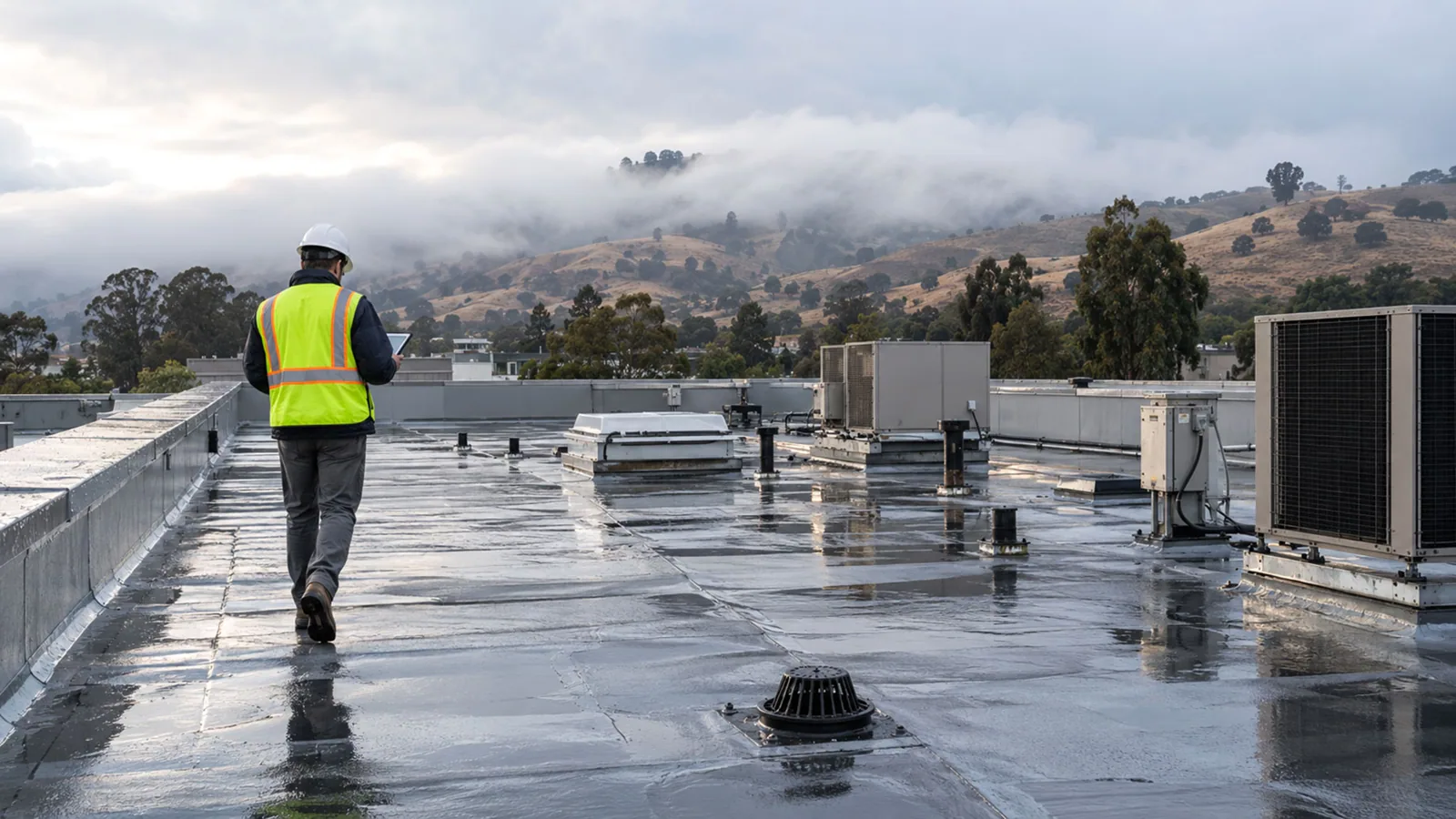
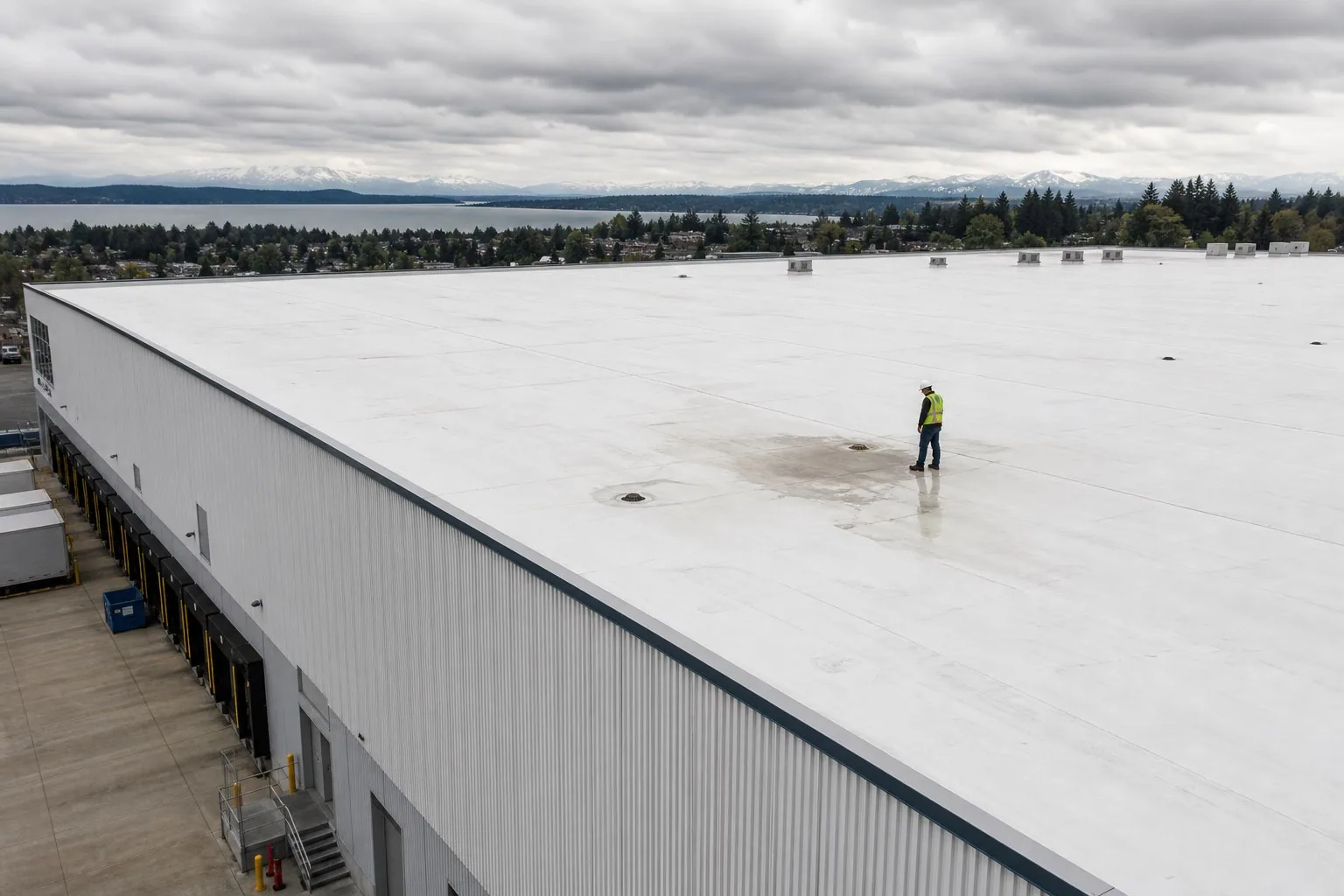
Name the membrane before anyone opens a patch kit. A report of water inside a Lowell, MA building starts the usual first-hour check, and on a roof made with GAF commercial materials the first question after safe access is which system is overhead. GAF sells single-ply membranes, modified bitumen, built-up components and liquid-applied coatings for commercial roofs, and each one takes a different temporary dry-in and a different permanent repair.
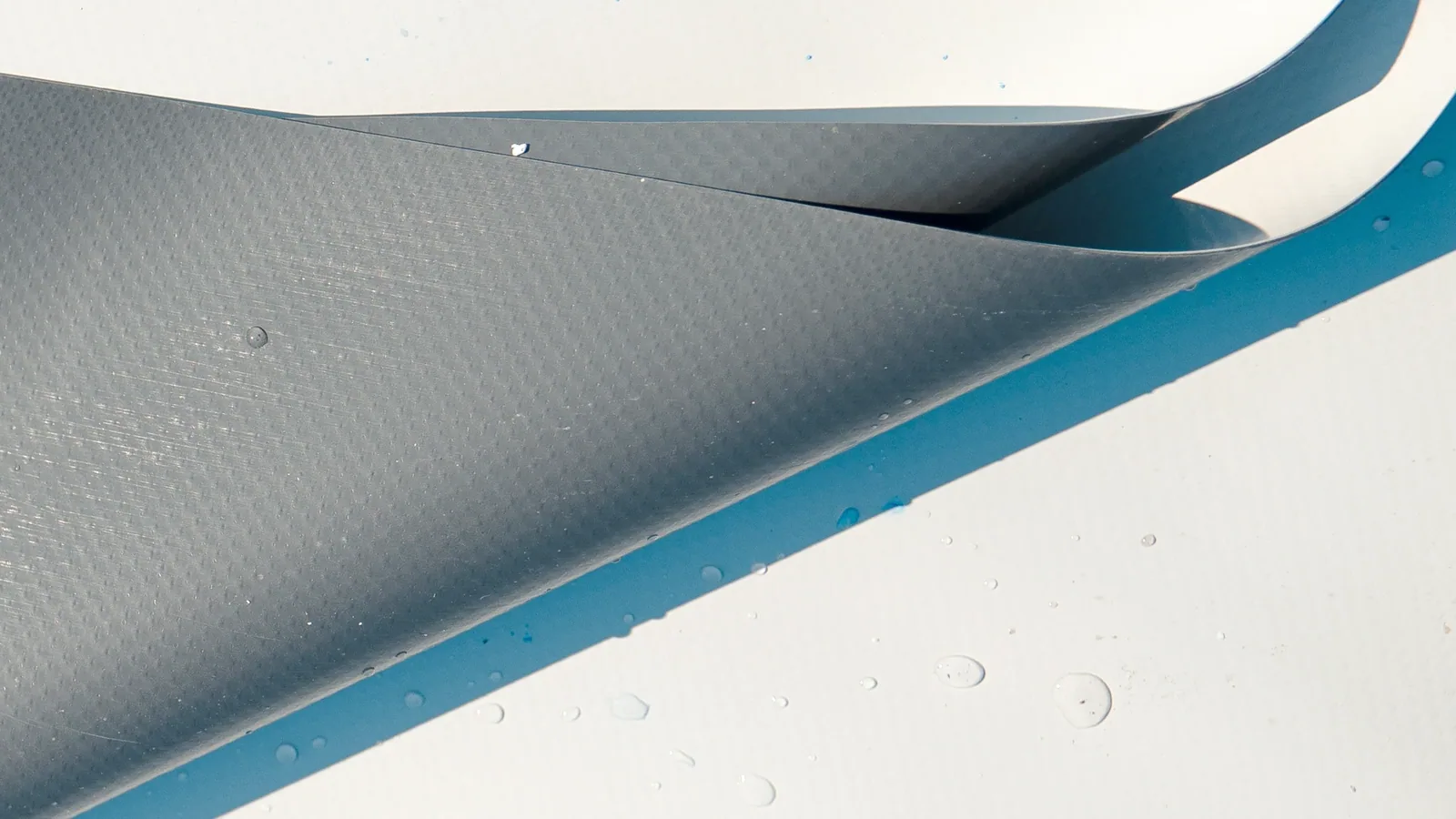
We repair, maintain and replace roofs built with these systems. Nothing on a roof is assumed from its brand label alone: the inspection note records what the membrane, seams and flashings actually are, and the scope follows.
System Identification
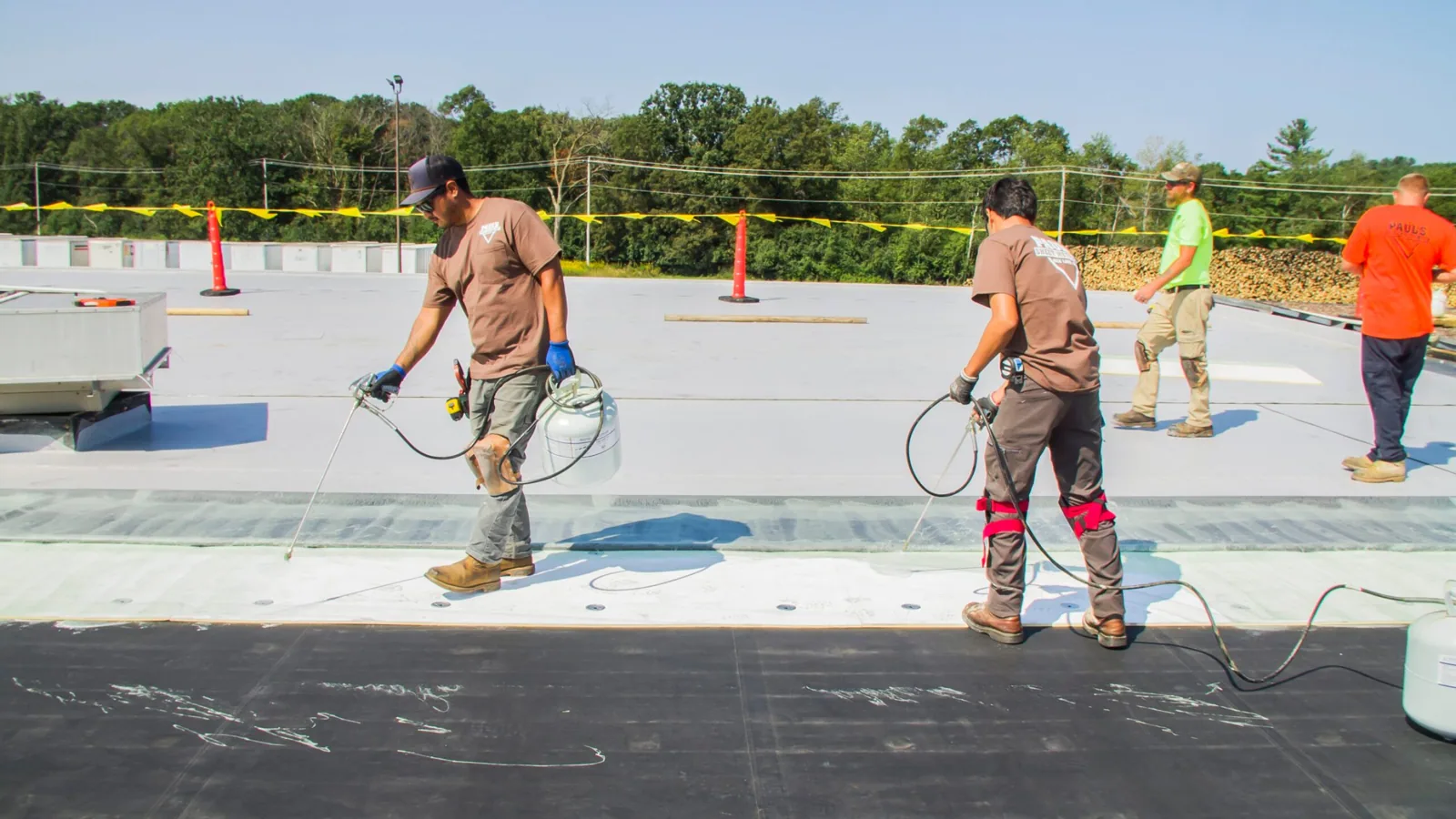
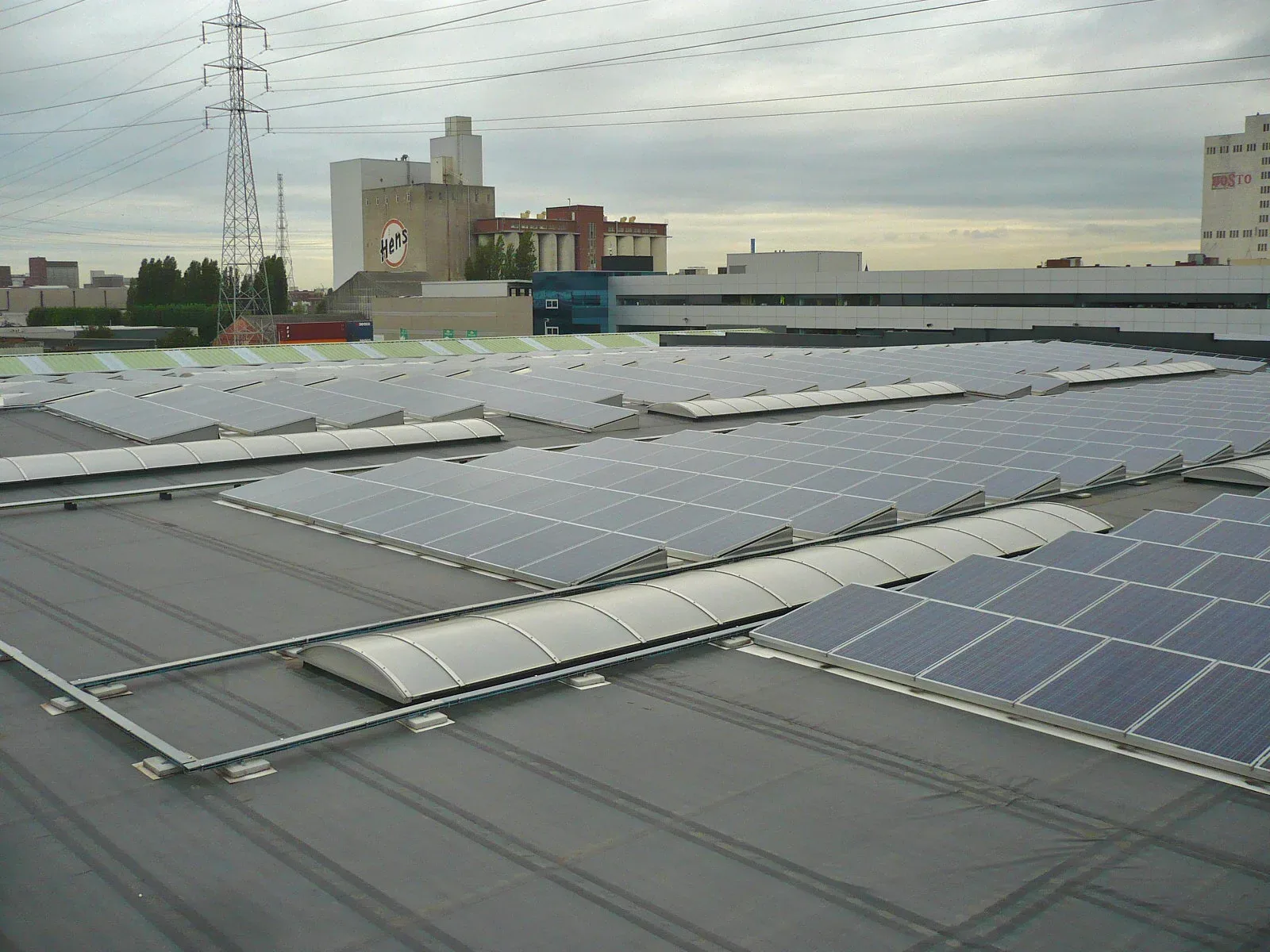
A brand name on a spec sheet does not tell a crew what to bring. The roof section does. We look at the surface first: smooth heat-welded sheet, granulated cap sheet, gravel-surfaced layers or a fluid-applied coat. Then we check the seams, the attachment pattern and the edge terminations, and where the roof history is thin we cut a small core to read the layers and the insulation beneath.
The result goes into the inspection note by roof section. If one section is a thermoplastic sheet and the next is a mineral-surfaced cap over base plies, they get separate entries, because they take separate materials. A mixed roof is common on buildings that were added to over time. The mill-era stock in the Downtown Lowell Historic District is one example of how a single building can carry several roof generations, each with its own detail.
Matching the repair material to the existing system is the whole point of the step. A patch that is chemically or mechanically wrong for the membrane under it can look sound for a week and open in the next freeze. The same section-by-section habit applies to a roof from Carlisle SynTec or Johns Manville, since several makers sell comparable thermoplastic and bitumen categories and the field condition, not the label, sets the work.
Temporary Dry-In by Membrane Type
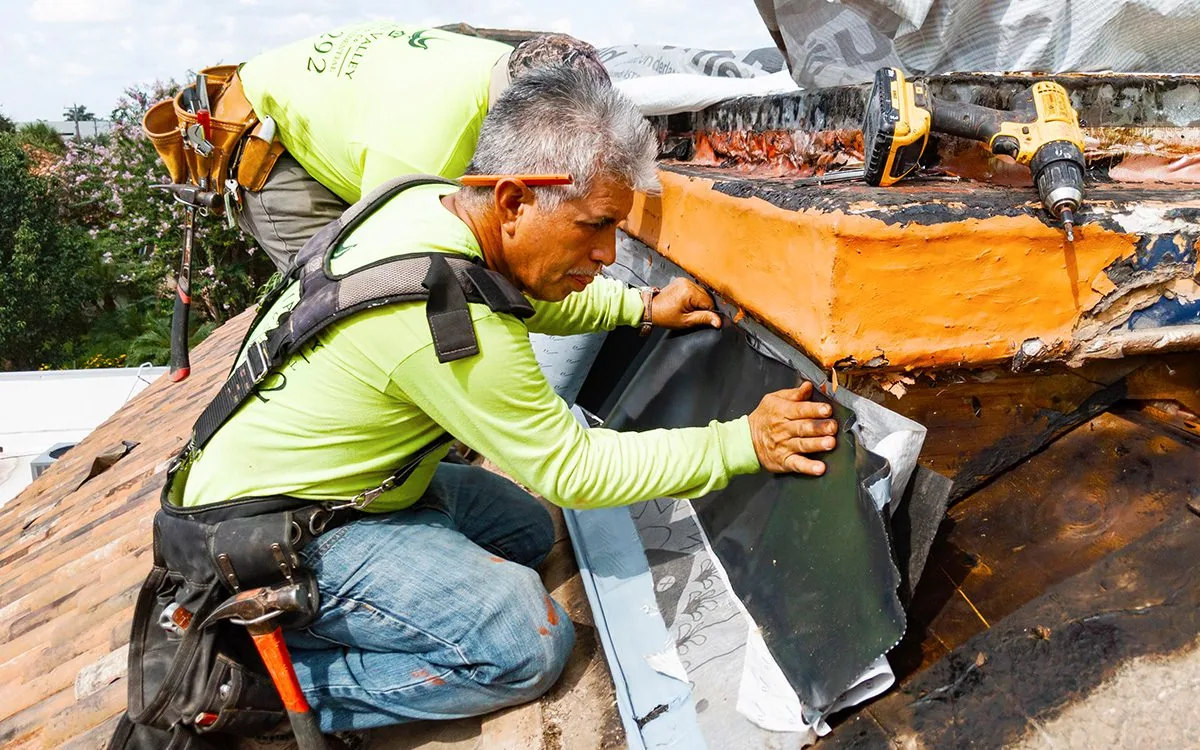
Water is on the clock, so the first fix is built from what is on the truck. On a single-ply sheet, a reinforced membrane strip is adhered or taped over the opening and the edges are rolled down. On a mineral-surfaced cap sheet, a mastic-and-fabric patch is set over a cleaned, dry area. On a coated roof, the failed area is cleaned back and a compatible patch material is applied. Each choice is temporary. The record lists what was used, where, and how long it is expected to hold under the weather hold in force.
Nor'easters, snowstorms and ice storms are on the city's hazard list, and the storm that opens a seam rarely leaves a dry window afterward. So the dry-in is fastened at its edges, not merely weighted, and the crew photographs it before leaving. The emergency roof repair visit ends with a written boundary: what was covered, what was not, and what the next visit will test.
Repair Boundary
The repair boundary is the line between work the evidence supports and work that is still a guess. On a thermoplastic sheet, a split seam or a punctured field can usually be bounded to the damaged run and the area around it. On a modified bitumen or built-up roof, the boundary depends on how many plies are wet and whether the blister, split or ridge is isolated or part of a pattern.
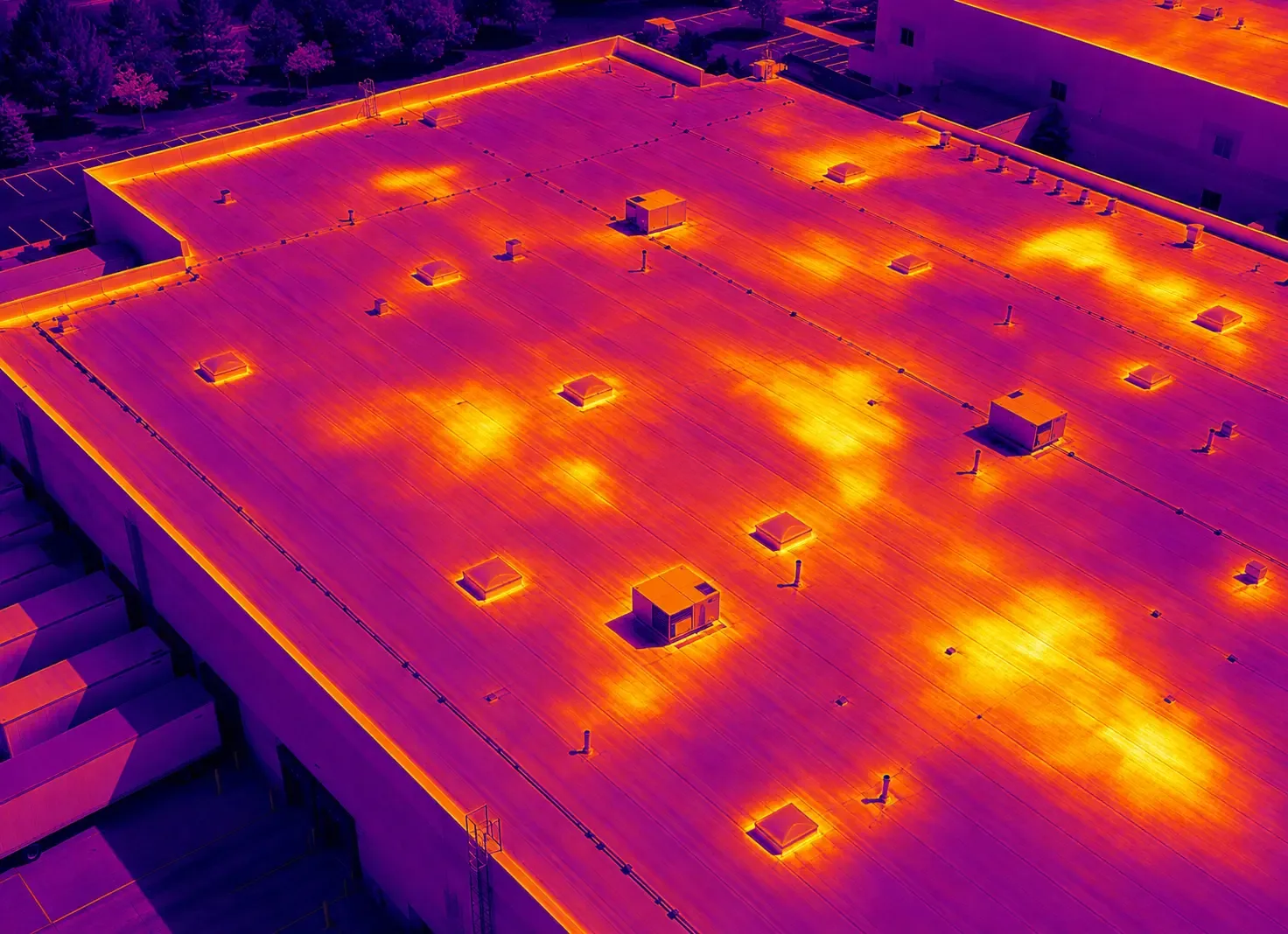
To set the line we check moisture. A handheld meter pass over the surrounding area, or an infrared moisture survey on a larger roof, shows whether the insulation beneath has taken water. Wet insulation moves the boundary outward. Dry insulation lets the repair stay small. Either way the note records the readings, the date and the weather, so the next inspection compares like with like.
Where a leak has run through several roof sections, the interior protection plan and the roof repair plan are written together. The facility director sees which areas are safe, which stay covered and which repair can wait for a return window.
Cold-Season Service
Normals for the Lowell station run from a January mean near 25 degrees to a July mean near 73, over 48.51 inches of yearly precipitation. Roof membranes cycle through that range, and adhesives, sealants and welds behave differently at each end of it. Many thermoplastic and bitumen repairs need a dry surface and a minimum working temperature, so a cold, wet week can close the permanent repair window even when a temporary seal is holding.
That is a scheduling cost, and the cost update says so. A repair that waits for a return window carries the price of the temporary measures kept in place, plus any added inspection. Owners who expect winter service should plan a fall roof check, which pairs naturally with preventive roof maintenance. The check clears drains, reseats loose edge metal and records seam condition before the cold arrives.
Replacement and Recover Decisions
When repair stops making sense, the scope decision follows the roof section data. Where the board is dry and the deck sound, a recover can go over the old membrane. A wet roof, or one that has already been recovered, goes to tear-off and replacement. Since July 1, 2025, filings in the state fall under a single code, the tenth edition drawn mainly from the 2021 IBC, while energy provisions can differ by town, so we confirm them project by project. Insulation thickness and attachment are written into the scope with that confirmation.
Choice of system is made on the roof, not the catalog. Heat-welded single-ply, layered bitumen and fluid-applied restoration each answer a different set of conditions, and the scope shows why one fits a particular section better than another.
Where the Work Happens
The city plan describes the Tanner Street area of Ayer's City as mostly heavy-industry zoned, and the town of Chelmsford names its Route 3/129 corridor as a concentration of large offices. A roof in either setting gets the same treatment: Lowell work and Chelmsford work both begin with a section map, a moisture reading and a written boundary, because the membrane decides the repair, not the zip code.
Commercial Roofing Questions
How do you know which GAF system is on my roof?
The roof section tells us. Surface type, seam style, attachment and a small core where records are thin identify the layers. The inspection note lists each section and system separately.
Does a temporary patch affect a later permanent repair?
The choice of temporary material decides it. A compatible, well-fastened dry-in comes off cleanly, while an unsuitable sealant can contaminate the surface and widen the permanent repair boundary.
What decides whether a leak means replacement?
Moisture. Dry insulation and a sound deck keep the answer at repair or recover. Wet insulation across several sections, or a roof already recovered once, moves it toward tear-off.
Can repairs wait until spring?
Cold and wet weather often blocks permanent work, so the temporary dry-in must be sound enough to last. The cost update separates the price of holding the roof from the price of the final repair.
Who reads the manufacturer paperwork on a roof?
We read any warranty or specification papers the owner holds and note their conditions in the file. Terms belong to the manufacturer and the owner's documents, so we report what they say without restating them as ours.