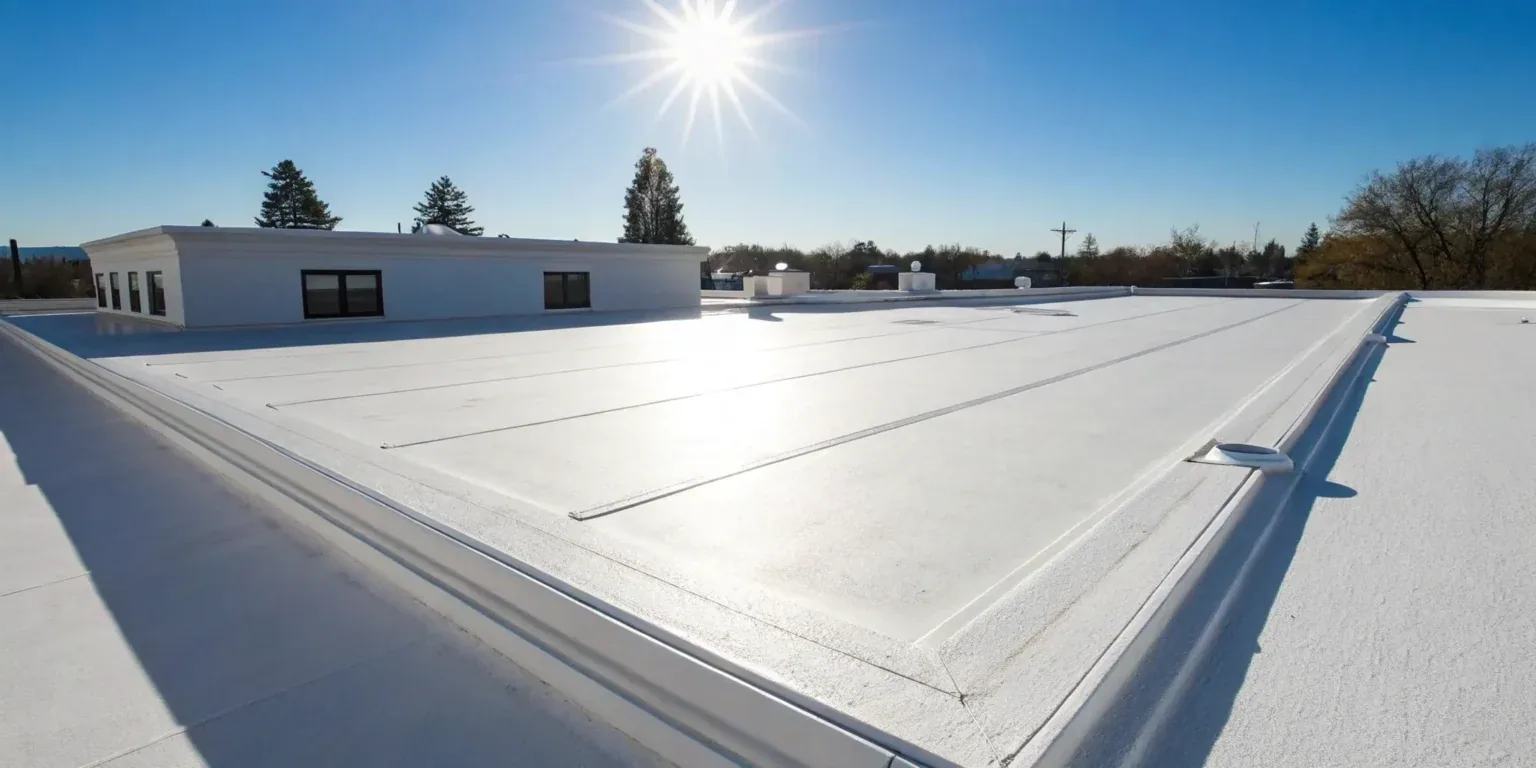
Seam type comes first in the inspection note. Carlisle SynTec produces single-ply membranes in rubber (EPDM) and thermoplastic (TPO and PVC) families, along with insulation and related roof components, and the repair on any of them depends on how the sheets are joined. An EPDM roof is joined with tape or adhesive at the splices. A thermoplastic roof is heat-welded. After a leak report in Lowell, MA, the crew decides the dry-in material from that one fact.
We repair and replace roofs of these families on occupied buildings, working to a short sequence: safe access, interior protection, a temporary dry-in, then a repair boundary the facility director can approve.
Seam Condition by Family
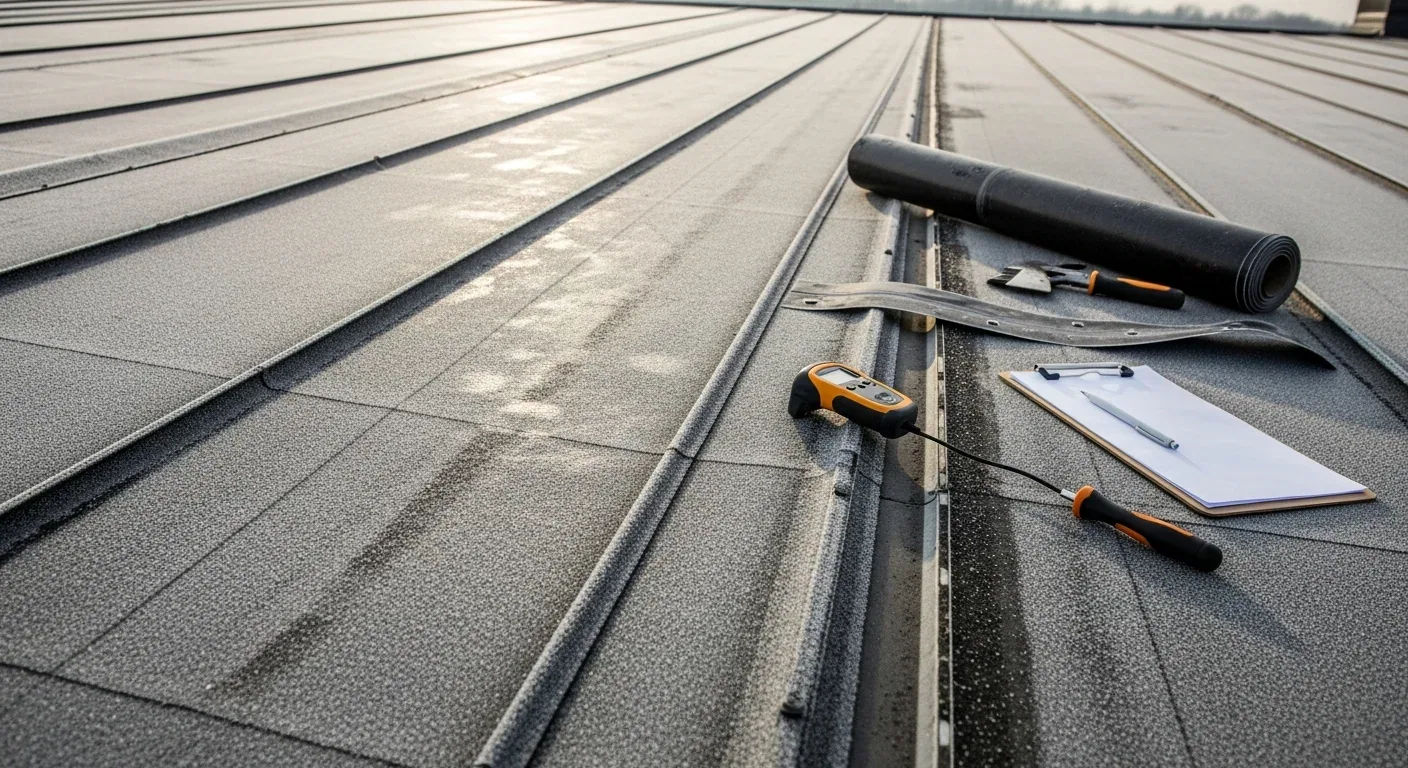
A rubber membrane fails differently from a welded one. On EPDM, splices can peel at the edges, tape can lose its bond where dirt got between the laps, and flashing pieces can shrink back from a corner. On thermoplastic sheet, a weld can be cold or thin, leaving a channel that opens under foot traffic or thermal movement. We test by hand and with a probe, walking the full length of each seam and recording where it holds and where it lifts.
Findings are logged by roof section and seam run. A single failed splice near a drain is a small repair. A pattern of lifting laps across a wide area suggests an installation or aging issue and moves the scope toward something larger. Neither conclusion is drawn until the seams, the substrate and the moisture readings are in the same note.
Cold-Weather Limits on Repair
Splice adhesives, primers and welds all have working ranges. January averages close to 25 degrees at the Lowell station, and the city's hazard materials name ice storms as a major hazard. A crew can protect an opening in that weather, but a permanent splice or weld may have to wait for a return window with dry surfaces and workable temperatures.
The temporary measure for a cold week is a mechanically secured membrane strip, a taped patch rolled down at the edges, or a tarp battened over the failed run. Each one is recorded with its date, location and the conditions at the time. The cost update then separates the price of keeping the temporary dry-in sound from the price of the permanent seam work, so the facility director sees what the weather hold costs while the roof waits.
The 1995 winter, when city records show 126.5 inches of snowfall in Lowell, is a reminder that repeated winter service is a planning item. A roof that needs three snow-day visits in a season carries a different cost exposure from one that needs a single spring repair.
Ponding and Drainage Path
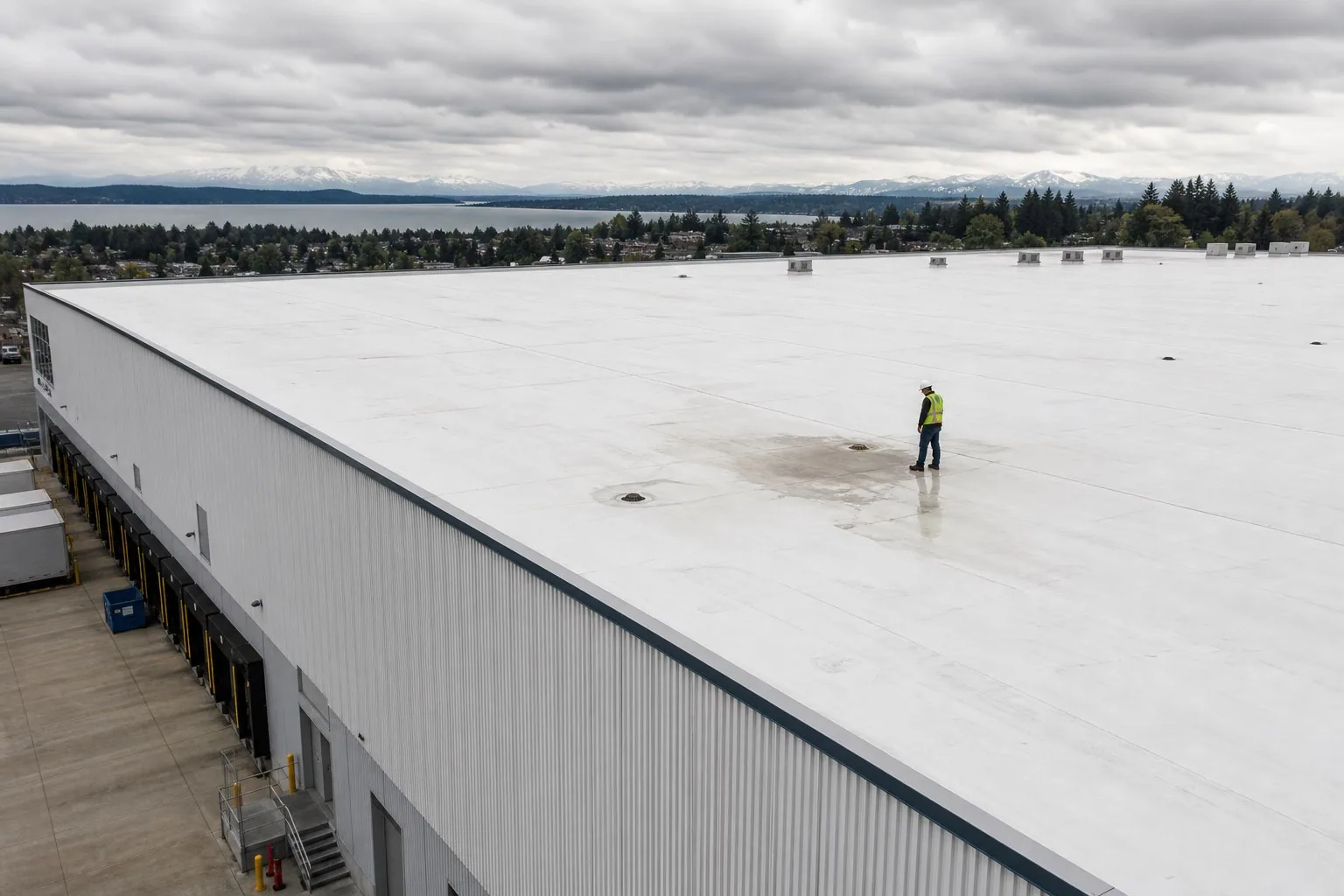
Low-slope single-ply roofs live or die by water leaving them. Standing water speeds the aging of seams and adds load in freezing weather, and a drain choked with leaves or ice sends water across the roof to the weakest lap. We record where water stood after the last rain, clear strainers, and check scupper openings and gutter outlets. The ponding water repair options range from new drain sumps and tapered insulation to a membrane upgrade at the pond.
Annual precipitation at the station totals 48.51 inches, and October alone brings a normal of 5.00. That rhythm leaves little dry season. Drainage checks belong in fall and again after the first thaw, with photographs taken from the same positions so a pond that is growing is visible in a side-by-side comparison.
Recover, Replace or Convert
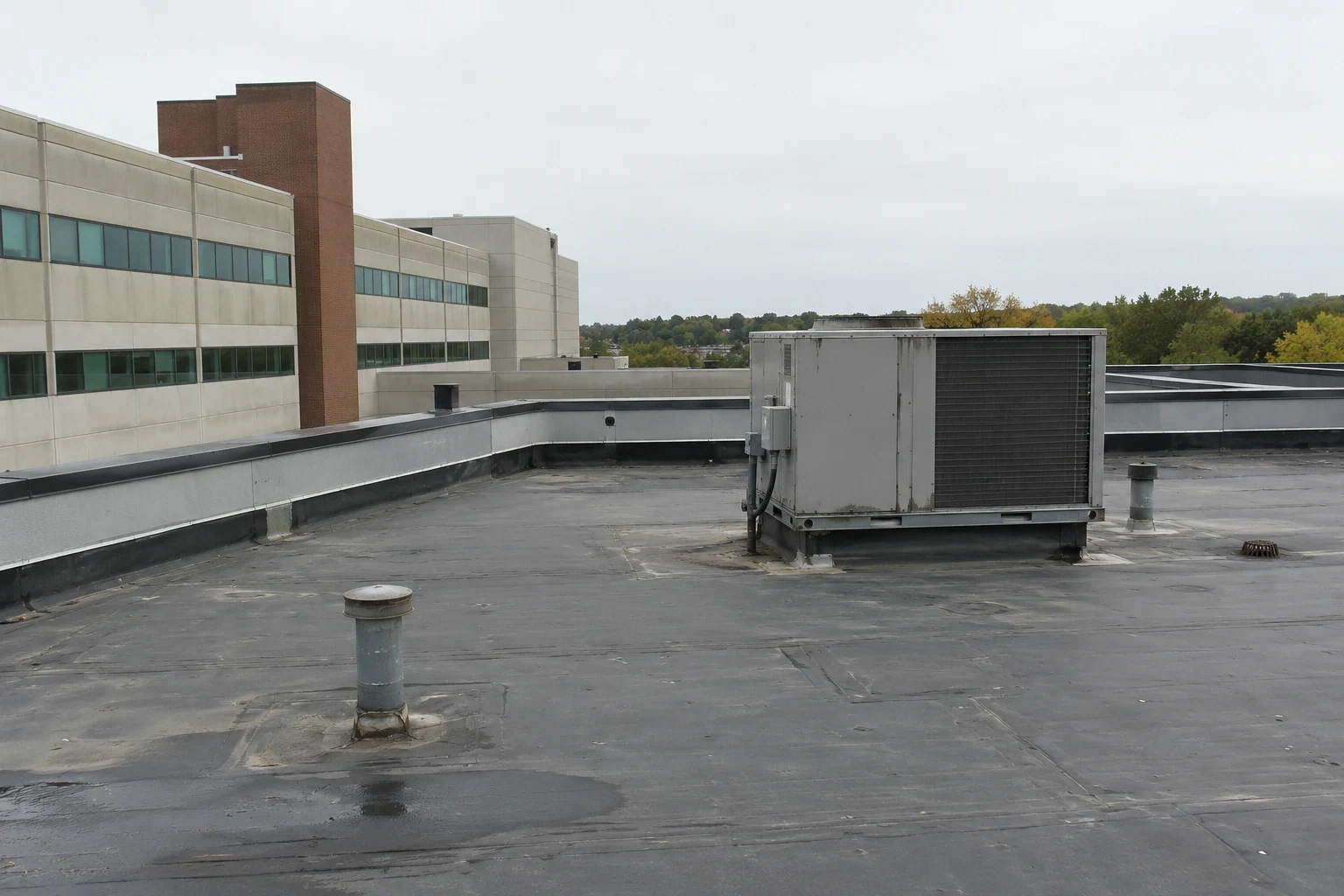
When repair stops paying for itself, the scope decision depends on the roof section data. A recover with a cover board suits a roof whose board is dry and whose deck is sound. A wet roof moves to tear-off. A ballasted rubber roof can be converted to an adhered or mechanically attached system, which removes the ballast load and gives a cleaner surface for inspection. Each path is priced with its test results beside it.
The state's tenth-edition code, rooted mainly in the 2021 IBC, now governs every new filing, and whether a town has added stretch energy rules decides how much insulation the scope must carry. We confirm that before insulation thickness is written into the scope.
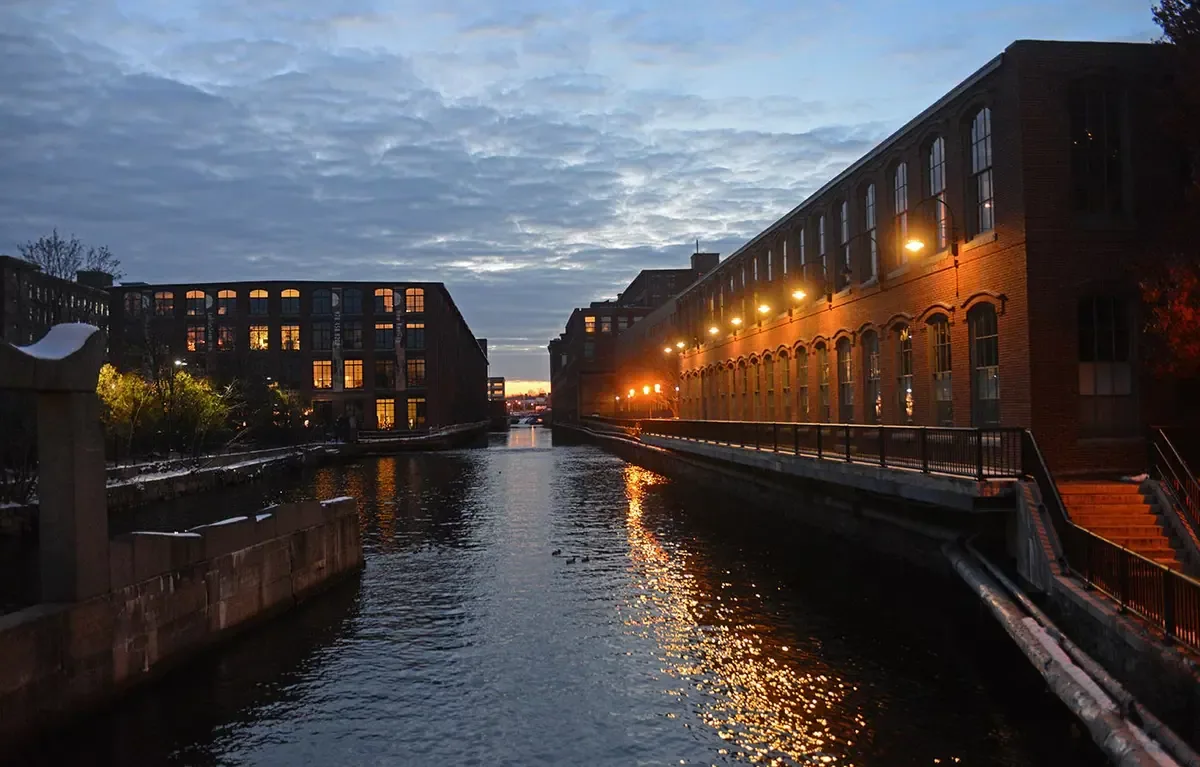
Exterior roof work in the Downtown Lowell Historic District comes under Historic Board review, which is why a visible roof change is raised with the owner before material is ordered. Owners in the Hamilton Canal District, the planned mixed-use link to the commuter-rail station, should confirm approvals early too.
Occupied Buildings and Interior Protection
The city's profile puts education and health services first among employment sectors; Lowell General Hospital is a named regional employer, and UMass Lowell and Middlesex Community College supply the regional workforce. Roofs over buildings like those carry an extra constraint: the interior cannot stop. Any roof like these needs a plan that names the people below, the equipment that must stay dry and the hours when noise, odor and dust are least tolerable.
Single-ply work suits that constraint when it is staged well. Mechanically attached or adhered membranes avoid hot kettles, and heat-welded seams give off little odor compared with solvent-heavy methods. Adhesives still carry vapor, so the scope names the product type and the air-intake locations before work starts. Intake louvers near the work zone get temporary protection, and the roof access route is kept apart from patient, student or tenant circulation.
The same plan serves any hospital roof or clinic where a leak is both a property loss and an operating issue. Interior protection is set first, the repair boundary second, and the schedule third. An owner in Lowell receives the three in one written note, with the next cost update dated.
Crews and materials reach job sites by the same highways that join Lowell to I-495 and Route 3, and staging for a roof in Billerica or Chelmsford starts the same way: the access route, the lift position, the delivery window and the hours the tenants keep.
Related Makers and Systems
Owners who compare single-ply makers will find overlap with Versico and Holcim Elevate in the EPDM, TPO and PVC categories, and the field checks are the same. Whichever name is on the paperwork, the crew confirms the membrane before ordering material. On a TPO roof the weld gets probed, and on an EPDM roof the splice gets peeled at a test point.
Commercial Roofing Questions
Why does seam type change the temporary repair?
Tape and adhesive joints take a taped or adhered patch. Welded joints take a heat-bonded or compatible strip. Using the wrong one lets water back in within days.
How cold is too cold for a permanent splice?
Adhesives and welds each have a working range, and the crew reads the material instructions on the day. If the surface is wet or the temperature is below range, the temporary dry-in holds until a return window.
What decides whether ballast stays?
Deck capacity and the condition of the membrane under the stone. If the structure is marginal or the membrane is failing, conversion to an attached system is priced against replacing it in place.
Does a failed splice mean the roof needs replacing?
One failed splice does not. A pattern across many laps, combined with wet insulation, does. The seam log and the moisture map decide it.
Who confirms warranty conditions?
The owner's documents and the manufacturer control them. We read the papers on file and record their conditions in the inspection note.