Probe the weld before pricing the patch. Sika Sarnafil makes thermoplastic roofing membranes, PVC and TPO among them, plus liquid-applied flashing and waterproofing products, and a report of water inside a Lowell, MA building sends the crew to a short list of suspects on that kind of roof: a cold weld, a cut at a penetration, a failed corner or a flashing that has pulled away from its wall. Each takes a different repair, and each costs a different amount.
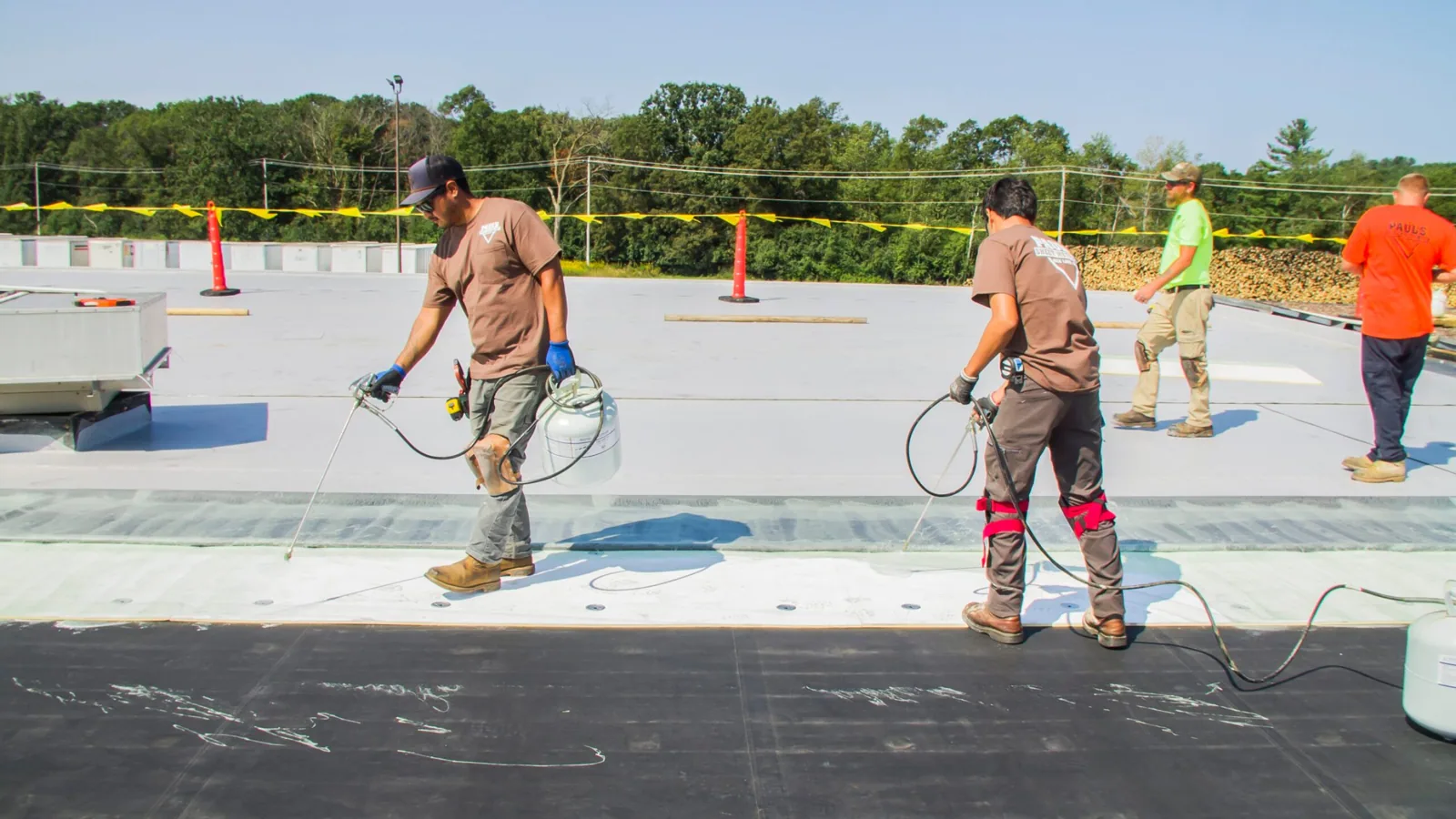
The first hour is procedural. Confirm safe access. Protect what is below. Place a temporary dry-in. Then test the seams and flashings in the section above the stain and set a repair boundary the facility director can approve.
Weld Probe Results
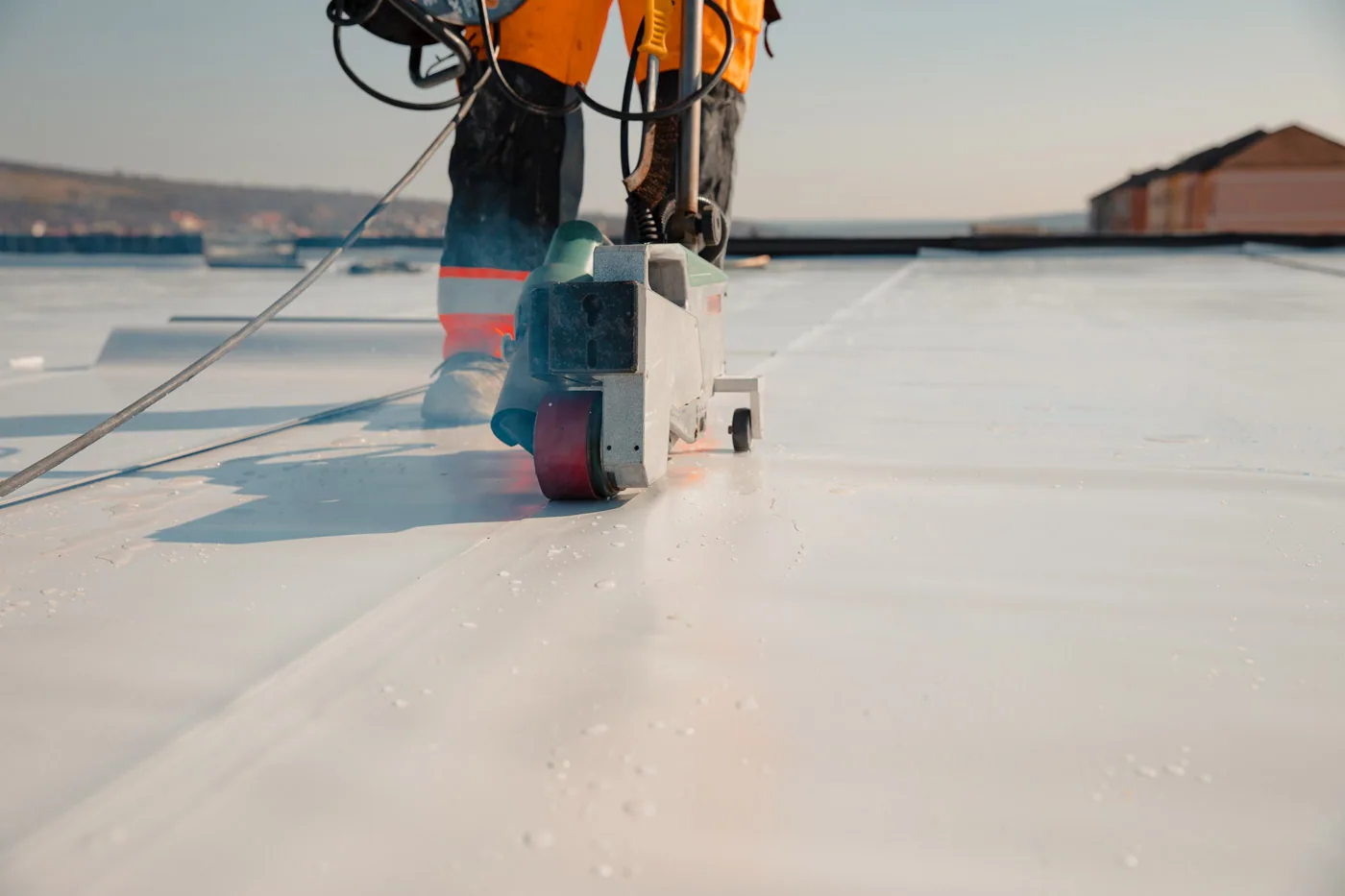
Thermoplastic membranes are joined by melting the overlapping edges together. A good weld is continuous and tight. A cold or thin weld can look finished but leave a channel at the edge, and a weld that crosses a wrinkle or a dirty surface can open later. We run a probe along each suspect seam, record the position of any opening, and mark the weld run on the roof plan with a number.
Results go into the inspection note in plain terms: held, lifted, or open with a measured length. A short open run near a drain is a small repair. A repeated pattern across a roof section suggests an installation or aging issue and may justify a larger scope. The note says which finding is which, and what test would settle any open question.
Flashing Resins and Detail Work
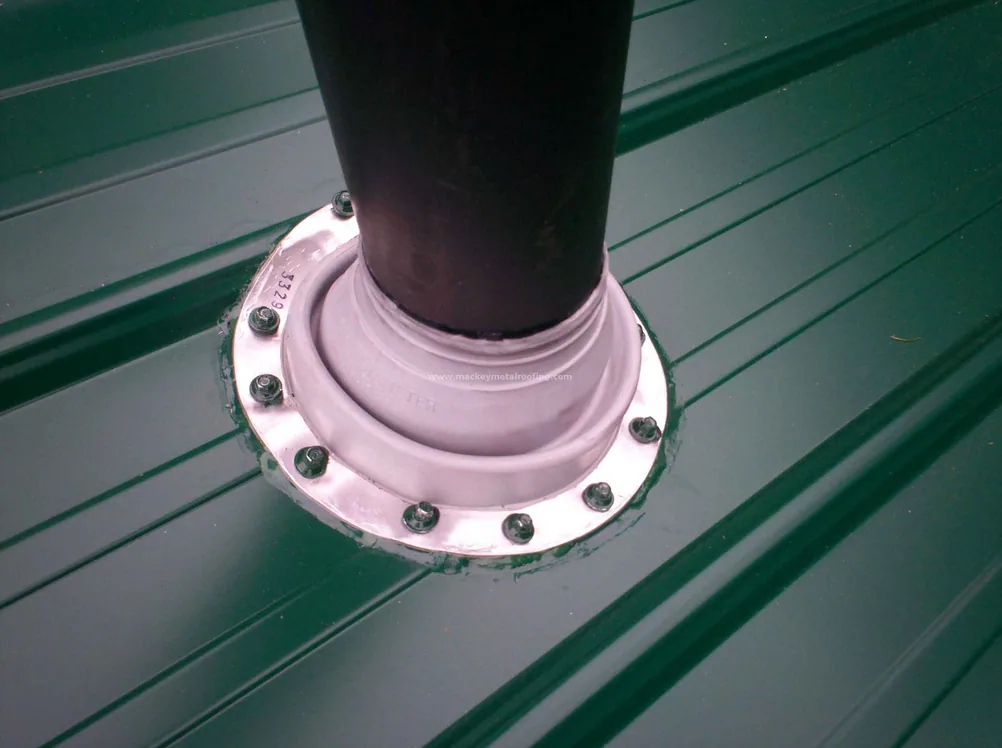
Corners, pipes, curbs, drains and other awkward shapes are hard to flash with flat sheet. Liquid-applied flashing resin, reinforced with fabric, fills those gaps and cures into a continuous detail with no lap to peel. It is also a useful repair on an existing roof: a failed pipe boot or a split curb corner can be cleaned, primed and rebuilt with resin and reinforcement.
The craft is in preparation. The surface must be clean, dry and compatible, and resin has working temperatures that Lowell winters can close. In a cold or wet week, a temporary seal holds and the permanent detail waits for a return window. The cost update shows both costs, so the facility director sees what the weather hold adds. When a roof carries many odd shapes, a penetration and skylight flashing program can address them in one visit instead of one leak at a time.
Walkways and Service Paths
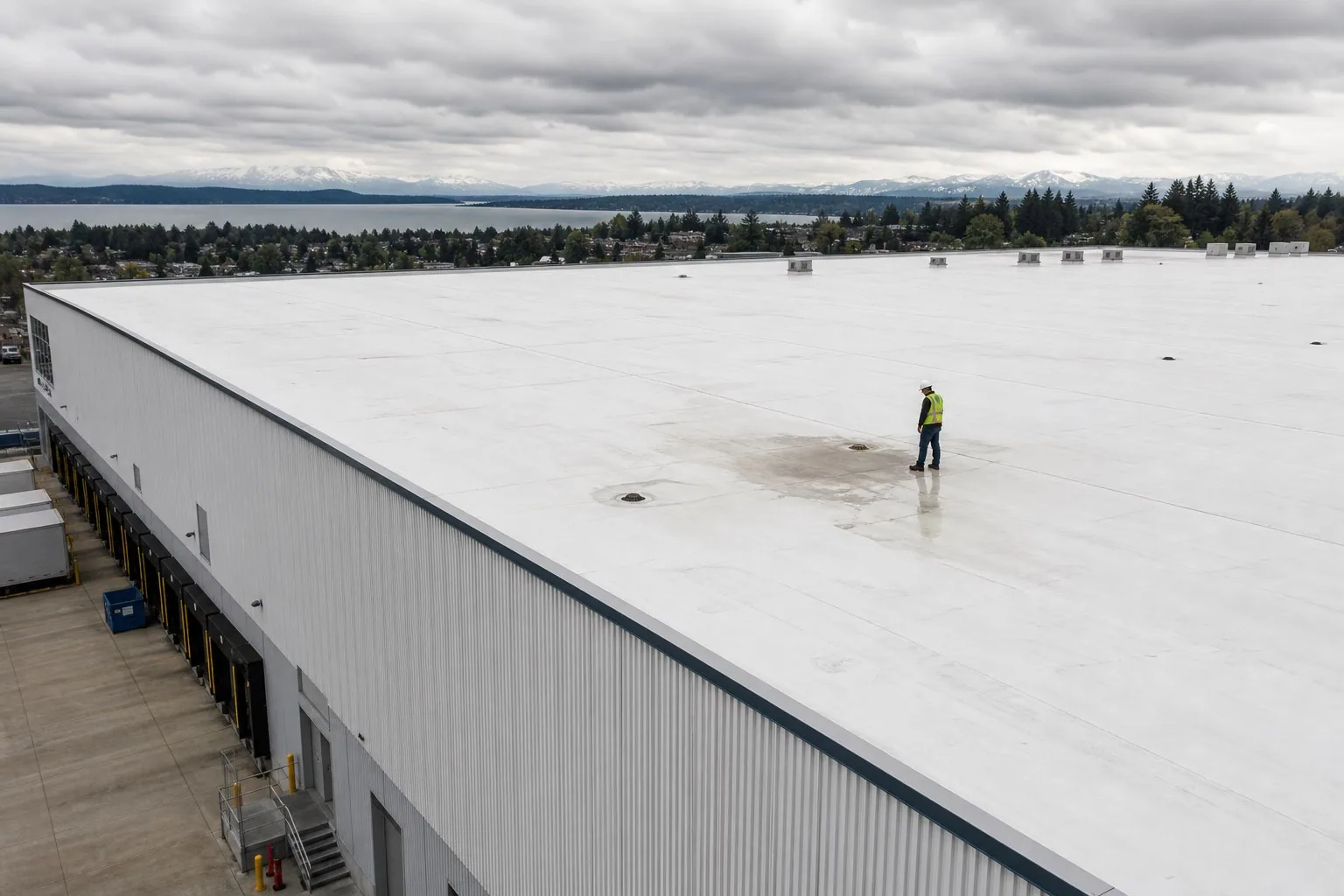
Foot traffic wears a thermoplastic sheet where technicians cross it to reach equipment. Scuffs, dirt tracks and early seam stress show up first along the path from the roof hatch to the rooftop units. We map these paths on the roof plan and check whether walkway pads protect them. Where pads are missing, the repair list adds them, because a pad costs far less than a membrane repair and keeps wear off the welds.
Equipment also drips. Condensate lines, oil from a motor or cleaning chemicals poured onto the roof can soften or stain a membrane. The note records any staining and its source, and the correction is part of the scope: a drain line routed to a pan or a pad, a spill kit left at the unit, a sign at the hatch.
Penetration count matters as well. A roof with many pipes, conduit runs and curbs has many details, each needing its own flashing, and each adds to leak risk and repair cost. The inspection counts them, rates them and flags those that depend on sealant alone. A facility director reading that count can budget for the repairs before the first stain appears.
Cold Season and Weld Windows
The Lowell station's normals put the January daily mean near 25 degrees, and its July mean near 73. Hot-air welding works best on a clean dry sheet in workable temperatures, and that window narrows from late fall through early spring. The city's hazard materials add nor'easters, snowstorms and ice storms to the picture. A permanent welded repair may have to wait, and a good temporary repair has to last through it.
The temporary dry-in on a thermoplastic roof is a mechanically secured strip, an adhered patch or a tarp battened at its edges. Each is logged by section and date. Before the permanent repair, the area is dried, cleaned and checked for trapped moisture, since welding over wet insulation steams and can damage the membrane.
Recover and Replacement Options
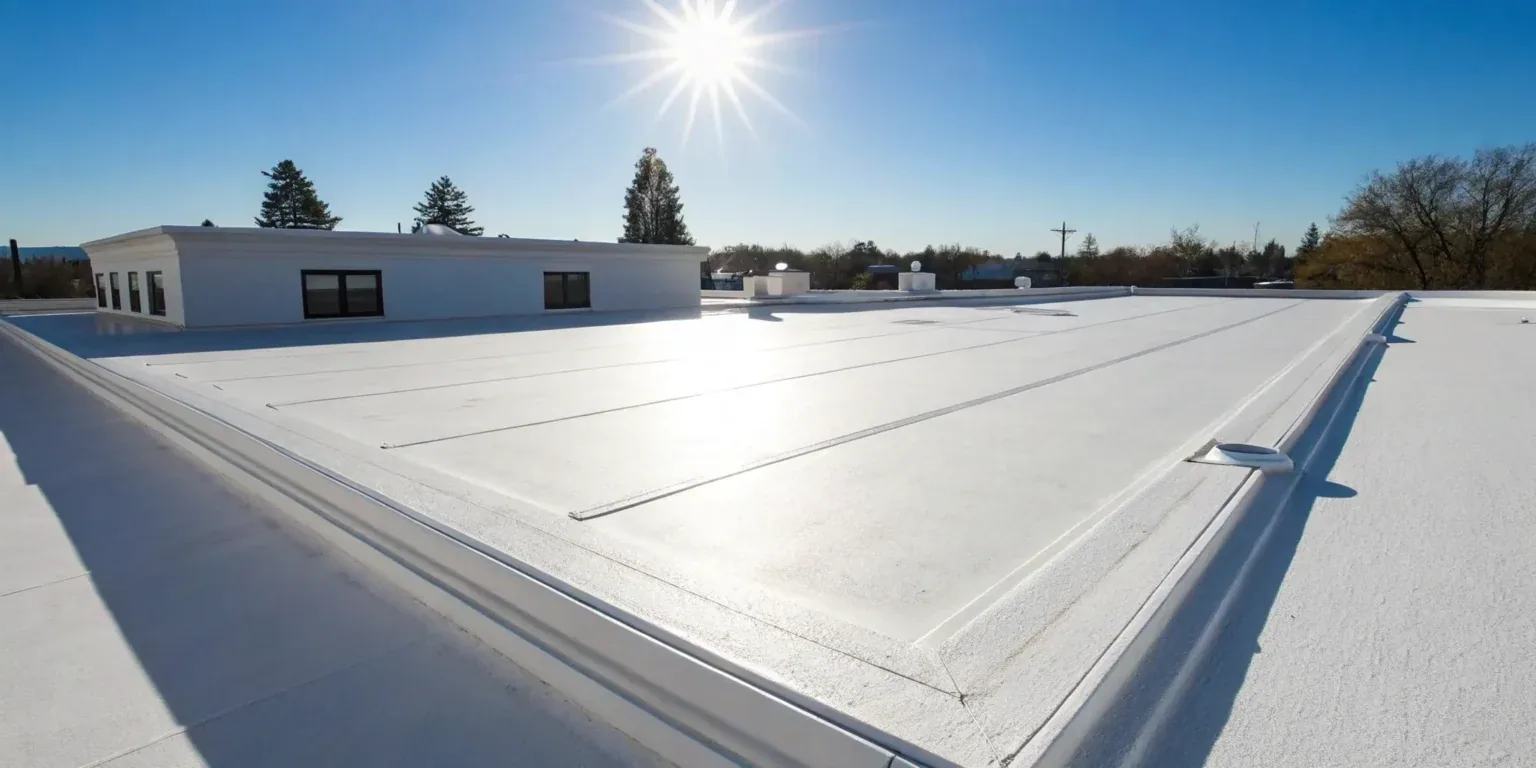
Thermoplastic roofs in sound condition last a long time, but a roof with wet board or widespread weld failure needs a bigger answer. A recover is possible if the board tests dry and the deck is sound. Replacement is the answer when moisture is widespread. We price both and show the cores that support each.
Filings after July 1, 2025 follow the tenth edition of the state code, which rests mostly on the 2021 IBC; stretch energy rules adopted by a town can raise the insulation requirement. The applicable edition is confirmed before insulation and fastening are specified. A PVC roof resists grease and many chemicals better than TPO, which matters on a roof with exhaust outlets.
Closeout Note
At the end of a repair, the closeout note lists the roof sections worked, the welds and flashings repaired, the materials used, the test results and the photographs. It also names what was left alone on purpose and the date to look again. If a temporary dry-in remains, the note says where it is and what the permanent repair will require.
The note is written to be forwarded. A property manager, a lender or a tenant can read it without a call, and the next crew can pick up exactly where the last one stopped.
Industrial and Office Settings
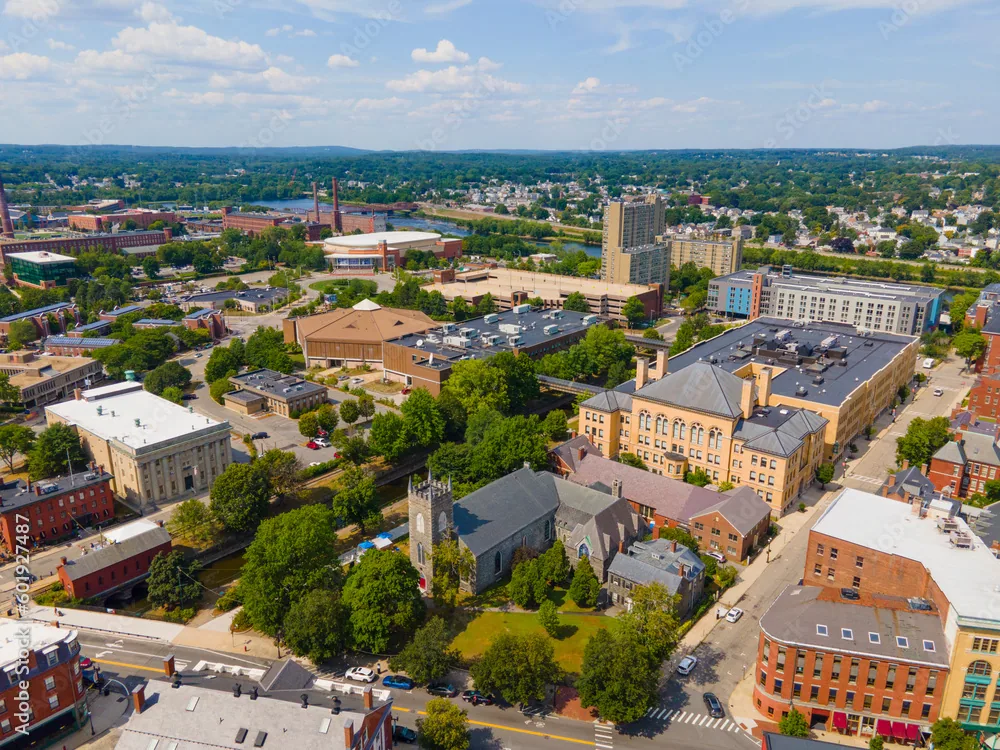
The Ayer's City plan covers roughly 108 acres around Tanner Street, mostly heavy-industry zoned, and treats the Lowell Connector and Tanner Street as redevelopment edges. Chelmsford, at the I-495 and Route 3 crossroads, names a technology corridor along Route 3/129 as a concentration of large offices. A thermoplastic roof on an industrial building may see exhaust, grease or chemical exposure; one on an office may see mainly foot traffic around equipment. We note the exposure on the walk before choosing materials.
Owners in Chelmsford and Lowell get the same inspection note format, so a portfolio with roofs in both towns can be compared side by side. Neighboring makers such as Versico and Duro-Last sell comparable thermoplastic categories, and the crew still identifies each roof by what is on it.
Commercial Roofing Questions
How can a weld look sound and still leak?
A thin or cold weld can leave a channel at the lap edge. A probe run along the seam finds the open stretch that the eye misses.
What is flashing resin used for?
Shapes that flat sheet cannot cover cleanly: pipe bases, curb corners, drain surrounds. It is applied with reinforcement and cures into a continuous detail with no lap to peel.
Why wait for a return window on a cold-weather repair?
Welds and resins need dry surfaces and workable temperatures. A repair forced in bad conditions can fail, so the temporary dry-in holds and the permanent work is scheduled.
Is welding over wet insulation possible?
It is not advisable. Trapped moisture turns to steam under the heat and can blister the sheet, so the area is tested and dried first.
Which exposures matter for an industrial roof?
Exhaust, grease, chemical vapor and heavy foot traffic. The walk records them so the membrane and any coating are chosen to suit.