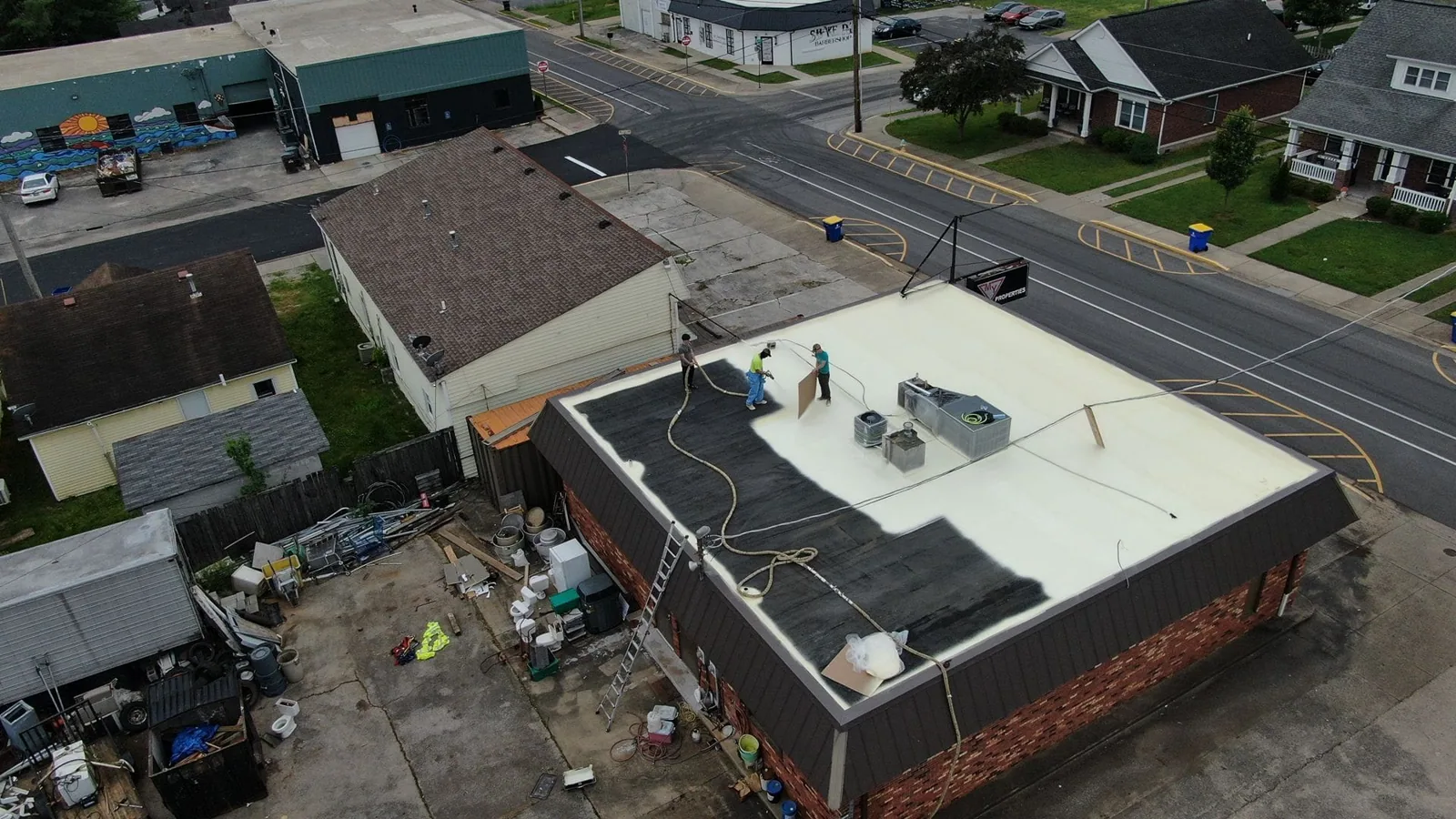
Rank the calls before dispatching. A property manager with several buildings in the Greater Lowell area may hold more than one open roof report at a time, and Versico single-ply roofs, whether TPO, PVC or EPDM, do not all deserve the same first hour. The triage question is cost exposure: which building has an active water path over occupied space, which has a slow stain over storage, and which can wait for a return window.
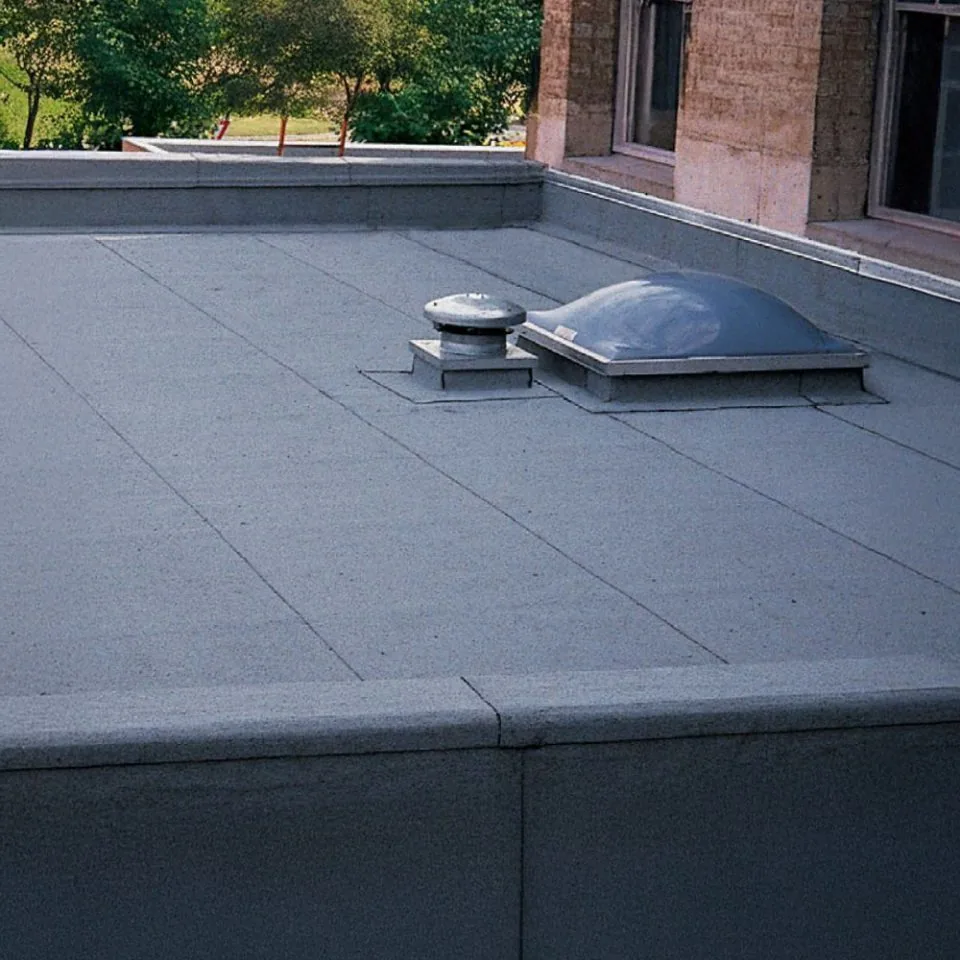
We repair and replace Versico membranes, and we run the response in a fixed order for each building: safe access, interior protection, temporary dry-in, repair boundary. The facility director receives one dated note per building, so decisions can be made in order of risk instead of order of arrival.
Triage by Water Path
An active water path means water is moving into the building now. It outranks everything else. Next comes a slow leak over valuable contents or sensitive equipment. After that, stains with no confirmed active path, which are checked on a scheduled visit. The ranking is written down, and each building's entry says what was done, what remains uncertain and when the next update arrives.
Triage also decides access. A roof that cannot be reached safely in ice or wind gets interior protection first and the roof visit later. A roof with a hatch, a ladder and a clear route gets a crew immediately. Photographs of the access route go into the note, so a second crew can follow without a phone call.
Dry-In Materials by Building
A crew that serves several buildings in one day carries a kit matched to what each roof is made of. Reinforced membrane strips for thermoplastic sheet, tape and primer for rubber, mastic and fabric for stubborn corners, and battens and tarps for open areas the kit cannot cover. The kit is chosen from the identification step, not guessed from the brand, so the first building's materials do not get carried to the second by habit.
Each temporary repair is photographed and entered with the date, the location, the material and the expected hold time under the current weather. The note states what the repair does not cover. If the roof needs interior protection beyond the dry-in, such as tarps over inventory or drip containment under a wet ceiling, that is listed beside it with the person who authorized it.
These records make a second visit shorter. A returning crew reads the note, goes to the logged location and removes the dry-in cleanly, rather than hunting for what the last crew left.
Single-Ply Families
Versico sells rubber and thermoplastic single-ply membranes, and the family on the roof decides the repair. EPDM splices and tape joints behave differently from the heat-welded seams of TPO and PVC. Insulation boards under the sheet may be polyiso or another type, and the attachment method may be mechanical, adhered or ballasted. We identify each by observation and, where records are thin, by a small core.
The identification goes into the portfolio file by roof section. Across several buildings, patterns appear: the same flashing failure on three roofs installed in the same period, or the same drain problem on every roof with one drain layout. Those patterns can change the repair plan from a series of single fixes to a coordinated program.
Portfolio Planning
Owners with many roofs benefit from one rating scale. Each building gets numbered sections, ratings, photographs and a repair priority. The ratings feed a multi-site roof program that orders the work by risk and by budget year, instead of by whoever calls loudest.
A program also supports roof asset management: the file tracks condition, repairs and expected service life for each roof, so a replacement is planned before it becomes an emergency. Property managers in Lowell, Dracut, Billerica and Chelmsford can hold all their roofs on the same schedule, with each town's building approvals confirmed project by project.
Dracut identifies nine business districts, while Billerica markets everything from small storefronts to large industrial space, so a portfolio spread across such towns may span many sizes and uses. Age and exposure differ building to building too, and the file handles each separately.
Perimeter and Attachment Review
Across a portfolio, the roof edge is the most consistent source of storm damage. Wind lifts edge metal, loosens fasteners and finds an unsealed lap. On a mechanically attached sheet, fastener rows near the perimeter carry the heaviest uplift. On an adhered sheet, bond strength at corners and edges matters most. On a ballasted roof, displaced stone leaves the edge exposed. We check each according to its attachment method and record the findings by section.
The repair order puts edges before field work. A sealed edge protects every square foot behind it, and a lifted edge can turn a small repair into a large one in a single gust. After a storm, the edge walk comes first, before the stain search, and the temporary measures at the edge are fastened to survive the next storm, not merely the last one. The city's major hazard list includes hurricanes as well as winter storms, so the wind exposure is one this crew plans for in every season.
Weather Holds and Return Windows
Precipitation at the station reaches 48.51 inches a year, 5.00 of them in October and 4.54 in December. A roof program cannot count on a long dry season. Permanent work happens in windows, and each repair that waits for one carries the price of keeping its temporary dry-in sound. The cost update lists that price explicitly.
The city's hazard plan lists nor'easters, snowstorms and ice storms and records 126.5 inches of snow in 1995. We treat those as planning context for access and drainage. They do mean the fall checklist runs early: drains cleared, edges fastened, temporary materials staged.
Replacement Sequencing
When several roofs approach replacement, sequencing matters. The worst roof goes first, but a building with a lease event or a planned sale may move up. For filings from July 1, 2025, the tenth-edition code governs, with the 2021 IBC as its base; each town's energy rules are confirmed before sequencing is fixed. A replacement scope lists insulation, cover board, membrane, edge metal and drainage for each building, with the confirmation noted.
Owners who compare makers will see overlap with Carlisle SynTec in the EPDM, TPO and PVC categories, and with Johns Manville in insulation and layered systems. The roof in front of the crew decides what is ordered.
Commercial Roofing Questions
Which roof gets the first crew when three are leaking?
The one with water moving into occupied space or over sensitive contents. Slow stains and unconfirmed paths follow, each on a dated schedule.
What does one rating scale buy a manager?
Comparison. Sections on different buildings can be ranked against each other, so repair money goes to the highest-risk roof first.
Can repeat failures across roofs be spotted?
Yes, when the same detail is logged on every building. A repeated flashing or drain problem turns three separate repairs into one planned correction.
How are replacements ordered across a portfolio?
By condition first, then by lease, sale or budget events. The file shows the readings behind each position in the queue.
Does every town in the region follow the same energy rules?
Not necessarily. The state energy code is the base, and municipalities may add stretch provisions, so each project is confirmed with its own town.