Slope first: standing seam is a metal roof for slopes, not for flat roofs, and the pitch decides whether the system sheds water by gravity alone or depends on the seams. For a facility director in Lowell, MA, the question is which of the building's roof sections are steep enough, what the panels are made of, and how the roof handles the sliding snow that comes with winter. We start on the roof with a level, a camera and a list of every seam, clip and penetration.
With the roof read, the scope decision follows: repair, restore, retrofit over the existing panels, or replace. The cost of each, and the weather window it needs, go on the page.
Panels, Clips and Concealed Fasteners
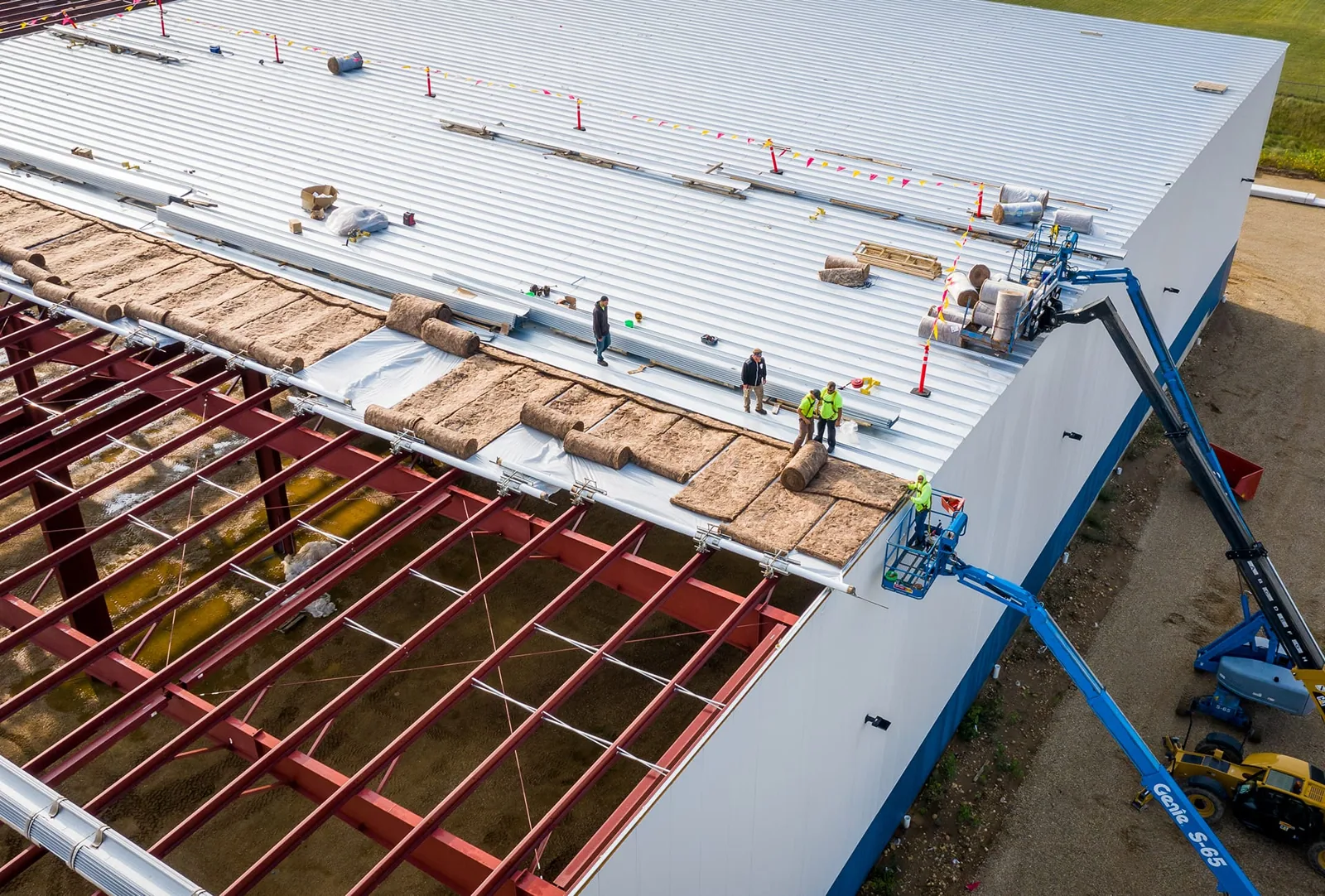
A standing seam roof is made of long metal panels with raised edges that interlock or are mechanically folded over each other. The fasteners are hidden: clips attach to the deck beneath the seam and hold the panel while letting it move. Because no screw heads sit in the flat of the panel, the water path is the seam itself, up above the flow of water, and that makes the system durable when installed well.
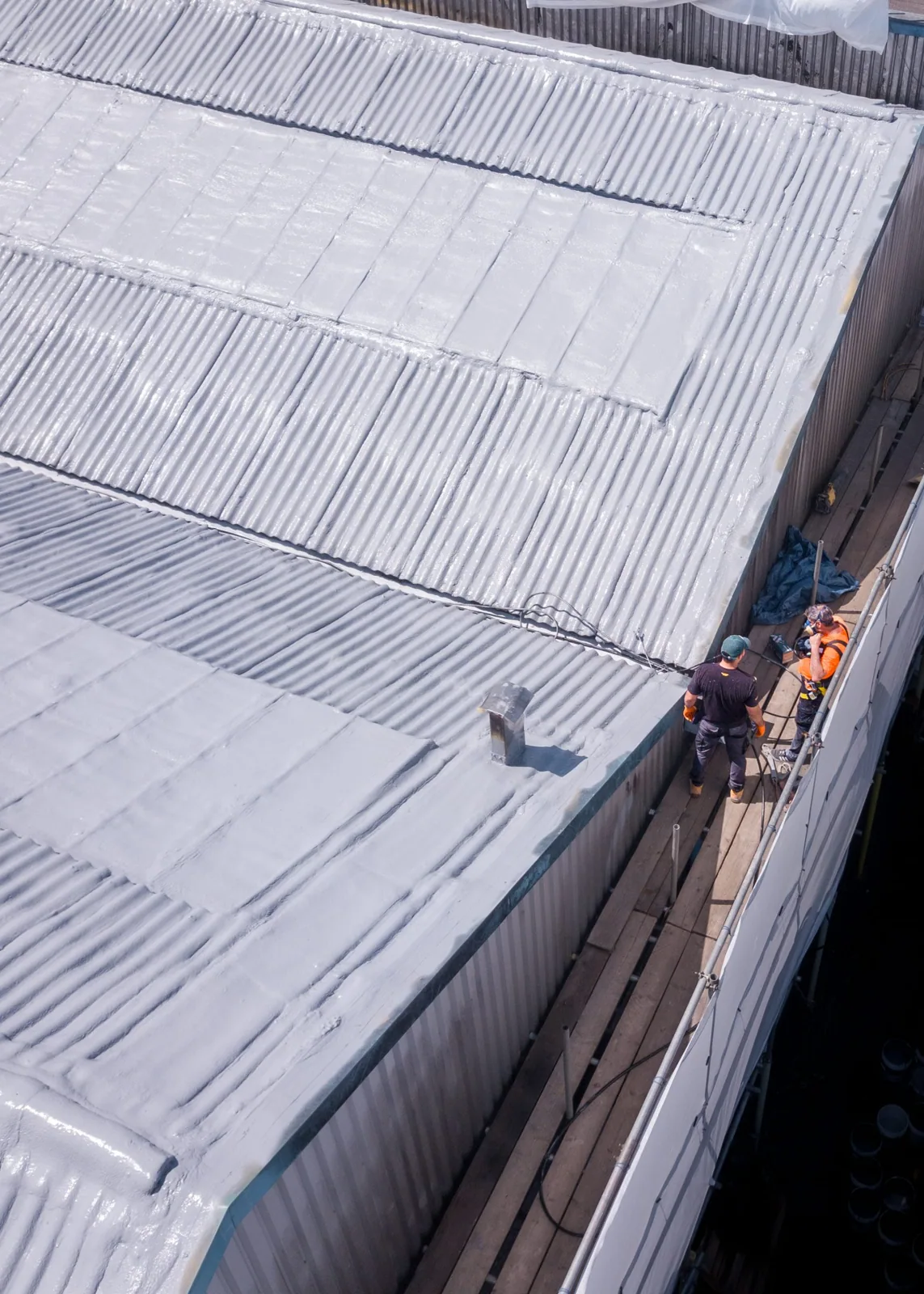
Panels are steel or aluminum, commonly with a baked paint finish, and come in a range of gauges and profiles. Finish is a maintenance item that is easy to overlook until rust shows: scratches that expose bare steel start rust at cut edges and fastener points, and a chalked finish on a sun-facing slope may be a candidate for a silicone coating restoration before the panel itself fails. The gauge, the seam height and the clip type decide wind resistance and how the panel handles movement. The scope names each, because the roof's wind rating and its expected life follow from them. Underneath the panels, a slip sheet or underlayment separates the metal from the deck and adds a second water barrier. On low-pitch sections the underlayment is a high-temperature membrane that can handle the heat that builds under dark metal in summer and the cold that grips it in winter.
Thermal Movement and Clip Design
Metal expands and contracts with temperature, and a long panel moves noticeably between a January morning and a July afternoon. Lowell's 1991-2020 NOAA normals sit at 24.9 degrees for January and 72.8 for July, with wider extremes on each side. Floating clips let the panel slide, and a fixed clip pins it at one point so movement goes in one direction.
When clips seize, are installed wrong or hold a panel too tightly, panels buckle, seams open and fastener holes elongate. We watch for oil-canning that has become deformation, for seams that have lifted and for rubbing at penetrations, since each shows that movement is not being absorbed.
Snow Retention and Sliding Loads
Snow slides off a smooth metal roof, and it slides all at once. Sliding snow is a real design issue in a city whose hazard materials record 126.5 inches of snow in 1995 and list snowstorms, nor'easters and ice storms as major hazards. Snow guards or rails hold snow on the roof so it melts in place, protecting people, vehicles, lower roofs, gutters and entrances below.
Retention hardware is attached to the seams with clamps or to the panel with sealed fasteners. Layout follows the snow load, the panel type and what lies beneath the eave. A gutter or lower roof under a long panel slope without retention is a damage claim waiting for the first thaw. We check retention on every walk and add it where it is missing. Ice is a second concern. Ice dams form at the eave where heat leaking from the building melts snow that refreezes at the cold edge, and the dam pushes meltwater under the panels and trim. Proper insulation, ventilation and an ice-tolerant eave detail reduce it, and the inspection record notes any staining below the eave that points to it.
Seams, Flashing and Penetrations
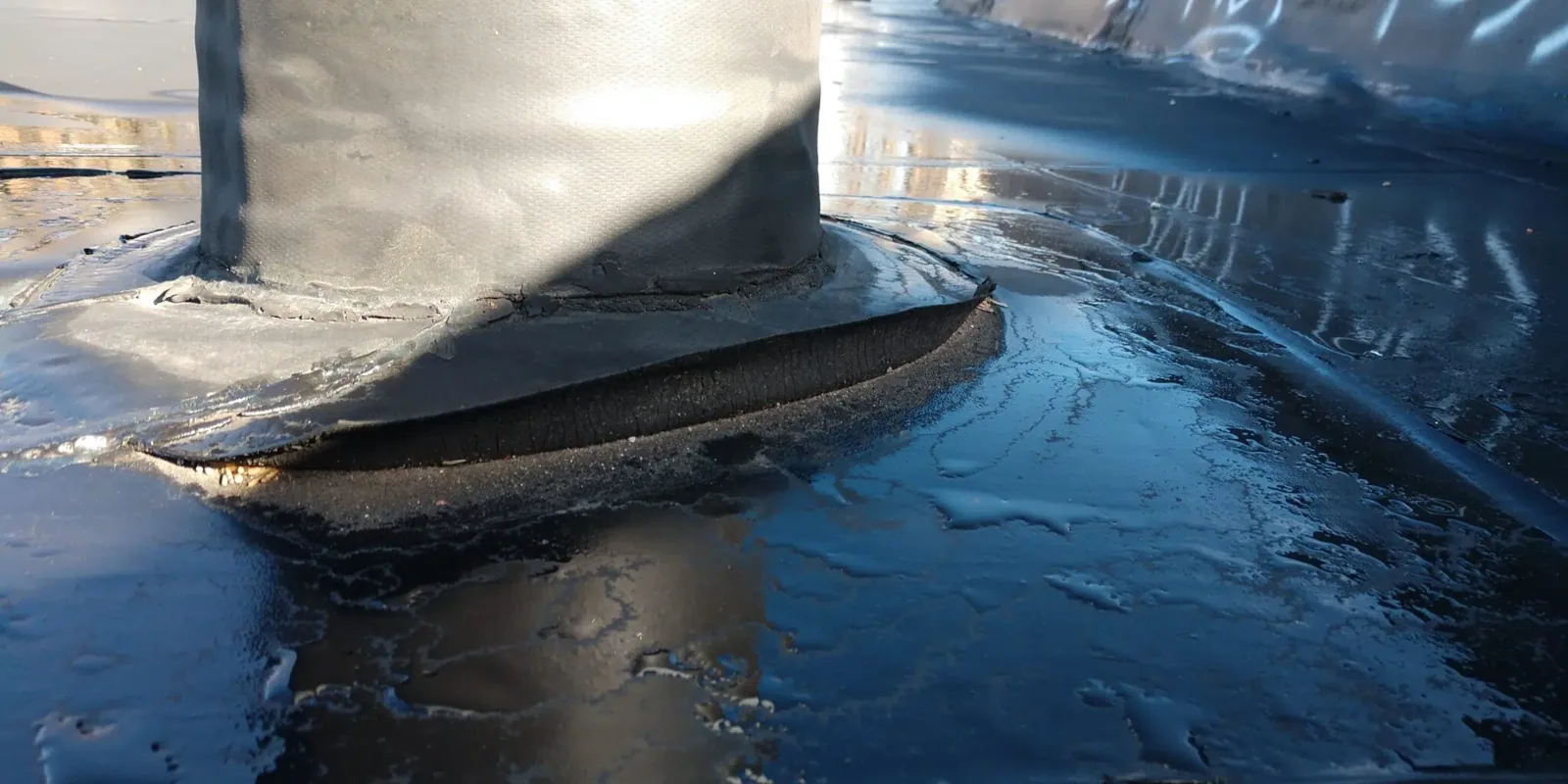
The failure points on standing seam are not usually in the field. They are at the eave, the ridge, the rake, the transition to a wall and every penetration. Sealant dries and cracks, boots split, closures leave gaps and trim lifts in wind. A rooftop vent or curb breaks the pan, so water must be diverted around it with a cricket or custom flashing.
A flashing failure repair on a metal roof means removing the old sealant, cleaning, installing the correct flashing and resealing with a compatible product. Mismatched sealants fail early, and fastener holes drilled in the flat of a panel for a quick fix often leak later. Our scope shows how each repair is made. Closures between the panel and the trim, the foam or rubber shapes that seal the profile at eaves and ridges, are small and cheap, and when they are missing or crushed, wind-driven rain and snow enter at the ends of every panel. We replace them with the profile-matched type whenever trim is touched.
Wind and the Lowell Hazard Record
Hurricanes and nor'easters appear among the hazards Lowell's mitigation report lists, and wind loads at corners and edges are highest. Standing seam resists wind through its clip spacing, seam engagement and panel gauge. Edge and ridge details take the heaviest load, and trim is fastened more closely at those zones.
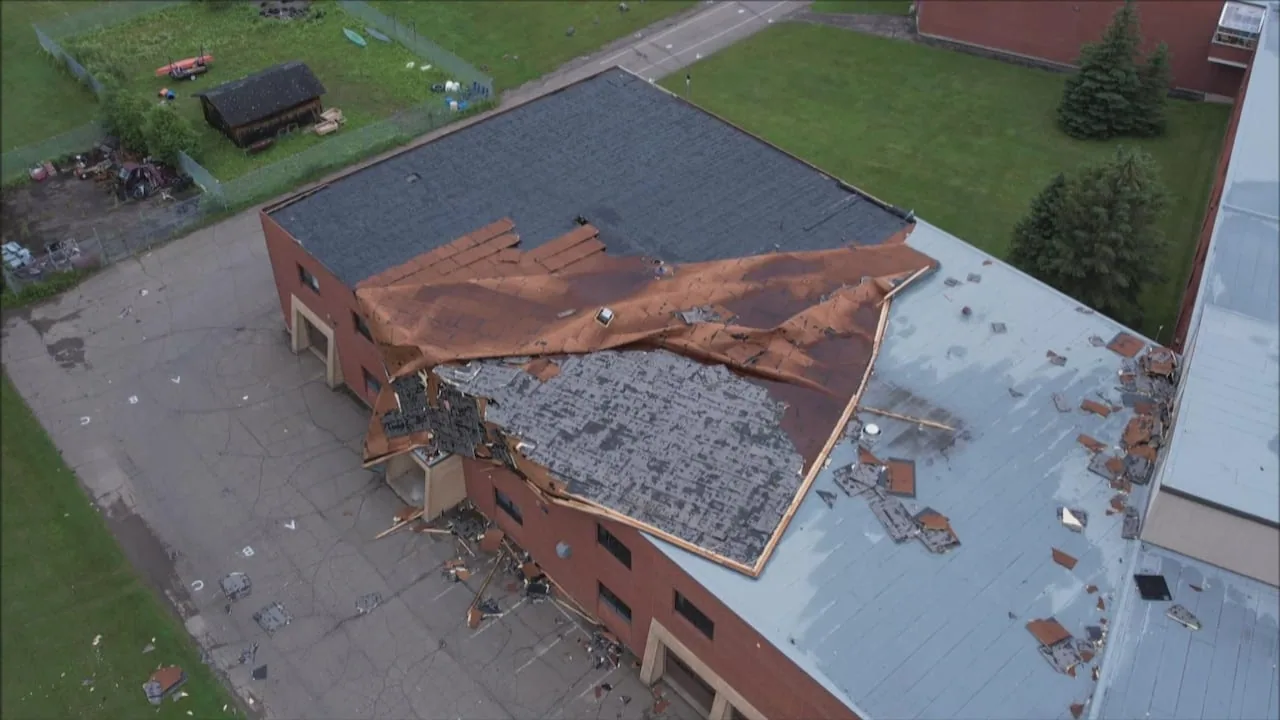
After a storm, we walk the roof for lifted trim, loose panels, popped seams and dented panels, and record each with photographs and a location on the roof sketch. A wind damage repair restores clip engagement and fastening before cosmetic issues are addressed.
Repair, Retrofit or Replace
Standing seam can sometimes be restored: seams cleaned and re-sealed, clips replaced, coatings applied. Where an old exposed-fastener metal roof sits on a building, a metal roof retrofit can install a new standing seam system over it with sub-framing. A full replacement removes the panels and begins again.
The governing code is the Massachusetts 10th edition, adapted mostly from the 2021 IBC, in effect since October 11, 2024 and exclusive for filings made on or after July 1, 2025. The base energy code may affect insulation under the metal panels, and the local requirement is confirmed before the scope is final.
Where Standing Seam Is Found Around Lowell
Standing seam is a metal option for industrial, institutional and retail buildings in the region, including in Chelmsford and Westford, both of which report access to I-495 and Route 3. The Historic Board reviews exterior work on buildings in the Downtown Lowell Historic District, and metal color and profile are part of it. A specific building's roof type is confirmed on the walk, and a job in Lowell begins with that confirmation.
Commercial Roofing Questions
What slope does a standing seam roof need?
The system has a minimum slope set by the maker. We measure the roof sections and tell you which ones qualify.
Why do panels buckle?
Clips may be seized or set wrong, so the panel cannot slide. Thermal movement then shows as buckling or opened seams.
Are snow guards needed in Lowell?
On long slopes above entrances, walks, lower roofs or gutters, yes. The layout follows the snow load and what lies below.
Can fastener holes in the panel be sealed?
Quick fixes leak later. The correct repair uses compatible flashing or replaces the damaged panel section.
How often should seams be checked?
Twice a year, in the fall and after the thaw, with attention to eaves, ridges and penetrations.