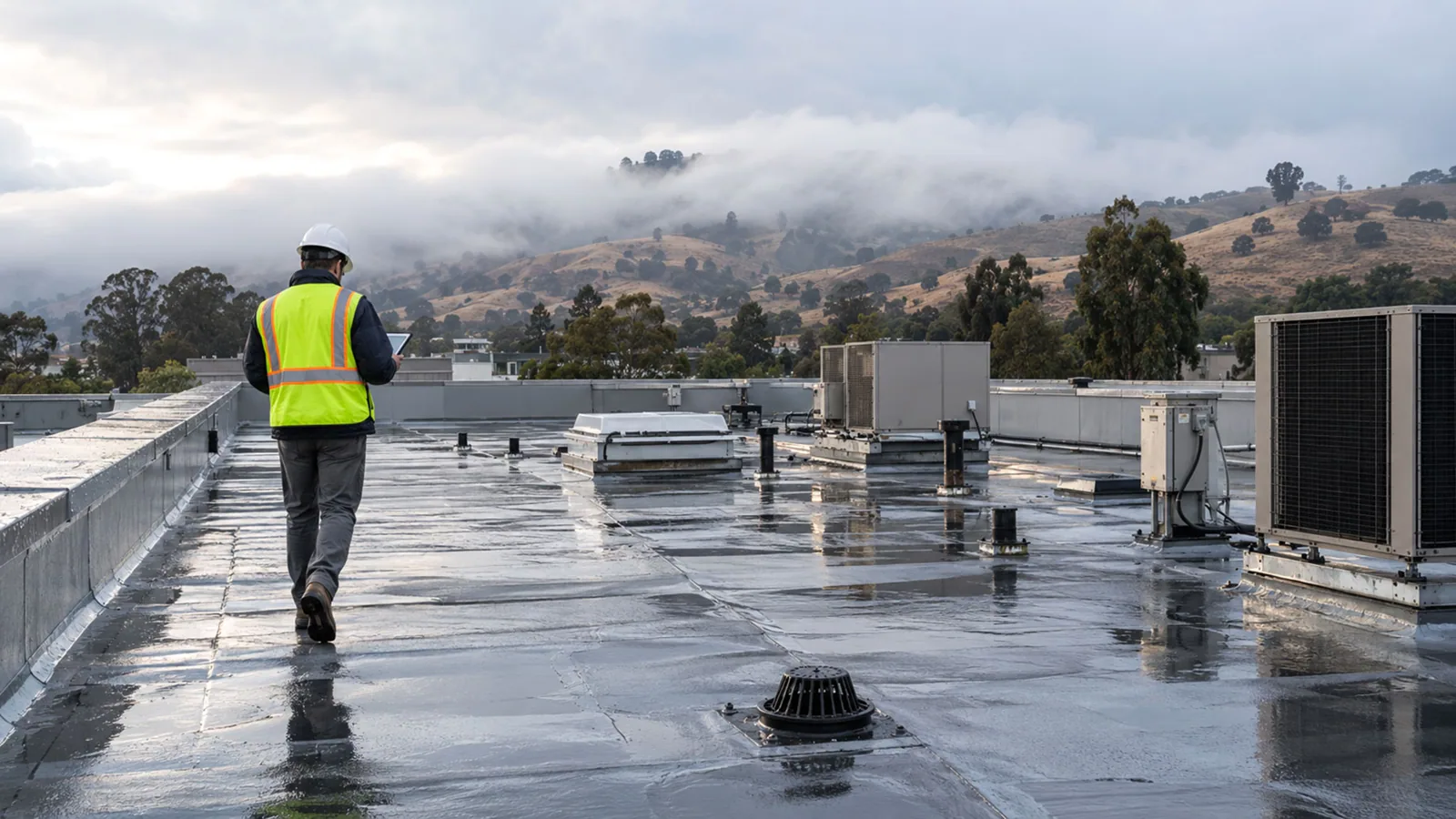
Westford, MA has more than one commercial setting, and the roof questions change with each. The town points to its business districts, the historic town center, Forge Village, the Route 110 corridor and its commercial office parks. A leak report from an office park needs a different first hour than one from a small building in the town center. Location of the water, contents below it and safe roof access come first, and the response is sized from those three answers.
The inspection that follows is written for the person who has to approve spending. It separates the temporary dry-in from the permanent repair and puts a price or a test recommendation on the next update. Emergency response runs all day and night, every day of the year, so the call does not have to wait for a weekday.
Commercial office parks
An office park is usually several buildings managed together, and the roof decisions follow that structure. A property manager may be answering to one owner, several owners or a condominium board, and each has a different approval path. We write the scope so each roof section and each building can be approved on its own, with shared items such as access, staging and lift placement listed once.
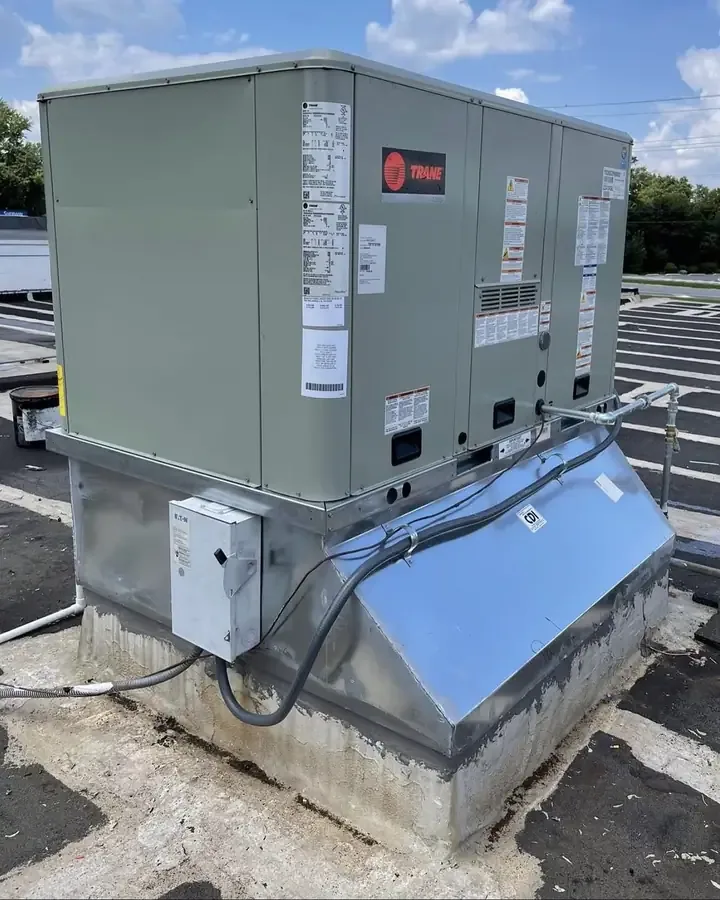
Offices carry a particular interior risk: wet ceilings over workstations, server closets and conference rooms. Before any repair, we locate the affected tenant space and record the protection used. Then the roof walk follows the water path back to a drain, a curb, a seam or a perimeter detail. Rooftop air handlers are a frequent source, so the equipment curb and support check comes early on any office roof. A park with a dozen roofs benefits from a multi-site roof program, because repairs can be ranked across the whole group instead of by whichever tenant calls first.
Route 110 and Route 40 buildings
Route 110 is named by the town as a commercial corridor, and its Route 40 study describes a major arterial running between Route 119 in Groton and Route 3 in Chelmsford, with plans for mixed commercial, industrial and residential use. A mixed-use frontage like that tends to hold buildings of different ages and different uses side by side. The inspection names the system on the roof, its attachment and its condition.
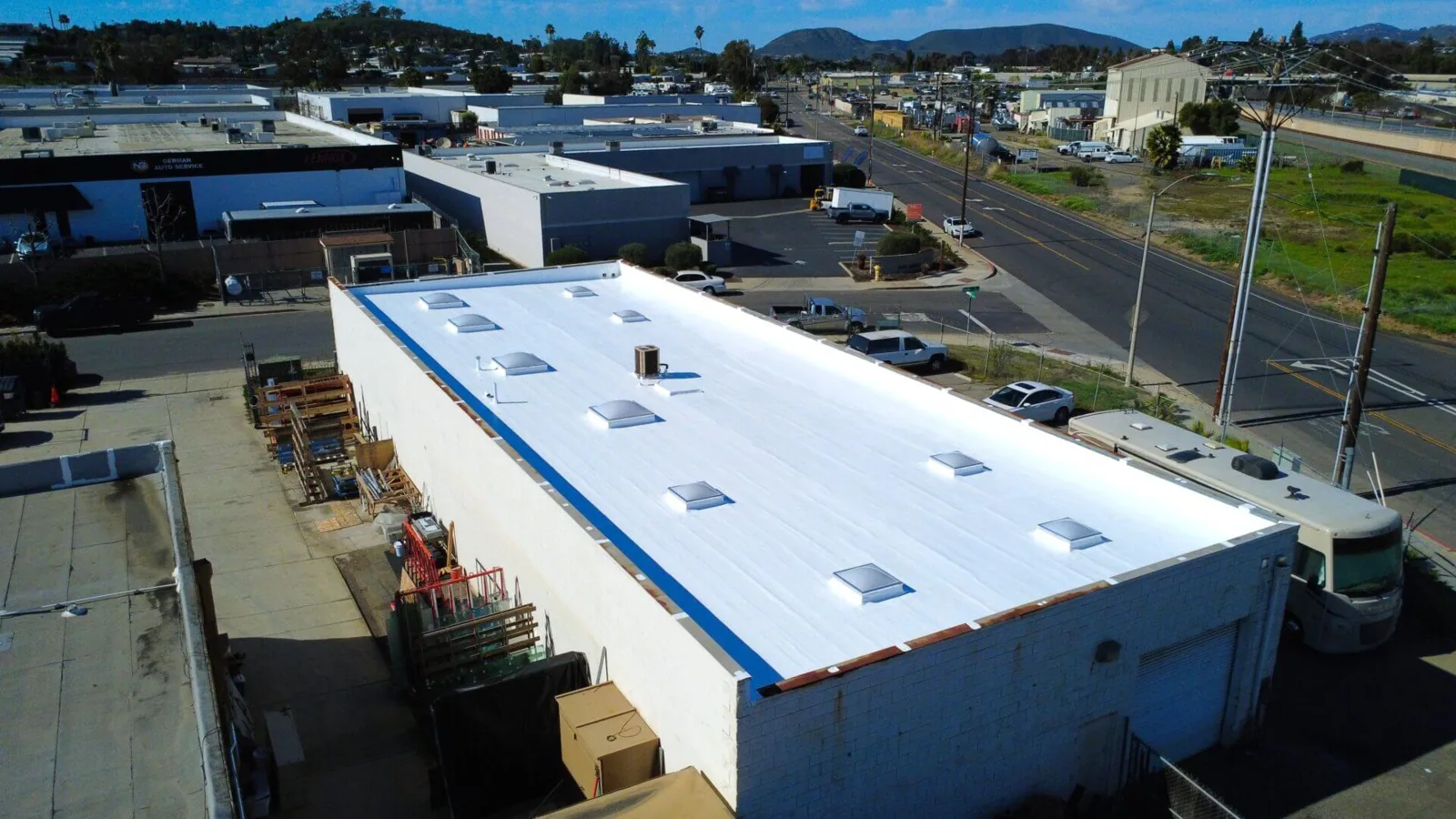
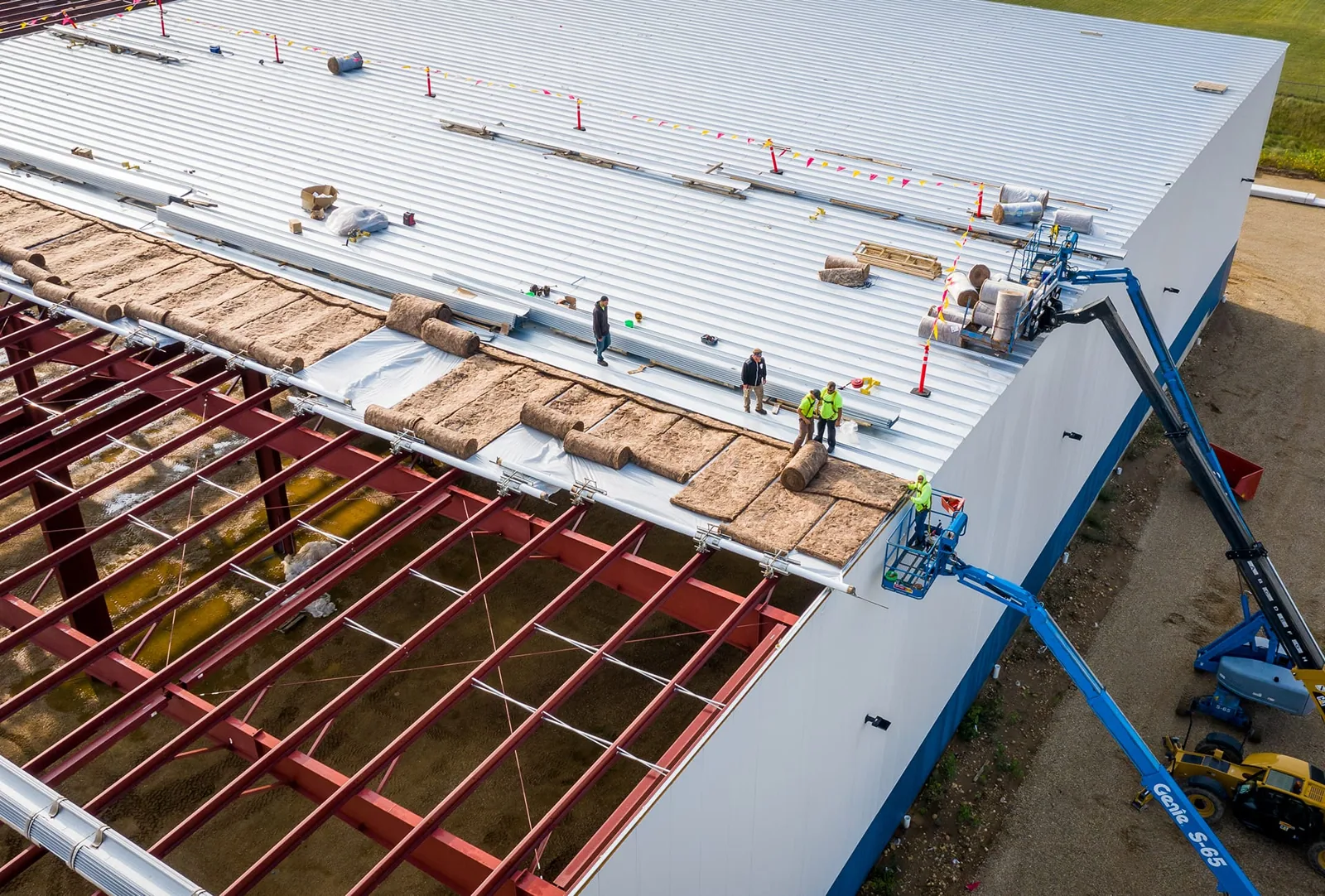
Industrial and service uses on these roads put weight and traffic on the roof through exhaust fans, makeup air units and vents. Every penetration is a flashing detail that has to stay watertight through winter movement. We photograph each one, mark loose sealant or split boots and group the repairs so one mobilization covers as many as possible. For buildings with metal roofs, retrofit metal is one option when the deck and framing can carry it, and the report explains the reasoning.
Town center and Forge Village
Smaller commercial buildings in a historic town center and in Forge Village raise questions that large parks do not. Parapets, tight roof edges and limited staging space can control the schedule. Access may mean a lift in a narrow lot or a street closure for a short period. We plan those constraints before the crew arrives and tell the owner which days need neighbor notice or a parking restriction.
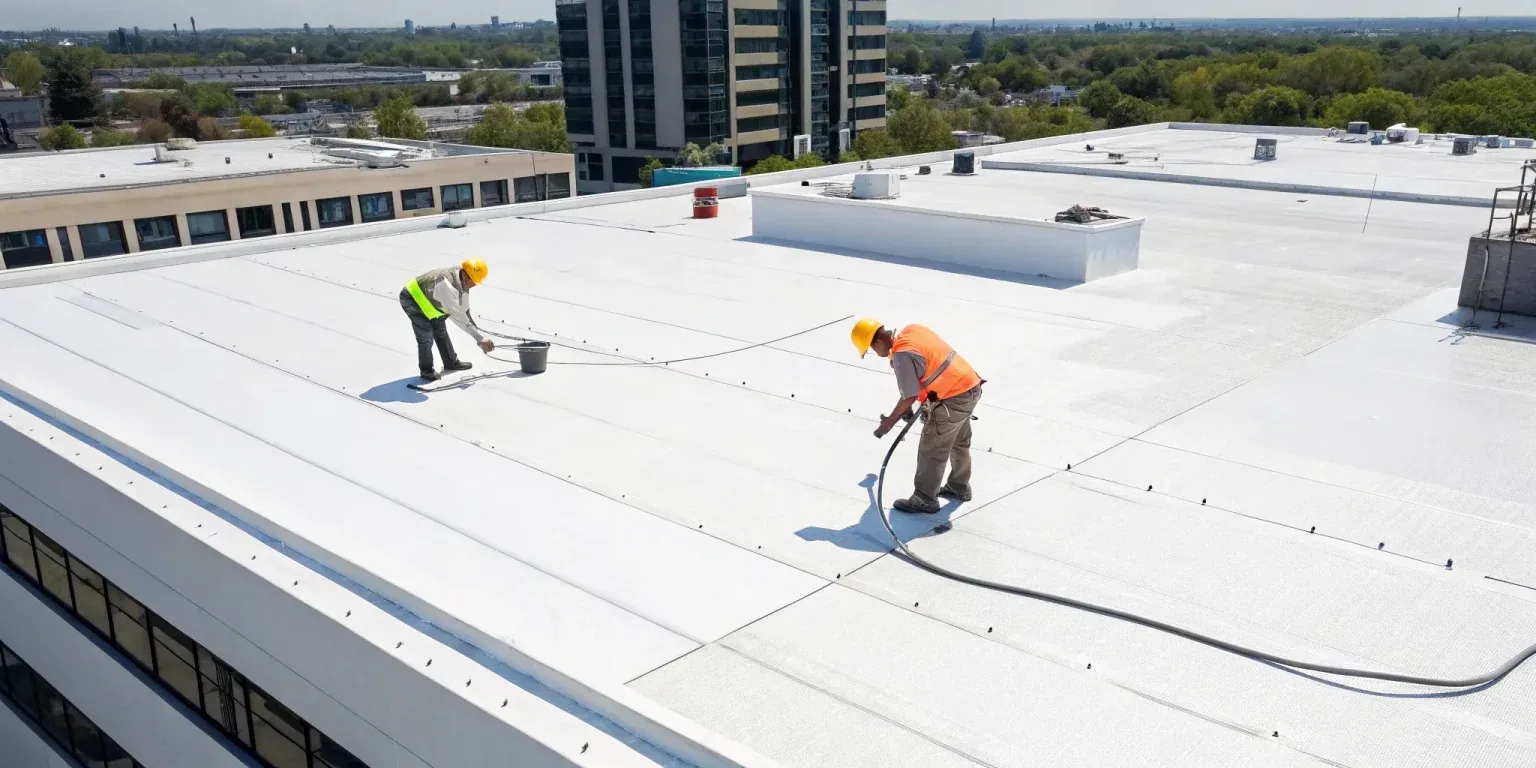
The walk reads the actual assembly: layers of membrane, insulation condition, flashing at walls and the drainage path. Some small roofs are best repaired and maintained. Others reach the point where repeated patching costs more than a new system, and the report says so with the evidence beside it. A commercial roof repair scope states the repair boundary in plain terms, and a maintenance plan keeps the small defects from spreading.
Winter exposure and drainage
Lowell's hazard planning lists nor'easters, snowstorms and ice storms as major natural hazards for the area, and its January mean sits at 24.9°F. For a Westford roof, those conditions argue for checking drains, scuppers and edge metal before the first heavy snow. Ice dams at the eave, clogged leaders and blocked overflow openings are common reasons water finds its way inside during a thaw.
The 1995 winter, with 126.5 inches of snowfall recorded in Lowell, is a reminder that snow load planning matters on low-slope roofs, especially where drifting piles against a parapet or a rooftop unit. We look at deck deflection, ponding after melt and any area where snow removal has damaged the membrane. If a storm leaves a leak behind, a snow and ice damage repair starts with a temporary dry-in and a written boundary for the permanent work.
Highway access and scheduling
Westford reports access to I-495 and Route 3, which matters for material deliveries, crane or lift trucks and fast response to a leak. It also matters for neighbors: a delivery window at a busy commercial building can be set so trucks arrive before tenants do. We lay out the material staging, the crew parking and the route a lift will take, so the property manager can brief tenants in advance.
The bill is set by the repair boundary, the roof system, lift or crane time, what is protected inside and how many trips the work needs. Cost also moves with the schedule: a repair that needs a weekend lift or an after-hours window is priced differently from one done during the week. Where moisture testing is needed first, it appears as its own line so the owner can decide whether to buy that information before committing to a larger scope. For Westford buildings near Chelmsford or Acton, the same approach applies, and the same plan carries back to Lowell itself.
Commercial Roofing Questions
How do you handle an office park with several roofs and several owners?
Each building gets its own roof section list, finding photos and price, while shared items such as lift placement and staging are listed once. That lets an owner approve a single roof without waiting for the rest. The manager gets a ranked list across the park, so the worst roofs are repaired first.
A leak appeared in a ceiling under a rooftop unit. Where do you look first?
The curb flashing, the unit's condensate line and the seam nearest the support. Water from a unit often travels under the membrane before it shows. We open the area as little as possible, record what we find and decide whether a patch, a rebuilt curb or a larger section repair is justified.
Can a small building in the town center get the same attention as an office park?
The inspection steps are the same: safe access, water path, drains, edges and penetrations. Size changes the logistics, not the standard. A small roof with limited staging may need a different lift plan, and the schedule works around neighbors and parking.
How does winter change what you can repair?
Cold, wet or snow-covered roofs limit adhesives and sealants. A temporary dry-in goes on first, with its boundary marked, and the permanent repair waits for a workable day. The next update gives the return window and whether the cost will change.
What documents should a property manager keep after roof work?
The written report with photos, the scope and the invoice, plus any record of interior protection used. Together they separate emergency work from permanent repair and support an insurance claim if storm damage is involved. We supply the report so the file is complete.