Confirm safe access first. After a wind event, a lifted edge or a peeled membrane corner can move again with the next gust, and nobody should walk that section until it is secured. The second step is the active water path: where is water entering, and can the space below be protected? Those two answers set the cost of the first hour, and they come before any talk of permanent repair.
The city's hazard mitigation work names hurricanes and winter storms, nor'easters among them, as major natural hazards. That is response-planning context. It does not tell us what happened to a particular roof, which is why the inspection note records what was found, where, and on what date. A facility director needs that note to separate wind damage from age, and to decide what is an emergency cost and what can wait for the return window.
Edge Metal and Perimeter Failures
Wind attacks a roof at its perimeter first. Air that is forced up the face of a wall accelerates over the parapet, and the pressure at corners and edges is higher than anywhere in the field. Copings loosen, fascia metal bends outward, and the membrane beneath begins to flutter. Once the membrane flutters, fasteners pull and the damage travels inward along the seams.
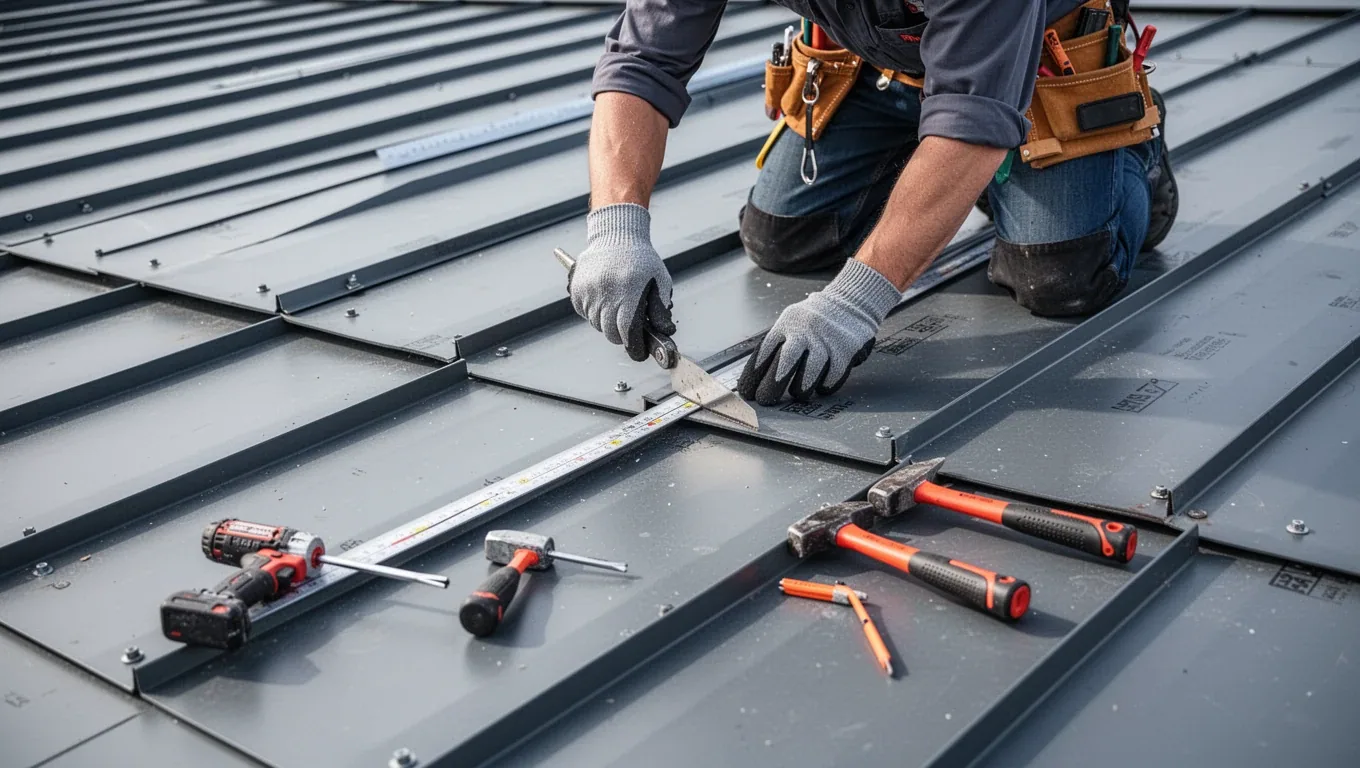
On the first walk we sight along each edge, press on the coping joints, and record every loose or displaced piece with a photograph and a roof section number. Securing edge metal and copings is usually the first permanent step, since a sound perimeter protects every repair made inside it. Where metal is bent beyond reuse, it is replaced with material that matches the profile and the fastening pattern of the original.
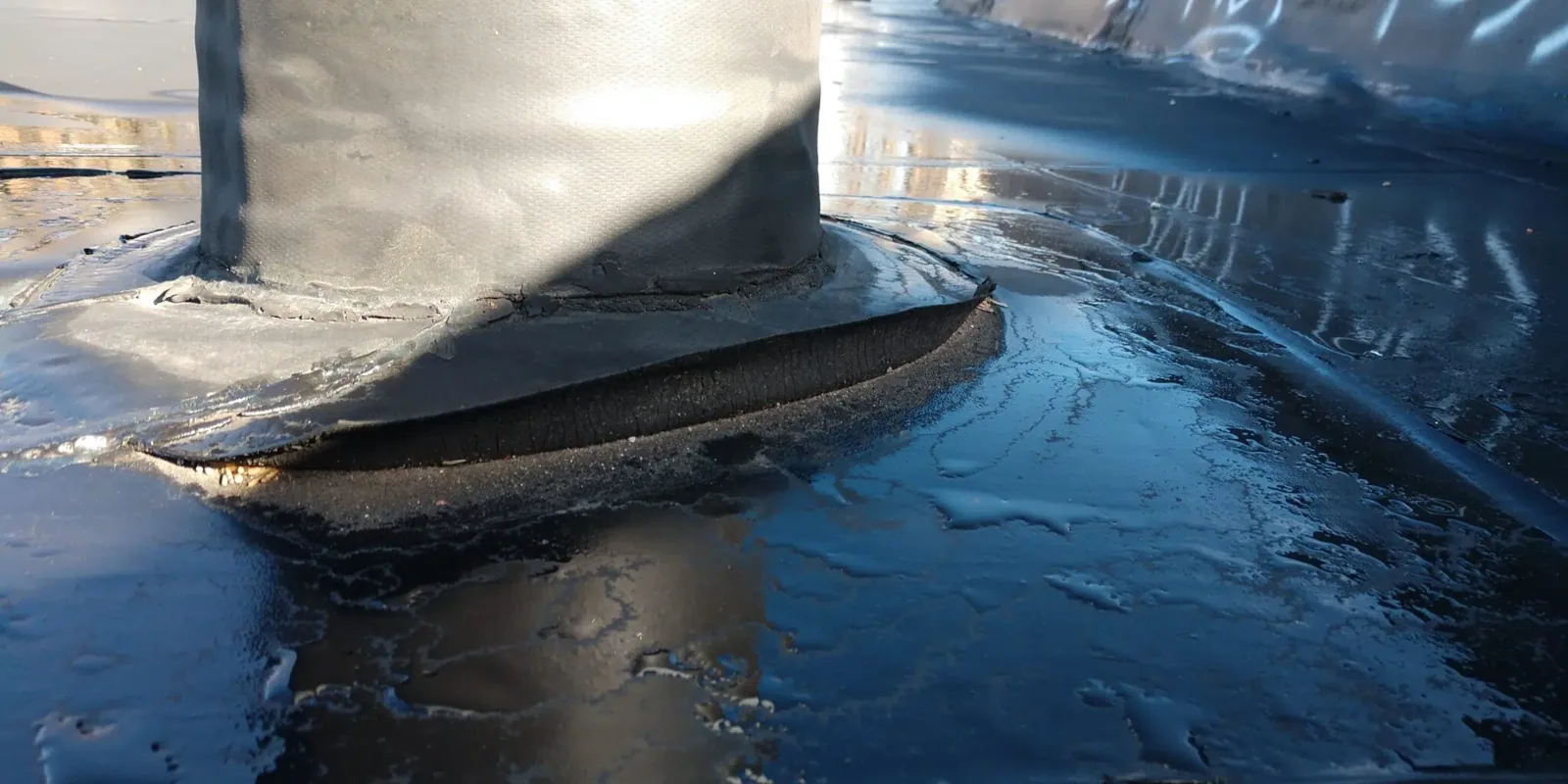
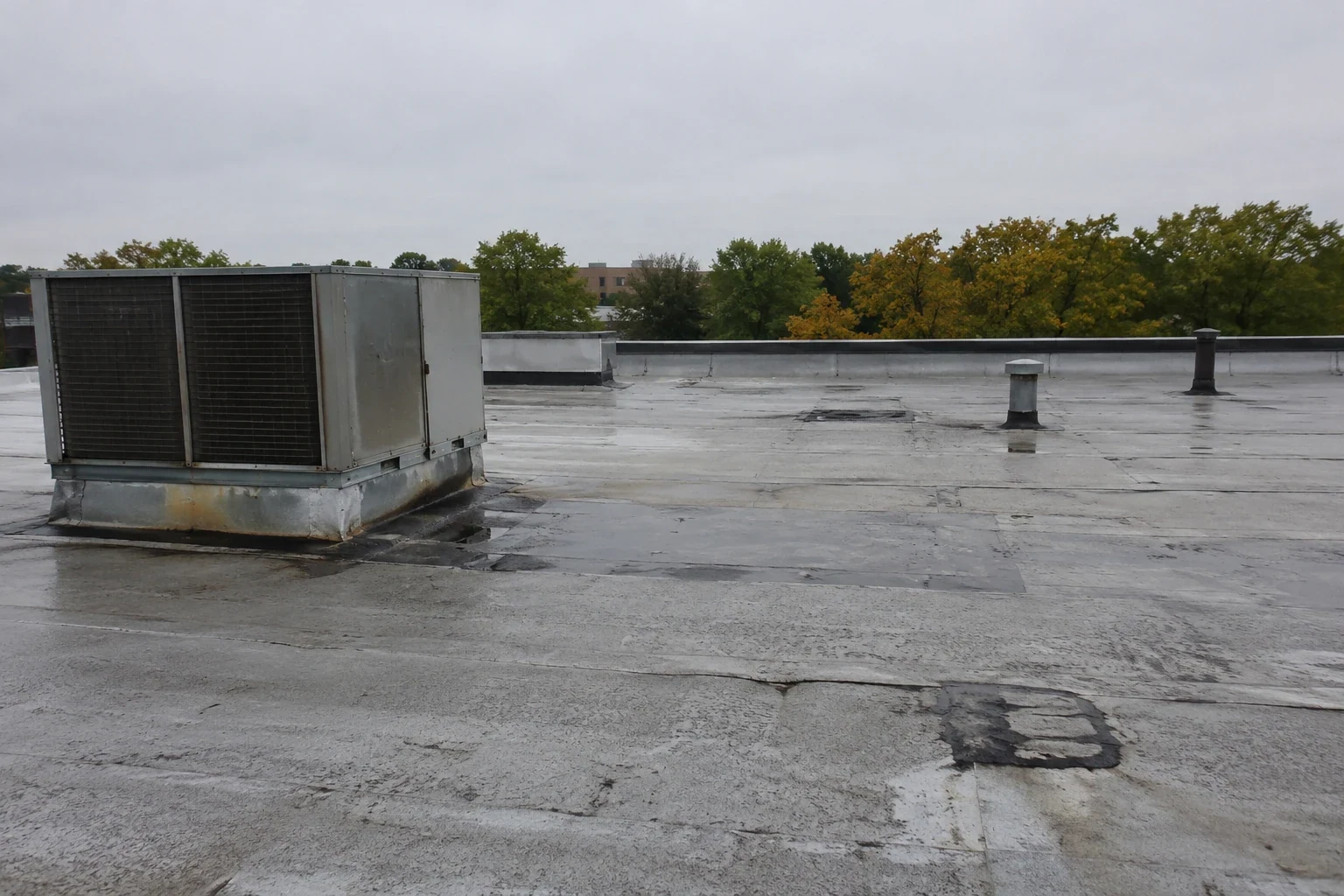
Wind also exposes the flashing at walls and equipment. A counterflashing that has pulled out of its reglet leaves the base flashing unprotected, and a rooftop unit that shifted on its curb opens the curb flashing. Both look minor from the ground. The flashing failure repair that follows fixes the cause, whether that is a fastener spacing, a sealant joint or a curb that moved.
Membrane Lift and Fastener Pull
In a mechanically attached system, the sheet is held by fasteners and plates at set spacing. Wind lifts the sheet between them, and over repeated cycles the plates work loose or tear through. A mechanically attached roof can show billowing, ripples near the edges and shiny fastener heads where the sheet has moved. In an adhered system, the failure is a bond line that has let go, leaving a blister or a peeled flap.
We map each area of lift on the roof plan and test the surrounding membrane by hand and by probe. The repair boundary extends past the visible damage to the point where the sheet is still sound. If the damage reaches the seams, the repair follows the guidance for seam failure repair. If it exposes insulation, a moisture check follows before the area is closed.
Snow and ice finish what wind starts. A flap of loose membrane holds meltwater, and freeze-thaw cycles widen the gap, which is why wind repairs ahead of winter get priority. Damage that shows up late in the season is often tied to the snow and ice damage it allowed.
Temporary Dry-In and Interior Protection
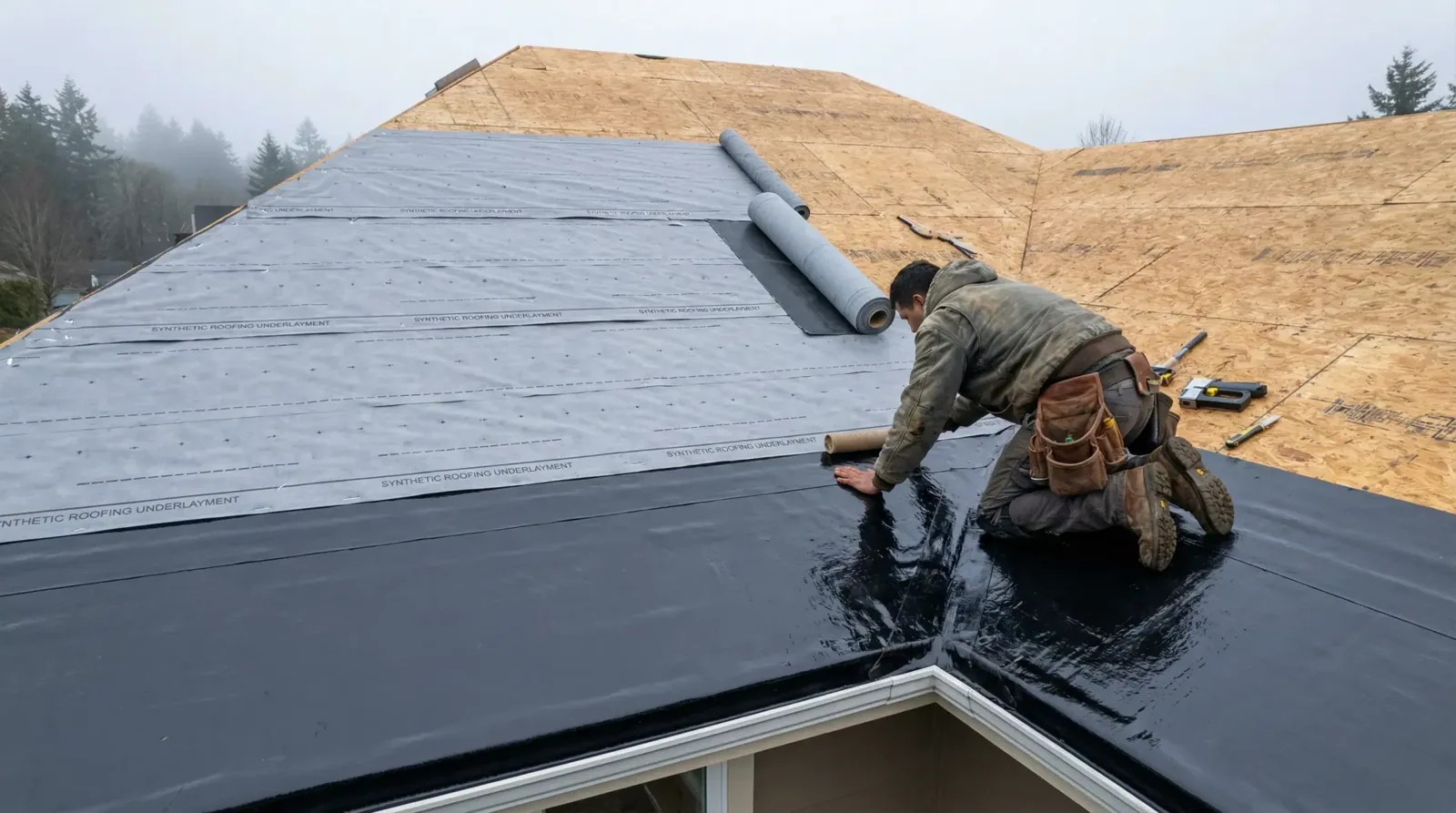
A temporary dry-in has one job: keep water out until the permanent work can be done under proper conditions. It may be a tarp ballasted along the edge, a sheet of membrane taped over the opening, or a patch set in sealant. Which one fits depends on the temperature, the wind, the substrate and how long it must last.
Inside the building, interior protection runs in parallel. Cover or move stock and equipment, mark wet ceiling tiles, and keep people away from electrical panels near a leak. The Lowell station averages about 48.5 inches of rain and melt a year, and October is among the wettest months, so a roof left open in the fall meets ordinary rain. We log the time the dry-in was placed, its method and any weather hold that delays the permanent repair.
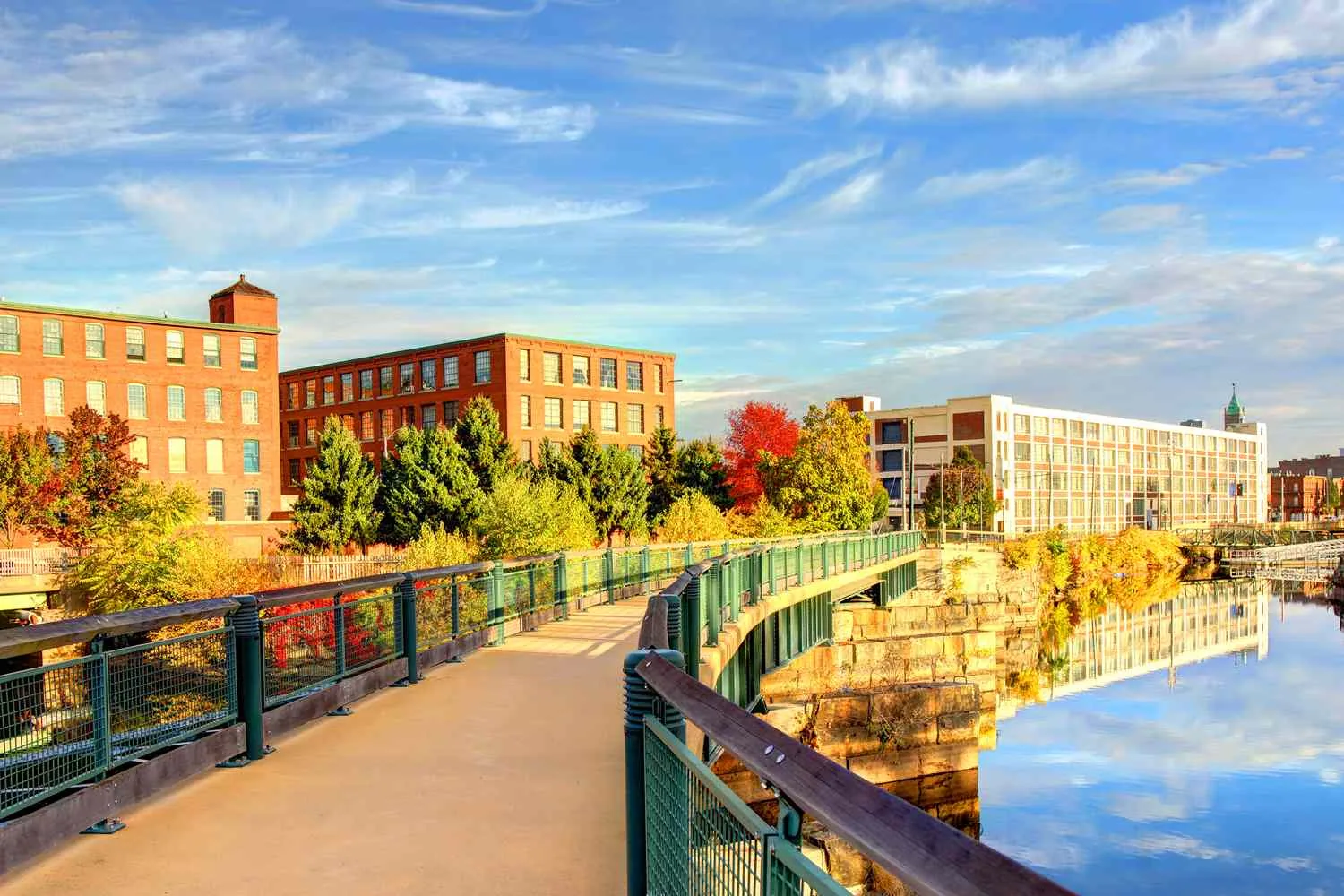
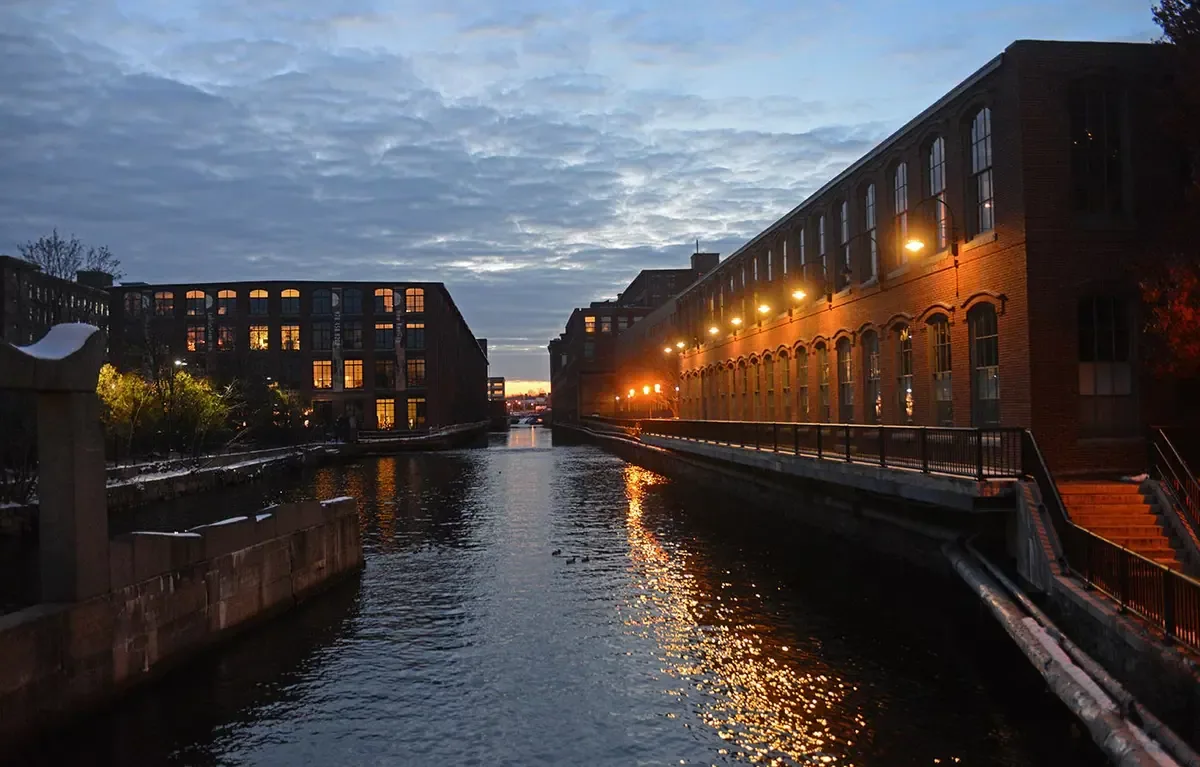
Crew access matters to the timing. I-93, I-495 and Route 3 meet at Lowell, and staging space near a building in the Downtown Lowell Historic District has to be checked, not assumed. We confirm the lift position, the delivery window and any street permit before the dry-in crew leaves, so the permanent repair is not delayed by logistics.
Code Review and Historic Districts
New Massachusetts applications since July 1, 2025 are reviewed under the 10th edition code alone, a state version of the 2021 IBC with its own amendments. A repair that replaces a large share of a roof can trigger code review, and the applicable local energy provisions must be confirmed for the project. We state those questions in the scope so the owner can raise them early.
Exterior work on a building in the Downtown Lowell Historic District, a zone that covers downtown's commercial blocks, mill yards and canals, goes before the Historic Board. Replacing a coping or a parapet cap on such a building can be an exterior change. Plan for that review in the schedule, and tell us before the crew orders material, so the replacement metal can be matched to what is allowed.
Cost Update and Return Window
The first cost update follows the inspection and covers the dry-in, the edge repair and a range for the membrane work. The second update follows testing, if moisture surveys or cores are needed. Each update names the scope decision it supports and the date the next one will arrive. For an owner filing a claim, the file also holds the photographs, the dates and the roof plan that claim documentation support depends on.
The return window is the first spell of weather suitable for the permanent repair. Adhesives and welds need a dry substrate and workable temperatures, so the window may be days or weeks out. The dry-in is built to last until then, and a follow-up date is set before the crew leaves. Owners with several buildings can compare the same report across Lowell properties.
Owners who already hold a maintenance plan can ask for a wind-damage line in it. A preventive maintenance visit before winter tightens loose copings and fasteners, and a visit after a major storm checks them again. Roofs that have a dated record from before the storm are easier to assess afterward, because the change is visible in two photographs of the same corner.
Commercial Roofing Questions
What determines whether a wind-lifted membrane can be reattached?
The condition of the sheet under the lift. If it is clean, flexible and free of tears, it can be reattached with the right adhesive or fasteners. A cracked or stretched sheet is cut out and replaced inside the repair boundary.
How is wind damage separated from normal aging in the report?
Photographs and location. Wind damage clusters at corners, edges and the windward side, with fresh breaks and clean tear edges. Aging shows up across the field as chalking, shrinkage and weathered seams.
Who decides whether a temporary dry-in is enough?
The owner decides, using the facts in the inspection note: expected weather, interior value at risk and the cost of a second visit. We give the options with prices so the decision is clear.
Does a repair on a downtown historic building need extra time?
It can. The Historic Board reviews exterior changes downtown, so the schedule includes review time. A like-for-like temporary repair is handled separately from the permanent change.
What records support an insurance claim?
Dated photographs, the roof plan with damage marked, the time of the first report, the dry-in method and the written scope. We assemble those into one file for the owner to submit.