Water over a storefront ceiling is a report with a clock on it. The first step in Acton, MA is to learn whether the unit is open, whether the leak is above merchandise or wiring and whether the neighbor's unit shares the roof section. Then comes a safe-access check, interior protection and a decision on temporary dry-in.

Acton's economic-development office promotes Great Road as a business and retail corridor with sidewalks and the Bruce Freeman Rail Trail nearby, and the town reports a new advanced-manufacturing unit for wireless-network technology that opened in 2026. Retail strips and a manufacturing site need different roof attention, and we treat them as two different jobs even when a single owner holds both.
Retail Strips Along Great Road
A strip of storefronts shares one roof, and the units below do not share one owner. A leak in one bay may start in the next. We trace the water from the stain back along the roof section, across party walls and over the demising lines, and we mark each unit on the roof plan. The record shows which tenant reported the leak, which units were checked and where the source was found.
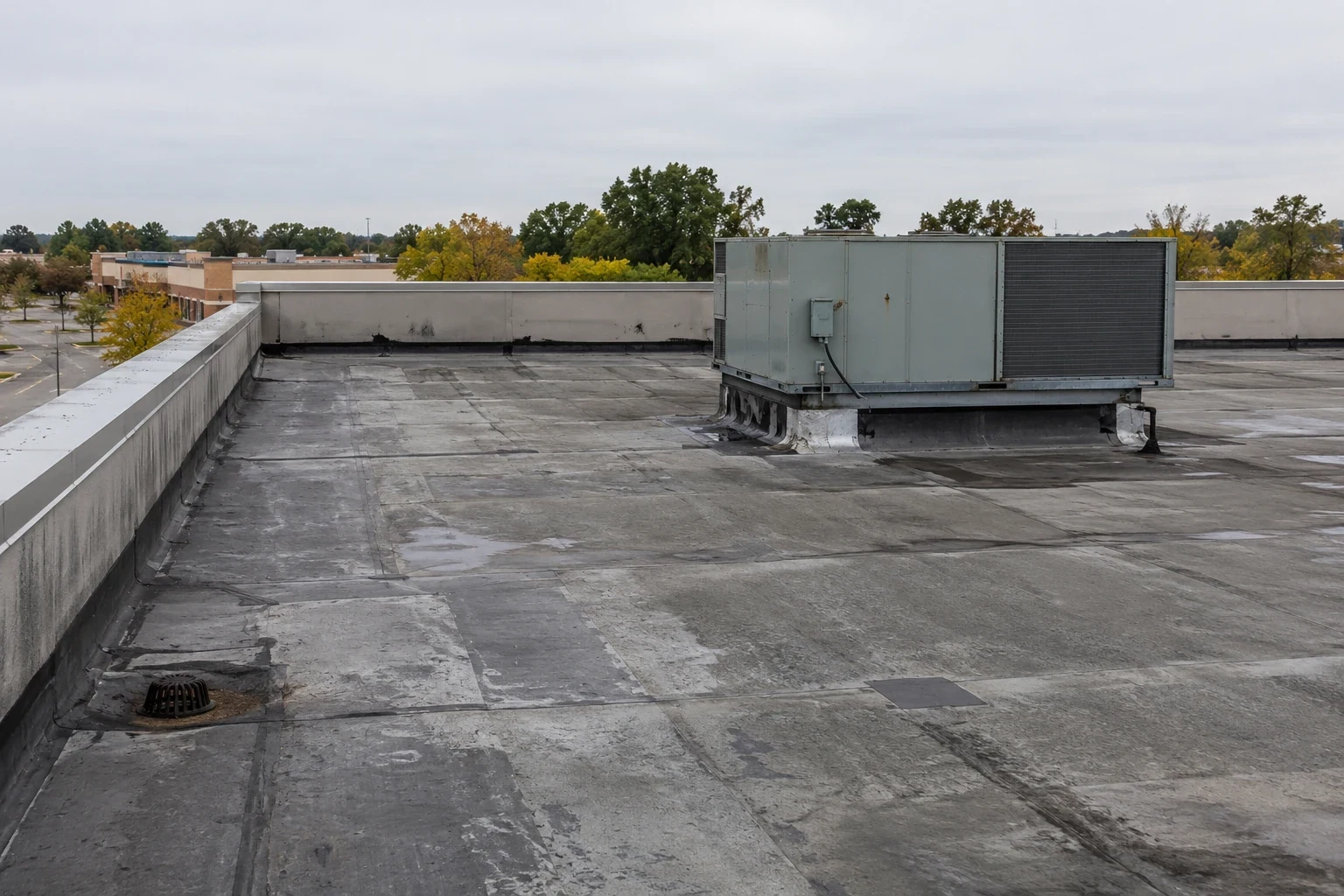
Front-of-store details deserve a close look. Canopy edges, fascia, rooftop signs and the parapet face the sidewalk, and any one of them can admit water. We check the flashing at each, test the sealant joints and photograph the drain path from the roof to the downspout. On a shopping center roof with many small penetrations, an old abandoned one is the first place to probe.
Drainage on a strip roof runs toward a few points. Scuppers at the back wall, interior drains and gutters along the front carry water from every bay, and one blocked outlet can pond water over several units. We clear and measure each outlet, record the standing water after a dry spell and propose a fix in order of cost: cleaning, a repositioned drain, or tapered insulation if ponding persists.
Vacant and Re-Let Units
The town has used a Vacant Storefront Program grant to support businesses along Great Road. A unit that changes tenants brings new rooftop equipment, new venting and sometimes a new sign. Each of those can open the roof. When a unit is re-let, we recommend a roof walk before the tenant moves in, so any penetration left from the earlier use is recorded and, if needed, closed.
Whenever a storefront turns over, the first walk lists curbs, capped lines and wall penetrations by unit, with photographs, so the landlord can price the work into the lease turnover, not into an emergency.
Light Manufacturing and Rooftop Equipment
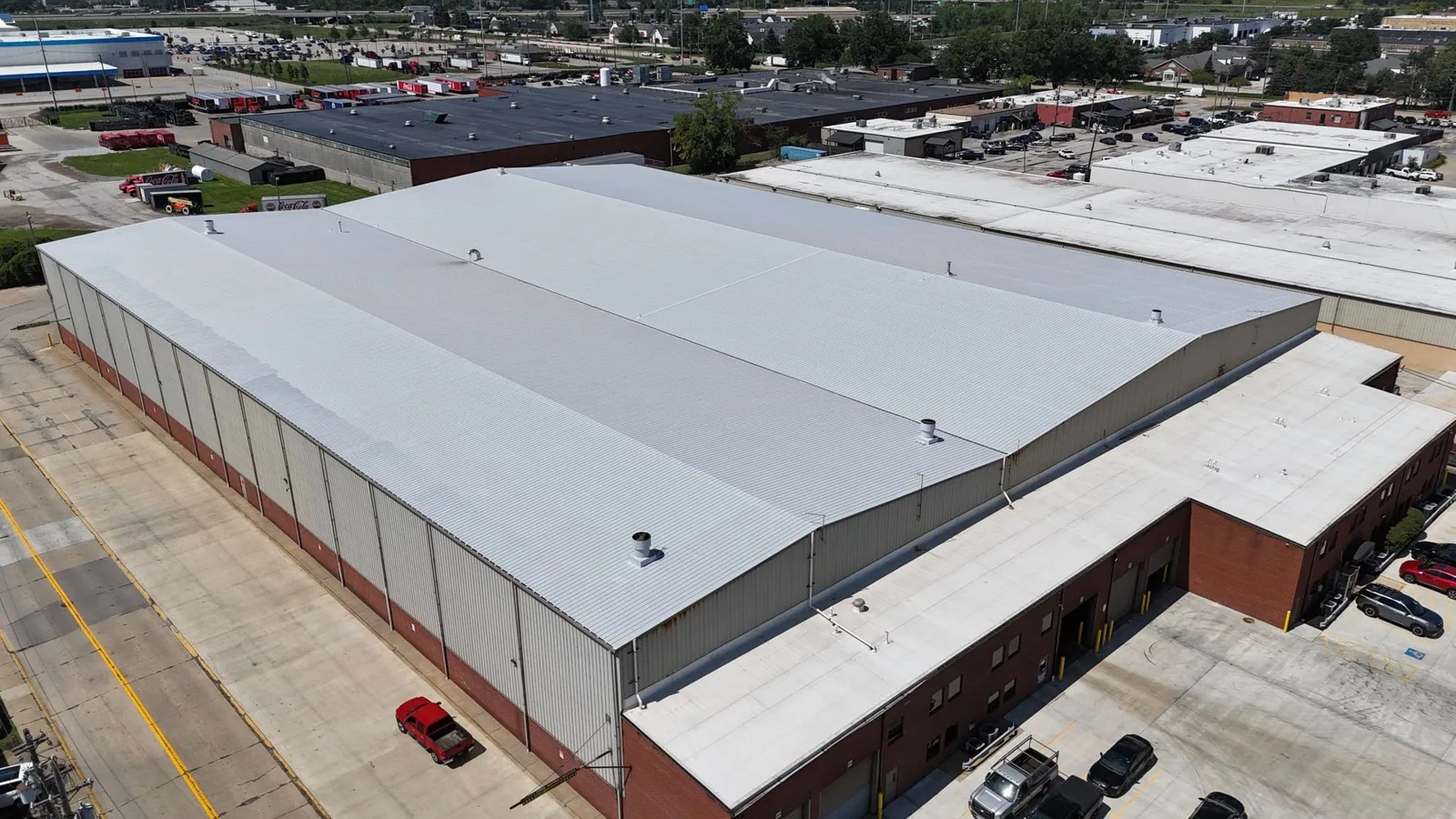
A manufacturing space carries more rooftop equipment than a storefront: exhaust, make-up air, process cooling and power feeds. We check each curb for fastening, flashing height and sealant, and we look at the membrane around the unit for wear from foot traffic and service visits. Walkway pads along the service route protect the roof from repeated access.
Where equipment is added or relocated, the structure and the drainage are checked first. A new unit changes the load and can block the water path to a drain. The scope shows both, and the plan for a manufacturing plant roof includes a list of utilities that cross the roof, so repairs avoid conduit and piping.
A new or expanding production space adds one more question: whether the roof was part of the project. If the building has been renovated, we ask for the date and extent of roof work so the inspection can compare the old sections with the new. A tie-in between them is photographed from several angles, since a seam at a renovation boundary is where movement and water meet.
Safe Access and Interior Protection
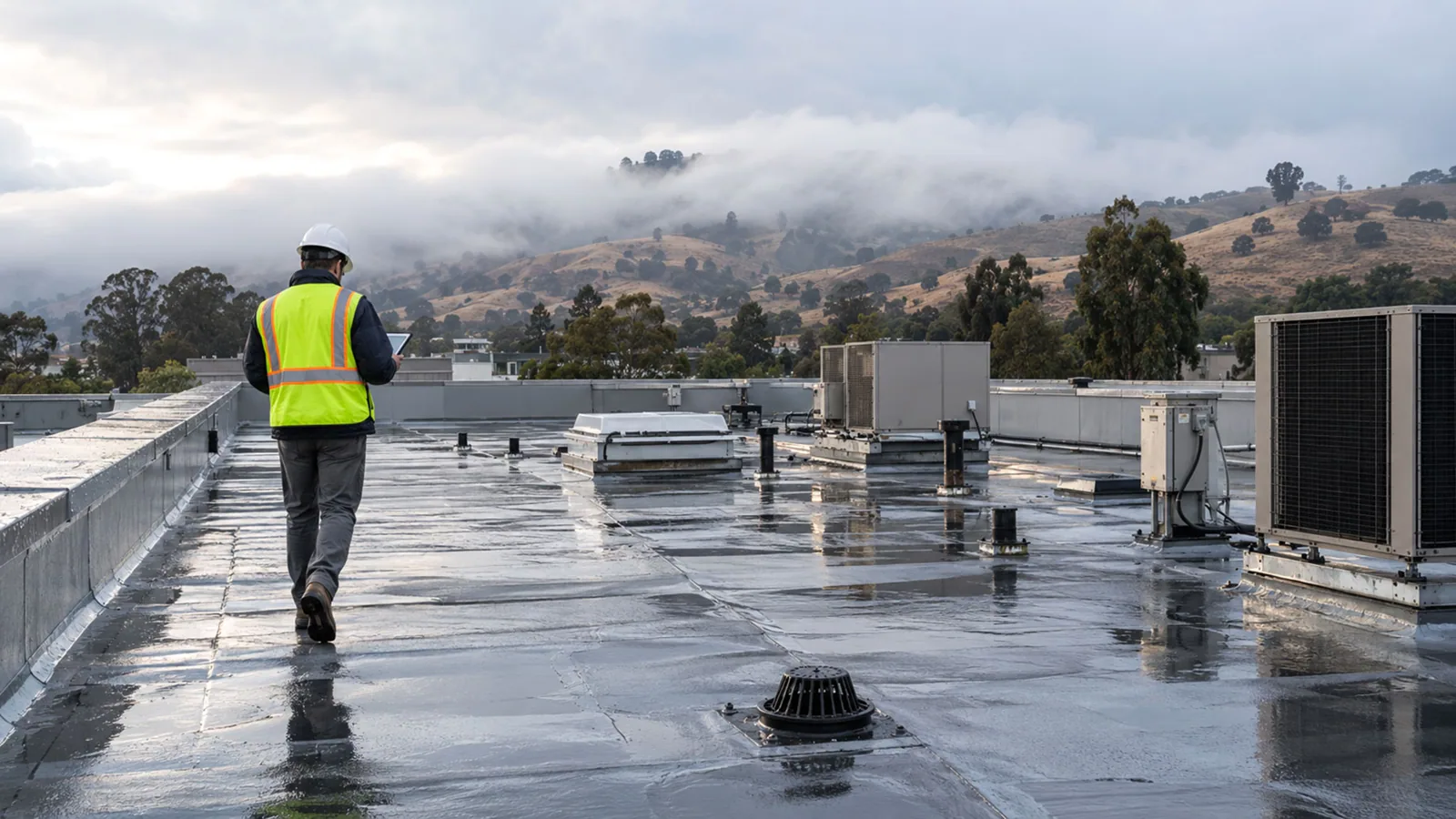
Before anyone goes on a roof, we confirm the route: hatch, ladder, lift or stair, and the condition of the edge. If the roof cannot be reached safely that day, the first response stays on the interior side. We move stock, cover equipment and place containment under the active drip, and we record what was done.
For a retail unit open to the public, the work zone is marked and the entrance kept clear. For an occupied manufacturing space, the supervisor tells us which line cannot stop and where electrical panels sit. Our occupied building reroofing plan carries those limits into the schedule.
Weather changes the first-response plan. In freezing conditions, tarps and temporary patches adhere poorly, so the dry-in may use mechanical fasteners and a sheet that can be re-secured. In heavy rain, interior protection takes priority and roof work waits for a safe window. The record notes the conditions at each step, so a later reader can tell why the temporary measure looked the way it did.
Regional Weather Context
Lowell, the nearest market city, collects 48.51 inches of precipitation a year by NOAA's 1991-2020 normals, with October and December among the wetter months, and its hazard report puts hurricanes, nor'easters and ice storms on its list of major threats. Acton roofs plan around the same regional pattern of regular rain and winter storms.
The plan is straightforward. Rain is regular through the year, so drains are checked in every season. Winter storms load roof edges and rooftop equipment, so edge metal and curb fastening are inspected before the cold months. A preventive maintenance visit in autumn covers both.
Repair Boundary and Cost Update
After the inspection, the update lists the temporary work done, the permanent repair, the options and the items still unknown. The repair boundary is drawn on the plan, and the price follows it. If the boundary moves because wet insulation extends past the visible stain, the update says so and shows the revised area. A landlord with several units can ask for the cost split by unit.
Timing is stated as a return window, with the weather hold that could move it. An owner with property in Concord or Littleton as well can have the updates compared on one schedule.
The last part of the update is a recommendation tied to the building's use. A retail strip with steady tenants may justify a repair program with a scheduled recover; a unit between tenants may be the right moment for a full section replacement, because the interior is empty and the downtime costs less. We show the figures for each so the owner can choose.
Commercial Roofing Questions
Who pays for a leak that crosses between two storefronts?
That is set by the lease, which the landlord holds. We trace the water to its source, mark each unit on the plan and give a cost split the landlord can apply.
Should a roof be walked when a unit changes tenants?
Yes, before move-in. Old curbs, capped lines and wall penetrations are easier to close when the unit is empty, and the record helps the landlord price the turnover.
What changes for a manufacturing roof?
More equipment, more utilities and a tighter schedule. We check curbs, protect the membrane along service routes and map conduit and piping before any repair is drawn.
How often should drains be checked on a strip roof?
In every season, since rain is regular through the year. A fall visit clears drains and secures edge metal before the cold months, and a spring visit reads what the winter did.
How soon does a cost update arrive?
After the inspection, in writing, with the first response step, the repair boundary and the items still unknown. The update also gives the earliest crew date and the weather hold that could move it.