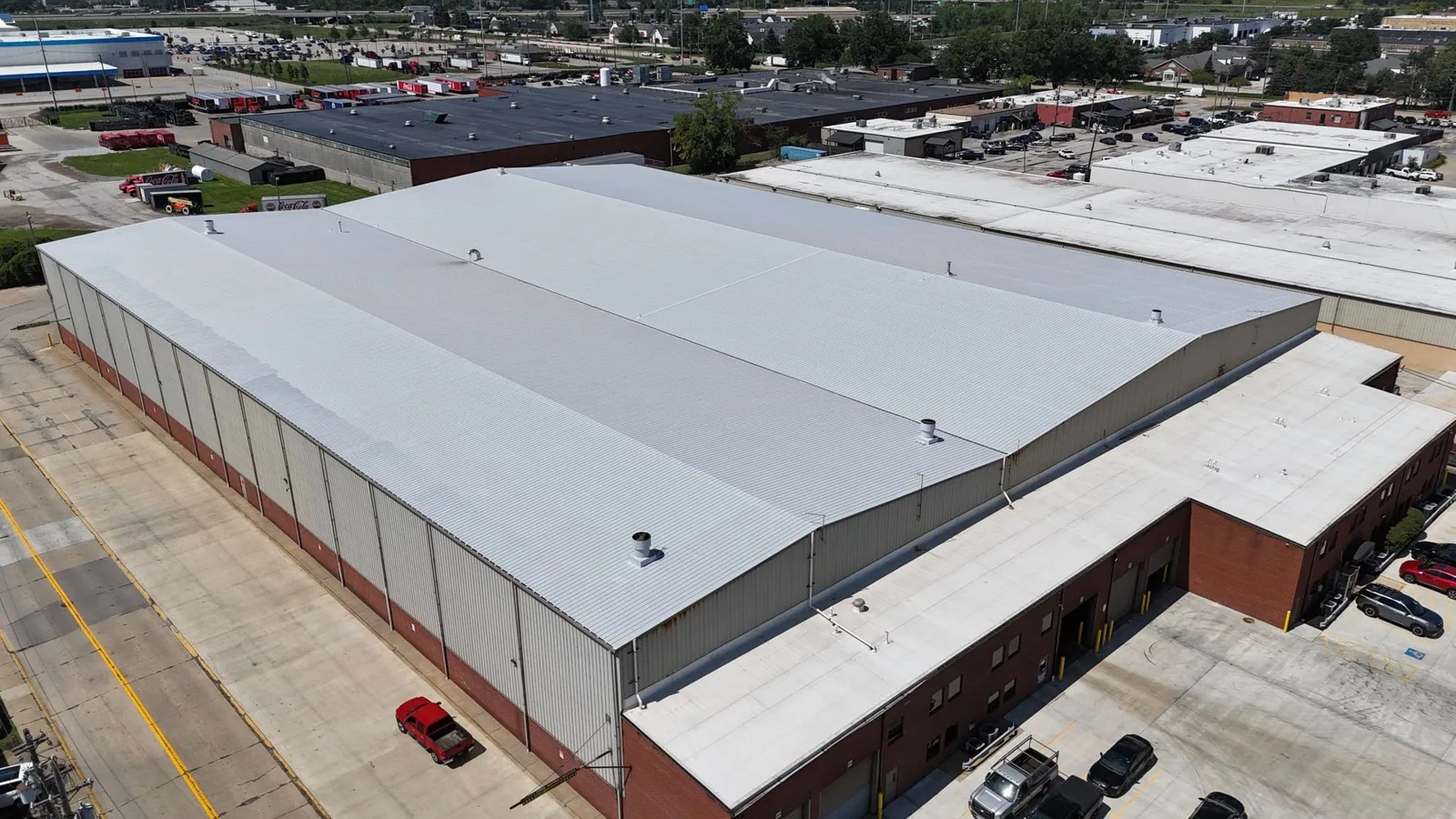
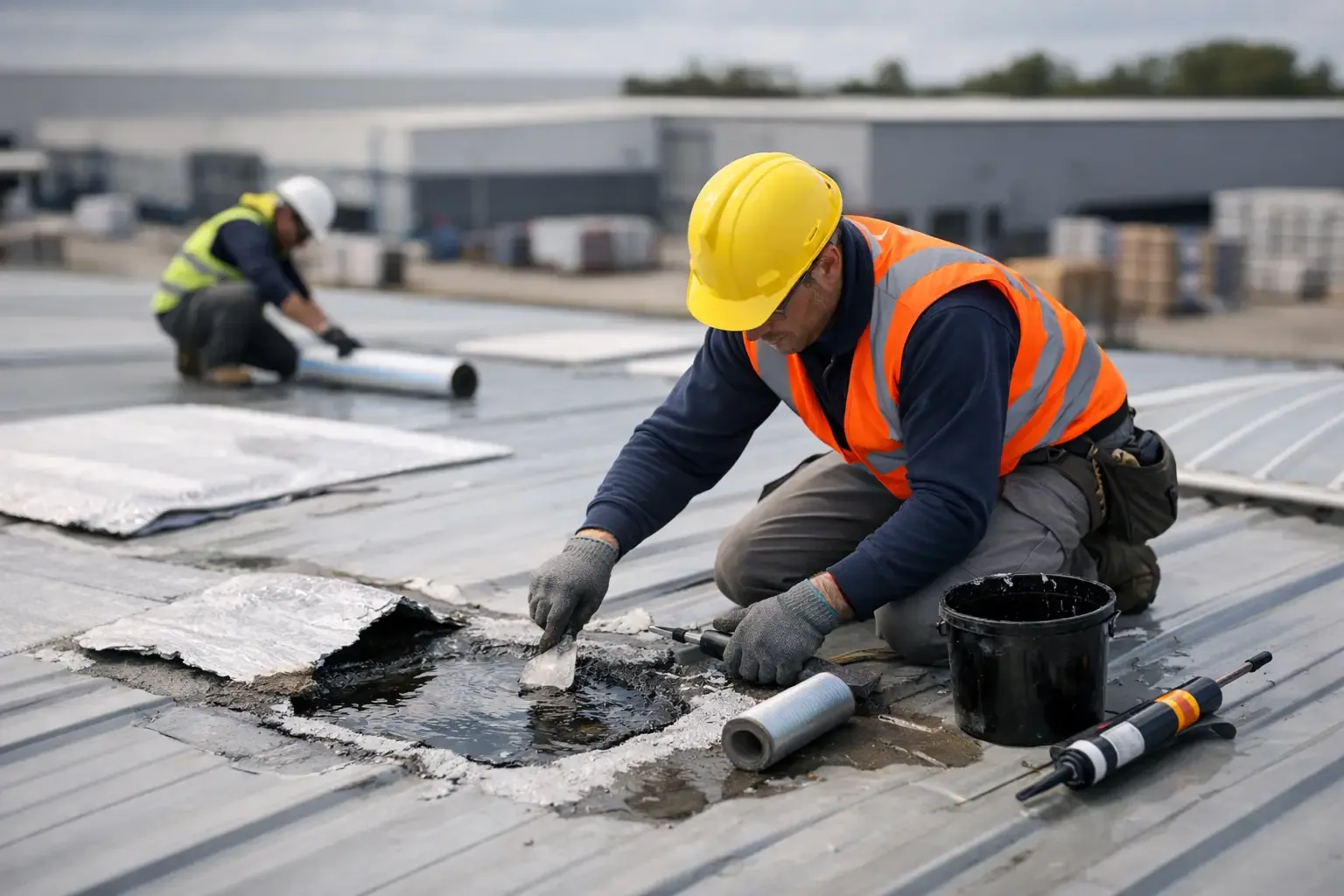
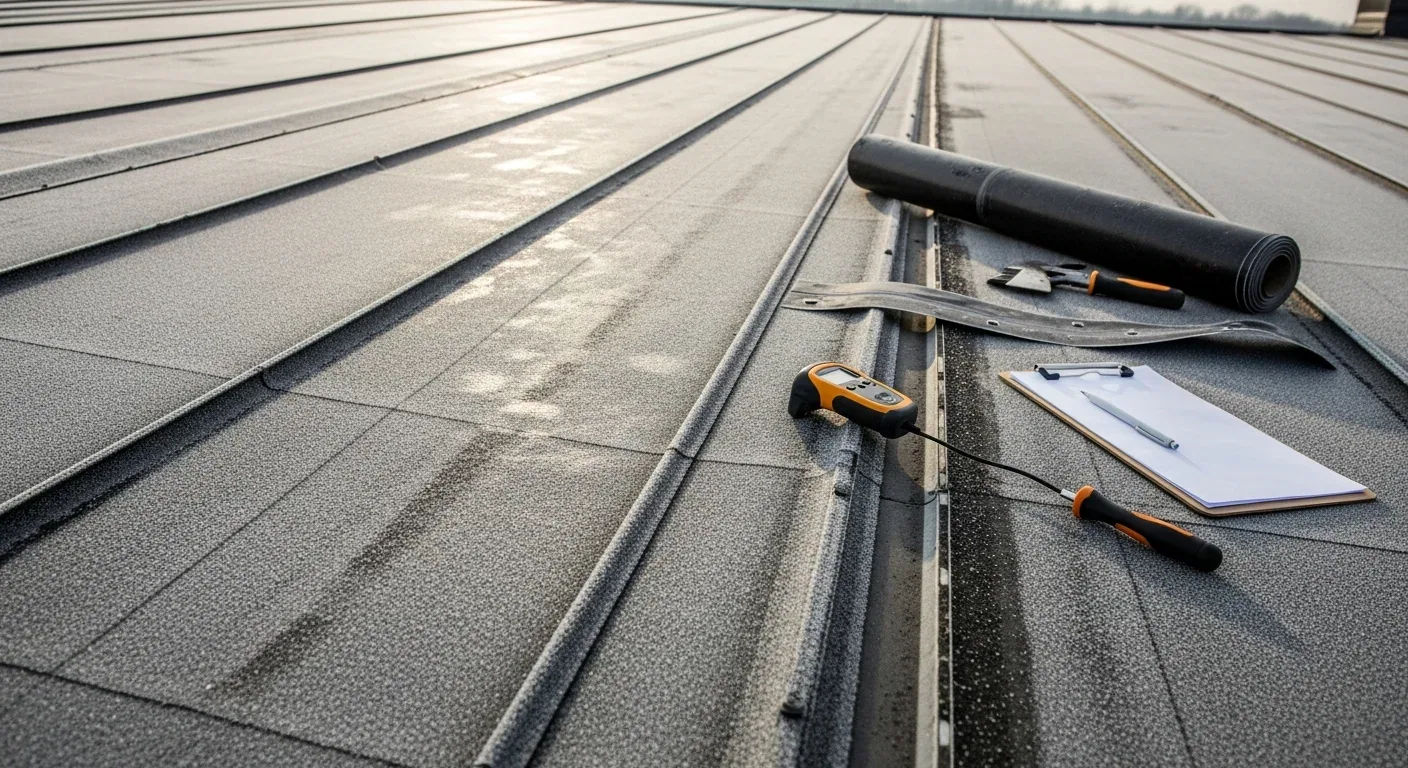
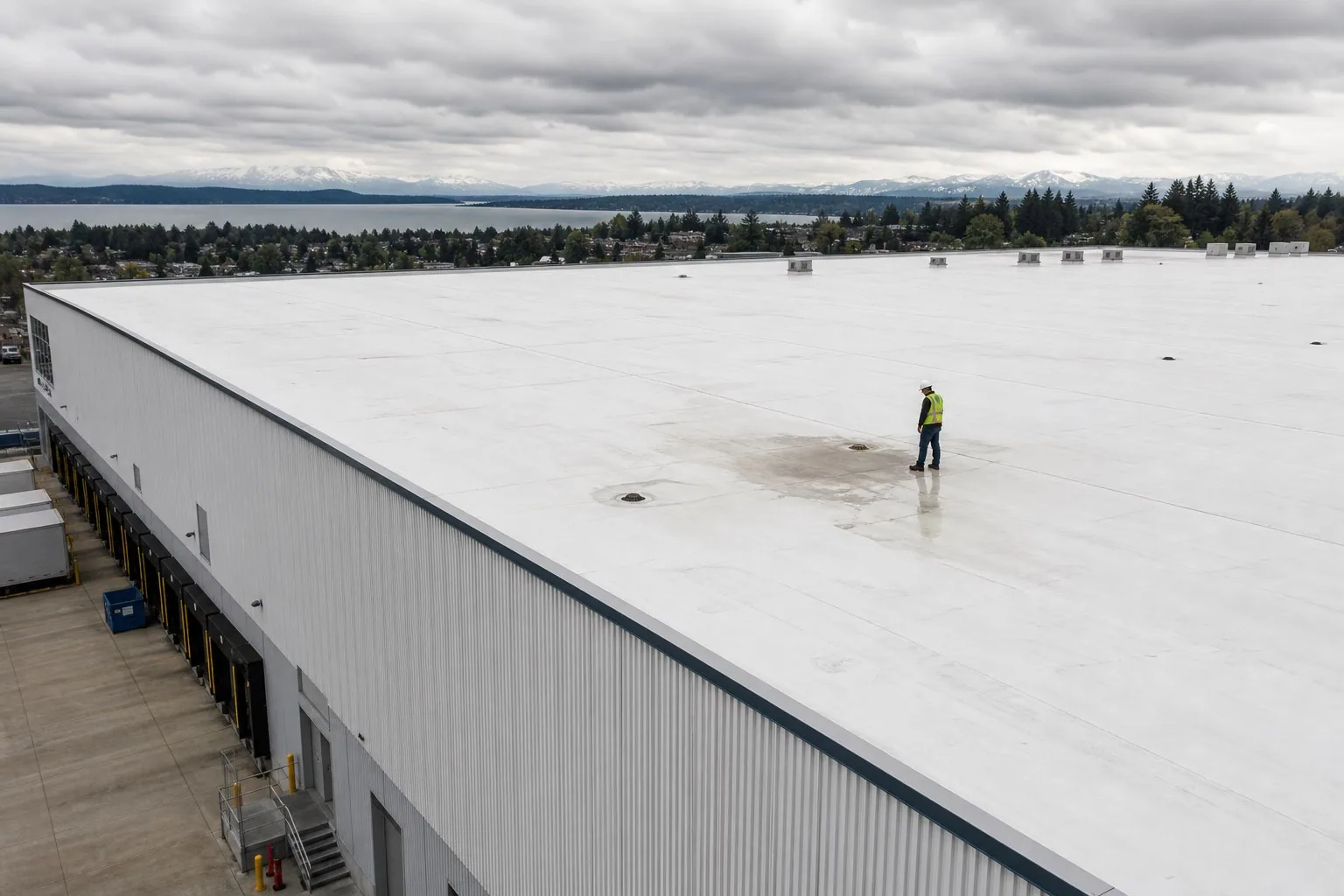
Hudson, NH has marked two industrial areas for economic revitalization: Sagamore and Clement Road. Roofs in industrial parks carry production floors, stock and electrical equipment beneath them, so a leak report from either area starts with the interior. Where is the water entering, what is below it and can the roof be reached safely. We answer those questions first, then trace the water path across the roof sections and set a temporary dry-in before any permanent repair is priced.
Calls are taken all hours, holidays included. The first visit records the reported location, the protection used inside and the first visible condition. The facility manager's next update carries a price or a recommended test, with the repair boundary drawn so the spending decision is made on facts.
Sagamore Industrial Park
The town describes Sagamore Industrial Park as lying between Route 3A and the Merrimack River, connected to the Everett Turnpike by the Sagamore Bridge. For a roofing job, that description is about access: trucks and lifts reach the park by bridge and by Route 3A, and the lot layout controls where equipment can stand. We confirm the approach, the delivery window and the staging area before the crew is scheduled.
Inside an industrial park, the building is the client's production line. Some operations cannot stop for a roof repair, others can pause for a few hours. We learn which, and we divide the scope so each section is finished and dry before the next one opens. The walk covers drains, scuppers, seams, flashings, perimeter metal and every rooftop unit. A manufacturing plant roof often has penetrations for process exhaust, and those details get a close look.
Equipment shutdowns are part of the plan. Some rooftop units must be switched off before a crew works around their curbs, and some exhaust must be redirected while the flashing is rebuilt. We ask the facility team which units can stop, for how long and who authorizes it, then write those steps into the schedule so no one is waiting on a decision at the roof edge.
Clement Road and Route 111
Clement Road Industrial Park extends along NH Route 111 and includes a multi-street industrial area with access to Route 3A, Route 102 and I-93 via Windham. A multi-street area means several buildings with different owners, different tenants and different roof ages, so the repair plan has to be written building by building. The inspection names the membrane, the attachment and the insulation present on each roof.
In a park of many tenants, a leak report can come from a ceiling that is not under the failed detail. Water moves along decks and under membranes before it shows. We trace it back to its source and mark the affected area on a roof plan. A flex industrial unit with an office front and a shop behind gets two plans, because the interior sensitivity differs. A leak repair is closed only when the boundary has been checked with a moisture survey or a water test.
Truck traffic and staging
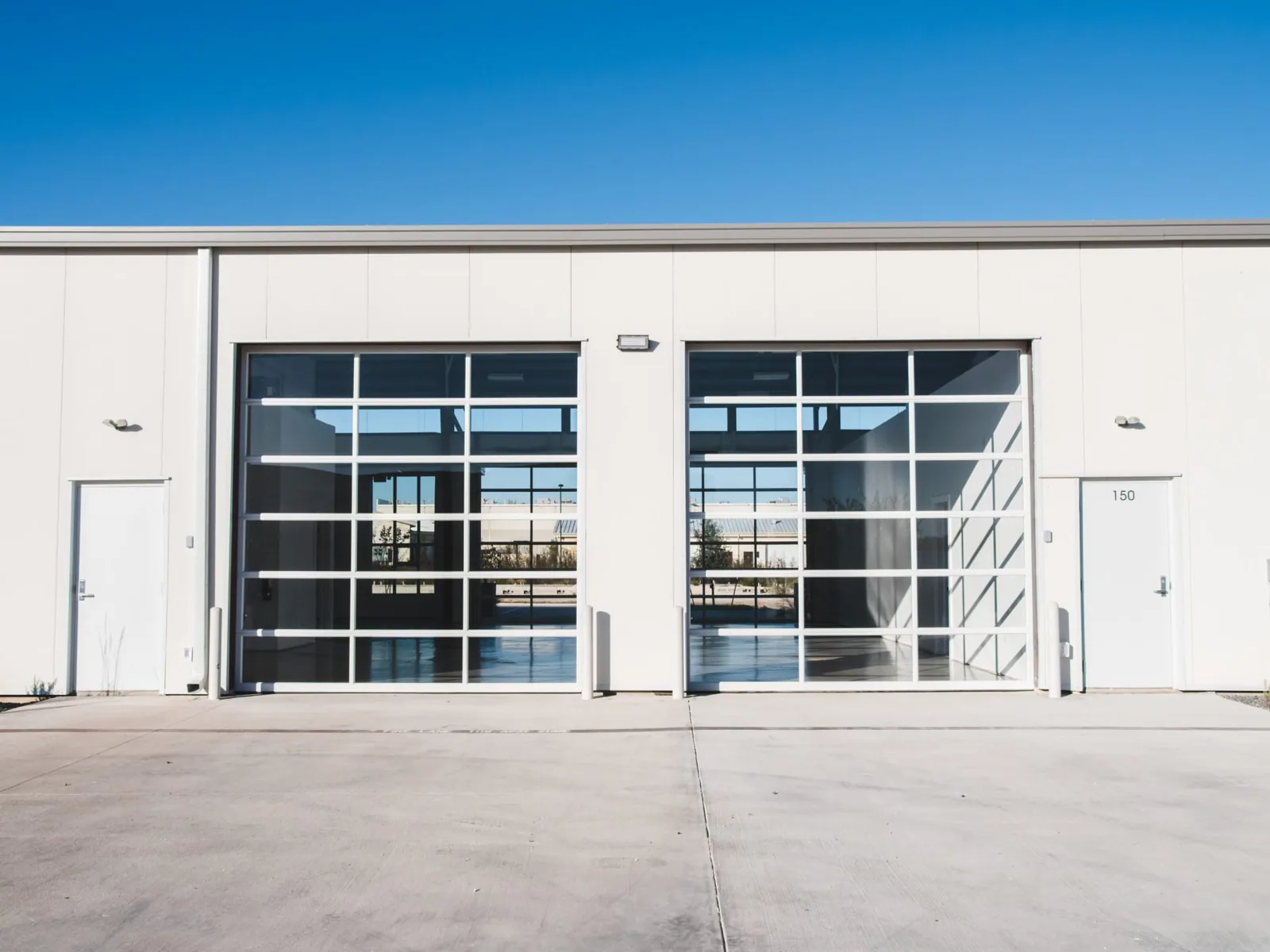
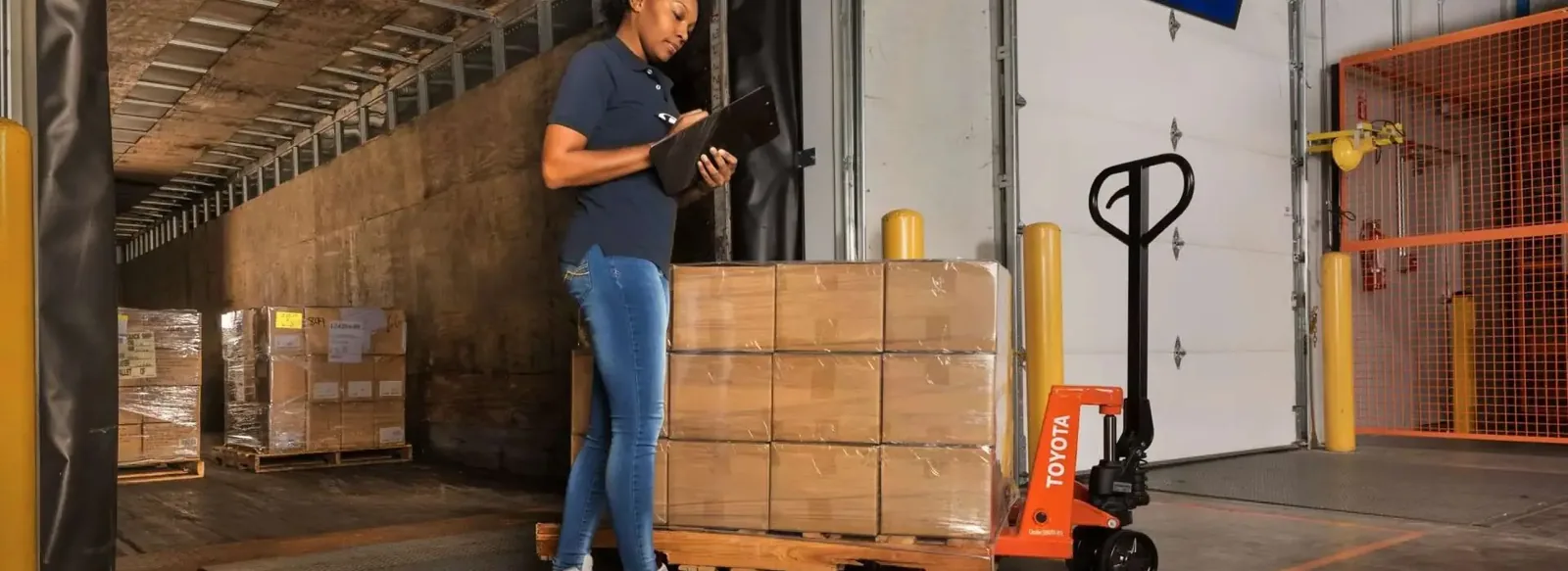
Industrial lots are busy places. Trucks arrive on schedules, forklifts cross the lot and loading docks need clear approaches. Roof work adds a lift, material pallets and a dumpster to that traffic. We lay out the staging area with the facility manager, mark pedestrian routes and set delivery times that do not collide with the building's own shipments.
Roof access in an industrial setting is also a safety matter. Skylights, roof hatches and low parapets are fall hazards, and we plan protection before the crew steps onto the surface. The access plan names the ladder or hatch used, the lift position and the tie-off points for fall protection. If a roof section cannot be reached safely, we say so and propose a different approach, such as a lift reach from the lot or a temporary edge guard. A logistics operation that runs on tight dock schedules gets the timing written into the scope.
Freeze-thaw and standing water
Across the region, exterior roof materials ride out a freeze-thaw rhythm that Lowell's 24.9°F January mean and 48.51 inches of yearly precipitation help describe. Condensation inside a roof assembly is a separate worry from rain: warm, damp air from the building below can meet a cold deck and wet the insulation from underneath. We check that vents and flashings allow moisture to escape and that insulation has stayed dry.
Ponding is a frequent finding on low-slope industrial roofs. Water that stays for more than a day or two adds weight, speeds seam wear and invites algae. The fix may be a clear drain, a tapered insulation addition or a new drain location. A ponding water repair is scoped from measurements, not from a guess. Lowell's 1995 winter left 126.5 inches of snow, and snow load planning remains part of any replacement design.
Pricing and approvals
Pricing moves with the repair boundary, the roof system, the lift or ladder access, the interior protection and the number of visits. Large industrial roofs are often priced by section, with lift days and disposal shown on their own lines, so the owner can approve the worst area first and schedule the rest. The scope separates the temporary dry-in from the permanent repair, so each can be authorized on its own, and a plant manager can approve the first call without waiting for the second.
Because Hudson is in New Hampshire, the Massachusetts code edition is not the rulebook; the applicable code and energy provisions are confirmed before insulation is written into the price. For owners weighing a recover system against a tear-off, the report states what the existing roof can carry and the conditions that rule each choice out. Nearby Nashua and Litchfield owners use the same itemized approach. The update names the earliest crew date and any hold for equipment shutdowns, so production can plan its schedule around the roof.
Commercial Roofing Questions
A production line sits under the leak. What happens first?
We protect the equipment and keep people clear of wet ceilings and electrical fixtures. Then we confirm safe roof access, locate the water entry and set a temporary dry-in. Only then do we price the permanent repair, so production can plan around a return window.
How do you handle a park with many tenants and many roofs?
Each building gets its own findings, photographs and price. Shared items such as lift position and staging are listed once. Tenants and owners can approve their own roofs without waiting for the rest, and the manager receives a ranked list across the park.
What makes ponding on an industrial roof a priority?
Standing water adds weight to the deck and wears seams faster. It also hides small punctures. We measure the depth and the drainage path, and the fix may be as simple as a clear drain or as involved as tapered insulation.
Which code applies to a replacement in New Hampshire?
The Massachusetts edition does not apply across the state line, so we confirm the New Hampshire code and local energy requirements for the town before the scope is priced. The price sheet lists each assumption so a change shows up as a clear line.
Can roof work happen around loading schedules?
Yes, when the sections are planned around dock times. We stage materials away from truck approaches, set delivery windows and close each section at the end of a shift. The schedule shows which days affect which doors.