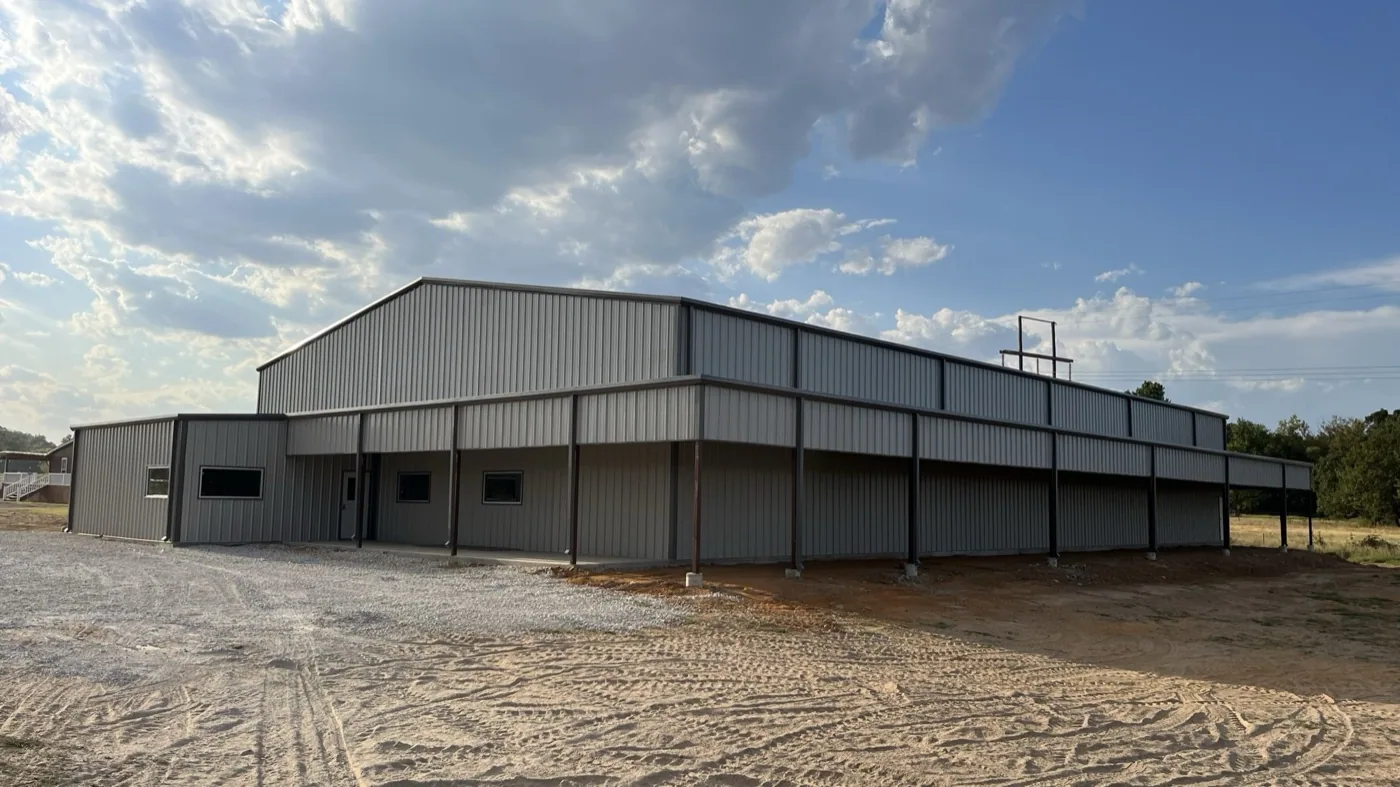
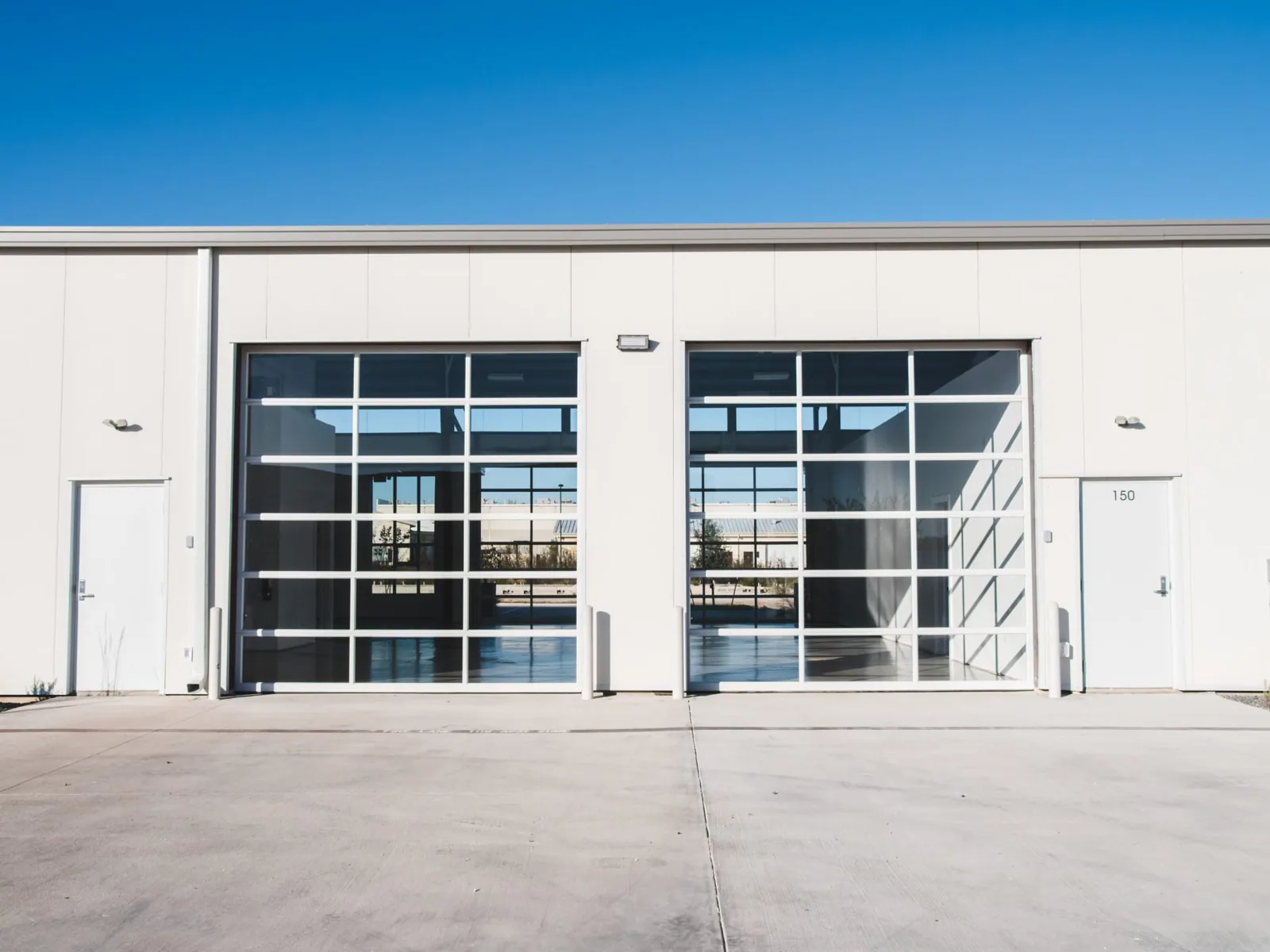
Cover the aircraft or move it. That is the first decision on a hangar roof report, and it belongs to the operator or the hangar manager. We ask what is parked below the water, whether it can be towed clear, and what is stored on the floor, on racks, or in shops along the sides. Next we keep people off wet floors and clear of electrical equipment, settle roof access, and set interior protection that never touches the aircraft or its systems.
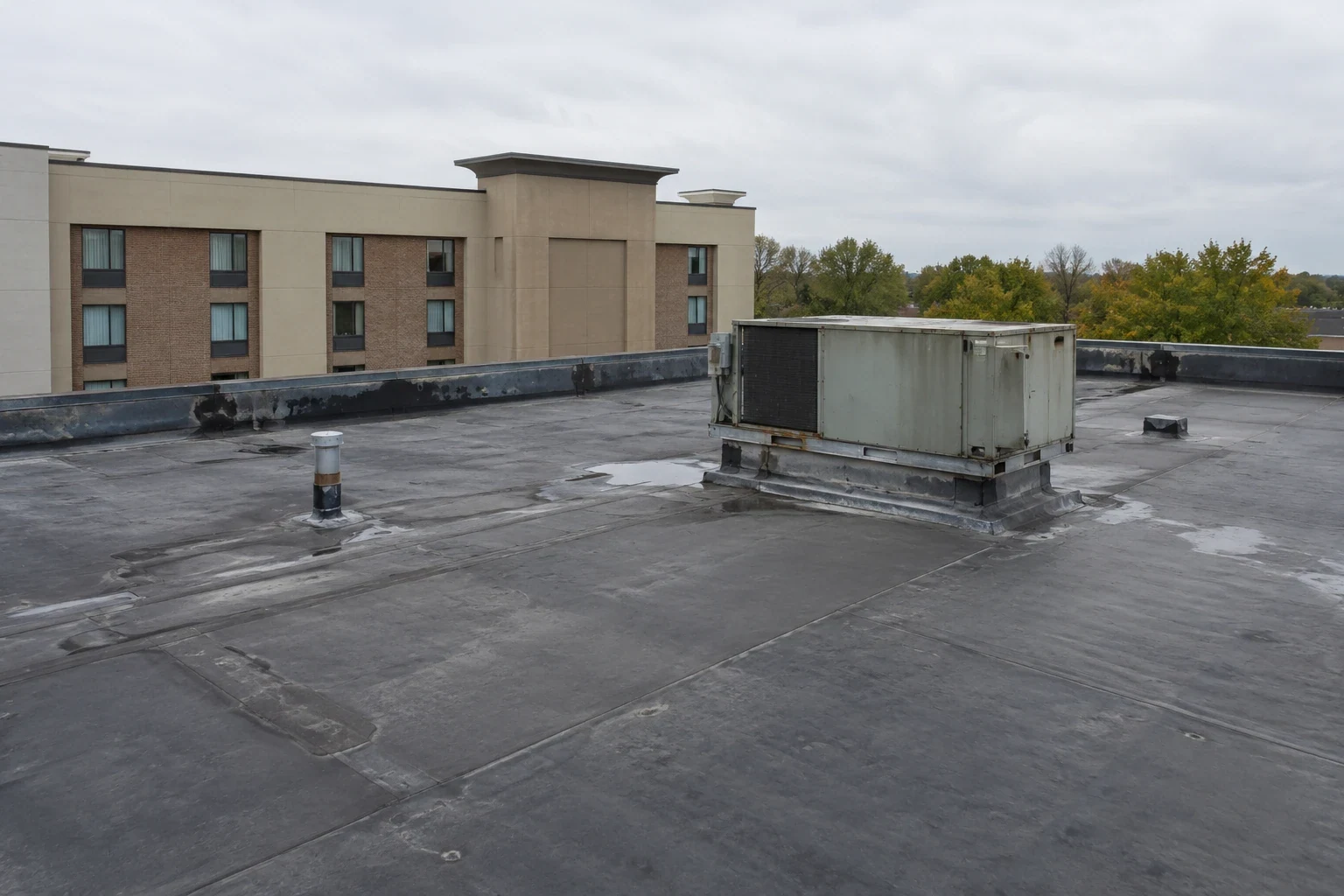
In the Lowell, MA area, a hangar or aviation building takes rain through the year and winter storms. The operator hears three things early: how the first hour will go, what the temporary dry-in covers, and when a priced repair boundary will follow, since a bay or an aircraft held out of service costs money by the day.
Aircraft Protection and Debris Control
Loose debris is a hazard around aircraft. A dropped fastener, a strip of membrane, or a cut screw on a hangar floor can damage an airframe or an engine if it is not found. We control the roof work so that nothing falls into the space. Interior protection includes a debris barrier under the work area, a count of tools and fasteners at the start and end of each shift, and a floor sweep before the aircraft returns.
Water is the other concern. Even a small drip can land on a wing surface or an open panel. The operator also tells us which bay doors must stay closed and which can open for crane access, since wind through an open door moves loose material across the floor. We recommend covering the aircraft with the operator's own protection, and we leave the cover to the operator. We do not touch the aircraft or its equipment. Our job is to stop the water from above and to keep the floor clean and clear. The record notes the time the roof was made watertight, the photographs of the work area before and after, and the sweep results, so the operator's maintenance log and the roof file agree on what happened and when. If a tool or fastener cannot be accounted for, the shift does not close until it is found.
Clear-Span Roofs and Door Tracks
A hangar roof usually spans a wide open floor. The structure may be steel trusses or long-span framing, with metal or membrane covering. Large doors at the ends or sides need tracks, seals, and headers that meet the roof edge. A leak at a door header or a track can run down the door and into the floor, so we check the roof edge, the header flashing, and the seals as a single assembly.
Penetrations are fewer than on a retail roof, but each matters: vent stacks, exhaust, skylights, and any fire protection or lighting that comes through the roof. We inspect flashing and sealant at each, and we photograph every roof section from fixed positions so a later visit can match the frames. Any lighting or conduit that passes through the roof is traced to its source, because a loose fitting at the roof can drip onto a cable tray or a light below. A warehouse roof shares the wide span, and an industrial roof shares the clear height, but a hangar adds door and aircraft limits.
Fire Protection, Hot Work, and Permits
Hangars hold fuel, oil, solvents, and aircraft with fuel in the tanks, so fire protection is a serious limit. Hot work on the roof, such as torch-applied material or welding, needs a permit, a fire watch, and an agreement with the hangar manager and often the fire authority. We ask what is allowed before we plan the work. Where hot work is not allowed, we choose cold-applied or mechanically attached systems.
Any fire suppression piping, sprinklers, or foam systems that hang from or pass through the roof structure must not be disturbed. We ask for drawings and locate those components before we fasten anything. If a roof fastener could penetrate a pipe or a conduit, we use shorter fasteners or a different attachment. The aim is a dry roof and an untouched protection system.
Aviation Buildings Near Hanscom
About 18 miles southwest of Lowell, Hanscom Air Force Base hosts Air Force programs in systems acquisition, command and control, communications, intelligence, and cyber work, and the base itself says most of its mission is not aircraft flight activity. Bedford, Concord, Lincoln, and Lexington are the towns that adjoin the base. Work on federal property follows the general rules of access, escort, badging, and mission scheduling, and roofing is built to the applicable federal criteria.
Private hangars and aviation support buildings in the wider region follow the owner's rules instead. The same record applies in each case: a roof plan, photographs, test results, and a repair boundary. On a military property, the rules of access, badging, and criteria that govern Air Force base roofing sit on top of the same record.
Winter Loads and Roof Edges
Winter is the hard season for a wide span, because snow load over a long roof is a question for the building's engineers and drifts can build against door headers and end walls. A wide-span roof loads with snow across a long area, and the structure's capacity is a matter for the building's engineering documents. We do not estimate it. We ask for the documents before heavy snow work, and we avoid adding weight to a roof we have not reviewed.
After a storm, we check the roof edges, the door headers, and the drains. Melt and refreeze then work on every edge through the cold months. The snow and ice damage repair record stays organized by roof section, which gives the operator a clean base for repairs and for any claim.
Cost Update and Return Window
Temporary protection is priced first, on the day water is active, and the permanent scope follows the inspection. The permanent price includes access, aircraft scheduling, hot work limits, and the weather hold. An aircraft schedule that moves can move the work too, so the update lists which days the bay must be clear and which days the operator can use it. Wet insulation beyond the first survey boundary is the likeliest reason a number moves, and the update lists it with the date of the next report.
The same method applies to buildings in Lowell, Chelmsford, and Bedford.
Commercial Roofing Questions
Who covers the aircraft during a roof leak?
The operator. We do not touch the aircraft or its systems. We stop the water above and keep the floor clear, and the operator decides whether to tow or cover.
How is falling debris kept off the floor?
With a barrier under the work area, a tool and fastener count at the start and end of each shift, and a floor sweep before the aircraft returns.
Can torch-applied roofing be used on a hangar?
Only with a permit, a fire watch, and agreement from the hangar manager and fire authority. If those are not possible, we choose cold-applied or mechanically attached systems.
What about sprinklers or foam pipes in the roof?
We ask for drawings and locate them before fastening. Fasteners are chosen so that nothing reaches a pipe or conduit.
How does a military hangar roof differ?
Installation roofing follows access, escort, badging, and mission-scheduling rules and the applicable federal criteria, and the contracting office sets the terms. The documentation does not change.