Food safety sets the clock. A grocery roof report from a store manager names a department, and the department tells us how urgent it is. Water over produce, over a dairy case, or over a checkout lane each has a different consequence for the store and a different interior protection plan. We confirm what sits below, keep people clear of wet ceilings and electrical fixtures, and decide whether the stain is active or old before anyone climbs to the roof.
In Lowell, MA, grocery roofs take rain through the year and winter storms that sit on rooftop refrigeration equipment. The facility contact needs a short list from us right away: where the water path runs, what temporary dry-in will hold, and when the next update will carry a price.
Perishables and Interior Protection
The first hour is about the store, not the roof. We ask the manager to move product away from the wet area, cover cases that cannot move, and keep carts and shoppers clear. If water reaches a ceiling grid above food, the store decides what is safe to sell, and the roofer supports that decision with the location and the time of the leak. We do not judge food safety. We supply the roof facts the store needs to judge it.
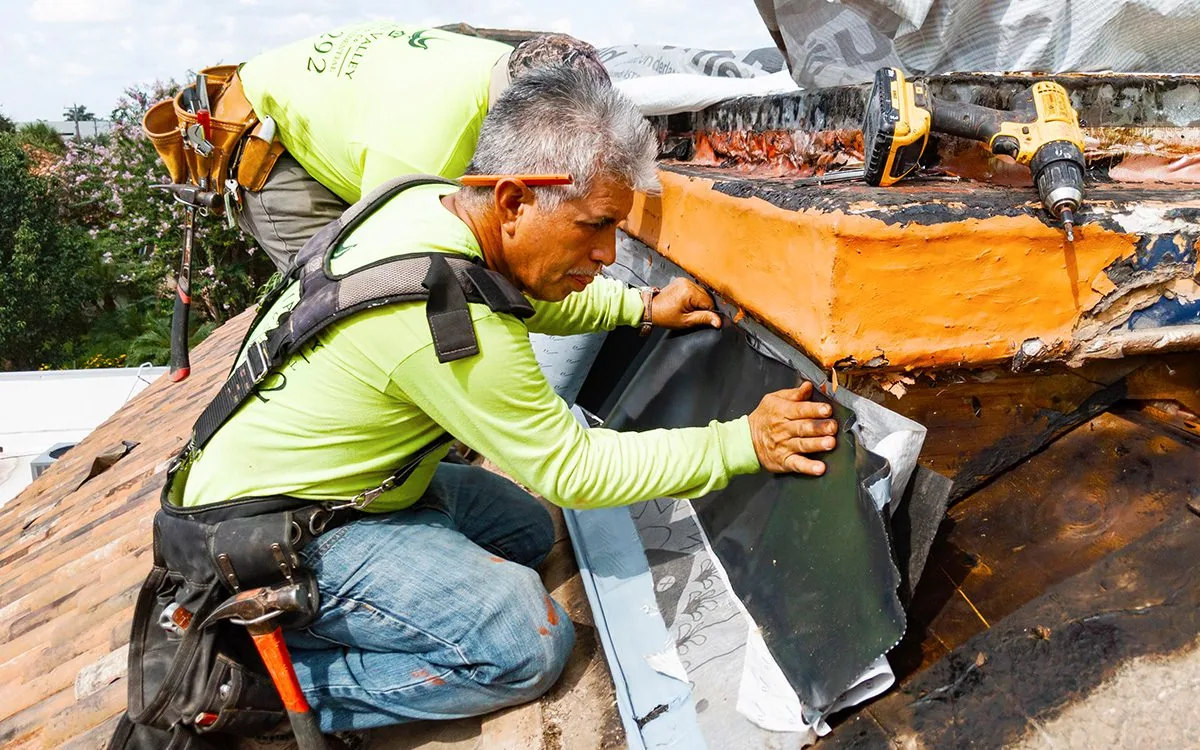
Plastic sheeting, drip pans, and tile removal are interior steps the store team may handle with our guidance. Once the water path is traced, a temporary dry-in at the roof opening stops the entry, and the interior protection can come down in stages. An emergency roof repair is available around the clock, which matters for a store that cannot wait for business hours.
Refrigeration Equipment on the Roof
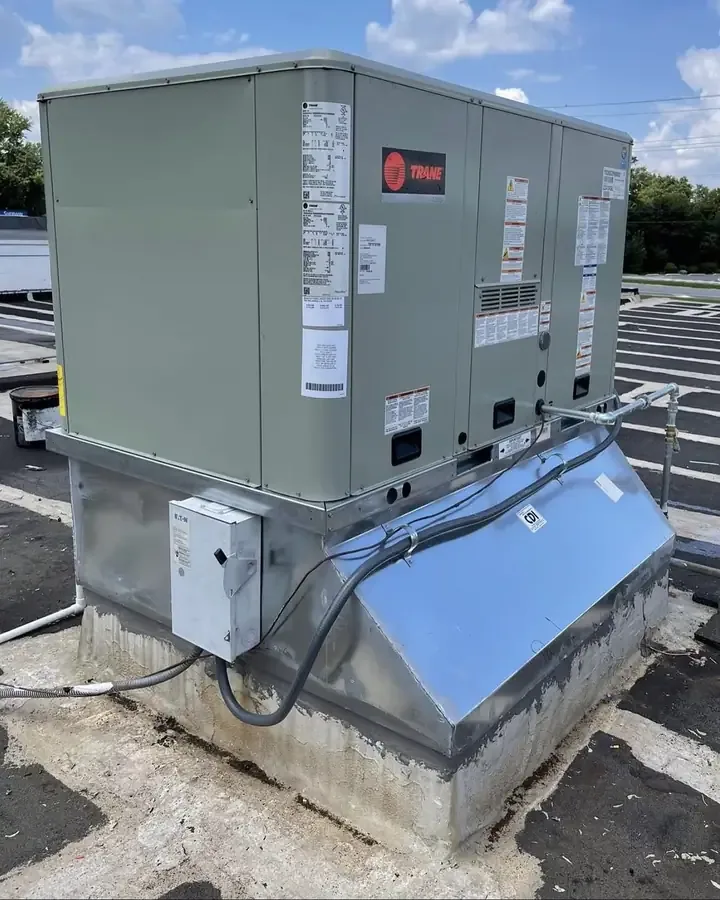
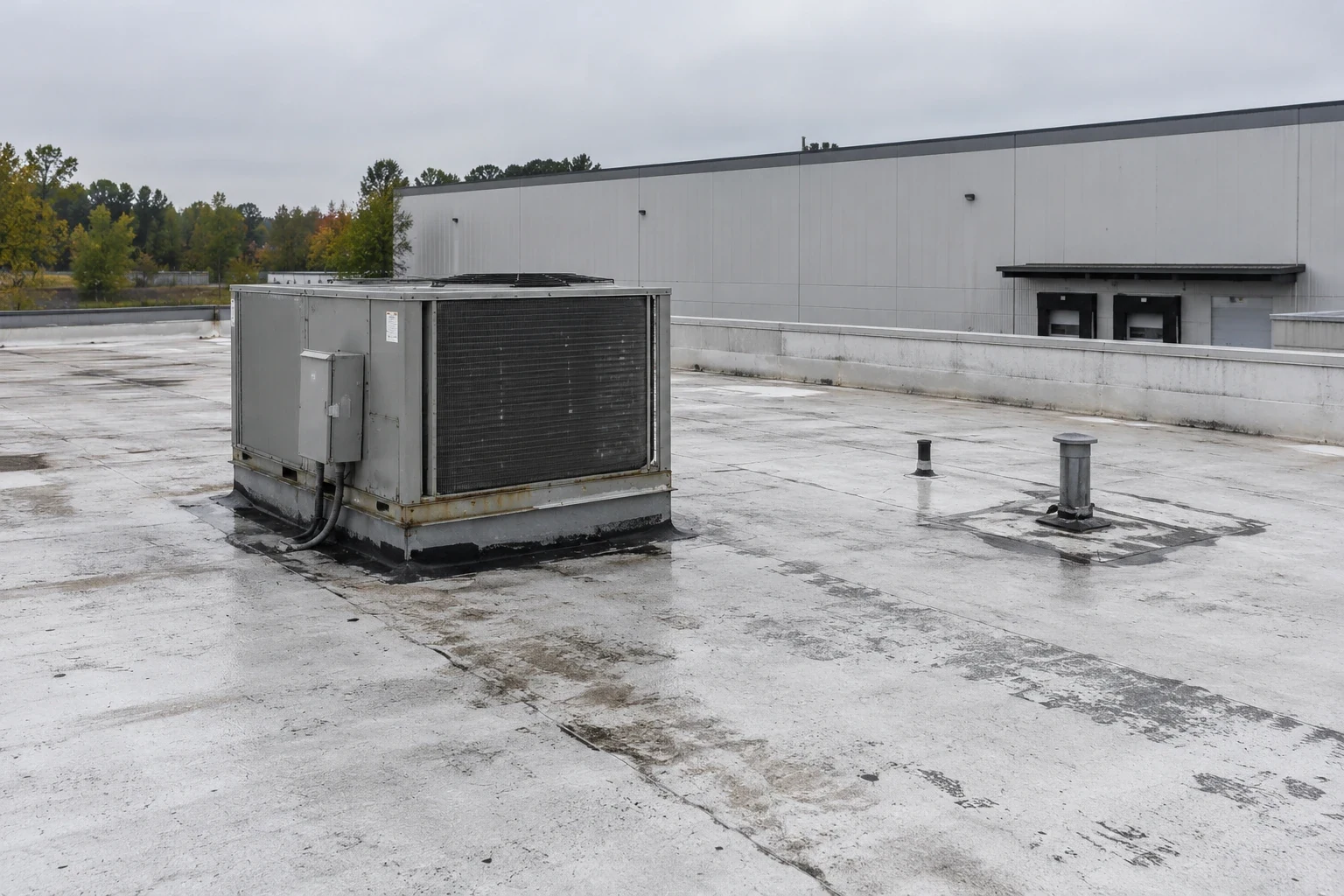
Grocery roofs carry condensers, rooftop units, exhaust fans, and the piping that connects them. Each unit sits on a curb or support, and each has a flashing detail that can fail. Condenser coils drip condensate. Refrigerant lines pass through the roof in pipe penetrations with boots that wear. Vibration can loosen fasteners over time.
We number each unit, test the flashing, and check every pipe boot and support. A cracked boot, a gap at a curb, or a pipe support that rests directly on the membrane gets a repair item. The scope for rooftop equipment curbs and supports covers raising supports off the membrane and adding protection under them, so the equipment stays in service and the roof stays tight.
Wet Insulation and Hidden Damage
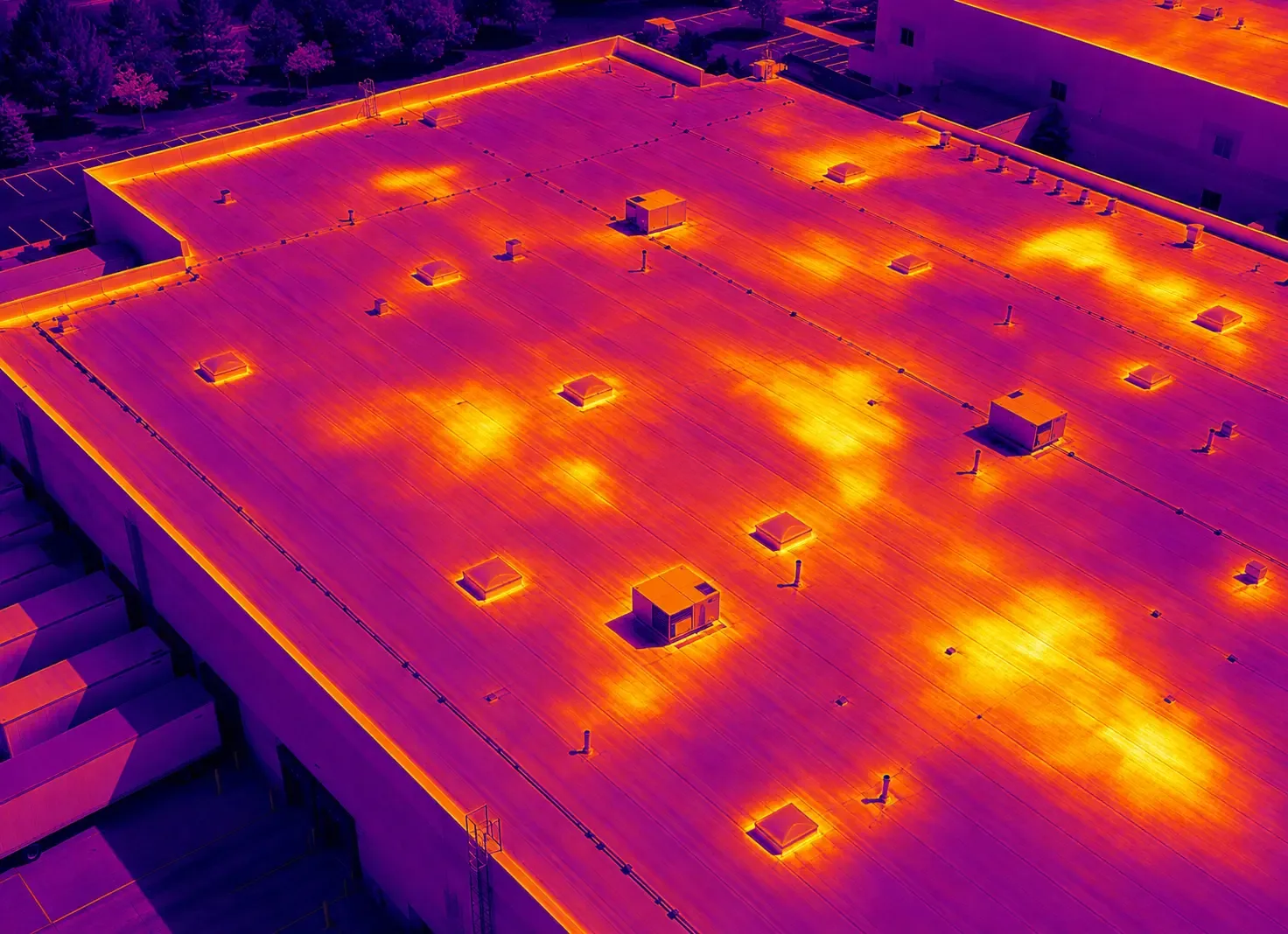
Water that enters a grocery roof does not stay at the opening. It travels along the deck and soaks insulation, and the damage shows up where the deck dips or where a ceiling joint lets it through. Wet insulation loses its insulating value, which can make the building work harder to hold temperature. We map the wet area with an infrared moisture survey and confirm with cores.
The map defines the repair boundary. A small wet area can be cut out and replaced. A large one may lead to a section replacement. We price both and show the readings. If a refrigeration unit sits in the wet zone, the scope includes the temporary support and the coordination with the refrigeration contractor, so that the unit is not left hanging over open roof. Photographs show the unit, the opening, and the temporary cover before the crew leaves, and the next visit starts from that record. When the refrigeration contractor needs the roof section clear for a service call, the schedule names the day, the lift position, and the person who signs off on the temporary protection afterward.
Winter Storms and Roof Access
Nor'easters, snowstorms, ice storms, and hurricanes all sit on the city's hazard list. A grocery roof sees those conditions at its edges and drains. After a storm, we check parapets, coping, and scuppers, then the drain strainers. NOAA's normal for Lowell shows 4.54 inches of precipitation in December and a January mean near 25 degrees, so melt and refreeze happen at the same drains again and again.
Access in snow takes planning. A lift may not reach the roof, a ladder may not be safe, and a deck loaded with snow raises a structural question. We ask for the structural documents when load is in doubt, and we delay work on a roof section we cannot reach safely. A weather hold is a decision, not a failure, and it comes with a temporary protection plan. The store hears the reason for the hold, the section it affects, and the next date we will look at the forecast, so the produce manager and the night crew can plan stock and staffing around it.
Overnight Work and Delivery Traffic
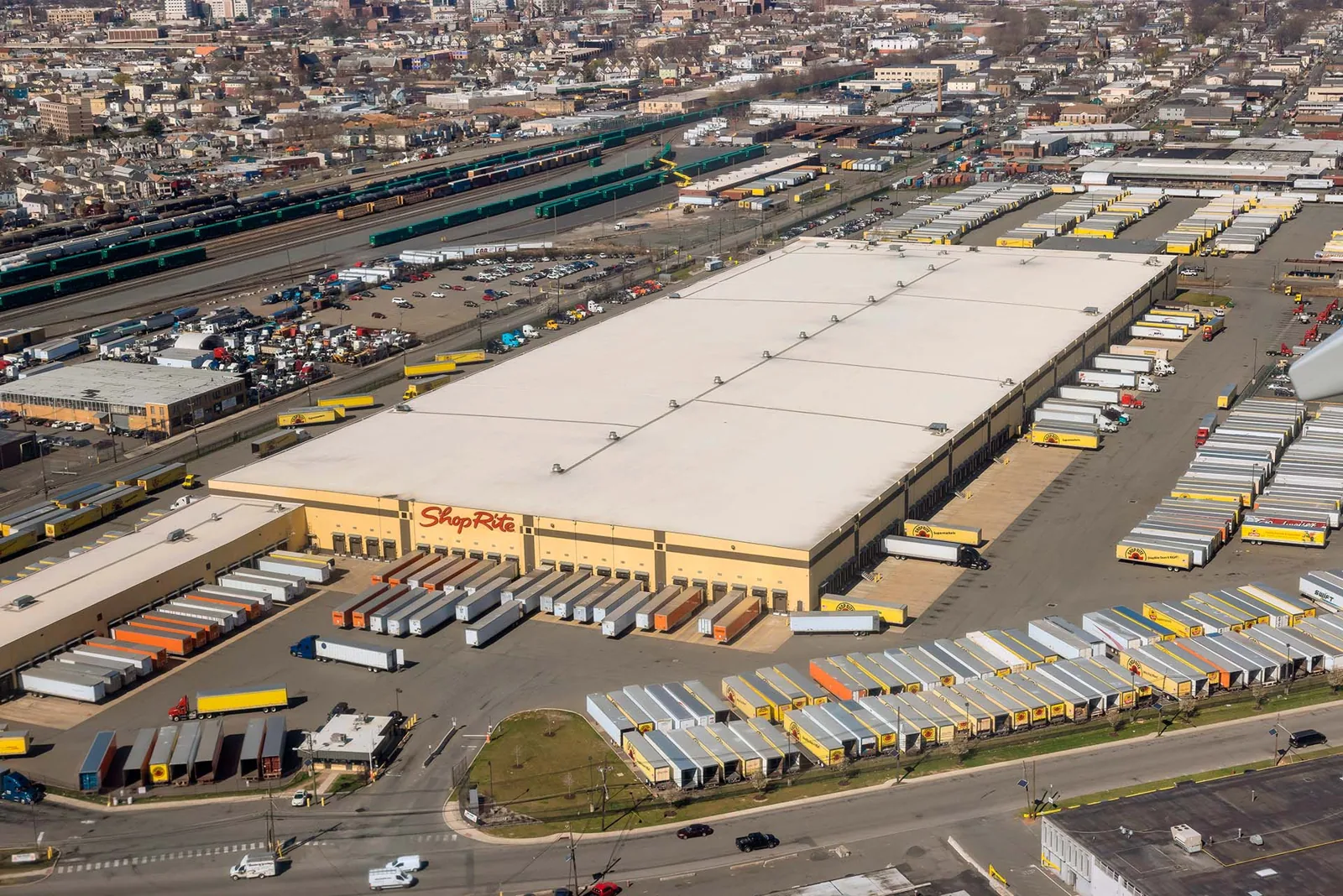
A grocery store receives deliveries on its own schedule, so roof work has to fit around truck arrivals, and the same is true of any big-box store with a receiving dock. We mark the staging area, keep it clear of delivery lanes and fire access, and coordinate crew hours with the receiving schedule. Regional truck traffic uses the I-93, I-495, and Route 3 junction at Lowell, and our own deliveries are routed with that in mind.
Overnight work is sometimes the right choice for noise and fumes. We locate air intakes before opening any adhesive, because vapor drifting into a food department is a problem the store cannot absorb. If an intake sits near the work, the product or the hour changes. A cold storage roof follows a similar plan, with more attention to insulation and vapor control.
Cost Update and Scope Decision
Pricing arrives in two stages: first the temporary dry-in, quoted the same day water is active, then the permanent repair once inspection is complete. Both include access, hours, and weather hold. The update also names who will receive it and when, so the facility contact and the district office see the same numbers. We list the items that could change the price, such as wet insulation beyond the first survey boundary or a curb that cannot be reused, so the store sees the exposure.
Chains that run many stores can use the same format across sites through a retail and restaurant chain program, and a single owner of one store gets the same records. Insulation is specified only after the local energy rule is confirmed. Stores in Dracut and Tewksbury follow the same steps.
Commercial Roofing Questions
Who decides what food is safe after a leak?
The store does. We provide the location, time, and extent of water entry, plus the roof section involved, so the manager has the facts to decide.
Can the roof be worked on while the store is open?
Yes, with staged work and interior protection. The staging area stays clear of delivery lanes and entrances, and noisy or fume-producing tasks move to quiet hours when intakes are close.
What if a condenser sits over the wet insulation?
We coordinate with the refrigeration contractor. The unit is supported or shut down only when needed, and the repair is sequenced so the equipment is not left over an open roof.
How long does a temporary dry-in last?
Until the weather and materials allow the permanent repair. The duration depends on the opening, the season, and the access, and we give a date for review with each update.
What triggers a full replacement for a grocery roof?
Wet insulation across many sections, damaged decking, or repeated failures in different places. Scan readings and core samples mark how far moisture reached, and the update lays out both routes.