Equipment first, then water. In a building with sensitive systems below, the first-hour check in Boxborough, MA asks what is powered, what is cooled and what cannot get wet. Then it asks where the water is entering, whether the area can be isolated and who controls the room. Roof work starts after those answers, not before.
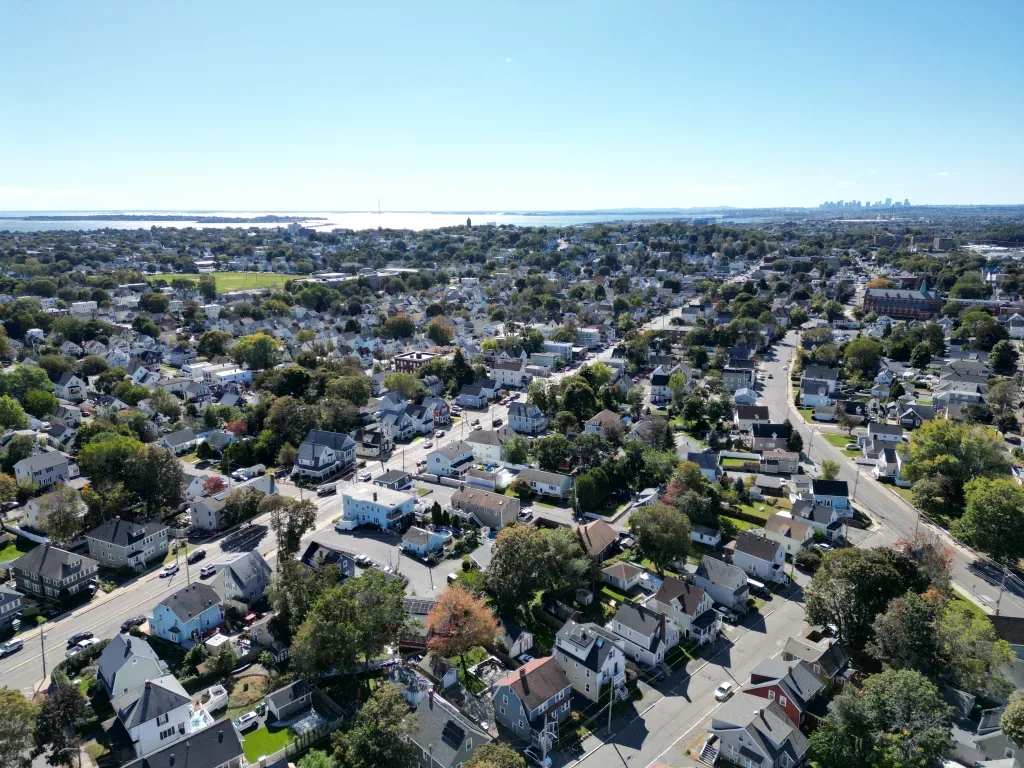
The town's master-plan priorities identify an I-495 high-tech and commercial business corridor and a Route 2 high-tech and commercial business center. Route 111 and the town center are identified for compact retail, dining and commercial uses. Two kinds of roof use result: large office or technology buildings with heavy rooftop systems, and small retail buildings in a compact center. We treat them separately.
Technology and Office Buildings
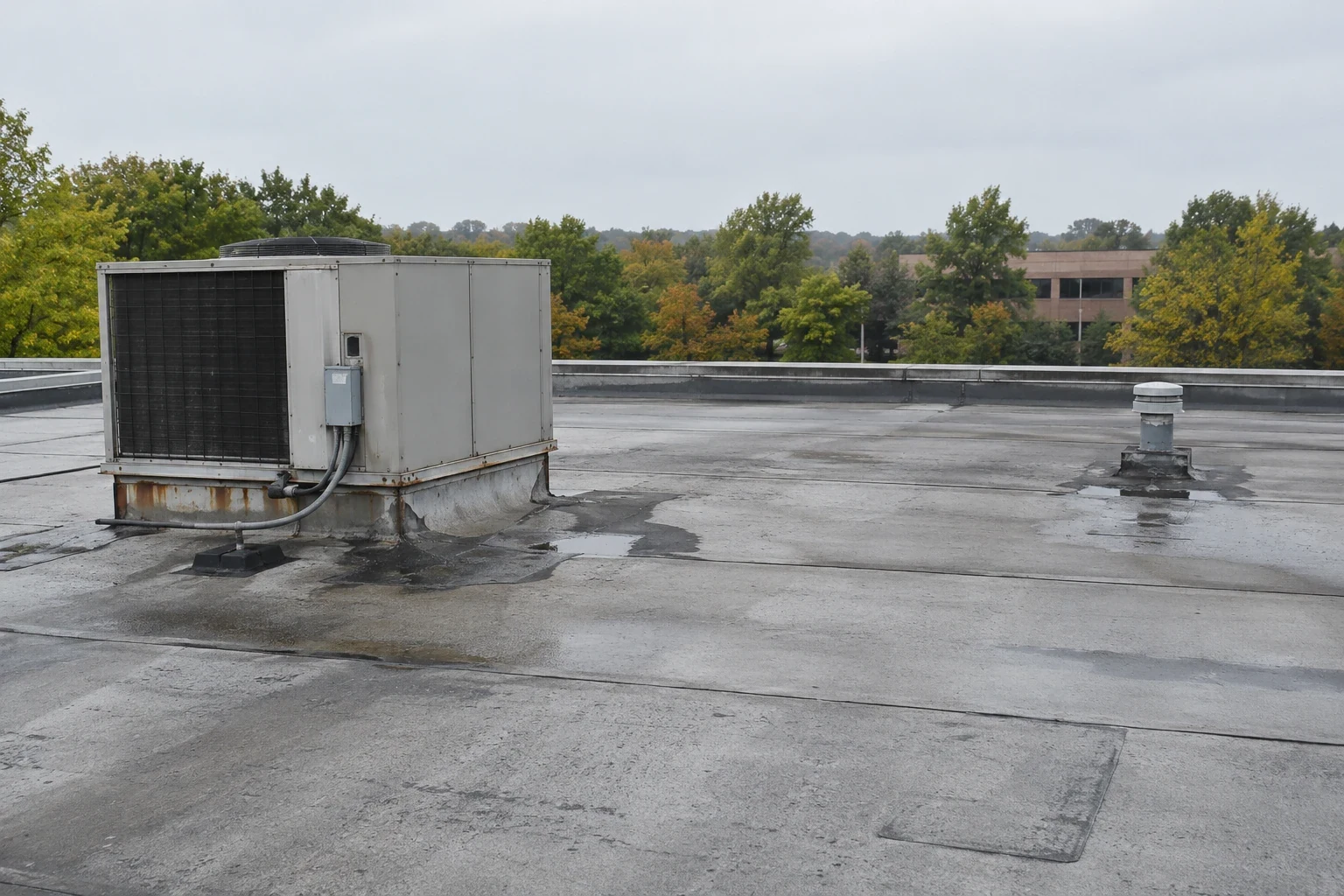
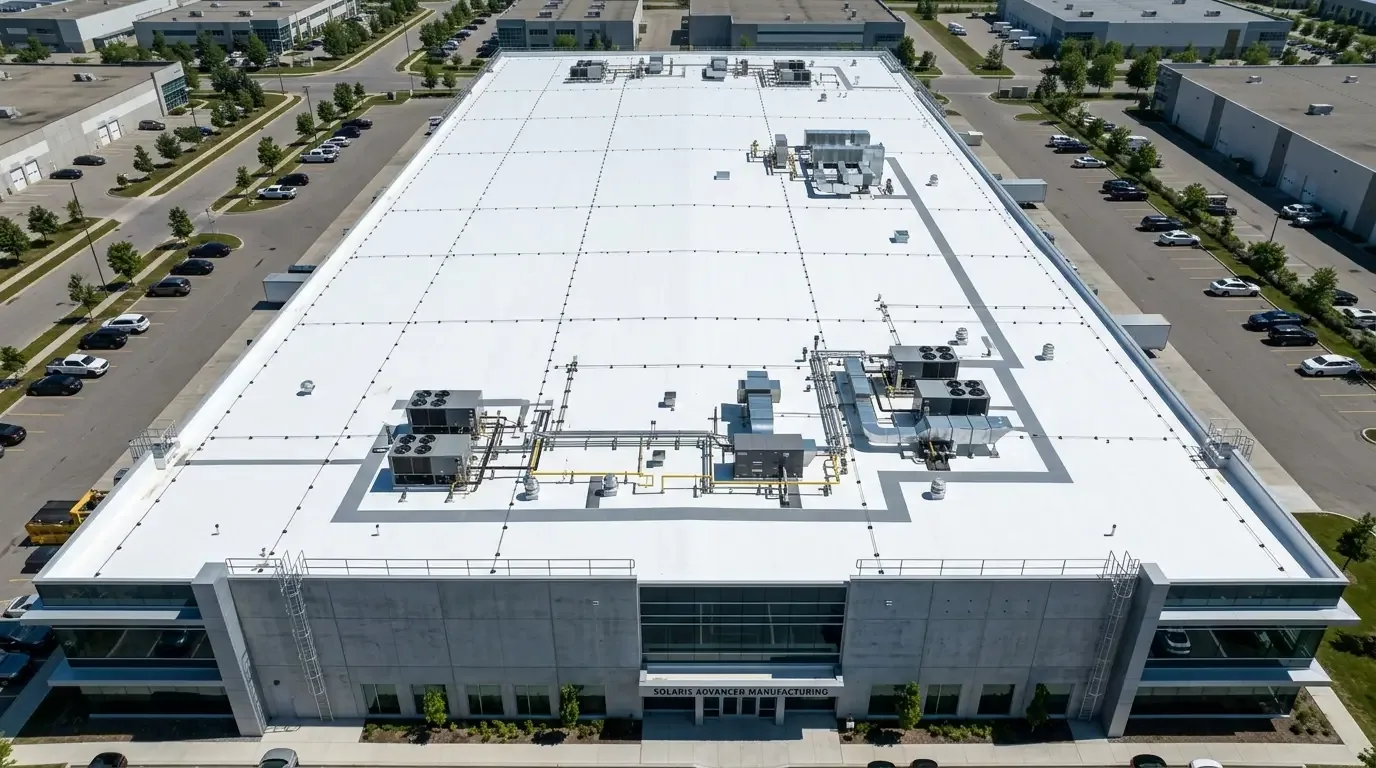
A building used for technology work often has a lot of mechanical equipment on the roof: air handlers, chillers, exhaust and power equipment. Each unit has a curb, a support and a set of penetrations for pipe and conduit. A leak near any of them can reach the space below, where racks, benches or instruments sit. We map the equipment, check each curb and mark the pipe and conduit penetrations by number.
The roof plan also marks what sits under each roof section. The facility director tells us which rooms are sensitive, which are vacant and which have restricted access. A repair starts with the sections above the sensitive rooms, and interior protection goes up before the roof is opened. Our office building roof procedures apply, with added attention to cleanrooms or labs if the owner reports them.
Penetrations for conduit and pipe deserve their own line in the record. Each one is a boot, a pitch pocket or a curb, and each has a different failure mode: boots crack in sun, pitch pockets shrink and curbs loosen. We photograph each penetration at close range, test the sealant and list the ones that need work. A roof with a hundred small penetrations leaks at the one that was missed, and a numbered list helps find it.
Working Around Live Equipment
Equipment on a roof cannot always be shut. A cooling unit that serves a process room must keep running, and the repair has to go around it. We plan the work in zones, keep a clear distance from intakes, and protect the units from debris and adhesive fumes. Where a unit has to be shut, the shutdown is scheduled with the person who controls it, with the time and duration recorded.
Roofing work near intakes needs care. Fumes and dust can enter through an air handler and reach the space below. The plan marks the intakes, the wind direction at the time and the steps taken, such as covering an intake or switching to a method with lower vapor. The record keeps each decision.
Documentation is part of the work. The facility director receives a daily log with the zones worked, the equipment affected, the weather and any interruption. If a leak reaches the interior during the work, the log shows when it was found and what was done. That record separates the roof work from any unrelated event, and it protects the owner if a tenant raises a question later.
Finding Hidden Water
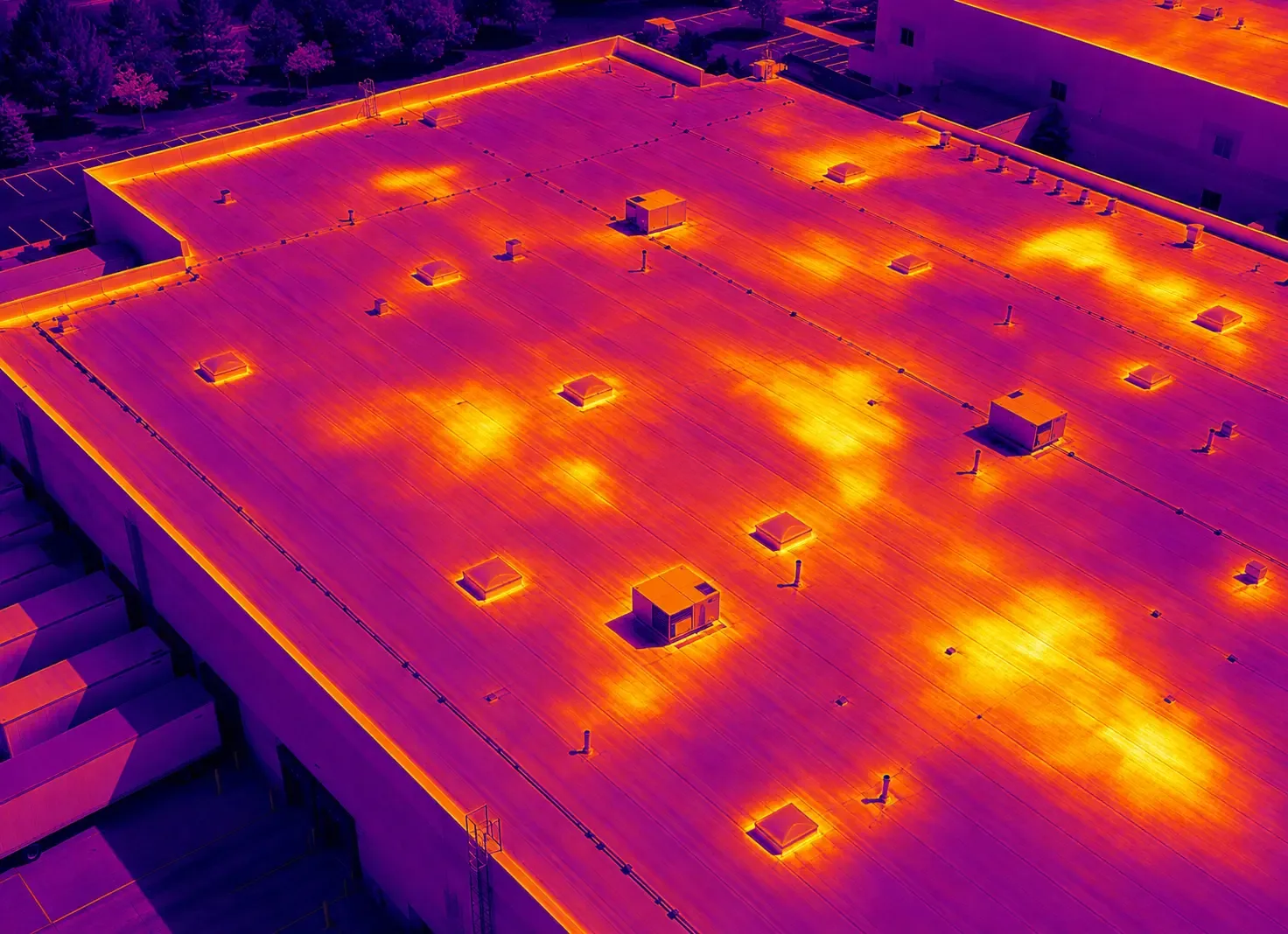
Large office roofs conceal leaks. Water can travel along a deck or through insulation and appear far from its entry. An infrared moisture survey shows wet insulation as a pattern, and the pattern leads back to the source: a curb, a drain, a seam. We confirm the survey with probes or cores, mark the wet area on the plan and set the repair boundary at the edge of the wet insulation.
Without the survey, a repair may cover the stain and miss the source. With it, the boundary is drawn from evidence, and the price follows the boundary. If a core shows trapped moisture under a membrane that looks sound, the update says so and prices the section for replacement.
Roof drains on a large technology building carry water from a lot of roof, and they matter more than their size suggests. A blocked drain can load a roof section with water, and an overflow scupper that sits too high does little to help. We test the drains with a flow check, measure the scupper height against the roof edge and record both. If a drain line is shared with interior plumbing, we confirm with the facility team who services it.
Route 111 and the Town Center
The town center and Route 111 are identified for compact retail, dining and commercial uses. A compact center has small buildings close together, shared lots and limited room for a lift. Restaurants add exhaust and grease, retail adds signs and canopies, and professional offices add HVAC units. The first walk inventories each item, checks flashing and sealants and notes any abandoned penetrations.
Access is simple to plan if the lot has space and harder if it is shared. We ask the owner about neighbors, deliveries and hours, and the plan marks the staging area. Dry-in material is held until the crew can lift it, so a pallet is not left in the rain.
Cost in a compact center often follows access. A roof that can be reached from a rear lot with a lift costs less to work than one that needs a hoist over a neighbor. The update lists the access method and its cost as separate lines, so the owner can see how much of the price comes from the roof and how much from reaching it.
Cool Roofs and Added Equipment
A building that adds equipment, or considers solar, changes what the roof has to carry. A solar-ready roof plan checks the structure, the membrane and the drainage before panels are added, so a roof that is near the end of its service life is not covered by an array. A cool roof installation reduces heat on a reflective membrane and changes the insulation plan. Each option goes in the update with its effect on cost and service life.
Weather Planning and Cost Update
The Lowell station's NOAA normals report 48.51 inches of precipitation annually and a January mean of 24.9 degrees Fahrenheit. We use those as regional planning context for roofs around Boxborough. Regular precipitation keeps drains in play all year, and freeze-thaw cycles work on seams and flashing.
The update sets out what was done to stop the water, what the permanent repair costs, which options exist and what is still unknown, and it names the next update date. Owners with buildings in Littleton or Acton can compare figures on one schedule.
The cost update closes with the recommendation, tied to the way the building is used. A technology tenant on a long lease can justify a longer-life membrane, while a short-term tenant may only justify a repair that keeps the roof sound. Each path in the update carries its price, its expected years and its upkeep, with the weather holds that could move the schedule spelled out.
Commercial Roofing Questions
What is asked first when equipment sits below a leak?
What is powered, what is cooled and what cannot get wet. Interior protection and isolation come before the roof is opened.
Can roofing continue while rooftop units run?
Yes, when the work is zoned around them, intakes are covered and any shutdown is scheduled with the person who controls the unit.
How is hidden moisture found?
An infrared survey shows wet insulation as a pattern. Probes or cores confirm it, and the edge of the wet area sets the repair boundary.
Does adding solar change roof planning?
Yes. The structure, membrane and drainage are checked first, so an array does not cover a roof near the end of its service life.
What keeps drains working on a large office roof?
A flow check on every drain, a scupper height measured against the roof edge, and clearing before the first freeze and again after leaf drop.