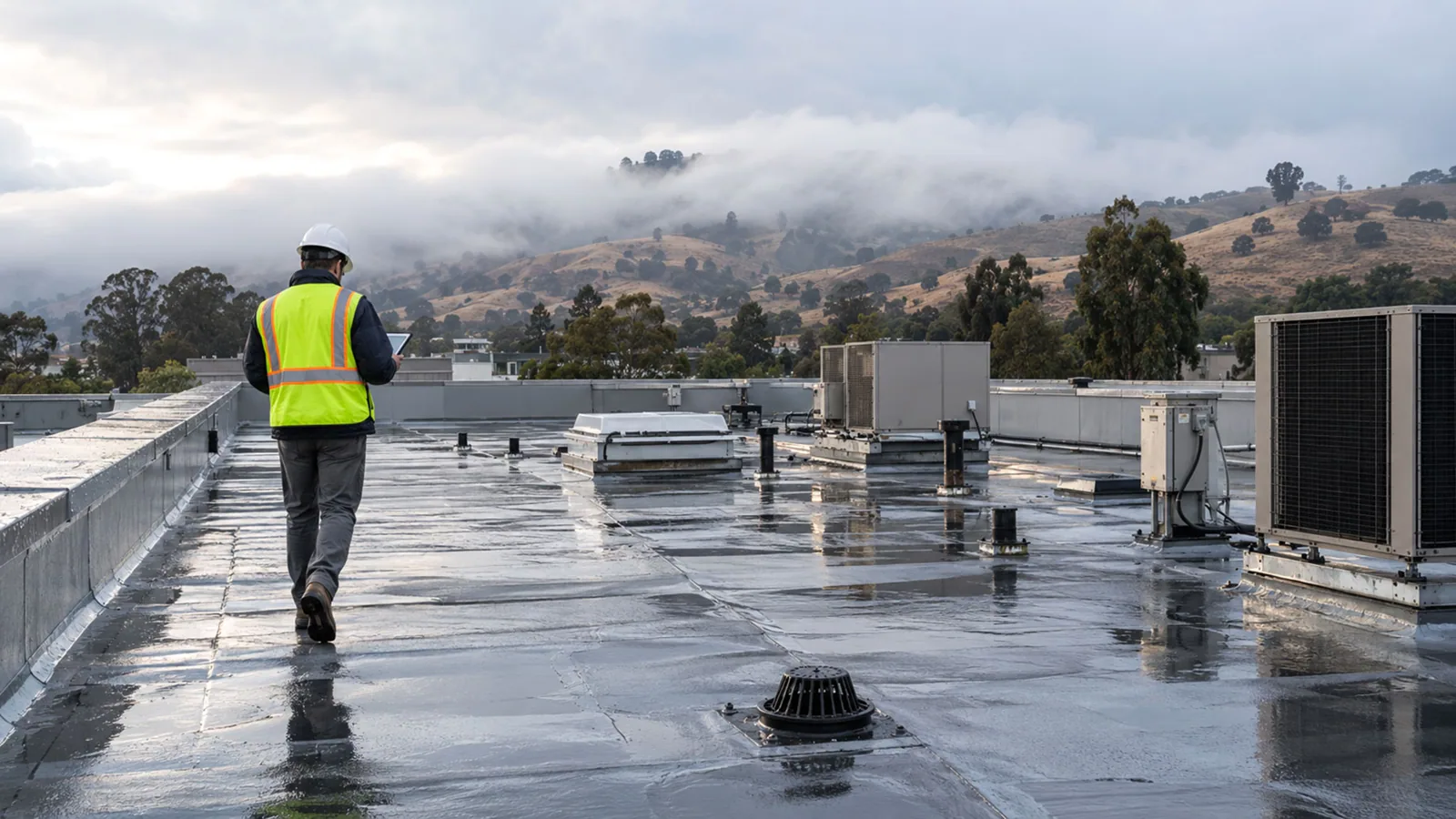
Carlisle, MA runs on private wells and septic systems, because municipal sewer and water are not available anywhere in town. That fact shapes roof work more than it first seems to. Staging areas, lift positions, debris handling and the washing of coated surfaces all have to respect the ground around the building. A first call about a commercial roof here starts with three facts: the point of water entry, the room beneath it and the way onto the roof. It also gets a question about where the crew can stage without touching a well head or a leach field.
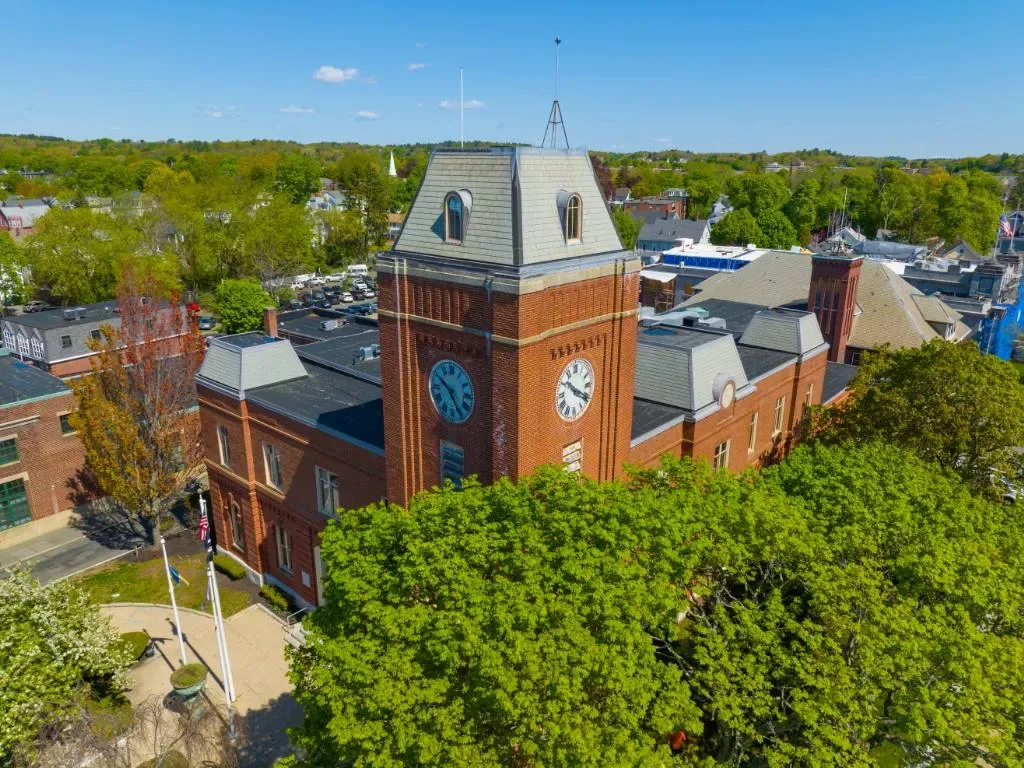
We answer all of that before the lift arrives. Emergency response runs through the night, on weekends and on holidays. At the first visit we log the leak location, what protected the interior and what the roof showed, so the next update can carry a price.
Wells, septic and roof staging
On a site served by a private well and a septic field, a roof job is also a ground job. Heavy equipment compacts soil, and a loaded material truck can damage buried lines or a distribution area. We ask the owner where the well, tank and field sit before we choose a lift position, and we keep the staging pad on firm surface away from them.
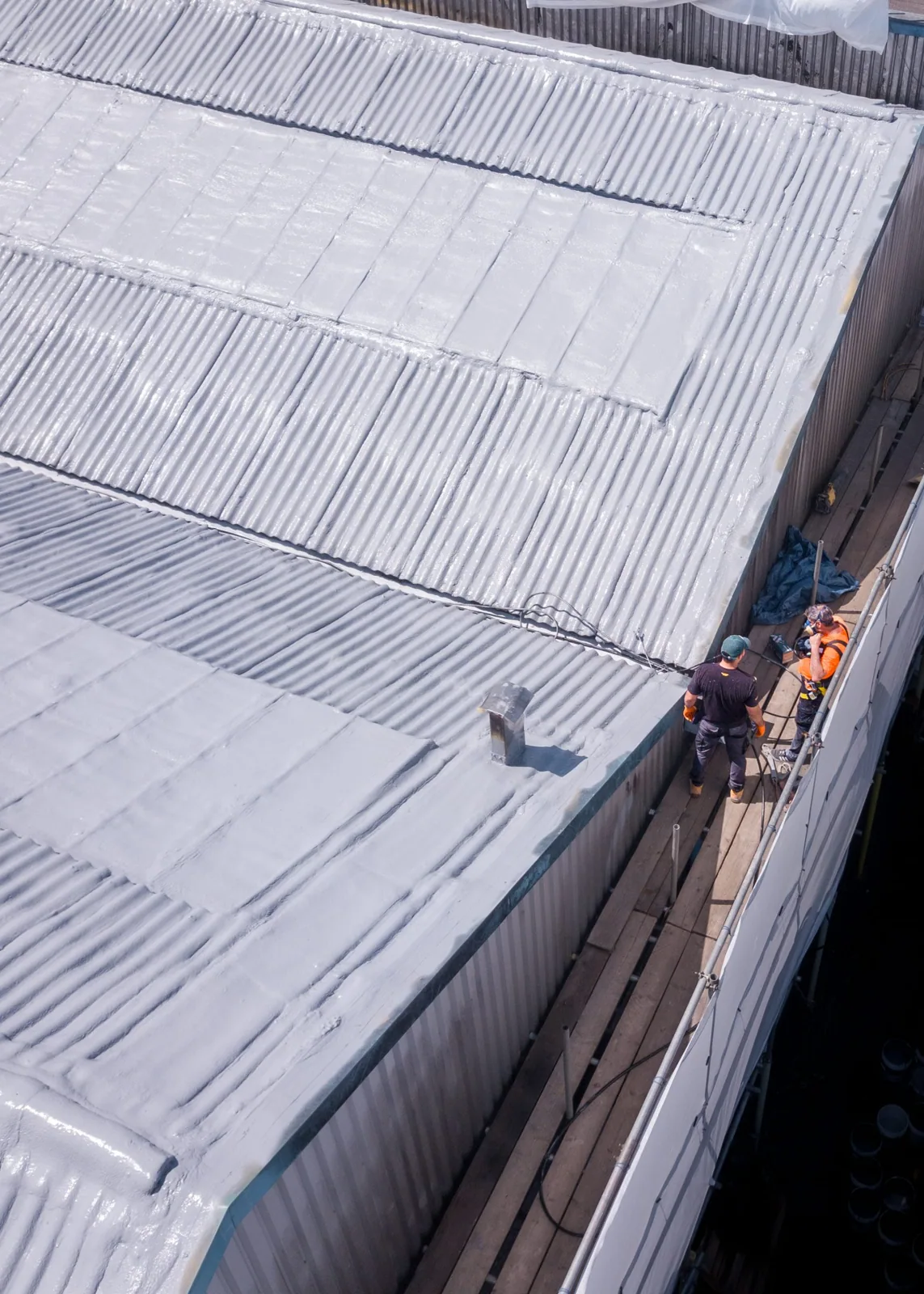
Roof debris, adhesive residue and coating overspray should never reach the soil around a well. We catch tear-off material at the edge, cover drains during the work and haul waste off the property each day. Cleaning solutions are chosen for low runoff and kept to the roof surface. These steps cost little, and they spare the owner a second problem that a roof repair would not fix. The same care applies to silicone coating work, where wash water and primer need to be contained on the roof.
Small sites and managed growth
Carlisle's 2022 master plan calls for managed growth to strengthen the local tax base, and the planning record notes potential mixed-use zoning in selected areas. For a roof owner, that points to buildings that may change use over time. An older building that becomes an office, a studio or a ground-floor shop with residences above creates new demands on the roof: different insulation needs, tighter noise limits during work and stronger requirements for keeping water out of finished spaces.
The first walk identifies the membrane, the insulation, the deck and the flashing details actually present. If a change of use is coming, a roof condition report gives the owner and any designer a record to plan around, and a commercial roof inspection sets the baseline before design decisions are made. Roof work planned ahead of a renovation is easier to price than a repair forced by a surprise, and it lets the owner schedule around tenants and weather.
What the walk records
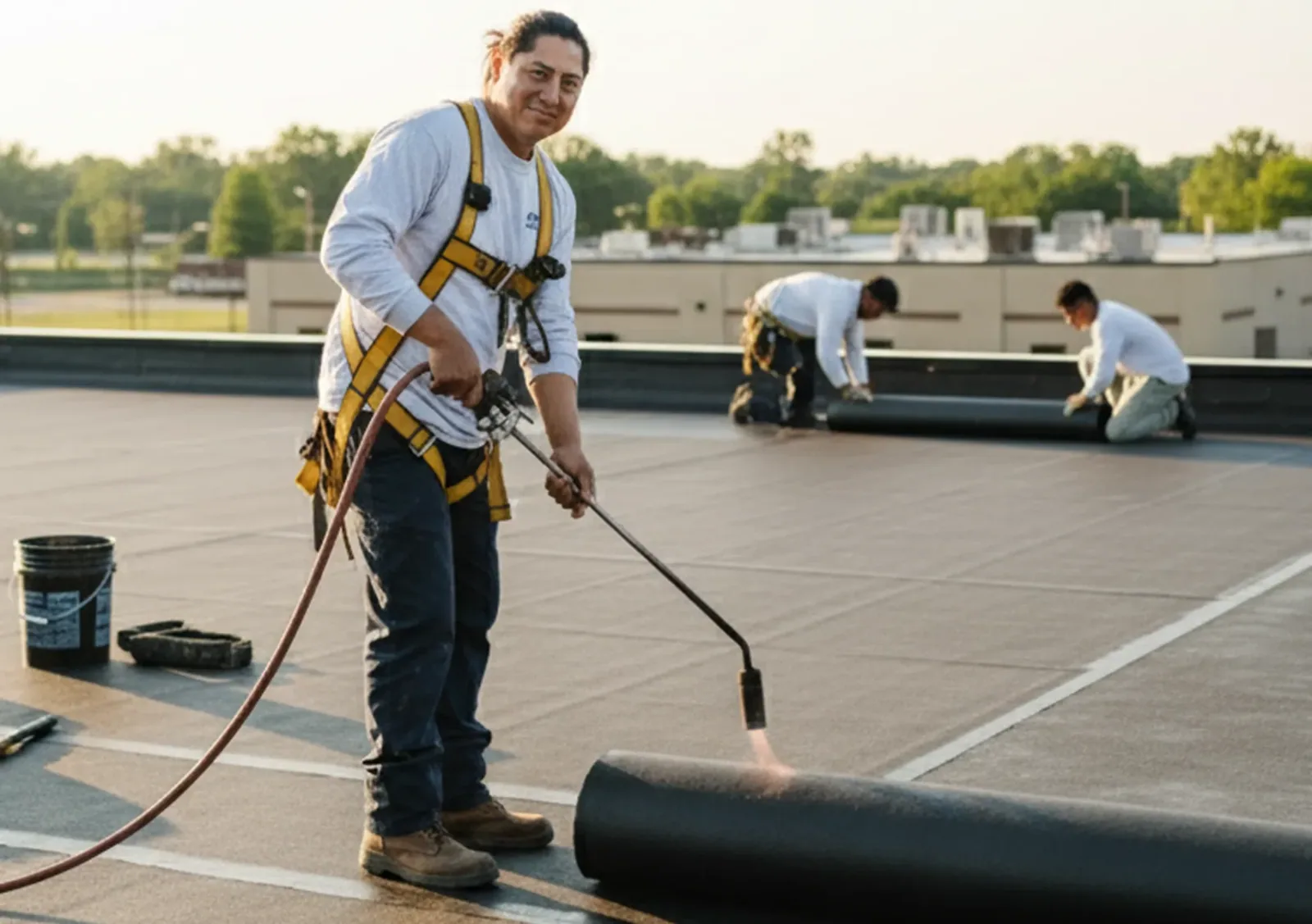
The inspection note for a Carlisle roof reads like the rest of ours. It lists safe access, the active water path, drain and scuppers, seams, flashings, penetrations and perimeter metal. Each finding has a location and a photograph. We mark whether the item is a patch, a rebuilt detail or a monitor-only condition, so the owner knows which items are urgent and which can wait for a dry window. Photos from the roof and from the ceiling below, taken together, show how far water has run.
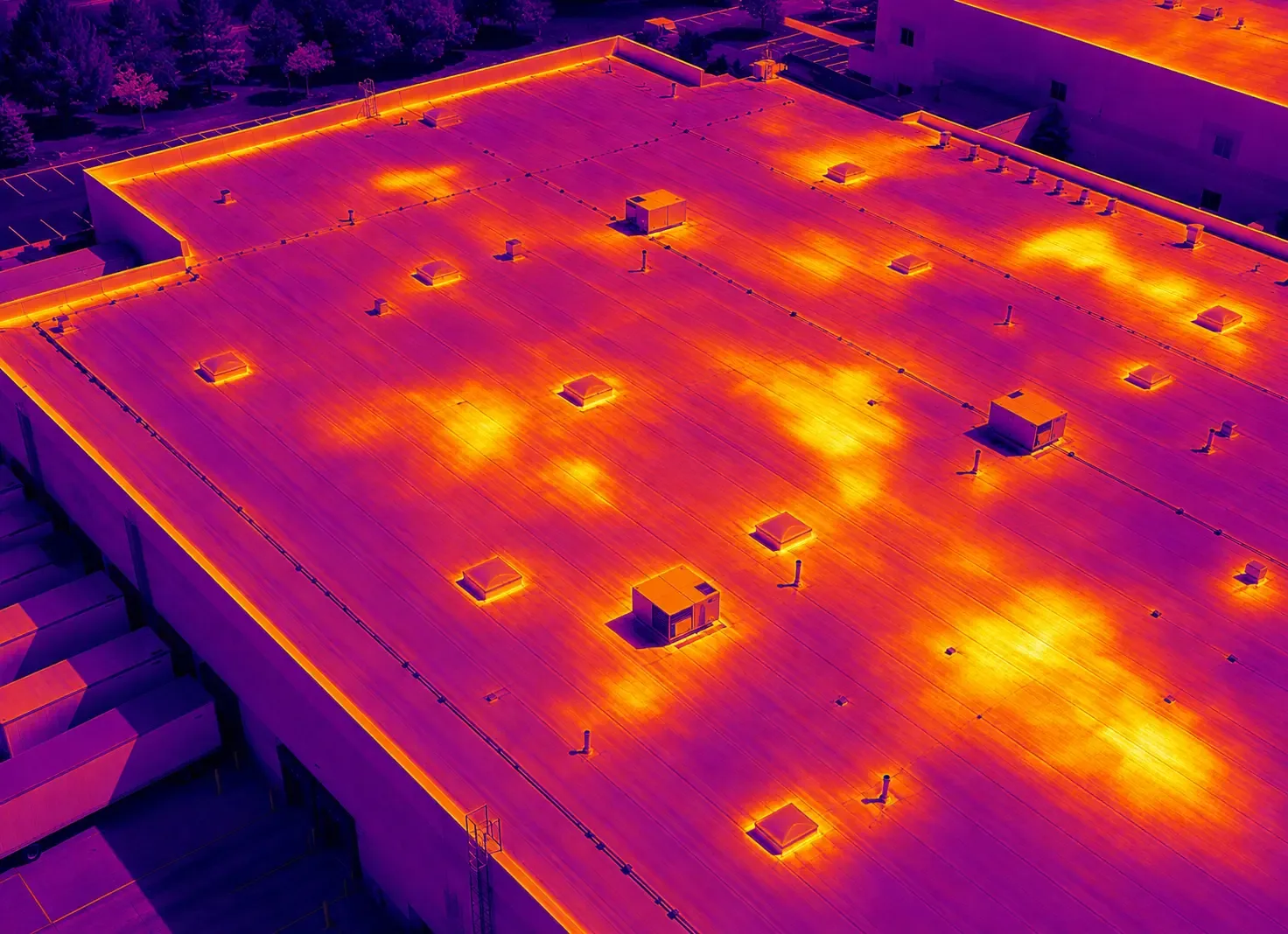
Where insulation may be wet, a moisture survey maps the damp areas before any tear-off is priced. That avoids replacing dry material and keeps the budget close to the real boundary. A drone inspection helps on roofs with steep approaches or limited ladder access, and the hands-on visit confirms the details that photos cannot show. Between visits, a maintenance plan clears drains and checks the repair points.
Rain, freeze-thaw and drainage
Lowell's October normal of 5.00 inches and December's 4.54 inches sit inside a yearly total of 48.51 inches, so the wet months are spread across the second half of the year. For a Carlisle roof, that rhythm means drains and gutters work hard in autumn leaf season and again through early winter. Leaves, needles and seed pods collect at scuppers and leaders, and a clogged outlet turns a sound roof into a ponding problem. Tree cover near a building raises that risk, so we check the roof edge as well as the field.
January in Lowell averages 24.9°F, and the region's freeze-thaw cycle works on small openings until they become leaks. Winter storms, including nor'easters and ice storms, are listed among the major hazards in the Lowell area plan. We look at ice at the eave, snow weight against rooftop equipment and any place a thaw lets water sit. If weather rules out the permanent repair, we dry the roof in temporarily and book the return for the next dry stretch.
Code and cost decisions
Applications filed from July 1, 2025 onward answer to the 10th edition alone, a Massachusetts code that draws on the 2021 International Building Code. Municipalities may adopt stretch or specialized stretch energy-code provisions, so the local energy requirement is confirmed for each project before insulation is specified. Replacing a roof can trigger insulation upgrades, and that is a cost line the owner should see before approving the work.
The rest of the price depends on repair extent, roof system, access gear, protection indoors and trips made to the site. A repair finished in a day sits far below the cost of a staged roof replacement on an occupied building. We list every item and the assumption behind it. Owners comparing options in nearby towns such as Concord or Chelmsford will find the same line-by-line scope. The earliest crew date and any weather hold are stated in the update, so a manager can plan around tenants and the well and septic protection steps.
Commercial Roofing Questions
Does a private well on the property change how the roof is worked on?
It changes where we put equipment and how we handle waste. The owner shows us the well and the septic field, and we choose a staging pad away from both. Debris is caught at the roof edge, drains are covered and coating or adhesive residue stays on the roof.
If a building may change use later, should the roof wait?
Not if it leaks now. A repair can stabilize the roof while the owner decides on the larger plan. The report records the existing layers and insulation, which a designer needs for any change of use, so the repair does not duplicate work done later.
What does a first-hour response on a Carlisle roof include?
Confirming the water location, keeping people clear of wet ceilings and electrical equipment, and checking that the roof can be reached safely. We log what protected the interior and what the roof showed, then tell the owner when a price will follow.
How do autumn leaves affect a commercial roof?
Leaves and needles pack into drains, scuppers and gutter outlets, and water then ponds on the membrane. Standing water speeds seam wear and adds weight. A cleaning visit in late autumn and another after the first thaw costs far less than a repair to saturated insulation.
Which energy rules apply to a replacement in town?
The Massachusetts base energy code applies, and the town may have adopted a stretch or specialized stretch provision on top of it. We confirm the local requirement before pricing insulation thickness, because it can change the material list and the final cost.