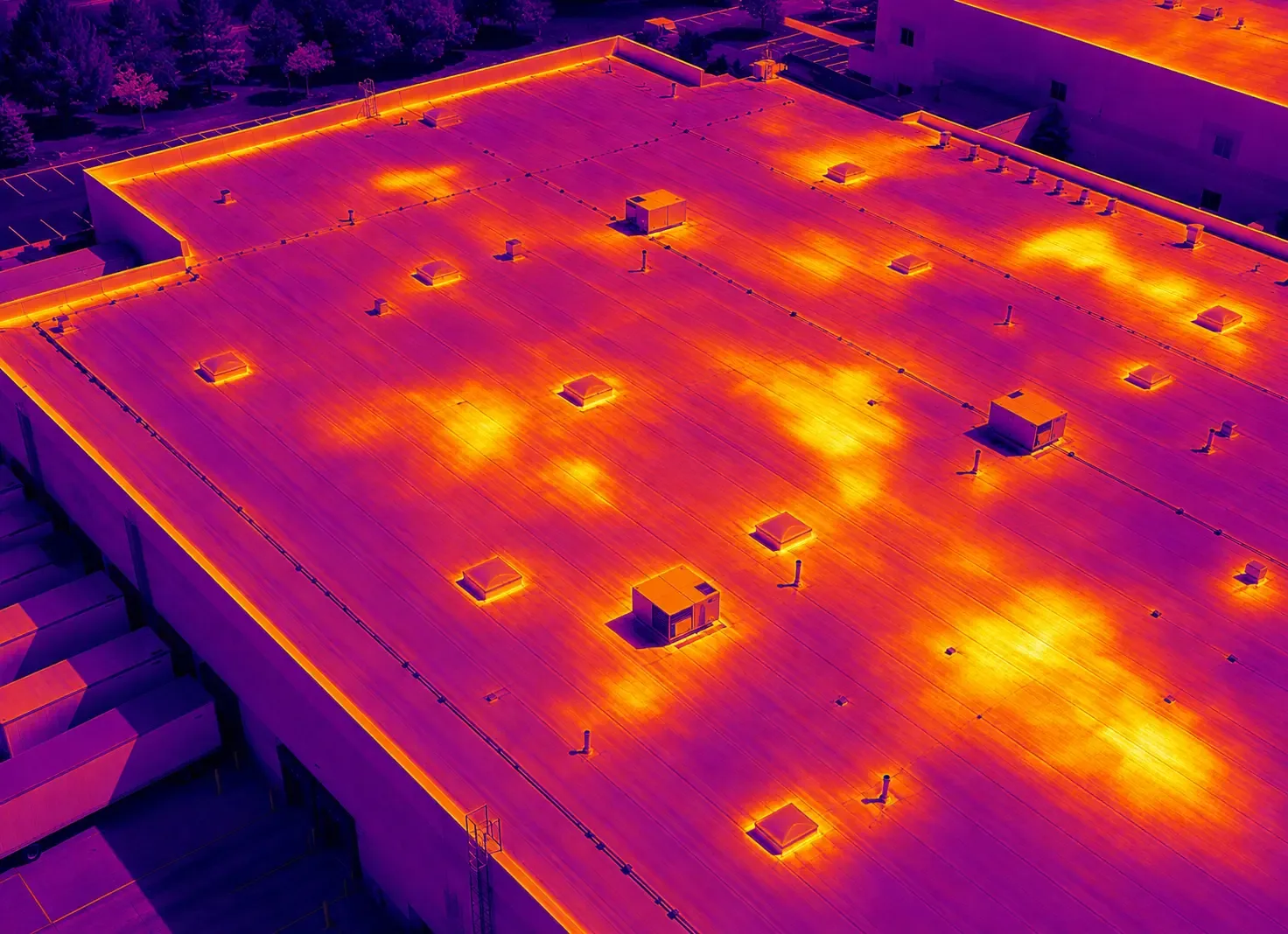
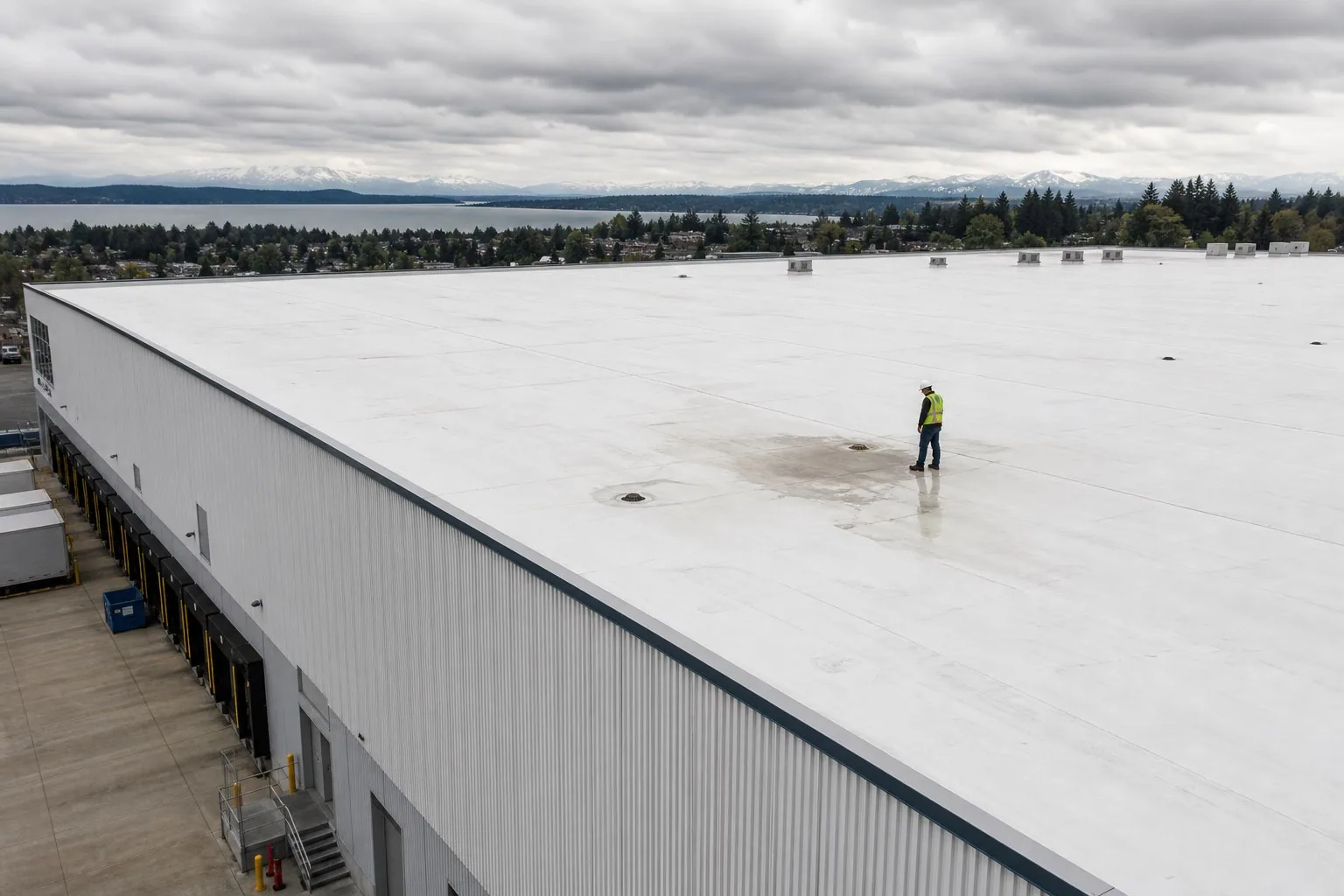
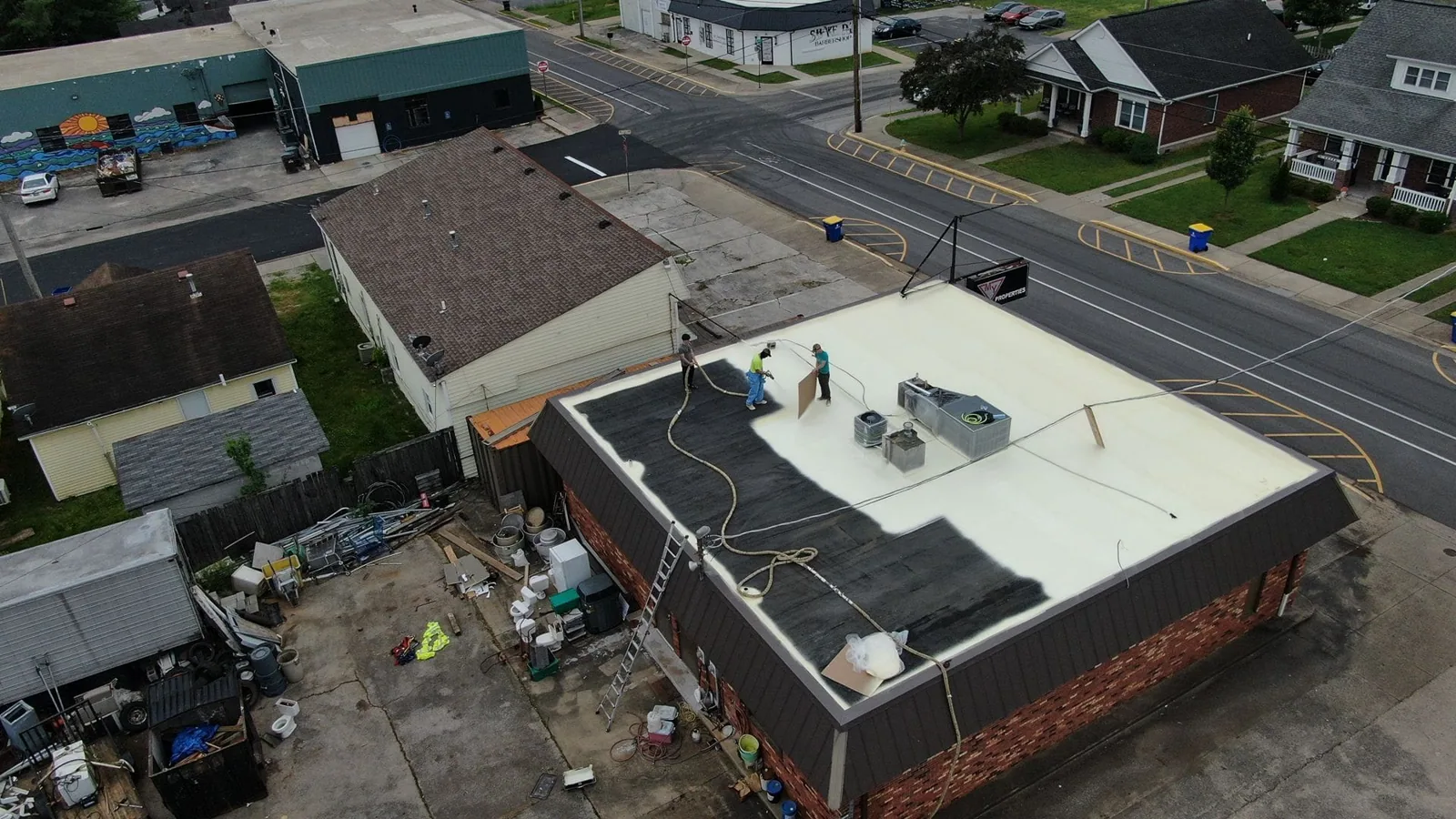
The first check on a coating job is a moisture reading, taken before anyone prices a drum of material. A coating is a liquid-applied membrane laid over an existing roof, and it extends service life only where the roof underneath is still dry. Wet insulation does not dry out under a fresh coat. It stays wet, the coat blisters over it, and the owner has paid to seal the moisture in.
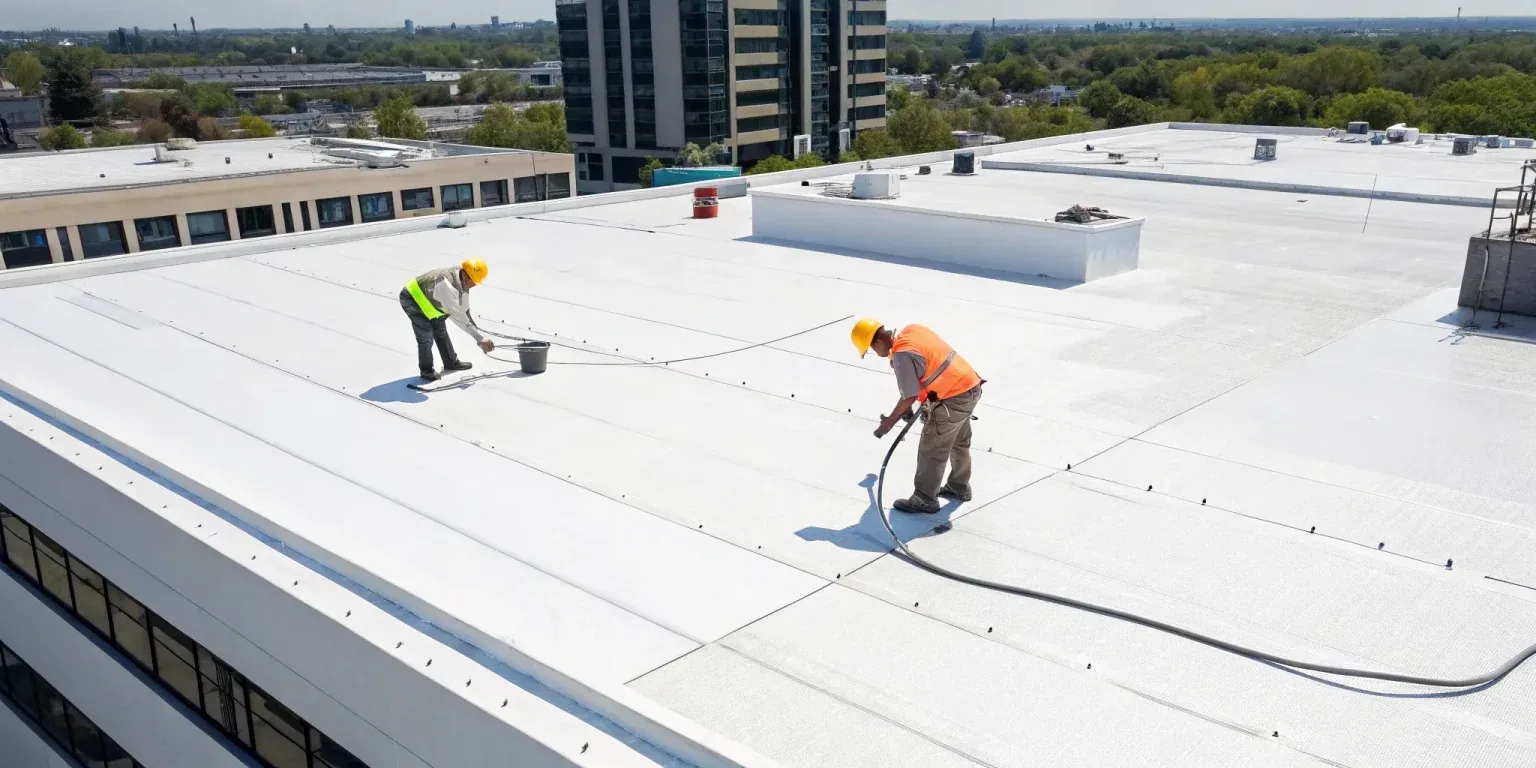
In Lowell, MA, the calendar presses on the same decision. From a 24.9°F January to a 72.8°F July, the roof swings through a wide range every year, and a coating has to stretch and recover through all of it. The inspection note names the roof sections that qualify, the sections that do not, and the cost exposure either way.
Roof Sections That Qualify
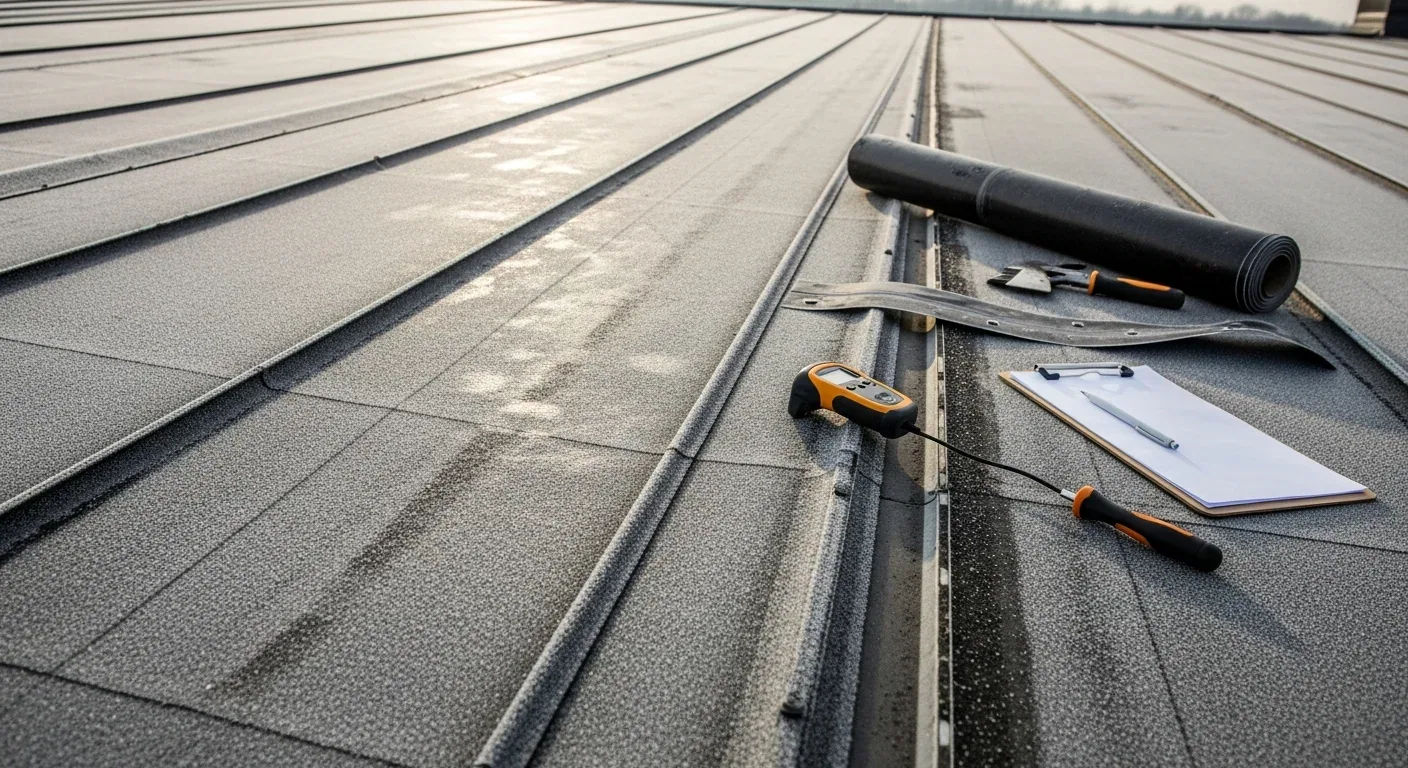
A coating suits a membrane that is sound but tired: a chalked or faded surface, seams that weep after rain, general weathering, and no widespread saturation. Single-ply, modified bitumen, smooth or mineral-surfaced built-up and sound metal panels can all take a coat when the surface is clean and the insulation below is dry. The roof is walked in full, and core samples or an infrared moisture survey separate wet sections from dry ones. Each section gets one of three marks: coat, repair then coat, or remove.
Roofs fail the screen when trapped moisture runs across large areas, when membrane has pulled away from walls, or when the deck gives underfoot. Those are recover or replacement decisions, and a coating laid over them is a repair that opens again in the next freeze.
Surface Preparation and Dry Windows
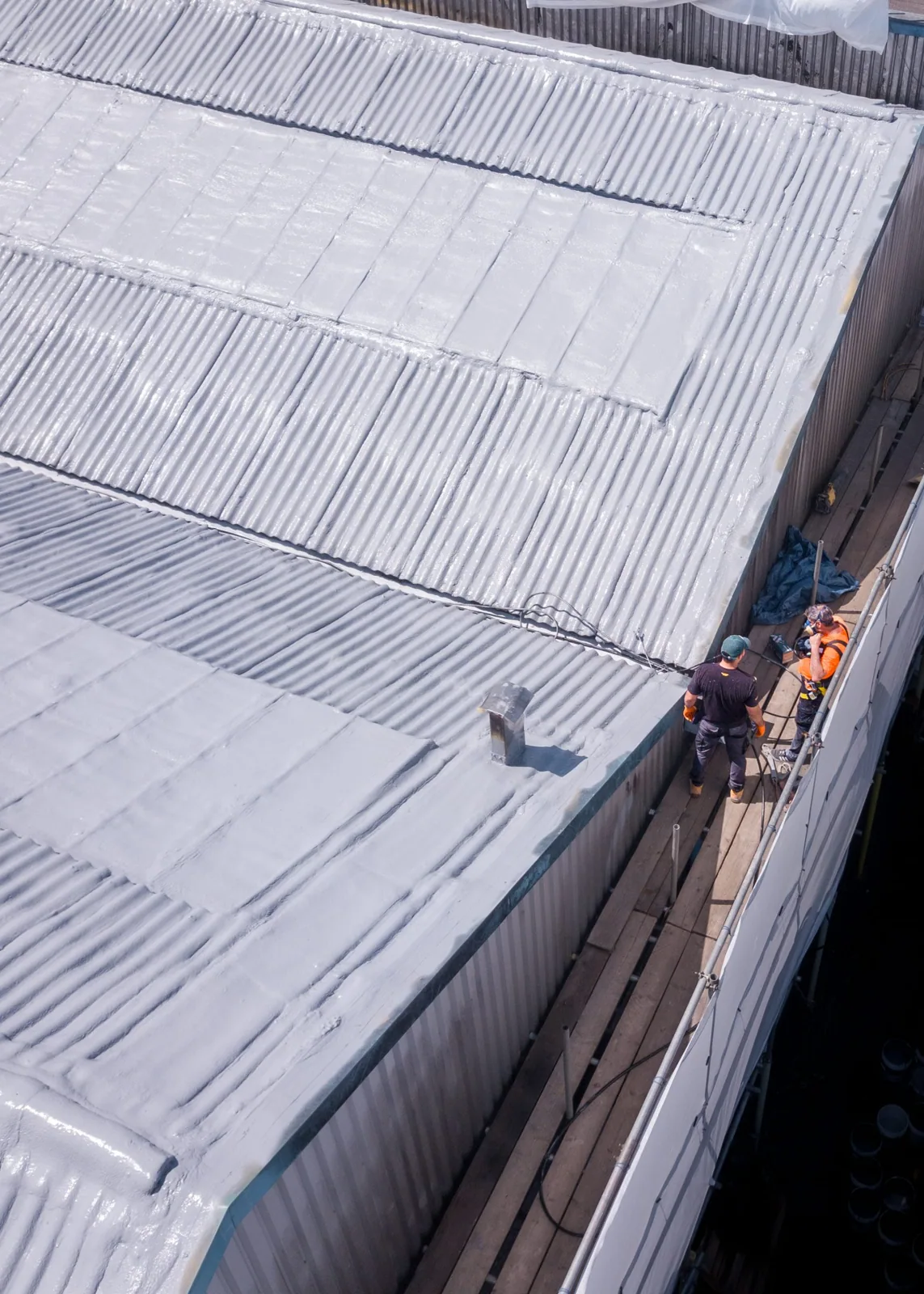
Preparation is most of the labor and most of the reason a coating lasts. The surface is washed free of dirt, oxidation and growth, then left to dry. Open seams are re-welded or reinforced with fabric and mastic, flashing is repaired or replaced, backed-out fasteners are reset, and rust on metal is treated.
Over a normal year the Lowell station records 48.51 inches of precipitation, and October (5.00 inches) and December (4.54 inches) are both wet months. Autumn is not a safe fallback for coating work: surfaces stay damp, mornings carry dew, and the dry window narrows. Application is scheduled into stretches of settled weather, and a weather hold is called when the surface or the forecast cannot support the cure.
Silicone, Acrylic and the Drainage Question
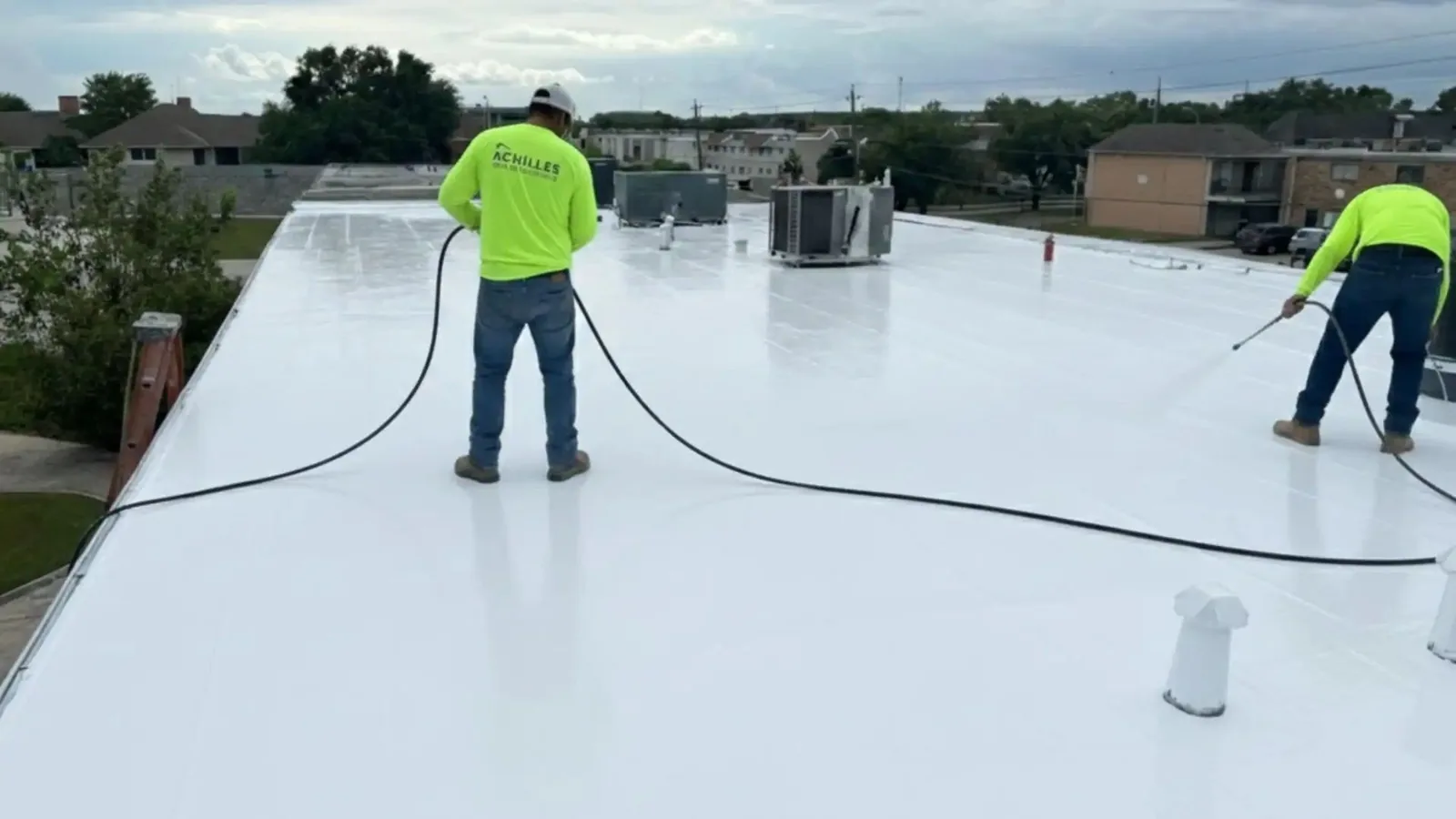
The two coatings most used on low-slope roofs behave differently where water sits. Silicone coating tolerates standing water and keeps its properties under it, which makes it the usual pick for a roof with shallow ponding that cannot be corrected. Acrylic coating is water-based and reflective, but it does not belong under persistent ponding. The choice follows the roof's drainage, not a preference.
Where the pond comes from a clogged drain or a low spot at a scupper, the cause is corrected first, because ponding water left in place shortens the life of any coating. A coat over a drainage defect only hides it for a season. The scope states which sections are coated, which receive new drains or tapered build-up, and which keep a shallow pond that silicone can live with.
Cure Time and Return Window
Coating work is staged by roof section so the building keeps operating. Each section is cleaned, repaired, primed, coated and left to cure before foot traffic or rain. Base coat and top coat go on in set passes, and thickness is checked with a gauge against the coating maker's required level, because a thin spot is where the first failure shows.
The facility director receives a return window for each section: when the crew arrives, which roof access is closed, when rooftop equipment can be serviced again, and when the next update with thickness readings and photographs will arrive. If the forecast turns, the pass is moved and the new date is reported.
Coating Against Recover or Replacement
A coating usually costs less than a recover or a tear-off and takes less time on site, but it buys a defined extension, not a new roof. How much life it adds depends on the starting condition, the coating type, the applied thickness and the care that follows. A roof that will need a recover in a few seasons may still be a coating candidate today. A roof that needs full replacement now is not, and the section map says so.
The scope puts the three paths side by side with their cost drivers: preparation labor, repairs before the coat, coating volume, access and the number of roof sections. After the cure, the coated roof joins a preventive maintenance routine of drain clearing, seam checks and traffic-area inspection.
Review, Code and Warranty Checks
A coating changes the look and the thermal behavior of a roof, and both can draw review. Any exterior change in the Downtown Lowell Historic District goes before the Historic Board, so a coated roof section there is cleared with the board before a color is chosen. Since July 1, 2025, new applications in Massachusetts fall under one state code only, the 10th edition, which borrows mainly from the 2021 IBC. A coating changes how a roof reflects and sheds heat, so the energy rules in force for the project, including any stretch provisions the town adopted, are checked before the scope is fixed.
An active manufacturer warranty is read before any coating goes on, since a coating over a covered membrane can change coverage. The warranty terms decide whether the work follows the original maker's notice rules or sits outside them, and the answer goes into the scope.
Industrial and Office Roofs Around Lowell
Coating fits the large, open roof sections common on industrial and commercial property. Ayer's City, the Tanner Street area at the center of the city's industrial park plan, covers about 108 acres that are mostly heavy-industry zoned. A heavy-industry roof runs under production schedules, and coating can often proceed one section at a time without the debris and noise of a tear-off. Chelmsford's Route 3/129 corridor is a technology concentration of large offices and corporate headquarters, and an office roof in Chelmsford there gets its coating passes fitted around tenant hours and rooftop mechanical equipment.
Commercial Roofing Questions
How much service life does a coating add to a commercial roof?
The starting condition sets the answer. A roof with dry insulation and a sound membrane gets the full benefit, and a roof with wet sections gets less or none. The inspection note gives an expected range for each roof section, based on the moisture readings, the coating type and the thickness specified. No range is a promise, so the maintenance routine after the cure is part of the plan.
Can a coating be applied over a roof that is leaking now?
A leak from a known detail, such as a split seam or loose base flashing, is repaired and then coated. A leak that comes from saturated insulation across a section is a different case, because the coat would seal the water in. Moisture readings taken before pricing separate the two, and the scope lists the wet sections for removal or replacement.
What does winter do to the coating schedule?
Cold and damp stop application, and a cure that begins in cold weather can stall. Both October and December normally bring more than four inches of precipitation to the Lowell station, so the work is planned for settled stretches rather than fixed dates. If the roof cannot be coated safely, a temporary dry-in holds the leak until the weather opens.
Does a roof coating in the downtown historic district need approval?
The Historic Board reviews exterior work in the Downtown Lowell Historic District, and a changed roof color or edge appearance is the kind of detail a review looks at. The approval path is confirmed with the municipality before a color is ordered. A building outside the district skips that step but still needs the energy code check.
Who maintains the coating after the crew leaves?
Drain clearing, seam checks and inspection of rooftop traffic areas fall to the owner or the maintenance contractor on a set schedule. Technicians who walk the roof to reach mechanical equipment wear the surface fastest, so walk pads protect the coat.