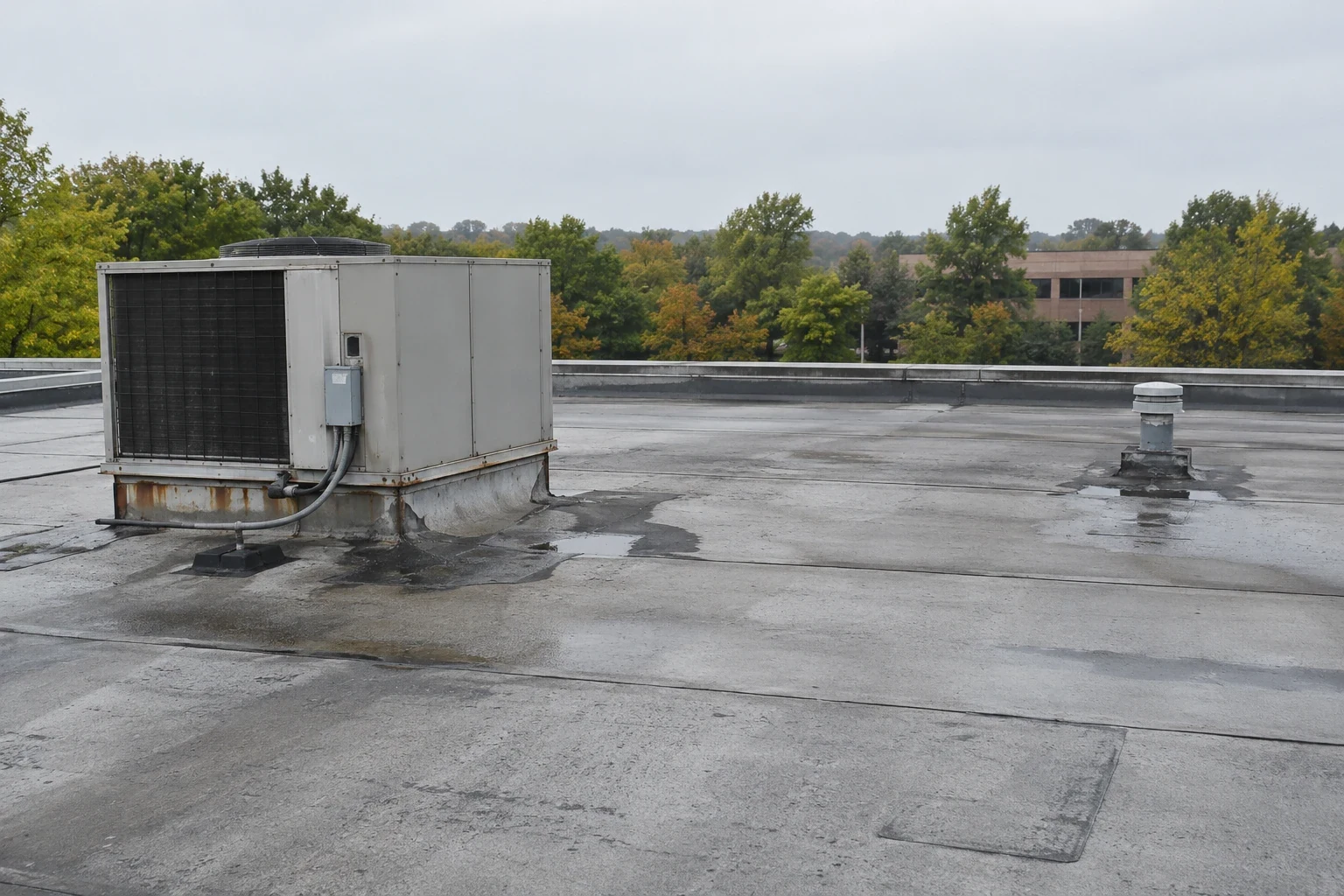
Count the lengths of loose edge metal before pricing anything, because the perimeter is priced by the foot. Coping, fascia, drip edge, gutters and downspouts are the metal that closes the roof against its walls and carries water off the building. When a length opens, water gets behind it, and the first sign is often a stain on the wall below or a ceiling at the perimeter, far from the opening itself.
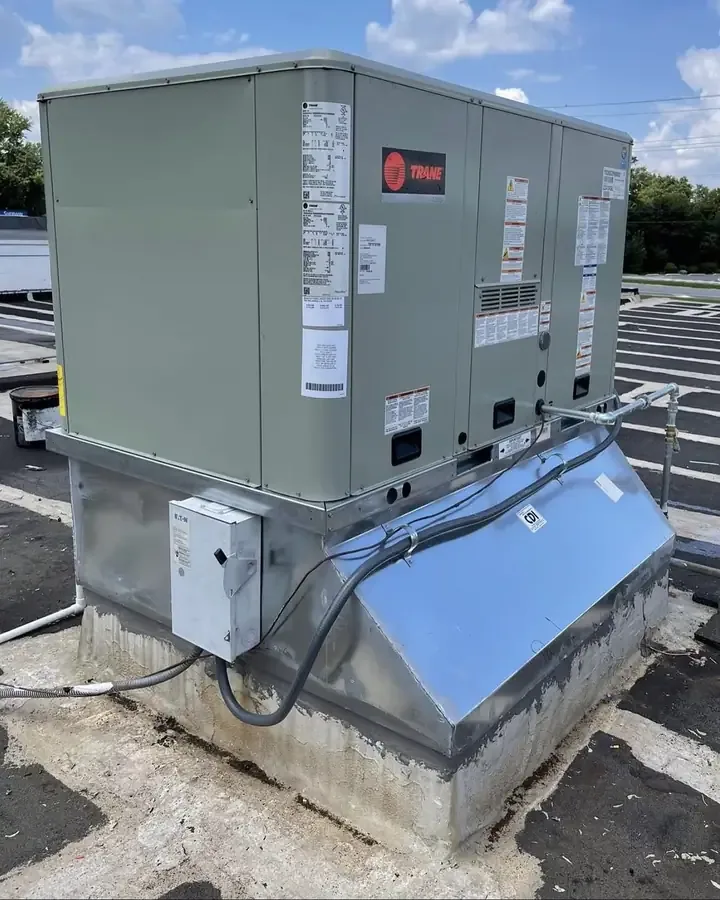
In Lowell, MA, the perimeter works hard. Hurricanes, nor'easters and ice storms all sit on the city's hazard list, and the Lowell station shows a 24.9°F January against a 72.8°F July. Metal expands and contracts through that range every year, and each joint, fastener and sealant bead has to follow. The inspection note gives the facility director the number of lengths that are loose, open or missing, and the cost of each group of repairs.
Coping and Parapet Caps
Coping caps the top of a parapet wall. It sheds water outward, covers the wall's top edge, and ties the roof membrane's termination into the building. Failures show at the joints between lengths, at the corners, and at the cleats or clips that hold the front and back edges. A cap with an open joint lets water into the wall, where it travels down the masonry or sheathing and can reach the interior far from the roof.
Repair starts with a check of the substrate under the cap: is the wall top sound, is the membrane termination intact, is the fastening tight. Joints are re-sealed or replaced with splice plates and sealant, loose lengths are re-fastened to the cleat, and missing lengths are fabricated to fit. Where the cap has been deformed by wind or impact, it is replaced, not bent back, since reshaped metal rarely seals again.
Fascia, Drip Edge and Terminations
On a roof without parapets, the edge is a fascia or drip edge that finishes the membrane and turns water into the gutter or off the building. The metal must be fastened through a continuous cleat or a hook strip, and the membrane must be terminated at the edge in a way that survives movement. Edge pieces that were nailed face-first, left unsealed or lapped backward fail early.
Where the edge detail is part of a flashing failure, the repair takes in the metal and the flashing beneath it as one job. Replacing a drip edge over a failed termination returns a clean line but leaves the opening underneath. The note lists what was replaced, how the new metal is fastened and which terminations were re-formed, so the next inspector can find them again.
Gutters and Downspouts
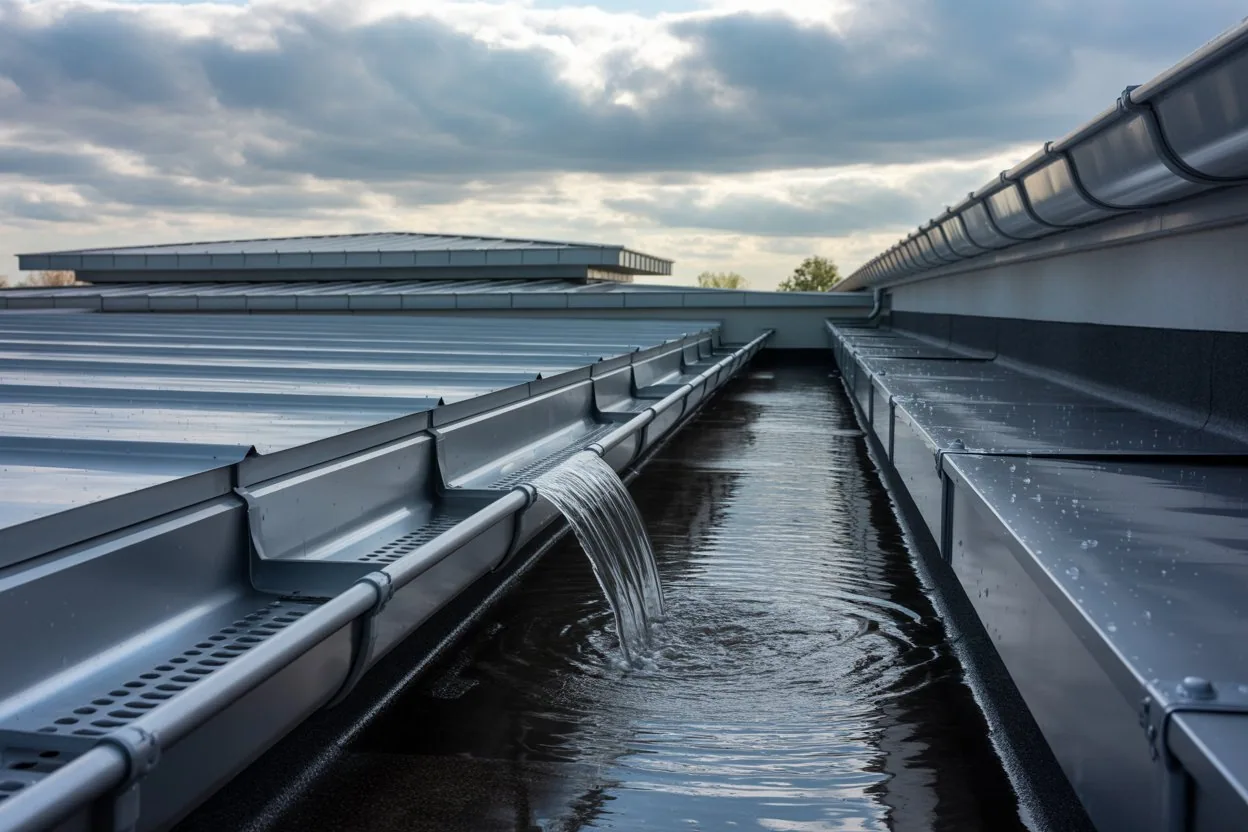
Gutters and downspouts carry roof water to the ground, and on a low-slope building they often serve the sloped canopies, entry roofs and smaller sections. They fail by clogging, by sagging off their brackets, by cracking at seams, and by freezing full. A full gutter in a freeze can pull its brackets off the fascia or split at the seams, and the load of ice can pull the gutter and the edge metal with it.
The repair checks pitch toward the downspout, bracket spacing, seam condition and the discharge point. Downspouts that dump against a foundation or onto a walkway are redirected, and those connected to underground piping are tested for flow. Where the gutter serves a primary roof drainage path, it is reviewed with the drain and scupper layout so one clogged outlet does not become an interior leak.
Fastening and Wind Load
Edge metal sees the highest wind pressures on a roof, so fastening matters more than appearance. Cleats should be continuous or closely spaced, fasteners should reach the structure and not just the sheathing, and laps should face away from the prevailing weather. A length that has lifted in a storm is usually telling the inspector which fasteners backed out, and the neighbor lengths get checked for the same fault.
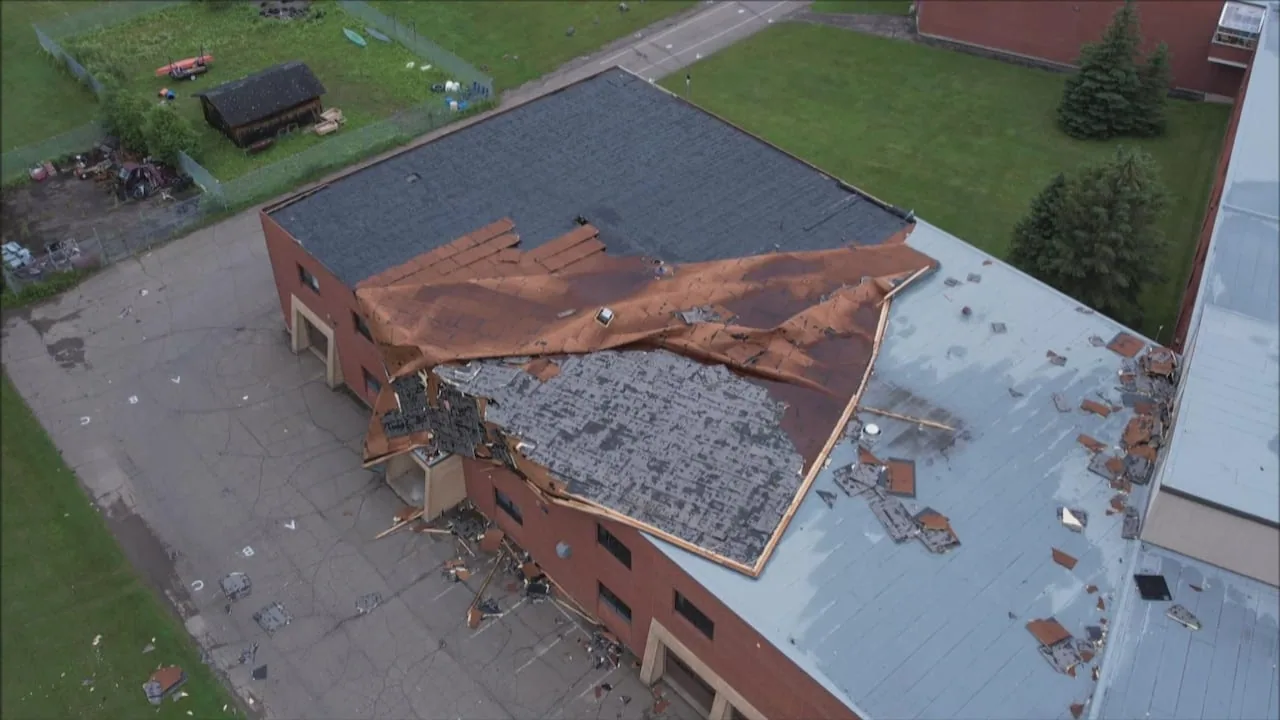
After a storm, a survey of the perimeter looks for the pattern. Corner pieces, long unbroken runs and areas near rooftop equipment are checked first. The wind damage repair scope uses the same perimeter record, with each length tagged and photographed, so the claim file and the repair scope match.
Freeze-Thaw and Ice at the Edge
Ice forms first at edges, where meltwater leaves the warm roof and meets cold metal. It builds along gutters and behind drip edges, and the next melt backs up under the metal. Lowell's regular precipitation, 48.51 inches across a normal year, supplies the water, and its freeze-thaw cycle opens any joint that is not tight. Sealants that were applied below their minimum temperature or onto a dirty surface let go in the first winter.
The fix is detail work: joints sealed in suitable weather on cleaned metal, expansion joints in long runs, and gutters pitched so they drain between storms. Heat cable, where installed, is checked before winter. Edge work done in cold weather is limited to temporary securing and sealing, with the permanent work set for the weather window.
Scope Groups and Cost Drivers
Edge metal is priced by the foot, and the price moves with the metal, the height, the access and the number of corners. A ground-level fascia is cheaper to reach than a coping cap four stories up that needs a lift or swing stage. Matching existing profiles and finishes adds to fabrication time, since custom bends take shop work.
The scope separates urgent securing, permanent replacement of failed lengths and optional upgrades such as a heavier gauge or a continuous cleat retrofit. It can also be staged with a larger roof repair so the lift and crew are mobilized once. The facility director approves the urgent group first and holds the rest for the maintenance budget.
Perimeters on Mill, Office and Industrial Buildings
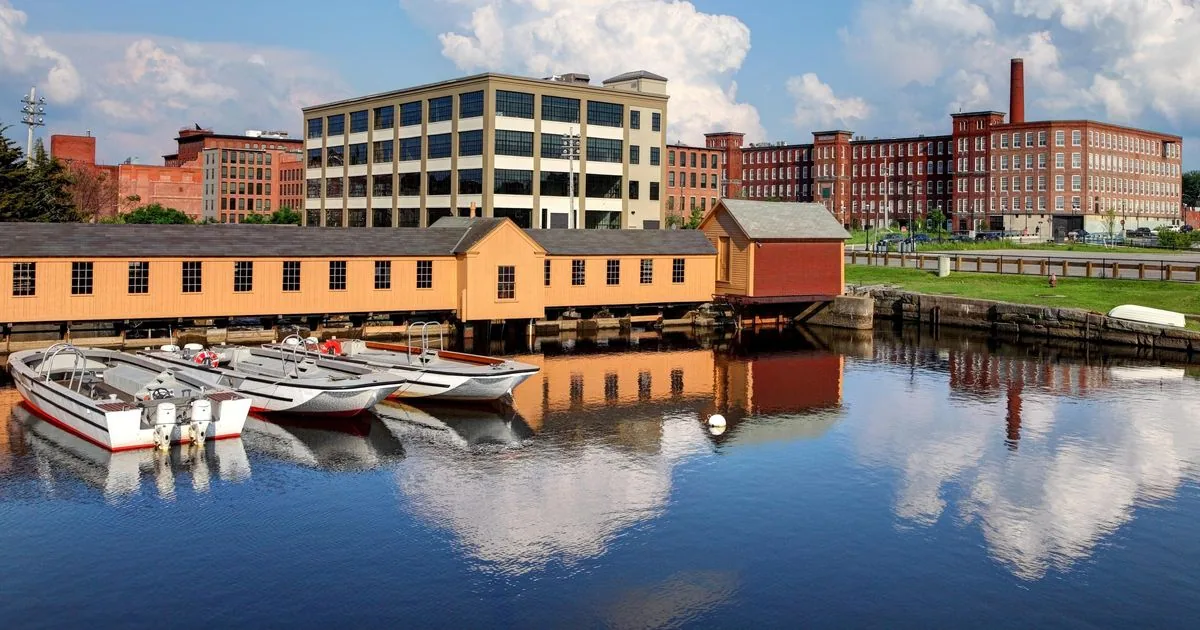
A replacement coping profile or color in the Downtown Lowell Historic District goes through Historic Board review before it is ordered. The district takes in the commercial district, the mill yards and the canal system, so a perimeter job there starts with the approval path. Further out, Westford identifies commercial office parks and the Route 110 corridor, with access to I-495 and Route 3, and an office building roof there with long parapet runs carries a perimeter schedule of its own.
Commercial Roofing Questions
Why does a wall stain appear far below the failed coping joint?
Water that enters at a cap joint follows the wall cavity or masonry downward until it finds a weak point. The stain marks where it exits, not where it entered. The inspection traces upward from the stain, checking each joint and corner between the stain and the roof edge.
Should failed gutters be repaired or replaced?
Cracked seams and a few loose brackets are repair items. A gutter that has been pulled off by ice, or that has pitched away from its downspout along most of its length, is a replacement case. The scope gives both prices when the line is close.
Does replacement coping need approval in the downtown historic district?
In that district the Historic Board reviews exterior work, and visible coping is the kind of item it looks at. Profile, finish and color are confirmed in advance, and the approval is attached to the scope.
How is edge metal fastened so it survives wind?
Through a continuous cleat or closely spaced clips that reach the structure, with laps facing away from the weather. Fasteners that reach only thin sheathing back out in the first storm. The repair note lists the cleat spacing and fastener type used.
What can be done about ice that keeps pulling a gutter loose?
Check pitch, bracket spacing and discharge first, since a gutter that holds water freezes full. Heavier brackets, closer spacing or a leaf-free outlet may help. Where ice forms at a roof edge because of heat loss or poor drainage, the cause is traced before new metal goes on.