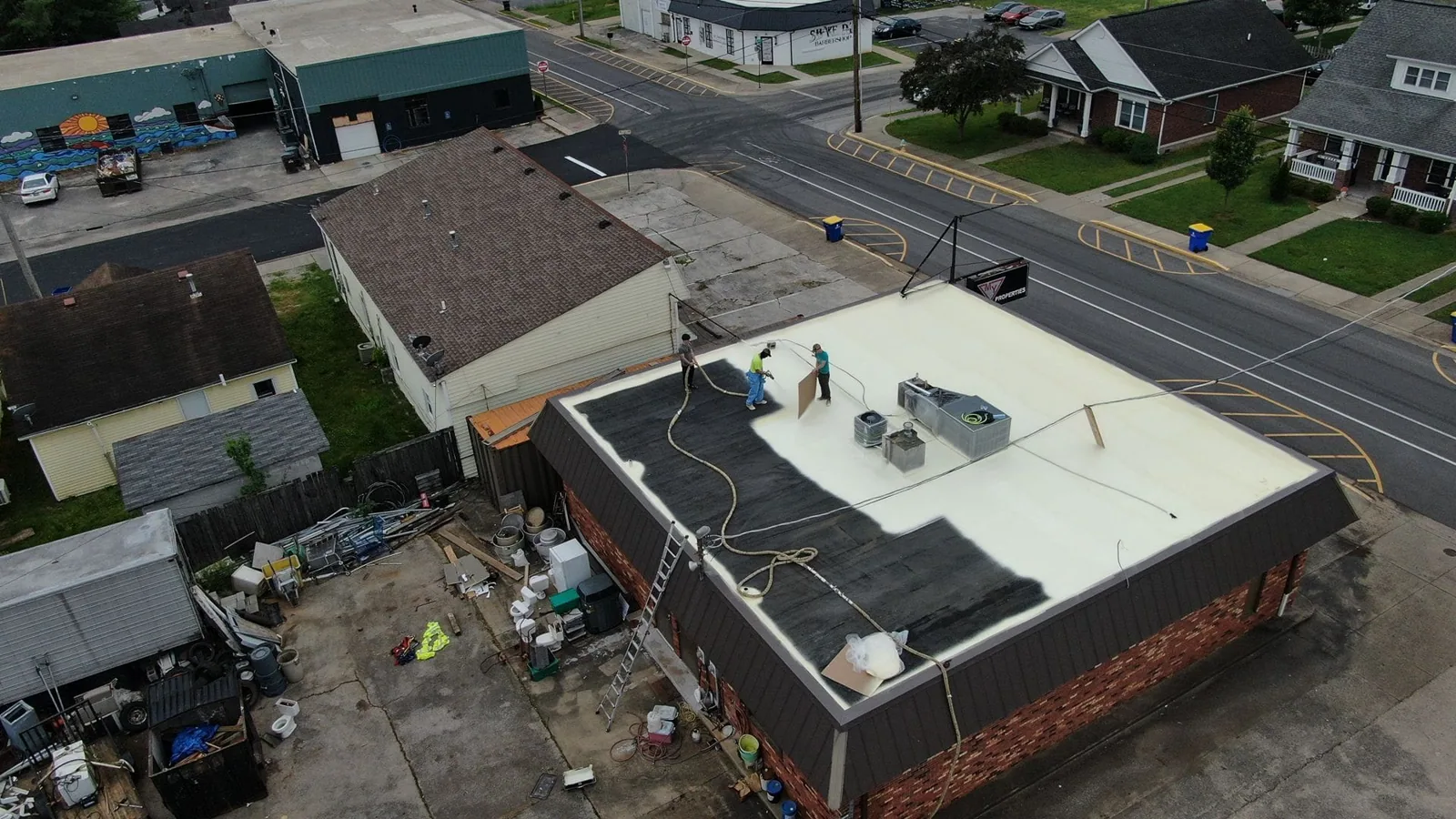
Keep everyone off the roof until a qualified person has cleared it. A fire can burn through a deck, weaken steel and leave a surface that looks sound and carries no load. The first action after a fire report is not a repair. It is a decision about who may enter, what has to be shored or barricaded, and what the authorities and the insurer need left undisturbed.
Once access is cleared, the work sequence runs in a fixed order: temporary dry-in, interior protection, assessment of the deck and insulation, removal of burned and wet material, and then permanent repair. Each step has a cost, and the inspection note keeps them apart so the owner and the insurer can see which charges belong to emergency protection and which belong to the permanent scope.
For a building with tenants, communication follows the same order. The facility director gets a short written note after each step: what was found, what was done, what comes next and when the next update arrives. The note keeps emergency work and permanent work separate, so decisions on cost are made with the facts in hand.
Structural Clearance and Safe Access
A roof that has been through a fire may be unsafe in ways that cannot be seen. Heat weakens steel decking and joists, burns through wood sheathing, and leaves holes under ash and debris. Firefighting water adds weight to insulation and can pond in areas that were never meant to hold it. A structural engineer or the building official decides when the roof may be walked and where loads must be limited.
Until that decision is made, our work is limited to what can be done from a safe position: documenting from the ground or a lift, installing temporary protection at the edges and, where the building official allows, laying tarps over the burned area from outside the footprint. Walking boards and fall protection are used when entry is permitted. We record the clearance, who gave it, and the conditions attached.
Temporary Dry-In and Interior Protection
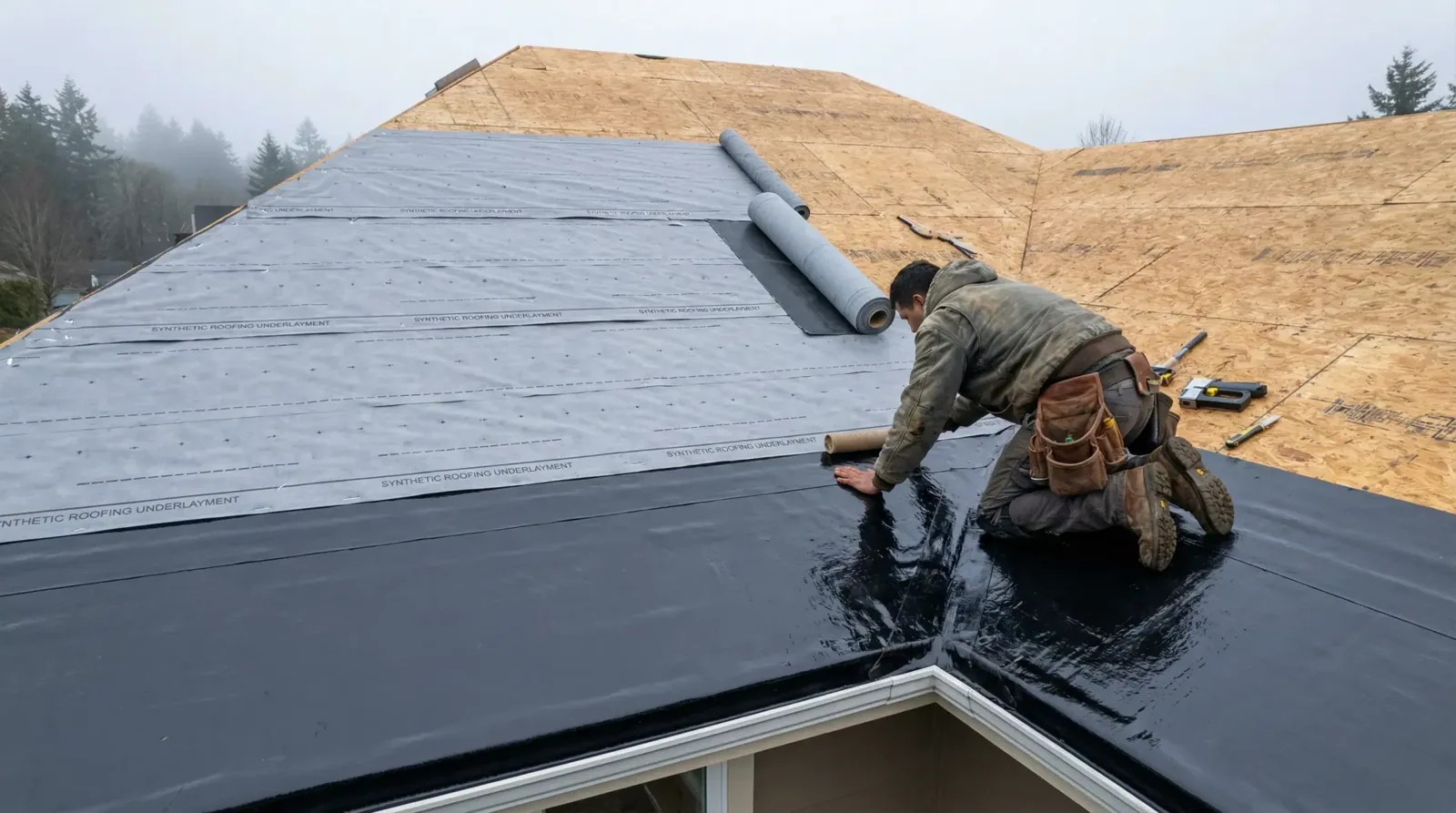
Water is the second damage after fire. An open roof, soaked insulation and a wet interior grow mold and ruin finishes within days. A temporary dry-in tarp or membrane goes over the burned area as soon as access allows. Edges are weighted or fastened to sound material, and the tarp is sloped so water runs off the roof and not into the opening.
Inside, the facility director's team protects what it can: covering equipment, moving stock, shutting off power in wet areas on the electrician's advice. Lowell's NOAA normals show 48.51 inches of precipitation a year and monthly normals above four inches in October and December, so an open roof in those months meets steady rain. We log the time the dry-in went on and check it after each weather event until the permanent work begins.
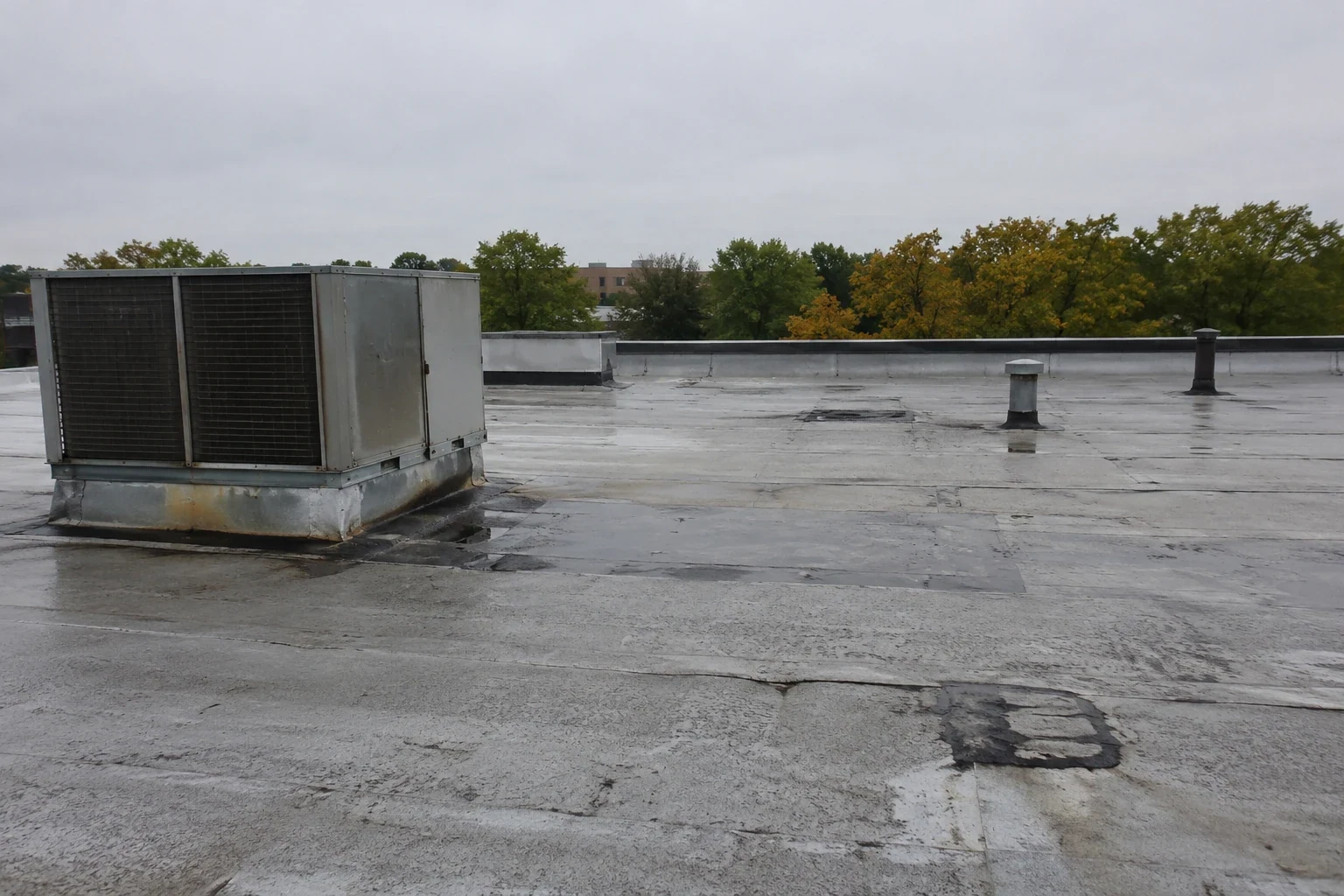
Water that firefighting leaves behind often collects in low areas. A ponding water repair may be needed once the structure is stable, because a deck weakened by heat can deflect and hold water in new places. We measure low spots after clearance and record them on the roof plan, with depths.
Deck, Insulation and Membrane Assessment
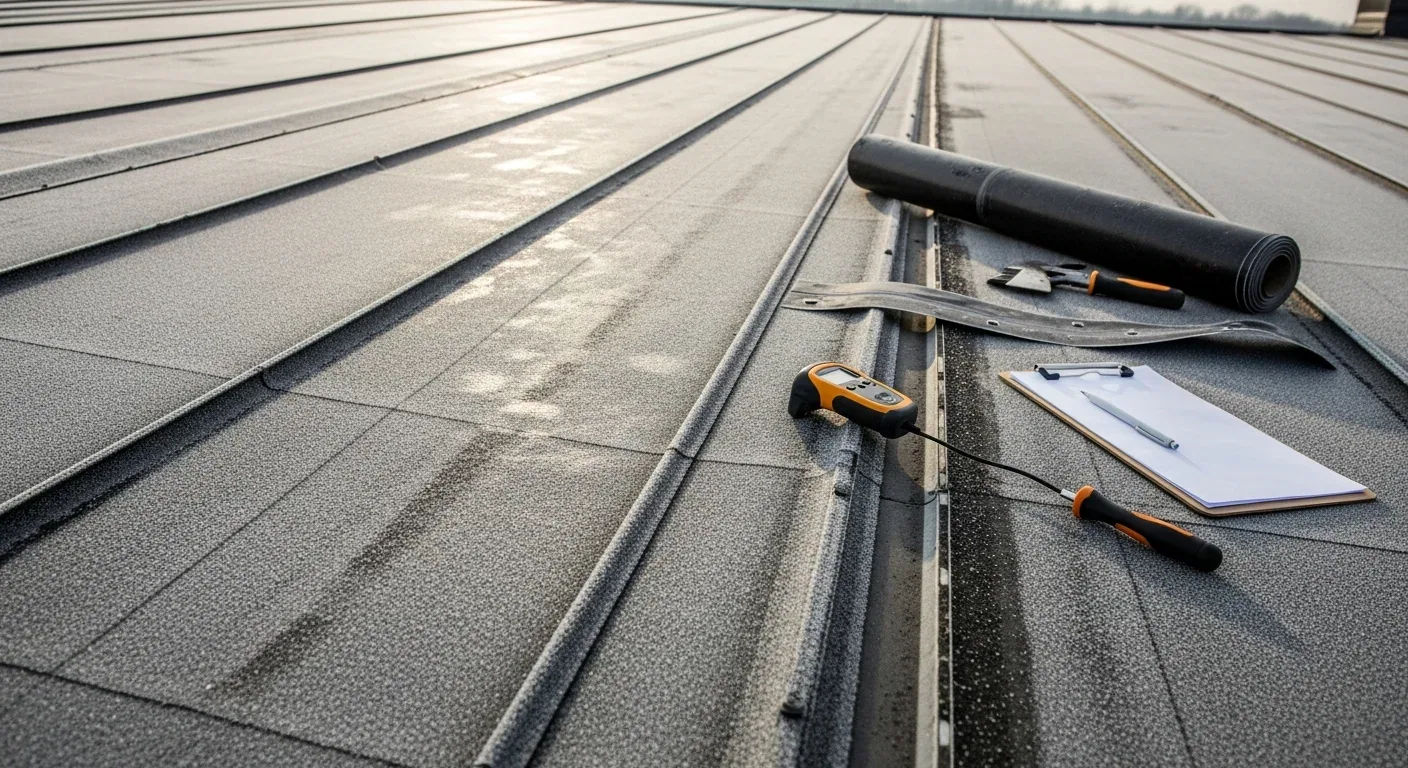
The assessment looks at three layers. The deck is checked for char, deflection and loss of section. The insulation is checked for melted foam, charring and saturation, since some insulation boards release smoke and residue. The membrane is checked for heat distortion, blistering and soot that may hide cuts. A core sample reveals how deep the damage goes and whether the layers below the surface are still sound.
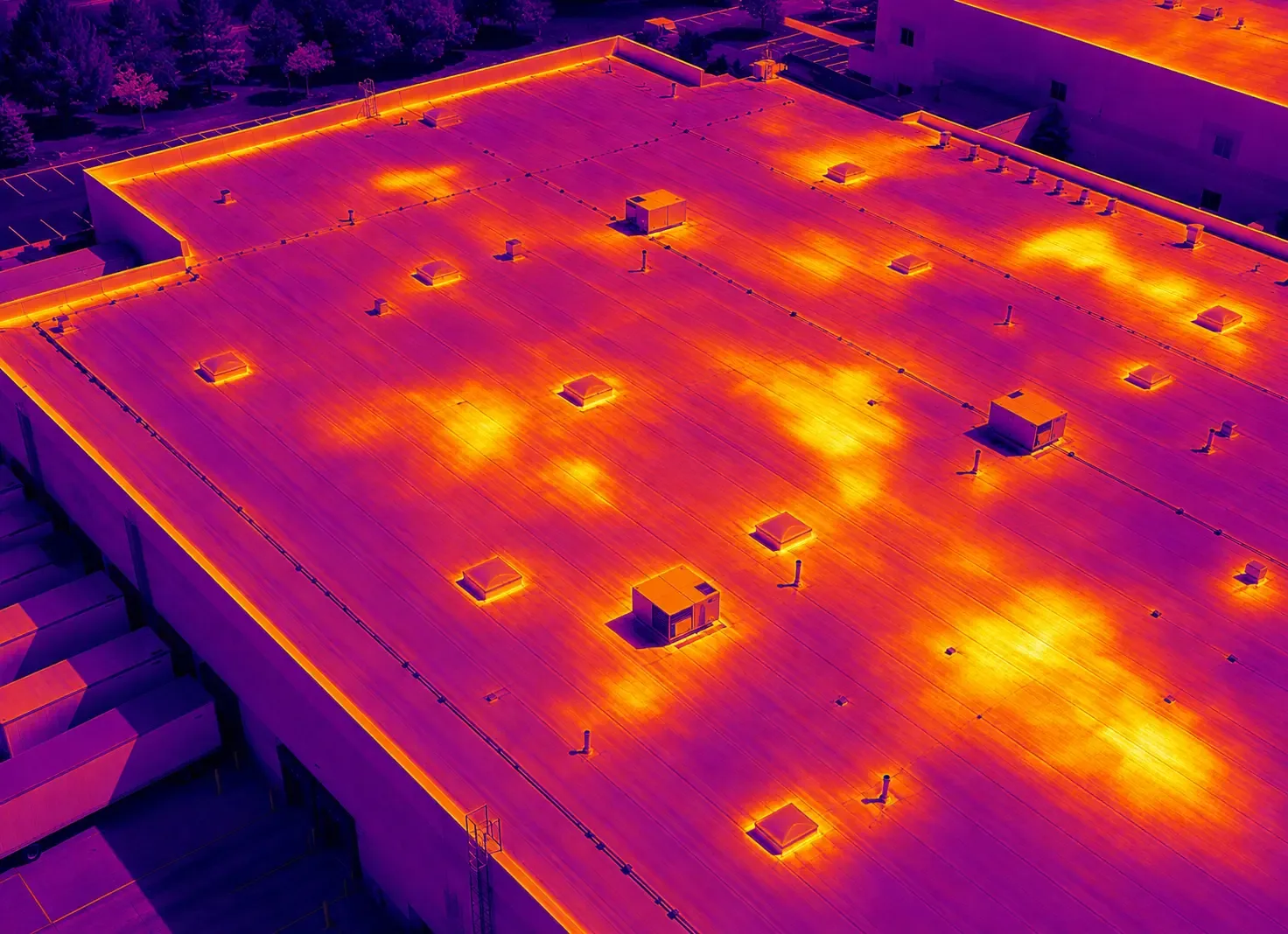
Smoke and soot may travel beyond the burned area. They settle on the membrane and can affect adhesion of new material. The surface is cleaned before repair, and we note where residue is heavy. If the insulation has been wetted by firefighting water, a moisture survey maps it so removal can be limited to the wet area and the burned area.
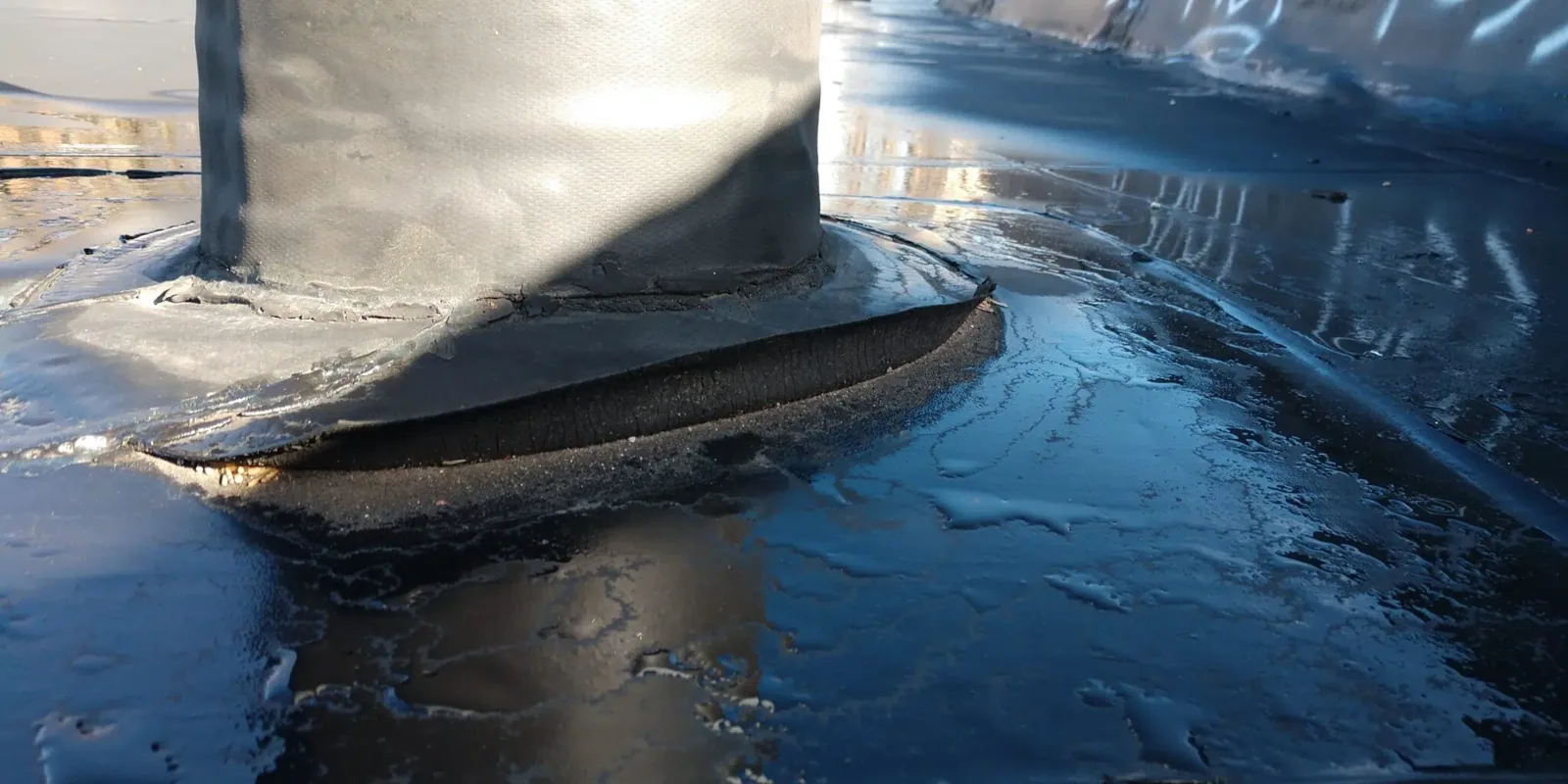
Rooftop equipment needs its own check. Units near the fire may have been damaged by heat or smoke, and their curbs and flashings can be distorted. Electrical conduits and gas lines that cross the roof are left to the licensed trades, and we flash around them once they have been inspected and released. Where flashing was scorched, the repair follows the steps in failed flashing repair.
Repair Boundary and Reconstruction
The repair boundary on a fire job usually follows the structural repair. Once the deck is repaired or replaced, insulation and membrane are rebuilt to the existing design or to the current code, whichever the permit requires. Filings from July 1, 2025 onward go under the state's 10th edition code, built on the 2021 IBC, and a major roof repair can trigger a code review. Local energy provisions must be confirmed for the project.
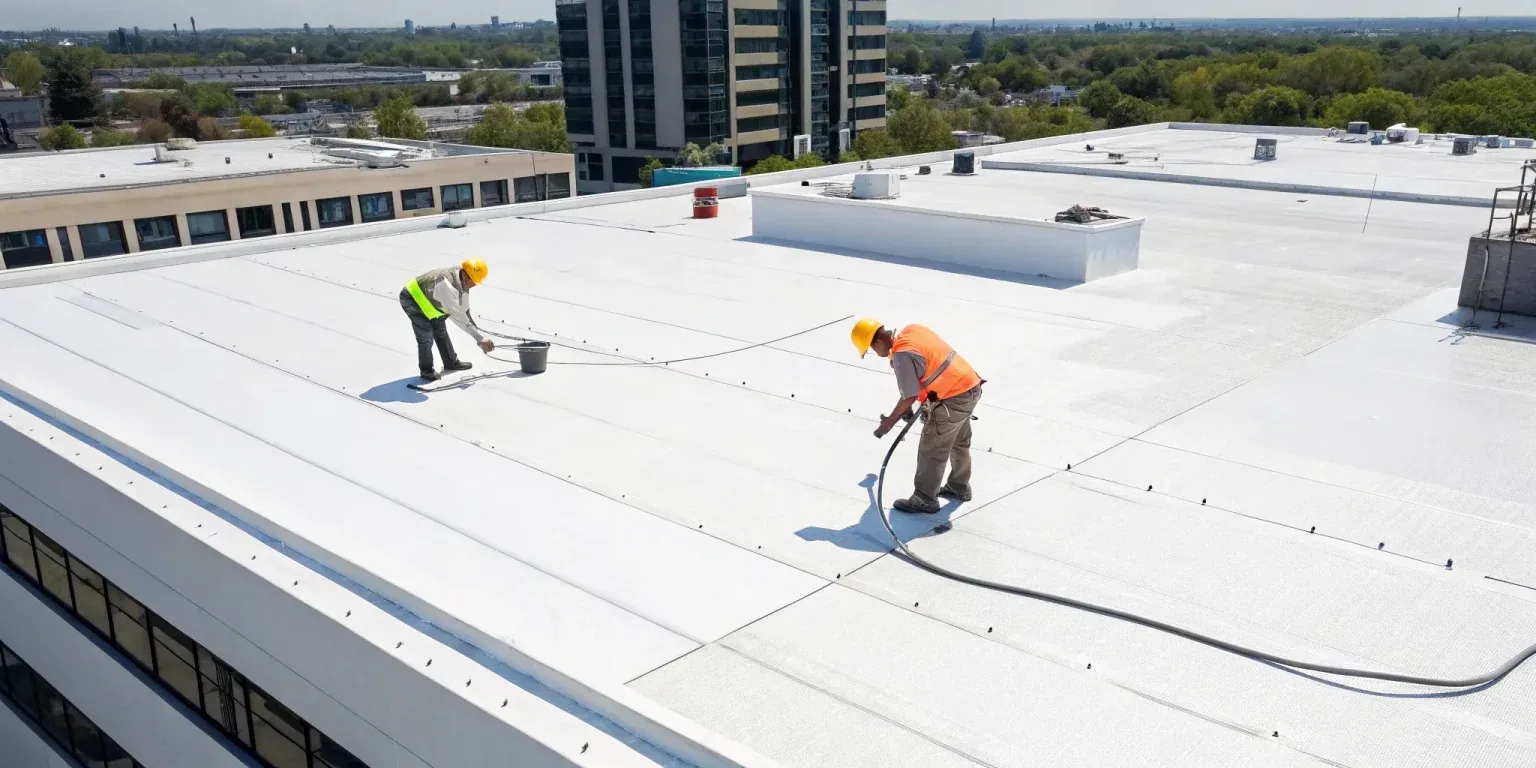
Where the burned area is small, the repair may be a section replacement tied into the existing roof, using the commercial roof repair methods for the existing system. Where it is large, the scope moves to a full replacement, which can let the owner correct problems the fire exposed, such as insufficient insulation or poor drainage.
Sequencing with other trades matters on a fire job. Structural repairs, electrical and mechanical work and roofing all meet at the roof, and each depends on the one before. We set a weather hold in the schedule, since new membrane cannot be placed over wet decking or in freezing conditions without special materials. The written schedule shows the order and the date each trade is expected, so the facility director can plan around it.
Insurance Records and Cost Update
The insurer wants an organized record. We provide dated photographs of the roof before cleanup, the dry-in and its cost, core samples, the scope and a breakdown of emergency and permanent items. Nothing is removed until the adjuster has seen it or has released it in writing. For the claim file, the process for claim documentation keeps each item tied to a photograph.
The cost update follows the assessment and gives a range with the unknowns named: deck condition below the char, hidden moisture and code requirements. A second update follows after demolition exposes the layers. Buildings across Lowell, whether reached from Route 3, I-495 or I-93, get the same sequence and the same dated record.
After the permanent repair, a seam and flashing check after the first heavy rain confirms the new work. Any open seam found there is closed under the same file. The closeout package includes the final photographs, test results, product data and warranty terms for the new materials.
Commercial Roofing Questions
Who gives clearance to enter a roof after a fire?
The building official or a structural engineer, depending on the damage. We document the clearance and its conditions, and we do not walk an area that has not been released.
Why is a tarp placed before the repair scope is finished?
Rain after a fire adds water damage to fire damage. The tarp is an emergency cost and is recorded separately from the permanent repair so the claim file stays clear.
Can burned insulation be left in place under a new membrane?
Not if it is charred, melted or wet. Damaged board is removed to sound material, and a core sample confirms the depth before the new layers go on.
Does a fire repair require a permit?
Often. A structural repair or a large area of reroofing usually needs one, and the code in force at the time of filing applies. We list the permit questions in the scope.
What should the insurer see before cleanup?
Photographs of the roof as found, the dry-in, and any core samples. The adjuster should see damaged material before it leaves the site, unless a release is given in writing.