A claim starts with a date and a photograph. The date says when the loss was reported, and the photograph says what the roof looked like before anyone touched it. Everything else in the file, from the mitigation invoice to the adjuster's walk, is checked against those two items, so they are collected in the first hour, ahead of any repair.

In Lowell, MA, the likely causes are on the record. Hurricanes and three kinds of winter storm (nor'easters, snowstorms and ice storms) appear among the major natural hazards in the city's hazard plan. A facility director dealing with a loss from one of them needs a roof file that stands up to review: what happened, what was done to protect the building, what the permanent repair costs, and what still needs a decision.
The First Record
The record opens with the report time, the reported leak location, the interior areas affected and the protection placed. Photographs follow in a fixed order: the wide view of each roof section, the damaged location, the close detail, and the interior below. Each photo carries a roof section number so the adjuster can find it again. Moisture readings or an inspection note go in with the same numbering.
Emergency steps are recorded as they happen: tarps, mastic and drain clearing. Each has a time, a location and a cost, because mitigation spending is part of most claims and an undocumented step is hard to defend later.
Storm Damage Against Wear
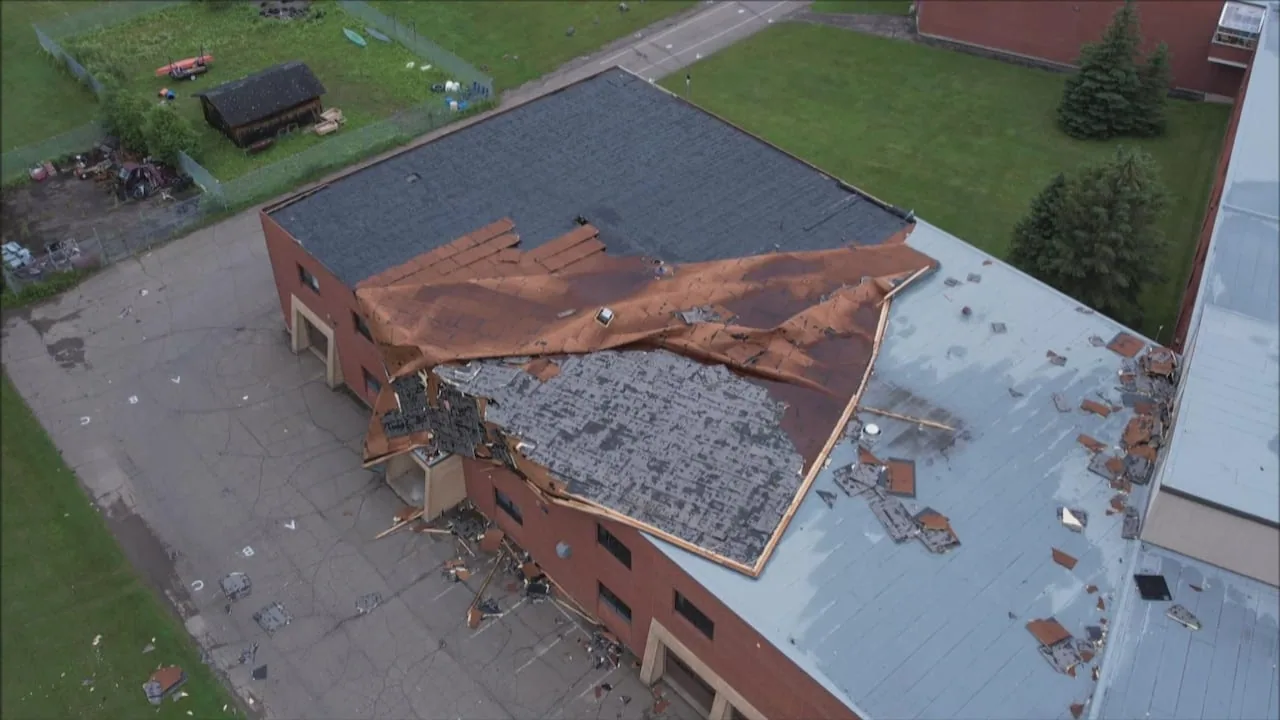
A carrier pays for a loss and not for deterioration, so the file has to show which is which. Fresh tears, clean lifted edges, displaced coping and debris strikes read as a recent event. Dried-out sealant, rusted fasteners, old patch layers and long-standing ponding read as wear. Most commercial roofs show both at once, and the report marks each location separately instead of calling the whole roof storm-damaged or worn.
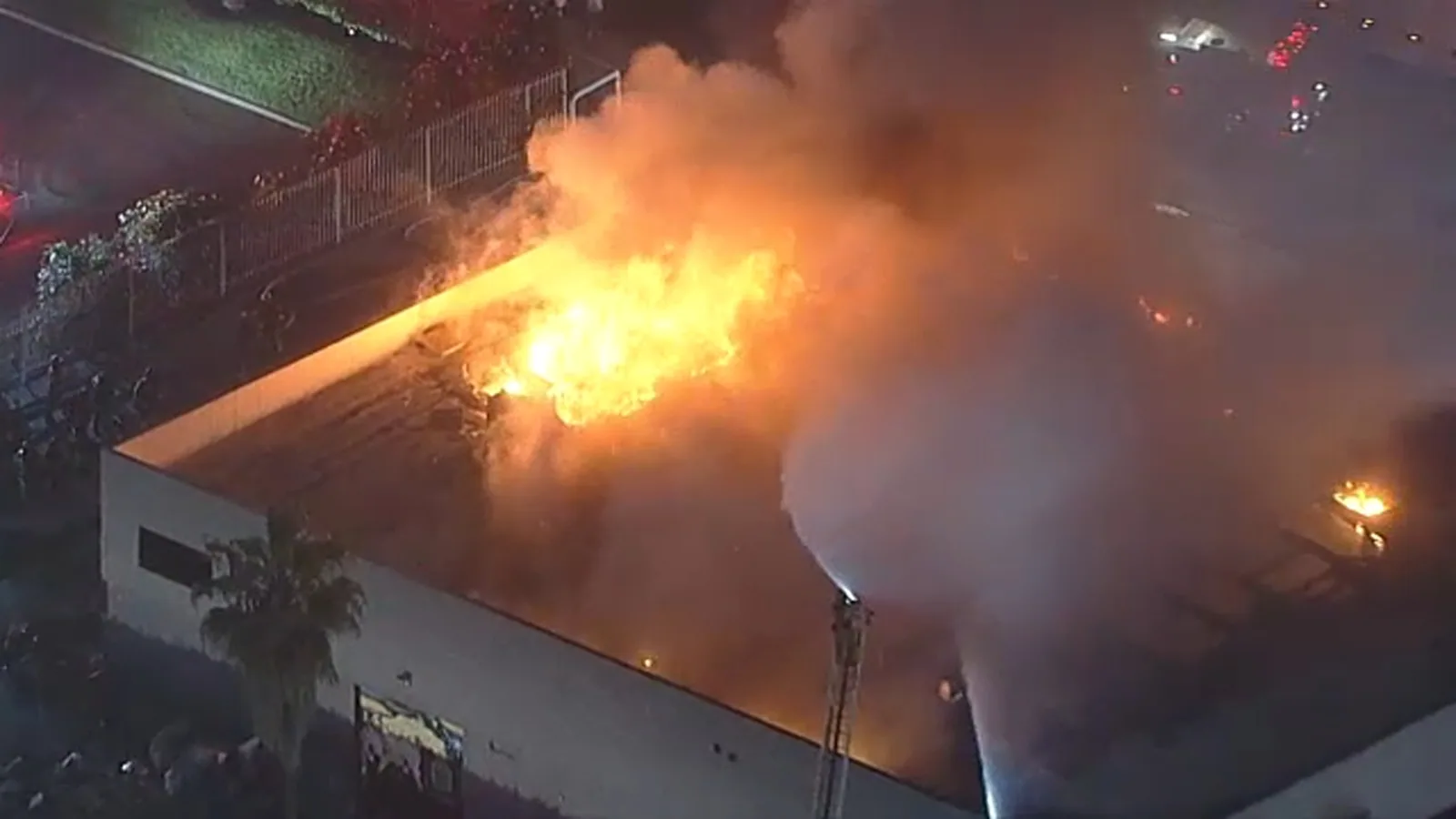
For wind losses, the pattern at corners and edges carries the story, as in wind damage repair. For fire, smoke and heat damage change what must be removed, so a fire-damaged roof is scoped section by section. Marking wear and damage separately lowers the odds of a dispute, because the adjuster can verify every line, and the owner is not asked to pay for repairs the carrier will not cover.
Scope Lines the Adjuster Can Check
The estimate is written so each line can be tested against a photograph. A line names the roof section, the method, the quantity and the material, with labor, equipment and access listed apart. Temporary work, permanent repair and optional upgrades sit in separate groups, and the owner sees which group each line belongs to before the file goes out.
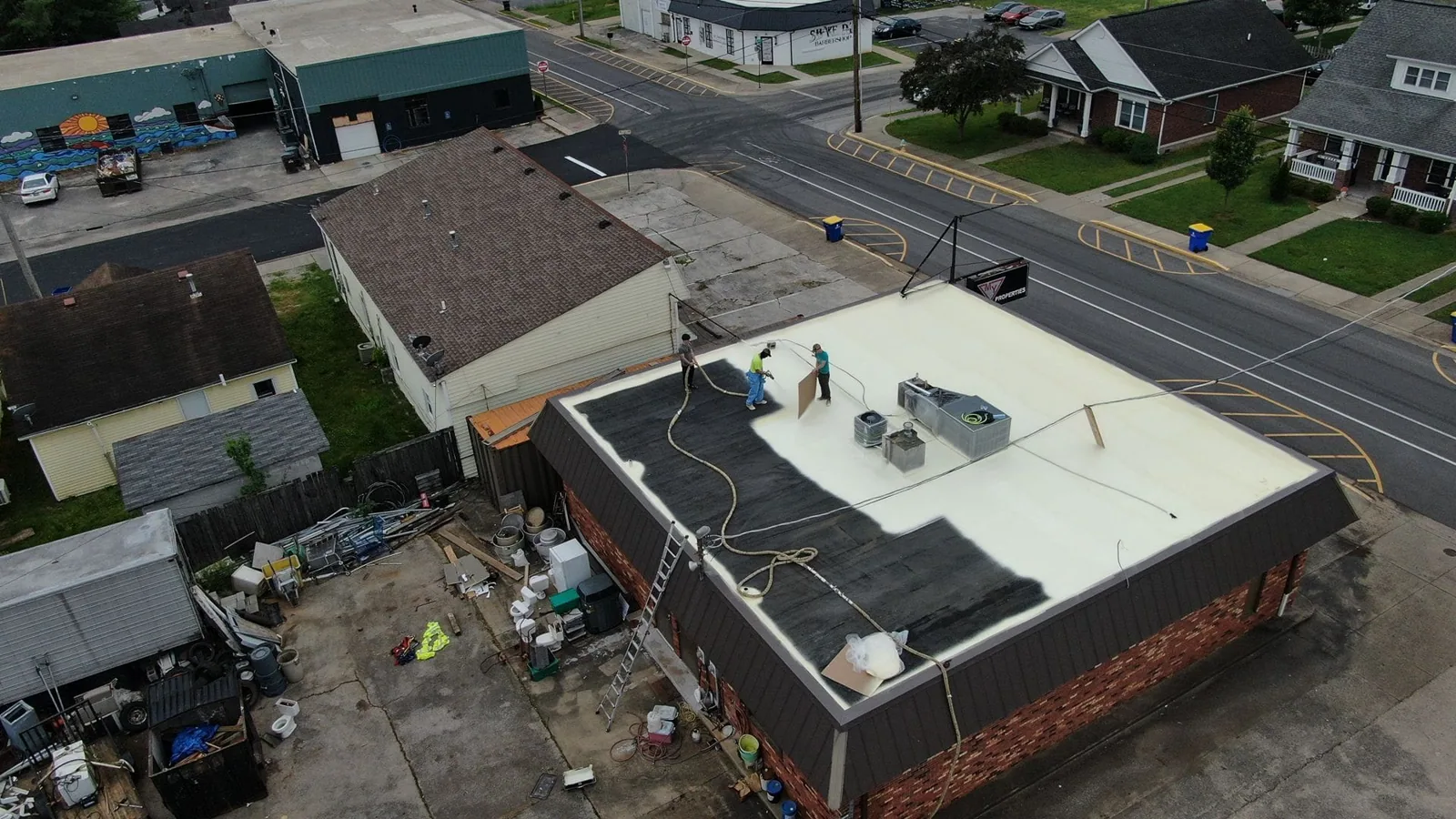
When the damage is spread across much of the roof, the scope sets the repair path beside a replacement path with both totals. A roof where patches would outnumber sound sections may be a replacement case, and the replacement scope carries the same photograph references as the repair estimate. Where the carrier disagrees with a line, the photograph and the moisture reading are what get discussed.
Code and Review Items in the Estimate
Some costs come from the rules and not from the storm. A repair filed from July 1, 2025 onward is permitted under the state's 10th edition code alone, and the code decides how much of the roof must meet current requirements at that scope. Towns may layer stretch rules over the base energy code, so the local energy rule for the specific building is confirmed before the estimate is final.
Historic review is the other item. A damaged roof edge in the Downtown Lowell Historic District brings the Historic Board into the repair, and the estimate carries that review as a line in the schedule, not a surprise at the end.
Adjuster Visits and Roof Access
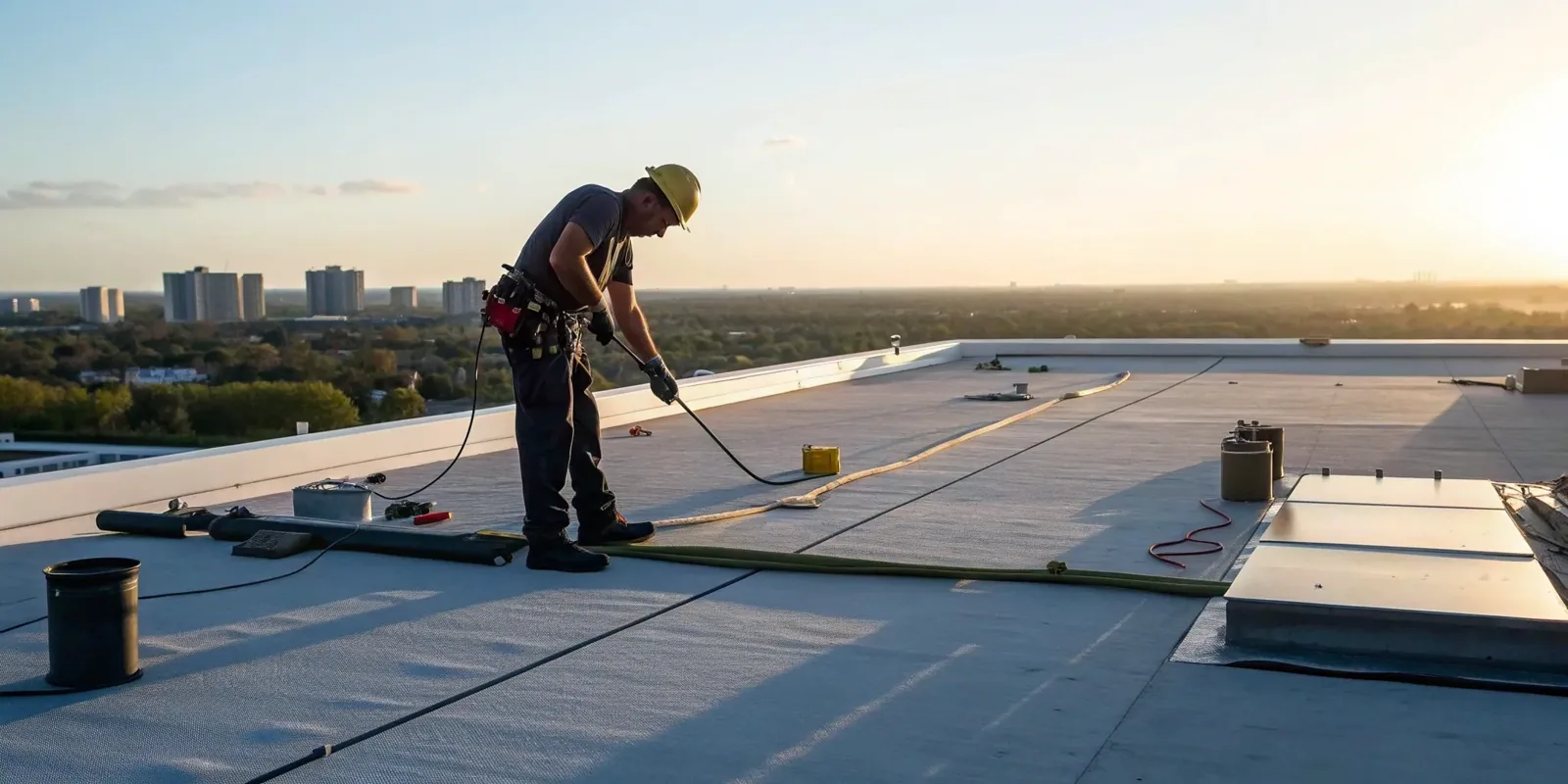
The adjuster's visit is planned like any roof entry. Someone with the access key, a safe route to the hatch, fall protection on the roof and a crew member who knows the damage locations all need to be in place. Damage that was covered with a tarp is uncovered only when the adjuster is present or when the photographs already show the condition beneath it.
After the visit, the notes are compared with the crew's record and any gaps are closed in writing. Coordination between the owner, the property manager and the carrier runs through a single file, which is why a property management office handling many buildings can keep each claim apart.
Warranty and Claim Together
A roof under an active manufacturer warranty has two sets of rules at once: the carrier's and the maker's. Notice periods, approved repair methods and who may perform the work are read before the permanent repair starts, since a repair outside the maker's method can affect coverage later. The warranty file and the claim file are kept together so a single repair satisfies both where it can.
Claim Files From Mill, Industrial and Office Roofs
Claim files differ by building. A roof edge in the downtown district may need metal matched to review conditions. Ayer's City Industrial Park sets heavy-industry zoning over about 108 acres near Tanner Street, and any operator running production there will want the adjuster's visit and the crew's access fitted around its hours. Restoration contractors and carriers working a loss together need the same photographs and section numbers, so an insurance restoration team and the crew on storm damage repair read from one claim file. A claim on any of these roofs is easier to settle when the interior photographs, the dry-in record and the moisture readings were taken in the first visit. Roof claims across Lowell, including the Hamilton Canal District, a mixed-use redevelopment area linking downtown to the commuter-rail station, follow the same file order from the first photograph to the final invoice, and so do losses in Chelmsford at the I-495 and Route 3 crossroads.
Commercial Roofing Questions
Does the roofer decide whether the claim is covered?
No. The carrier decides coverage. Our part is the record: photographs, readings, a marked scope and the invoices for emergency steps. A clear file lets the adjuster verify each line quickly, and it keeps the owner's cost exposure visible while the decision is pending.
What should be photographed before temporary repairs go on?
Every damaged location from a wide view and a close view, each interior area below it, and any debris that struck the roof. Photos go in before tarps or mastic cover the evidence, and each carries its roof section number so it can be matched to the scope later.
How are emergency costs handled in a claim?
Each emergency step is listed with its time, location and cost, separate from the permanent repair. The owner sees the running total at every update. Mitigation that keeps damage from growing is part of the file the adjuster reviews, so records of it matter.
What happens when the carrier pays for repair and the roof needs replacement?
The two paths are priced side by side with the same photographs behind each. If the gap between them is large, the scope explains why in terms of roof sections and moisture readings. The owner can then decide whether to cover the difference or hold at repair, with the cost exposure of each laid out.
Can an older storm loss still be documented?
A loss found weeks later is documented from what the roof shows now plus any records the owner has: report dates, tenant complaints and earlier photographs. The inspection marks what looks recent and what looks long-standing, and the note says plainly where the evidence stops.