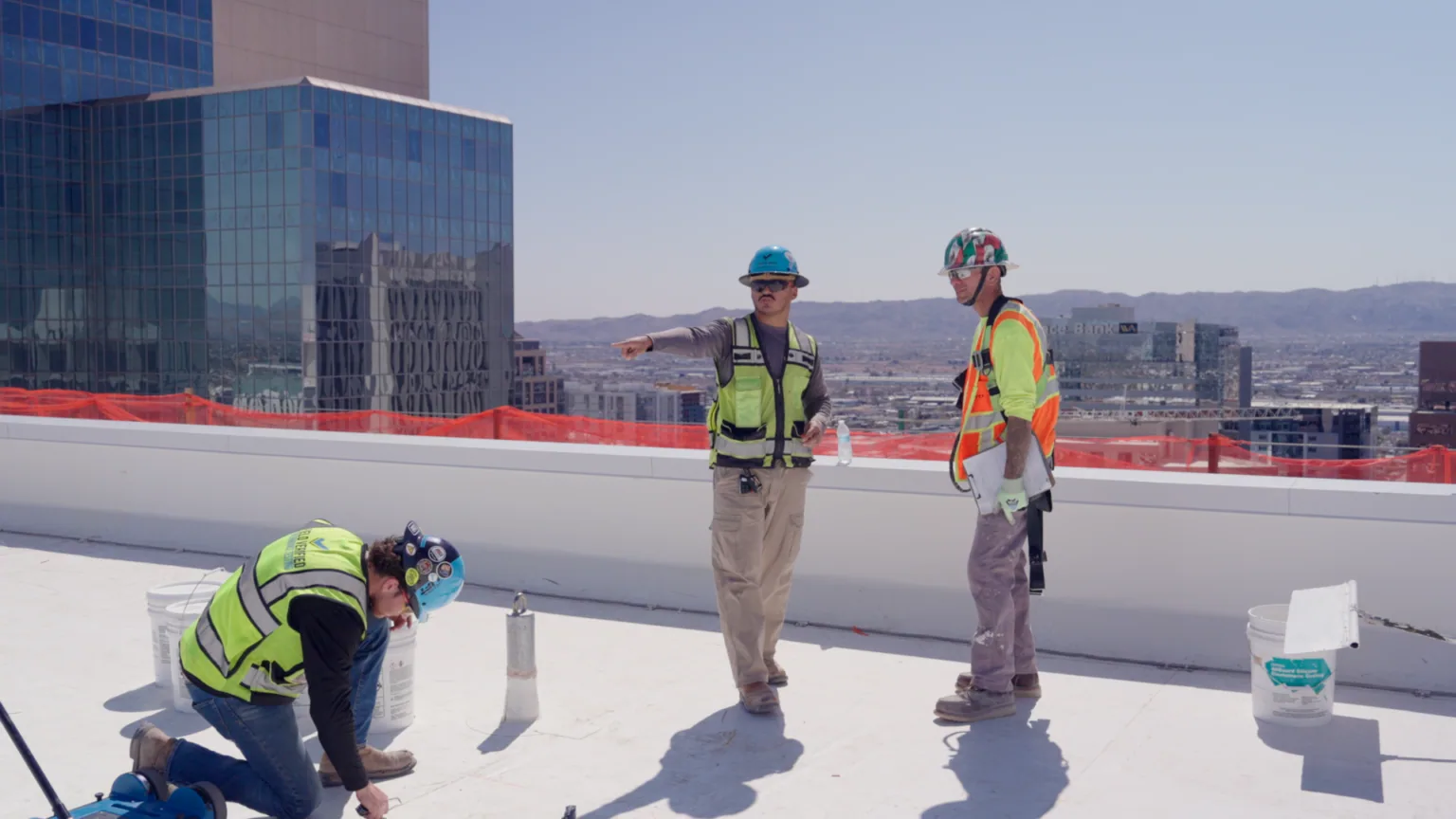
Clear the hallway first. A school roof report usually comes from a custodian or a building manager who has seen a stained tile or a puddle near a classroom door, and the first question is who is standing under it. We ask which room, whether the space is in use, and whether students or staff can be moved. Next comes the roof section overhead: who can reach it safely, and what covers the interior until the crew arrives.
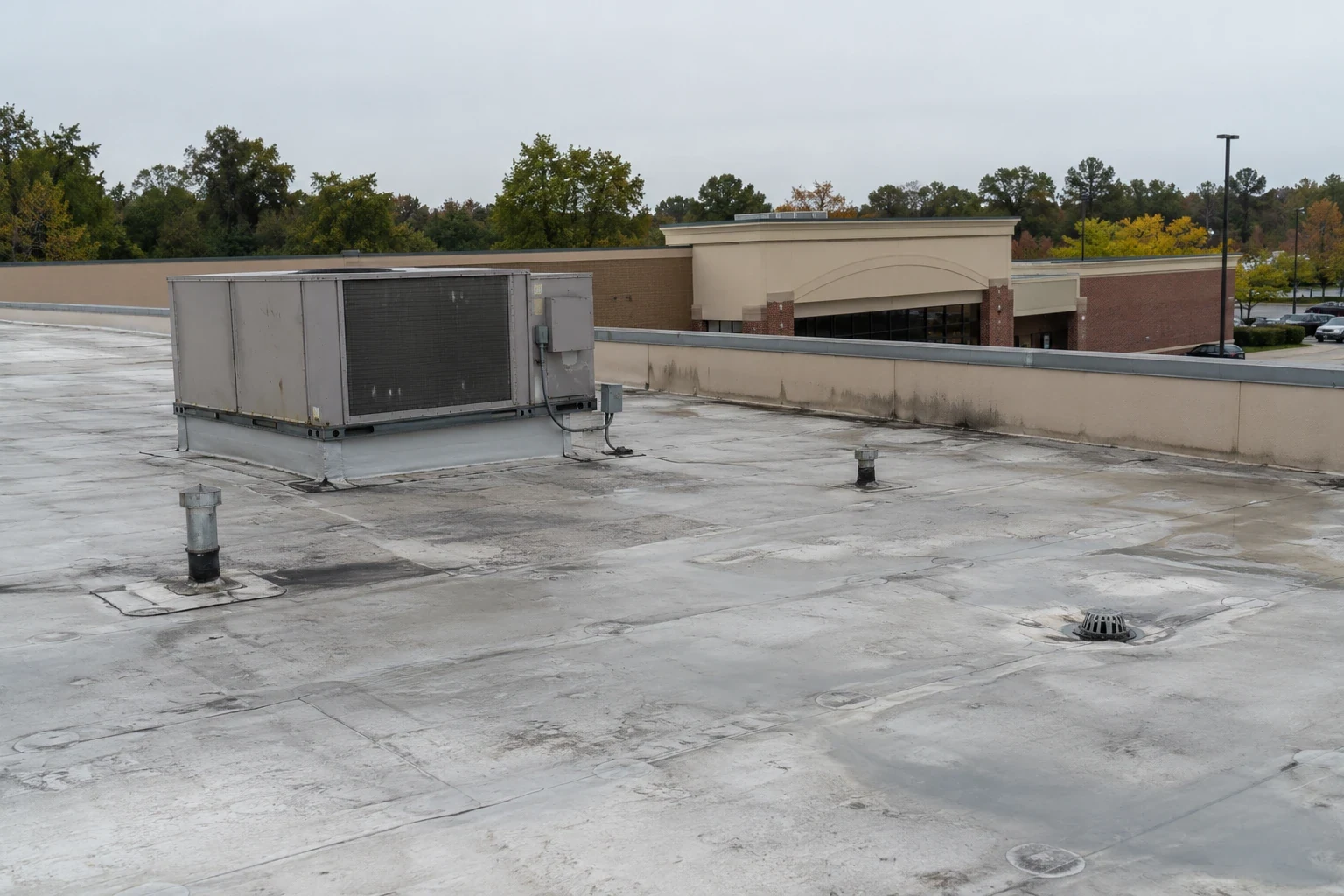
In Lowell, MA, that decision carries a calendar. A school roof cannot be closed to the public for a week the way some commercial buildings can, so the work is sequenced around bells, buses, and exams. The facility director needs three things from us early: the active water path, the temporary dry-in plan, and the earliest return window for permanent repair.
Occupied Buildings and Student Safe Access
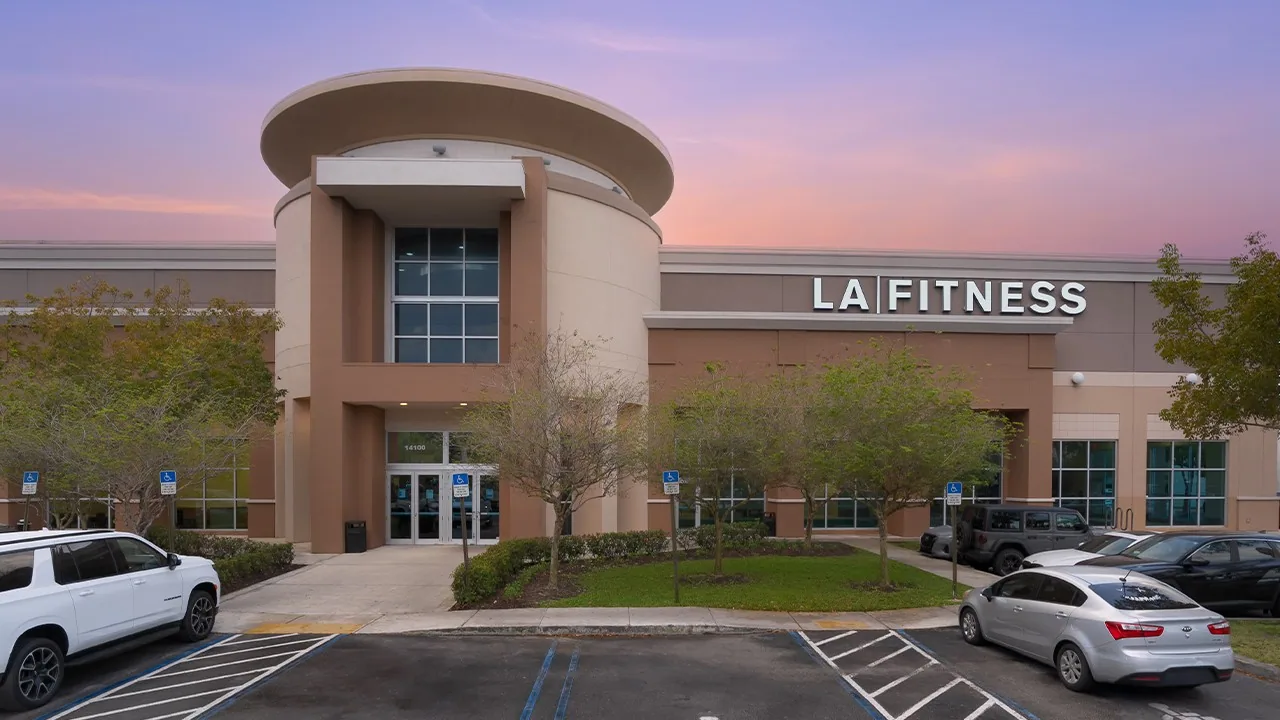
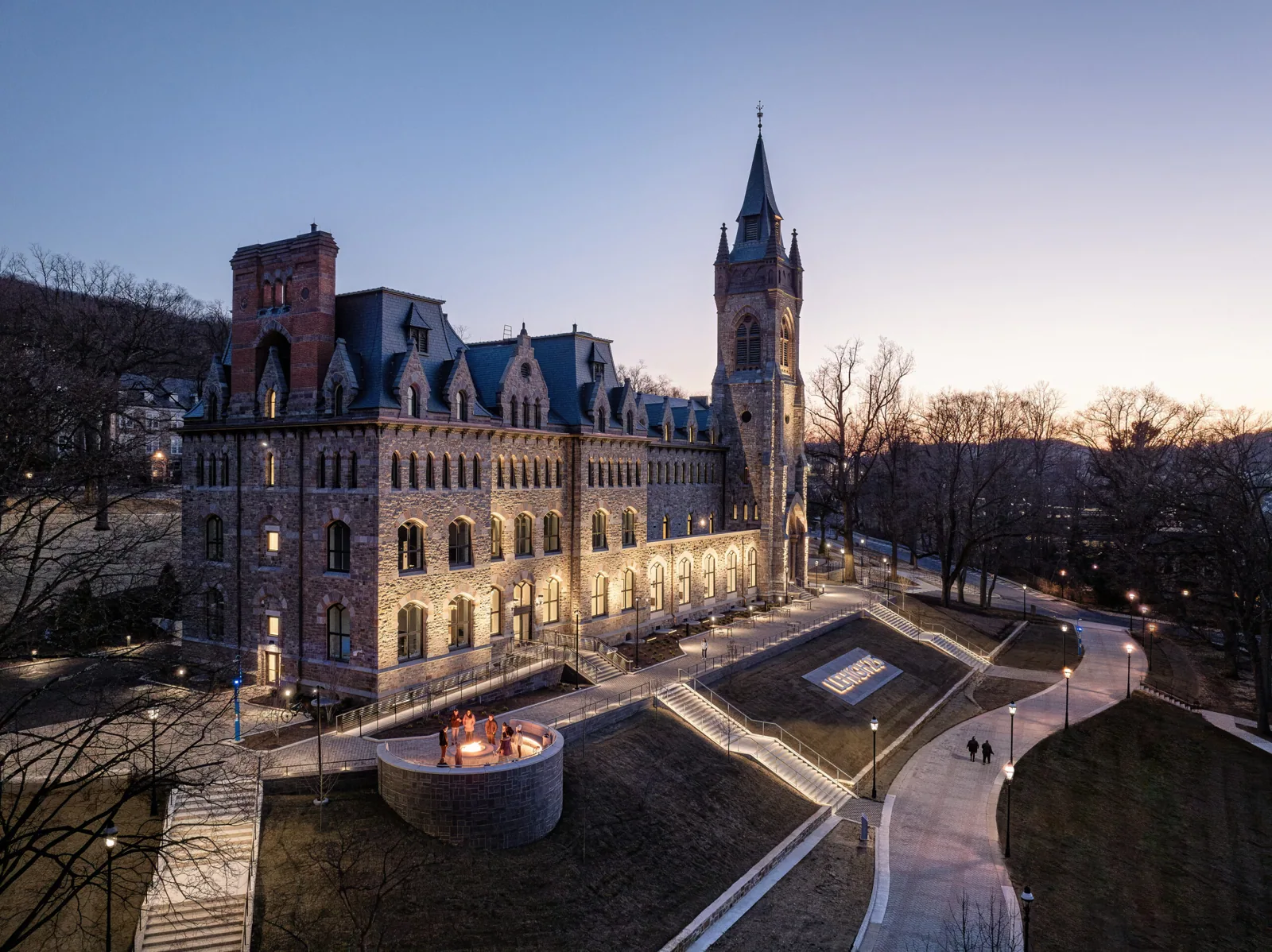
Student movement is the constraint. We map the crew path, the lift or hoist location, the material staging area, and the doors that stay clear. Roof access from a stairwell or a hatch inside the building needs a supervised route. A gymnasium roof over an active court is handled like a fitness center roof, with the floor protected first, and college buildings with similar academic calendars follow the plan for college and university roofs. Either way, the roof section above an occupied space is closed to anyone without an assignment. Where possible, we stage outside the drop-off and pickup zones and keep tools and debris away from play areas and entrances.
Noise matters in a different way than it does on a warehouse. Tear-off and fastener work can interrupt instruction, so we list loud tasks separately and ask the facility team which rooms hold tests or quiet activities. Before a container is opened, we locate every air intake near the work, since adhesive vapor and hot-work smoke drift toward classrooms. If an intake sits near the work area, we shift the task, change the product, or schedule it for an unoccupied period. The plan for reroofing an occupied building sets those limits in writing before the first day.
Report to Inspection Steps
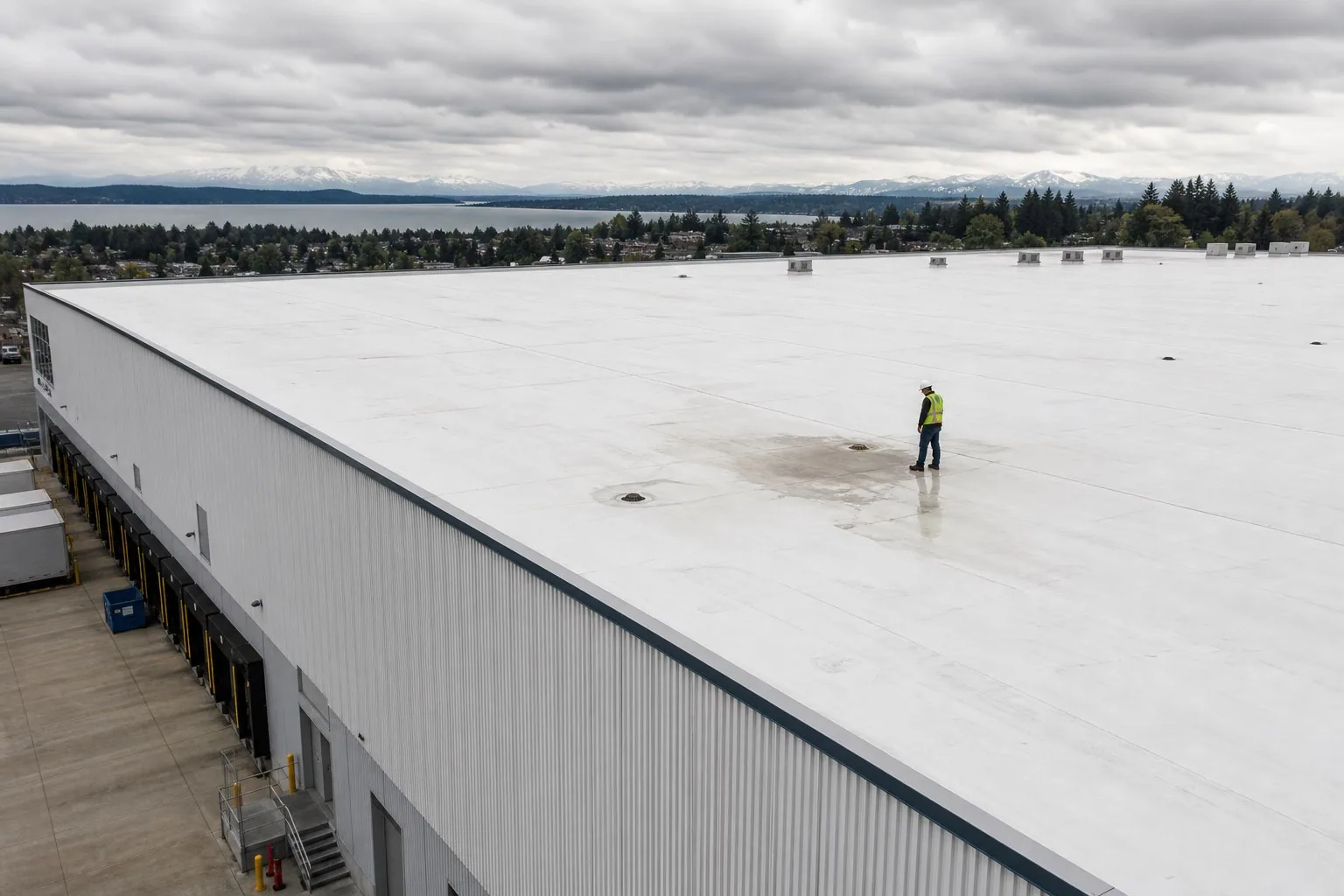
The inspection starts from the report: we trace the interior stain back along the deck to the roof section above it, then walk the drains, scuppers, seams, flashings, penetrations, and roof edges. Roof hatches, skylights, and mechanical curbs are checked for sealant and flashing separation. Photographs go on a roof plan so the facility team can see where each finding sits.
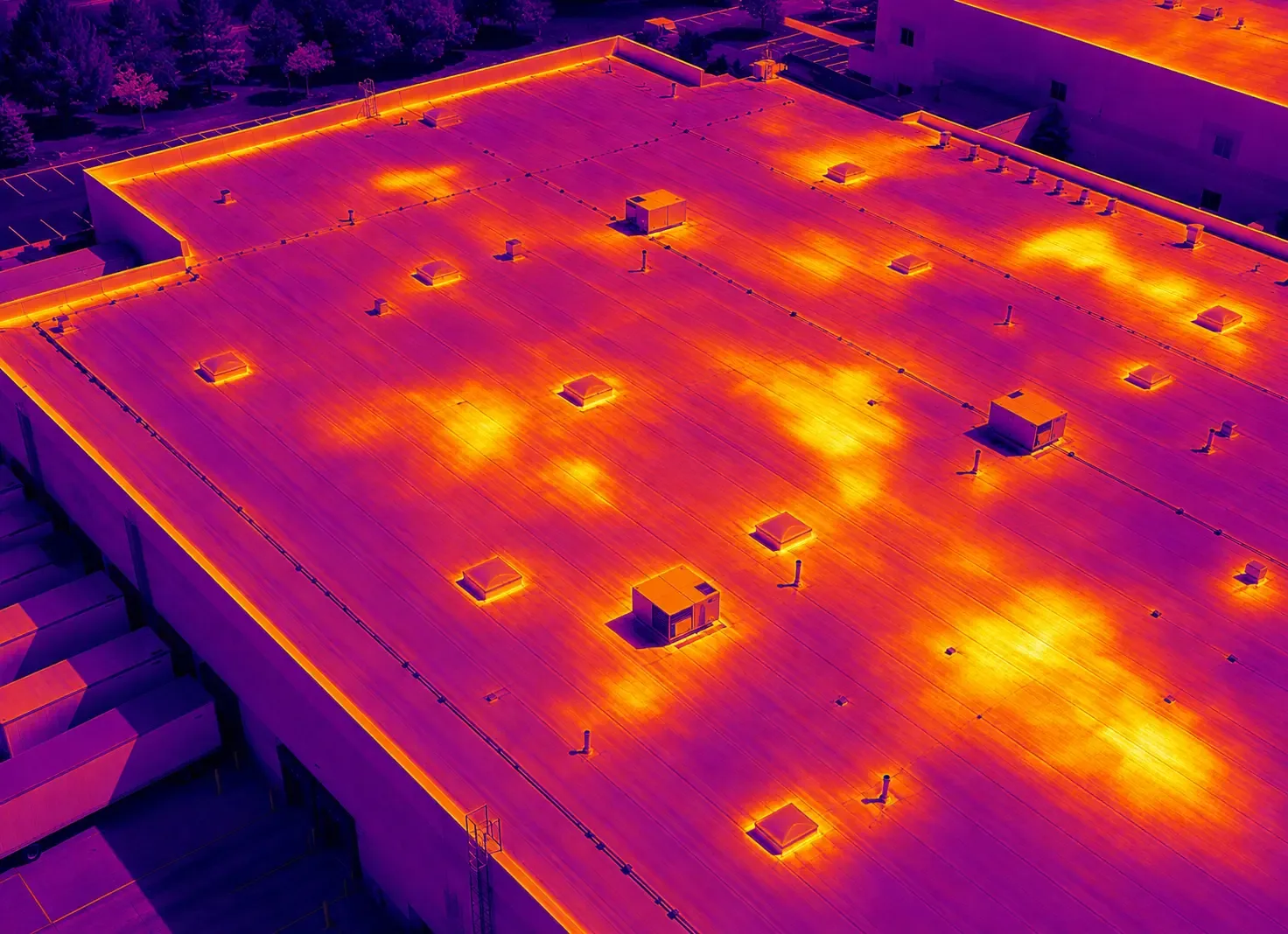
When insulation holds water, an infrared moisture survey draws the wet boundary and a handful of cores prove its depth. That is the scope decision: a small repair boundary around a seam, a larger one around wet board, or a section replacement. We write each boundary on the plan with the cost exposure attached, so a facility director and a business office can both see what is being approved and why.
Lowell Weather and Roof Timing
A year at the Lowell station adds up to 48.51 inches of precipitation, with October normally near five inches and December near four and a half. Drainage on a school roof therefore has to work all year, not only in spring. January averages close to 25 degrees there and July close to 73, so a school membrane goes through freeze and thaw as well as summer heat.
Hurricanes and winter storms appear among the city's major hazards, and one recorded winter reached 126.5 inches of snow. That history informs how we plan drains, snow access, and the weather hold that can delay permanent work. After a heavy snow, we look at drains, parapets, and the roof edge first, since meltwater and ice show weakness there before they show it in the field of the roof.
The Summer Return Window
Most large school roof work belongs in the weeks when students are out, and those weeks are short. That compresses decisions. If a roof is on the replacement list, the survey, scope, and material order have to finish in time for the return window, or the work slips a year. We encourage districts and private schools to schedule inspection in the winter and spring, so findings are in hand when the planning for summer begins.
A repair that must happen during the school year is limited to the repair boundary: seam closure, flashing replacement, drain clearing, or a localized patch. Larger scope waits for the return window unless water entry makes waiting unsafe. A recover overlay can shorten the on-site schedule when the insulation tests dry, because the old roof stays in place and less debris leaves the building.
Code, Review, and Records
Since July 1, 2025, the 10th edition has been the single Massachusetts building code for new filings. The base is the 2021 International Building Code with state amendments, and energy requirements turn on whether the town adopted a stretch or specialized stretch provision. We confirm the local energy requirement for each project before specifying insulation.
For a school, the file we keep is as important as the repair. It holds the roof plan, photographs, test results, the repair boundary as built, and the date for the next walk. A roof capital plan uses those records to rank buildings by need and to set a budget year for each. For a district or a school group with several buildings, that ranking is the most useful document we produce.
Cost Update and Scope Decision
Cost moves with a short list of facts: the extent of wet insulation, the number of penetrations and curbs, the access route, the work hours the school allows, and the weather hold. We give a first response step the same day, a temporary dry-in price when water is active, and a permanent repair price after the inspection. The next update's date is named in each one, so the business office is not left guessing about timing.
The same method applies to school buildings in Chelmsford and Dracut, and a district with several sites can set up a multi-site roof program with one reporting format. A school district that holds its roof records in one file can plan the summer schedule from real numbers.
Commercial Roofing Questions
What decides whether the roof can be worked on while classes meet?
Safe access and noise. If the crew path stays clear of students and the loud tasks avoid tests, repairs can proceed. Otherwise the work waits for a quiet period or the summer return window.
Who should be told when a ceiling tile stains?
The custodian reports to the facility director, who sends us the room, the date, and the last rain or melt. We trace the water path from that location and report back with a first response step.
How is a temporary dry-in priced?
Separately from the permanent repair, since it is a stopgap with its own materials and labor. The price depends on the size of the opening and the access needed. We state it before the crew mobilizes.
Can a school roof be recovered instead of replaced?
When moisture tests show dry insulation and the deck is sound, a recover is possible. Wet insulation, damaged decking, or too many layers already in place rule it out.
Do fumes from roofing materials reach classrooms?
They can if an air intake sits near the work. We check intake locations before opening materials and adjust the product, the location of the work, or the hour of the work to keep fumes out.