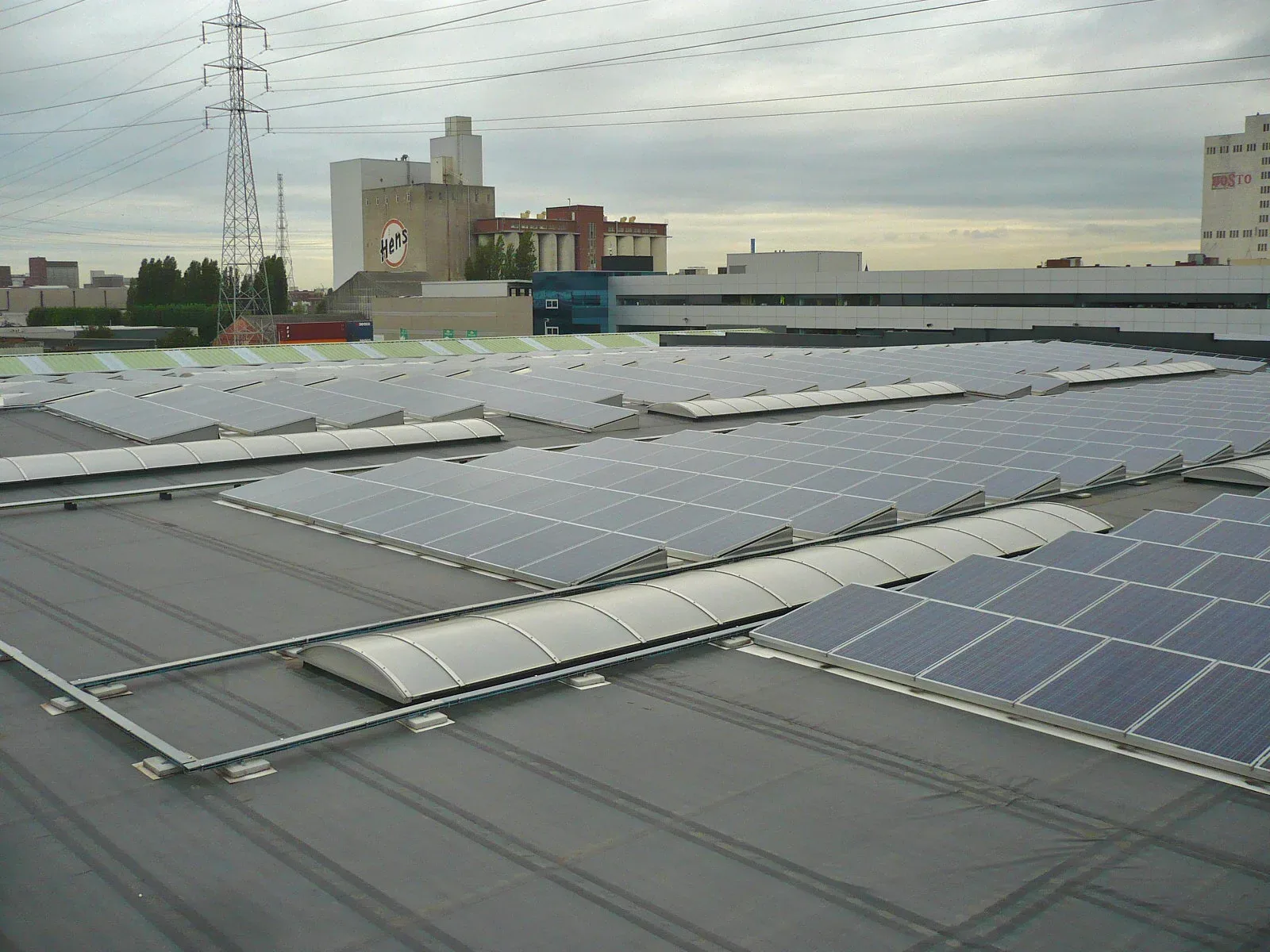
Ask about heat before asking about price. Soprema makes modified bitumen membranes, liquid-applied waterproofing and flashing products, and roof insulation, and several of those methods involve flame, hot asphalt or strong vapors. After a leak report in Lowell, MA, the first-hour check adds a question to the usual three: what is below the work area, and can it tolerate heat, fumes or sparks? The answer shapes the temporary dry-in and the permanent method.
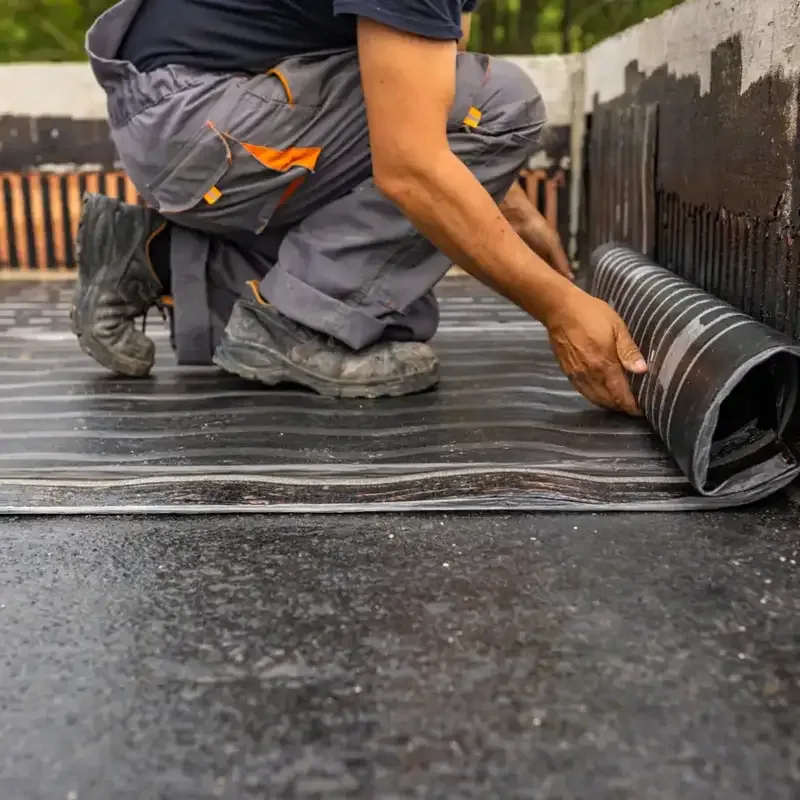
We repair and replace roofs of these categories on occupied buildings. The sequence is fixed: safe access, interior protection, temporary dry-in, repair boundary, dated cost update. Where fire risk is part of the roof, the sequence adds a hot-work step before any flame comes out of the truck.
Hot-Work Controls
Torch-applied modified bitumen uses open flame at the roof surface. That can be a sound method on the right roof and a poor one on the wrong roof. Combustible decks, voids in walls, wood blocking at parapets and old insulation that may burn all raise the stakes. Before any torch work, we confirm what is under and beside the work area, set a fire watch period, keep extinguishers at the work point and record the permit if the owner or town requires one.
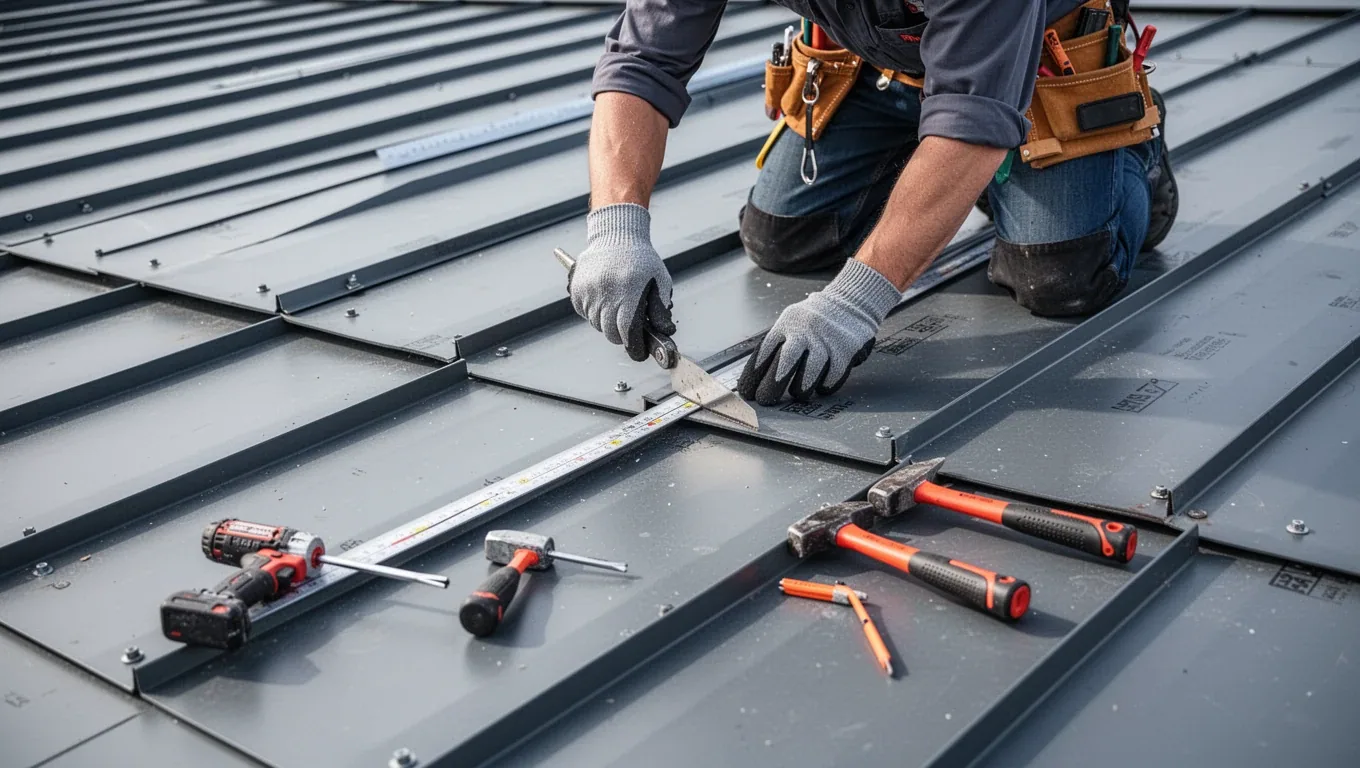
Where the risk is too high, other methods exist. Cold-applied adhesives, self-adhered sheets and mechanically attached plies need no flame. Liquid-applied membranes need none either, though they carry odors. The scope names the method and the reason for it, so the facility director sees why one approach was selected over another.
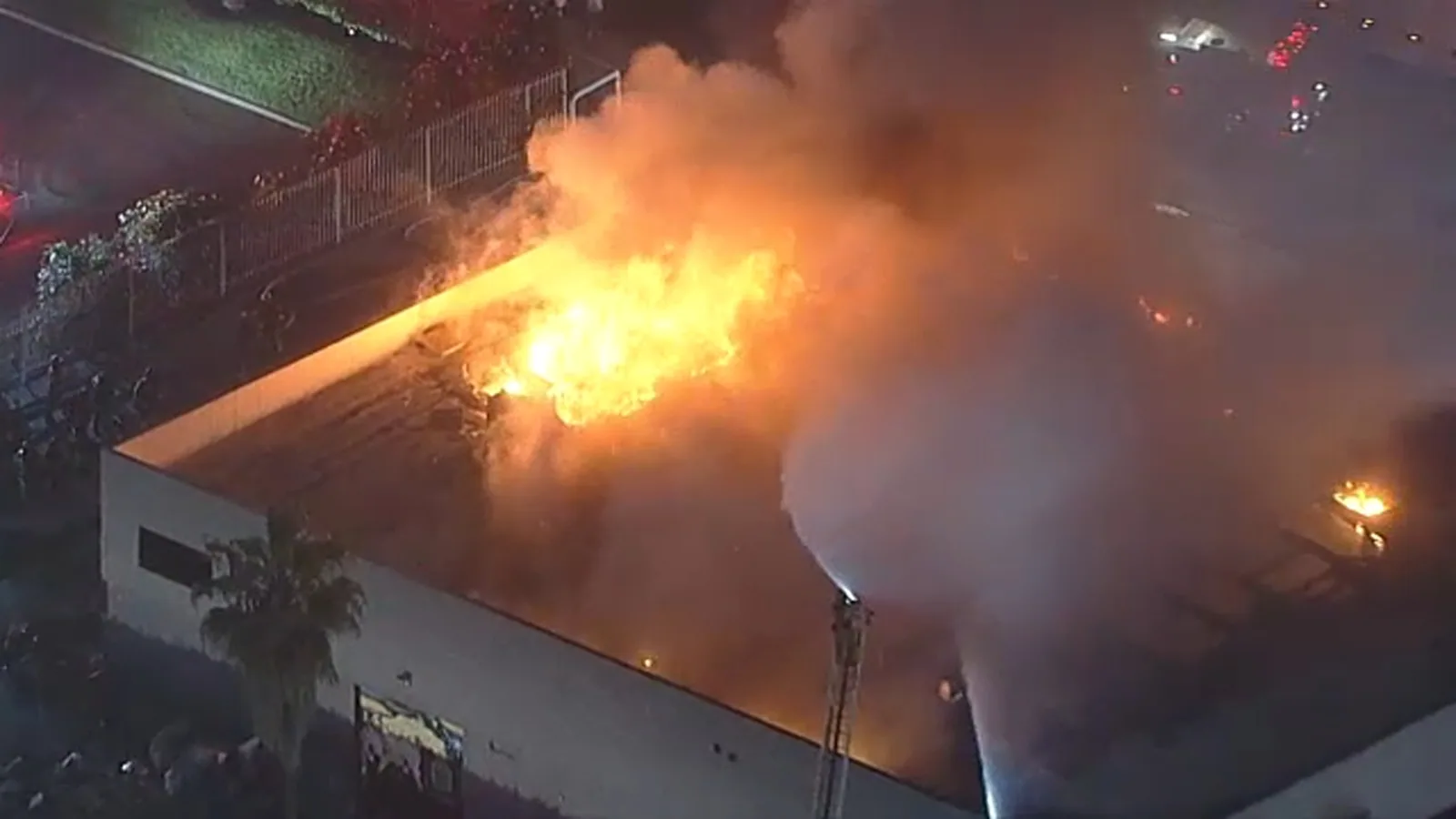
After a fire in a building, the roof is a separate question: charring, heat-warped deck and wet insulation from firefighting water all change the repair. A fire damage roof repair starts with a structural check before membrane work is priced.
Layered Roof Findings
Modified bitumen roofs are built in layers: base sheet, one or more plies, a cap sheet with a mineral or coated surface. Failures show as splits at laps, blisters over trapped moisture, granule loss that exposes the asphalt, and cracks at flashings. Each has a different cause and a different repair.
A blister over dry board can be cut, dried and patched. A blister over wet board points to a moisture source, and the board is tested. A split along a lap may be thermal movement or a poor bond. Granule loss near drains marks water flow and may call for a protective patch or coating. The inspection note records each by roof section, with a photograph and a measured length or diameter.
Older Building Roofs
Downtown Lowell's historic district spans the commercial core, mill yards and canals, and city planning materials point to a large stock of legacy mill buildings. Exterior work in the district is subject to Historic Board review. A roof visible from a street or yard may therefore need approval for changes in color, profile or edge detail, and the owner should know that before the scope is final. We raise it at the first walk.
Beneath the visible surface, an older building's roof may have decks, parapets, skylight openings and drainage paths that suit its original use more than its present one. We look, note and, where needed, core. Parapet walls get a close look at their tops and flashings, since a coping that sheds water badly can let it behind the wall. The edge metal and coping repairs that follow are priced as their own line.
Liquid-Applied Restoration
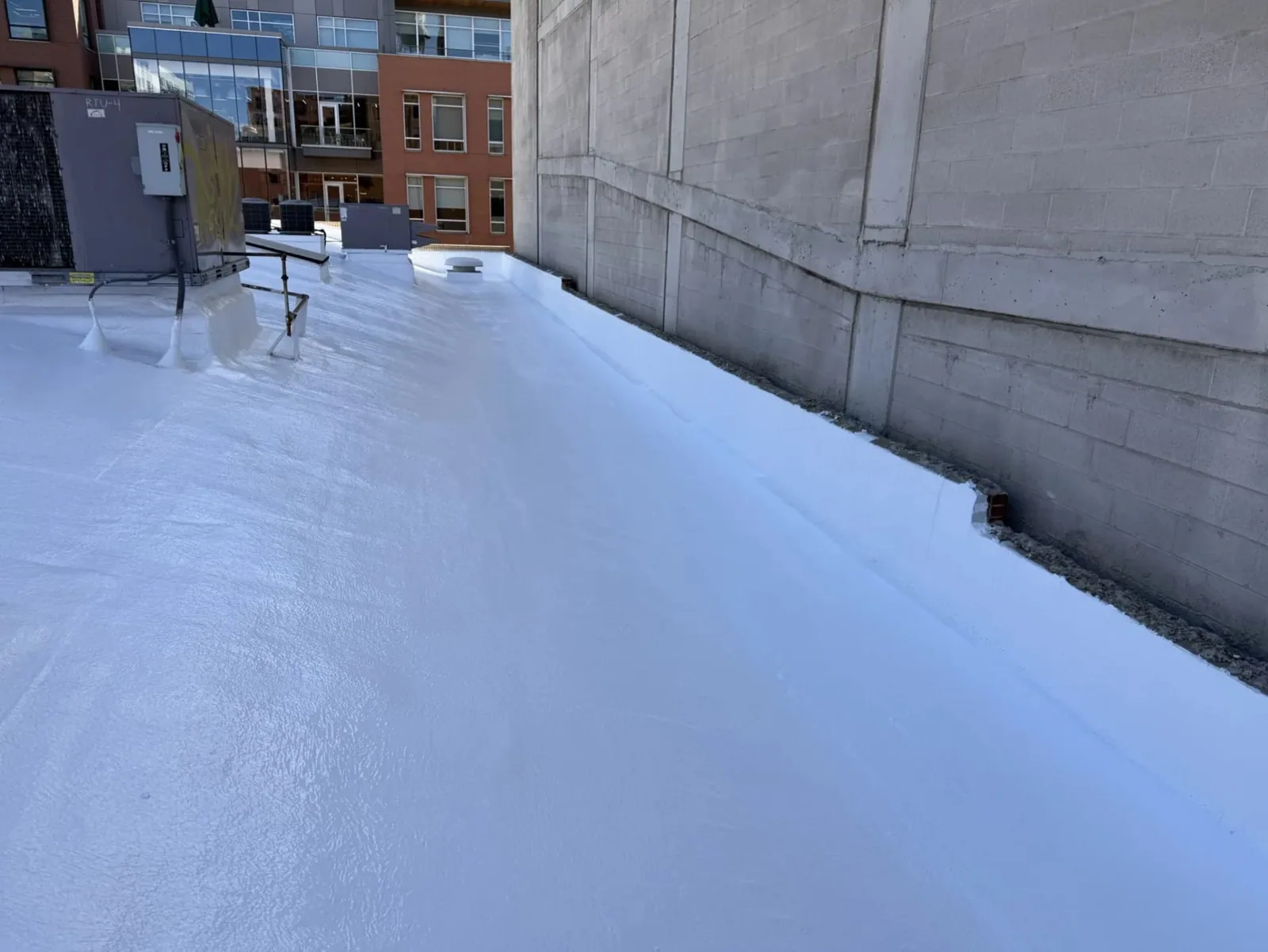
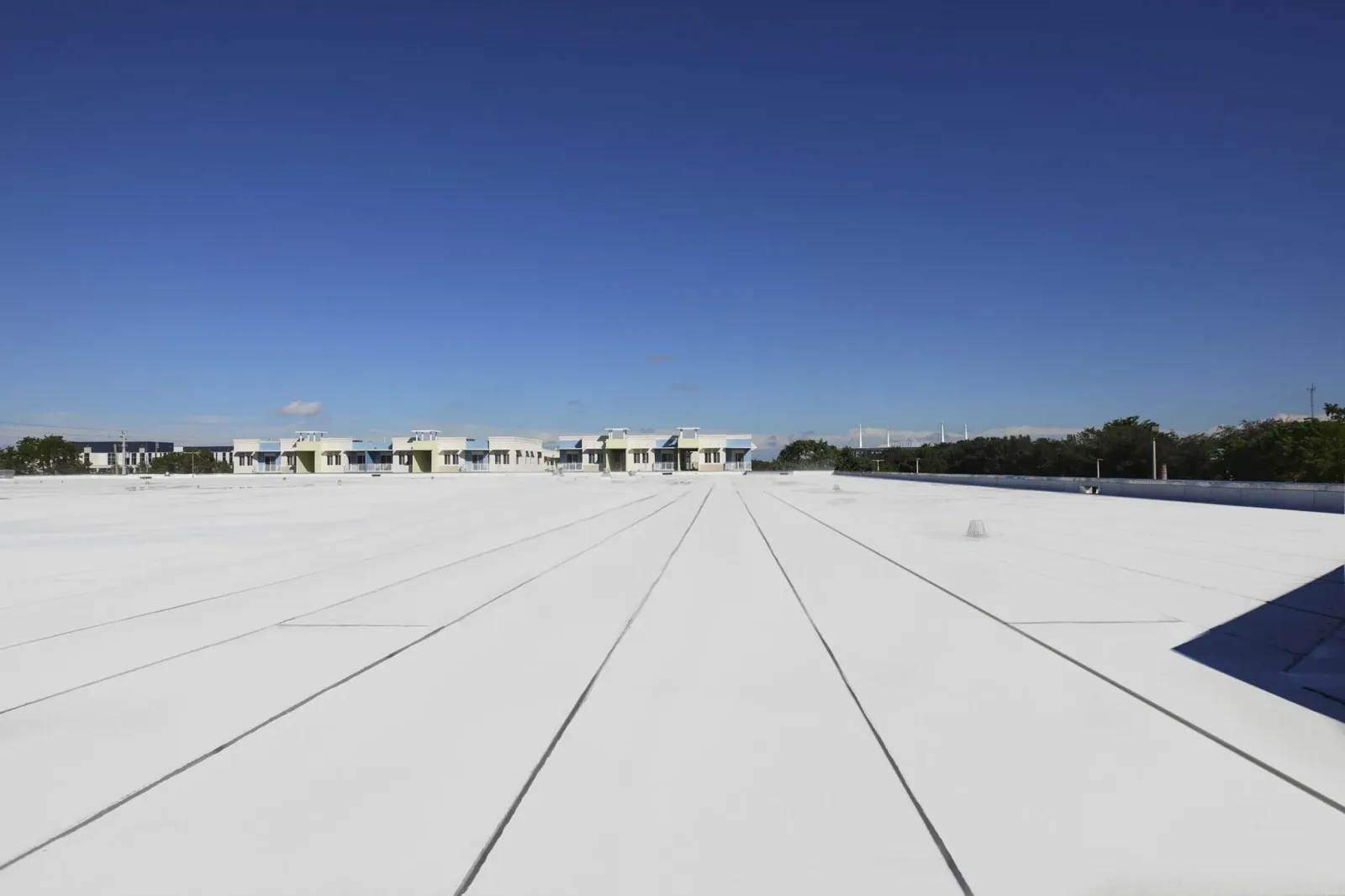
Liquid-applied membranes suit roofs with many penetrations and odd shapes, where sheet goods are hard to fit. They are rolled or sprayed in coats, often over reinforcing fabric, and they cure in place into a continuous layer. As a restoration, they can extend a dry, sound roof without tear-off. As flashing, they rebuild corners and curbs. Surface preparation drives results: cleaning, primer, moisture checks. The roof coating restoration scope lists those steps and the cure time before rain.
Lowell receives 48.51 inches of precipitation across a typical year by the NOAA normals, with 5.00 inches in October, so cure windows are real constraints. A liquid system applied ahead of rain can wash out. The schedule carries a weather hold, and the cost update shows what the hold adds.
Insulation and Vapor Control
Soprema also supplies roof insulation, and a layered roof depends on what sits between deck and membrane. A vapor layer under the insulation keeps interior moisture from rising into it during the cold months. Lowell's January daily mean sits near 25 degrees, so the temperature difference across a roof assembly is large for much of the season. Where a building holds humid space, such as a kitchen, a pool or a process area, the vapor design deserves a line in the scope.
When cores come up with damp board under a sound membrane, the cause may be vapor drive from inside rather than a leak from outside. The note records both possibilities and the test that would separate them, such as checking interior humidity or the absence of exterior openings. Fixing the wrong cause leaves the board wet. Fixing the right cause gives the new insulation a chance to stay dry.
Either way, the repair boundary follows the wet board, not the stain. Owners who see the core photograph, the moisture reading and the cut line together can approve the work with the evidence in hand, and the dated cost update shows what a wider cut would add if later readings call for it.
Cost Update and Scope Decision
The first cost update comes after the readings, not before. It separates three items: the temporary dry-in and its upkeep, the repair within the boundary, and any larger scope the readings may justify. The tenth-edition state code, drawn mainly from the 2021 IBC, governs filings from July 1, 2025; stretch energy provisions vary by town and are confirmed per project. An owner who wants to avoid flame can weigh modified bitumen applied cold against single-ply sheet, a category that GAF and Johns Manville also supply next to layered systems.
The city's Hamilton Canal District plan ties downtown to the commuter-rail station through mixed commercial, retail, office and research uses; a roof there is scheduled with its neighbors in mind. Outside the city, a roof in Tewksbury or Billerica gets the same hot-work and interior-protection questions, with delivery routes planned along I-93, I-495 and Route 3. Tewksbury has direct access to the first two, and Billerica's Concord Road area sits just off Route 3.
Commercial Roofing Questions
When is torch work ruled out?
When the deck, blocking or insulation beneath could burn, or when voids hide flame paths. Cold-applied, self-adhered or mechanically attached methods take over.
Does a blister always mean wet insulation?
No. A blister over dry board is cut, dried and patched. One over wet board points to a moisture source, and the board is tested first.
Can a liquid-applied system fix a leaking roof?
Only after the leak source is found and wet board is removed. Over a dry, clean, sound surface it can extend life and flash difficult shapes.
Do historic district rules touch a roof?
Changes to a roof's exterior in the historic district go before the Historic Board. Visible changes need approval before material is ordered.
What stops a liquid coat from washing out?
A cure window with no rain. The schedule carries a weather hold, and the cost update shows what holding adds.