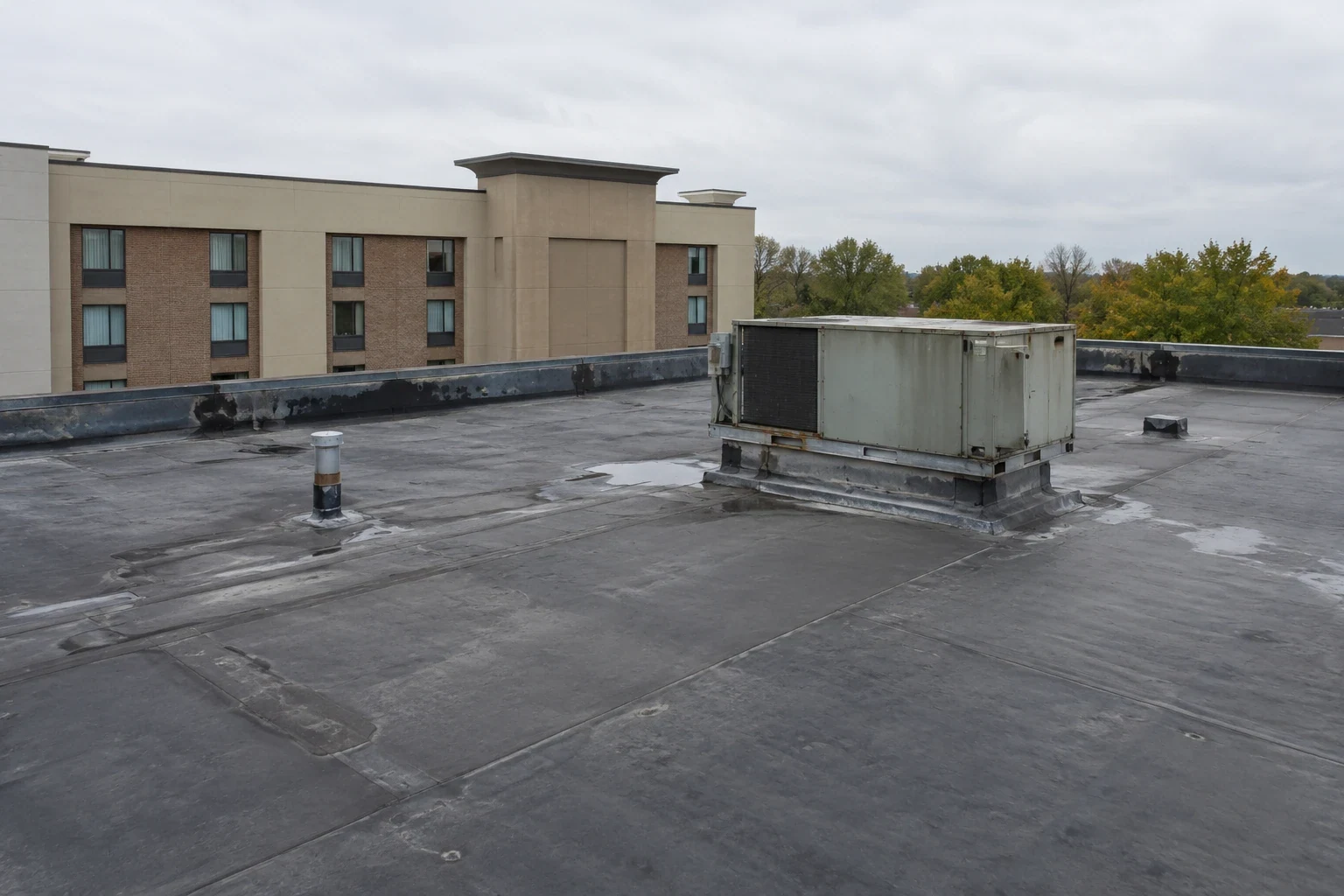
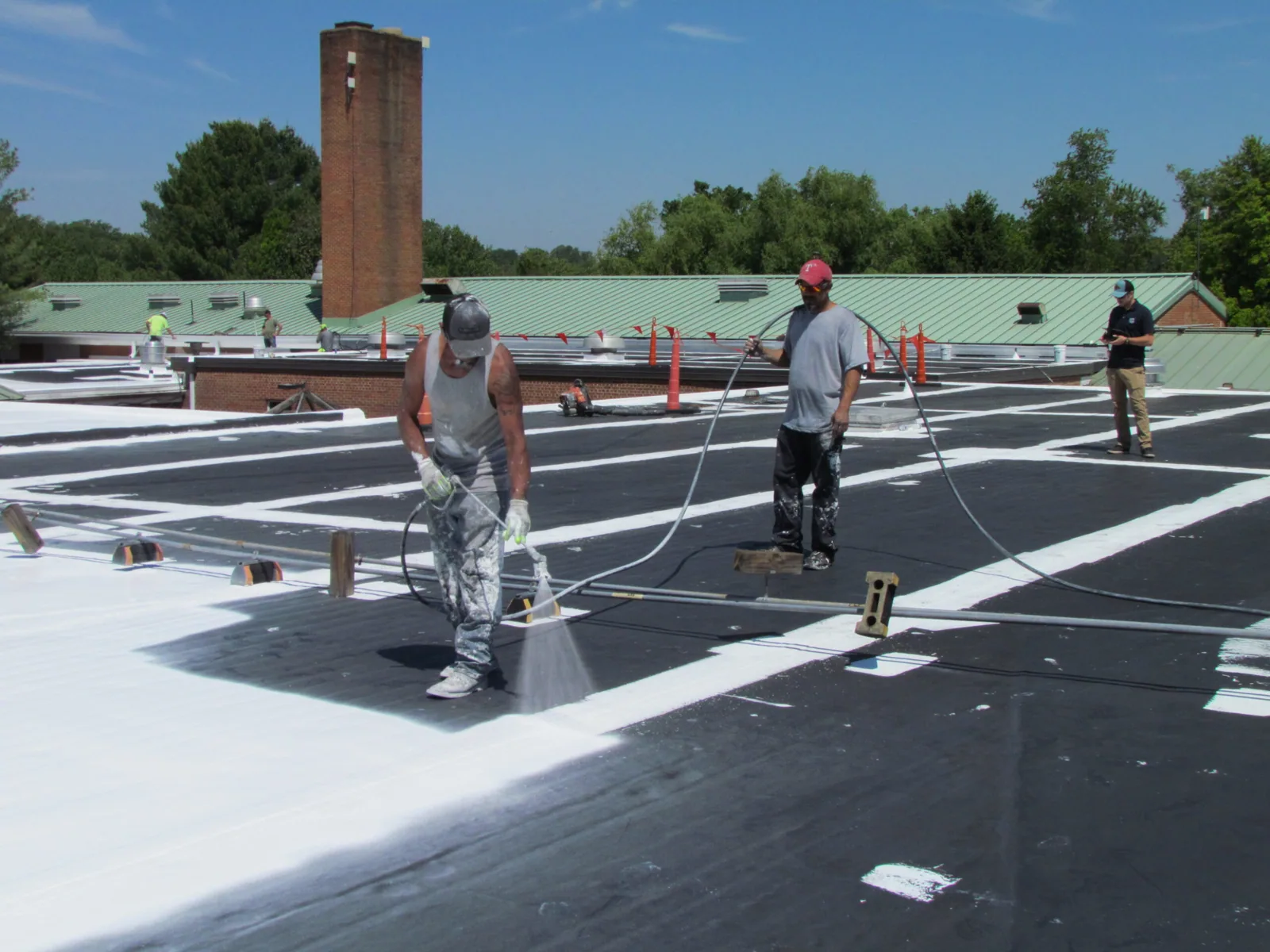
Close the wet zone, then trace the water. A fitness facility report usually reaches us through a general manager or a facilities lead who has found a slick floor, a stained ceiling over a studio, or water at a light fixture over a cardio row. Slips are the first risk, and electricity is the second. We ask where the water is, what sits below it, and whether the area can be closed. From there we work out roof access and decide what interior protection goes up while we travel.
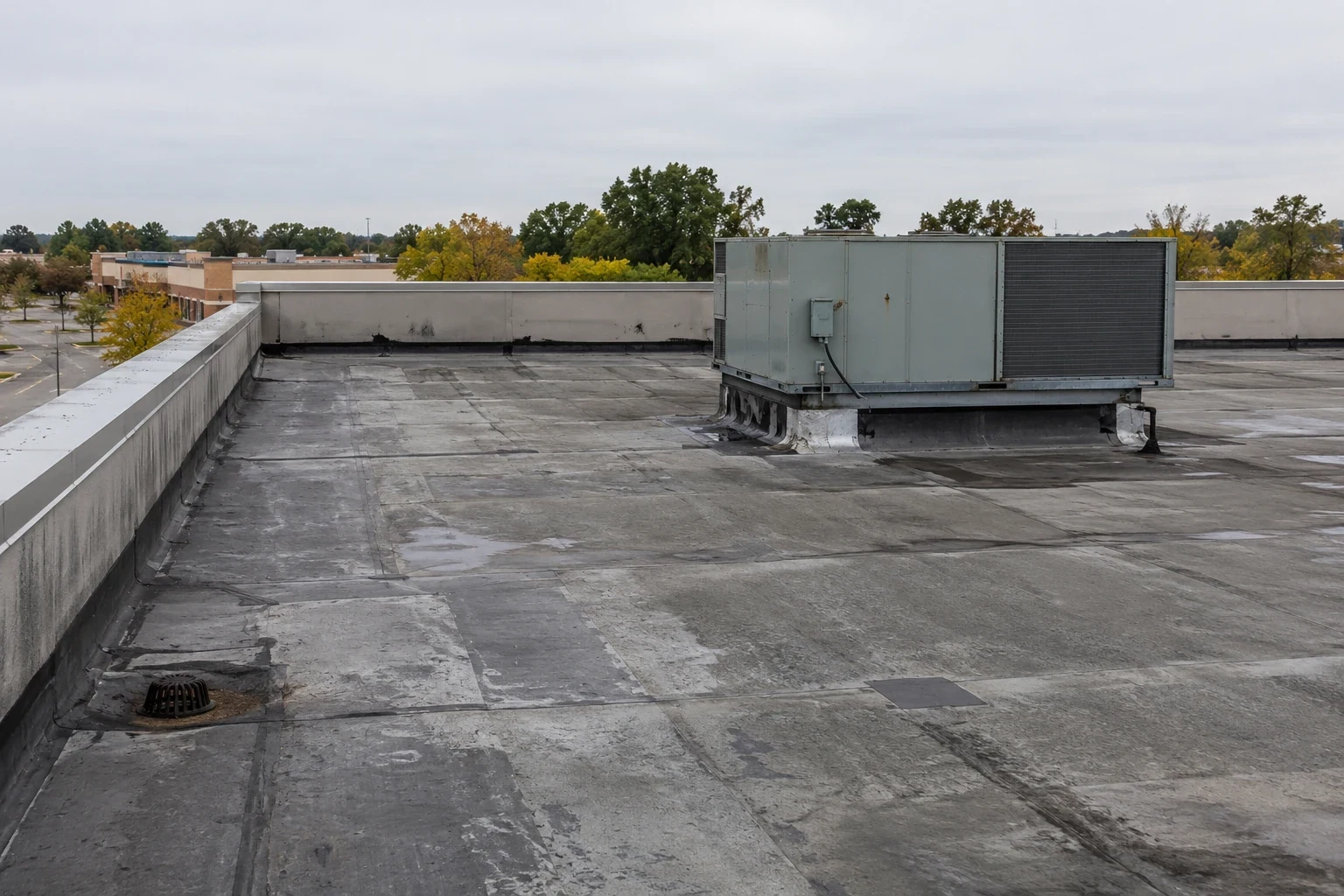
A fitness roof in Lowell, MA, sheds rain every month and carries winter loads on wide, low-slope sections. The manager hears the plan in order: first-hour step, temporary dry-in, inspection, repair boundary, and price, with a time on each, because classes and member traffic do not pause for a roofer.
Floors, Equipment, and Member Safety
Gym floors are rubber, wood, or turf, and each takes water differently. Rubber flooring traps moisture at seams. Wood warps. Turf drains but can hold wet padding. Equipment such as treadmills, ellipticals, and weight stations carries motors and cords. We keep members clear, shut off power to affected circuits through the manager, and cover or move equipment where possible.
The manager decides what closes. Behind that decision sit four facts: where water entered, which roof section sits above, what the dry-in covers, and when the roof was made watertight. For a leak over a studio or court, a barrier and signs protect members while the roof is traced. A photo record of the interior stain, with dates, supports any claim and any conversation with a member who reports a problem. Wet rubber flooring and turf padding need drying before they return to use, and that work belongs to the facility's cleaning or restoration vendor. We tell the manager when the roof above is tight, so drying starts from a dry source.
Clear-Span Roofs and High Ceilings
Many gyms, courts, and rec spaces use wide open volumes with high ceilings, so roof structures often span long distances and carry equipment at height. The roof may be metal or a low-slope membrane. We read what is on the building and walk the sections in a fixed order: drains, seams, flashing, penetrations, and edges.
High ceilings complicate interior protection. A drip falls a long way and spreads, and cleanup needs a lift. We place protection at the source where we can, and we ask for access to the ceiling cavity to look for wet insulation. A lift is the usual way to reach the ceiling, so we agree on its placement and on the floor protection under it before it moves, and we schedule the lift for hours when members are not in the room. Any panel we remove for the inspection is replaced or noted before the crew leaves. A school gymnasium shares the same volume and the same concerns, and a hotel with a fitness room or a pool shares the humidity concerns below.
Humidity, Pools, and Condensation
Fitness facilities create moisture: showers, saunas, pools, and hard-working people. Warm, humid air rises and meets a cold roof deck, and the moisture condenses. In winter, that produces drips that look like leaks and leave the same stains. We separate condensation from water entry by timing, pattern, and moisture readings. A drip on cold mornings that stops by afternoon points to condensation, and a drip after rain points to a leak.
Condensation is a vapor-control and ventilation question as much as a roofing one. The roof insulation and cover board layers in a replacement scope include the vapor layer, and the report states whether the existing assembly has one. We do not design the ventilation system. We tell the manager what the roof shows and recommend a mechanical engineer if the building needs one. The report includes the moisture readings, the photographs of the stain pattern, and the dates of each visit, so an engineer or an insurer can see what was measured and when.
Early Hours, Classes, and Noise
A fitness facility opens early and closes late, with classes at set times. Roof work competes with both. Noisy tasks move away from studios during classes and away from quiet areas such as yoga and stretching rooms. Staging stays out of member parking and entrances. Fumes from adhesives are checked against air intakes before products are opened, since members breathing hard are the last people to want solvent in the air.
The plan for occupied building reroofing sets quiet windows, safe routes, and the day each section becomes watertight. The manager shares the schedule with staff and members, and we post any changes the same day. A section is never left open overnight. If a class has to move to another room because of a lift or a work zone, the manager hears about it the day before, with the room, the hours, and the expected end of the work, so instructors and members are not surprised at the door. Early-morning arrivals use an entrance the crew has kept clear and lit.
Winter Weather and Roof Edges
Heavy snow years are part of the local record, and they test roof edges and drains first. Melt and refreeze then work on those edges and drains through the cold months. After a storm, we check coping, flashing, and drains first, then the field of the roof.
The snow and ice damage repair record is organized by section for the manager and any insurer. Snow that slides from a roof can land on an entrance, so the report flags slopes that shed toward doors. We do not clear snow by methods that cut the membrane, and we ask for structural documents when load is in doubt before anyone works on a roof under heavy snow.
Cost Update and Return Window
The dry-in is priced first and the permanent repair follows inspection. Access, hours, and the weather hold sit inside each price, and every update names the next. When the moisture map shows wet insulation across sections, the scope can move to a section replacement with a PVC membrane or another system, and the report shows both paths.
Crews and materials arrive by I-495, I-93, and Route 3, and the lot plan keeps member parking clear. The same method applies in Lowell, Dracut, and Billerica.
Commercial Roofing Questions
Can the gym stay open during a roof repair?
Often, with a quiet-hours plan. We close the wet zone, keep staging out of member parking, and work over studios and courts at times the manager picks.
How do we tell condensation from a roof leak?
By timing and pattern. Drips on cold mornings that stop by afternoon suggest condensation, and drips after rain suggest water entry. Moisture readings at the stain and around it settle the question.
What if power is near the wet area?
The manager shuts off the affected circuits and keeps members clear. An electrician checks fixtures and outlets before the space returns to use. We flag the step in every report.
Does a pool room change the roof work?
It does. Humidity enters the roof assembly, so we check insulation for condensation and fasteners for corrosion, and the scope adds vapor control where it is missing.
How is a high ceiling protected from drips?
At the source where possible, with a temporary dry-in at the roof opening. Interior protection below uses sheeting and pans placed with a lift if needed.