Count the rooms under the leak. A hotel roof report starts at the front desk or with a housekeeping supervisor who has found a wet carpet, a stained ceiling, or a guest complaint. We ask which floor, which rooms, and whether the area can be taken out of service tonight. The answer decides the interior protection: sheeting over furniture, a barrier at the door, a guest relocated, or a ballroom event moved. After that we check who can reach the roof section overhead and what dry-in can be placed before dark.
In Lowell, MA, hospitality is a named sector in the city's economic profile, and a hotel carries a mix of room blocks, public spaces, kitchens, and mechanical areas under one set of roofs. The general manager receives a first move, a repair boundary, and a price, all on a posted schedule.
Guest Rooms, Ballrooms, and Public Space
Each space under a hotel roof carries a different cost when water arrives. A guest room out of service loses a night of revenue and may need drying equipment. A ballroom with an event booked needs a decision about the date. A lobby needs a barrier and signs. We map the affected spaces on the roof plan so that the operations team and the roofer talk about the same rooms. Housekeeping and engineering staff usually see water first, so we ask them for the room list, the time of discovery, and phone photographs. Those first images often show the direction of the drip, which points toward the roof opening.
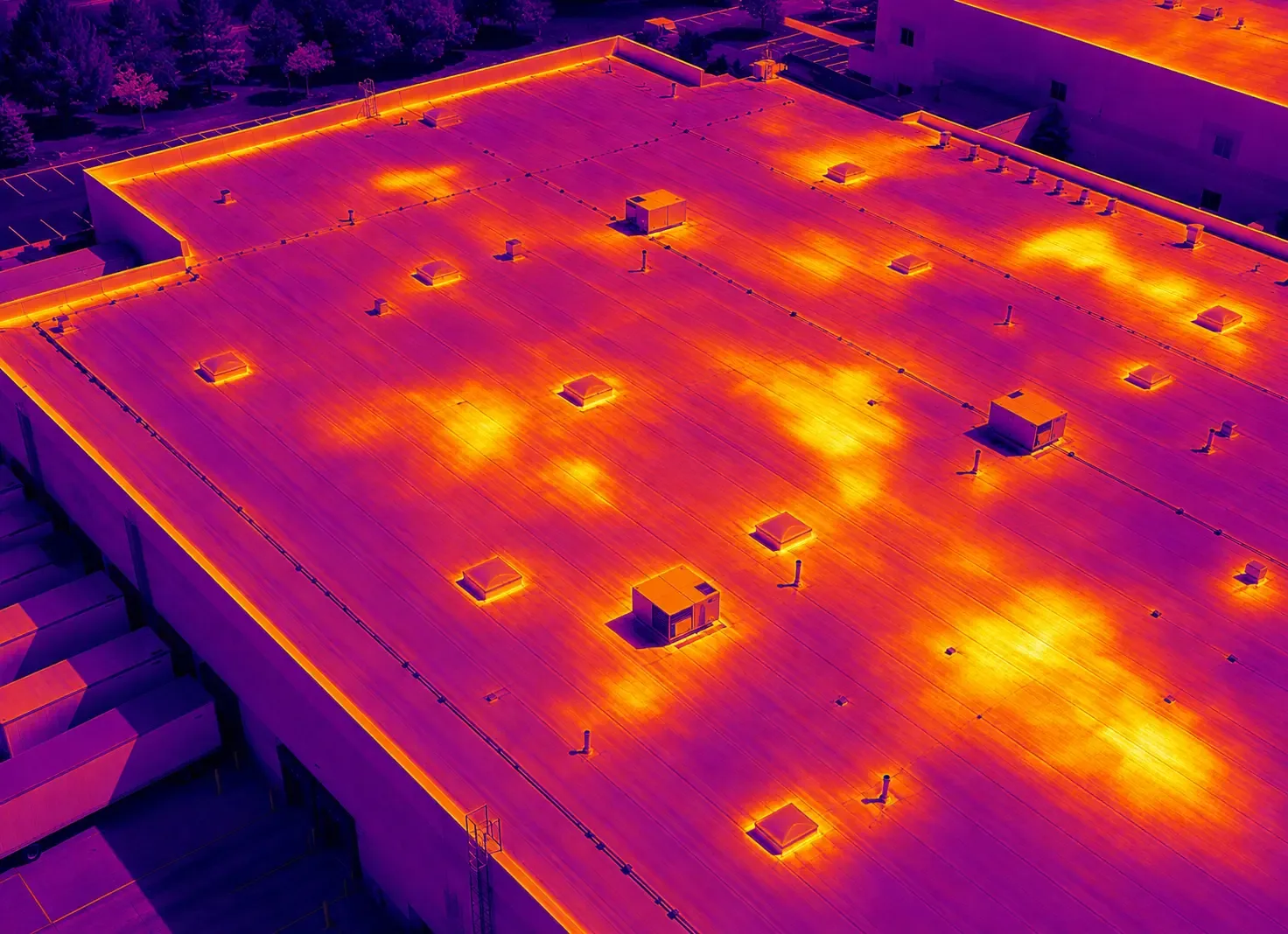
Water often travels along the deck or through a wall cavity before it appears. A stain in room 312 may start above the corridor. We trace upslope, walk the roof sections above the affected floors, and test the flashing, drains, and penetrations in a fixed order. If water reaches insulation, an infrared moisture survey maps the wet zone and cores confirm its depth.
Mechanical Roofs and Pool Areas
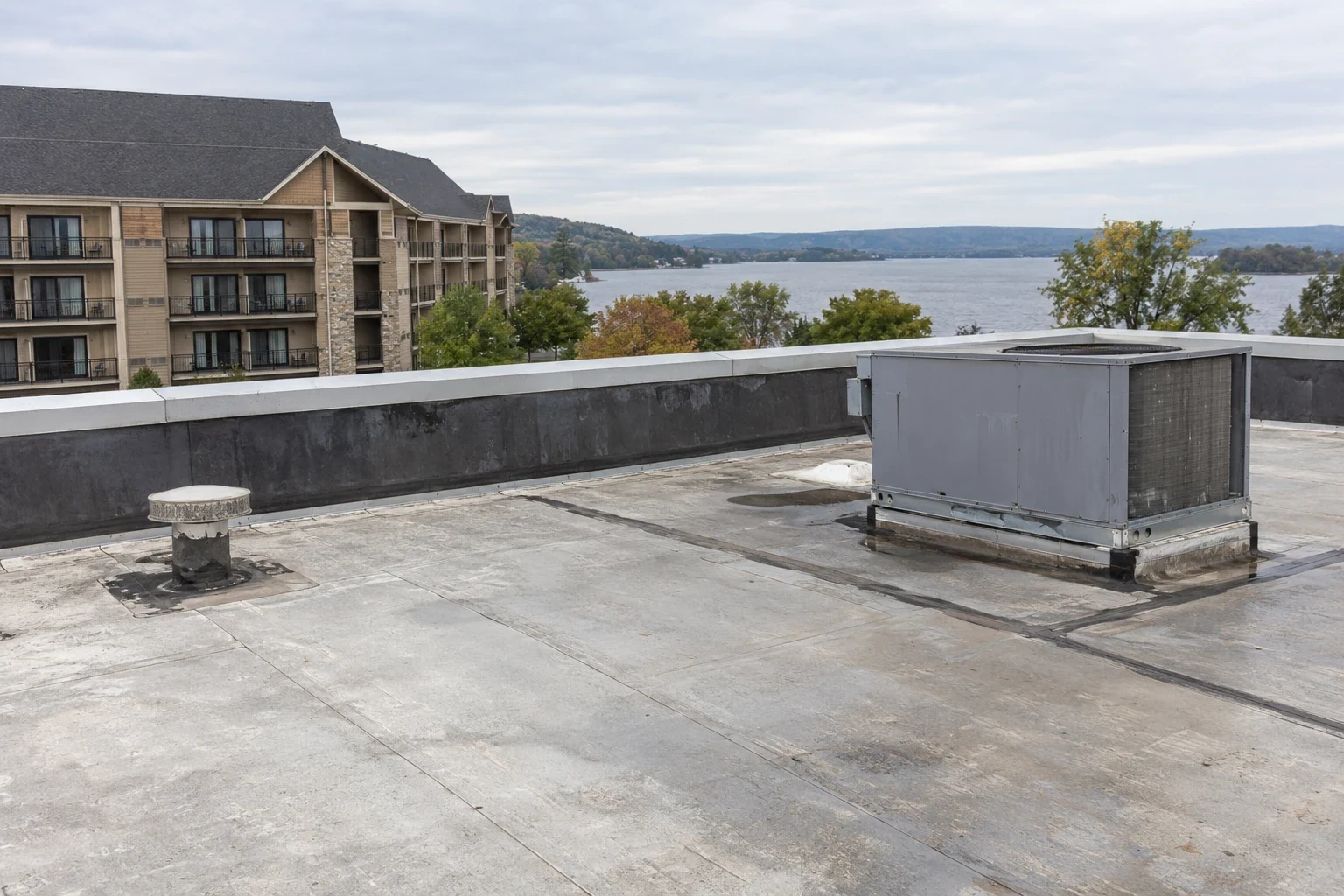
A hotel roof may carry rooftop units, kitchen exhaust, laundry exhaust, machine room vents, and water-heating equipment. Laundry and kitchen exhaust bring heat and moisture to the roof surface. Pipe penetrations carry hot water lines through the membrane. We number each item, check flashing and sealant, and note any equipment that rests directly on the membrane without a support or protection pad.
Where an indoor pool or spa sits below the roof, humidity moves into the roof assembly if the vapor control is poor. We look for signs of condensation in the insulation and for corrosion at fasteners and metal edges. When a replacement is on the table, the roof insulation and cover board layers carry the vapor and thermal design, and the scope lists them.
Noise, Fumes, and Quiet Hours
Guests sleep in the rooms below the roof. Tear-off, power tools, and hot work disturb them at any hour, and fumes reaching rooms are a complaint waiting to happen. We list the loud and fume-producing tasks separately and set them for hours the hotel selects, with the quiet sections of the roof reserved for the early morning or late evening. Air intakes are located before adhesives are opened.
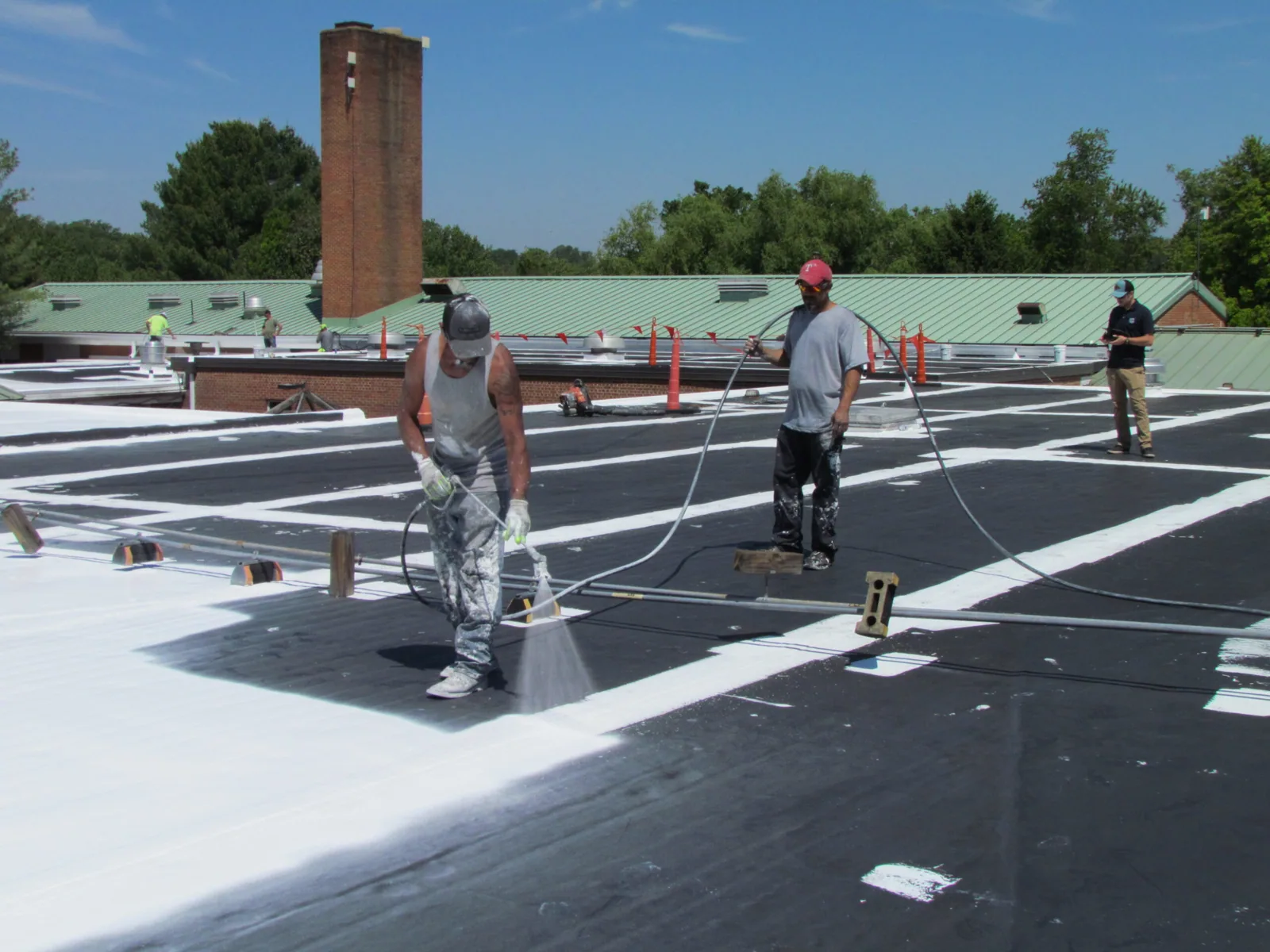
The plan for occupied building reroofing sets noise windows, safe pedestrian routes, staging areas away from the entrance, and the day each section becomes watertight. A hotel that runs events needs the schedule early enough to move or block rooms, and we give that notice in the first update.
Lowell Weather and Roof Edges
Hurricanes, nor'easters, snowstorms, and ice storms are all named among the city's major hazards. A hotel roof sees those conditions at its edges, at drains, and at rooftop equipment. After a storm, we walk the perimeter first, then the drains, then the field of the roof. Wind-lifted flashing and torn edge metal show up there before they show up inside.
At the city station, January averages near 25 degrees and December precipitation normally reaches 4.54 inches, so a hotel roof sees freeze and thaw as well as snow. A weather hold may delay permanent work, and the temporary dry-in has to stand through it. A snow and ice damage record breaks the findings out by section, so insurance and repairs match.
Downtown, Redevelopment, and Highway Access
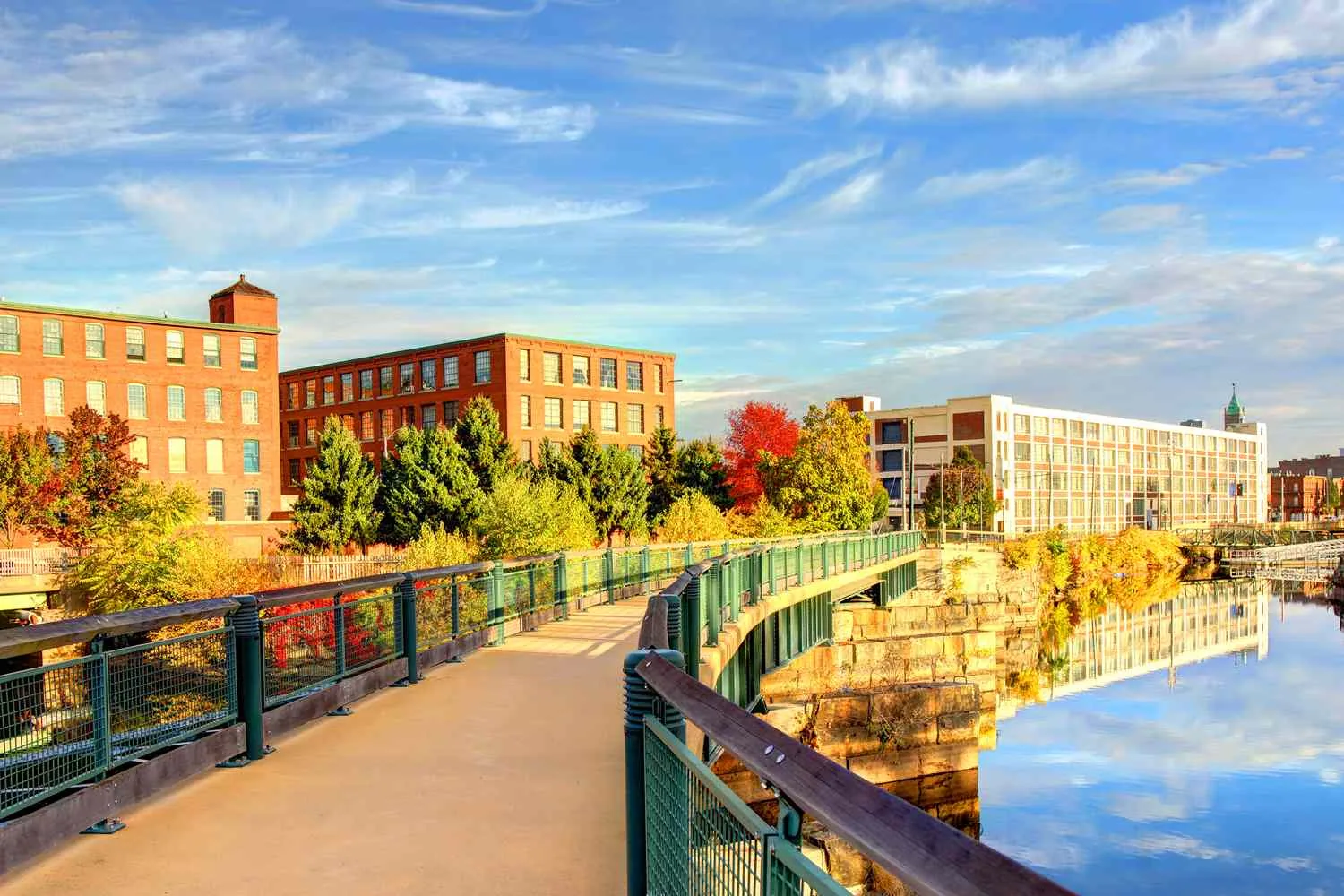
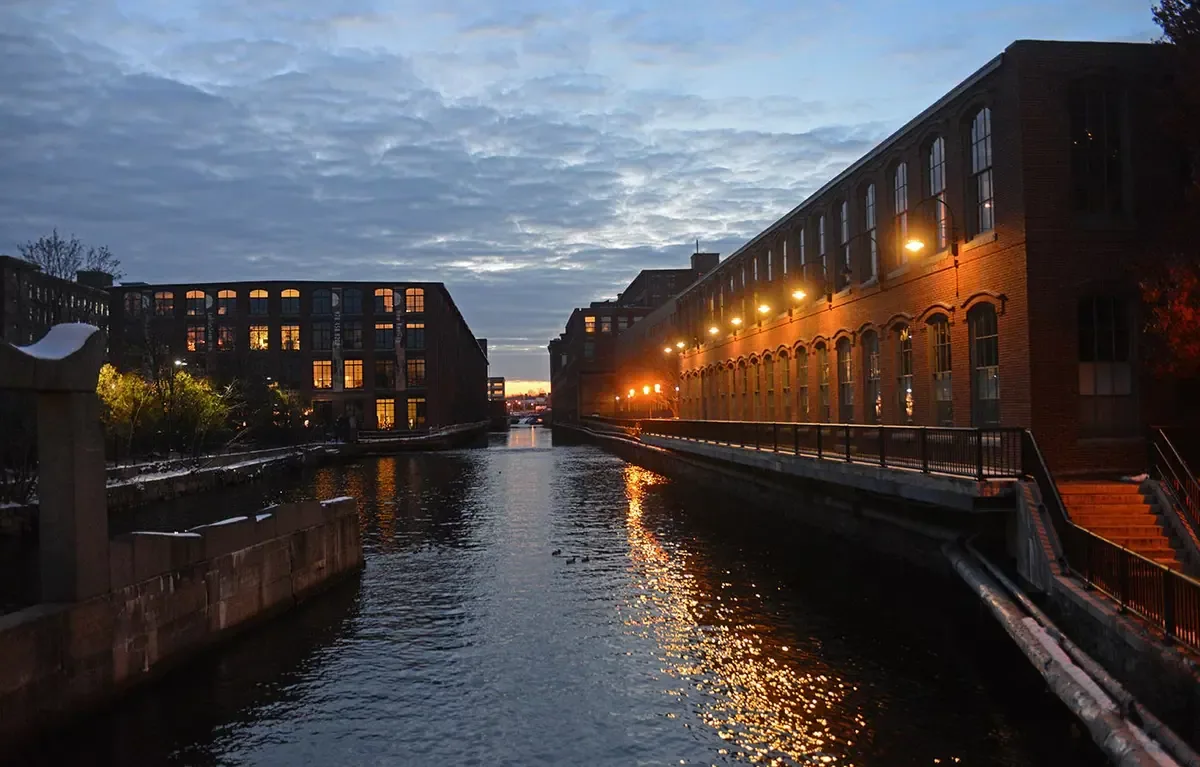
City plans for the Hamilton Canal District, between downtown and the commuter-rail station, mix commercial, retail, office, and research uses. Hotels near that area and near the Downtown Lowell Historic District may have exterior review questions when a roof changes. The Historic Board reviews exterior work in the district, and we ask the owner early whether review applies.
Guests and our trucks both use I-93, I-495, and Route 3 to reach Lowell. We stage deliveries so that guest parking and the main entrance stay clear. The same approach works for hotels in Lowell and in towns such as Chelmsford or Tewksbury, and for a hospitality group with several properties.
Cost Update and Return Window
A hotel update has a clear order, and each step has a person attached: the general manager for the schedule, the chief engineer for equipment and access, and the revenue manager for the rooms and events that must move. Photographs of the affected rooms and the roof section go to all three, so the same facts reach each of them at once. The first item is the temporary dry-in price, given the same day when water is active. The second is the set of inspection findings, with photographs and a roof plan that shows every wet section and every flashing detail checked. The third is the permanent repair price and the return window, with the weather hold allowance listed separately so the owner can see what is fixed cost and what depends on the forecast. Each update carries the date of the one after it, and we keep that date. Between updates, the chief engineer has a direct line to the crew lead for questions about access, equipment shutdowns, and the status of any rooms below the work.
The energy rule that applies locally is confirmed before any insulation is chosen. Hotels with restaurants follow the kitchen exhaust steps used for a restaurant roof, and extended-stay or residential-style properties follow the plan used for an apartment roof. A roof condition report across a hotel's sections gives the owner a ranked list for the next budget year.
Commercial Roofing Questions
Can the hotel stay open during a reroof?
Usually, with a phased plan. Sections above vacated rooms go first, noisy work follows the hours the hotel picks, and every section is closed watertight before the crew leaves each evening.
How do you decide which rooms to take out of service?
The wet area and the structure decide. We map the water path and the moisture reading, and rooms inside that boundary are held until the ceiling and floor are dry and the roof above is repaired.
What if an event is booked while the roof is open?
The event date goes on the schedule at the start. If the roof section over the event space cannot be closed in time, we propose a different sequence or a temporary cover that holds.
Do pool and spa areas change the roof work?
They do. With poor vapor control, humidity enters the roof assembly, so the scope checks insulation for condensation and fasteners for corrosion and adds vapor control where it is missing.
When does a hotel owner move from repair to replacement?
When moisture is spread across sections, the insulation has lost its value, or repairs keep failing in new places. The scan and cores show the extent, and the update carries both prices.