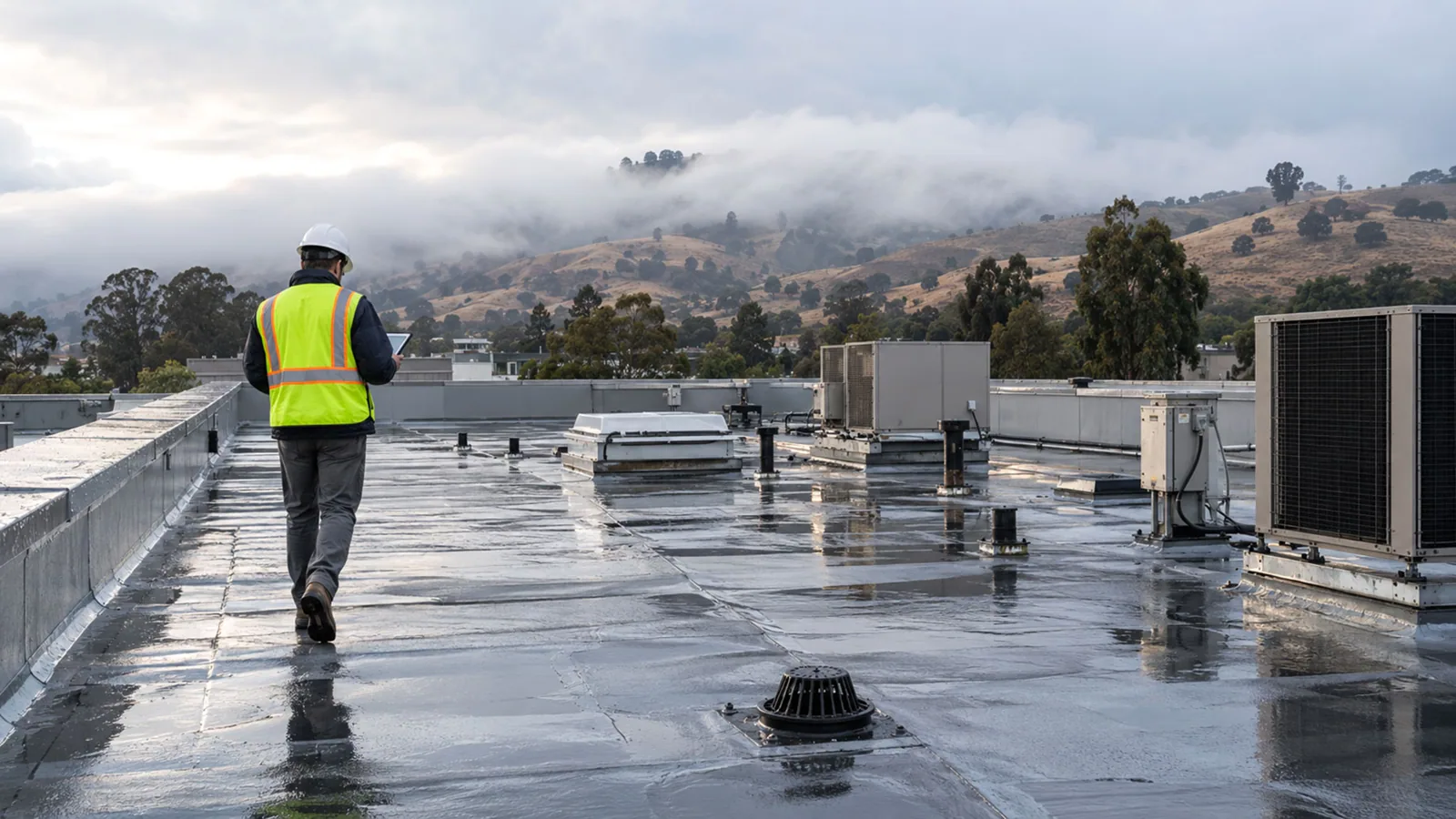
Commercial roofs in Dunstable, MA tend to be small and spread out. The town's market study describes commercial uses as small-scale and interspersed with agricultural and residential land, a pattern that sets the terms for roof work. One building may sit beside a field, another near a house, and each has its own access, its own tree cover and its own neighbors. A first report here comes down to the water entry point, the space beneath it and a way onto the roof that leaves the lot, the neighbors and the land undisturbed.
We respond to leak reports at any hour, holidays included. At the first visit we log the location, any cover placed inside and what the roof showed; the next update brings a price or a recommended test. A small building deserves the same written scope as a large one.
Route 113 buildings
Route 113 is named in the town's market study as the principal corridor linking Dunstable with neighboring communities. A business on the town's main road usually has customers arriving during the day, so roof work often happens while the doors stay open. We plan a lift position that does not block the entrance and a staging area that leaves parking available for the hours customers need it.
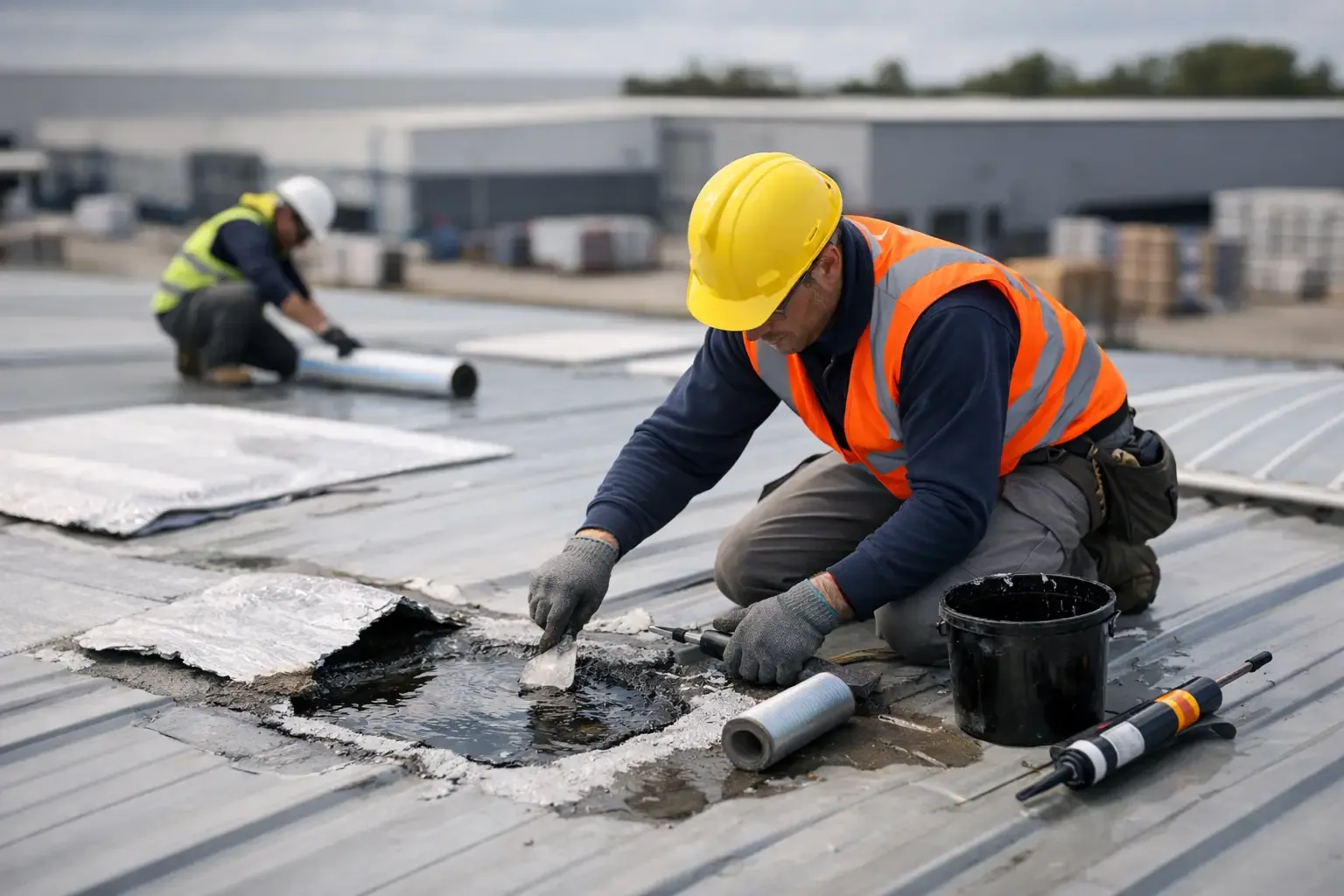
We read the seams, drains and edge metal first, then each penetration: vents, exhaust fans, a small rooftop unit or a satellite mount. In a small commercial building, a single failed flashing detail can account for the whole leak, and fixing it right the first time is cheaper than patching it every spring. The commercial roof leak repair process traces the water from the interior stain to the roof detail, then sets the repair boundary.
Town center and civic roofs
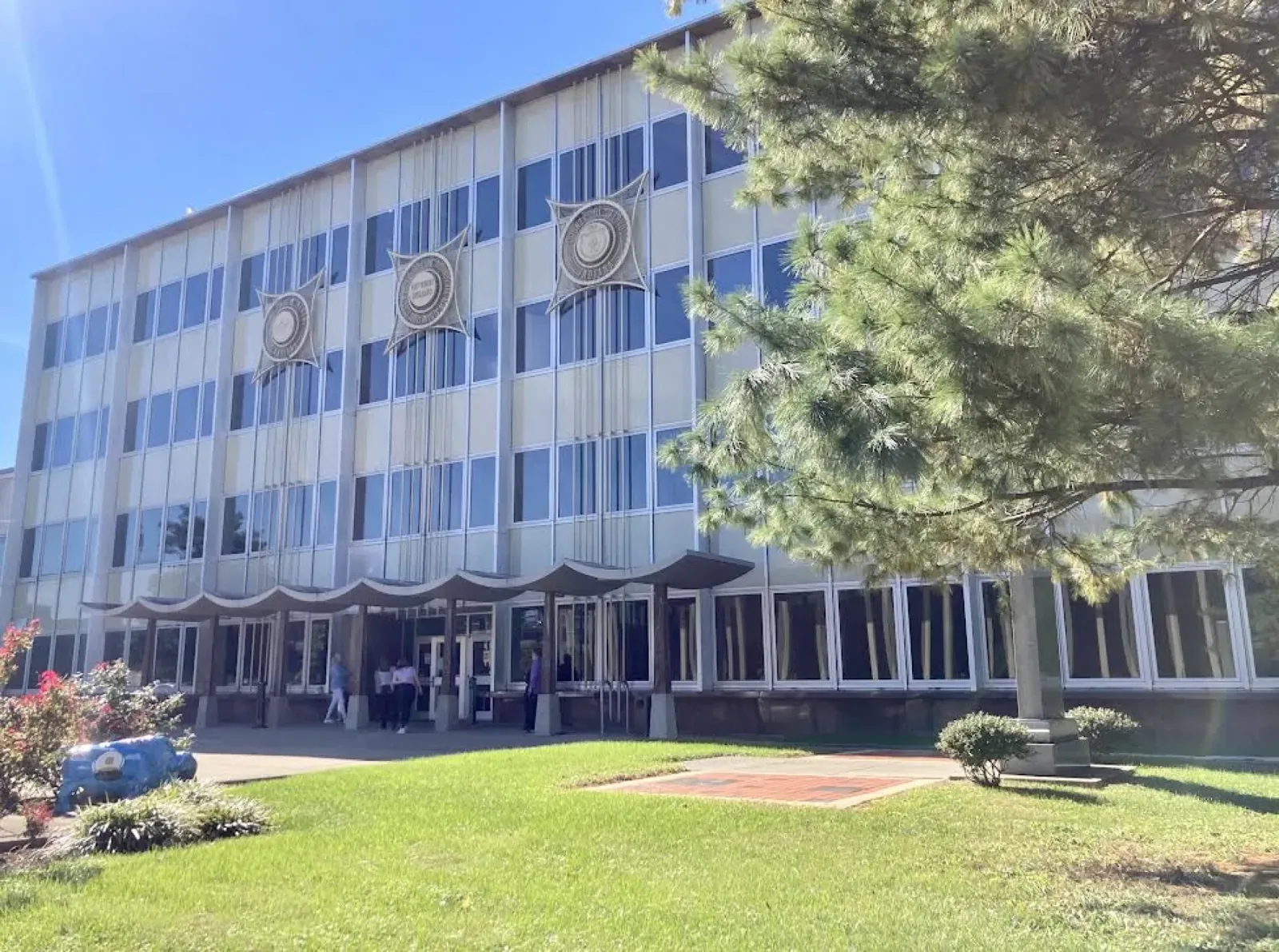
The market study identifies a compact town center with civic and municipal uses. Roofs on public buildings carry a different kind of accountability: the budget is public, decisions often wait for a board vote and the work has to be documented. We write a scope that a board can read and approve, with each item listed, its location marked and its cost shown separately. A temporary dry-in can be authorized quickly while the permanent repair goes through the approval process.
A government building roof scope also lists the hours the building is open to the public, the areas that must remain clear and any stored records that need protection from water. Our public agency reports keep the report format consistent so each year's condition record can be compared with the last. That history helps a town plan capital repairs instead of reacting to leaks.
Fields, trees and roof debris
When a building sits among agricultural and residential land, the roof collects things a city roof does not. Leaves, needles and seed pods fall into gutters and drains. Wind carries dust and field debris onto the membrane. Snow slides off a pitched roof onto a lower flat section and loads it unevenly. We check the roof edge, the gutters and any section where debris piles up, and we recommend a cleaning schedule that matches the seasons. Standing water behind a debris dam adds weight to the deck and speeds wear on the membrane, so a clear outlet is the cheapest protection the roof has.
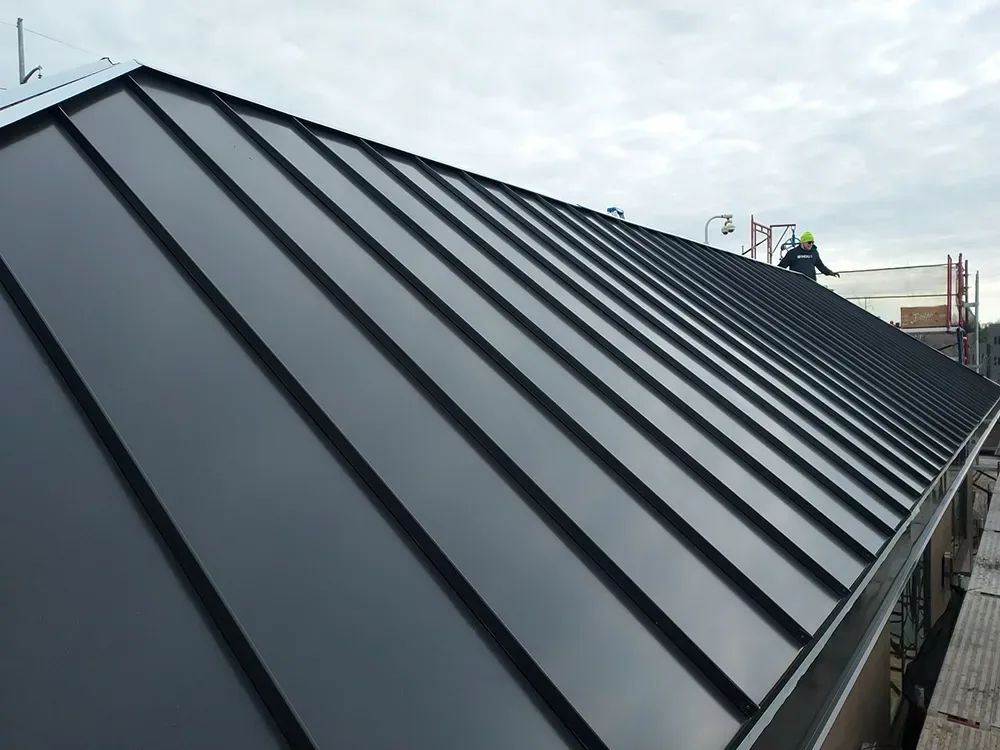
Metal roofs are common on small commercial buildings in many places, and their weak points are the fasteners, the seams and the flashing at the ridge and wall. Whether a Dunstable building has a metal roof is settled on the walk. If it does, we check for backed-out screws, worn washers and open laps, and we explain whether a standing seam or a coating restoration would extend its life. A maintenance plan keeps the small defects from becoming wet insulation.
Rain, snow and the winter record
Lowell averages 48.51 inches of precipitation over a year, and its January mean of 24.9°F points to the freeze-thaw rhythm exterior roof materials live with in this region. Lowell's hazard materials list nor'easters, snowstorms and ice storms, and its 1995 winter brought 126.5 inches of snow. These numbers help a Dunstable owner frame the winter checklist: clear drains, check edge metal, confirm that snow retention and rooftop supports are secure.
After a storm, the first step is safe access. Ice, snow and wet surfaces make a roof walk dangerous, so we wait for conditions that let the crew work. Where water is still getting in, a temporary dry-in holds the interior until the permanent repair can be booked for a workable day. Heavy snow can also leave dents, split seams or damaged flashing, and a snow and ice damage repair starts with a record of what the storm left behind.
Cost, code and scheduling
What drives the figure is how far the repair extends, the roof system, how the crew gets up, what the interior needs and the visit total. A small, open roof can often be repaired in a day, while a replacement needs weather windows and a staged crew. The roof area is measured, the tear-off layers are counted and the disposal is priced as its own line, so a change in the layer count found at tear-off can be explained against a written number. Because buildings here are spread out, travel and delivery are part of the plan, and we group repairs so one trip covers as much as possible.
A replacement falls under the Massachusetts 10th edition code, drawn largely from the 2021 International Building Code, with the town's energy rules checked before insulation goes into the price. Owners weighing a recover over the existing roof against a full tear-off get the reasoning for each option and the conditions that would rule one out. Nearby Tyngsborough and Pepperell owners follow the same method.
Commercial Roofing Questions
How do you decide between patching a small commercial roof and replacing it?
Repeat failures in different places, wet insulation across a broad area and a membrane that has lost flexibility point toward replacement. A single failed flashing or puncture on an otherwise sound roof is a repair. The report lists the evidence for each and the cost of both paths.
A tree overhangs the roof. What should be done about the debris?
Clean the drains and gutters on a set schedule, usually after leaf drop and again after the first thaw, and trim branches that scrape the membrane. We check for punctures and abrasion from branches during the walk and record any areas that need patching.
Can a town authorize roof work quickly after a leak is reported?
An emergency dry-in can usually be approved on short notice, with the permanent scope following the normal approval path. We write the scope in a form a board can review, with a separate price for each item, so the second decision moves faster.
What records should a building owner keep for roof work?
The written inspection report with photographs, the signed scope, invoices and any notes on interior protection. These show what was done, when and why, and they support an insurance claim if storm damage is involved.
Does a business stay open during roof work?
Often, with limits. We plan entrance access, parking and noisy tasks with the owner, and we work in sections so the space below any open area is protected. If a task needs the room clear, we state the hours in advance.