A wet guest room is a room out of inventory. The revenue loss starts the moment the front desk blocks the room, and it runs until the ceiling is dried, repaired and cleared by housekeeping. For a hotel owner, the roof call is a count of rooms and nights: how many are affected, for how long and what that costs against the price of the repair.
Leisure and hospitality appears among the key employment sectors named in Lowell, MA's city profile, and hospitality businesses of every size need a roof that keeps working through the season. The roofs above them face the same weather as any other building in the region, but the tolerance for disruption is lower. Guests do not accept noise, dust or a dripping ceiling, and online reviews record every one.
Rooms, nights and the leak
The first-hour check at a hotel begins on the top floor. Which rooms are under the wet area, are guests inside, and can they be moved? The general manager decides, and the roof crew covers the opening. Interior protection is placed over furniture and bedding when the room cannot be vacated at once.
A leak on an upper floor often travels. Water drops through a ceiling, runs along a pipe chase and appears in a lower room or corridor. The inspection traces it from the stain back along its path, and the infrared survey shows wet insulation above the ceiling. Rooms are released only after the moisture readings come back dry, since damp materials invite mold and complaints.
The update to the general manager lists affected rooms, the interim protection used, the likely return date for each room and the cost range of the permanent repair. With that, the revenue manager can price the lost nights against the repair choice.
Events, weekends and the busy calendar
A hotel has a calendar that the roof plan must respect. Weddings, conferences, holiday weekends and sports travel fill rooms, and a noisy tear-off over a ballroom on a wedding Saturday is not an option. The scope asks for the calendar at the first visit and treats blackout dates as fixed.
Work is planned for the slower weeks. A reroof starts at one end of the building and moves section by section, with the rooms below blocked only while their section is open. A reroof on an occupied building uses protected walkways, controlled deliveries and quiet hours to keep guests undisturbed.
Timing also affects cost. Night and weekend labor carries a premium, and a split schedule costs more in mobilization. The scope shows those lines separately, with the alternative beside each, so the owner can compare a lower-cost plan that blocks more rooms against a higher-cost plan that blocks fewer. The choice rests on the occupancy forecast, not on a guess.
Kitchens, pools and rooftop equipment
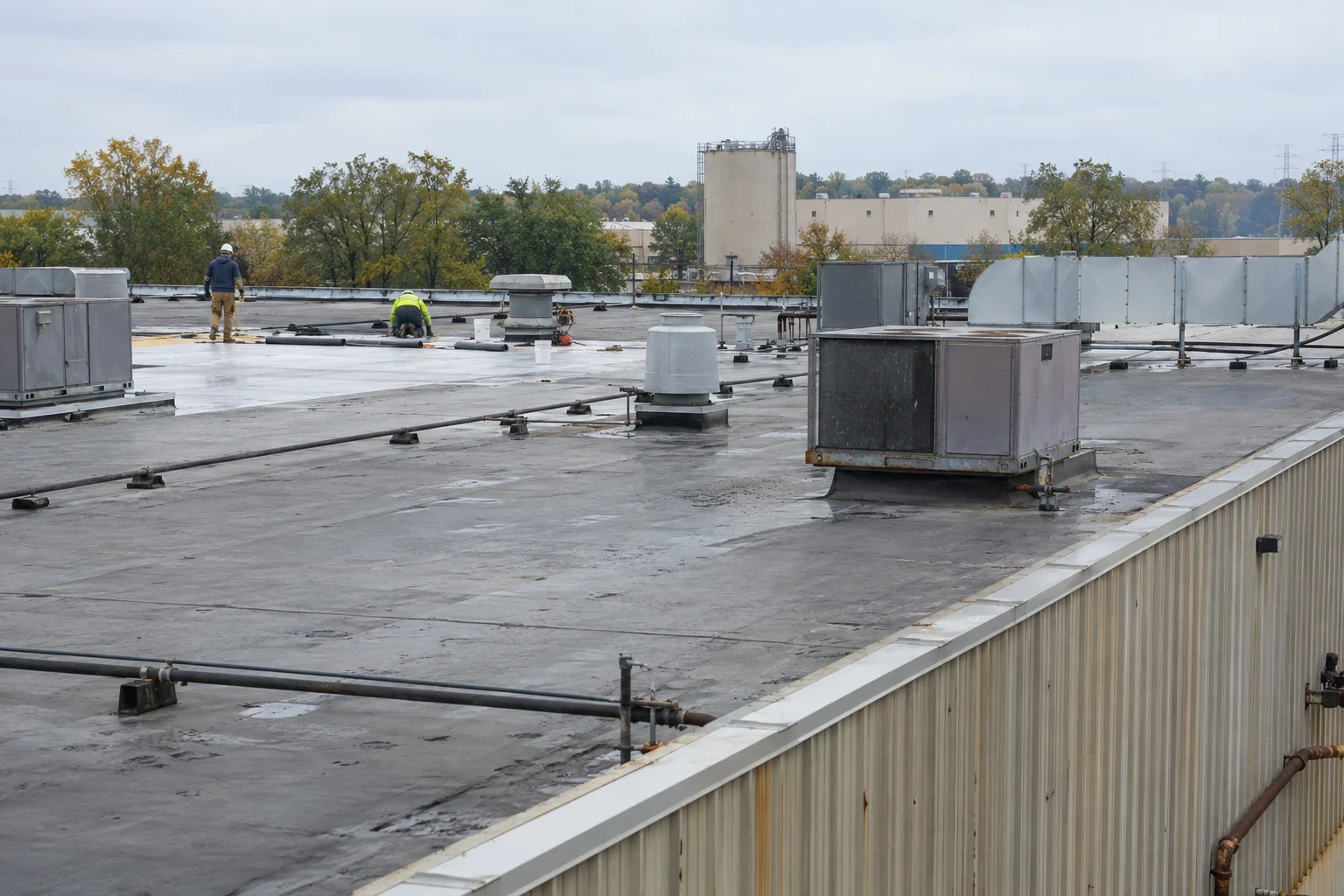
Hotels carry roof loads that other buildings do not. Kitchen exhaust discharges grease onto the membrane, laundry vents release warm, humid air, and pool or spa mechanical systems add moisture-laden exhaust. Each of these affects the roof system. A grease-resistant membrane suits the area around kitchen fans, and humid exhaust calls for a look at vapor control and ventilation in the assembly below.
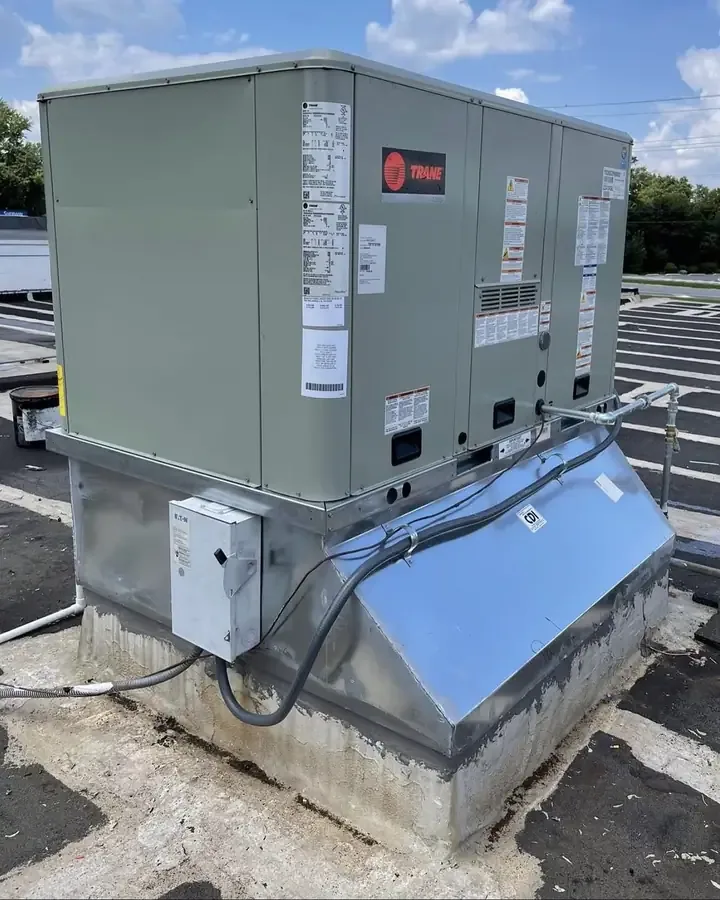
Rooftop units for guest-room heating and cooling, stair penthouses and signage frames add penetrations. Each is a flashing detail, and each is checked for sealed edges, a sound curb and proper support. When an HVAC contractor replaces a unit, the roof flashing is often disturbed. We inspect the curb afterward so that the first rain does not become a guest complaint. Our equipment curb and support work includes this step.
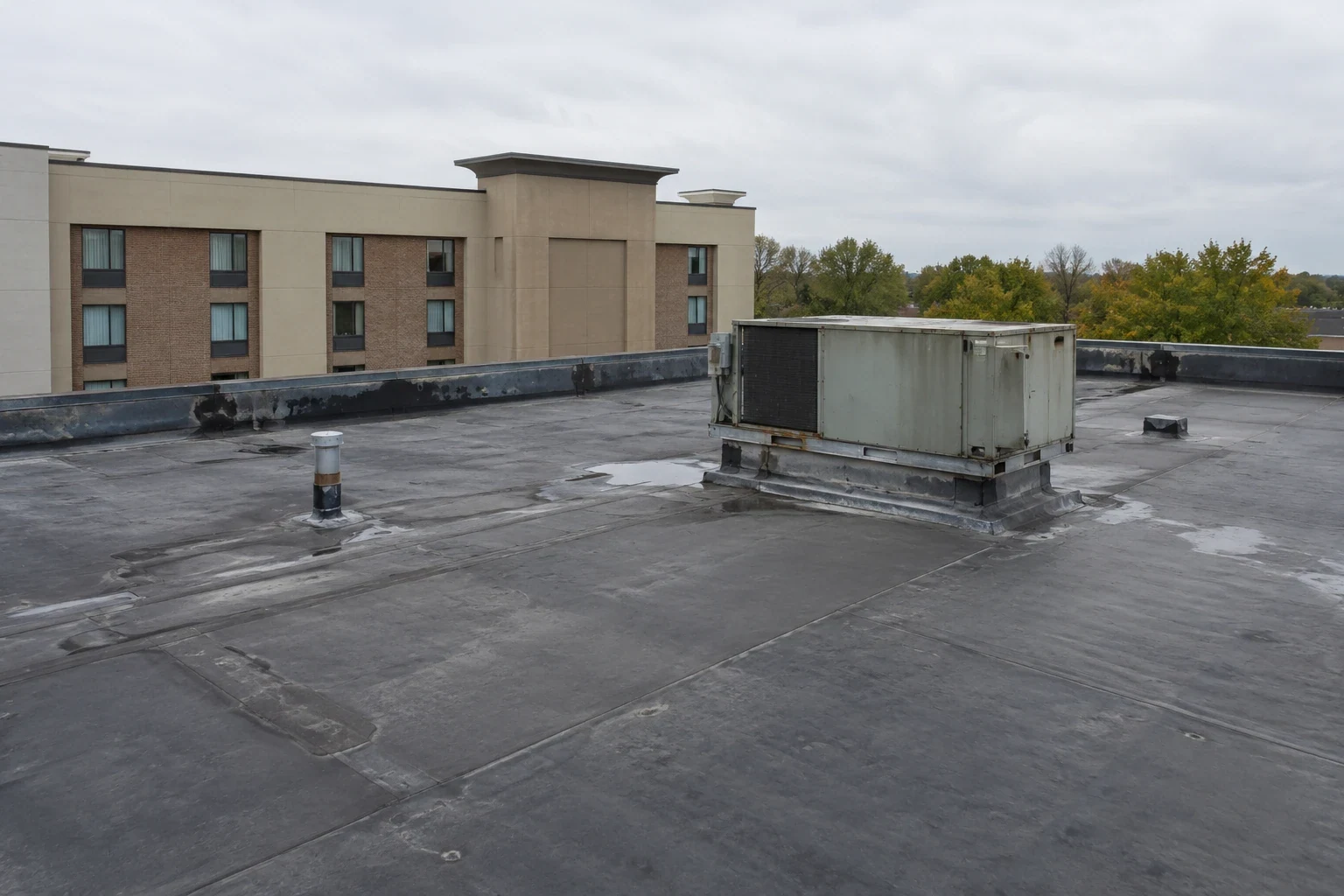
A single lodging building, as in hotel roofing, usually combines a main low-slope field, a kitchen wing and a mechanical area, and each part is surveyed on its own. The survey also notes where guest-room windows and balconies sit near roof edges, since noise and falling debris are planned out before any equipment is set.
Downtown and village hospitality buildings
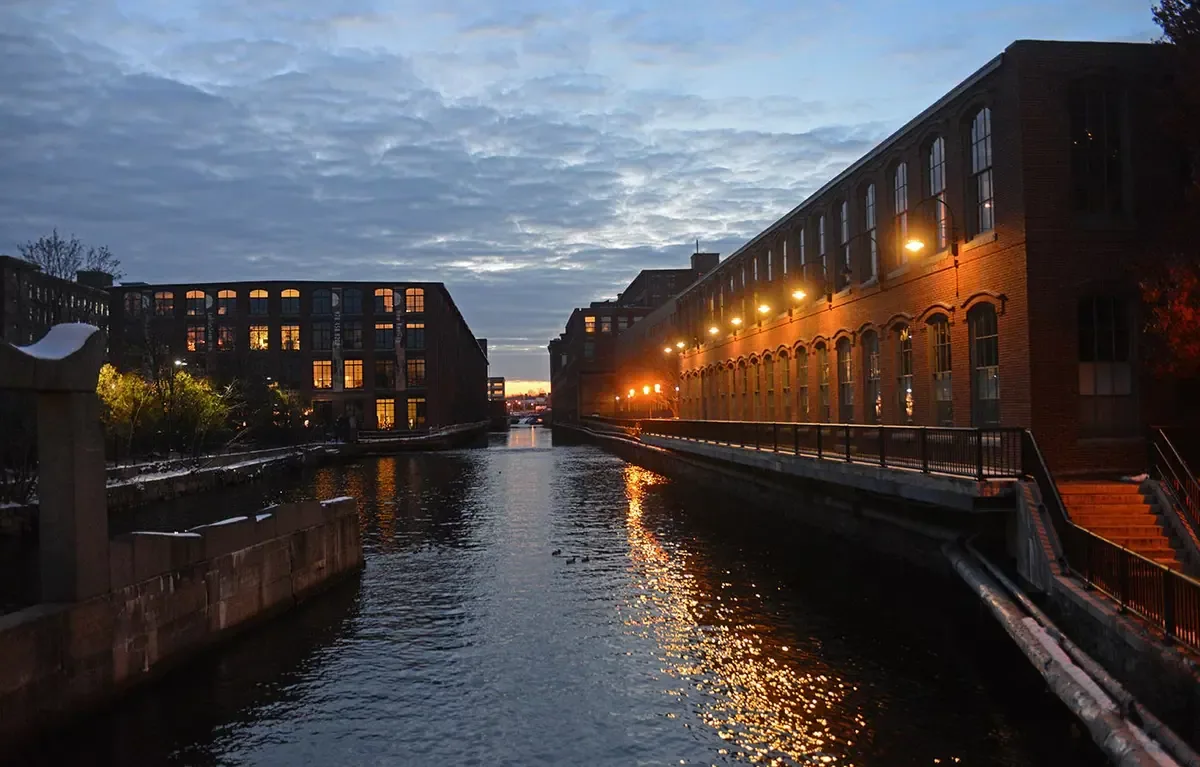
Not every hospitality property is a modern low-rise. In downtown Lowell the historic district spans commercial blocks, mill yards and canals, and exterior roof work there goes to the Historic Board. A boutique hotel or restaurant in a converted historic building may need approval for visible roof changes, and the schedule includes that step from the outset.
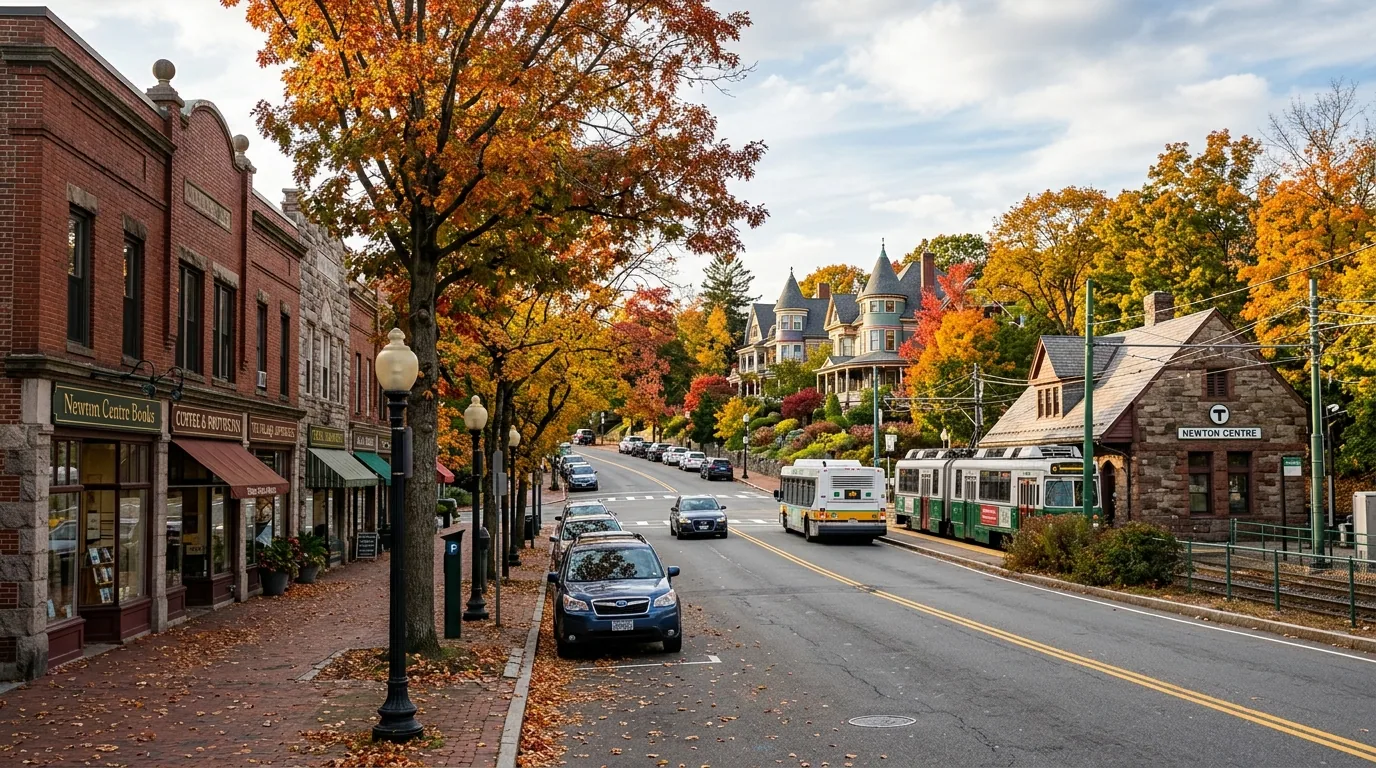
Concord describes West Concord as a walkable business district of independent shops, arts organizations and restaurants, and Bedford describes its historic center as a walkable business district with retail, restaurants and start-up companies. A hospitality building in Concord or Lowell gets the same first-hour check. Older hospitality buildings in village centers may involve complex roofs with several levels, which makes drainage between levels a priority.
The Hamilton Canal District plan connects downtown Lowell with the commuter rail station through mixed-use redevelopment, and new lodging or dining projects in such areas carry a roof decision from the start: system, equipment layout and solar readiness.
Managing roofs across a hospitality group
A group with several properties benefits from one inspection format and one ranking. Each property gets a roof file: system, age, warranty, repair history and photographs. The ranking puts the roof most likely to take rooms out of service at the top, which is the roof with the worst combination of age, condition and exposure over occupied floors.
The file also supports transactions. A buyer or lender asks for roof condition, and a standing file answers fast. Owners who hold hospitality property alongside other asset types will find the same logic in the approach for real estate investors, and groups that also operate restaurants overlap with restaurant and retail brands.
A roof capital plan schedules replacements into off-peak seasons and estimates the reserve for each property. NOAA's Lowell station normals show 48.51 inches of precipitation across a year, and nor'easters, snowstorms and ice storms are all on the city's hazard record, so a winter-ready roof is a standing requirement.
Commercial Roofing Questions
How are affected rooms released after a roof leak?
After moisture readings confirm that ceilings, walls and insulation above the room are dry and the roof opening is sealed. Housekeeping and maintenance then clear the room. The written update gives a return date for each room and revises it if readings change.
Can a hotel stay open during a full reroof?
Often yes, in sections, with the rooms under each open section blocked while work proceeds. Quiet hours, protected walkways and controlled deliveries keep guests undisturbed. The scope shows the room-night impact of each schedule option so the owner can weigh it.
What proves a roof leak is fixed, and not just hidden?
A water test or a dry reading after rain, plus moisture readings above the ceiling. Cosmetic repairs to a stained ceiling do not show the source is closed. The closeout record includes photographs and readings taken after the repair.
Why do kitchen and laundry exhaust matter to the roof?
Grease and humid air degrade some membranes and can drive moisture into the roof assembly. The survey records each discharge point and matches the membrane or detail to the exposure. Grease-resistant materials and sound ventilation protect the roof around those fans.
Do historic downtown properties need a different plan?
Often, since exterior changes in Lowell's historic district are subject to Historic Board review and older roofs may have several levels. We check approval needs early, document the existing materials and write the scope so visible changes are clearly identified.