Unit number first. An apartment roof report arrives as a resident's call to the office: water at a ceiling, a bubbled paint patch, a drip at a light fixture. The manager has a unit, a floor, and a time. We ask for those, plus whether the unit is occupied, who holds the key, and whether the resident can be reached. From there we check how the roof section overhead can be reached and what protection the interior needs until we arrive. A leak in a home is a different emergency from a leak in an office, and the first hour reflects it.
In Lowell, MA, apartment roofs take rain through the year and a winter that tests drains and edges. The manager or owner hears the plan in order: the first-hour step, the repair boundary, and the price, each with a clear time, so residents get one story from the office and from us.
Residents, Notice, and Unit Access
Roof work above homes involves people who did not ask for it. Residents need notice of the dates, the hours, the noise, and any need to enter a unit. We write the notice for the manager to send, listing the start date, hours, noise, work areas, parking and walkway changes, and a contact for questions. We do not send notices ourselves. The office controls communication with residents.
When a leak requires entry to a unit, the manager schedules it, arranges the key and any escort, and tells the resident. We photograph the ceiling, walls, and fixtures, and record the moisture reading. Those photographs help with insurance, with the resident's claim, and with the repair scope. Where the leak is active, a temporary dry-in at the roof stops the water first, and the interior is dried after.
Low-Slope Sections and Roof Penetrations
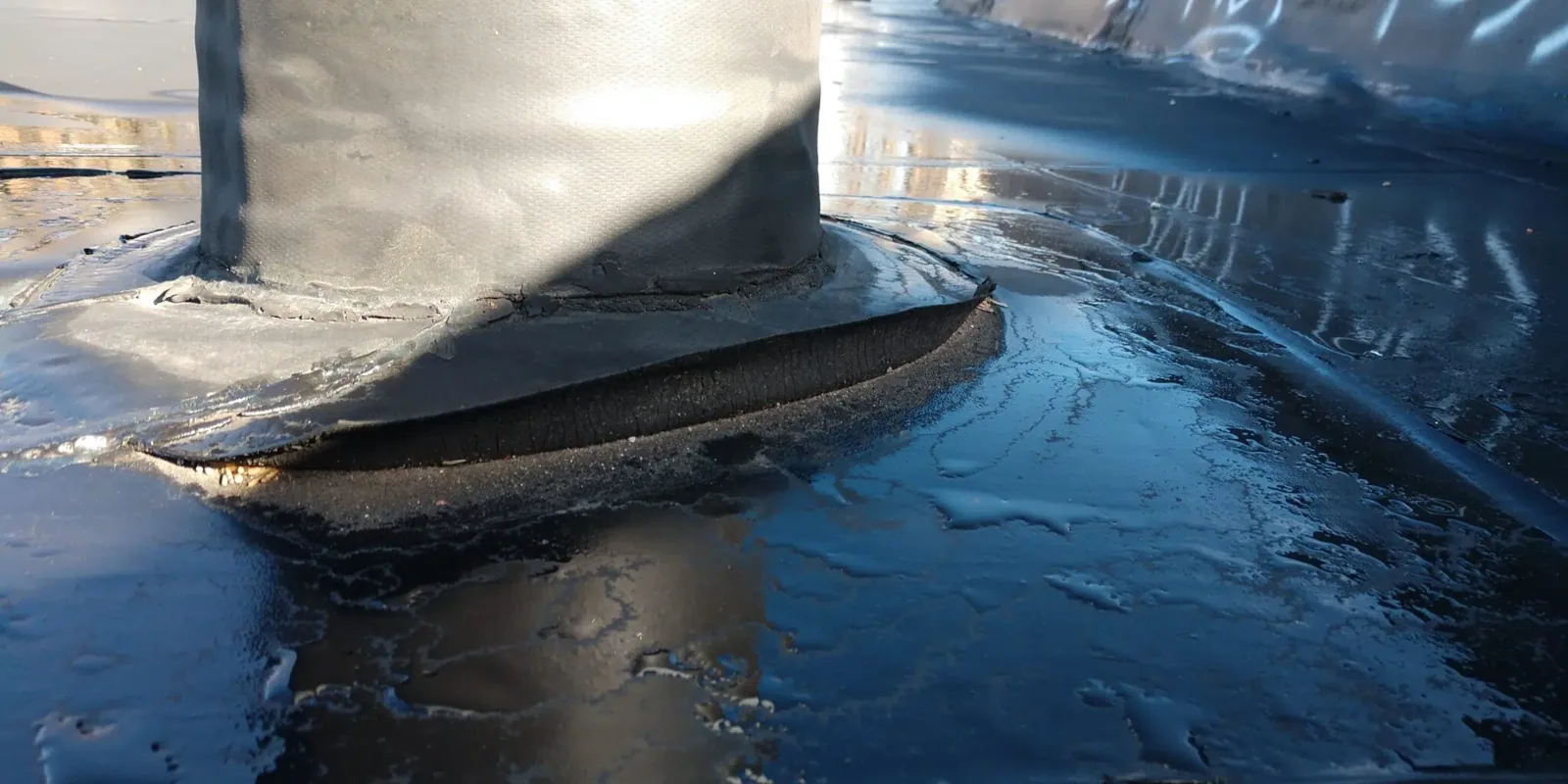
Multifamily buildings often have roof sections at different heights, with plumbing vents, bathroom and kitchen exhaust fans, and sometimes rooftop units or common-area equipment. Each vent boot and exhaust curb is a place for the membrane to fail. We walk the roof in a fixed order: drains, seams, penetrations, wall flashings, and edges, and we photograph each with a section number.
Balcony doors, stair towers, and roof hatches add their own flashing details, and a hatch left unlatched after a service visit can admit rain as readily as a torn seam. We check latches, curbs, and the stair or ladder that leads to each hatch, and we photograph them with the rest of the section. Dishes or antennas fixed to a parapet are logged as penetrations to be inspected. Many apartment leaks trace to small details: a cracked pipe boot, a loose exhaust cap, or a flashing that has lifted at a wall. A flashing failure repair or a boot replacement may be the whole fix. When several leaks appear in different units over a short time, we look for wet insulation and a failing membrane, since a roof near the end of its life shows up as scattered small leaks.
Winter Drainage and Ice at the Edges
At NOAA's Lowell station January averages near 25 degrees and July near 73, so freeze and thaw work on the roof across the year. Winter storms and nor'easters are part of the city's hazard record, and that is the weather the drains and edges have to handle.
Ice forms where meltwater refreezes at the roof edge, in gutters, and around drains. It can back water under flashing and into the wall. After a storm, we check gutters, scuppers, and parapet drains first. A snow and ice damage repair record sorts the damage by section, so the manager can assign cost, file with the insurer, and plan permanent work.
Phasing a Reroof Over Occupied Homes
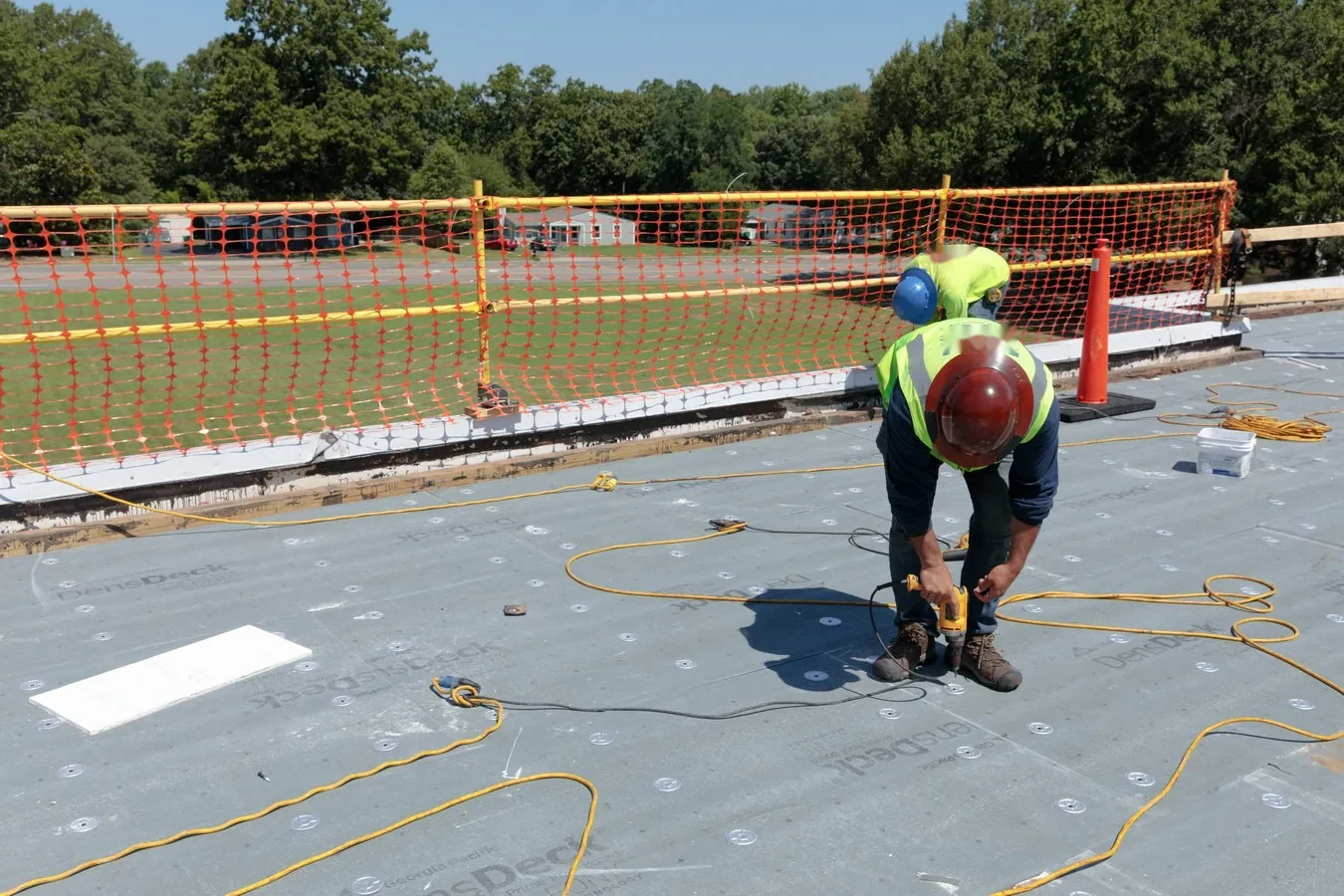
A full reroof of an occupied building runs in phases. The first phase sets safety: walkway covers, parking restrictions, fall protection, and material staging that does not block fire lanes. The second phase opens a section, installs the new roof, and closes it watertight before the crew leaves. The third phase moves to the next section.
Noise is the main complaint. We list loud tasks, such as tear-off and fastener work, and set them for hours the manager approves. Fumes are checked against air intakes and open windows, and adhesives are chosen or timed to limit odor. A written plan for occupied building reroofing lists these points, and the manager shares the schedule with residents before the first day.
Owners, Managers, and Asset Planning
An owner of one building and a manager of fifty need the same thing: a record that ranks roofs by condition and cost exposure. A roof asset management file holds each building's roof plan, age, repairs, and next review date. A property management company uses it to plan capital spending across buildings, and an investor or REIT uses it in acquisition and hold decisions.
Energy requirements depend on local adoption of a stretch or specialized stretch code, and the office confirms which applies before insulation is chosen. The same file keeps the answer, so the next manager does not start over.
Cost Update and Return Window
Cost moves with the extent of wet insulation, the number of penetrations, the staging space, the hours allowed, and the weather hold. The dry-in carries a same-day price when water is active, and the permanent repair is priced after the inspection. Each update names the next one, so the manager can tell residents when to expect news. Apartment buildings in Chelmsford, Dracut, and Tewksbury get the same sequence as those inside Lowell, and crews and materials reach all of them by I-495, I-93, or Route 3. Extended-stay rooms follow the same notice and unit-access steps as the guest floors of a hotel roof. The manager receives the schedule, the photographs, and the roof plan together, which keeps the office answer and the roofer answer the same when a resident calls.
City plans for the Hamilton Canal District mix commercial, retail, office, and research uses with other types, so a building that combines shops and homes needs a roof file that records both uses. Exterior work in the Downtown Lowell Historic District goes to the Historic Board, so the owner checks status before any roof change is scoped. The same method applies to apartment buildings in Lowell and to senior living communities, where the building cannot empty during work.
Commercial Roofing Questions
Who tells residents about roof work?
The property manager. We supply the dates, hours, noise, and access needs in plain language, and the office sends the notice through its own channels.
What if a leak shows up in several units at once?
That points to wet insulation or a failing section, not one small opening. We map moisture across the roof and price a repair boundary that matches the wet area.
Can a unit be entered without the resident home?
Only as the manager arranges it under the lease and local rules. We ask for the escort or key plan and photograph what we find, so the record shows the condition on entry.
How long will residents notice noise?
For tear-off and fastening, noise runs through the working hours of each phase. The schedule lists those tasks by day, and the manager passes the schedule along.
When is a patch enough for an apartment roof?
When the leak traces to one detail and the insulation tests dry. Scattered leaks across sections suggest the membrane is failing, and then the scope grows.