Residents come before the roof. A report from a senior living community usually reaches us through an administrator or a maintenance director, and the first questions are about people: which room or wing is affected, whether anyone uses a walker or a wheelchair on that corridor, and whether the area can be closed without moving a resident. We keep anyone clear of wet ceilings, electrical fixtures, and slick floors, and we confirm safe access to the roof section above before we plan any repair.
In Lowell, MA, a roof over a care setting takes rain across the year and winter storms that test drains and edges. For the administrator the order is brief: first response, temporary dry-in, inspection, repair boundary, price, and a clock on every item. Staff on each shift get the same short summary, so the evening nurse and the morning director are working from one version of the facts. We keep that sequence plain, so staff, families, and the owner's office can all follow it.
Resident Safety and Room Access
Interior protection in a care setting is more than sheeting. It includes a barrier that does not block an exit, signs staff can read quickly, a dry route for residents and carts, and a plan for the room if moisture stays. We ask the administrator which spaces can close, which must stay open, and which residents need notice. The decision to move a resident belongs to the care team, and we supply the roof facts they need.
When a leak requires entry to a room, the staff controls access. We photograph the ceiling and walls, take a moisture reading, and leave the room as we found it. Water and electrical equipment do not mix, so lights, outlets, and call-system hardware near the stain get an electrician's check before the space returns to use. That step is outside roofing, but we flag it in every report, along with the photographs of the fixtures and the time the roof section above was closed, so the electrician and the administrator start from the same facts.
Care Operations and Quiet Hours
A care community keeps a schedule of meals, medication rounds, visits, and rest. Roof noise and vibration disrupt it. We list loud tasks, such as tear-off, fastening, and equipment moves, and set them for hours the administrator selects. Sleeping areas and therapy rooms get the quietest part of the schedule, and the work moves above corridors and storage when it can.
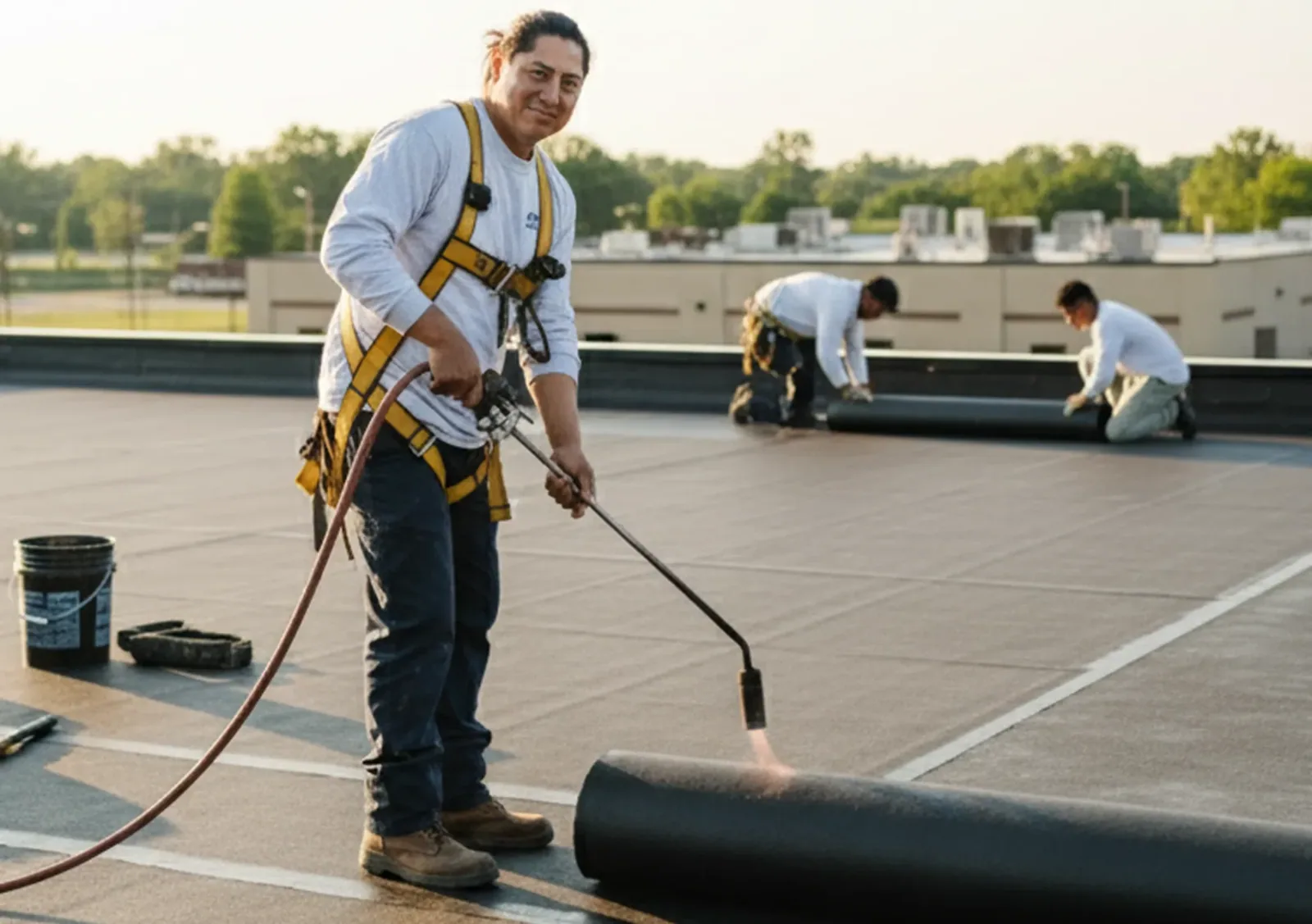
Fumes matter too. Adhesives and hot-applied materials can reach air intakes and open windows, so we locate the intakes before any product is opened. If an intake sits near the work, we change the product, change the hour, or add a temporary shutdown agreed with the maintenance director. The plan for occupied building reroofing sets these limits in writing before the crew arrives.
Rooftop Equipment and Building Systems
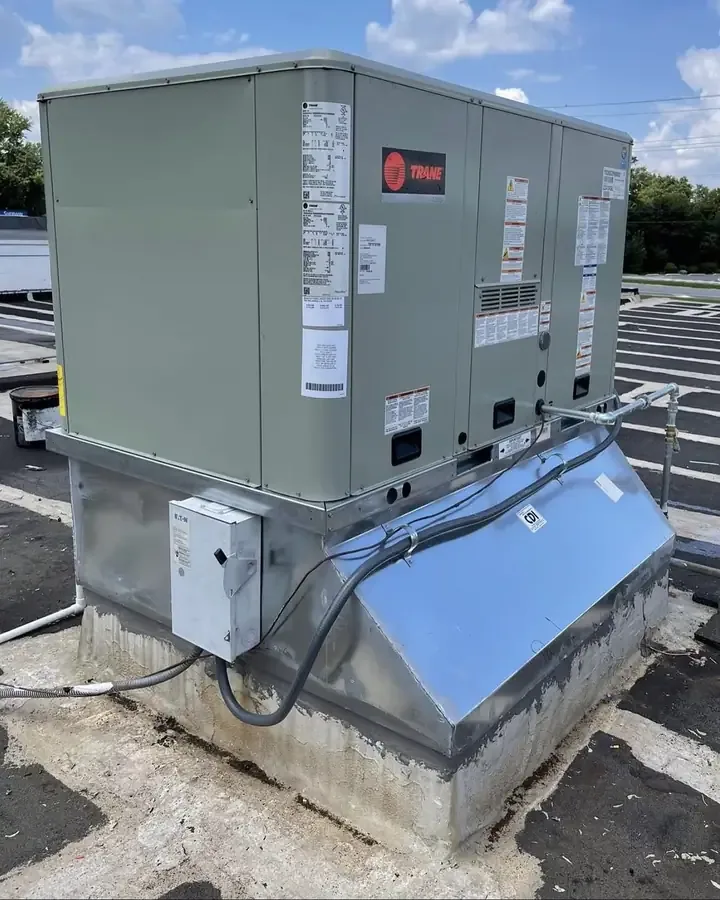
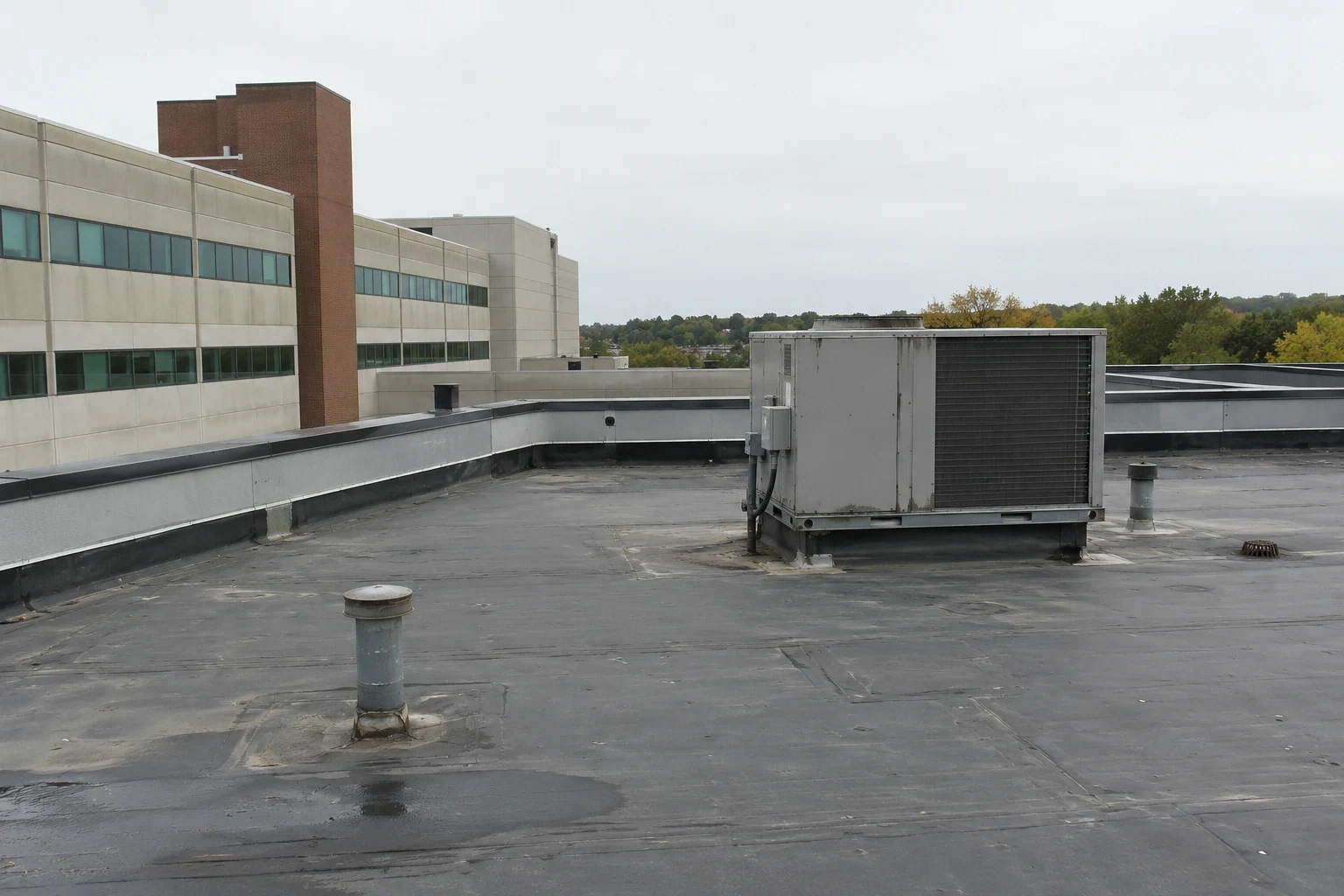
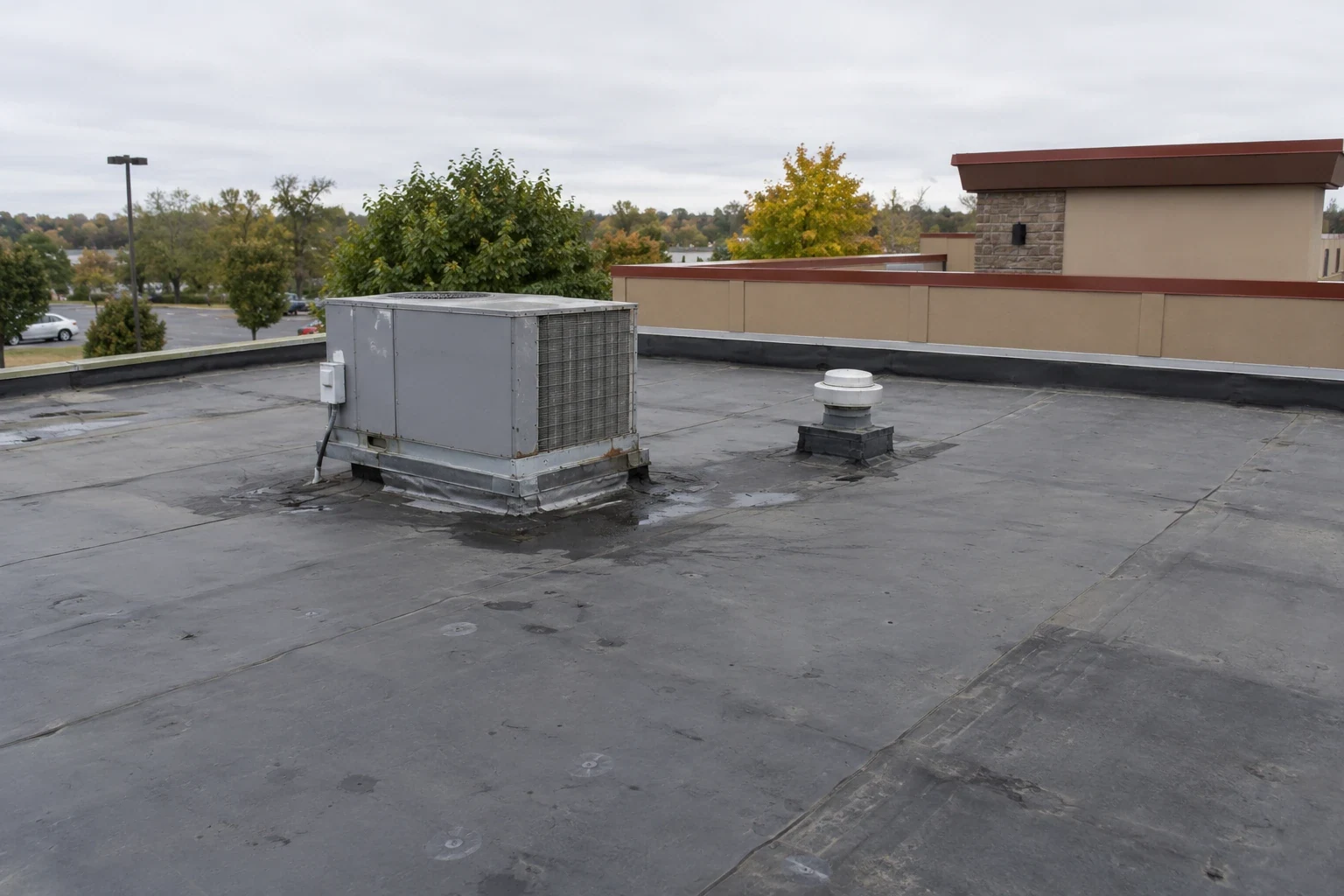
Senior living buildings carry heating and cooling units, ventilation fans, and exhaust for kitchens and laundries. Each unit sits on a curb or support with its own flashing. A failed curb can let water reach a ceiling cavity or a mechanical room, and an interrupted ventilation system affects resident comfort. We number every unit, check the flashing and fasteners, and flag any support that sits straight on the membrane.
When a unit must be shut down for roof work, the maintenance director sets the date and the temporary arrangement. For the rooftop equipment curbs and supports, the sequence returns each unit on the day the building needs it and closes the deck every evening.
Moisture, Mold Risk, and Testing
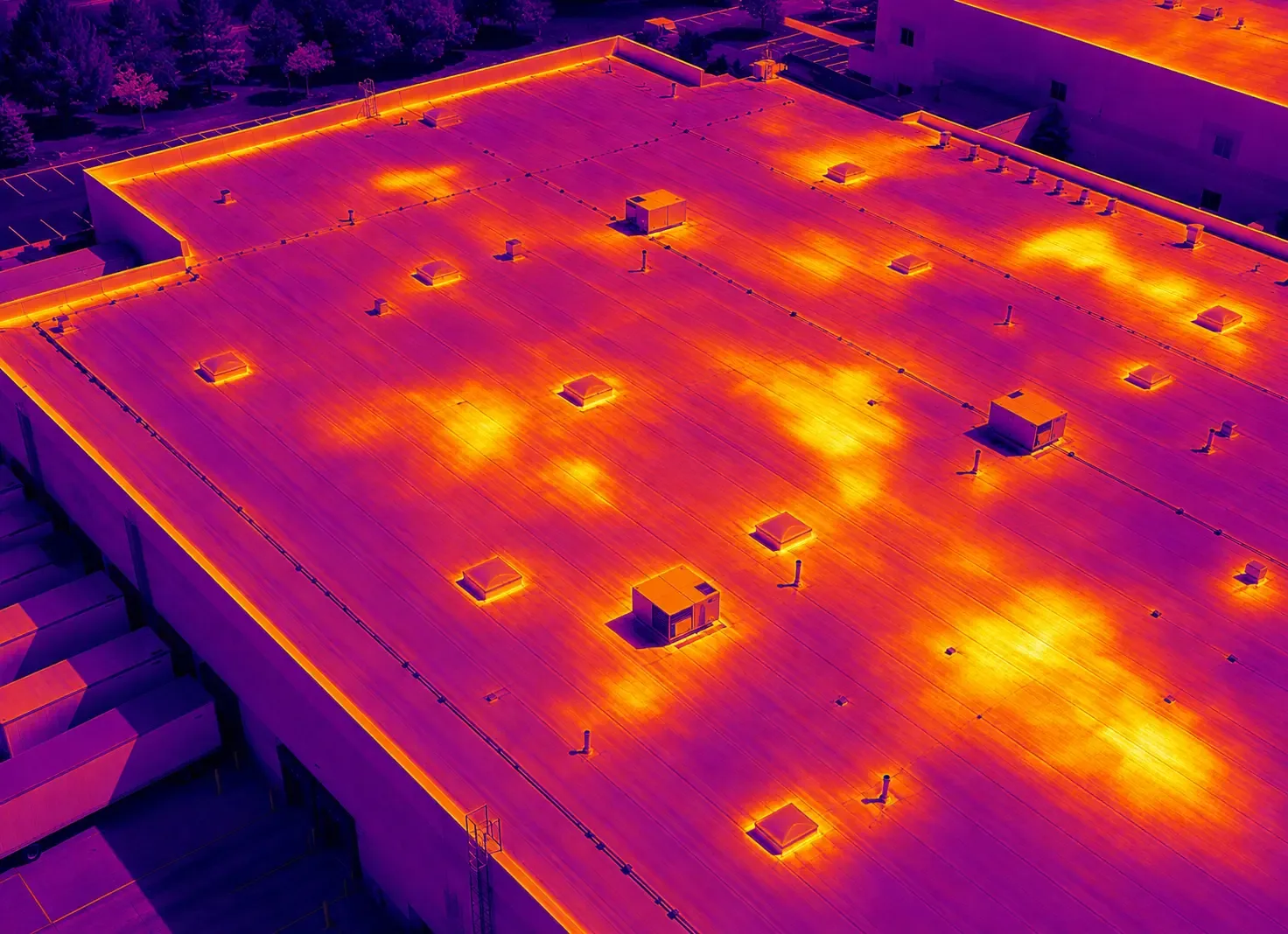
Water that reaches insulation and ceiling cavities can stay for weeks. In a care setting, damp materials are a health concern, so the moisture map matters. An infrared moisture survey shows wet insulation from the roof surface, and cores confirm depth. Ceiling and wall moisture readings from inside show how far water traveled.
The map sets the repair boundary and the interior drying scope. We do not perform interior remediation, and we do not judge air quality. We give the administrator the roof-side facts, the extent of the wet area, and the date the roof section above was made watertight, which the care team can use to decide on testing and cleanup with the appropriate specialists.
Winter Drainage and Roof Access
Nor'easters, snowstorms, and ice storms rank among the city's major hazards, and one recorded winter produced 126.5 inches of snow. At NOAA's Lowell station January runs near 25 degrees and every month brings precipitation. For a care community, a winter leak is also a staffing and safety issue, so the drains, parapets, and roof edges are checked before the cold season and after each major storm.
Access in snow takes planning. We do not ask staff to clear a roof, and we do not let anyone onto a deck with drifted snow or a covered drain. We delay work on a section we cannot reach safely. If a heavy snow load raises a structural question, we ask for the building's documents before anyone works on the roof. A temporary dry-in has to stand through a weather hold, and we say how long it can. We also name who checks it each day, so the maintenance director is not left wondering whether the cover is still tight after a night of wind or a hard freeze.
Cost Update and Planning
Cost has three parts: the same-day dry-in, the permanent repair after inspection, and a list of conditions that could change the number, such as wet insulation beyond the first survey boundary. Each update names the next update, and a copy goes to the administrator and the maintenance director together, so the two sides of the building hear the same plan at the same time. For a community with several buildings, a roof condition report ranks every roof section and gives the owner a budget path.
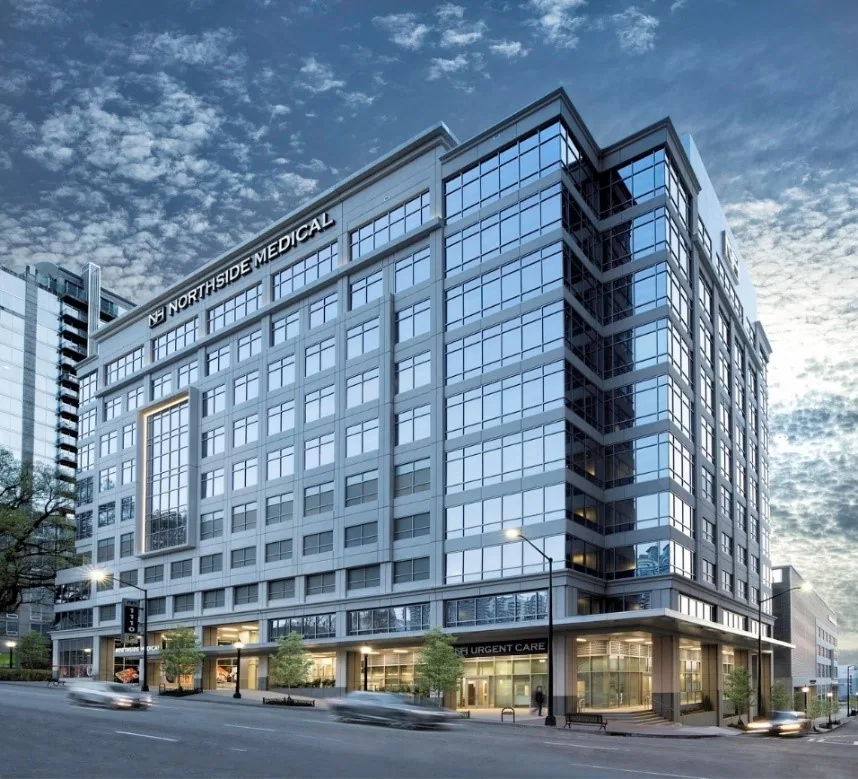
Healthcare buildings share many of these steps. A hospital roof adds infection-control and air-handling limits, and a medical office roof adds appointment schedules. The Edith Nourse Rogers Memorial Veterans' Hospital, about 10 miles southwest of Lowell, is one example of a care campus in the region, with a main hospital campus and a Community Living Center. The same method applies to senior living communities in Lowell, Chelmsford, and Tewksbury, under the state's 10th edition building code.
Commercial Roofing Questions
Who decides whether a resident moves during a leak?
The care team. We provide the water path, the wet area, and the time the roof section above can be closed, and staff decide what that means for each resident.
Can roof work be done without disturbing rest?
Much of it can, with planning. Loud tasks move away from sleeping areas and to approved hours, and we tell staff the hours in advance.
What if a ventilation unit sits over the wet area?
The maintenance director sets the shutdown date and the temporary arrangement. We sequence the roof work so the unit is down for the shortest time and the roof is tight when it returns.
How do you handle fumes near air intakes?
We find the intakes first, then choose the product and the hour that keep fumes away. If needed, the maintenance director agrees to a short intake shutdown.
Should we replace the roof or keep repairing it?
Count the repeat leaks and read the moisture map. Wet insulation across sections or repairs that keep failing in new places point to replacement. The update shows both prices.